

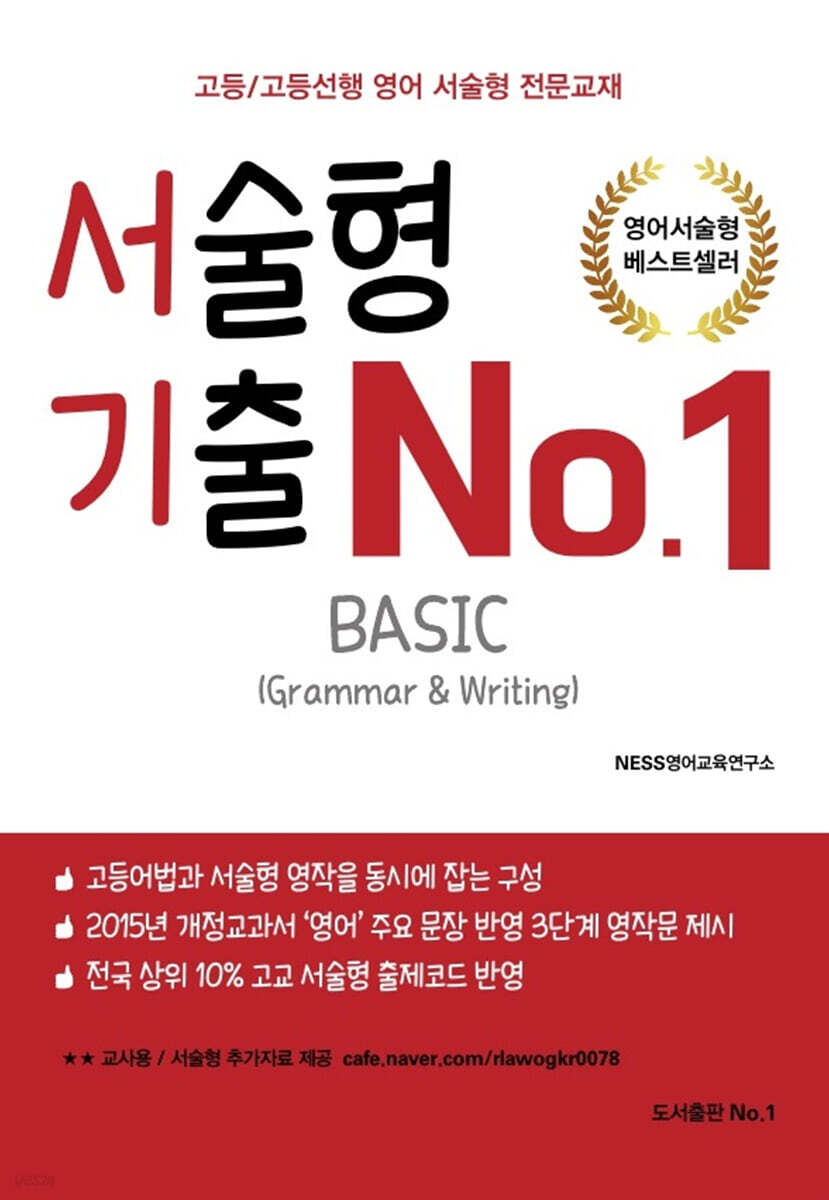
Descriptive Previous Exam No. 1 BASIC
 |
Description
Book Introduction
Fundamentally, it provides a summary of key grammar necessary for English writing, along with English writing questions organized by stage/level to help you develop your English writing skills.
The essay section (evaluating the ability to compose English sentences), which has the highest proportion of questions in the descriptive section, is not simply about memorizing the text, but rather evaluates whether the student has basic English writing skills.
Additionally, to help you prepare for difficult descriptive questions, we have arranged descriptive written tests (6 common high-difficulty types) that are closest to the actual exam, so that you can solve descriptive questions more smoothly in the actual exam.
The essay section (evaluating the ability to compose English sentences), which has the highest proportion of questions in the descriptive section, is not simply about memorizing the text, but rather evaluates whether the student has basic English writing skills.
Additionally, to help you prepare for difficult descriptive questions, we have arranged descriptive written tests (6 common high-difficulty types) that are closest to the actual exam, so that you can solve descriptive questions more smoothly in the actual exam.
- You can preview some of the book's contents.
Preview
index
Composition and Features
Learning MAP by textbook
Level-based learning navigation
Analysis of past exam questions from 185 schools
PART 1 Example of Writing Method
PART 2 Sentence Transitions by Key Grammar
1.
Passive voice transition
2.
Phrase transitions including to-infinitive
3.
Participle phrase conversion
4.
Conversion to family law
5.
Conversion of superlative expressions using the original/comparative degree
6.
the comparative, the conversion of the comparative
7.
Transition to the inverted sentence
PART 3: A Complete Guide to the Mackerel Method and How to Use It in English Writing
1.
Sentence structure (5 types)
Key points + simple arrangement composition → grammar application composition
2.
gerund
Key points + simple arrangement composition → grammar application composition → grammar accumulation
3.
Subject It
Key points + simple arrangement composition → grammar application composition → grammar accumulation
4.
to infinitive
Key points + simple arrangement composition → grammar application composition → grammar accumulation
5.
Indirect question
Key points + simple arrangement composition → grammar application composition → grammar accumulation
6.
Object It
Key points + simple arrangement composition → grammar application composition → grammar accumulation
7.
passive
Key points + simple arrangement composition → grammar application composition → grammar accumulation
8.
jet
Key points + simple arrangement composition → grammar application composition → grammar accumulation
9.
Participle phrase
Key points + simple arrangement composition → grammar application composition → grammar accumulation
10.
Affiliate 1
Key points + simple arrangement composition → grammar application composition → grammar accumulation
11.
Relationship 2
Key points + simple arrangement composition → grammar application composition → grammar accumulation
12.
conjunction
Key points + simple arrangement composition → grammar application composition → grammar accumulation
13.
comparison
Key points + simple arrangement composition → grammar application composition → grammar accumulation
14.
subjunctive
Key points + simple arrangement composition → grammar application composition → grammar accumulation
15.
Dochi
Key points + simple arrangement composition → grammar application composition → grammar accumulation
16.
Emphasis (do, It - that)
Key points + simple arrangement composition → grammar application composition → grammar accumulation
17.
Matching numbers
Key points + simple arrangement composition → grammar application composition → grammar accumulation
18.
auxiliary verb
Key points + simple arrangement composition → grammar application composition → grammar accumulation
19.
tense
Key points + simple arrangement composition → grammar application composition → grammar accumulation
20.
Parallel structure
Key points + simple arrangement composition → grammar application composition → grammar accumulation
Learning MAP by textbook
Level-based learning navigation
Analysis of past exam questions from 185 schools
PART 1 Example of Writing Method
PART 2 Sentence Transitions by Key Grammar
1.
Passive voice transition
2.
Phrase transitions including to-infinitive
3.
Participle phrase conversion
4.
Conversion to family law
5.
Conversion of superlative expressions using the original/comparative degree
6.
the comparative, the conversion of the comparative
7.
Transition to the inverted sentence
PART 3: A Complete Guide to the Mackerel Method and How to Use It in English Writing
1.
Sentence structure (5 types)
Key points + simple arrangement composition → grammar application composition
2.
gerund
Key points + simple arrangement composition → grammar application composition → grammar accumulation
3.
Subject It
Key points + simple arrangement composition → grammar application composition → grammar accumulation
4.
to infinitive
Key points + simple arrangement composition → grammar application composition → grammar accumulation
5.
Indirect question
Key points + simple arrangement composition → grammar application composition → grammar accumulation
6.
Object It
Key points + simple arrangement composition → grammar application composition → grammar accumulation
7.
passive
Key points + simple arrangement composition → grammar application composition → grammar accumulation
8.
jet
Key points + simple arrangement composition → grammar application composition → grammar accumulation
9.
Participle phrase
Key points + simple arrangement composition → grammar application composition → grammar accumulation
10.
Affiliate 1
Key points + simple arrangement composition → grammar application composition → grammar accumulation
11.
Relationship 2
Key points + simple arrangement composition → grammar application composition → grammar accumulation
12.
conjunction
Key points + simple arrangement composition → grammar application composition → grammar accumulation
13.
comparison
Key points + simple arrangement composition → grammar application composition → grammar accumulation
14.
subjunctive
Key points + simple arrangement composition → grammar application composition → grammar accumulation
15.
Dochi
Key points + simple arrangement composition → grammar application composition → grammar accumulation
16.
Emphasis (do, It - that)
Key points + simple arrangement composition → grammar application composition → grammar accumulation
17.
Matching numbers
Key points + simple arrangement composition → grammar application composition → grammar accumulation
18.
auxiliary verb
Key points + simple arrangement composition → grammar application composition → grammar accumulation
19.
tense
Key points + simple arrangement composition → grammar application composition → grammar accumulation
20.
Parallel structure
Key points + simple arrangement composition → grammar application composition → grammar accumulation
Into the book
PART 1 Example of Writing Method
This is a learning course on 'English writing methods by sentence pattern' that presents the process of constructing English sentences from Korean.
PART 2 Sentence Transitions by Key Grammar
This is a foundational area for understanding grammar and writing in English. Based on recent school exam questions, it compresses frequently asked sentence transition descriptive content into 7 grammar parts, and presents sentence transition questions along with a summary of key grammar.
In addition, we have presented the trends in questions by part and shown the schools that recently issued the questions to help students get a feel for the actual exam, so that they can prepare for the descriptive type of sentence transition.
PART 3: A Complete Guide to the Mackerel Method and How to Use It in English Writing
This is a 'course to prepare for English writing', which is the most frequently tested and most frequently mistaken subject in the descriptive section. After classifying the core elements of higher-level grammar and English writing into 20 types, it presents a diagrammatic summary of the main contents of each grammar and 400 English writing questions, thereby combining higher-level grammar and English writing.
By presenting composition questions structured in stages (simple arrangement composition → grammar application composition → grammar accumulation), we provide the first “cumulative grammar composition” in Korea, so that students do not forget what they learned in the previous unit and continue to use it in the next unit, enabling organic composition using grammar rather than fragmented composition.
In addition, we have provided the names of schools that used the relevant grammar to provide a more realistic feel, and have provided descriptive key sentences reflected in the 11 types of English textbooks revised in 2015 as writing questions to provide practical help to students in preparing for the exam.
■ Commentary (comprehensive summary of advanced key grammar)
To solve the most frequently asked question, 'Descriptive Writing', I tried to cover in detail the process of deriving English sentences.
In addition, the advanced core grammar learned in Parts 2 and 3 of this book is organized separately in a commentary booklet, allowing you to organize advanced grammar at a glance and eliminating the hassle of having to separately look up related content while solving problems in this book.
This is a learning course on 'English writing methods by sentence pattern' that presents the process of constructing English sentences from Korean.
PART 2 Sentence Transitions by Key Grammar
This is a foundational area for understanding grammar and writing in English. Based on recent school exam questions, it compresses frequently asked sentence transition descriptive content into 7 grammar parts, and presents sentence transition questions along with a summary of key grammar.
In addition, we have presented the trends in questions by part and shown the schools that recently issued the questions to help students get a feel for the actual exam, so that they can prepare for the descriptive type of sentence transition.
PART 3: A Complete Guide to the Mackerel Method and How to Use It in English Writing
This is a 'course to prepare for English writing', which is the most frequently tested and most frequently mistaken subject in the descriptive section. After classifying the core elements of higher-level grammar and English writing into 20 types, it presents a diagrammatic summary of the main contents of each grammar and 400 English writing questions, thereby combining higher-level grammar and English writing.
By presenting composition questions structured in stages (simple arrangement composition → grammar application composition → grammar accumulation), we provide the first “cumulative grammar composition” in Korea, so that students do not forget what they learned in the previous unit and continue to use it in the next unit, enabling organic composition using grammar rather than fragmented composition.
In addition, we have provided the names of schools that used the relevant grammar to provide a more realistic feel, and have provided descriptive key sentences reflected in the 11 types of English textbooks revised in 2015 as writing questions to provide practical help to students in preparing for the exam.
■ Commentary (comprehensive summary of advanced key grammar)
To solve the most frequently asked question, 'Descriptive Writing', I tried to cover in detail the process of deriving English sentences.
In addition, the advanced core grammar learned in Parts 2 and 3 of this book is organized separately in a commentary booklet, allowing you to organize advanced grammar at a glance and eliminating the hassle of having to separately look up related content while solving problems in this book.
--- From the text
Publisher's Review
A structure that simultaneously captures high-level grammar and descriptive writing!
2015 Revised Textbook 'English' Key Sentences Reflected in 3-Step English Composition Presentation!
Reflecting the descriptive exam codes of the top 10% of high schools nationwide!
"No. 1 Descriptive Writing Exam [BASIC]," a specialized English textbook for advanced/high school students
When exam period comes, students usually memorize the text to prepare for English essay questions.
For already busy high school students, memorizing textbooks, mock exams, and supplementary materials for descriptive preparation not only takes away time from studying other subjects, but also reduces efficiency because the exams do not reflect what was memorized.
The reason is that, for objective questions, sufficient preparation is possible based on a thorough understanding of the text, but for descriptive questions, where each question carries a high score enough to determine a grade, it is difficult to cope with them through short-term preparation because English expressive power is evaluated based on an understanding of the text.
Accordingly, this book presents English writing questions organized by stage/level along with a summary of key grammar necessary for English writing to fundamentally develop English writing skills.
The essay section (evaluating the ability to compose English sentences), which has the highest proportion of questions in the descriptive section, is not simply about memorizing text, but rather evaluates whether the student has basic English writing skills.
Additionally, to help you prepare for difficult descriptive questions, we have placed descriptive written tests (6 common high-difficulty types) that are closest to the actual exam, so that you can solve descriptive questions more smoothly in the actual exam.
However, sometimes we hear that people only want to solve descriptive questions that are appropriate for that school type.
It seems like an approach that focuses on testing English rather than language.
Rather, I think that if we study with a more open attitude, beyond the fence of the exam, we will be able to solve any type of new problem that comes up.
However, the idea that you can conquer the descriptive writing with just one textbook is neither correct nor the right way to learn.
In the reality where English is a foreign language, the only way to acquire a foreign language is through continuous exposure to the target language and endless corrections of the errors through the repetition of mistakes.
Your 833 attempts at problem-solving and error correction on the 833 descriptive questions presented in this book will improve your English descriptive writing.
You must compete with your competence, not with descriptive or memorization!
2015 Revised Textbook 'English' Key Sentences Reflected in 3-Step English Composition Presentation!
Reflecting the descriptive exam codes of the top 10% of high schools nationwide!
"No. 1 Descriptive Writing Exam [BASIC]," a specialized English textbook for advanced/high school students
When exam period comes, students usually memorize the text to prepare for English essay questions.
For already busy high school students, memorizing textbooks, mock exams, and supplementary materials for descriptive preparation not only takes away time from studying other subjects, but also reduces efficiency because the exams do not reflect what was memorized.
The reason is that, for objective questions, sufficient preparation is possible based on a thorough understanding of the text, but for descriptive questions, where each question carries a high score enough to determine a grade, it is difficult to cope with them through short-term preparation because English expressive power is evaluated based on an understanding of the text.
Accordingly, this book presents English writing questions organized by stage/level along with a summary of key grammar necessary for English writing to fundamentally develop English writing skills.
The essay section (evaluating the ability to compose English sentences), which has the highest proportion of questions in the descriptive section, is not simply about memorizing text, but rather evaluates whether the student has basic English writing skills.
Additionally, to help you prepare for difficult descriptive questions, we have placed descriptive written tests (6 common high-difficulty types) that are closest to the actual exam, so that you can solve descriptive questions more smoothly in the actual exam.
However, sometimes we hear that people only want to solve descriptive questions that are appropriate for that school type.
It seems like an approach that focuses on testing English rather than language.
Rather, I think that if we study with a more open attitude, beyond the fence of the exam, we will be able to solve any type of new problem that comes up.
However, the idea that you can conquer the descriptive writing with just one textbook is neither correct nor the right way to learn.
In the reality where English is a foreign language, the only way to acquire a foreign language is through continuous exposure to the target language and endless corrections of the errors through the repetition of mistakes.
Your 833 attempts at problem-solving and error correction on the 833 descriptive questions presented in this book will improve your English descriptive writing.
You must compete with your competence, not with descriptive or memorization!
GOODS SPECIFICS
- Publication date: December 15, 2018
- Page count, weight, size: 153 pages | 210*297*20mm
- ISBN13: 9791196547004
- ISBN10: 1196547009
You may also like
카테고리
korean


korean

![GQ KOREA Mark (Monthly): December [2025]](http://librairie.coreenne.fr/cdn/shop/files/8ef265dbbfbf186523ed75ba7319009d.jpg?v=1765340328&width=3840)


