

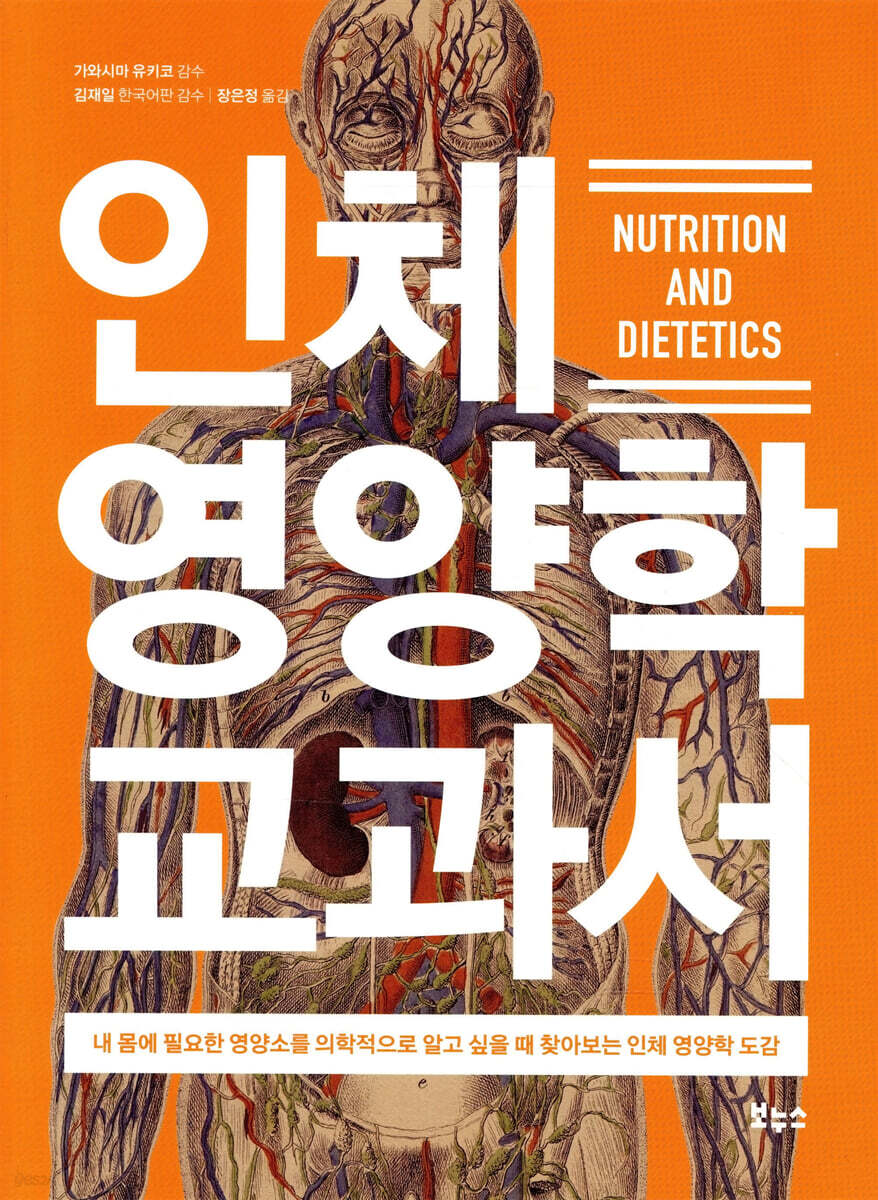
Textbook of Human Nutrition
 |
Description
Book Introduction
Nutrition is a discipline that focuses on 'food and nutrition', such as cooking with nutrients or investigating the nutrients contained in food, and 'people and nutrition', which deals with what happens after food enters the body through the mouth.
The reason why nutrition is important is because 'nutrition' refers to all the actions of a living organism to sustain life.
This book explains the mechanisms of nutrition and the human body, including how nutrients are digested and absorbed, how energy is generated in the body, the functions and metabolism of each nutrient, the role of water and electrolytes, how urine is produced and waste is excreted, and the relationship between nutrition and disease.
You will be able to easily understand the concept of nutrition through various illustrations and visual materials that reflect the latest verified research results.
The reason why nutrition is important is because 'nutrition' refers to all the actions of a living organism to sustain life.
This book explains the mechanisms of nutrition and the human body, including how nutrients are digested and absorbed, how energy is generated in the body, the functions and metabolism of each nutrient, the role of water and electrolytes, how urine is produced and waste is excreted, and the relationship between nutrition and disease.
You will be able to easily understand the concept of nutrition through various illustrations and visual materials that reflect the latest verified research results.
- You can preview some of the book's contents.
Preview
index
Entering
How to use this book
Chapter 1: What is Nutrition?
Human Body and Nutrition / What is Undernutrition / What is Overnutrition / Dietary Intake Standards / Genes and Nutrition / Genes and Lifestyle Diseases
Chapter 2 Digestion and Absorption of Nutrients
Structure and function of the digestive system / small intestine, large intestine / liver, gallbladder / pancreas / digestion and absorption of proteins / digestion and absorption of carbohydrates / digestion and absorption of lipids / digestion and absorption of vitamins / digestion and absorption of minerals / digestion and absorption rate of food
Chapter 3: Functions of Proteins, Carbohydrates, and Lipids
Nutrients and Energy / Principles of Energy Metabolism / Structure and Function of Proteins / Protein Metabolism / Structure and Function of Carbohydrates / Carbohydrate Metabolism / What is Glycogen / Function of Dietary Fiber / Structure and Function of Lipids / Types of Fatty Acids / Lipid Metabolism / Cholesterol Metabolism
Chapter 4: The Action of Water and Electrolytes
The functions of water / Water input and output / Urine production and excretion / Types and functions of electrolytes / Osmotic pressure regulation of body fluids / Acid-base balance of body fluids
Chapter 5: The Functions of Vitamins and Phytochemicals
Vitamin A / Vitamin D / Vitamin E / Vitamin K / Vitamin B1 / Vitamin B2 / Niacin / Vitamin B6 / Vitamin B12 / Folic Acid
Pantothenic acid / Vitamin C / Biotin / Phytochemicals
Chapter 6: The Function of Minerals
Sodium (Na) / Chlorine (Cl) / Potassium (K) / Calcium (Ca) / Magnesium (Mg) / Phosphorus (P) / Iron (Fe) / Zinc (Zn) / Copper (Cu) / Manganese (Mn) / Iodine (I) / Selenium (Se) / Chromium (Cr) / Molybdenum (Mo)
Chapter 7 Diseases and Nutrition
Nutritional Disorders / Metabolic Syndrome / Diabetes and Nutrition / Dyslipidemia and Nutrition / Gout and Nutrition / Arteriosclerotic Disease and Nutrition / Liver Disease and Nutrition / Kidney Disease and Nutrition / Immunity and Nutrition
Chapter 8: Pregnancy, Growth, Aging, and Nutrition
Pregnancy and Nutrition / Breastfeeding and Nutrition / Infants and Nutrition / Growth and Nutrition / Aging and Nutrition
supplement
2020 Nutrient Intake Standards for Koreans
Search
How to use this book
Chapter 1: What is Nutrition?
Human Body and Nutrition / What is Undernutrition / What is Overnutrition / Dietary Intake Standards / Genes and Nutrition / Genes and Lifestyle Diseases
Chapter 2 Digestion and Absorption of Nutrients
Structure and function of the digestive system / small intestine, large intestine / liver, gallbladder / pancreas / digestion and absorption of proteins / digestion and absorption of carbohydrates / digestion and absorption of lipids / digestion and absorption of vitamins / digestion and absorption of minerals / digestion and absorption rate of food
Chapter 3: Functions of Proteins, Carbohydrates, and Lipids
Nutrients and Energy / Principles of Energy Metabolism / Structure and Function of Proteins / Protein Metabolism / Structure and Function of Carbohydrates / Carbohydrate Metabolism / What is Glycogen / Function of Dietary Fiber / Structure and Function of Lipids / Types of Fatty Acids / Lipid Metabolism / Cholesterol Metabolism
Chapter 4: The Action of Water and Electrolytes
The functions of water / Water input and output / Urine production and excretion / Types and functions of electrolytes / Osmotic pressure regulation of body fluids / Acid-base balance of body fluids
Chapter 5: The Functions of Vitamins and Phytochemicals
Vitamin A / Vitamin D / Vitamin E / Vitamin K / Vitamin B1 / Vitamin B2 / Niacin / Vitamin B6 / Vitamin B12 / Folic Acid
Pantothenic acid / Vitamin C / Biotin / Phytochemicals
Chapter 6: The Function of Minerals
Sodium (Na) / Chlorine (Cl) / Potassium (K) / Calcium (Ca) / Magnesium (Mg) / Phosphorus (P) / Iron (Fe) / Zinc (Zn) / Copper (Cu) / Manganese (Mn) / Iodine (I) / Selenium (Se) / Chromium (Cr) / Molybdenum (Mo)
Chapter 7 Diseases and Nutrition
Nutritional Disorders / Metabolic Syndrome / Diabetes and Nutrition / Dyslipidemia and Nutrition / Gout and Nutrition / Arteriosclerotic Disease and Nutrition / Liver Disease and Nutrition / Kidney Disease and Nutrition / Immunity and Nutrition
Chapter 8: Pregnancy, Growth, Aging, and Nutrition
Pregnancy and Nutrition / Breastfeeding and Nutrition / Infants and Nutrition / Growth and Nutrition / Aging and Nutrition
supplement
2020 Nutrient Intake Standards for Koreans
Search
Detailed image

Publisher's Review
A guide to human nutrition to help you understand the medical aspects of your body's nutritional needs.
An Explanation of the Nutritional Medicine Mechanism that Understands the Essence of Disease and Symptoms
There is no living thing in the world that does not consume nutrients.
Plants absorb water and nutrients through their roots, and animals sustain life by consuming the appropriate nutrients.
People also constantly consume food throughout their lives, absorbing necessary substances (nutrients) into their bodies and producing energy from those nutrients.
Therefore, nutrition can be said to be a living organism's action to preserve life and sustain life.
In short, we cannot live without eating, and it is difficult to sustain life without a supply of nutrients.
So, what are nutrients, and what functions do the foods we eat have within our bodies, producing energy? What happens to food waste or nutrients that aren't absorbed by the body?
In addition to the five major nutrients, carbohydrates, lipids, proteins, vitamins, and minerals, nutrients include dietary fiber and phytochemicals, which are beneficial to the human body.
Water is also an important nutrient, making up approximately 60 percent of the human body. These nutrients typically enter our bodies through the mouth in the form of food, and are broken down into smaller, easily absorbed molecules through the digestive processes of the mouth, stomach, and small intestine.
Then, the nutrients are absorbed into the bloodstream from the epithelial cells of the small intestine, and the absorbed nutrients are collected in the liver and then sent to the cells throughout the body through the heart.
Nutrients sent to cells in this way are converted into energy in each cell or become materials for making cells.
Food waste that is not absorbed in the intestines is excreted as feces, and waste products produced by each cell are collected in the blood, filtered by the kidneys, and excreted as urine. This series of flows is called 'nutrition.'
In this way, the act of nutrition, which metabolizes nutrients and excretes waste through digestion and absorption of food, protects our lives.
How are nutrients necessary for sustaining life metabolized?
How do nutrients like carbohydrates, fats, proteins, vitamins, and phytochemicals work?
The food we eat is primarily digested through the digestive system and absorbed into the body in the form of nutrients.
It can be said to be the most basic of nutrition.
The digestive system consists of the digestive tract, liver, gallbladder, and pancreas, among which the digestive tract occupies the largest part of our body.
Starting from the mouth, esophagus, stomach, and small intestine.
This is because the digestive tract is the tube that runs from the large intestine to the anus.
Its length reaches as much as 8 to 10 meters.
In the digestive system, digestion and absorption of food occur, and digestion includes mechanical digestion and chemical digestion.
Mechanical digestion refers to the process of chewing and breaking down food into small pieces with the teeth and the peristaltic movement of the stomach and intestines, while chemical digestion refers to the breakdown of food components through the action of digestive enzymes.
The stomach primarily digests proteins, temporarily storing food and regulating and excreting its contents.
The small intestine, which is connected to the stomach, is divided into the small intestine, the ileum, and the colon. In this small intestine, about 90 percent of the digested substances are absorbed through the epithelial cells of the small intestine.
The large intestine is the last part of the digestive tract, and secretes large amounts of mucus to form stool that is easy to excrete.
Moisture that is not absorbed in the small intestine is also absorbed in the large intestine.
More than 100 types of intestinal bacteria live in the large intestine.
It is said that the time it takes for food to be ingested and excreted from the mouth to the large intestine is usually about 70 hours.
Of course, digestion and absorption times vary greatly depending on the length of the intestines and the contents of the meal, and vary from person to person.
The ultimate guide to human nutrition, making it easy to understand the relationship between each nutrient and disease.
The ultimate human physiology guide for easily understanding the complex structures and interactions of the human body.
This book helps you understand the concept of nutrition, which can seem difficult, more easily by explaining it along with the structure of the human body.
Understanding how nutrients are absorbed and metabolized in each organ of our body to produce energy will be the first step to maintaining good health.
In particular, understanding the role of proper nutrition will provide a way to fundamentally address various diseases.
This is because adequate intake of nutrients needed by our body helps prevent disease.
The contents of Chapter 7 (Disease and Nutrition) and Chapter 8 (Pregnancy, Growth, Aging, and Nutrition), which provide easy-to-understand explanations of human diseases and nutritional issues, will be of great help in maintaining health.
Additionally, the 'Dietary Intake Standards', which explain the functions of each nutrient, will help us maintain a healthier diet.
(Refer to the appendix, “2020 Nutrient Intake Standards for Koreans”)
This is a must-read for anyone interested in health, as well as nutritionists and healthcare professionals.
This is because, although it is important to treat a disease after it occurs, a balanced nutritional intake is the best way to prevent the disease.
In that sense, proper knowledge of nutrition will be the wisest knowledge for preventing disease and maintaining health.
An Explanation of the Nutritional Medicine Mechanism that Understands the Essence of Disease and Symptoms
There is no living thing in the world that does not consume nutrients.
Plants absorb water and nutrients through their roots, and animals sustain life by consuming the appropriate nutrients.
People also constantly consume food throughout their lives, absorbing necessary substances (nutrients) into their bodies and producing energy from those nutrients.
Therefore, nutrition can be said to be a living organism's action to preserve life and sustain life.
In short, we cannot live without eating, and it is difficult to sustain life without a supply of nutrients.
So, what are nutrients, and what functions do the foods we eat have within our bodies, producing energy? What happens to food waste or nutrients that aren't absorbed by the body?
In addition to the five major nutrients, carbohydrates, lipids, proteins, vitamins, and minerals, nutrients include dietary fiber and phytochemicals, which are beneficial to the human body.
Water is also an important nutrient, making up approximately 60 percent of the human body. These nutrients typically enter our bodies through the mouth in the form of food, and are broken down into smaller, easily absorbed molecules through the digestive processes of the mouth, stomach, and small intestine.
Then, the nutrients are absorbed into the bloodstream from the epithelial cells of the small intestine, and the absorbed nutrients are collected in the liver and then sent to the cells throughout the body through the heart.
Nutrients sent to cells in this way are converted into energy in each cell or become materials for making cells.
Food waste that is not absorbed in the intestines is excreted as feces, and waste products produced by each cell are collected in the blood, filtered by the kidneys, and excreted as urine. This series of flows is called 'nutrition.'
In this way, the act of nutrition, which metabolizes nutrients and excretes waste through digestion and absorption of food, protects our lives.
How are nutrients necessary for sustaining life metabolized?
How do nutrients like carbohydrates, fats, proteins, vitamins, and phytochemicals work?
The food we eat is primarily digested through the digestive system and absorbed into the body in the form of nutrients.
It can be said to be the most basic of nutrition.
The digestive system consists of the digestive tract, liver, gallbladder, and pancreas, among which the digestive tract occupies the largest part of our body.
Starting from the mouth, esophagus, stomach, and small intestine.
This is because the digestive tract is the tube that runs from the large intestine to the anus.
Its length reaches as much as 8 to 10 meters.
In the digestive system, digestion and absorption of food occur, and digestion includes mechanical digestion and chemical digestion.
Mechanical digestion refers to the process of chewing and breaking down food into small pieces with the teeth and the peristaltic movement of the stomach and intestines, while chemical digestion refers to the breakdown of food components through the action of digestive enzymes.
The stomach primarily digests proteins, temporarily storing food and regulating and excreting its contents.
The small intestine, which is connected to the stomach, is divided into the small intestine, the ileum, and the colon. In this small intestine, about 90 percent of the digested substances are absorbed through the epithelial cells of the small intestine.
The large intestine is the last part of the digestive tract, and secretes large amounts of mucus to form stool that is easy to excrete.
Moisture that is not absorbed in the small intestine is also absorbed in the large intestine.
More than 100 types of intestinal bacteria live in the large intestine.
It is said that the time it takes for food to be ingested and excreted from the mouth to the large intestine is usually about 70 hours.
Of course, digestion and absorption times vary greatly depending on the length of the intestines and the contents of the meal, and vary from person to person.
The ultimate guide to human nutrition, making it easy to understand the relationship between each nutrient and disease.
The ultimate human physiology guide for easily understanding the complex structures and interactions of the human body.
This book helps you understand the concept of nutrition, which can seem difficult, more easily by explaining it along with the structure of the human body.
Understanding how nutrients are absorbed and metabolized in each organ of our body to produce energy will be the first step to maintaining good health.
In particular, understanding the role of proper nutrition will provide a way to fundamentally address various diseases.
This is because adequate intake of nutrients needed by our body helps prevent disease.
The contents of Chapter 7 (Disease and Nutrition) and Chapter 8 (Pregnancy, Growth, Aging, and Nutrition), which provide easy-to-understand explanations of human diseases and nutritional issues, will be of great help in maintaining health.
Additionally, the 'Dietary Intake Standards', which explain the functions of each nutrient, will help us maintain a healthier diet.
(Refer to the appendix, “2020 Nutrient Intake Standards for Koreans”)
This is a must-read for anyone interested in health, as well as nutritionists and healthcare professionals.
This is because, although it is important to treat a disease after it occurs, a balanced nutritional intake is the best way to prevent the disease.
In that sense, proper knowledge of nutrition will be the wisest knowledge for preventing disease and maintaining health.
GOODS SPECIFICS
- Publication date: August 30, 2022
- Page count, weight, size: 256 pages | 664g | 172*235*19mm
- ISBN13: 9788964945704
- ISBN10: 8964945700
You may also like
카테고리
korean


korean

![GQ KOREA Mark (Monthly): December [2025]](http://librairie.coreenne.fr/cdn/shop/files/8ef265dbbfbf186523ed75ba7319009d.jpg?v=1765340328&width=3840)


