

carbon neutrality
 |
Description
Book Introduction
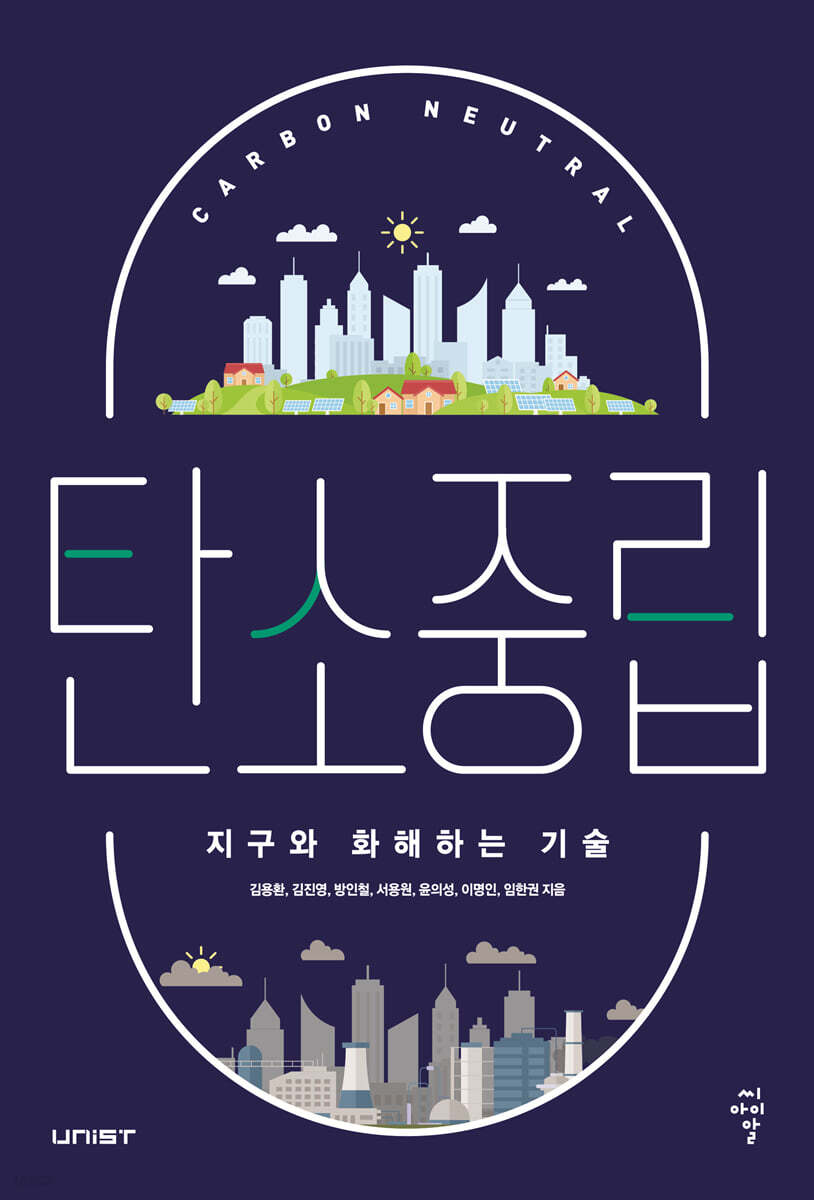
"Carbon Neutrality: Technology for Reconciliation with the Earth" is a book designed to introduce and explain the severity of the climate crisis and the excellent research UNIST has been conducting on carbon neutrality.
Chapter 1 addresses the crisis caused by climate change and responses, while Chapter 2 introduces research and development related to hydrogen energy.
Chapter 3 introduces research and development related to solar energy, Chapter 4 introduces research and development related to next-generation nuclear energy, and Chapter 5 introduces the concept of a virtuous carbon cycle that converts bad carbon into good carbon and covers research and development to promote it.
This could serve as a milestone for examining the direction science and technology should take to achieve "carbon neutrality," one of our generation's greatest challenges for the next generation, and the role UNIST's technologies can play in this process.
Chapter 1 addresses the crisis caused by climate change and responses, while Chapter 2 introduces research and development related to hydrogen energy.
Chapter 3 introduces research and development related to solar energy, Chapter 4 introduces research and development related to next-generation nuclear energy, and Chapter 5 introduces the concept of a virtuous carbon cycle that converts bad carbon into good carbon and covers research and development to promote it.
This could serve as a milestone for examining the direction science and technology should take to achieve "carbon neutrality," one of our generation's greatest challenges for the next generation, and the role UNIST's technologies can play in this process.
index
CHAPTER 1: THE CLIMATE CRISIS AND CARBON NEUTRALITY
Climate change and crisis
New Economic Order
Current Status and Outlook of Domestic Carbon Emissions
Future outlook for our economy and society
CHAPTER 2 HYDROGEN ENERGY
Why hydrogen energy?
Hydrogen energy core technology
Measures for entering a hydrogen energy society
UNIST Research Status in the Field of Hydrogen Energy
Hydrogen Energy and Carbon Neutrality
CHAPTER 3 SOLAR ENERGY
The sun, the source of life and energy
Core solar energy technologies
How can we overcome the limitations of solar energy supply?
UNIST Research Status in the Field of Solar Energy
Solar energy and carbon neutrality
CHAPTER 4 Next-Generation Nuclear Energy
nuclear fusion energy
Nuclear fission and nuclear fusion
Nuclear fusion energy core technology
Nuclear fusion research: A 30-year secret
UNIST Research Status in the Field of Nuclear Fusion Energy
small modular reactor (SMR)
Small modular reactors and large nuclear power plants
Small modular reactor core technology
Issues in the field of small modular reactors
UNIST Research Status in the Field of Small Modular Reactors
Next-Generation Nuclear Energy and Carbon Neutrality
CHAPTER 5 Carbon Cycle
A virtuous carbon cycle that turns bad carbon into good carbon
Carbon virtuous cycle core technology
Issues in the field of carbon circulation
UNIST Research Status in the Field of Carbon Cycle
Carbon cycle and carbon neutrality
Climate change and crisis
New Economic Order
Current Status and Outlook of Domestic Carbon Emissions
Future outlook for our economy and society
CHAPTER 2 HYDROGEN ENERGY
Why hydrogen energy?
Hydrogen energy core technology
Measures for entering a hydrogen energy society
UNIST Research Status in the Field of Hydrogen Energy
Hydrogen Energy and Carbon Neutrality
CHAPTER 3 SOLAR ENERGY
The sun, the source of life and energy
Core solar energy technologies
How can we overcome the limitations of solar energy supply?
UNIST Research Status in the Field of Solar Energy
Solar energy and carbon neutrality
CHAPTER 4 Next-Generation Nuclear Energy
nuclear fusion energy
Nuclear fission and nuclear fusion
Nuclear fusion energy core technology
Nuclear fusion research: A 30-year secret
UNIST Research Status in the Field of Nuclear Fusion Energy
small modular reactor (SMR)
Small modular reactors and large nuclear power plants
Small modular reactor core technology
Issues in the field of small modular reactors
UNIST Research Status in the Field of Small Modular Reactors
Next-Generation Nuclear Energy and Carbon Neutrality
CHAPTER 5 Carbon Cycle
A virtuous carbon cycle that turns bad carbon into good carbon
Carbon virtuous cycle core technology
Issues in the field of carbon circulation
UNIST Research Status in the Field of Carbon Cycle
Carbon cycle and carbon neutrality
Publisher's Review
Covering various research and development activities for a virtuous carbon cycle
As of 2021, the first year of the new climate regime, carbon neutrality has emerged as a global topic.
Numerous opinions have emerged on how to achieve carbon neutrality, each attempting to convince the world with their own logic.
Carbon neutrality.
This is the first step of a goal that the world promised to achieve by 2050 in Paris in 2015, which aims to reduce carbon emissions to zero by matching the amount of carbon emitted with the amount of carbon absorbed.
This book begins with a general discussion of the climate crisis and then introduces research on eco-friendly, carbon-free energy.
Hydrogen energy, solar energy, and next-generation nuclear energy are the main characters.
After examining these future energies, we also cover the current status of various research and development efforts for a virtuous carbon cycle.
This book does not present a roadmap for achieving carbon neutrality.
However, I believe this can serve as a milestone for examining the direction science and technology should take to achieve "carbon neutrality," one of our generation's greatest challenges for the next generation, and the role UNIST's technologies can play in this process.
Chapter 1 covers the crisis caused by climate change and responses.
Chapter 2 introduces research and development related to hydrogen energy.
Chapter 3 introduces research and development related to solar energy.
Chapter 4 introduces research and development related to next-generation nuclear energy.
Chapter 5 introduces the concept of a virtuous carbon cycle, which transforms bad carbon into good carbon, and introduces research and development to promote it.
I hope that readers will learn more about carbon neutrality and think about it more deeply while reading this book.
As of 2021, the first year of the new climate regime, carbon neutrality has emerged as a global topic.
Numerous opinions have emerged on how to achieve carbon neutrality, each attempting to convince the world with their own logic.
Carbon neutrality.
This is the first step of a goal that the world promised to achieve by 2050 in Paris in 2015, which aims to reduce carbon emissions to zero by matching the amount of carbon emitted with the amount of carbon absorbed.
This book begins with a general discussion of the climate crisis and then introduces research on eco-friendly, carbon-free energy.
Hydrogen energy, solar energy, and next-generation nuclear energy are the main characters.
After examining these future energies, we also cover the current status of various research and development efforts for a virtuous carbon cycle.
This book does not present a roadmap for achieving carbon neutrality.
However, I believe this can serve as a milestone for examining the direction science and technology should take to achieve "carbon neutrality," one of our generation's greatest challenges for the next generation, and the role UNIST's technologies can play in this process.
Chapter 1 covers the crisis caused by climate change and responses.
Chapter 2 introduces research and development related to hydrogen energy.
Chapter 3 introduces research and development related to solar energy.
Chapter 4 introduces research and development related to next-generation nuclear energy.
Chapter 5 introduces the concept of a virtuous carbon cycle, which transforms bad carbon into good carbon, and introduces research and development to promote it.
I hope that readers will learn more about carbon neutrality and think about it more deeply while reading this book.
GOODS SPECIFICS
- Publication date: June 25, 2021
- Page count, weight, size: 388 pages | 286g | 153*224*23mm
- ISBN13: 9791156109839
- ISBN10: 1156109833
You may also like
카테고리
korean


korean

![GQ KOREA Mark (Monthly): December [2025]](http://librairie.coreenne.fr/cdn/shop/files/8ef265dbbfbf186523ed75ba7319009d.jpg?v=1765340328&width=3840)


