

The Soul of Food: All About Fermentation
 |
Description
Book Introduction
The Bible of Fermentation Written by the 'King of Fermentation'
A compilation of the science and culture of fermentation based on 'microbiology' and 'experience and oral tradition'!
From the revival of fermented foods to the exploration of sustainable civilization.
"The Soul of Food, Everything About Fermentation" is a bible on fermentation, with over 900 pages filled with fermentation-related content.
Author Sander Elix Katz is one of today's leading fermentation experts and has led the revival of fermentation culture, conducting hundreds of workshops across the United States and around the world.
He emerged as an authority in the field in 2003 with the publication of 『Natural Fermentation』, and in 2012, he received praise from the New York Times for decorating a page of American food history with 『The Soul of Food: All About Fermentation』, and won the James Beard Award, known as the Oscar of the restaurant industry.
A compilation of the science and culture of fermentation based on 'microbiology' and 'experience and oral tradition'!
From the revival of fermented foods to the exploration of sustainable civilization.
"The Soul of Food, Everything About Fermentation" is a bible on fermentation, with over 900 pages filled with fermentation-related content.
Author Sander Elix Katz is one of today's leading fermentation experts and has led the revival of fermentation culture, conducting hundreds of workshops across the United States and around the world.
He emerged as an authority in the field in 2003 with the publication of 『Natural Fermentation』, and in 2012, he received praise from the New York Times for decorating a page of American food history with 『The Soul of Food: All About Fermentation』, and won the James Beard Award, known as the Oscar of the restaurant industry.
- You can preview some of the book's contents.
Preview
index
Recommendation by Michael Pollan
preface
Chapter 1: The Resonant Power of Fermentation
Bacteria: Our Ancestors and Co-Evolving Companions | Fermentation and Culture | Fermentation and Coevolution | The Natural Phenomenon of Fermentation | The War on Bacteria | The Spirit of Loving Life
Chapter 2: Benefits of Fermentation
The Benefits and Limitations of Preservation | Fermented Foods for Health | Energy-Saving Fermented Foods | The Sublime Flavor of Fermented Foods
Chapter 3 Basic Concepts and Tools
Substrates and microbial communities | Natural fermenters versus starters | Selective environments | Evolution and continuity of microbial communities | Cleanliness and hygiene | Cross-contamination | Water | Salt | Darkness and sunlight | Fermentation vessels | Glass bottle fermentation | Jar fermentation | Jar lids | Jar shapes | Metal fermentation vessels | Plastic fermentation vessels | Wooden fermentation vessels | Canoa | Gourd or berry fermentation vessels | Baskets | Pit fermentation | Pickle press | Slicing tools | Beaters | Alcohol fermentation vessels and airlocks | Siphons and racking | Bottling | Hydrometer | Thermometer | Apple and grape presses | Grain mills | Steamers | Incubation chambers | Maturation chambers | Temperature controllers | Masking tape and permanent markers
Chapter 4: Alcoholic Fermentation of Sugars: Mead, Wine, and Cider
Yeast | Simple meads | Botanical meads: Tez and Balche | Fruit meads and flower petal meads | Refreshing vs. bold | Continuous fermentation with starter cultures | Herbal meads of immortality | Grape wines | Cider and pear wines | Sugar-based fruit wines | Alcoholic beverages using other sweeteners | Fermented fruit salads | Plant sap | Carbonation of alcoholic beverages | Mixing various ingredients together | Troubleshooting
Chapter 5 Fermentation of Vegetables (Including Some Fruits)
Lactic acid bacteria | Vitamin C and fermented vegetables | The basics of kraut-chee | Chopping | Salt: To salt or to soak? | Pounding or pressing vegetables (or soaking them in brine) | Storage | How long to ferment? | Mold and yeast | Which vegetables to ferment? | Seasoning | Sauerkraut | Kimchi | Chinese pickles | Indian fermented vegetables | Fermenting hot sauces, relishes, salsas, chutneys, and more | Gundrug and shinki in the Himalayas | Precautions when fermenting vegetables without salt | Pickling in brine | Sour pickles | Pickling mushrooms | Pickling olives | Dilly beans | Lactic acid fermentation of fruits | Kawal | Fermenting vegetables with starters | Liquid fermented vegetables: beet or lettuce kvass, aged cabbage juice, kaanji, shalgam suyu | Tsukemono: Japanese pickles | Dishes made with fermented vegetables | Rapet (fermented tea leaves) | Problem solving
Chapter 6: Sour Health Drinks
Carbonation | Making ginger beer with ginger syrup | Kvass | Tepache and Aluá | Mavi/Mauvi | Water kefir (or tibicos) | Whey starter | Root beer | Fru | Sweet potato fries | For creative flavors and aromas | Smreka | Noni | Kombucha: panacea or dangerous substance? | Making kombucha | Kombucha candy: Nata | Jun | Vinegar | Shrub | Problem solving
Chapter 7 Fermentation of Milk
Yogurt | Kefir | Billy | Other Milk Ferments | Plant-Based Milk Ferments | Crème Fraîche, Butter, Buttermilk | Whey | Cheese | Factory Cheese vs. Farm Cheese | Non-Dairy Milk, Yogurt, and Cheese | Problem Solving
Chapter 8 Fermentation of Grains and Underground Crops
Familiar Patterns | Soaking | Sprouting | Rejuvlac | Porridge | Fermented Oatmeal | Grits/Polenta | Atole Agrio | Millet Porridge | Millet Porridge | Rice Porridge | Porridge with Stale Bread | Potato Porridge | Foy | Cassava | South American Cassava Bread | Fermenting Potatoes | Sourdough: Fermentation and Preservation | Flatbreads/Pancakes | Sourdough Bread | Sour Rye Porridge (Zour) | Sierra Rice | Hopper/Apam | Kisk and Kekek El Pokhara | Fermenting Grains with Other Foods | Fermenting Leftover Grains (or Underground Crops) | Troubleshooting
Chapter 9: Alcoholic beverages made from grains, such as beer
Natural yeast beer | Tesguino | Sorghum beer | Merissa (a Sudanese beer made from roasted sorghum) | Asian rice-based drinks | Basic rice beer | Sweet potato makgeolli | Joe Tongba | Sake | Barley sprouts | Opaque barley beer | Cassava and potato beers | Beers made from chewed potatoes | Beyond hops: beers made with other herbs and plant-based additives | Distillation
Chapter 10 Growing Mold
Mold Culture Lab | Making Tempeh | Cooking Tempeh | Propagating Tempeh Seeds | Making Koji | Amazake | Plant-Based Sources of Mold | Troubleshooting
Chapter 11 Fermentation of Legumes, Seeds, and Nuts
Cheeses, pâtés, and milk made from seeds or nuts | Acorns | Coconut oil | Fermentation of cacao, coffee, and vanilla | Natural fermentation of legumes | Idli/dosa/dhokla/kaman | Akaraje (fermented black-eyed pea fritters eaten by Afro-Brazilians) | Soybeans | Miso | Uses of miso | Soy sauce | Fermented soybean “nuggets”: amanatto and douchi | Natto | West African fermented seeds such as dawadawa | Fermenting tofu | Problem solving
Chapter 12 Fermentation of Meat, Fish, and Eggs
Drying, salting, smoking, and curing | The basics of dry curing | Pickling: corned beef and beef tongue | Dry-cured sausages | Fish sauce | Jeotgal (fermented seafood) | Fish fermented with grains | Burong isuda and balao-balao in the Philippines | Narezushi in Japan | Fish and meat fermented with whey, sauerkraut, and kimchi | Fermenting eggs | Cod liver oil | Burying | Spoiled meat | The ethics of meat and fish
Chapter 13: Considerations for Commercialization
Consistency | First Step | Business Expansion | Relevant Laws, Regulations, and Permits | Other Business Models: Farm-Based Business, Diversification, and Specialization
Chapter 14 Fermentation in Non-Food Industries
Agriculture | Biological environmental remediation | Waste disposal | Body disposal | Textiles and construction | Energy production | Healthcare | Fermentation for skin care and aromatherapy | Fermentation art
Epilogue: Declaration of the Fermentation Culture Revival Movement
Relationships with plants and animals | Relationships with farmers and producers | Relationships with ancestors | Relationships with mystery | Relationships with community | Relationships with resistance movements | Relationships with objects
Acknowledgements
Glossary of Terms
annotation
References
preface
Chapter 1: The Resonant Power of Fermentation
Bacteria: Our Ancestors and Co-Evolving Companions | Fermentation and Culture | Fermentation and Coevolution | The Natural Phenomenon of Fermentation | The War on Bacteria | The Spirit of Loving Life
Chapter 2: Benefits of Fermentation
The Benefits and Limitations of Preservation | Fermented Foods for Health | Energy-Saving Fermented Foods | The Sublime Flavor of Fermented Foods
Chapter 3 Basic Concepts and Tools
Substrates and microbial communities | Natural fermenters versus starters | Selective environments | Evolution and continuity of microbial communities | Cleanliness and hygiene | Cross-contamination | Water | Salt | Darkness and sunlight | Fermentation vessels | Glass bottle fermentation | Jar fermentation | Jar lids | Jar shapes | Metal fermentation vessels | Plastic fermentation vessels | Wooden fermentation vessels | Canoa | Gourd or berry fermentation vessels | Baskets | Pit fermentation | Pickle press | Slicing tools | Beaters | Alcohol fermentation vessels and airlocks | Siphons and racking | Bottling | Hydrometer | Thermometer | Apple and grape presses | Grain mills | Steamers | Incubation chambers | Maturation chambers | Temperature controllers | Masking tape and permanent markers
Chapter 4: Alcoholic Fermentation of Sugars: Mead, Wine, and Cider
Yeast | Simple meads | Botanical meads: Tez and Balche | Fruit meads and flower petal meads | Refreshing vs. bold | Continuous fermentation with starter cultures | Herbal meads of immortality | Grape wines | Cider and pear wines | Sugar-based fruit wines | Alcoholic beverages using other sweeteners | Fermented fruit salads | Plant sap | Carbonation of alcoholic beverages | Mixing various ingredients together | Troubleshooting
Chapter 5 Fermentation of Vegetables (Including Some Fruits)
Lactic acid bacteria | Vitamin C and fermented vegetables | The basics of kraut-chee | Chopping | Salt: To salt or to soak? | Pounding or pressing vegetables (or soaking them in brine) | Storage | How long to ferment? | Mold and yeast | Which vegetables to ferment? | Seasoning | Sauerkraut | Kimchi | Chinese pickles | Indian fermented vegetables | Fermenting hot sauces, relishes, salsas, chutneys, and more | Gundrug and shinki in the Himalayas | Precautions when fermenting vegetables without salt | Pickling in brine | Sour pickles | Pickling mushrooms | Pickling olives | Dilly beans | Lactic acid fermentation of fruits | Kawal | Fermenting vegetables with starters | Liquid fermented vegetables: beet or lettuce kvass, aged cabbage juice, kaanji, shalgam suyu | Tsukemono: Japanese pickles | Dishes made with fermented vegetables | Rapet (fermented tea leaves) | Problem solving
Chapter 6: Sour Health Drinks
Carbonation | Making ginger beer with ginger syrup | Kvass | Tepache and Aluá | Mavi/Mauvi | Water kefir (or tibicos) | Whey starter | Root beer | Fru | Sweet potato fries | For creative flavors and aromas | Smreka | Noni | Kombucha: panacea or dangerous substance? | Making kombucha | Kombucha candy: Nata | Jun | Vinegar | Shrub | Problem solving
Chapter 7 Fermentation of Milk
Yogurt | Kefir | Billy | Other Milk Ferments | Plant-Based Milk Ferments | Crème Fraîche, Butter, Buttermilk | Whey | Cheese | Factory Cheese vs. Farm Cheese | Non-Dairy Milk, Yogurt, and Cheese | Problem Solving
Chapter 8 Fermentation of Grains and Underground Crops
Familiar Patterns | Soaking | Sprouting | Rejuvlac | Porridge | Fermented Oatmeal | Grits/Polenta | Atole Agrio | Millet Porridge | Millet Porridge | Rice Porridge | Porridge with Stale Bread | Potato Porridge | Foy | Cassava | South American Cassava Bread | Fermenting Potatoes | Sourdough: Fermentation and Preservation | Flatbreads/Pancakes | Sourdough Bread | Sour Rye Porridge (Zour) | Sierra Rice | Hopper/Apam | Kisk and Kekek El Pokhara | Fermenting Grains with Other Foods | Fermenting Leftover Grains (or Underground Crops) | Troubleshooting
Chapter 9: Alcoholic beverages made from grains, such as beer
Natural yeast beer | Tesguino | Sorghum beer | Merissa (a Sudanese beer made from roasted sorghum) | Asian rice-based drinks | Basic rice beer | Sweet potato makgeolli | Joe Tongba | Sake | Barley sprouts | Opaque barley beer | Cassava and potato beers | Beers made from chewed potatoes | Beyond hops: beers made with other herbs and plant-based additives | Distillation
Chapter 10 Growing Mold
Mold Culture Lab | Making Tempeh | Cooking Tempeh | Propagating Tempeh Seeds | Making Koji | Amazake | Plant-Based Sources of Mold | Troubleshooting
Chapter 11 Fermentation of Legumes, Seeds, and Nuts
Cheeses, pâtés, and milk made from seeds or nuts | Acorns | Coconut oil | Fermentation of cacao, coffee, and vanilla | Natural fermentation of legumes | Idli/dosa/dhokla/kaman | Akaraje (fermented black-eyed pea fritters eaten by Afro-Brazilians) | Soybeans | Miso | Uses of miso | Soy sauce | Fermented soybean “nuggets”: amanatto and douchi | Natto | West African fermented seeds such as dawadawa | Fermenting tofu | Problem solving
Chapter 12 Fermentation of Meat, Fish, and Eggs
Drying, salting, smoking, and curing | The basics of dry curing | Pickling: corned beef and beef tongue | Dry-cured sausages | Fish sauce | Jeotgal (fermented seafood) | Fish fermented with grains | Burong isuda and balao-balao in the Philippines | Narezushi in Japan | Fish and meat fermented with whey, sauerkraut, and kimchi | Fermenting eggs | Cod liver oil | Burying | Spoiled meat | The ethics of meat and fish
Chapter 13: Considerations for Commercialization
Consistency | First Step | Business Expansion | Relevant Laws, Regulations, and Permits | Other Business Models: Farm-Based Business, Diversification, and Specialization
Chapter 14 Fermentation in Non-Food Industries
Agriculture | Biological environmental remediation | Waste disposal | Body disposal | Textiles and construction | Energy production | Healthcare | Fermentation for skin care and aromatherapy | Fermentation art
Epilogue: Declaration of the Fermentation Culture Revival Movement
Relationships with plants and animals | Relationships with farmers and producers | Relationships with ancestors | Relationships with mystery | Relationships with community | Relationships with resistance movements | Relationships with objects
Acknowledgements
Glossary of Terms
annotation
References
Detailed image
Into the book
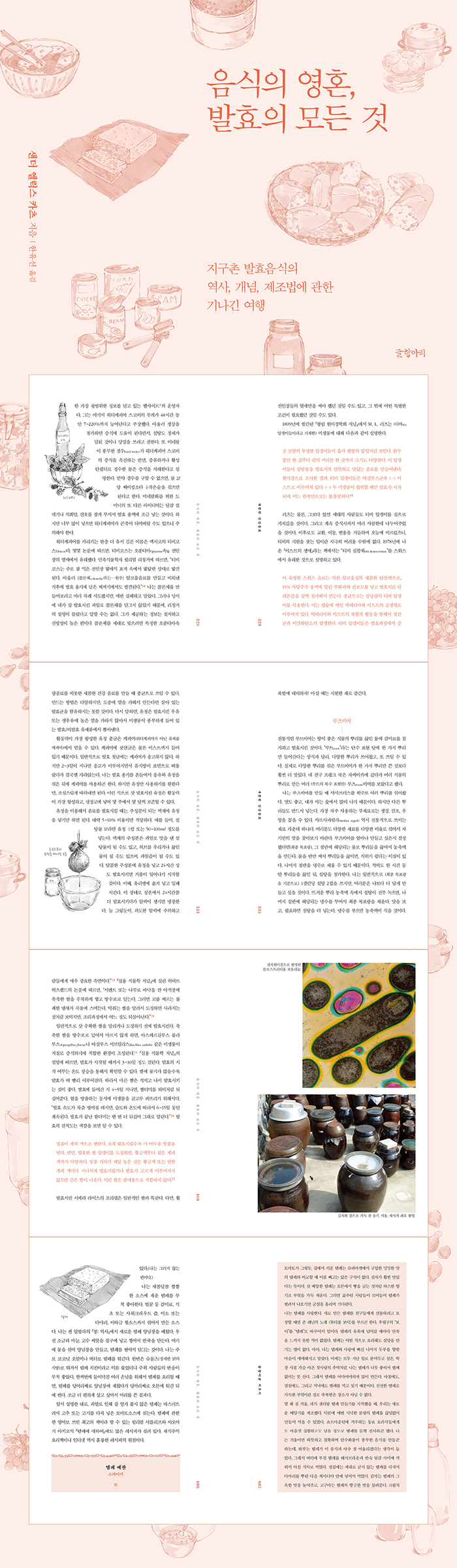
Pickle recipes from Eastern Europeans often call for floating a slice of rye bread in brine.
Ira Wise, who loves pickles like I do, grew up on Manhattan's Lower East Side in the 1950s.
There was a time when I would come across a street vendor selling pickles every three times I crossed the street.
He recalls that his Hungarian-born mother would float a slice of rye bread in the brine when she made pickles.
However, after numerous experiments, Ire concluded that adding rye bread had no significant effect on the final result, and decided not to continue the tradition.
--- Page 266
The main ingredient of kvass is bread.
Usually, bread that has been aged for a long time and has dried out hard is used.
Once the bread is completely dry, place it in a jar or pot and add some dried herbs such as mint.
Then pour in enough boiling water to cover the contents.
Cover the mouth with a cloth to prevent flies from entering and wait overnight.
The next morning, take out the loaves of bread and squeeze out the liquid.
Next, place a sieve on top and place several layers of cheesecloth over it to finish the process.
When the kvass starts to foam, it's time to bottle it.
The finished kvass can be enjoyed as a refreshing carbonated drink, or made into a cool soup in the summer, like okroshka.
--- Pages 317-319
Crème fraîche is made with only cream and fermented for a day or two.
It's thick, rich in flavor and very smooth.
Most recipes these days call for adding a little buttermilk to the cream as a starter.
This is true if you use pasteurized cream.
However, if it is whipped cream, there is no need to add fermentation bacteria.
Place in a warm pot and let it ferment for about 24 hours. Once it becomes thick, transfer it to the refrigerator.
It will thicken and taste better in the refrigerator.
Enjoy it as a sauce, soup, or dessert.
Ira Wise, who loves pickles like I do, grew up on Manhattan's Lower East Side in the 1950s.
There was a time when I would come across a street vendor selling pickles every three times I crossed the street.
He recalls that his Hungarian-born mother would float a slice of rye bread in the brine when she made pickles.
However, after numerous experiments, Ire concluded that adding rye bread had no significant effect on the final result, and decided not to continue the tradition.
--- Page 266
The main ingredient of kvass is bread.
Usually, bread that has been aged for a long time and has dried out hard is used.
Once the bread is completely dry, place it in a jar or pot and add some dried herbs such as mint.
Then pour in enough boiling water to cover the contents.
Cover the mouth with a cloth to prevent flies from entering and wait overnight.
The next morning, take out the loaves of bread and squeeze out the liquid.
Next, place a sieve on top and place several layers of cheesecloth over it to finish the process.
When the kvass starts to foam, it's time to bottle it.
The finished kvass can be enjoyed as a refreshing carbonated drink, or made into a cool soup in the summer, like okroshka.
--- Pages 317-319
Crème fraîche is made with only cream and fermented for a day or two.
It's thick, rich in flavor and very smooth.
Most recipes these days call for adding a little buttermilk to the cream as a starter.
This is true if you use pasteurized cream.
However, if it is whipped cream, there is no need to add fermentation bacteria.
Place in a warm pot and let it ferment for about 24 hours. Once it becomes thick, transfer it to the refrigerator.
It will thicken and taste better in the refrigerator.
Enjoy it as a sauce, soup, or dessert.
--- Page 402
Publisher's Review
The Bible of Fermentation Written by the 'King of Fermentation'
A compilation of the science and culture of fermentation based on 'microbiology' and 'experience and oral tradition'!
From the revival of fermented foods to the exploration of sustainable civilization.
"The Soul of Food, Everything About Fermentation" is a bible on fermentation, with over 900 pages filled with fermentation-related content.
Author Sander Elix Katz is one of today's leading fermentation experts and has led the revival of fermentation culture, conducting hundreds of workshops across the United States and around the world.
He emerged as an authority in the field in 2003 with the publication of 『Natural Fermentation』, and in 2012, he received praise from the New York Times for decorating a page of American food history with 『The Soul of Food: All About Fermentation』, and won the James Beard Award, known as the Oscar of the restaurant industry.
A Complete Guide to Fermented Foods from a James Beard Award-Winning Author
This book is considered the first guide to fully compile the entirety of fermentation, more comprehensive and detailed than any other book published to date.
The author graduated from Brown University and lived in New York until 1993, when he settled in a rural town in Canon County, Tennessee, where there was no electricity. He was captivated by the taste of his first homemade sauerkraut and became deeply immersed in the world of fermentation.
He provides simple and easy methods for making sauerkraut and yogurt, and kindly guides readers to a proper understanding of much more advanced fermentation methods.
By following the guide, you can thoroughly understand the history, concept, and manufacturing process of fermentation.
You'll also be surprised at how many fermented foods exist in different parts of the world.
In addition, the author meticulously explains the fermentation process and techniques of various vegetables, alcohol, carbonated beverages, milk, various grains and underground crops, beer, beans, seeds, fish, meat, eggs, and the process of cultivating mold, as well as the role of fermentation in agriculture, art, energy production, and commerce.
The author has written this book by focusing on the types of fermentation, especially the fermentation techniques.
The first three chapters examine the context of fermentation in terms of its development, practical benefits, and basic concepts.
Chapter 4 begins with alcoholic fermentation (honey, wine, and apple), and then moves on to the fermentation of vegetables (fruits), sour health drinks, milk, grains and underground crops, alcoholic beverages made from grains such as beer, fermentation of beans, seeds, and nuts, and fermentation of meat, fish, and eggs.
The final few chapters outline some considerations for those considering turning their passion for fermentation into a business, and address the application of fermentation beyond food.
This book is written with a focus on the fermentation process, so it differs from the typical cookbook format that introduces recipes.
Because the recipe was intended to explain the concept itself, which has broad applications, rather than detailed recipes, it presented general proportions and the degree to which variables affect the manufacturing process, and focused more on explaining what to do at each fermentation stage and why.
Fermentation is much more dynamic and variable than cooking.
Because we have to cooperate with other living beings.
The author argues that the method and reasons for this collaboration, which can sometimes be complex, are far more important than the quantities or proportions of additives, which can vary depending on the recipe or tradition.
The nearly infinite variety of fermented foods
The author has long had the privilege of tasting a variety of homemade fermented foods, including "masterpieces" created by artisans, and hearing amazing stories.
Many people I met at the lecture told stories about fermented foods passed down through generations, immigrants passionately described the fermented foods they enjoyed in their home countries, and travelers shared the tastes of fermented foods they had experienced.
There were also experimenters who shared recipes they had discovered themselves.
There were also countless instances of people sharing stories of when they encountered difficulties.
This allowed me to write this book after experiencing and reflecting on the various 'variations' that individuals inevitably encounter when making fermented foods themselves.
In conclusion, this book is the result of the author's comprehensive collection of wisdom on fermentation.
In Bakhtin's terms, the "polyphony" created by the resonance of many voices resonates throughout the book, and while it covers all aspects of fermentation, it is far from an encyclopedia; it is also philosophical and literary, which is the charm of this book.
The fermentation process itself resembles the book.
What is fermentation?: Fermentation created humans.
It's important to recognize that fermentation is a natural phenomenon that affects much more than just the foods we eat, the authors say.
For example, even the cells in our bodies have the ability to ferment.
In other words, it is more accurate to say that man did not first invent fermentation, but that fermentation created man.
Fermentation is a symbiotic relationship and coevolution.
For the two billion years since life first appeared on Earth, bacteria have constantly transformed the planet's surface and atmosphere, creating the chemical systems essential for all life.
And a symbiotic relationship developed between the bacteria involved in fermentation and early single-celled life forms.
The prey (bacteria) developed resistance to aerobic predators, and thus were able to survive in the bodies of predators where there was plenty of food.
The two types of organisms utilized each other's metabolic products.
When the prey reproduced without causing problems inside the cells they had invaded, the predators also gave up their independent survival method and chose eternal symbiosis.
Many biologists are convinced that a symbiotic relationship between bacteria involved in fermentation and other early single-celled organisms gave rise to the first eukaryotic cells that make up plants, animals, and fungi.
The symbiotic origin of countless bacterial genes played a crucial role in enriching the limited metabolic potential of eukaryotes.
Because it accelerates and promotes adaptation to a level far greater than could be achieved through unexpected mutations alone.
Human reproduction also requires fermentation.
A mysterious glycogen has been discovered in a woman's vagina that helps a colony of indigenous bacteria called lactobacilli.
Lactic acid bacteria ferment this glycogen into lactic acid, protecting the vagina from invasion by pathogenic bacteria.
From this alone, we can guess how widespread fermentation is as a living phenomenon.
Benefits of fermentation: preservation, health, energy saving, taste
Fermentation can extend the life of food in a variety of ways.
First, the microbes we cultivate dominate the food, inhibiting or driving out the growth of countless other bacteria.
It reduces the possibility of pathogenic microorganisms growing, preserves food to a significant degree before harvest and consumption, and increases nutritional value while changing the taste of the components.
Preservation through acidification applies to all kinds of fermented foods eaten by people around the world, including vinegar, pickles, sauerkraut, kimchi, yogurt, cheese, and salami.
Recently, it has been revealed that a significant number of diseases are caused by bacterial contamination of raw vegetables.
Therefore, I think it is correct to say that fermented foods are safer than raw foods.
During the fermentation process, even when the raw materials are contaminated, acidifying bacteria are specially adapted to the nutrient-rich environment and hold on by secreting protective substances including acids, forcing toxic bacteria to fight hard for survival.
In these environments, foodborne pathogens such as salmonella, E. coli, listeria, and tetanus ultimately cannot survive.
Fermented foods are generally nutritious and easily digestible.
Fermentation transforms food into a digestible state, making nutrients more biologically available to the human body.
It also creates new nutrients or removes harmful substances or toxins.
Fermented foods contain bacteria that actively produce lactic acid, which is very beneficial for overall health, including digestive and immune functions.
Gut bacteria also influence immune responses in other distant organs.
“Commensal microbes play a crucial role in modulating the immune response of the respiratory mucosa, particularly in relation to the “productive immune response of the lungs” in response to influenza virus infection.” This means that if the potential of gut bacteria is enhanced by bacteria present in food (including probiotic supplements), the impact on human health could be much broader and more profound.
Fermentation, Culture, and the Rebirth of Community
As the author continued to explore and contemplate fermentation, there was one word that kept popping up.
That's what culture is.
Fermentation is linked to culture in countless ways, as is the multifaceted meaning of this important word, from the microbiological meaning of 'bacterial cultivation' to the much broader meaning of 'culture'.
The starter bacteria added to milk to ferment yogurt are called cultures.
At the same time, everything that humanity wishes to pass on to future generations, including language, music, art, literature, science, religion, and even crop cultivation and cooking methods, is collectively called culture.
In fact, the word culture comes from the Latin word colere, the noun form cultura, which means “to cultivate.”
The act of humans cultivating the land and the beings that gained life through it (plants, animals, fungi, bacteria, etc.) are inevitably the core elements of culture.
Therefore, the act of growing one's own food and cooking it with one's own hands becomes a means of cultural recovery that breaks down the social structure that defines individuals as childlike, dependent consumers and allows them to regain their dignity and power as producers and creators.
The revival of fermented foods signifies the revival of community.
This means that people are encouraged to cooperate economically through the division and specialization of labor.
Simply put, let's figure out what crops are available in our neighborhood, make fermented foods with them, and share them with our neighbors.
Transporting something around the world requires enormous resources.
This causes great harm to the environment.
Food imported from overseas can offer a thrilling taste.
But from the perspective of a full life, it is inappropriate and destructive.
Most of the world's food comes from vast monocultures that destroy forests and sacrifice subsistence crop diversity.
Moreover, our total dependence on the global trade system has left us extremely vulnerable to various threats, including natural disasters and resource depletion.
Fermentation could be an important lever for economic revival.
Food localization means reforming agriculture and, more broadly, the process of preserving agricultural products by transforming them into what we eat and drink every day, such as bread, cheese, and beer.
By participating in the local food production and consumption process, we can actively create a vital resource that meets almost all of our basic daily needs.
Natural fermentation and culture fermentation
The fermentation process generally means controlling environmental conditions to keep desired microorganisms alive and suppress unwanted microorganisms.
For example, a head of cabbage doesn't automatically become sauerkraut.
Cabbage, or any vegetable for that matter, if left at room temperature, will eventually develop a black mold on its surface.
If left alone for any longer, these oxygen-loving microbes will turn a head of cabbage into an ugly slime that bears no resemblance to the crisp, sweet-and-sour sauerkraut.
All vegetables are home to countless microorganisms, including lactic acid bacteria and mold.
To create an environment that produces delicious sauerkraut rather than a sticky, slimy substance, the cabbage must be submerged in liquid to prevent it from coming into contact with oxygen.
Most fermented foods are made using this simple method.
When making sauerkraut, it is common to rely on bacteria that naturally live in raw vegetables such as cabbage.
This method of fermenting using microorganisms present in the material itself or in the surrounding environment is called natural fermentation.
The opposite fermentation method is called culture, which triggers fermentation by supplying a separate microorganism or a group of microorganisms as a substrate from outside.
Most starter cultures, called yeast, leaven, or yeast, have a simple role: to inject small amounts of active, mature enzymes into the fresh nutrients of the raw ingredients.
Yogurt and sauerkraut are also made this way.
This is technically called backsloping.
People expected that starter cultures would produce the same results as natural fermentation bacteria, which naturally produce satisfactory changes, and after numerous trials, they discovered the optimal conditions and also developed techniques for long-term preservation of fermented foods made in this way.
A compilation of the science and culture of fermentation based on 'microbiology' and 'experience and oral tradition'!
From the revival of fermented foods to the exploration of sustainable civilization.
"The Soul of Food, Everything About Fermentation" is a bible on fermentation, with over 900 pages filled with fermentation-related content.
Author Sander Elix Katz is one of today's leading fermentation experts and has led the revival of fermentation culture, conducting hundreds of workshops across the United States and around the world.
He emerged as an authority in the field in 2003 with the publication of 『Natural Fermentation』, and in 2012, he received praise from the New York Times for decorating a page of American food history with 『The Soul of Food: All About Fermentation』, and won the James Beard Award, known as the Oscar of the restaurant industry.
A Complete Guide to Fermented Foods from a James Beard Award-Winning Author
This book is considered the first guide to fully compile the entirety of fermentation, more comprehensive and detailed than any other book published to date.
The author graduated from Brown University and lived in New York until 1993, when he settled in a rural town in Canon County, Tennessee, where there was no electricity. He was captivated by the taste of his first homemade sauerkraut and became deeply immersed in the world of fermentation.
He provides simple and easy methods for making sauerkraut and yogurt, and kindly guides readers to a proper understanding of much more advanced fermentation methods.
By following the guide, you can thoroughly understand the history, concept, and manufacturing process of fermentation.
You'll also be surprised at how many fermented foods exist in different parts of the world.
In addition, the author meticulously explains the fermentation process and techniques of various vegetables, alcohol, carbonated beverages, milk, various grains and underground crops, beer, beans, seeds, fish, meat, eggs, and the process of cultivating mold, as well as the role of fermentation in agriculture, art, energy production, and commerce.
The author has written this book by focusing on the types of fermentation, especially the fermentation techniques.
The first three chapters examine the context of fermentation in terms of its development, practical benefits, and basic concepts.
Chapter 4 begins with alcoholic fermentation (honey, wine, and apple), and then moves on to the fermentation of vegetables (fruits), sour health drinks, milk, grains and underground crops, alcoholic beverages made from grains such as beer, fermentation of beans, seeds, and nuts, and fermentation of meat, fish, and eggs.
The final few chapters outline some considerations for those considering turning their passion for fermentation into a business, and address the application of fermentation beyond food.
This book is written with a focus on the fermentation process, so it differs from the typical cookbook format that introduces recipes.
Because the recipe was intended to explain the concept itself, which has broad applications, rather than detailed recipes, it presented general proportions and the degree to which variables affect the manufacturing process, and focused more on explaining what to do at each fermentation stage and why.
Fermentation is much more dynamic and variable than cooking.
Because we have to cooperate with other living beings.
The author argues that the method and reasons for this collaboration, which can sometimes be complex, are far more important than the quantities or proportions of additives, which can vary depending on the recipe or tradition.
The nearly infinite variety of fermented foods
The author has long had the privilege of tasting a variety of homemade fermented foods, including "masterpieces" created by artisans, and hearing amazing stories.
Many people I met at the lecture told stories about fermented foods passed down through generations, immigrants passionately described the fermented foods they enjoyed in their home countries, and travelers shared the tastes of fermented foods they had experienced.
There were also experimenters who shared recipes they had discovered themselves.
There were also countless instances of people sharing stories of when they encountered difficulties.
This allowed me to write this book after experiencing and reflecting on the various 'variations' that individuals inevitably encounter when making fermented foods themselves.
In conclusion, this book is the result of the author's comprehensive collection of wisdom on fermentation.
In Bakhtin's terms, the "polyphony" created by the resonance of many voices resonates throughout the book, and while it covers all aspects of fermentation, it is far from an encyclopedia; it is also philosophical and literary, which is the charm of this book.
The fermentation process itself resembles the book.
What is fermentation?: Fermentation created humans.
It's important to recognize that fermentation is a natural phenomenon that affects much more than just the foods we eat, the authors say.
For example, even the cells in our bodies have the ability to ferment.
In other words, it is more accurate to say that man did not first invent fermentation, but that fermentation created man.
Fermentation is a symbiotic relationship and coevolution.
For the two billion years since life first appeared on Earth, bacteria have constantly transformed the planet's surface and atmosphere, creating the chemical systems essential for all life.
And a symbiotic relationship developed between the bacteria involved in fermentation and early single-celled life forms.
The prey (bacteria) developed resistance to aerobic predators, and thus were able to survive in the bodies of predators where there was plenty of food.
The two types of organisms utilized each other's metabolic products.
When the prey reproduced without causing problems inside the cells they had invaded, the predators also gave up their independent survival method and chose eternal symbiosis.
Many biologists are convinced that a symbiotic relationship between bacteria involved in fermentation and other early single-celled organisms gave rise to the first eukaryotic cells that make up plants, animals, and fungi.
The symbiotic origin of countless bacterial genes played a crucial role in enriching the limited metabolic potential of eukaryotes.
Because it accelerates and promotes adaptation to a level far greater than could be achieved through unexpected mutations alone.
Human reproduction also requires fermentation.
A mysterious glycogen has been discovered in a woman's vagina that helps a colony of indigenous bacteria called lactobacilli.
Lactic acid bacteria ferment this glycogen into lactic acid, protecting the vagina from invasion by pathogenic bacteria.
From this alone, we can guess how widespread fermentation is as a living phenomenon.
Benefits of fermentation: preservation, health, energy saving, taste
Fermentation can extend the life of food in a variety of ways.
First, the microbes we cultivate dominate the food, inhibiting or driving out the growth of countless other bacteria.
It reduces the possibility of pathogenic microorganisms growing, preserves food to a significant degree before harvest and consumption, and increases nutritional value while changing the taste of the components.
Preservation through acidification applies to all kinds of fermented foods eaten by people around the world, including vinegar, pickles, sauerkraut, kimchi, yogurt, cheese, and salami.
Recently, it has been revealed that a significant number of diseases are caused by bacterial contamination of raw vegetables.
Therefore, I think it is correct to say that fermented foods are safer than raw foods.
During the fermentation process, even when the raw materials are contaminated, acidifying bacteria are specially adapted to the nutrient-rich environment and hold on by secreting protective substances including acids, forcing toxic bacteria to fight hard for survival.
In these environments, foodborne pathogens such as salmonella, E. coli, listeria, and tetanus ultimately cannot survive.
Fermented foods are generally nutritious and easily digestible.
Fermentation transforms food into a digestible state, making nutrients more biologically available to the human body.
It also creates new nutrients or removes harmful substances or toxins.
Fermented foods contain bacteria that actively produce lactic acid, which is very beneficial for overall health, including digestive and immune functions.
Gut bacteria also influence immune responses in other distant organs.
“Commensal microbes play a crucial role in modulating the immune response of the respiratory mucosa, particularly in relation to the “productive immune response of the lungs” in response to influenza virus infection.” This means that if the potential of gut bacteria is enhanced by bacteria present in food (including probiotic supplements), the impact on human health could be much broader and more profound.
Fermentation, Culture, and the Rebirth of Community
As the author continued to explore and contemplate fermentation, there was one word that kept popping up.
That's what culture is.
Fermentation is linked to culture in countless ways, as is the multifaceted meaning of this important word, from the microbiological meaning of 'bacterial cultivation' to the much broader meaning of 'culture'.
The starter bacteria added to milk to ferment yogurt are called cultures.
At the same time, everything that humanity wishes to pass on to future generations, including language, music, art, literature, science, religion, and even crop cultivation and cooking methods, is collectively called culture.
In fact, the word culture comes from the Latin word colere, the noun form cultura, which means “to cultivate.”
The act of humans cultivating the land and the beings that gained life through it (plants, animals, fungi, bacteria, etc.) are inevitably the core elements of culture.
Therefore, the act of growing one's own food and cooking it with one's own hands becomes a means of cultural recovery that breaks down the social structure that defines individuals as childlike, dependent consumers and allows them to regain their dignity and power as producers and creators.
The revival of fermented foods signifies the revival of community.
This means that people are encouraged to cooperate economically through the division and specialization of labor.
Simply put, let's figure out what crops are available in our neighborhood, make fermented foods with them, and share them with our neighbors.
Transporting something around the world requires enormous resources.
This causes great harm to the environment.
Food imported from overseas can offer a thrilling taste.
But from the perspective of a full life, it is inappropriate and destructive.
Most of the world's food comes from vast monocultures that destroy forests and sacrifice subsistence crop diversity.
Moreover, our total dependence on the global trade system has left us extremely vulnerable to various threats, including natural disasters and resource depletion.
Fermentation could be an important lever for economic revival.
Food localization means reforming agriculture and, more broadly, the process of preserving agricultural products by transforming them into what we eat and drink every day, such as bread, cheese, and beer.
By participating in the local food production and consumption process, we can actively create a vital resource that meets almost all of our basic daily needs.
Natural fermentation and culture fermentation
The fermentation process generally means controlling environmental conditions to keep desired microorganisms alive and suppress unwanted microorganisms.
For example, a head of cabbage doesn't automatically become sauerkraut.
Cabbage, or any vegetable for that matter, if left at room temperature, will eventually develop a black mold on its surface.
If left alone for any longer, these oxygen-loving microbes will turn a head of cabbage into an ugly slime that bears no resemblance to the crisp, sweet-and-sour sauerkraut.
All vegetables are home to countless microorganisms, including lactic acid bacteria and mold.
To create an environment that produces delicious sauerkraut rather than a sticky, slimy substance, the cabbage must be submerged in liquid to prevent it from coming into contact with oxygen.
Most fermented foods are made using this simple method.
When making sauerkraut, it is common to rely on bacteria that naturally live in raw vegetables such as cabbage.
This method of fermenting using microorganisms present in the material itself or in the surrounding environment is called natural fermentation.
The opposite fermentation method is called culture, which triggers fermentation by supplying a separate microorganism or a group of microorganisms as a substrate from outside.
Most starter cultures, called yeast, leaven, or yeast, have a simple role: to inject small amounts of active, mature enzymes into the fresh nutrients of the raw ingredients.
Yogurt and sauerkraut are also made this way.
This is technically called backsloping.
People expected that starter cultures would produce the same results as natural fermentation bacteria, which naturally produce satisfactory changes, and after numerous trials, they discovered the optimal conditions and also developed techniques for long-term preservation of fermented foods made in this way.
GOODS SPECIFICS
- Date of issue: June 7, 2021
- Format: Hardcover book binding method guide
- Page count, weight, size: 936 pages | 1,192g | 165*227*50mm
- ISBN13: 9788967359003
- ISBN10: 8967359004
You may also like
카테고리
korean


korean

![GQ KOREA Mark (Monthly): December [2025]](http://librairie.coreenne.fr/cdn/shop/files/8ef265dbbfbf186523ed75ba7319009d.jpg?v=1765340328&width=3840)


