

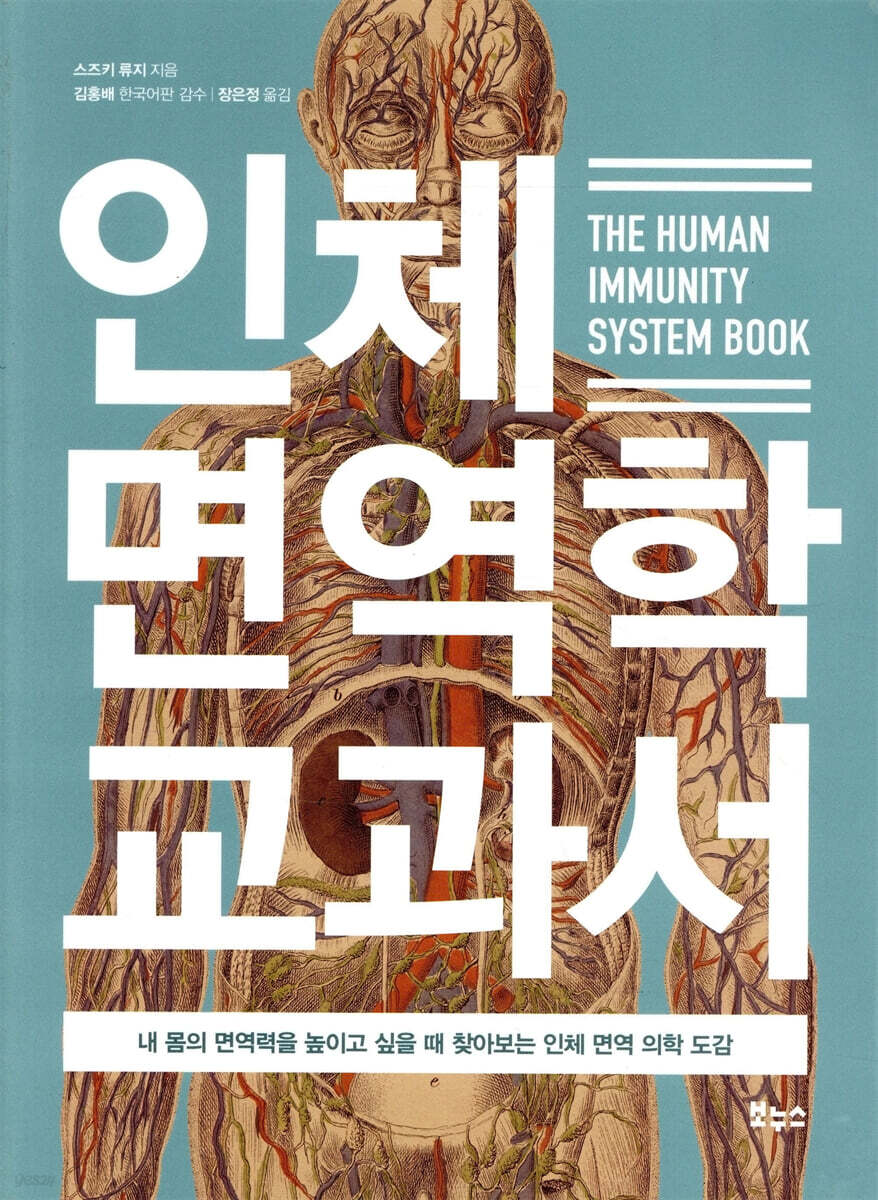
Textbook of Human Immunology
 |
Description
Book Introduction
Immunity is the body's core defense system, revealing the mechanisms of numerous diseases and treatments, from colds and mild allergies to cancer, AIDS, autoimmune diseases, and organ transplants.
To build a healthy body by boosting your immunity, you must learn about immunity so you can wisely fight against various diseases that target your body.
《Textbook of Human Immunology》 explains the complex structure and principles of immunity with abundant illustrations, visual aids, and friendly explanations, allowing even beginners to easily understand the immune mechanism.
To build a healthy body by boosting your immunity, you must learn about immunity so you can wisely fight against various diseases that target your body.
《Textbook of Human Immunology》 explains the complex structure and principles of immunity with abundant illustrations, visual aids, and friendly explanations, allowing even beginners to easily understand the immune mechanism.
- You can preview some of the book's contents.
Preview
index
Entering
Chapter 1: Basic Knowledge of Immunology
-History of immunology
The Birth of Immunology | The Development of Immunology
-The basics of immunity
What is Immunity? | Innate and Adaptive Immunity | Types and Functions of White Blood Cells
Chapter 2: Principles of the Immune System
-Basics of the immune system
Humoral immunity and cellular immunity
-Antigens and immunity
What is an Antigen? | The Ins and Outs of Antigens
-Immune and lymphatic tissue
Lymphatic tissue that supports the immune system
central lymphoid tissue
peripheral lymphoid tissue
-B cells and humoral immunity
B Cell Function | B Cell Birth and Growth | B Cells and Autoimmune Tolerance
-Structure and function of antibodies
Basic Structure of Antibodies | Types and Functions of Antibodies
-Self-identification and MHC
MHC Self-Marking | MHC and Antigen Presentation
-T cells and cellular immunity
T Cell Function | T Cell Birth and Growth | Two Helper T Cells | Cytotoxic T Cells | Regulatory T Cells | The Third Helper Th17 Cell
-Various immune cells
NK Cell Function | NKT Cell Function | Large Phagocyte Function | Dendritic Cell Function
- Helper system and immunity
Principles and functions of the helper
-Mucosal immunity
Gut immunity and airway immunity
-Immunity and Genes
The principle of diversity in immune cells
-Immune cells and classification
Human Self-Marker HLA | CD Classification of Immune Cells
Chapter 3 Cofactors of the Immune System
-The action of cytokines
The Cytokine Network | What Are Cytokines? | Innate Immunity and Cytokines | Adaptive Immunity and Cytokines | Chemokine Functions | Cytokine Receptors
-cell adhesion molecules
Function of cell adhesion molecules
Chapter 4 Infections and Allergies
-Infections and Immunity
What is an infection? | Infections caused by bacteria | Infections caused by viruses | AIDS, which causes a breakdown of immunity | How vaccines work | Types and functions of vaccines
-Allergies and immunity
What is an Allergy? | Types and Characteristics of Allergies | Anaphylaxis
-Causes and Treatment of Allergic Diseases
Pollen allergy (type I allergy) | Bronchial asthma (type I allergy) | Atopic dermatitis (type I allergy) | Food allergy (type I allergy) | Autoimmune hemolytic anemia (type II allergy) | Serum sickness and trichophytitis (type III allergy) | Contact dermatitis (type IV allergy) | Graves' disease (type V allergy) | Treatment of allergic diseases
Chapter 5 Autoimmune Diseases
- Principles of autoimmune diseases
The principle of attacking oneself
-Major autoimmune diseases
Systemic lupus erythematosus | Rheumatoid arthritis | Hashimoto's disease (thyroid-related) | Myasthenia gravis (muscle and nerve-related) | Goodpasture's syndrome (kidney-related) | Ulcerative colitis
Chapter 6 Transplant Immunity/Cancer and Immunity
-Transplant immunity
Transplantation and Immunity | How Transplant Immunity Works | Appropriateness for Organ Transplantation
-Multiple organ transplants
Kidney transplant | Heart transplant | Bone marrow transplant
-Cancer and immunity
The Relationship Between Cancer and Immunity | Cancer Treatment 1 (Molecular Targeted Agents) | Cancer Treatment 2 (Immunotherapy) | Cancer Treatment 3 (Cancer Vaccine Therapy)
supplement
Glossary of terms
Search
References
COLUMN
Experience immunity with a tuberculin skin test
Relationship between T cells and MHC molecules
Fever from a cold is a defensive response caused by cytokines.
Bull venom and anaphylaxis
Why is teacher's disease more common in women?
Now transplant organs are 3D printed!
LABORATORY
Why use cowpox virus in smallpox vaccine?
Pregnancy Immunity - Why Doesn't the Mother Attack the Fetus?
Penicillin and drug allergies
Antigens that induce autoantibodies
Swollen lymph nodes
Another principle by which B cells expand their diversity
Genes responsible for negative selection of T cells
Hopes for cancer treatment
Infection and granuloma
AIDS and the Red Ribbon
Chapter 1: Basic Knowledge of Immunology
-History of immunology
The Birth of Immunology | The Development of Immunology
-The basics of immunity
What is Immunity? | Innate and Adaptive Immunity | Types and Functions of White Blood Cells
Chapter 2: Principles of the Immune System
-Basics of the immune system
Humoral immunity and cellular immunity
-Antigens and immunity
What is an Antigen? | The Ins and Outs of Antigens
-Immune and lymphatic tissue
Lymphatic tissue that supports the immune system
central lymphoid tissue
peripheral lymphoid tissue
-B cells and humoral immunity
B Cell Function | B Cell Birth and Growth | B Cells and Autoimmune Tolerance
-Structure and function of antibodies
Basic Structure of Antibodies | Types and Functions of Antibodies
-Self-identification and MHC
MHC Self-Marking | MHC and Antigen Presentation
-T cells and cellular immunity
T Cell Function | T Cell Birth and Growth | Two Helper T Cells | Cytotoxic T Cells | Regulatory T Cells | The Third Helper Th17 Cell
-Various immune cells
NK Cell Function | NKT Cell Function | Large Phagocyte Function | Dendritic Cell Function
- Helper system and immunity
Principles and functions of the helper
-Mucosal immunity
Gut immunity and airway immunity
-Immunity and Genes
The principle of diversity in immune cells
-Immune cells and classification
Human Self-Marker HLA | CD Classification of Immune Cells
Chapter 3 Cofactors of the Immune System
-The action of cytokines
The Cytokine Network | What Are Cytokines? | Innate Immunity and Cytokines | Adaptive Immunity and Cytokines | Chemokine Functions | Cytokine Receptors
-cell adhesion molecules
Function of cell adhesion molecules
Chapter 4 Infections and Allergies
-Infections and Immunity
What is an infection? | Infections caused by bacteria | Infections caused by viruses | AIDS, which causes a breakdown of immunity | How vaccines work | Types and functions of vaccines
-Allergies and immunity
What is an Allergy? | Types and Characteristics of Allergies | Anaphylaxis
-Causes and Treatment of Allergic Diseases
Pollen allergy (type I allergy) | Bronchial asthma (type I allergy) | Atopic dermatitis (type I allergy) | Food allergy (type I allergy) | Autoimmune hemolytic anemia (type II allergy) | Serum sickness and trichophytitis (type III allergy) | Contact dermatitis (type IV allergy) | Graves' disease (type V allergy) | Treatment of allergic diseases
Chapter 5 Autoimmune Diseases
- Principles of autoimmune diseases
The principle of attacking oneself
-Major autoimmune diseases
Systemic lupus erythematosus | Rheumatoid arthritis | Hashimoto's disease (thyroid-related) | Myasthenia gravis (muscle and nerve-related) | Goodpasture's syndrome (kidney-related) | Ulcerative colitis
Chapter 6 Transplant Immunity/Cancer and Immunity
-Transplant immunity
Transplantation and Immunity | How Transplant Immunity Works | Appropriateness for Organ Transplantation
-Multiple organ transplants
Kidney transplant | Heart transplant | Bone marrow transplant
-Cancer and immunity
The Relationship Between Cancer and Immunity | Cancer Treatment 1 (Molecular Targeted Agents) | Cancer Treatment 2 (Immunotherapy) | Cancer Treatment 3 (Cancer Vaccine Therapy)
supplement
Glossary of terms
Search
References
COLUMN
Experience immunity with a tuberculin skin test
Relationship between T cells and MHC molecules
Fever from a cold is a defensive response caused by cytokines.
Bull venom and anaphylaxis
Why is teacher's disease more common in women?
Now transplant organs are 3D printed!
LABORATORY
Why use cowpox virus in smallpox vaccine?
Pregnancy Immunity - Why Doesn't the Mother Attack the Fetus?
Penicillin and drug allergies
Antigens that induce autoantibodies
Swollen lymph nodes
Another principle by which B cells expand their diversity
Genes responsible for negative selection of T cells
Hopes for cancer treatment
Infection and granuloma
AIDS and the Red Ribbon
Detailed image

Publisher's Review
Immunology knowledge to look for when you want to boost your body's immunity
An Explanation of the Human Immune Mechanism to Understand the Nature of Disease and Symptoms
The first keywords to understand immunity are ‘self’ and ‘non-self.’
The basic function of the immune system is to identify self and non-self and then attack non-self.
In this process, immunity has two basic properties: ‘specificity’ and ‘diversity’.
Specificity refers to the property that immunity established against antigen A does not react to other types of antigens.
Diversity is the property of an antibody that reacts only to one antigen through specificity, and can be transformed into various forms so that each can respond to numerous antigens.
Due to this property, the human body can prepare immune mechanisms (antibodies) in advance even against opponents (antigens) it has never encountered before.
However, immunity is not a simple system that detects and attacks only non-self.
Sometimes it reacts to itself and attacks itself, and sometimes it does not attack itself even though it has identified itself as a non-self and allows coexistence with itself.
A representative example is the concept of ‘pregnancy immunity.’
When a woman becomes pregnant with a fetus, the fetus is nothing more than a non-self from the mother's perspective.
However, when pregnant, regulatory T cells that suppress the immune response to fetal antigens are activated and produce antibodies that neutralize antibodies that would attack the fetus, preventing an immune response from occurring in the fetus.
This is called 'immune tolerance' between mother and fetus and is one of the many systems through which the immune system operates.
In this way, immunity has a precise structure that operates systematically according to complex principles.
However, immunity does not always perfectly protect the body from invasion by foreign substances.
The importance of knowledge of immunology has been further emphasized since it was discovered that the immune system can actually have a negative impact on the human body, such as in allergies, autoimmune diseases, and immunodeficiency syndromes.
Causes and Treatments of Cancer, Coronavirus, Allergies, Atopic Dermatitis, and Autoimmune Diseases
Unraveling the key mechanisms of how immunity affects disease and its treatment.
The immune system acts as a guardian that protects the human body from numerous diseases, but it can also turn into a destroyer that attacks the body and causes diseases.
The origins of diseases, including cancer and allergies, clearly reveal these characteristics of immunity.
All cells have both mutation-promoting and mutation-suppressing functions.
Mutation promotion works for the evolution and adaptation of species, while mutation suppression works for the health and homeostasis of organisms.
This means that cells contain both elements that induce evolution or cancerization and elements that suppress this cancerization.
When the human body is exposed to external stress (ultraviolet rays, radiation, etc.) or infected with pathogens, the possibility of genes mutating increases, leading to the development of cancer.
The tumor suppressor gene p53 prevents the accumulation of DNA damage caused by mutations and induces apoptosis (cell suicide) in cells that have already progressed to cancer, thereby preventing the spread of cancer to other cells.
To date, several genes have been discovered that play a role in cancer suppression, including p53, Rb, and BRCA1.
Allergies are also a disease that occurs when the immune system, which tries to block the invasion of foreign substances, operates excessively and causes damage to the body.
In other words, an allergic reaction is fundamentally a process in which the immune system defends the body (antigen-antibody reaction).
The number of allergy patients is increasing in developed countries, and the prevailing theory is that an overly hygienic environment disrupts the balance of helper T cells in the body, and that stress, lack of sleep, and picky eating suppress the activity of T cells and NK cells that fight antigens.
Contains the fundamentals of immunology, as well as the latest, verified data and medical expertise.
The ultimate guide to human immunology, making it easy to understand the complex immune system.
Immunology, which has developed rapidly since the latter half of the 20th century, has quickly established itself as essential knowledge not only in basic medical research but also in actual disease treatment settings.
《Textbook of Human Immunology》 provides a comprehensive overview of the structure and principles of immunity, essential for understanding the body, through various illustrations and visual aids.
We've taken great care to ensure that even difficult content can be easily understood by utilizing the 'LABORATORY' section, which provides helpful supplementary explanations of the complex mechanisms of immunity, and the 'Mini Knowledge' and 'Terminology Explanation' sections, which allow readers to quickly find out questions or understand parts of the text.
Not only does it provide a solid foundation in the fundamentals of immunology, it also covers a wide range of areas that can be applied to actual medical practice, including the latest, verified data and medical expertise.
Even those with prior knowledge of immunology, as well as those new to immunology, can clearly understand the core concepts and principles of immunity.
As you become more interested in immunology through this book, your body's immunity will naturally increase.
An Explanation of the Human Immune Mechanism to Understand the Nature of Disease and Symptoms
The first keywords to understand immunity are ‘self’ and ‘non-self.’
The basic function of the immune system is to identify self and non-self and then attack non-self.
In this process, immunity has two basic properties: ‘specificity’ and ‘diversity’.
Specificity refers to the property that immunity established against antigen A does not react to other types of antigens.
Diversity is the property of an antibody that reacts only to one antigen through specificity, and can be transformed into various forms so that each can respond to numerous antigens.
Due to this property, the human body can prepare immune mechanisms (antibodies) in advance even against opponents (antigens) it has never encountered before.
However, immunity is not a simple system that detects and attacks only non-self.
Sometimes it reacts to itself and attacks itself, and sometimes it does not attack itself even though it has identified itself as a non-self and allows coexistence with itself.
A representative example is the concept of ‘pregnancy immunity.’
When a woman becomes pregnant with a fetus, the fetus is nothing more than a non-self from the mother's perspective.
However, when pregnant, regulatory T cells that suppress the immune response to fetal antigens are activated and produce antibodies that neutralize antibodies that would attack the fetus, preventing an immune response from occurring in the fetus.
This is called 'immune tolerance' between mother and fetus and is one of the many systems through which the immune system operates.
In this way, immunity has a precise structure that operates systematically according to complex principles.
However, immunity does not always perfectly protect the body from invasion by foreign substances.
The importance of knowledge of immunology has been further emphasized since it was discovered that the immune system can actually have a negative impact on the human body, such as in allergies, autoimmune diseases, and immunodeficiency syndromes.
Causes and Treatments of Cancer, Coronavirus, Allergies, Atopic Dermatitis, and Autoimmune Diseases
Unraveling the key mechanisms of how immunity affects disease and its treatment.
The immune system acts as a guardian that protects the human body from numerous diseases, but it can also turn into a destroyer that attacks the body and causes diseases.
The origins of diseases, including cancer and allergies, clearly reveal these characteristics of immunity.
All cells have both mutation-promoting and mutation-suppressing functions.
Mutation promotion works for the evolution and adaptation of species, while mutation suppression works for the health and homeostasis of organisms.
This means that cells contain both elements that induce evolution or cancerization and elements that suppress this cancerization.
When the human body is exposed to external stress (ultraviolet rays, radiation, etc.) or infected with pathogens, the possibility of genes mutating increases, leading to the development of cancer.
The tumor suppressor gene p53 prevents the accumulation of DNA damage caused by mutations and induces apoptosis (cell suicide) in cells that have already progressed to cancer, thereby preventing the spread of cancer to other cells.
To date, several genes have been discovered that play a role in cancer suppression, including p53, Rb, and BRCA1.
Allergies are also a disease that occurs when the immune system, which tries to block the invasion of foreign substances, operates excessively and causes damage to the body.
In other words, an allergic reaction is fundamentally a process in which the immune system defends the body (antigen-antibody reaction).
The number of allergy patients is increasing in developed countries, and the prevailing theory is that an overly hygienic environment disrupts the balance of helper T cells in the body, and that stress, lack of sleep, and picky eating suppress the activity of T cells and NK cells that fight antigens.
Contains the fundamentals of immunology, as well as the latest, verified data and medical expertise.
The ultimate guide to human immunology, making it easy to understand the complex immune system.
Immunology, which has developed rapidly since the latter half of the 20th century, has quickly established itself as essential knowledge not only in basic medical research but also in actual disease treatment settings.
《Textbook of Human Immunology》 provides a comprehensive overview of the structure and principles of immunity, essential for understanding the body, through various illustrations and visual aids.
We've taken great care to ensure that even difficult content can be easily understood by utilizing the 'LABORATORY' section, which provides helpful supplementary explanations of the complex mechanisms of immunity, and the 'Mini Knowledge' and 'Terminology Explanation' sections, which allow readers to quickly find out questions or understand parts of the text.
Not only does it provide a solid foundation in the fundamentals of immunology, it also covers a wide range of areas that can be applied to actual medical practice, including the latest, verified data and medical expertise.
Even those with prior knowledge of immunology, as well as those new to immunology, can clearly understand the core concepts and principles of immunity.
As you become more interested in immunology through this book, your body's immunity will naturally increase.
GOODS SPECIFICS
- Date of issue: April 5, 2021
- Page count, weight, size: 240 pages | 642g | 172*235*17mm
- ISBN13: 9788964944769
- ISBN10: 8964944763
You may also like
카테고리
korean


korean

![GQ KOREA Mark (Monthly): December [2025]](http://librairie.coreenne.fr/cdn/shop/files/8ef265dbbfbf186523ed75ba7319009d.jpg?v=1765340328&width=3840)


