

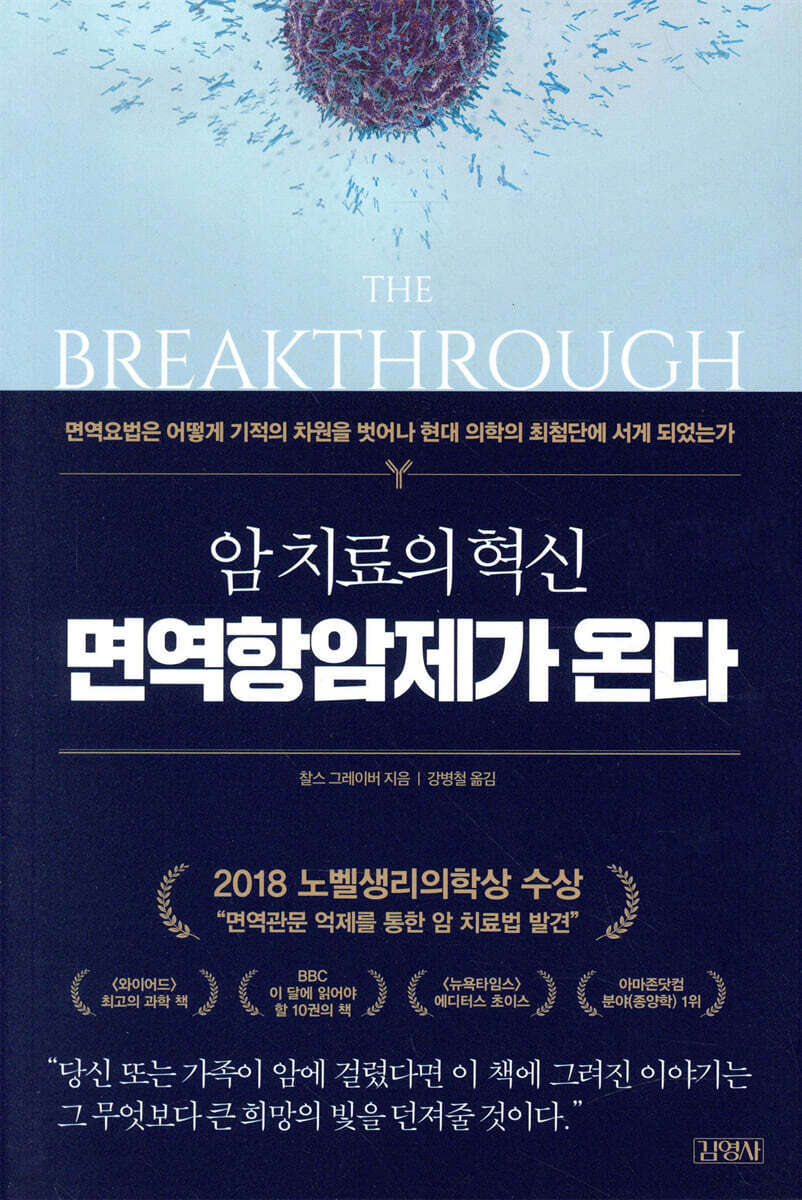
A Revolution in Cancer Treatment: Immunotherapy
 |
Description
Book Introduction
How Immunotherapy Moved From Miracle to the Cutting Edge of Modern Medicine A book to help you understand immunotherapy, a new generation of cancer treatments! 2018 Nobel Prize in Physiology or Medicine (for discoveries of cancer treatments through immune checkpoint inhibition) *[Wired] 'Best Science Books' *BBC's '10 Books to Read This Month' *[New York Times] Editor's Choice *[National Book Review] '5 Books to Recommend' *#1 in Amazon.com (Oncology) How did immunotherapy, once denounced as pseudoscience, become a cutting-edge field of modern medicine? From the workings of the human immune system to the history and present of cancer immunotherapy, its possibilities and limitations, and the challenges yet to be solved, this captivating medical research is meticulously and dynamically portrayed. The long journey of unraveling the tricks of cancer cells and harnessing the innate immune system to fight cancer becomes a reality, a drama interwoven with the challenges, failures, and triumphs of countless scientists and doctors who have dedicated their lives to this research, the unwavering hope and dedication of countless patients, and the undying humanity of humanity. |
- You can preview some of the book's contents.
Preview
index
introduction
prelude
1.
Patient 101006 JDS
2.
Simple idea
3.
A faint light in the darkness
4.
Eureka
5.
removal, equilibrium, escape
6.
A fierce struggle
7.
chimera
8.
After the gold rush
9.
just now
Acknowledgements
Appendix A Immunotherapies Currently in Use or Soon to Become Available
Appendix B: A Brief History of Innovative Cancer Immunotherapy
Appendix C: A Brief History of Disease, Civilization, and Immunity in Anecdotes
More books to read
main
Translator's Note
Search
prelude
1.
Patient 101006 JDS
2.
Simple idea
3.
A faint light in the darkness
4.
Eureka
5.
removal, equilibrium, escape
6.
A fierce struggle
7.
chimera
8.
After the gold rush
9.
just now
Acknowledgements
Appendix A Immunotherapies Currently in Use or Soon to Become Available
Appendix B: A Brief History of Innovative Cancer Immunotherapy
Appendix C: A Brief History of Disease, Civilization, and Immunity in Anecdotes
More books to read
main
Translator's Note
Search
Detailed image

Into the book
Why didn't the immune system fight cancer earlier?
To answer simply, it's not that we didn't fight.
At least I tried to fight.
But cancer uses a variety of tricks to hide from the immune system, disrupt our defenses, and avoid fighting.
So, unless we change the rules of the game, we have no chance of winning the fight against cancer.
Cancer immunotherapy is a way to defeat these tricks.
It strips away the cancer's mask and stimulates the immune system to start fighting again.
It is fundamentally different from existing treatments in that it has no direct effect on cancer at all.
Instead, it naturally awakens the killer cells in our innate immune system and causes them to do what they were designed to do in the first place.
--- p.12~13
Of course, there are only a handful of immunotherapies available right now.
Even patients who respond to these drugs account for less than half of all cancer patients.
However, in many patients who do respond, their cancer remains in remission for life, not just for a few weeks or months.
These fundamentally different long-term effects are the results that only cancer immunotherapy can promise, and are what patients are so excited about.
However, it is also important to recognize that such promises do not guarantee specific outcomes for specific patients.
There is still much work to be done to broaden the range of patients who respond and to discover a true cure.
But the door has already opened, and we have just taken our first step.
--- p.16~17
Jeff doesn't know either.
Some of it has to do with luck, some with strong will, some with faith, and things like that.
And part of the answer dates back more than a century, to the very inner-city streets where Jeff spent his youth, when a New York surgeon, pursuing a medical mystery, delved deep into the slums of immigrants and returned with a magic recipe for curing cancer.
--- p.58
Something changed Stein's cancer.
His fate changed along with it.
The only observable 'something' that happened between Stein's botched cancer surgery and his incredible healing was a bacterial infection.
Could the infection have somehow cured the "undoubted sarcoma"? Collie wrote:
“……If it is possible to artificially induce a disease, it would be reasonable to assume that it could have the same curative effect on similar patients.”
When the thought reached this point, Collie could no longer sit still and wait.
--- p.73
Now is the time to attack.
Antibodies on the surface of B cells fly precisely toward their target antigens, like sticky guided missiles.
The attack is fierce.
The number of antibodies binding to the target antigen reaches 2,000 per second.
Each antibody missile flies towards only one target.
It is a target antigen on the surface of a type cell.
I don't even pay attention to anything else.
Antibodies keep repeating the process of finding and attaching to the antigen, and eventually the target becomes like a hedgehog.
In addition to directly attacking invaders or diseased cells, antibodies bound to their targets also act like blinking neon signs, attracting the attention of surrounding macrophages.
Macrophages immediately move towards it, like amoebas given a free meal coupon.
Antibodies also attach firmly to approaching macrophages.
It's about tying predators and prey together.
At this point, the antibodies seem to stimulate the appetite of these "natural little garbage collectors" through a process called "opsonizing" (from the German word meaning "to prepare for consumption").
Trapped in a situation where they cannot move, the intruder is eventually eaten.
--- p.103-104
On June 12, 1983, something amazing happened.
Just as Rosenberg was about to board a plane to attend the conference, a senior researcher at Cetus, a biotechnology company spun off from Stanford University, approached him and handed him a test tube full of IL-2, genetically engineered using genetic engineering.
Rosenberg carefully placed the vial containing the most valuable item on earth in his jacket pocket, lest he lose it.
“It was hard to hide my excitement.” He couldn’t have been relaxed about his trip, having carefully boarded the plane with a quantity that was incomparable to all the IL-2s he had been supplied with before.
--- p.125-126
As head of a government research institute, Rosenberg was spending a huge amount of taxpayer money on pigs and mice, yet he had 66 consecutive 'failures'.
I met 66 people, got to know them, and tried my best to help them in any way I could, but in the end, I just experimented with various methods and couldn't save a single person.
On November 29, 1984, driven by a desperate need to prove something, he finally decided to try both methods at once, doubling the dose of the powerful cytokine.
--- p.127
But when he returned to the lab four days later, he realized that the situation had changed completely.
In two of our cases, the tumors were shrinking.
In the remaining two cages, the tumors continued to grow.
He finally lifted the blindfold and looked up what had been done to the mice, and gasped.
As with vaccination, it took time for the immune response to begin.
The evidence that an immune response had begun was right before our eyes.
The tumor shrank day by day.
It was the same as last time.
It was a 100 percent perfect experiment! I didn't even know where I was going, but suddenly I arrived at my destination.
They uncovered biological mechanisms that cleared up data that had been confusing for decades.
The tumor was exploiting the built-in safety mechanisms of T cells to put the brakes on the body's immune response against itself.
It was a survival strategy that cancer learned through the process of evolution.
--- p.162~163
In our bodies, old or diseased cells are constantly dying and new cells are being created.
When cells are ready to die, they destroy themselves and end their lives.
This is called 'apoptosis' (derived from the ancient Greek word meaning 'to fall away').
Apoptosis is a natural process that is built into cells from the moment they are born, like spring cleaning.
The weight of cells that disappear in this way from our bodies over the course of a year is roughly equal to our body weight.
Our bodies use these natural processes to eliminate damaged, infected, or mutated cells.
Apoptosis plays a key role in the early development of the fetus in the womb, even before birth.
Some mutations that cause cancer eliminate the ability of cells to self-destruct by apoptosis.
Instead of dying on their own to make way for healthy cells, mutant cells continue to divide and multiply out of control.
Resistance to apoptosis is a key hallmark of cancer.
--- p.174
Scientists are people too.
Scientists also have beliefs, and they personally invest time and effort into maintaining and deepening those beliefs.
And sometimes, because of our beliefs, we become biased, often unintentionally, without even realizing it.
In other words, even scientists can become obsessed with personal beliefs and adopt unscientific attitudes.
It's a kind of intellectual blind faith.
Schreiber submitted his papers to several prestigious academic journals.
He detailed his observations and presented strong, clear data suggesting that blocking specific cytokines in mice makes them more susceptible to cancer.
“I was really surprised by their reaction.
It seems to be saying something like this.
"Are you trying to say there's immunosurveillance for cancer? But there's no such thing as immunosurveillance for cancer?"
--- p.182-183
The immunoediting theory explains how the immune system protects us and prevents us from getting cancer.
In the process, the immune system completely changes the genes of some tumors, as if "carving them into pieces."
Meanwhile, tumors with significantly altered genes develop strategies to evade or suppress the immune response, allowing them to escape the immune system's siege.
One such strategy is to exploit the built-in safety mechanisms of T cells, called immune checkpoints.
Since Allison's initial discovery, other important immune checkpoints have been discovered in quick succession.
Allison's research suggested that blocking immune checkpoints might thwart a crucial cancer survival strategy and allow the immune system to do its job.
And Allison sought to test this theory through clinical trials.
When Schreiber and Old published their paper on immunoediting in 2004, it became clear that their theory fit perfectly with the phenomenon Allison had discovered in 1996.
In fact, they had reached the same place through different routes.
--- p.188-189
In clinical trials, time is money.
If you don't get marketing approval as soon as possible, you might as well fail as quickly as possible.
Typically, a drug must pass three phases of clinical trials.
Each step takes years and enormous costs.
It was only natural that the newly-owned BMS would try to expedite the FDA approval process as quickly as possible.
--- p.194~195
“People think that cancer immunotherapy is an overnight success.
While it is certainly a revolutionary treatment, its success comes after numerous failures.
“It was the patients who had to endure such failure.”
--- p.221
Oncologists now explain to patients that the goal of treatment may not necessarily be to beat the cancer right away.
This means that the goal may be to prolong life only until we can benefit from the next innovative treatment that will come our way in the near future.
But in the end, science couldn't catch up with Brad.
Cancer immunotherapy offered a breakthrough that led to innovation in that it proved a concept, but Brad needed a drug that was proven, not just a concept.
Ultimately, this story still contains a mixture of excessive expectations and genuine hope.
The door to innovation in cancer immunotherapy is now wide open, but it is only the beginning and has not yet reached the goal of curing cancer.
--- p.248
New immunotherapy drugs, usually pronounced in four syllables, are now being used in the Super Bowl.
Just like the Korean Series in our country's professional baseball league, it is played with national attention - translator) and there are even advertisements during the game.
The new 'Jimmy Carter drug' is no longer novel or new.
But the surprise, excitement, and hope surrounding this first breakthrough in cancer immunotherapy was immense.
This has led to a surge of new interest and research funding in the field, which in turn has dramatically accelerated the pace of scientific progress.
As a result, biologist Edward O.
A phenomenon occurred that Wilson called 'consilience'.
This creates intellectual synergy, allowing experts from completely different fields to discuss common interests and find a common language to share their thoughts.
--- p.277
The question this book doesn't address is how many people can afford the financial burden that comes with such a bright outlook.
Yervoy (the brand name for ipilimumab, an anti-CLTA-4 agent) is administered in four doses, with a total treatment cost of over $120,000.
The cost of taking Merck's anti-PD-1 antibody Keytruda, used for advanced melanoma, for one year is $150,000.
While the constant stream of good news is welcome, there is an urgent need to find a solution to the economic burden of illness and death that everyone inevitably experiences.
Everyone has the same chance of getting cancer.
However, if the benefits of medical advancement cannot be enjoyed by everyone, even the most innovative treatments will be a regression for humanity as a whole.
--- p.281~282
Repaying kindness with kindness, sharing information, telling stories.
It's a common sentiment among cancer survivors and those who have lost loved ones to cancer.
That's why Emily told me Brad's story.
It was a way of showing gratitude.
Dan Chen is grateful for what she did for her husband, and for what all the doctors did or tried to do for him.
It is also my hope that others will learn something from her story and perhaps achieve better outcomes.
--- p.299
But Allison was a biochemist.
He was a stranger who happened to be interested in immunology and came into the world.
As is often the case in the history of cancer immunotherapy, he was blindly walking the line between those who fervently supported the therapy and those who were utterly skeptical.
His next experiment touched on a more controversial topic.
--- p.383
Ira Mulman still remembers that debate.
They couldn't convince anyone.
“The problem with immunotherapy is that it’s been a promise for 100 years.
Do you understand? I always said something huge would happen in 20 years.
So, that concept, I don't know for sure, but it's probably been around for at least 50 years.
The concept is to activate the human immune system to fight cancer.
But whenever something becomes a hot topic, an innovative surgical method is introduced, or a radiation therapy that is clearly effective is introduced, and so on, it is pushed to one side.
At that time, we knew almost nothing about the immune system.
Also, the research itself was backward from a scientific perspective.
So the concept remained the same for decades!”
--- p.409
These tumors tend to develop in areas of the body most exposed to carcinogens, such as sunlight or cigarette smoke.
This includes skin cancer (melanoma), lung cancer (small cell and non-small cell carcinoma), and cancers of organs like the bladder, kidneys, colon, and rectum that process substances in a concentrated form. This is because DNA is constantly exposed to carcinogens during its replication process.
Imagine trying to write something down while a rain of golf balls falls on you.
There is a high possibility that several places will be written incorrectly.
In cellular terms, these mistakes are called mutations.
As you can easily guess, cancer that occurs in organs exposed to carcinogens is characterized by a large number of 'mistakes' in the DNA.
The mutation level is the highest.
To answer simply, it's not that we didn't fight.
At least I tried to fight.
But cancer uses a variety of tricks to hide from the immune system, disrupt our defenses, and avoid fighting.
So, unless we change the rules of the game, we have no chance of winning the fight against cancer.
Cancer immunotherapy is a way to defeat these tricks.
It strips away the cancer's mask and stimulates the immune system to start fighting again.
It is fundamentally different from existing treatments in that it has no direct effect on cancer at all.
Instead, it naturally awakens the killer cells in our innate immune system and causes them to do what they were designed to do in the first place.
--- p.12~13
Of course, there are only a handful of immunotherapies available right now.
Even patients who respond to these drugs account for less than half of all cancer patients.
However, in many patients who do respond, their cancer remains in remission for life, not just for a few weeks or months.
These fundamentally different long-term effects are the results that only cancer immunotherapy can promise, and are what patients are so excited about.
However, it is also important to recognize that such promises do not guarantee specific outcomes for specific patients.
There is still much work to be done to broaden the range of patients who respond and to discover a true cure.
But the door has already opened, and we have just taken our first step.
--- p.16~17
Jeff doesn't know either.
Some of it has to do with luck, some with strong will, some with faith, and things like that.
And part of the answer dates back more than a century, to the very inner-city streets where Jeff spent his youth, when a New York surgeon, pursuing a medical mystery, delved deep into the slums of immigrants and returned with a magic recipe for curing cancer.
--- p.58
Something changed Stein's cancer.
His fate changed along with it.
The only observable 'something' that happened between Stein's botched cancer surgery and his incredible healing was a bacterial infection.
Could the infection have somehow cured the "undoubted sarcoma"? Collie wrote:
“……If it is possible to artificially induce a disease, it would be reasonable to assume that it could have the same curative effect on similar patients.”
When the thought reached this point, Collie could no longer sit still and wait.
--- p.73
Now is the time to attack.
Antibodies on the surface of B cells fly precisely toward their target antigens, like sticky guided missiles.
The attack is fierce.
The number of antibodies binding to the target antigen reaches 2,000 per second.
Each antibody missile flies towards only one target.
It is a target antigen on the surface of a type cell.
I don't even pay attention to anything else.
Antibodies keep repeating the process of finding and attaching to the antigen, and eventually the target becomes like a hedgehog.
In addition to directly attacking invaders or diseased cells, antibodies bound to their targets also act like blinking neon signs, attracting the attention of surrounding macrophages.
Macrophages immediately move towards it, like amoebas given a free meal coupon.
Antibodies also attach firmly to approaching macrophages.
It's about tying predators and prey together.
At this point, the antibodies seem to stimulate the appetite of these "natural little garbage collectors" through a process called "opsonizing" (from the German word meaning "to prepare for consumption").
Trapped in a situation where they cannot move, the intruder is eventually eaten.
--- p.103-104
On June 12, 1983, something amazing happened.
Just as Rosenberg was about to board a plane to attend the conference, a senior researcher at Cetus, a biotechnology company spun off from Stanford University, approached him and handed him a test tube full of IL-2, genetically engineered using genetic engineering.
Rosenberg carefully placed the vial containing the most valuable item on earth in his jacket pocket, lest he lose it.
“It was hard to hide my excitement.” He couldn’t have been relaxed about his trip, having carefully boarded the plane with a quantity that was incomparable to all the IL-2s he had been supplied with before.
--- p.125-126
As head of a government research institute, Rosenberg was spending a huge amount of taxpayer money on pigs and mice, yet he had 66 consecutive 'failures'.
I met 66 people, got to know them, and tried my best to help them in any way I could, but in the end, I just experimented with various methods and couldn't save a single person.
On November 29, 1984, driven by a desperate need to prove something, he finally decided to try both methods at once, doubling the dose of the powerful cytokine.
--- p.127
But when he returned to the lab four days later, he realized that the situation had changed completely.
In two of our cases, the tumors were shrinking.
In the remaining two cages, the tumors continued to grow.
He finally lifted the blindfold and looked up what had been done to the mice, and gasped.
As with vaccination, it took time for the immune response to begin.
The evidence that an immune response had begun was right before our eyes.
The tumor shrank day by day.
It was the same as last time.
It was a 100 percent perfect experiment! I didn't even know where I was going, but suddenly I arrived at my destination.
They uncovered biological mechanisms that cleared up data that had been confusing for decades.
The tumor was exploiting the built-in safety mechanisms of T cells to put the brakes on the body's immune response against itself.
It was a survival strategy that cancer learned through the process of evolution.
--- p.162~163
In our bodies, old or diseased cells are constantly dying and new cells are being created.
When cells are ready to die, they destroy themselves and end their lives.
This is called 'apoptosis' (derived from the ancient Greek word meaning 'to fall away').
Apoptosis is a natural process that is built into cells from the moment they are born, like spring cleaning.
The weight of cells that disappear in this way from our bodies over the course of a year is roughly equal to our body weight.
Our bodies use these natural processes to eliminate damaged, infected, or mutated cells.
Apoptosis plays a key role in the early development of the fetus in the womb, even before birth.
Some mutations that cause cancer eliminate the ability of cells to self-destruct by apoptosis.
Instead of dying on their own to make way for healthy cells, mutant cells continue to divide and multiply out of control.
Resistance to apoptosis is a key hallmark of cancer.
--- p.174
Scientists are people too.
Scientists also have beliefs, and they personally invest time and effort into maintaining and deepening those beliefs.
And sometimes, because of our beliefs, we become biased, often unintentionally, without even realizing it.
In other words, even scientists can become obsessed with personal beliefs and adopt unscientific attitudes.
It's a kind of intellectual blind faith.
Schreiber submitted his papers to several prestigious academic journals.
He detailed his observations and presented strong, clear data suggesting that blocking specific cytokines in mice makes them more susceptible to cancer.
“I was really surprised by their reaction.
It seems to be saying something like this.
"Are you trying to say there's immunosurveillance for cancer? But there's no such thing as immunosurveillance for cancer?"
--- p.182-183
The immunoediting theory explains how the immune system protects us and prevents us from getting cancer.
In the process, the immune system completely changes the genes of some tumors, as if "carving them into pieces."
Meanwhile, tumors with significantly altered genes develop strategies to evade or suppress the immune response, allowing them to escape the immune system's siege.
One such strategy is to exploit the built-in safety mechanisms of T cells, called immune checkpoints.
Since Allison's initial discovery, other important immune checkpoints have been discovered in quick succession.
Allison's research suggested that blocking immune checkpoints might thwart a crucial cancer survival strategy and allow the immune system to do its job.
And Allison sought to test this theory through clinical trials.
When Schreiber and Old published their paper on immunoediting in 2004, it became clear that their theory fit perfectly with the phenomenon Allison had discovered in 1996.
In fact, they had reached the same place through different routes.
--- p.188-189
In clinical trials, time is money.
If you don't get marketing approval as soon as possible, you might as well fail as quickly as possible.
Typically, a drug must pass three phases of clinical trials.
Each step takes years and enormous costs.
It was only natural that the newly-owned BMS would try to expedite the FDA approval process as quickly as possible.
--- p.194~195
“People think that cancer immunotherapy is an overnight success.
While it is certainly a revolutionary treatment, its success comes after numerous failures.
“It was the patients who had to endure such failure.”
--- p.221
Oncologists now explain to patients that the goal of treatment may not necessarily be to beat the cancer right away.
This means that the goal may be to prolong life only until we can benefit from the next innovative treatment that will come our way in the near future.
But in the end, science couldn't catch up with Brad.
Cancer immunotherapy offered a breakthrough that led to innovation in that it proved a concept, but Brad needed a drug that was proven, not just a concept.
Ultimately, this story still contains a mixture of excessive expectations and genuine hope.
The door to innovation in cancer immunotherapy is now wide open, but it is only the beginning and has not yet reached the goal of curing cancer.
--- p.248
New immunotherapy drugs, usually pronounced in four syllables, are now being used in the Super Bowl.
Just like the Korean Series in our country's professional baseball league, it is played with national attention - translator) and there are even advertisements during the game.
The new 'Jimmy Carter drug' is no longer novel or new.
But the surprise, excitement, and hope surrounding this first breakthrough in cancer immunotherapy was immense.
This has led to a surge of new interest and research funding in the field, which in turn has dramatically accelerated the pace of scientific progress.
As a result, biologist Edward O.
A phenomenon occurred that Wilson called 'consilience'.
This creates intellectual synergy, allowing experts from completely different fields to discuss common interests and find a common language to share their thoughts.
--- p.277
The question this book doesn't address is how many people can afford the financial burden that comes with such a bright outlook.
Yervoy (the brand name for ipilimumab, an anti-CLTA-4 agent) is administered in four doses, with a total treatment cost of over $120,000.
The cost of taking Merck's anti-PD-1 antibody Keytruda, used for advanced melanoma, for one year is $150,000.
While the constant stream of good news is welcome, there is an urgent need to find a solution to the economic burden of illness and death that everyone inevitably experiences.
Everyone has the same chance of getting cancer.
However, if the benefits of medical advancement cannot be enjoyed by everyone, even the most innovative treatments will be a regression for humanity as a whole.
--- p.281~282
Repaying kindness with kindness, sharing information, telling stories.
It's a common sentiment among cancer survivors and those who have lost loved ones to cancer.
That's why Emily told me Brad's story.
It was a way of showing gratitude.
Dan Chen is grateful for what she did for her husband, and for what all the doctors did or tried to do for him.
It is also my hope that others will learn something from her story and perhaps achieve better outcomes.
--- p.299
But Allison was a biochemist.
He was a stranger who happened to be interested in immunology and came into the world.
As is often the case in the history of cancer immunotherapy, he was blindly walking the line between those who fervently supported the therapy and those who were utterly skeptical.
His next experiment touched on a more controversial topic.
--- p.383
Ira Mulman still remembers that debate.
They couldn't convince anyone.
“The problem with immunotherapy is that it’s been a promise for 100 years.
Do you understand? I always said something huge would happen in 20 years.
So, that concept, I don't know for sure, but it's probably been around for at least 50 years.
The concept is to activate the human immune system to fight cancer.
But whenever something becomes a hot topic, an innovative surgical method is introduced, or a radiation therapy that is clearly effective is introduced, and so on, it is pushed to one side.
At that time, we knew almost nothing about the immune system.
Also, the research itself was backward from a scientific perspective.
So the concept remained the same for decades!”
--- p.409
These tumors tend to develop in areas of the body most exposed to carcinogens, such as sunlight or cigarette smoke.
This includes skin cancer (melanoma), lung cancer (small cell and non-small cell carcinoma), and cancers of organs like the bladder, kidneys, colon, and rectum that process substances in a concentrated form. This is because DNA is constantly exposed to carcinogens during its replication process.
Imagine trying to write something down while a rain of golf balls falls on you.
There is a high possibility that several places will be written incorrectly.
In cellular terms, these mistakes are called mutations.
As you can easily guess, cancer that occurs in organs exposed to carcinogens is characterized by a large number of 'mistakes' in the DNA.
The mutation level is the highest.
--- p.420
Publisher's Review
How Immunity Fights Cancer
The mystery of immunotherapy, which has persisted for 100 years, has been solved, and a breakthrough in cancer treatment has been discovered!
How did immunotherapy, once denounced as pseudoscience, become a cutting-edge field of modern medicine? From the workings of the human immune system to the history and present of cancer immunotherapy, its possibilities and limitations, and the challenges yet to be solved, this captivating medical research is meticulously and dynamically portrayed. The long journey of unraveling the tricks of cancer cells and harnessing the innate immune system to fight cancer becomes a reality, a drama interwoven with the challenges, failures, and triumphs of countless scientists and doctors who have dedicated their lives to this research, the unwavering hope and dedication of countless patients, and the undying humanity of humanity.
The idea of treating cancer by using the innate immune system
A touching and exciting story that becomes reality
'Why doesn't our immune system fight cancer?' For decades, doctors and scientists have puzzled over this perplexing riddle.
The answer lies in the fact that cancer uses a number of tricks to turn off the normal immune response.
Only recently have scientists figured out exactly what the trick is and figured out how to defeat it.
Many people call this method “the penicillin moment” in cancer treatment.
This opens the way to the development of immunotherapy drugs that activate the body's own immune cells to fight cancer cells, unlike existing treatments that attack the cancer cells themselves. Improved treatments that enable more precise and effective treatments are continuously appearing and joining the long line of clinical trials.
And through this very cancer immunotherapy, patients with terminal cancer who were considered incurable are miraculously cured.
In this book, New York Times bestselling author and medical journalist Charles Graeber depicts the struggles, trial and error, and discoveries that countless people went through to make cancer immunotherapy, once considered pseudoscience or a miracle, a new paradigm in cancer treatment today, and explains in an easy-to-understand way how our body's immune system works and the principles of cancer immunotherapy.
This book meticulously examines numerous medical papers and literature, including the records of Dr. William Coley, who witnessed a patient's cancer melt away after an intense immune response following an injection of "monococcus" over 100 years ago, and interviews doctors, researchers, and patients, including 2018 Nobel Prize winner in Physiology or Medicine James Allison, to detail the remarkable scientific discoveries of our time.
Behind these achievements are the stories of geniuses, skeptics, people of true faith, and, above all, patients who risked their lives and many more who lost theirs, all of whom contributed to pioneering, refining, and testing this new and promising science.
As the translator says, this book “vividly shows the relationship between cancer, the greatest disease facing humanity today, immunity, the miraculous healing method latent within our bodies, and the relationship between them, by tightly combining history, science, and human drama like three threads twisted together.”
expectation
The 2018 Nobel Prize in Physiology or Medicine went to Professors James Allison and Tasuku Honjo for their discovery of cancer treatment through immune checkpoint inhibition.
“We have established a completely new principle for cancer treatment by stimulating the immune system’s unique ability to attack tumor cells.
The fact that the reason for selecting the treatment, “Treatment through immune checkpoint inhibition has now revolutionized cancer treatment and fundamentally changed the way we look at cancer,” is not just empty rhetoric can be seen immediately when you look at how many cancer research institutes and pharmaceutical companies are actually jumping into the development of immuno-oncology drugs.
As of June 2018, approximately 940 new immuno-oncology agents are reported to be undergoing testing with the goal of breakthrough designation and FDA approval.
In addition, 1,064 new immunotherapies are in preclinical development in numerous laboratories.
In just a few years, 2,004 new anticancer drugs are being studied.
This pace of change is highly unusual in medicine and unprecedented in the field of cancer treatment.
By the time readers finish this book, the numbers and the science behind them will have advanced significantly.” _Page 283
history
The idea that we could use our innate immune system to fight cancer wasn't always so welcome.
Rather, it was the opposite.
There have been occasional reports of terminally ill cancer patients whose tumors disappeared after a bout with a bacterial infection, but these have often been dismissed as nothing more than mystical anecdotes.
This is because the science of the time could not understand why such things were happening.
However, there were pioneers who noticed this mysterious phenomenon and thought about it in relation to the immune system.
A representative example is William Colley, who is introduced in Chapter 2 of the book.
In the late 1800s, New York physician Colley reads a medical report that a terminally ill cancer patient named Fred Stein had his tumors disappear after being infected with a deadly "pyrexia" bacteria. He sets out to see for himself what he has found.
Experiments to induce an immune response by injecting a single virus into a patient whose cancer was too advanced to be treated were a great success.
A patient whose tumor had progressed so far that it seemed hopeless even after surgery suffered from a high fever and an immune response for several days after being 'vaccinated' with a single virus, but the tumor melted and flowed away, and he made a clean recovery shortly thereafter.
After confirming the effectiveness several times, Coley developed and sold a treatment called 'Collitoxin' by weakening the single bacterium, but the cheers were short-lived.
The American Cancer Society listed his toxin as an "unproven cancer treatment" (a decision they reversed a decade later, but its reputation never recovered), and it was eventually tabooed in the medical community, overshadowed by the then-popular radiation therapy and the subsequent chemotherapy (even though Coley's immunotherapy actually showed superior results).
Even as time passed and many of the components of the human immune system were discovered, immunotherapy was often ridiculed.
Any medical student with sound thinking should not have even come close to researching cancer immunotherapy.
Of course, there were times when cancer immunotherapy was considered a miracle cure and received a lot of attention.
For example, in 1980, interferon, which became possible to mass-produce thanks to the development of genetic recombination technology, was a substance that was so highly anticipated that it was featured in a cover story in Time magazine titled “Penicillin for Cancer.”
There was an investment boom in biotechnology companies producing interferon, but it was short-lived.
It was similar when Dr. Steven Rosenberg of the National Cancer Institute in the United States announced the results of a trial on patients of a drug called interleukin-2, which stimulates the body to produce large quantities of T cells.
The phrase "breakthrough in cancer treatment" was used in articles, but interest soon waned when it became known that the results were not satisfactory enough for the public who were hoping for a perfect breakthrough.
It was only after countless researchers, often observing clinical cases of patients who improved through cancer immunotherapy, experienced countless frustrations, failures, and the joy of discovery, that the reason the human immune system does not respond to cancer cells and how the immune system can be made to recognize and attack them was discovered.
It took this long time for it to be accepted in the oncology community because it was a drug with a ‘slightly different treatment philosophy’ that worked on the immune system to attack cancer cells rather than directly attacking cancer cells.
science
The human immune system is so complex, and new cancer immunotherapy agents and combination therapies are constantly emerging, that even doctors find it difficult to fully grasp them. However, this book presents this information in an engaging way, using simple and intuitive analogies so that even the general public can understand it.
(The main contents are briefly summarized in Appendix B.)
Why the immune system doesn't attack cancer cells has long been a mystery.
Some oncologists have speculated that something might be preventing immune cells from attacking cancer cells, but this view has often been dismissed as far-fetched or hopeless.
Then, in 2011, several important facts were discovered.
In fact, several groundbreaking studies, including the discovery of the T cell receptor in 1984, have revealed some of the processes required for T cells to detect and attack antigens, and researchers have been focused on how to accelerate the immune response.
But what was finally revealed was not the accelerator pedal, but the brake.
There are several checkpoints in T cells to prevent immune cells from attacking normal cells, and James Allison discovered that a molecule called CTLA-4 is one of these brakes, and that cancer cells can take over this brake to block the immune response and proliferate freely.
And “when we developed a drug (antibody) that binds to this brake and blocks it from being used by cancer cells, the immunosuppression was lifted and the T cells started attacking the cancer again.
“It’s like cancer has tied up the immune system’s feet so that it can’t step on the brakes.” (p. 321) Professor Tasuku Honjo and other researchers went a step further and discovered the mechanism by which a protein called PD-1 on the surface of T cells and an antigen called PD-L1 present on cancer cells combine to prevent an immune response, and discovered an antibody that blocks this, thereby opening the door to the development of treatments with fewer side effects.
The main characters of this book are anti-CTLA-4 antibodies and PD-1/PD-L1 antibodies.
And new treatments, including vaccines, cell therapy, combination therapy, and bispecific antibodies, including a therapy that creates genetically modified T cells (CAR-T) and injects them into patients (Chapter 7), are opening a breakthrough in cancer treatment (Appendix A).
people
The book breathlessly portrays the stories of countless people who played leading and supporting roles in achieving these innovations, “stories of people who fought desperately on the edge of life’s precipice and miraculously recovered.”
Dr. Kang Byeong-cheol, a pediatrician and translator of science/medical books who was in charge of the translation, said, “I was so impressed by the vividness and speed of the descriptions that I sat down without thinking much about the original book, and ended up staying up all night to read it all.”
Let's hear a little more from the translator.
“The heart of this book is human drama.
The book is full of stories of doctors and scientists who dedicated themselves to their studies with human compassion and warm empathy for suffering patients, such as Jim Allison, an immunologist born from humble beginnings but who discovered the immune checkpoint with his free spirit and brilliant insight and won the 2018 Nobel Prize; Lloyd Old, who believed in the possibility of cancer immunotherapy despite prejudice and coldness and opened the way for numerous talented people; Robert Shriver, who established a new relationship between cancer and the immune system together with Old; and Carl June, who lost his wife to cancer and eventually jumped into cancer immunotherapy research and pioneered new frontiers.
Their stories are no less impressive than the myths and heroic tales woven by gods and giants.
Paradoxically, the more heroic stories come from ordinary people.
The stories of patients who, even in the depths of despair, never give up their will to live and their positivity, survivors who share their stories of hard-won survival to help others, and neighbors who willingly help, share, and stand in solidarity with one another are truly heartwarming.
While the stories of patients battling cancer without giving up hope are moving, one of the book's charms is its vivid glimpse into how medical research is conducted.
Researchers who have conducted similar studies sometimes engage in fierce competition to be the first to publish a paper (see the anecdote about Mark Davis and Susumu Tonegawa surrounding the discovery of alpha chains, pp. 152-153), and they also generously share experimental materials and research results.
While some eccentric individuals solve problems with ingenious ideas, there are also many who make the mistake of being caught up in bias and failing to objectively interpret data.
There are those like Dr. Steven Rosenberg, who turned down a pharmaceutical company offer that offered him the chance to make a fortune and instead stayed in the lab.
The book also shows the process of new drug development and clinical trials.
“The book features vivid figures who gave their all to gradually roll the wheels of science forward, their obsession, their jubilant successes, and their bitter failures intertwined. As you read, lost in the public's misunderstanding, the scientific community's infighting, and the lives of pioneers with great vision, you will soon grasp the fundamentals of science” (Translator's Note).
assignment
Although the original title is 'The Breakthrough', the book does not mislead readers by claiming that immunotherapy is a miracle treatment that can cure cancer.
It is also important to note that existing immunotherapy drugs do not work on all cancers, that there are specific drugs that work well for specific cancers, that the side effects of the drugs, and that responses vary from patient to patient.
While there were those like Jeff Schwartz (Chapter 1) and Emily Whitehead (Chapter 7) who miraculously returned from the brink of death, there were also cases like Brad McMillan (Chapter 6), who, after decades of innovative treatments, ultimately failed to recover, and another girl who received the same treatment as the survivors but did not survive.
The book calls us to remain humble even in the face of remarkable achievements, and shows that there is still a long way to go.
Among the challenges that need to be addressed is the high cost of cancer immunotherapy.
“The question this book doesn’t address is how many people can afford the financial burden that comes with such a bright outlook.
Boy (the brand name for ipilimumab, an anti-CLTA-4 agent) is administered in four doses, with a total treatment cost of over $120,000.
The cost of taking Merck's anti-PD-1 antibody Keytruda, which is used to treat advanced melanoma, for one year is $150,000.
While the constant stream of good news is welcome, there is an urgent need to find a solution to the economic burden of illness and death that everyone inevitably experiences.
Everyone has the same chance of getting cancer.
However, if the benefits of medical advancement cannot be enjoyed by everyone, even if innovative treatments are developed, it will be a regression for humanity as a whole.” _281-282
It is clear that immunotherapy will be a tremendous innovation and a last resort for countless cancer patients.
The question then remains: how accessible is this treatment?
We hope this book will inform the world about the existence of immunotherapy and the progress of its treatment, and serve as a catalyst for social discussion regarding patient accessibility.
The mystery of immunotherapy, which has persisted for 100 years, has been solved, and a breakthrough in cancer treatment has been discovered!
How did immunotherapy, once denounced as pseudoscience, become a cutting-edge field of modern medicine? From the workings of the human immune system to the history and present of cancer immunotherapy, its possibilities and limitations, and the challenges yet to be solved, this captivating medical research is meticulously and dynamically portrayed. The long journey of unraveling the tricks of cancer cells and harnessing the innate immune system to fight cancer becomes a reality, a drama interwoven with the challenges, failures, and triumphs of countless scientists and doctors who have dedicated their lives to this research, the unwavering hope and dedication of countless patients, and the undying humanity of humanity.
The idea of treating cancer by using the innate immune system
A touching and exciting story that becomes reality
'Why doesn't our immune system fight cancer?' For decades, doctors and scientists have puzzled over this perplexing riddle.
The answer lies in the fact that cancer uses a number of tricks to turn off the normal immune response.
Only recently have scientists figured out exactly what the trick is and figured out how to defeat it.
Many people call this method “the penicillin moment” in cancer treatment.
This opens the way to the development of immunotherapy drugs that activate the body's own immune cells to fight cancer cells, unlike existing treatments that attack the cancer cells themselves. Improved treatments that enable more precise and effective treatments are continuously appearing and joining the long line of clinical trials.
And through this very cancer immunotherapy, patients with terminal cancer who were considered incurable are miraculously cured.
In this book, New York Times bestselling author and medical journalist Charles Graeber depicts the struggles, trial and error, and discoveries that countless people went through to make cancer immunotherapy, once considered pseudoscience or a miracle, a new paradigm in cancer treatment today, and explains in an easy-to-understand way how our body's immune system works and the principles of cancer immunotherapy.
This book meticulously examines numerous medical papers and literature, including the records of Dr. William Coley, who witnessed a patient's cancer melt away after an intense immune response following an injection of "monococcus" over 100 years ago, and interviews doctors, researchers, and patients, including 2018 Nobel Prize winner in Physiology or Medicine James Allison, to detail the remarkable scientific discoveries of our time.
Behind these achievements are the stories of geniuses, skeptics, people of true faith, and, above all, patients who risked their lives and many more who lost theirs, all of whom contributed to pioneering, refining, and testing this new and promising science.
As the translator says, this book “vividly shows the relationship between cancer, the greatest disease facing humanity today, immunity, the miraculous healing method latent within our bodies, and the relationship between them, by tightly combining history, science, and human drama like three threads twisted together.”
expectation
The 2018 Nobel Prize in Physiology or Medicine went to Professors James Allison and Tasuku Honjo for their discovery of cancer treatment through immune checkpoint inhibition.
“We have established a completely new principle for cancer treatment by stimulating the immune system’s unique ability to attack tumor cells.
The fact that the reason for selecting the treatment, “Treatment through immune checkpoint inhibition has now revolutionized cancer treatment and fundamentally changed the way we look at cancer,” is not just empty rhetoric can be seen immediately when you look at how many cancer research institutes and pharmaceutical companies are actually jumping into the development of immuno-oncology drugs.
As of June 2018, approximately 940 new immuno-oncology agents are reported to be undergoing testing with the goal of breakthrough designation and FDA approval.
In addition, 1,064 new immunotherapies are in preclinical development in numerous laboratories.
In just a few years, 2,004 new anticancer drugs are being studied.
This pace of change is highly unusual in medicine and unprecedented in the field of cancer treatment.
By the time readers finish this book, the numbers and the science behind them will have advanced significantly.” _Page 283
history
The idea that we could use our innate immune system to fight cancer wasn't always so welcome.
Rather, it was the opposite.
There have been occasional reports of terminally ill cancer patients whose tumors disappeared after a bout with a bacterial infection, but these have often been dismissed as nothing more than mystical anecdotes.
This is because the science of the time could not understand why such things were happening.
However, there were pioneers who noticed this mysterious phenomenon and thought about it in relation to the immune system.
A representative example is William Colley, who is introduced in Chapter 2 of the book.
In the late 1800s, New York physician Colley reads a medical report that a terminally ill cancer patient named Fred Stein had his tumors disappear after being infected with a deadly "pyrexia" bacteria. He sets out to see for himself what he has found.
Experiments to induce an immune response by injecting a single virus into a patient whose cancer was too advanced to be treated were a great success.
A patient whose tumor had progressed so far that it seemed hopeless even after surgery suffered from a high fever and an immune response for several days after being 'vaccinated' with a single virus, but the tumor melted and flowed away, and he made a clean recovery shortly thereafter.
After confirming the effectiveness several times, Coley developed and sold a treatment called 'Collitoxin' by weakening the single bacterium, but the cheers were short-lived.
The American Cancer Society listed his toxin as an "unproven cancer treatment" (a decision they reversed a decade later, but its reputation never recovered), and it was eventually tabooed in the medical community, overshadowed by the then-popular radiation therapy and the subsequent chemotherapy (even though Coley's immunotherapy actually showed superior results).
Even as time passed and many of the components of the human immune system were discovered, immunotherapy was often ridiculed.
Any medical student with sound thinking should not have even come close to researching cancer immunotherapy.
Of course, there were times when cancer immunotherapy was considered a miracle cure and received a lot of attention.
For example, in 1980, interferon, which became possible to mass-produce thanks to the development of genetic recombination technology, was a substance that was so highly anticipated that it was featured in a cover story in Time magazine titled “Penicillin for Cancer.”
There was an investment boom in biotechnology companies producing interferon, but it was short-lived.
It was similar when Dr. Steven Rosenberg of the National Cancer Institute in the United States announced the results of a trial on patients of a drug called interleukin-2, which stimulates the body to produce large quantities of T cells.
The phrase "breakthrough in cancer treatment" was used in articles, but interest soon waned when it became known that the results were not satisfactory enough for the public who were hoping for a perfect breakthrough.
It was only after countless researchers, often observing clinical cases of patients who improved through cancer immunotherapy, experienced countless frustrations, failures, and the joy of discovery, that the reason the human immune system does not respond to cancer cells and how the immune system can be made to recognize and attack them was discovered.
It took this long time for it to be accepted in the oncology community because it was a drug with a ‘slightly different treatment philosophy’ that worked on the immune system to attack cancer cells rather than directly attacking cancer cells.
science
The human immune system is so complex, and new cancer immunotherapy agents and combination therapies are constantly emerging, that even doctors find it difficult to fully grasp them. However, this book presents this information in an engaging way, using simple and intuitive analogies so that even the general public can understand it.
(The main contents are briefly summarized in Appendix B.)
Why the immune system doesn't attack cancer cells has long been a mystery.
Some oncologists have speculated that something might be preventing immune cells from attacking cancer cells, but this view has often been dismissed as far-fetched or hopeless.
Then, in 2011, several important facts were discovered.
In fact, several groundbreaking studies, including the discovery of the T cell receptor in 1984, have revealed some of the processes required for T cells to detect and attack antigens, and researchers have been focused on how to accelerate the immune response.
But what was finally revealed was not the accelerator pedal, but the brake.
There are several checkpoints in T cells to prevent immune cells from attacking normal cells, and James Allison discovered that a molecule called CTLA-4 is one of these brakes, and that cancer cells can take over this brake to block the immune response and proliferate freely.
And “when we developed a drug (antibody) that binds to this brake and blocks it from being used by cancer cells, the immunosuppression was lifted and the T cells started attacking the cancer again.
“It’s like cancer has tied up the immune system’s feet so that it can’t step on the brakes.” (p. 321) Professor Tasuku Honjo and other researchers went a step further and discovered the mechanism by which a protein called PD-1 on the surface of T cells and an antigen called PD-L1 present on cancer cells combine to prevent an immune response, and discovered an antibody that blocks this, thereby opening the door to the development of treatments with fewer side effects.
The main characters of this book are anti-CTLA-4 antibodies and PD-1/PD-L1 antibodies.
And new treatments, including vaccines, cell therapy, combination therapy, and bispecific antibodies, including a therapy that creates genetically modified T cells (CAR-T) and injects them into patients (Chapter 7), are opening a breakthrough in cancer treatment (Appendix A).
people
The book breathlessly portrays the stories of countless people who played leading and supporting roles in achieving these innovations, “stories of people who fought desperately on the edge of life’s precipice and miraculously recovered.”
Dr. Kang Byeong-cheol, a pediatrician and translator of science/medical books who was in charge of the translation, said, “I was so impressed by the vividness and speed of the descriptions that I sat down without thinking much about the original book, and ended up staying up all night to read it all.”
Let's hear a little more from the translator.
“The heart of this book is human drama.
The book is full of stories of doctors and scientists who dedicated themselves to their studies with human compassion and warm empathy for suffering patients, such as Jim Allison, an immunologist born from humble beginnings but who discovered the immune checkpoint with his free spirit and brilliant insight and won the 2018 Nobel Prize; Lloyd Old, who believed in the possibility of cancer immunotherapy despite prejudice and coldness and opened the way for numerous talented people; Robert Shriver, who established a new relationship between cancer and the immune system together with Old; and Carl June, who lost his wife to cancer and eventually jumped into cancer immunotherapy research and pioneered new frontiers.
Their stories are no less impressive than the myths and heroic tales woven by gods and giants.
Paradoxically, the more heroic stories come from ordinary people.
The stories of patients who, even in the depths of despair, never give up their will to live and their positivity, survivors who share their stories of hard-won survival to help others, and neighbors who willingly help, share, and stand in solidarity with one another are truly heartwarming.
While the stories of patients battling cancer without giving up hope are moving, one of the book's charms is its vivid glimpse into how medical research is conducted.
Researchers who have conducted similar studies sometimes engage in fierce competition to be the first to publish a paper (see the anecdote about Mark Davis and Susumu Tonegawa surrounding the discovery of alpha chains, pp. 152-153), and they also generously share experimental materials and research results.
While some eccentric individuals solve problems with ingenious ideas, there are also many who make the mistake of being caught up in bias and failing to objectively interpret data.
There are those like Dr. Steven Rosenberg, who turned down a pharmaceutical company offer that offered him the chance to make a fortune and instead stayed in the lab.
The book also shows the process of new drug development and clinical trials.
“The book features vivid figures who gave their all to gradually roll the wheels of science forward, their obsession, their jubilant successes, and their bitter failures intertwined. As you read, lost in the public's misunderstanding, the scientific community's infighting, and the lives of pioneers with great vision, you will soon grasp the fundamentals of science” (Translator's Note).
assignment
Although the original title is 'The Breakthrough', the book does not mislead readers by claiming that immunotherapy is a miracle treatment that can cure cancer.
It is also important to note that existing immunotherapy drugs do not work on all cancers, that there are specific drugs that work well for specific cancers, that the side effects of the drugs, and that responses vary from patient to patient.
While there were those like Jeff Schwartz (Chapter 1) and Emily Whitehead (Chapter 7) who miraculously returned from the brink of death, there were also cases like Brad McMillan (Chapter 6), who, after decades of innovative treatments, ultimately failed to recover, and another girl who received the same treatment as the survivors but did not survive.
The book calls us to remain humble even in the face of remarkable achievements, and shows that there is still a long way to go.
Among the challenges that need to be addressed is the high cost of cancer immunotherapy.
“The question this book doesn’t address is how many people can afford the financial burden that comes with such a bright outlook.
Boy (the brand name for ipilimumab, an anti-CLTA-4 agent) is administered in four doses, with a total treatment cost of over $120,000.
The cost of taking Merck's anti-PD-1 antibody Keytruda, which is used to treat advanced melanoma, for one year is $150,000.
While the constant stream of good news is welcome, there is an urgent need to find a solution to the economic burden of illness and death that everyone inevitably experiences.
Everyone has the same chance of getting cancer.
However, if the benefits of medical advancement cannot be enjoyed by everyone, even if innovative treatments are developed, it will be a regression for humanity as a whole.” _281-282
It is clear that immunotherapy will be a tremendous innovation and a last resort for countless cancer patients.
The question then remains: how accessible is this treatment?
We hope this book will inform the world about the existence of immunotherapy and the progress of its treatment, and serve as a catalyst for social discussion regarding patient accessibility.
GOODS SPECIFICS
- Date of publication: October 25, 2019
- Page count, weight, size: 448 pages | 678g | 145*215*30mm
- ISBN13: 9788934999324
- ISBN10: 8934999322
You may also like
카테고리
korean


korean

![GQ KOREA Mark (Monthly): December [2025]](http://librairie.coreenne.fr/cdn/shop/files/8ef265dbbfbf186523ed75ba7319009d.jpg?v=1765340328&width=3840)


