

Tesla's autobiography
 |
Description
Book Introduction
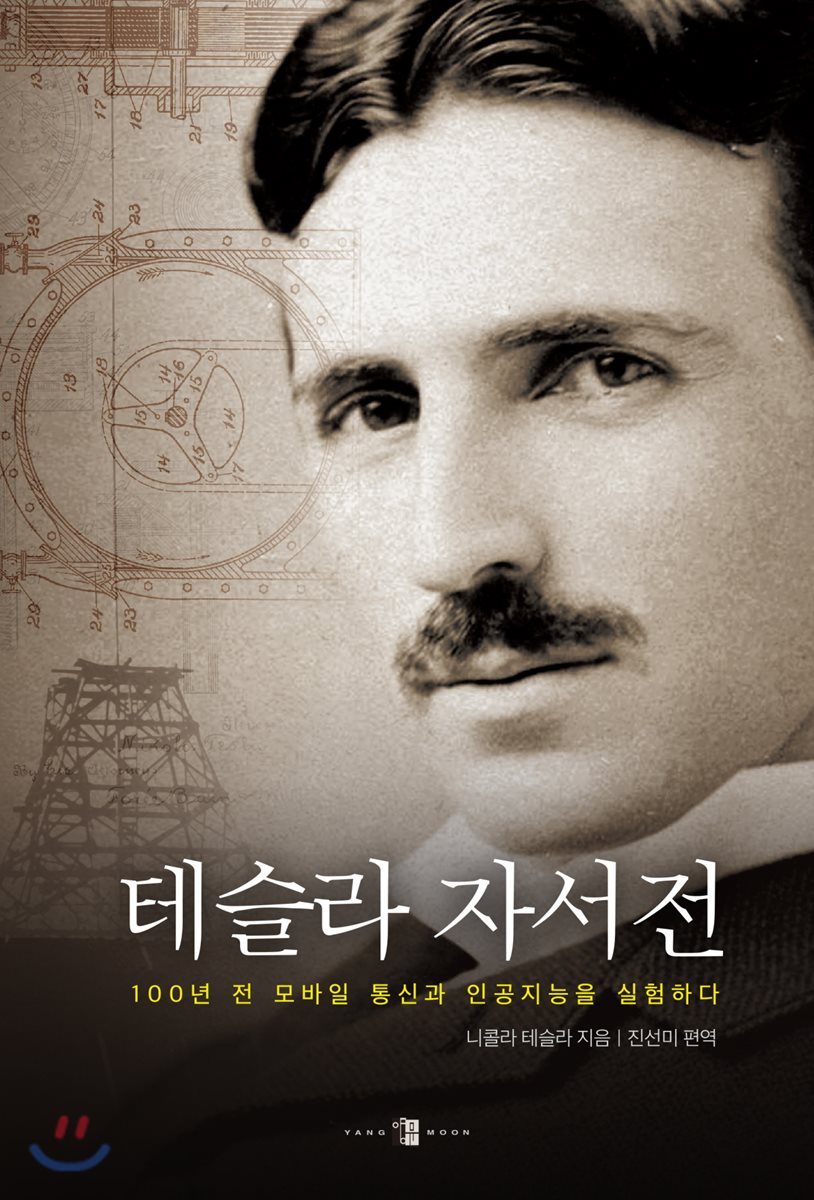
Nikola Tesla, who waged a war of currents with Edison
He was not just a brilliant scientist, but a pioneer ahead of his time.
Nikola Tesla, the modern-day Prometheus who opened the age of light to mankind by inventing the innovative power system called the modern alternating current system, is a genius inventor and scientist who obtained over 270 patents in 25 countries for electric lighting systems, induction motors, and wireless energy transmission.
He was also an unfortunate scientist who was overshadowed by the commercial success of his contemporary, Edison, and did not receive much attention during his lifetime.
But as he assured, “The present may be theirs, but the future is mine,” Tesla is not only the most respected scientist among scientists, but is still considered a living legend today.
This book is a translation of Nikola Tesla's only autobiography, "My Inventions," written in 1919 when he was 63, and "The Problem of Increasing Human Energy," which looked forward to the 21st century as the 20th century began.
Unlike previous biographies, biographies, and related books on Nikola Tesla that have either dramatically glorified or denigrated him, this book reveals Tesla's childhood and upbringing, his thoughts and feelings, his dreams and passions, his emotional life, and his human struggles as they were.
Above all, it has valuable material value as a foundation for fully understanding the philosophy and sense of mission he had as an inventor and scientist.
The translator has organized the controversies and various events surrounding Tesla into topics, ensuring a proper understanding of this man who was far ahead of his time.
He was not just a brilliant scientist, but a pioneer ahead of his time.
Nikola Tesla, the modern-day Prometheus who opened the age of light to mankind by inventing the innovative power system called the modern alternating current system, is a genius inventor and scientist who obtained over 270 patents in 25 countries for electric lighting systems, induction motors, and wireless energy transmission.
He was also an unfortunate scientist who was overshadowed by the commercial success of his contemporary, Edison, and did not receive much attention during his lifetime.
But as he assured, “The present may be theirs, but the future is mine,” Tesla is not only the most respected scientist among scientists, but is still considered a living legend today.
This book is a translation of Nikola Tesla's only autobiography, "My Inventions," written in 1919 when he was 63, and "The Problem of Increasing Human Energy," which looked forward to the 21st century as the 20th century began.
Unlike previous biographies, biographies, and related books on Nikola Tesla that have either dramatically glorified or denigrated him, this book reveals Tesla's childhood and upbringing, his thoughts and feelings, his dreams and passions, his emotional life, and his human struggles as they were.
Above all, it has valuable material value as a foundation for fully understanding the philosophy and sense of mission he had as an inventor and scientist.
The translator has organized the controversies and various events surrounding Tesla into topics, ensuring a proper understanding of this man who was far ahead of his time.
- You can preview some of the book's contents.
Preview
index
Part 1.
My invention
1.
Childhood with pictures drawn in my head
2.
Tesla begins to invent
3.
Tesla's continued dreams and passions
4.
Invention of the Tesla coil and transformer
5.
A world system that was way ahead of its time
6.
Remotely automated machines that look to the future
Part 2.
How to increase human energy
Human movement - Kinetic energy - Three ways to increase human energy|First task: How to increase human mass - Burning nitrogen in the atmosphere|Second task: How to reduce the force that retards the speed of human mass - Teleautonomous machine technology|Third task: How to enhance the force that accelerates human mass - Utilizing solar energy|Source of human energy - Three ways to obtain energy from the sun|Possibility of increasing human capacity through iron - Waste in the iron manufacturing process|New method of economically producing iron|The advent of the aluminum age and the end of the copper industry, a world opened up by new metals|To obtain more energy from coal|Getting energy from the surrounding environment - Wind power, solar power, geothermal energy|Electrical energy obtained from nature|Machines that operate by obtaining their own energy|First step toward automata|Wireless energy transmission using the Earth revealed in experiments|Wireless telegraphy - The secret of tuning - Errors in Hertzian research - Receivers with surprising sensitivity|Communication between planets becomes possible|Wireless transmission of electric energy to any point - Humans The best way to increase the force that accelerates mass
Part 3.
The Life and Inventions of Nikola Tesla
The Life of Nikola Tesla | Tesla and the War of Currents | Tesla and Mark Twain | Tesla and the Invention of Radio | Wireless World Transmission Towers | The Mystery Surrounding Death Rays | Tesla and UFOs | Tesla and X-Rays | Tesla in Money, and the Pigeon | Colorado Springs | Columbus's Egg | Teleautomata
My invention
1.
Childhood with pictures drawn in my head
2.
Tesla begins to invent
3.
Tesla's continued dreams and passions
4.
Invention of the Tesla coil and transformer
5.
A world system that was way ahead of its time
6.
Remotely automated machines that look to the future
Part 2.
How to increase human energy
Human movement - Kinetic energy - Three ways to increase human energy|First task: How to increase human mass - Burning nitrogen in the atmosphere|Second task: How to reduce the force that retards the speed of human mass - Teleautonomous machine technology|Third task: How to enhance the force that accelerates human mass - Utilizing solar energy|Source of human energy - Three ways to obtain energy from the sun|Possibility of increasing human capacity through iron - Waste in the iron manufacturing process|New method of economically producing iron|The advent of the aluminum age and the end of the copper industry, a world opened up by new metals|To obtain more energy from coal|Getting energy from the surrounding environment - Wind power, solar power, geothermal energy|Electrical energy obtained from nature|Machines that operate by obtaining their own energy|First step toward automata|Wireless energy transmission using the Earth revealed in experiments|Wireless telegraphy - The secret of tuning - Errors in Hertzian research - Receivers with surprising sensitivity|Communication between planets becomes possible|Wireless transmission of electric energy to any point - Humans The best way to increase the force that accelerates mass
Part 3.
The Life and Inventions of Nikola Tesla
The Life of Nikola Tesla | Tesla and the War of Currents | Tesla and Mark Twain | Tesla and the Invention of Radio | Wireless World Transmission Towers | The Mystery Surrounding Death Rays | Tesla and UFOs | Tesla and X-Rays | Tesla in Money, and the Pigeon | Colorado Springs | Columbus's Egg | Teleautomata
Into the book
Invention is essential for the advancement of mankind, and invention is the most important product of the creative brain.
Its ultimate goal is to enable the human mind to completely dominate the material world, thus making the forces of nature serve human needs.
This is a difficult task for an inventor, but... ...the inventor derives great satisfaction from using his abilities for good and from knowing that he belongs to a special class.
Without such inventors, humanity would have long ago disappeared, having lost its fierce battle against the harsh conditions of nature.
--- p.9
Scientists don't try to get results right away.
Don't expect your ideas to be accepted immediately.
His work is like planting trees.
It's about preparing for the future.
It is the scientist's job to lay the foundation for future generations and show them the way forward.
Its ultimate goal is to enable the human mind to completely dominate the material world, thus making the forces of nature serve human needs.
This is a difficult task for an inventor, but... ...the inventor derives great satisfaction from using his abilities for good and from knowing that he belongs to a special class.
Without such inventors, humanity would have long ago disappeared, having lost its fierce battle against the harsh conditions of nature.
--- p.9
Scientists don't try to get results right away.
Don't expect your ideas to be accepted immediately.
His work is like planting trees.
It's about preparing for the future.
It is the scientist's job to lay the foundation for future generations and show them the way forward.
--- p.195
Publisher's Review
The only autobiography of a genius scientist ahead of his time.
Part 1 [My Invention] is the only autobiography written by Nikola Tesla himself, and is currently one of the must-reads for American students.
The autobiography documents his childhood in Croatia, his education in Gospić and Prague, and his significant research activities in the late 19th and early 20th centuries, beginning in Budapest and moving on to Paris and New York.
In particular, it covers the development of ideas and the underlying theories leading up to Tesla's two most famous inventions, the induction motor and the transformer (Tesla coil), as well as his ultimate vision of a remotely automated machine and a wireless energy transmission device.
He points out the dangers of development that is solely focused on material abundance, and predicts a miserable future for humanity brought about by nuclear energy. He also makes the optimistic claim that war will disappear from the Earth forever if all of humanity is brought closer together by building a global wireless communication network and wireless energy transmission network.
Part 2, [How to Increase Human Energy], foresees the harm that human civilization, which has finally begun to overcome and utilize nature, will inflict on the future world and presents an alternative.
Now that his concerns have become our reality, his writings offer a glimpse into the brilliant intellect of a genius scientist a century ahead of his time.
Edison, Tesla, Westinghouse, and the War of Currents
Nikola Tesla's scientific achievements rivaled those of Thomas Edison, including the invention of the alternator, induction motor, polyphase AC system, Tesla coil, wireless energy transmission, radio, and X-rays.
Yet, he died alone in a New York hotel without receiving a proper evaluation.
Edison, who lived in the same era as him and was once his colleague at the company, was at the center of the reason he was not treated fairly during his lifetime.
Among them, the current war between Edison, who invented the direct current system, and Tesla, who invented the alternating current system, over the method of power transmission brought about a sharp conflict between the two.
In 1888, a massive snow storm knocked down power lines, electrocuting pedestrians and shutting down the power system. Driven into a corner, Edison began spreading false information and rumors, and in particular, he continued his despicable acts, such as making a film of an electric shock execution, claiming that alternating current (AC) was more dangerous than electricity, and electrocuting a live elephant with 6,600 volts of AC in front of a large crowd.
However, the War of Currents ended with Tesla's victory when the lighting project for the 1893 Chicago World's Fair was awarded to Tesla and Westinghouse despite Edison-General Electric's constant sabotage, resulting in a tremendous success.
This war of currents was not simply a battle of egos between Edison and Tesla, but a historic fight over how technology would impact the lives of future generations.
Part 1 [My Invention] is the only autobiography written by Nikola Tesla himself, and is currently one of the must-reads for American students.
The autobiography documents his childhood in Croatia, his education in Gospić and Prague, and his significant research activities in the late 19th and early 20th centuries, beginning in Budapest and moving on to Paris and New York.
In particular, it covers the development of ideas and the underlying theories leading up to Tesla's two most famous inventions, the induction motor and the transformer (Tesla coil), as well as his ultimate vision of a remotely automated machine and a wireless energy transmission device.
He points out the dangers of development that is solely focused on material abundance, and predicts a miserable future for humanity brought about by nuclear energy. He also makes the optimistic claim that war will disappear from the Earth forever if all of humanity is brought closer together by building a global wireless communication network and wireless energy transmission network.
Part 2, [How to Increase Human Energy], foresees the harm that human civilization, which has finally begun to overcome and utilize nature, will inflict on the future world and presents an alternative.
Now that his concerns have become our reality, his writings offer a glimpse into the brilliant intellect of a genius scientist a century ahead of his time.
Edison, Tesla, Westinghouse, and the War of Currents
Nikola Tesla's scientific achievements rivaled those of Thomas Edison, including the invention of the alternator, induction motor, polyphase AC system, Tesla coil, wireless energy transmission, radio, and X-rays.
Yet, he died alone in a New York hotel without receiving a proper evaluation.
Edison, who lived in the same era as him and was once his colleague at the company, was at the center of the reason he was not treated fairly during his lifetime.
Among them, the current war between Edison, who invented the direct current system, and Tesla, who invented the alternating current system, over the method of power transmission brought about a sharp conflict between the two.
In 1888, a massive snow storm knocked down power lines, electrocuting pedestrians and shutting down the power system. Driven into a corner, Edison began spreading false information and rumors, and in particular, he continued his despicable acts, such as making a film of an electric shock execution, claiming that alternating current (AC) was more dangerous than electricity, and electrocuting a live elephant with 6,600 volts of AC in front of a large crowd.
However, the War of Currents ended with Tesla's victory when the lighting project for the 1893 Chicago World's Fair was awarded to Tesla and Westinghouse despite Edison-General Electric's constant sabotage, resulting in a tremendous success.
This war of currents was not simply a battle of egos between Edison and Tesla, but a historic fight over how technology would impact the lives of future generations.
GOODS SPECIFICS
- Date of issue: March 19, 2019
- Page count, weight, size: 240 pages | 443g | 152*224*15mm
- ISBN13: 9788994025773
- ISBN10: 8994025774
You may also like
카테고리
korean


korean

![GQ KOREA Mark (Monthly): December [2025]](http://librairie.coreenne.fr/cdn/shop/files/8ef265dbbfbf186523ed75ba7319009d.jpg?v=1765340328&width=3840)


