

This is my first time using a telescope.
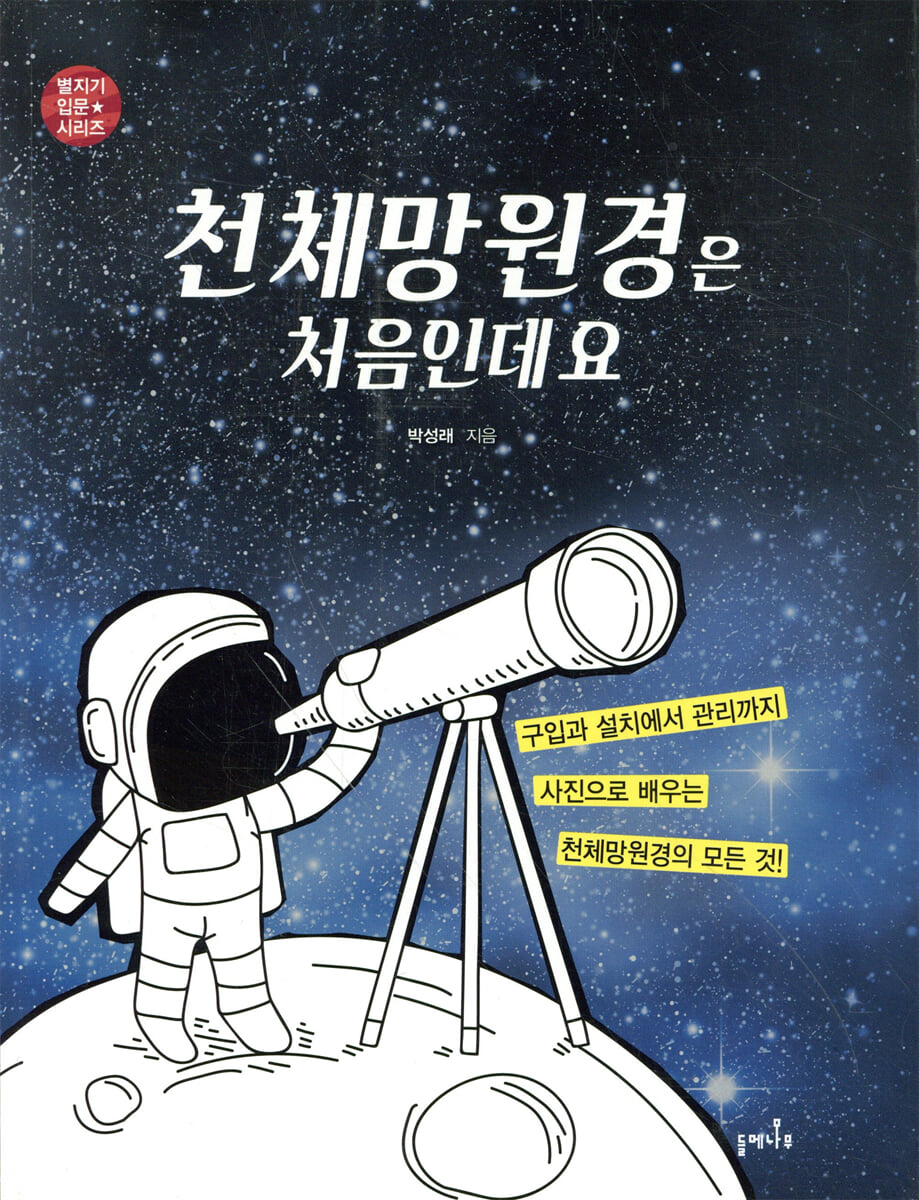 |
Description
Book Introduction
Learning how to use a telescope for the first time in my life!
The principles and types of astronomical telescopes, from purchase and installation to maintenance.
A Beginner's Guide to Telescopes
Amateur astronomers who are just starting out with astronomical observations may be overwhelmed by everything from where and how to buy a telescope, what the pros and cons are of each, which telescope is right for them, how to set up and use the equipment, and how to maintain and care for it.
It is not easy for a beginner to read and properly understand a telescope manual.
This book is for those who are interested in telescopes, considering purchasing one, or amateur astronomers who have purchased one but feel something is missing. It provides easy-to-understand explanations with pictures.
First, we share basic knowledge about the types and features of telescopes, mounts and eyepieces, and accessories.
Because telescopes vary in specifications, shape, and features from manufacturer to manufacturer, this book cannot cover every product, but it will serve as a useful reference.
It also includes information on telescope maintenance.
Telescope maintenance can be a bit daunting, especially if you're considering a reflector telescope, but you'll quickly become comfortable with the material covered in this book after just one or two sessions.
I hope this book will help readers reduce the time they spend alone, struggling, or searching the Internet, unable to overcome the daunting obstacle of astronomical telescopes.
The principles and types of astronomical telescopes, from purchase and installation to maintenance.
A Beginner's Guide to Telescopes
Amateur astronomers who are just starting out with astronomical observations may be overwhelmed by everything from where and how to buy a telescope, what the pros and cons are of each, which telescope is right for them, how to set up and use the equipment, and how to maintain and care for it.
It is not easy for a beginner to read and properly understand a telescope manual.
This book is for those who are interested in telescopes, considering purchasing one, or amateur astronomers who have purchased one but feel something is missing. It provides easy-to-understand explanations with pictures.
First, we share basic knowledge about the types and features of telescopes, mounts and eyepieces, and accessories.
Because telescopes vary in specifications, shape, and features from manufacturer to manufacturer, this book cannot cover every product, but it will serve as a useful reference.
It also includes information on telescope maintenance.
Telescope maintenance can be a bit daunting, especially if you're considering a reflector telescope, but you'll quickly become comfortable with the material covered in this book after just one or two sessions.
I hope this book will help readers reduce the time they spend alone, struggling, or searching the Internet, unable to overcome the daunting obstacle of astronomical telescopes.
- You can preview some of the book's contents.
Preview
index
At the beginning of the book
CHAPTER 1 Types of Telescopes (Optical Tubes)
refracting telescope
-Apochromatic refracting telescope
-The actual structure of a refracting telescope
reflecting telescope
-Newtonian reflector telescope
-Dobsonian Telescope
-Cassegrain reflecting telescope and its derivatives
catadioptric telescope
-Schmidt Camera
-Schmidt-Cassegrain telescope
-Mag-S-Cassegrain telescope
-Other catadioptric telescopes
CHAPTER 2: Stands and Tripods
trestle
Horizon coordinate system and equatorial coordinate system
polar axis telescope
The actual structure of an equatorial mount
Reading the Equator's Specs
How to connect to the telescope
CHAPTER 3 Eyepiece
Magnification
angle
Image quality
Eye Relief
Eyepiece specifications
What magnification is right for my telescope?
What type of eyepiece is it? Let's read the specs.
Accessories for eyepieces
CHAPTER 4 Classification of Telescopes by Use
Main telescope (primary mirror)
finder
polar axis telescope
guide telescope
CHAPTER 5 Observation Site Manners
Be careful with light so as not to break dark adaptation.
If possible, arrive at the observation point before sunset.
Be careful when using lasers and flashlights.
Be careful of vehicle lights
Someone else's equipment is someone else's equipment.
Let's leave no trace of our presence.
Refrain from smoking, but if it is unavoidable, do not cause harm…
CHAPTER 6 Which way shall I go?
Visual observation
astrophotography
Gear Mania
CHAPTER 7 Binoculars are also great
Types of binoculars
Magnification, aperture, and exit pupil
Which binoculars are good?
Let's fix the binoculars
Eye width and focus
CHAPTER 8 Buying Your First Telescope
Study comes first
Let's meet other stargazers
Let's read the telescope's specifications.
Let's figure out your mobility abilities
Where to buy?
Which product should I buy?
CHAPTER 9 Main Accessories
everyone
Connection of power and each electronic device
Bags and storage products
chairs and tables
Saint
flashlight
Heated band
hood
CHAPTER 10 INSTALLATION AND USE OF EQUIPMENT
A suitable place for observation
Telescope installation sequence
CHAPTER 11 MAINTENANCE AND MANAGEMENT OF EQUIPMENT
Refractive and SCT cleaning (lenses, correction plates)
Eyepiece cleaning
Cleaning the reflector
Aligning the Optical Axis 1-Newtonian Reflector Telescope
Optical Axis Alignment 2-SCT
Aligning the Optical Axis 3-Refractor Telescope
How to store the tube
supplement
Aberration of the telescope
How to correct aberrations
Domestic and international manufacturers and distributors of astronomical equipment
References
CHAPTER 1 Types of Telescopes (Optical Tubes)
refracting telescope
-Apochromatic refracting telescope
-The actual structure of a refracting telescope
reflecting telescope
-Newtonian reflector telescope
-Dobsonian Telescope
-Cassegrain reflecting telescope and its derivatives
catadioptric telescope
-Schmidt Camera
-Schmidt-Cassegrain telescope
-Mag-S-Cassegrain telescope
-Other catadioptric telescopes
CHAPTER 2: Stands and Tripods
trestle
Horizon coordinate system and equatorial coordinate system
polar axis telescope
The actual structure of an equatorial mount
Reading the Equator's Specs
How to connect to the telescope
CHAPTER 3 Eyepiece
Magnification
angle
Image quality
Eye Relief
Eyepiece specifications
What magnification is right for my telescope?
What type of eyepiece is it? Let's read the specs.
Accessories for eyepieces
CHAPTER 4 Classification of Telescopes by Use
Main telescope (primary mirror)
finder
polar axis telescope
guide telescope
CHAPTER 5 Observation Site Manners
Be careful with light so as not to break dark adaptation.
If possible, arrive at the observation point before sunset.
Be careful when using lasers and flashlights.
Be careful of vehicle lights
Someone else's equipment is someone else's equipment.
Let's leave no trace of our presence.
Refrain from smoking, but if it is unavoidable, do not cause harm…
CHAPTER 6 Which way shall I go?
Visual observation
astrophotography
Gear Mania
CHAPTER 7 Binoculars are also great
Types of binoculars
Magnification, aperture, and exit pupil
Which binoculars are good?
Let's fix the binoculars
Eye width and focus
CHAPTER 8 Buying Your First Telescope
Study comes first
Let's meet other stargazers
Let's read the telescope's specifications.
Let's figure out your mobility abilities
Where to buy?
Which product should I buy?
CHAPTER 9 Main Accessories
everyone
Connection of power and each electronic device
Bags and storage products
chairs and tables
Saint
flashlight
Heated band
hood
CHAPTER 10 INSTALLATION AND USE OF EQUIPMENT
A suitable place for observation
Telescope installation sequence
CHAPTER 11 MAINTENANCE AND MANAGEMENT OF EQUIPMENT
Refractive and SCT cleaning (lenses, correction plates)
Eyepiece cleaning
Cleaning the reflector
Aligning the Optical Axis 1-Newtonian Reflector Telescope
Optical Axis Alignment 2-SCT
Aligning the Optical Axis 3-Refractor Telescope
How to store the tube
supplement
Aberration of the telescope
How to correct aberrations
Domestic and international manufacturers and distributors of astronomical equipment
References
Into the book
In order to see the image clearly with a refracting telescope composed of a single lens, the telescope had to be infinitely long, but a method to reduce chromatic aberration by combining lenses made of flint glass with a high refractive index and crown glass with a low refractive index was developed in England in 1733.
A lens made in this way is called an achromatic lens.
Compared to an objective lens composed of a single lens, it can focus red and blue wavelengths of light into one place, and spherical aberration can be controlled by adjusting the shape and distance of the two lenses, so the performance is significantly improved compared to an astronomical telescope composed of a single lens, and there is no need to intentionally increase the focal length significantly.
Compared to the apochromatic refracting telescope described later, it is easy to make and uses relatively inexpensive materials, so it is widely used in low-cost refracting telescopes these days.
However, because chromatic aberration still remains, as the magnification increases, you can see red or blue light spreading around stars or planets, and the color spreading becomes more noticeable when observing or taking pictures at high magnification.
(From pages 16-17 of “Refractor Telescope”)
If you purchase a full telescope package, including the telescope tube and tripod, it usually includes one or two eyepieces.
Interestingly, if you buy a high-end telescope, it doesn't come with an eyepiece.
I bought an expensive telescope, but they didn't even give me an eyepiece. How heartless.
If you look at the eyepieces in some beginner telescopes, they are marked H20mm, SR4mm.
H stands for Huygens type eyepiece, and SR stands for Symmetrical Ramsden type eyepiece.
However, these types of eyepieces are not only inconvenient to use due to their structurally narrow field of view and short eye relief, but because they are bundled products, they are poorly made to the point that the lens coating is not even properly applied, which tends to lower the image quality of the telescope.
Therefore, it is rare to find an identical eyepiece sold separately as a new product on the market, and it is only available as a bundle with a telescope set.
If possible, I recommend avoiding these eyepieces and purchasing a good one, even if it is cheap.
Even if you replace the telescope in the future, the eyepiece is an item that can be used for a long time.
Recent eyepieces can be divided into the Plossl series of eyepieces and various types of wide-field eyepiece products.
It is difficult to list all types of wide-field eyepieces because their designs vary slightly depending on the manufacturer and product.
Therefore, it is important to look at the specifications and understand what kind of product it is.
(From "Types of Eyepieces? Let's Read the Specs" on pages 99-100)
You shouldn't just buy equipment to take astrophotos.
Astrophotography is a more complex process than you might think, so it's a good idea to start with some basic knowledge of photography.
I've often seen people who learned photography as a hobby quickly adapt to astrophotography.
If you want to take pictures, it is a good idea to start by at least understanding the concepts related to exposure.
Also, the performance of the equipment is quite important in photography, but the more advanced the equipment, the more difficult it is to handle, so if you start with too advanced equipment from the beginning, you may end up fiddling with the equipment and before you know it, you will see the sun rise.
Therefore, it is advisable to start with simple equipment and upgrade it as you learn shooting techniques and post-production.
There is advice to go all in with good equipment, but if you don't enjoy it after trying it out for a while, you may end up selling it used without even using it properly, which can result in significant financial losses.
(Page 138 of “Which Way Should I Go? - Astrophotography”)
In astrophotography, the power of the equipment is quite important.
To take the pictures we want, we need big, heavy, and expensive equipment.
But you don't need to buy expensive equipment from the start.
Because, depending on how you shoot, you can take some great photos with just an interchangeable lens camera, a tripod, and if you have some spare cash, a small equatorial mount for night photography.
Since astrophotography is also photography, it is most important to build up basic photography skills.
It is important to understand and approach the basics of light exposure, such as the lens' F-number, aperture, shutter speed, and sensitivity, as well as the focal length of the lens and how the subject is captured differently depending on the focal length (I will cover astrophotography in detail in my next book).
If you just buy equipment without any prior knowledge, it will feel difficult because of its complexity and difficulty.
Hobbies should be fun.
If you don't already have a camera, consider getting one with interchangeable lenses. A DSLR or mirrorless camera will do.
However, it must be a device that allows you to freely control the exposure time through a release or PC.
There are cameras that are well suited for astrophotography, but it doesn't matter which one you use to start with.
Because it's important to try it first.
So, it's a good idea to try out the camera you have at home and, when you feel like you're not getting any better, look for a better model.
Unless you are a photography enthusiast, you likely only have one basic zoom lens, also known as a bundled lens.
This lens isn't bright or high-quality enough to be suitable for astrophotography, but it's still usable, so let's make the most of it.
Typically, a focal length of 17 to 55 mm is provided (this may vary depending on the camera brand and model), and since a basic lens of this length is sufficient for taking pictures of the Milky Way and constellations, there is no need to purchase a separate high-end lens from the beginning.
(From pages 174-175 of “First Photography Equipment”)
A lens made in this way is called an achromatic lens.
Compared to an objective lens composed of a single lens, it can focus red and blue wavelengths of light into one place, and spherical aberration can be controlled by adjusting the shape and distance of the two lenses, so the performance is significantly improved compared to an astronomical telescope composed of a single lens, and there is no need to intentionally increase the focal length significantly.
Compared to the apochromatic refracting telescope described later, it is easy to make and uses relatively inexpensive materials, so it is widely used in low-cost refracting telescopes these days.
However, because chromatic aberration still remains, as the magnification increases, you can see red or blue light spreading around stars or planets, and the color spreading becomes more noticeable when observing or taking pictures at high magnification.
(From pages 16-17 of “Refractor Telescope”)
If you purchase a full telescope package, including the telescope tube and tripod, it usually includes one or two eyepieces.
Interestingly, if you buy a high-end telescope, it doesn't come with an eyepiece.
I bought an expensive telescope, but they didn't even give me an eyepiece. How heartless.
If you look at the eyepieces in some beginner telescopes, they are marked H20mm, SR4mm.
H stands for Huygens type eyepiece, and SR stands for Symmetrical Ramsden type eyepiece.
However, these types of eyepieces are not only inconvenient to use due to their structurally narrow field of view and short eye relief, but because they are bundled products, they are poorly made to the point that the lens coating is not even properly applied, which tends to lower the image quality of the telescope.
Therefore, it is rare to find an identical eyepiece sold separately as a new product on the market, and it is only available as a bundle with a telescope set.
If possible, I recommend avoiding these eyepieces and purchasing a good one, even if it is cheap.
Even if you replace the telescope in the future, the eyepiece is an item that can be used for a long time.
Recent eyepieces can be divided into the Plossl series of eyepieces and various types of wide-field eyepiece products.
It is difficult to list all types of wide-field eyepieces because their designs vary slightly depending on the manufacturer and product.
Therefore, it is important to look at the specifications and understand what kind of product it is.
(From "Types of Eyepieces? Let's Read the Specs" on pages 99-100)
You shouldn't just buy equipment to take astrophotos.
Astrophotography is a more complex process than you might think, so it's a good idea to start with some basic knowledge of photography.
I've often seen people who learned photography as a hobby quickly adapt to astrophotography.
If you want to take pictures, it is a good idea to start by at least understanding the concepts related to exposure.
Also, the performance of the equipment is quite important in photography, but the more advanced the equipment, the more difficult it is to handle, so if you start with too advanced equipment from the beginning, you may end up fiddling with the equipment and before you know it, you will see the sun rise.
Therefore, it is advisable to start with simple equipment and upgrade it as you learn shooting techniques and post-production.
There is advice to go all in with good equipment, but if you don't enjoy it after trying it out for a while, you may end up selling it used without even using it properly, which can result in significant financial losses.
(Page 138 of “Which Way Should I Go? - Astrophotography”)
In astrophotography, the power of the equipment is quite important.
To take the pictures we want, we need big, heavy, and expensive equipment.
But you don't need to buy expensive equipment from the start.
Because, depending on how you shoot, you can take some great photos with just an interchangeable lens camera, a tripod, and if you have some spare cash, a small equatorial mount for night photography.
Since astrophotography is also photography, it is most important to build up basic photography skills.
It is important to understand and approach the basics of light exposure, such as the lens' F-number, aperture, shutter speed, and sensitivity, as well as the focal length of the lens and how the subject is captured differently depending on the focal length (I will cover astrophotography in detail in my next book).
If you just buy equipment without any prior knowledge, it will feel difficult because of its complexity and difficulty.
Hobbies should be fun.
If you don't already have a camera, consider getting one with interchangeable lenses. A DSLR or mirrorless camera will do.
However, it must be a device that allows you to freely control the exposure time through a release or PC.
There are cameras that are well suited for astrophotography, but it doesn't matter which one you use to start with.
Because it's important to try it first.
So, it's a good idea to try out the camera you have at home and, when you feel like you're not getting any better, look for a better model.
Unless you are a photography enthusiast, you likely only have one basic zoom lens, also known as a bundled lens.
This lens isn't bright or high-quality enough to be suitable for astrophotography, but it's still usable, so let's make the most of it.
Typically, a focal length of 17 to 55 mm is provided (this may vary depending on the camera brand and model), and since a basic lens of this length is sufficient for taking pictures of the Milky Way and constellations, there is no need to purchase a separate high-end lens from the beginning.
(From pages 174-175 of “First Photography Equipment”)
--- From the text
GOODS SPECIFICS
- Date of issue: January 7, 2019
- Page count, weight, size: 264 pages | 310g | 172*225*20mm
- ISBN13: 9791186889169
- ISBN10: 1186889160
You may also like
카테고리
korean


korean

![GQ KOREA Mark (Monthly): December [2025]](http://librairie.coreenne.fr/cdn/shop/files/8ef265dbbfbf186523ed75ba7319009d.jpg?v=1765340328&width=3840)


