

Tidal Flat Excursion Guide
 |
Description
Book Introduction
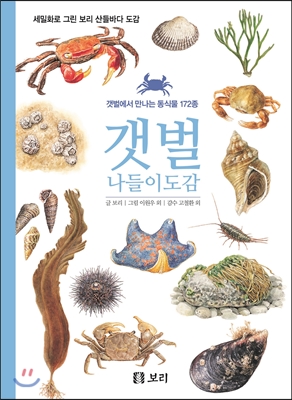
《Tidal Flat Excursion Guide》 contains 172 species of plants and animals that can be found in the tidal flats.
《Tidal Flats Excursion Guide》 depicts in detail commonly known animals and fish such as crabs, snails, and clams, birds that visit the tidal flats, seaweed that lives on the rocks, and coastal plants that grow from the river mouth to the tidal flats.
It also includes various ecological pictures, such as living things and laying eggs.
If you look at the "Tidal Flats Excursion Guide," you can meet the tidal flats and the countless creatures that live there, which have become precious gardens for our people.
《Tidal Flats Excursion Guide》 depicts in detail commonly known animals and fish such as crabs, snails, and clams, birds that visit the tidal flats, seaweed that lives on the rocks, and coastal plants that grow from the river mouth to the tidal flats.
It also includes various ecological pictures, such as living things and laying eggs.
If you look at the "Tidal Flats Excursion Guide," you can meet the tidal flats and the countless creatures that live there, which have become precious gardens for our people.
- You can preview some of the book's contents.
Preview
index
Note
Find it by picture
Seaside animals and plants
crab
- Tongs
- Night crab
- Net-patterned crab
- Hairy crab
- Flower crab
- Min Flower Crab
- Flower fan crab
- Dull teeth
- Pearl-ttul-kong-ge
- White-footed crab
- Crab
- Leaf crab
- Danglange
- Seth Lange
- Long
- I'll do it
- Patterned crab
- Let's solve it
- Crab
- I'll go
- Thief crab
- Hongge
- Mostly
- Horn water match
- Go to sleep
conch
- Abalone
- Round-bellied sea bream
- Conch shell
- A snail shell
- Bomalgodong
- Yellow Sea Silk Snail
- Sora
- Eyeball
- Snail
- Bullet snail
- Snail
- Big ball snail
- Sea snail
- Horned snail
- Major repairs
- Shoulder horn snail
- Mapsari
- Borimureuk
- King-shaped snail
- Brown-banded snail
- Northern snail
- Silkworm snail
- Minchaengi
- Small
- Military
seashell
- Cockle
- Clams
- Shellfish
- Mussels
- Mediterranean mussel
- Key scallops
- Silk scallops
- Large scallop
- cave
- Cave
- Northern brown-patterned clam
- Clams
- Clams
- Lily
- Clams
- Gamurak clams
- Rice cake clams
- clams
- Adams Lily
- New clams
- Dongjuk
- Improved clams
- Northern clam
- King sea bass clams
- Scallops
- Pork flavor
- Clams
- Large clams
shrimp
- jumbo shrimp
- Pickled shrimp
- Shrimp
- Ssok
- Sticky
- Crayfish
- Sea urchin
- Mantis shrimp
- Gaetganggu
barnacles
- Turtle hand
- Barnacle
- Black barnacle
lug
- lugworm
Starfish, sea urchins, and sea cucumbers
- Black-belt starfish
- Amur starfish
- Starfish
- Thorny spider starfish
- Branched sea urchin
- Purple sea urchin
- Salted sea urchin
- Sea cucumber 126
- Sea cucumber with thorns
Jellyfish and sea anemones
- Jellyfish
- Sea cactus
- Yellow-leaved sea squirt
- Full-color flower beach anemone
squid and octopus
- calamari
- Cuckoo
- Cuttlefish
- Octopus
- Octopus
- octopus
Dog taste
- Dog taste
Dog Buddha
- Dog
Mideodeok and sea squirt
- Mideodeok
- Sea squirt
fish
- Bedorachi
- Goby
- Mudskipper
- Fathead
bird
- That bird
- Humpbacked Stingray
- Black-headed gull
- Black-faced plover
- Freshwater sandpiper
- Black-tailed Godwit
- Black-tailed gull
- Red-billed Gull
- Black-crowned Tern
- Osprey
seaweed
- Blue
-thornbush
- Maesaengi
- Hearing
- Gorimae
- Kelp
- Seaweed
- Hot
- Hat class
- Ji-chung
- seaweed
- Seaweed
- Buldeungpulgasari
- True gambling
- A snail
seaside plants
- Leech's tongue
- Reed
- Na Moon-jae
- Tongtongmadi
- Chilmyuncho
- Transport greens
- Tongbori Sacho
- Sea peas
- Sea buckthorn
- Sea breeze
- Azalea
Learn more about the tidal flats
A tidal life that has continued for thousands of years
East Sea, West Sea, South Sea
high and low tides
Precious garden, tidal flat
Seaside animals and plants
crab
conch
seashell
shrimp
barnacles
lug
Starfish, sea urchins, and sea cucumbers
Jellyfish and sea anemones
squid and octopus
Dog taste
Dog Buddha
Mideodeok and sea squirt
fish
bird
seaweed
seaside plants
Search
Find scientific names
Find Korean words
Reference book
Find it by picture
Seaside animals and plants
crab
- Tongs
- Night crab
- Net-patterned crab
- Hairy crab
- Flower crab
- Min Flower Crab
- Flower fan crab
- Dull teeth
- Pearl-ttul-kong-ge
- White-footed crab
- Crab
- Leaf crab
- Danglange
- Seth Lange
- Long
- I'll do it
- Patterned crab
- Let's solve it
- Crab
- I'll go
- Thief crab
- Hongge
- Mostly
- Horn water match
- Go to sleep
conch
- Abalone
- Round-bellied sea bream
- Conch shell
- A snail shell
- Bomalgodong
- Yellow Sea Silk Snail
- Sora
- Eyeball
- Snail
- Bullet snail
- Snail
- Big ball snail
- Sea snail
- Horned snail
- Major repairs
- Shoulder horn snail
- Mapsari
- Borimureuk
- King-shaped snail
- Brown-banded snail
- Northern snail
- Silkworm snail
- Minchaengi
- Small
- Military
seashell
- Cockle
- Clams
- Shellfish
- Mussels
- Mediterranean mussel
- Key scallops
- Silk scallops
- Large scallop
- cave
- Cave
- Northern brown-patterned clam
- Clams
- Clams
- Lily
- Clams
- Gamurak clams
- Rice cake clams
- clams
- Adams Lily
- New clams
- Dongjuk
- Improved clams
- Northern clam
- King sea bass clams
- Scallops
- Pork flavor
- Clams
- Large clams
shrimp
- jumbo shrimp
- Pickled shrimp
- Shrimp
- Ssok
- Sticky
- Crayfish
- Sea urchin
- Mantis shrimp
- Gaetganggu
barnacles
- Turtle hand
- Barnacle
- Black barnacle
lug
- lugworm
Starfish, sea urchins, and sea cucumbers
- Black-belt starfish
- Amur starfish
- Starfish
- Thorny spider starfish
- Branched sea urchin
- Purple sea urchin
- Salted sea urchin
- Sea cucumber 126
- Sea cucumber with thorns
Jellyfish and sea anemones
- Jellyfish
- Sea cactus
- Yellow-leaved sea squirt
- Full-color flower beach anemone
squid and octopus
- calamari
- Cuckoo
- Cuttlefish
- Octopus
- Octopus
- octopus
Dog taste
- Dog taste
Dog Buddha
- Dog
Mideodeok and sea squirt
- Mideodeok
- Sea squirt
fish
- Bedorachi
- Goby
- Mudskipper
- Fathead
bird
- That bird
- Humpbacked Stingray
- Black-headed gull
- Black-faced plover
- Freshwater sandpiper
- Black-tailed Godwit
- Black-tailed gull
- Red-billed Gull
- Black-crowned Tern
- Osprey
seaweed
- Blue
-thornbush
- Maesaengi
- Hearing
- Gorimae
- Kelp
- Seaweed
- Hot
- Hat class
- Ji-chung
- seaweed
- Seaweed
- Buldeungpulgasari
- True gambling
- A snail
seaside plants
- Leech's tongue
- Reed
- Na Moon-jae
- Tongtongmadi
- Chilmyuncho
- Transport greens
- Tongbori Sacho
- Sea peas
- Sea buckthorn
- Sea breeze
- Azalea
Learn more about the tidal flats
A tidal life that has continued for thousands of years
East Sea, West Sea, South Sea
high and low tides
Precious garden, tidal flat
Seaside animals and plants
crab
conch
seashell
shrimp
barnacles
lug
Starfish, sea urchins, and sea cucumbers
Jellyfish and sea anemones
squid and octopus
Dog taste
Dog Buddha
Mideodeok and sea squirt
fish
bird
seaweed
seaside plants
Search
Find scientific names
Find Korean words
Reference book
Publisher's Review
《Tidal Flats Outing Guide》 is a field guide that you can carry around and explore.
《Tidal Flats Outing Guide》 is a size that fits perfectly in one hand.
It fits perfectly in children's hands.
It's small enough to fit in your pocket or bag.
The book opens wide and is made with a sturdy PUR binding.
We have added a ‘Find by Picture’ feature so that you can immediately find the plants and animals that stand out in the tidal flats.
You can see and compare groups of similar-looking creatures at a glance, such as crabs, snails, and clams.
《Tidal Flats Outing Guide》 was written in easy Korean.
《Tidal Flat Outing Guide》 is written in simple Korean so that both children and adults can read it together.
If you read the description, you can easily learn about the names, appearance, and lifestyle of tidal flat creatures such as crabs, snails, and clams caught in the tidal flats.
You can also learn how our people have maintained their livelihood by digging for clams, collecting snails, picking seaweed, and catching fish in the tidal flats.
The 《Tidal Flats Outing Guide》 is structured as follows.
In Part 1, 'Finding with Pictures', you can easily find various creatures found in the tidal flats by dividing them into groups, such as groups of crabs, snails, clams, and shrimp.
We listed them in the order they first caught our eye when we went out to the tidal flats.
Within a group, you can find similar animals and plants by comparing them in order of classification.
Part 2 is divided into groups and listed in order of classification.
It consists of detailed drawings and descriptions of the flora and fauna living in the tidal flats, alternate names and northern names, and information boxes.
You can see the curious tidal flat animals and plants in detail, and you can also see how they live through ecological illustrations.
We also included information about their appearance, lifestyle, and stories and usage related to their names in easy Korean.
You can also learn how to catch it and how to eat it.
We also included names that differ by region and names from the North.
The information box is grouped separately for quick overview of size, where it lives, when it grows, and features.
To help you better understand the tidal flats, we have included Part 3, ‘Learn more about the tidal flats.’
You can learn more about how our people have lived with tidal flats, how tidal flats are formed, and how tidal flat creatures live and look in groups.
《Tidal Flats Outing Guide》 is a size that fits perfectly in one hand.
It fits perfectly in children's hands.
It's small enough to fit in your pocket or bag.
The book opens wide and is made with a sturdy PUR binding.
We have added a ‘Find by Picture’ feature so that you can immediately find the plants and animals that stand out in the tidal flats.
You can see and compare groups of similar-looking creatures at a glance, such as crabs, snails, and clams.
《Tidal Flats Outing Guide》 was written in easy Korean.
《Tidal Flat Outing Guide》 is written in simple Korean so that both children and adults can read it together.
If you read the description, you can easily learn about the names, appearance, and lifestyle of tidal flat creatures such as crabs, snails, and clams caught in the tidal flats.
You can also learn how our people have maintained their livelihood by digging for clams, collecting snails, picking seaweed, and catching fish in the tidal flats.
The 《Tidal Flats Outing Guide》 is structured as follows.
In Part 1, 'Finding with Pictures', you can easily find various creatures found in the tidal flats by dividing them into groups, such as groups of crabs, snails, clams, and shrimp.
We listed them in the order they first caught our eye when we went out to the tidal flats.
Within a group, you can find similar animals and plants by comparing them in order of classification.
Part 2 is divided into groups and listed in order of classification.
It consists of detailed drawings and descriptions of the flora and fauna living in the tidal flats, alternate names and northern names, and information boxes.
You can see the curious tidal flat animals and plants in detail, and you can also see how they live through ecological illustrations.
We also included information about their appearance, lifestyle, and stories and usage related to their names in easy Korean.
You can also learn how to catch it and how to eat it.
We also included names that differ by region and names from the North.
The information box is grouped separately for quick overview of size, where it lives, when it grows, and features.
To help you better understand the tidal flats, we have included Part 3, ‘Learn more about the tidal flats.’
You can learn more about how our people have lived with tidal flats, how tidal flats are formed, and how tidal flat creatures live and look in groups.
GOODS SPECIFICS
- Date of issue: January 20, 2016
- Page count, weight, size: 228 pages | 225g | 104*148*13mm
- ISBN13: 9788984288928
- ISBN10: 8984288926
You may also like
카테고리
korean


korean

![GQ KOREA Mark (Monthly): December [2025]](http://librairie.coreenne.fr/cdn/shop/files/8ef265dbbfbf186523ed75ba7319009d.jpg?v=1765340328&width=3840)


