

What do your body language tell your dog?
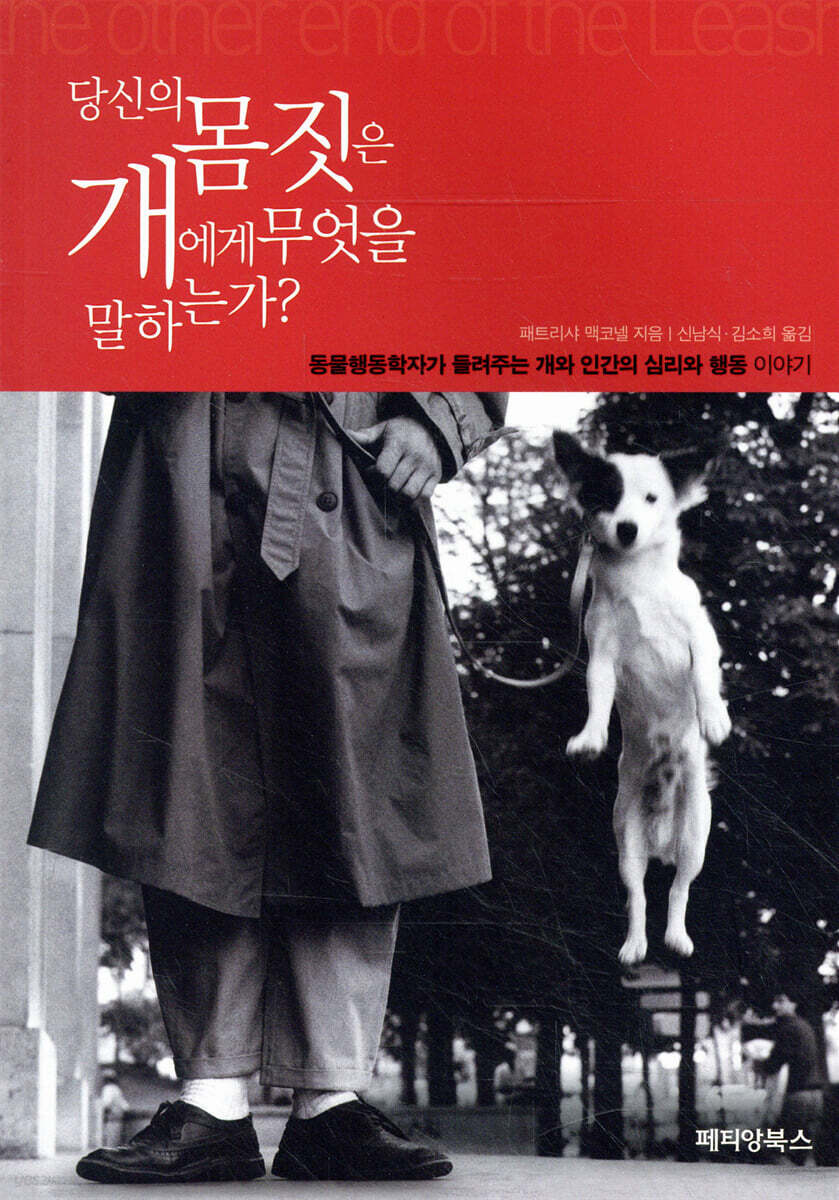 |
Description
Book Introduction
It proves that even slight changes in our voice and body language can help dogs better understand what we are trying to say.
This book contains solutions to break the vicious cycle in which both owners and dogs suffer. It teaches readers that if we start thinking about our behavior from the dog's perspective, many problem behaviors that were previously considered to be dog disobedience are actually caused by simple misunderstandings in communication.
For readers who have had inexplicable problems with their pets, this book will help them enjoy a happier bond with their companions.
This book contains solutions to break the vicious cycle in which both owners and dogs suffer. It teaches readers that if we start thinking about our behavior from the dog's perspective, many problem behaviors that were previously considered to be dog disobedience are actually caused by simple misunderstandings in communication.
For readers who have had inexplicable problems with their pets, this book will help them enjoy a happier bond with their companions.
- You can preview some of the book's contents.
Preview
index
Author's Note
Translator's Note
prolog
- Episode
- Humans and dogs are similar.
- Humans and dogs are different.
- Problems caused by human behavior as primates
- We need to pay more attention to our own behavior than to the dog's.
1.
Dogs and humans, each understanding the world through their own eyes.
- Episode
- Our small gestures influence the dog's behavior.
- The dog is always talking.
We just don't pay attention - It takes practice to read and understand dog behavior - Broken traffic lights that confuse dogs, humans - Dogs and humans have different greeting styles.
- Dogs don't like hugs.
2.
What Our Gestures Tell Dogs
- Episode
- Dogs don't understand changes in silhouette.
- An effective way to get a dog to come to you
- Controlling your dog's behavior by 'taking up space'.
- Controlling a dog's behavior by the direction and degree of my body's tilt using the 'pressure cycle'
- Reading a dog's lips can reveal the true intentions of its aggression.
Our unconscious behaviors fuel dogfights. Avoiding eye contact and cutting off social contact.
3.
Communication using sound
- Episode
- Dogs can't read our minds.
- Humans love synonyms, but dogs don't understand them.
- Commands must be used consistently.
- Dogs do not understand repeated commands.
- The leader wolf doesn't bark loudly. - How to quiet a barking dog: Yelling "Be quiet" has no effect on the dog.
- Control the dog's behavior by the shape, speed, and pitch of the command 'sound'.
1) Number of negatives
2) Tone
3) Pitch control
4.
Dogs read the world with their noses.
- Episode
- The human nose is much smarter than you think.
- A 'moving nose' living on a strange smelling planet
- Is there a link between smell and dog aggression?
- Dogs decide where to use the toilet based on the presence or absence of a 'family' scent.
-Do dogs can always smell?
- Why do dogs roll around on smelly things?
- Humans are also fascinated by strange smells.
5.
pranks and games
- Episode
- Eternal Youth of Man and Dog 1 - Playing Until You Drop
- Eternal Youth of Humans and Dogs 2 - The Process of Domestication and Type Evolution
- Ball game
- Fetch game
- Playing with dogs can be dangerous.
6.
group of friends
- Episode
- 5-12 weeks after birth, forming social bonds
- Social education takes a village and time.
- Social interaction is essential for humans too.
- Appropriate social intimacy
- Just because they're dogs doesn't mean they always want to be petted.
- A gentle touch brings peace to everyone.
- Baby animals' survival weapon: cuteness
- Horrible puppy breeding farm
- So where do you get a puppy?
- Breeding of very small and cute(?) deformed dogs
7.
The Truth About Superiority
- Episode
The dangers of the advice to "stand above the dog"
- How to know the dog's hierarchy
- Correctly understanding the concept of superiority
- Food and environment make a difference in perception of status.
- Dominance and aggression are completely different concepts.
- Various hierarchical hierarchies that make up the social structure
Group 2: Those who want to be leaders
- Can dogs and humans, two different species, coexist within the same hierarchy?
- A wise and compassionate owner makes a happy dog.
8.
A patient dog and a wise man
- Episode
- You shouldn't give in to all of a dog's demands.
- Dogs need exercise.
- Dogs don't like to be patted on the head.
- Raising a patient dog
- Teaching manners at the door
The difference between friendliness and rudeness, and how to correct rude behavior.
- Dogs do not consider talkative and noisy people as 'leaders'.
- Compassionate leadership
- No, who the hell owns this place?
- Threats and violence only ruin a dog.
- Correcting your dog's misbehavior
9.
Dogs have personalities too.
- Episode
- All dogs are different.
-Just because the breed is the same doesn't mean the temperament is the same.
- You must choose by taking into account the characteristics and individuality of each breed.
- How to spot a really good dog
- You shouldn't choose a dog based on its appearance alone.
- A dog's behavior changes depending on the time and place.
- There is no perfect dog.
10.
Love and separation
- Episode
- Greater love has no master.
- Stubbornly raising a dog is also an act of betraying the dog.
- Separation and sadness
- Do animals also understand the concept of death?
- Overcoming pet-loss syndrome
Epilogue
Translator's Note
prolog
- Episode
- Humans and dogs are similar.
- Humans and dogs are different.
- Problems caused by human behavior as primates
- We need to pay more attention to our own behavior than to the dog's.
1.
Dogs and humans, each understanding the world through their own eyes.
- Episode
- Our small gestures influence the dog's behavior.
- The dog is always talking.
We just don't pay attention - It takes practice to read and understand dog behavior - Broken traffic lights that confuse dogs, humans - Dogs and humans have different greeting styles.
- Dogs don't like hugs.
2.
What Our Gestures Tell Dogs
- Episode
- Dogs don't understand changes in silhouette.
- An effective way to get a dog to come to you
- Controlling your dog's behavior by 'taking up space'.
- Controlling a dog's behavior by the direction and degree of my body's tilt using the 'pressure cycle'
- Reading a dog's lips can reveal the true intentions of its aggression.
Our unconscious behaviors fuel dogfights. Avoiding eye contact and cutting off social contact.
3.
Communication using sound
- Episode
- Dogs can't read our minds.
- Humans love synonyms, but dogs don't understand them.
- Commands must be used consistently.
- Dogs do not understand repeated commands.
- The leader wolf doesn't bark loudly. - How to quiet a barking dog: Yelling "Be quiet" has no effect on the dog.
- Control the dog's behavior by the shape, speed, and pitch of the command 'sound'.
1) Number of negatives
2) Tone
3) Pitch control
4.
Dogs read the world with their noses.
- Episode
- The human nose is much smarter than you think.
- A 'moving nose' living on a strange smelling planet
- Is there a link between smell and dog aggression?
- Dogs decide where to use the toilet based on the presence or absence of a 'family' scent.
-Do dogs can always smell?
- Why do dogs roll around on smelly things?
- Humans are also fascinated by strange smells.
5.
pranks and games
- Episode
- Eternal Youth of Man and Dog 1 - Playing Until You Drop
- Eternal Youth of Humans and Dogs 2 - The Process of Domestication and Type Evolution
- Ball game
- Fetch game
- Playing with dogs can be dangerous.
6.
group of friends
- Episode
- 5-12 weeks after birth, forming social bonds
- Social education takes a village and time.
- Social interaction is essential for humans too.
- Appropriate social intimacy
- Just because they're dogs doesn't mean they always want to be petted.
- A gentle touch brings peace to everyone.
- Baby animals' survival weapon: cuteness
- Horrible puppy breeding farm
- So where do you get a puppy?
- Breeding of very small and cute(?) deformed dogs
7.
The Truth About Superiority
- Episode
The dangers of the advice to "stand above the dog"
- How to know the dog's hierarchy
- Correctly understanding the concept of superiority
- Food and environment make a difference in perception of status.
- Dominance and aggression are completely different concepts.
- Various hierarchical hierarchies that make up the social structure
Group 2: Those who want to be leaders
- Can dogs and humans, two different species, coexist within the same hierarchy?
- A wise and compassionate owner makes a happy dog.
8.
A patient dog and a wise man
- Episode
- You shouldn't give in to all of a dog's demands.
- Dogs need exercise.
- Dogs don't like to be patted on the head.
- Raising a patient dog
- Teaching manners at the door
The difference between friendliness and rudeness, and how to correct rude behavior.
- Dogs do not consider talkative and noisy people as 'leaders'.
- Compassionate leadership
- No, who the hell owns this place?
- Threats and violence only ruin a dog.
- Correcting your dog's misbehavior
9.
Dogs have personalities too.
- Episode
- All dogs are different.
-Just because the breed is the same doesn't mean the temperament is the same.
- You must choose by taking into account the characteristics and individuality of each breed.
- How to spot a really good dog
- You shouldn't choose a dog based on its appearance alone.
- A dog's behavior changes depending on the time and place.
- There is no perfect dog.
10.
Love and separation
- Episode
- Greater love has no master.
- Stubbornly raising a dog is also an act of betraying the dog.
- Separation and sadness
- Do animals also understand the concept of death?
- Overcoming pet-loss syndrome
Epilogue
Detailed image

Into the book
Dogs are animals that are very sensitive to even the smallest changes in our bodies.
Also, because we believe that each of the small movements we make has its own meaning, all of these movements have a huge impact on the dog's behavior.
Depending on whether we stand with our shoulders hunched or straight and upright, the dog may or may not sit.
Also, the change in direction of body tilt is so important that even a change of body tilt of just 1-2 centimeters forward or backward can either attract a frightened stray dog toward us or scare it away.
Also, depending on whether you take a deep breath or hold it, you can either prevent a fierce dogfight or vice versa.
---p.43
When walking down the street and encountering someone nice, most people approach them head-on, calling out their name or waving, and looking at their face, especially their eyes.
Reach out and shake hands, give a warm hug, or, more intimately, kiss the other person on the cheek.
It's a really nice and warm greeting.
But this extremely polite primate greeting is horribly rude in dog society.
It's better to urinate on a dog's head ---p.59
Dogs perceive hugs differently than we do.
The human face being hugged looks happy, but the dog's face being hugged is usually frozen.
To humans, hugs are an expression of love, but dogs see hugs as rude or threatening behavior intended to show off their power.
Also, when we meet someone we are happy to see, we look at their face and walk straight ahead, but in the dog world, this is a very threatening behavior.
---p.65
In the dog world, there is no such thing as 'come here'.
The best way to get a dog to come when he's engrossed in something else is to bend down low, like a play greeting, then turn around and clap your hands.
Walking toward a dog and calling it "come here" is like saying "come here" with your voice but "stay right there" with your body.
---p.80
Dogs who live with owners who unconditionally give in to their demands can cause real problems.
Frustration is one of the most common causes of aggression in dogs.
If you want your dog to be a well-mannered family pet, you need to raise him like a child, teaching him patience and the knowledge that he won't always get what he wants.
---p.100
“Don’t do that, don’t do that, I told you not to do that!” We use the same words in as many different ways as possible.
But as a dog, there is no way to know if these words all mean the same thing.
---p.111
There's no use yelling, "Be quiet!"
In the dog world, it's natural for dogs to join in on someone else's barking, so perhaps when they see us yelling "Quiet!" or "Shut up!" loudly, they think, "He's barking along."
---p.124
I meet too many underemployed dogs who are constantly chewing and destroying things, barking, and driving their owners crazy with their constant excitement.
These behavioral problems often stem from boredom.
While some may have physiological issues, most simply need a purpose in life and a simple walk may not be enough to satisfy them.
---p.304
Experienced and confident adult wolves rarely bark.
Dogs interpret their 'non-barking' behavior as a sign of leadership and are drawn to their confidence.
Dogs like and want to be around quiet and calm people, and conversely, they think that talkative and noisy people are fearful or out of control.
---p.321
We've long heard the misguided advice that we should be 'over the dog.'
Because being dominant meant being aggressive, many people resorted to harsh punishments, such as yelling, tugging on the leash, shaking, and even hitting the dog.
However, such harsh punishment only causes more defensive aggression.
Even in the wolf world, a true leader does not use force indiscriminately.
Because its very existence already has enough power.
Also, because we believe that each of the small movements we make has its own meaning, all of these movements have a huge impact on the dog's behavior.
Depending on whether we stand with our shoulders hunched or straight and upright, the dog may or may not sit.
Also, the change in direction of body tilt is so important that even a change of body tilt of just 1-2 centimeters forward or backward can either attract a frightened stray dog toward us or scare it away.
Also, depending on whether you take a deep breath or hold it, you can either prevent a fierce dogfight or vice versa.
---p.43
When walking down the street and encountering someone nice, most people approach them head-on, calling out their name or waving, and looking at their face, especially their eyes.
Reach out and shake hands, give a warm hug, or, more intimately, kiss the other person on the cheek.
It's a really nice and warm greeting.
But this extremely polite primate greeting is horribly rude in dog society.
It's better to urinate on a dog's head ---p.59
Dogs perceive hugs differently than we do.
The human face being hugged looks happy, but the dog's face being hugged is usually frozen.
To humans, hugs are an expression of love, but dogs see hugs as rude or threatening behavior intended to show off their power.
Also, when we meet someone we are happy to see, we look at their face and walk straight ahead, but in the dog world, this is a very threatening behavior.
---p.65
In the dog world, there is no such thing as 'come here'.
The best way to get a dog to come when he's engrossed in something else is to bend down low, like a play greeting, then turn around and clap your hands.
Walking toward a dog and calling it "come here" is like saying "come here" with your voice but "stay right there" with your body.
---p.80
Dogs who live with owners who unconditionally give in to their demands can cause real problems.
Frustration is one of the most common causes of aggression in dogs.
If you want your dog to be a well-mannered family pet, you need to raise him like a child, teaching him patience and the knowledge that he won't always get what he wants.
---p.100
“Don’t do that, don’t do that, I told you not to do that!” We use the same words in as many different ways as possible.
But as a dog, there is no way to know if these words all mean the same thing.
---p.111
There's no use yelling, "Be quiet!"
In the dog world, it's natural for dogs to join in on someone else's barking, so perhaps when they see us yelling "Quiet!" or "Shut up!" loudly, they think, "He's barking along."
---p.124
I meet too many underemployed dogs who are constantly chewing and destroying things, barking, and driving their owners crazy with their constant excitement.
These behavioral problems often stem from boredom.
While some may have physiological issues, most simply need a purpose in life and a simple walk may not be enough to satisfy them.
---p.304
Experienced and confident adult wolves rarely bark.
Dogs interpret their 'non-barking' behavior as a sign of leadership and are drawn to their confidence.
Dogs like and want to be around quiet and calm people, and conversely, they think that talkative and noisy people are fearful or out of control.
---p.321
We've long heard the misguided advice that we should be 'over the dog.'
Because being dominant meant being aggressive, many people resorted to harsh punishments, such as yelling, tugging on the leash, shaking, and even hitting the dog.
However, such harsh punishment only causes more defensive aggression.
Even in the wolf world, a true leader does not use force indiscriminately.
Because its very existence already has enough power.
---p.328
Publisher's Review
- Pointing out that a dog's problem behavior is caused by what we say or do unconsciously.
Essays on Dog Behavior from a New Perspective
- We have compiled together the most common dog behavior problems cases among the thousands of cases encountered by animal behaviorists.
- It captures not only the psychology and behavior of dogs, but also the psychology and behavior of humans who 'can only do that'.
- Revised and expanded edition of the book of the same name published in Korea in 2005 (out of print)
- A steady seller in the fields of dog psychology, behavior, and training, translated into 12 languages worldwide.
How to Communicate Properly with Your Dog, According to an Animal Behaviorist
“Before blaming the dog’s problem behavior, let’s look at our own behavior first.
“Because most of the problems stem from our wrong actions.”
A dog that leaves the house in shambles? A dog that poops and pees everywhere? A dog that refuses to return a toy it brought home? A dog that refuses to come no matter how many times it's called? A dog that barks at every opportunity to get out of the house? A dog that lunges at other dogs as if to kill them? An ungrateful dog that growls at its owner and even bites them? Most dogs have behavioral issues, big or small, and many owners suffer from them.
But what if all these problem behaviors are caused by our body language?
There is a reason for every problem behavior in a dog.
Before blaming the dog, let's look at our own behavior.
Because many of the dog's problem behaviors that were thought to be disobedience actually stem from our own body language.
The image of a dog that is arrogant in front of me but becomes a docile lamb in front of others, especially experts, clearly demonstrates “how much the attitude of the person toward the dog affects the dog’s behavior.”
This book demonstrates that simply changing our voice and body language can help dogs better understand what we're trying to say.
It contains the answer to break the vicious cycle in which the owner suffers and the dog suffers.
Once we begin to think about our behavior from a dog's perspective, we begin to realize that many behavioral problems previously attributed to disobedience are actually simply miscommunication.
Those problem behaviors will melt away like snow, and you will be able to live a happier bond with your pet.
The words and actions we say or do unconsciously
A new perspective on dog behavior that points out how confusing it can be for dogs.
Dogs can't talk or read our minds.
We just get hints through our body language.
Unlike existing dog books, this book covers human behavior in as much detail as dog behavior.
Dogs and humans share each other's lives, and dogs, in particular, live their entire lives completely dependent on humans from birth until death.
To that extent, dogs have no choice but to live with their senses sharpened to every single human action.
Unfortunately, however, we often forget that we treat dogs unilaterally with a sense of authority because they are the lords of all creation, and that it is natural for them not to understand what we say.
The ones who suffer from not being able to communicate are dogs, who are weaker than us.
We consider dogs as a part of our lives, but to dogs, we are their whole life.
Dogs can't talk or read our minds.
In that case, humans, as more intelligent animals, need to take proactive action.
Understanding how we unconsciously behave toward dogs, why we do so, and what that means to them is the only way to communicate effectively with them.
How do dogs interpret our words and actions?
Are we really communicating what we want to our dogs correctly?
Because humans and dogs speak their own language, many meanings are 'lost' or 'misunderstood' in the process of interpretation, which causes dogs to behave in ways we do not want them to.
Let's take hugs as an example.
We want to express our affection and friendliness towards our dogs by hugging them, but in the dog world, this behavior is very rude.
The same goes for eye contact.
Approaching someone while looking them in the eye is considered a challenge in their world, so angry dogs often growl and become tense.
We just did it because we wanted to feel a warm connection.
Dr. Patricia McConnell, an animal behaviorist and dog trainer with 30 years of experience, views not only dogs but also humans as an interesting species, talking about how and why we act the way we do around dogs, how dogs interpret our behavior, and how we should use our voices and body language to interact properly with dogs.
We can train our dogs to do what we want just by changing our body language and vocalizations.
Dogs are animals that respond better to visual signals than to vocal signals.
We are always communicating using our bodies, and the visual signals we receive, both big and small, unconsciously have a huge impact on our dogs' behavior.
Even a slight forward lean can make a scared dog run away, and averting eye contact can calm an angry, growling dog.
Additionally, simply turning away from the dog or moving in the opposite direction can increase the number of times the dog comes to us each time we call its name.
Unfortunately, we send out signals indiscriminately without really understanding how our bodies move or what those movements mean to our dogs.
A dog's disobedience may not be due to disobedience, but rather confusion.
It's almost surprising that dogs don't go crazy living with owners who insist on human behavior and send out inconsistent signals.
A book containing secrets to communicating properly with dogs
The author, who compiled this book based on the most frequently encountered behavioral problems over the past 30 years as an animal behaviorist, says that a 'good dog' is created through healthy communication with its owner, and that we can further improve our relationship with our dogs simply by being aware of our own behavior.
It turns out that we can control a dog's behavior simply by making slight changes to our body language and tone of voice.
This book has been a steady seller since its publication in the United States in 2002, and has been translated into 12 languages around the world. It was also briefly published in Korea in 2005.
Recommended for those who want to develop a deeper bond with their pets through proper communication, those who work in dog-related professions, or those who train dogs.
I believe this book will be of great help, especially if you have a dog with behavioral problems.
You need to know 'properly' and 'well' about dogs to be able to love them properly.
Until now, books about dogs have focused on what dog behavior means.
Thanks to this, most dog owners now have a basic understanding of what behaviors like tail wagging, digging, lifting a leg, urinating, and barking mean.
But few people know how to communicate accurately with dogs.
That is, how to prevent bad behavior and encourage good behavior, how to properly convey what I mean.
If you love dogs, you need to know enough about them to help them live healthy, happy, and well-mannered lives.
This is also a way to make our lives more comfortable as we live with them.
It might be okay if it happens once in a while, but no matter how much you love your dog, there is no owner who can tolerate and laugh at their dog's problem behavior for the rest of their life.
The problem of animal abuse and the number of abandoned dogs reaching hundreds of thousands every year may not be unrelated to this fact.
Truly, learning the proper way to communicate with dogs is essential not only for living a happy bond with them, but also for creating a mature dog culture.
Essays on Dog Behavior from a New Perspective
- We have compiled together the most common dog behavior problems cases among the thousands of cases encountered by animal behaviorists.
- It captures not only the psychology and behavior of dogs, but also the psychology and behavior of humans who 'can only do that'.
- Revised and expanded edition of the book of the same name published in Korea in 2005 (out of print)
- A steady seller in the fields of dog psychology, behavior, and training, translated into 12 languages worldwide.
How to Communicate Properly with Your Dog, According to an Animal Behaviorist
“Before blaming the dog’s problem behavior, let’s look at our own behavior first.
“Because most of the problems stem from our wrong actions.”
A dog that leaves the house in shambles? A dog that poops and pees everywhere? A dog that refuses to return a toy it brought home? A dog that refuses to come no matter how many times it's called? A dog that barks at every opportunity to get out of the house? A dog that lunges at other dogs as if to kill them? An ungrateful dog that growls at its owner and even bites them? Most dogs have behavioral issues, big or small, and many owners suffer from them.
But what if all these problem behaviors are caused by our body language?
There is a reason for every problem behavior in a dog.
Before blaming the dog, let's look at our own behavior.
Because many of the dog's problem behaviors that were thought to be disobedience actually stem from our own body language.
The image of a dog that is arrogant in front of me but becomes a docile lamb in front of others, especially experts, clearly demonstrates “how much the attitude of the person toward the dog affects the dog’s behavior.”
This book demonstrates that simply changing our voice and body language can help dogs better understand what we're trying to say.
It contains the answer to break the vicious cycle in which the owner suffers and the dog suffers.
Once we begin to think about our behavior from a dog's perspective, we begin to realize that many behavioral problems previously attributed to disobedience are actually simply miscommunication.
Those problem behaviors will melt away like snow, and you will be able to live a happier bond with your pet.
The words and actions we say or do unconsciously
A new perspective on dog behavior that points out how confusing it can be for dogs.
Dogs can't talk or read our minds.
We just get hints through our body language.
Unlike existing dog books, this book covers human behavior in as much detail as dog behavior.
Dogs and humans share each other's lives, and dogs, in particular, live their entire lives completely dependent on humans from birth until death.
To that extent, dogs have no choice but to live with their senses sharpened to every single human action.
Unfortunately, however, we often forget that we treat dogs unilaterally with a sense of authority because they are the lords of all creation, and that it is natural for them not to understand what we say.
The ones who suffer from not being able to communicate are dogs, who are weaker than us.
We consider dogs as a part of our lives, but to dogs, we are their whole life.
Dogs can't talk or read our minds.
In that case, humans, as more intelligent animals, need to take proactive action.
Understanding how we unconsciously behave toward dogs, why we do so, and what that means to them is the only way to communicate effectively with them.
How do dogs interpret our words and actions?
Are we really communicating what we want to our dogs correctly?
Because humans and dogs speak their own language, many meanings are 'lost' or 'misunderstood' in the process of interpretation, which causes dogs to behave in ways we do not want them to.
Let's take hugs as an example.
We want to express our affection and friendliness towards our dogs by hugging them, but in the dog world, this behavior is very rude.
The same goes for eye contact.
Approaching someone while looking them in the eye is considered a challenge in their world, so angry dogs often growl and become tense.
We just did it because we wanted to feel a warm connection.
Dr. Patricia McConnell, an animal behaviorist and dog trainer with 30 years of experience, views not only dogs but also humans as an interesting species, talking about how and why we act the way we do around dogs, how dogs interpret our behavior, and how we should use our voices and body language to interact properly with dogs.
We can train our dogs to do what we want just by changing our body language and vocalizations.
Dogs are animals that respond better to visual signals than to vocal signals.
We are always communicating using our bodies, and the visual signals we receive, both big and small, unconsciously have a huge impact on our dogs' behavior.
Even a slight forward lean can make a scared dog run away, and averting eye contact can calm an angry, growling dog.
Additionally, simply turning away from the dog or moving in the opposite direction can increase the number of times the dog comes to us each time we call its name.
Unfortunately, we send out signals indiscriminately without really understanding how our bodies move or what those movements mean to our dogs.
A dog's disobedience may not be due to disobedience, but rather confusion.
It's almost surprising that dogs don't go crazy living with owners who insist on human behavior and send out inconsistent signals.
A book containing secrets to communicating properly with dogs
The author, who compiled this book based on the most frequently encountered behavioral problems over the past 30 years as an animal behaviorist, says that a 'good dog' is created through healthy communication with its owner, and that we can further improve our relationship with our dogs simply by being aware of our own behavior.
It turns out that we can control a dog's behavior simply by making slight changes to our body language and tone of voice.
This book has been a steady seller since its publication in the United States in 2002, and has been translated into 12 languages around the world. It was also briefly published in Korea in 2005.
Recommended for those who want to develop a deeper bond with their pets through proper communication, those who work in dog-related professions, or those who train dogs.
I believe this book will be of great help, especially if you have a dog with behavioral problems.
You need to know 'properly' and 'well' about dogs to be able to love them properly.
Until now, books about dogs have focused on what dog behavior means.
Thanks to this, most dog owners now have a basic understanding of what behaviors like tail wagging, digging, lifting a leg, urinating, and barking mean.
But few people know how to communicate accurately with dogs.
That is, how to prevent bad behavior and encourage good behavior, how to properly convey what I mean.
If you love dogs, you need to know enough about them to help them live healthy, happy, and well-mannered lives.
This is also a way to make our lives more comfortable as we live with them.
It might be okay if it happens once in a while, but no matter how much you love your dog, there is no owner who can tolerate and laugh at their dog's problem behavior for the rest of their life.
The problem of animal abuse and the number of abandoned dogs reaching hundreds of thousands every year may not be unrelated to this fact.
Truly, learning the proper way to communicate with dogs is essential not only for living a happy bond with them, but also for creating a mature dog culture.
GOODS SPECIFICS
- Date of publication: March 28, 2011
- Page count, weight, size: 405 pages | 572g | 148*210*20mm
- ISBN13: 9788996476610
- ISBN10: 8996476617
You may also like
카테고리
korean


korean

![GQ KOREA Mark (Monthly): December [2025]](http://librairie.coreenne.fr/cdn/shop/files/8ef265dbbfbf186523ed75ba7319009d.jpg?v=1765340328&width=3840)


