

Biophilia
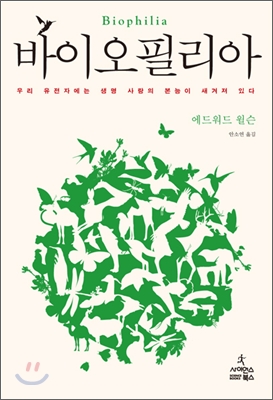 |
Description
Book Introduction
A Tribute to the Life of Edward Wilson, the Scientist of 'Consilience'!
"The instinct to love life is engraved in our genes."
Edward Wilson, a renowned science writer who won the Pulitzer Prize twice as a professor at Harvard University and a world authority on ant research who identified almost all of the numerous ant species in the Americas and was the first to analyze the function of pheromones, argues in his newly introduced book, Biophilia, that humans have an innate instinct to be drawn to life.
The 'biophilia' he speaks of is a combination of 'Bio-' (life) and '-philia' (liking or admiration), and he argues that this 'love of life' tendency is inherent in human instinct or nature, and that it very strongly influences our choices and actions.
In a modern society where interest in the conservation and development of biodiversity is growing, Biophilia will elevate the discussion on this topic to a deeper level.
From his childhood in South Florida as a boy naturalist and snake hunter to his more recent research, where he has trekked through the tropical jungles of Brazil and Suriname with fellow scholars, the author reflects on his history with life and shows how biophilia operates within the human psyche.
This is in line with what we have already seen in children's natural affinity and curiosity for living things like dogs and cats, and in the sense of relief modern people feel when they leave the city and go to natural environments like mountains and parks on weekends.
Based on these experiences, as you read this book, you will experience firsthand that biophilia is not simply a hypothesis, but a concept that will form the foundation for the future conservation and development of biodiversity.
The author also develops the concept of biophilia as a link between the natural sciences and the humanities and social sciences, and as an ethical foundation for environmentalism, biodiversity conservation, and development.
According to him, 'life' is a concept that has the potential to explain human existence itself and our future.
So, I'm saying that when scientists, humanists, and everyone else come together to discuss life and rationally realize that we need to value nature more, our attitude toward life can fundamentally change.
"The instinct to love life is engraved in our genes."
Edward Wilson, a renowned science writer who won the Pulitzer Prize twice as a professor at Harvard University and a world authority on ant research who identified almost all of the numerous ant species in the Americas and was the first to analyze the function of pheromones, argues in his newly introduced book, Biophilia, that humans have an innate instinct to be drawn to life.
The 'biophilia' he speaks of is a combination of 'Bio-' (life) and '-philia' (liking or admiration), and he argues that this 'love of life' tendency is inherent in human instinct or nature, and that it very strongly influences our choices and actions.
In a modern society where interest in the conservation and development of biodiversity is growing, Biophilia will elevate the discussion on this topic to a deeper level.
From his childhood in South Florida as a boy naturalist and snake hunter to his more recent research, where he has trekked through the tropical jungles of Brazil and Suriname with fellow scholars, the author reflects on his history with life and shows how biophilia operates within the human psyche.
This is in line with what we have already seen in children's natural affinity and curiosity for living things like dogs and cats, and in the sense of relief modern people feel when they leave the city and go to natural environments like mountains and parks on weekends.
Based on these experiences, as you read this book, you will experience firsthand that biophilia is not simply a hypothesis, but a concept that will form the foundation for the future conservation and development of biodiversity.
The author also develops the concept of biophilia as a link between the natural sciences and the humanities and social sciences, and as an ethical foundation for environmentalism, biodiversity conservation, and development.
According to him, 'life' is a concept that has the potential to explain human existence itself and our future.
So, I'm saying that when scientists, humanists, and everyone else come together to discuss life and rationally realize that we need to value nature more, our attitude toward life can fundamentally change.
- You can preview some of the book's contents.
Preview
index
Recommendation
Starting the article
Bernhardsdorf
superorganism
time machine
Bird of Paradise
Poetic species, human
snake
The dwelling place in our hearts
Ethics of Life
surname
References
Acknowledgements
Search
Starting the article
Bernhardsdorf
superorganism
time machine
Bird of Paradise
Poetic species, human
snake
The dwelling place in our hearts
Ethics of Life
surname
References
Acknowledgements
Search
Publisher's Review
We are always drawn to life!
To awaken the instinct to love life
A great proposal from Edward Wilson, the scientist of 'consilience'
The 10th Conference of the Parties to the Convention on Biological Diversity (CBD) closed on October 29th in Nagoya, Japan.
This conference, attended by 16,000 government officials from 192 Parties to the Convention on Biological Diversity, signed in June 1992, and representatives from international organizations and international civil society groups, resulted in a historic international agreement on the conservation of biodiversity.
The Nagoya Protocol on Access to Genetic Resources and Benefit-Sharing was adopted.
The Nagoya Protocol, which was signed 18 years after the Convention on Biological Diversity in 1992, is significant in that it introduced 'rules' that countries around the world can agree on for the development of biological resources, which had previously been the exclusive domain of a few advanced countries and multinational corporations, by requiring that benefits from the development of biological resources be shared with the country of origin.
This can be evaluated as a true progress toward the conservation and development of biodiversity, a resource with limitless potential.
However, scientific, philosophical, and practical discussions on the conservation and development of biodiversity still remain superficial.
It is true that Korea, where the biodiversity debate swings like a pendulum between the extremes of the economic-first argument that biodiversity is worth a few pennies and the fundamentalist argument that development must be abandoned in order to preserve the environment, is particularly vulnerable to the global environmental order after the Nagoya Protocol.
In this context, Edward O. Wilson published
Wilson's controversial work, Biophilia, will elevate the discussion on the protection and development of biodiversity to a deeper level.
Biophilia (which can be translated as love of life, life-loving, and life-giving, but is generally referred to as “love of life” in the text of the book) is a hypothetical concept proposed by Edward Wilson, a world-renowned scholar famous for the concept of consilience and social biology, and refers to “an innate tendency to value life and life-like processes.”
Wilson argues that this tendency is built into human nature or instinct, and that it powerfully influences our choices and actions, whether we know it or not.
Wilson explains the numerous abnormal reactions, such as the affinity, interest, and natural curiosity that children have toward living things like dogs and cats, the sense of relief and comfort they feel in appropriate natural environments like mountains and parks that attract tens of thousands of adults on weekends, and the atopy and emotional disorders that occur in artificial environments lacking natural objects, using the concept of biophilia.
If evolutionary biologists, psychologists, and cognitive scientists join hands, they will be able to scientifically demonstrate the inherent biophilic tendencies in human nature, and present a grand intellectual vision that will allow us to rebuild the human love for nature and the ethics of environmental conservation from this biophilic tendencies.
Much of the concept of 'love of life' is now clear, but there is still much to be added.
In this book, I will demonstrate that human exploration of life and a sense of intimacy with it are profound and complex processes essential to spiritual growth.
Although it is not yet highly regarded in the fields of philosophy and religion, this life-loving tendency shapes our existence, shapes our spirit, and inspires hope.
Moreover, modern biologists have developed a completely different perspective on the world, one that coincidentally aligns with the spirit and direction of the love of life.
That is, when instinct works in the same direction as reason.
My conclusion is optimistic:
To the extent that we understand other creatures, we place greater value on them and on ourselves.
-In the text
Edward Wilson's Intimate Confession of Love for Life
Choi Jae-cheon, a professor emeritus at Ewha Womans University and a disciple of Edward Wilson, evaluates this book as Edward Wilson's most personal book.
Because it boldly reveals “his thoughts on human nature that has not yet been revealed, and perhaps will never be revealed.”
This is because the concept of ‘biophilia’, which has not yet been officially recognized by the scientific community, is being introduced in a “highly subjective and emotional” manner.
It is a bold and daring proposal for Edward Wilson, a renowned science writer who won the Pulitzer Prize twice as a professor at Harvard University, a world authority on ant research who identified almost all of the numerous ant species in the Americas and was the first to analyze the function of pheromones, and a founder of island biogeography and sociobiology, renowned for his meticulous scientific research.
However, as you read Wilson's book, you will discover that the biophilia hypothesis is not just a simple hypothesis, but a scientific and realistic concept that will eventually become the basis for the conservation and development of biodiversity.
Edward Wilbuck reflects on his nearly half-century of life, from his childhood as a boy naturalist and snake hunter in South Florida to his more recent research expeditions through the tropical jungles of Brazil and Suriname alongside fellow scientists, vividly illustrating how biophilia operates within the human psyche.
Reading this book by Wilson, who analyzes the mechanisms of biophilia at work in the mind of a biologist who squats next to a fallen tree stump in a corner of the jungle and observes the procession of leafcutter ants for hours, crossing academic fields from evolutionary biology to literature, you cannot help but admit that biophilia is definitely built into our minds, or somewhere in our genes.
The naturalist's insights are simply a branch of the life-loving instinct we all share, and these insights can be developed in detail to benefit an ever-increasing number of people.
Humans are noble not because they are superior to other creatures, but because their knowledge of other animals enhances the true meaning of life.
-In the text
The forest has already disappeared
We are still living on high alert.
Biophilia, the human instinct to love life, is still at work in modern cities as well as in the rainforests of Bernhardsdorf, Suriname, or the Amazon Basin in Brazil.
Wilson finds this evidence in modern science and works of art.
In particular, it analyzes how biophilia tendencies work, citing the instinctive aversion to snakes and the numerous myths, legends, and works of art featuring snake motifs.
Cases of instinctive snake phobia, found in humans, chimpanzees, and even in primates close to us, such as long-tailed macaques and vervet monkeys, demonstrate that responses to life, or to specific creatures, can be hardwired into our instincts.
And such fearful reactions are sublimated through culture in human society.
Wilson meticulously analyzes how the fear of snakes was sublimated into myths and legends in Hinduism, Judaism, ancient Greek polytheism, and ancient mythology of Central and South America, proving biophilia.
The existence of biophilia is also proven in habitat selection, that is, in certain tendencies that organisms show when choosing a habitat.
All living things, from bacteria to plants and even higher animals, fail to survive if they fail to choose an appropriate habitat.
Natural selection thus gives organisms the ability to choose suitable habitats or a tendency to prefer suitable habitats.
Wilson builds on this by showing that humans also have instinctive habitat preferences.
Our ancestors evolved on hilly terrain with patches of savanna, or grassland, dotted with trees, and even today, humans find comfort and security in similar terrain.
As a result, people build their homes on terrain overlooking grasslands (they point out that the wealthy, who have the freedom to choose where to build their homes, tend to build on such terrain), and when they create parks in urban areas, they create landscapes that could be called artificial savannas.
Through these cases and ongoing research, Wilson shows that housing or habitat choice is not simply a matter of aesthetic taste, but rather an evolutionary psychological problem driven by biophilia.
If so, we need to pay more attention to how much we depend on other life forms.
The brain tends to weave its mind from a multitude of contacts that seem wasteful, as well as the minimal contacts necessary for existence.
In a sense, waste may be proof of life.
Just as monkeys seem to thrive in lab cages and cows grow fat on a diet of soybeans, humans can grow up seemingly normal in environments devoid of plants and animals.
If you ask them if they are happy, they will probably say yes.
But someone who grew up like that will be lacking in some absolutely essential things.
One thing I can say for sure is that on Earth, as in space, there is more to life than just a lawn, potted plants, caged parakeets, puppies, and rubber snakes.
Humans are beings that must live together with other living creatures.
-In the text
We become noble as we know and love other creatures.
Wilson's concept of biophilia goes beyond simply explaining human psychological mechanisms.
Wilson develops this concept of biophilia as a link between the natural sciences and the humanities and social sciences, and as a foundation for an ethics of environmentalism, biodiversity conservation, and development.
Wilson doesn't want the discussions between natural scientists and humanists surrounding life to remain limited to superficial topics like genetic engineering or the development of human organs.
Wilson argues that the topic of life has the potential to evolve into a discussion encompassing the very existence of humans, their past, present, and future, and even to replace religion.
I argue that we need a discussion that can embrace the fact that the human species is genetically extremely close relatives of chimpanzees and even those microscopic bacteria, and the dilemma that if we are to coexist with nature, we will inevitably destroy it to some extent.
I argue that the discourse on life conservation will struggle to mature further unless natural scientists, humanists, and everyone else gather to discuss how protecting nature can help protect and develop the human spirit, and how science—by dissecting, dissecting, and analyzing nature in detail and thus dismantling its mysterious aura—can revive genuine affection and interest in nature and life.
However, Wilson offers an optimistic outlook, saying that “as knowledge increases, ethics will fundamentally change.”
It emphasizes that a new path opens up when we come to understand clearly, rationally, what we should value more and what it means to value, rather than just emotionally.
In fact, we have never conquered the world, nor have we ever understood it.
We just think we rule the world.
We don't really understand why we react to other creatures in certain ways, or why they need us in different ways.
The most common myths about humans killing each other and destroying the environment are outdated, unreliable, and destructive.
The more we understand the mind itself as a survival mechanism, the more we will respect living things for purely rational reasons.
-In the text
Wilson argues that we are human because of our “special way of relating to other creatures.”
It took 18 years from the Convention on Biological Diversity in 1992 to the Nagoya Protocol in 2010.
It took us 18 years to become one step more 'human'.
So how long will it take to take the next step?
As our understanding and empathy for biophilia, the instinct for loving life that Wilson proposed, deepens, that time will decrease.
To awaken the instinct to love life
A great proposal from Edward Wilson, the scientist of 'consilience'
The 10th Conference of the Parties to the Convention on Biological Diversity (CBD) closed on October 29th in Nagoya, Japan.
This conference, attended by 16,000 government officials from 192 Parties to the Convention on Biological Diversity, signed in June 1992, and representatives from international organizations and international civil society groups, resulted in a historic international agreement on the conservation of biodiversity.
The Nagoya Protocol on Access to Genetic Resources and Benefit-Sharing was adopted.
The Nagoya Protocol, which was signed 18 years after the Convention on Biological Diversity in 1992, is significant in that it introduced 'rules' that countries around the world can agree on for the development of biological resources, which had previously been the exclusive domain of a few advanced countries and multinational corporations, by requiring that benefits from the development of biological resources be shared with the country of origin.
This can be evaluated as a true progress toward the conservation and development of biodiversity, a resource with limitless potential.
However, scientific, philosophical, and practical discussions on the conservation and development of biodiversity still remain superficial.
It is true that Korea, where the biodiversity debate swings like a pendulum between the extremes of the economic-first argument that biodiversity is worth a few pennies and the fundamentalist argument that development must be abandoned in order to preserve the environment, is particularly vulnerable to the global environmental order after the Nagoya Protocol.
In this context, Edward O. Wilson published
Wilson's controversial work, Biophilia, will elevate the discussion on the protection and development of biodiversity to a deeper level.
Biophilia (which can be translated as love of life, life-loving, and life-giving, but is generally referred to as “love of life” in the text of the book) is a hypothetical concept proposed by Edward Wilson, a world-renowned scholar famous for the concept of consilience and social biology, and refers to “an innate tendency to value life and life-like processes.”
Wilson argues that this tendency is built into human nature or instinct, and that it powerfully influences our choices and actions, whether we know it or not.
Wilson explains the numerous abnormal reactions, such as the affinity, interest, and natural curiosity that children have toward living things like dogs and cats, the sense of relief and comfort they feel in appropriate natural environments like mountains and parks that attract tens of thousands of adults on weekends, and the atopy and emotional disorders that occur in artificial environments lacking natural objects, using the concept of biophilia.
If evolutionary biologists, psychologists, and cognitive scientists join hands, they will be able to scientifically demonstrate the inherent biophilic tendencies in human nature, and present a grand intellectual vision that will allow us to rebuild the human love for nature and the ethics of environmental conservation from this biophilic tendencies.
Much of the concept of 'love of life' is now clear, but there is still much to be added.
In this book, I will demonstrate that human exploration of life and a sense of intimacy with it are profound and complex processes essential to spiritual growth.
Although it is not yet highly regarded in the fields of philosophy and religion, this life-loving tendency shapes our existence, shapes our spirit, and inspires hope.
Moreover, modern biologists have developed a completely different perspective on the world, one that coincidentally aligns with the spirit and direction of the love of life.
That is, when instinct works in the same direction as reason.
My conclusion is optimistic:
To the extent that we understand other creatures, we place greater value on them and on ourselves.
-In the text
Edward Wilson's Intimate Confession of Love for Life
Choi Jae-cheon, a professor emeritus at Ewha Womans University and a disciple of Edward Wilson, evaluates this book as Edward Wilson's most personal book.
Because it boldly reveals “his thoughts on human nature that has not yet been revealed, and perhaps will never be revealed.”
This is because the concept of ‘biophilia’, which has not yet been officially recognized by the scientific community, is being introduced in a “highly subjective and emotional” manner.
It is a bold and daring proposal for Edward Wilson, a renowned science writer who won the Pulitzer Prize twice as a professor at Harvard University, a world authority on ant research who identified almost all of the numerous ant species in the Americas and was the first to analyze the function of pheromones, and a founder of island biogeography and sociobiology, renowned for his meticulous scientific research.
However, as you read Wilson's book, you will discover that the biophilia hypothesis is not just a simple hypothesis, but a scientific and realistic concept that will eventually become the basis for the conservation and development of biodiversity.
Edward Wilbuck reflects on his nearly half-century of life, from his childhood as a boy naturalist and snake hunter in South Florida to his more recent research expeditions through the tropical jungles of Brazil and Suriname alongside fellow scientists, vividly illustrating how biophilia operates within the human psyche.
Reading this book by Wilson, who analyzes the mechanisms of biophilia at work in the mind of a biologist who squats next to a fallen tree stump in a corner of the jungle and observes the procession of leafcutter ants for hours, crossing academic fields from evolutionary biology to literature, you cannot help but admit that biophilia is definitely built into our minds, or somewhere in our genes.
The naturalist's insights are simply a branch of the life-loving instinct we all share, and these insights can be developed in detail to benefit an ever-increasing number of people.
Humans are noble not because they are superior to other creatures, but because their knowledge of other animals enhances the true meaning of life.
-In the text
The forest has already disappeared
We are still living on high alert.
Biophilia, the human instinct to love life, is still at work in modern cities as well as in the rainforests of Bernhardsdorf, Suriname, or the Amazon Basin in Brazil.
Wilson finds this evidence in modern science and works of art.
In particular, it analyzes how biophilia tendencies work, citing the instinctive aversion to snakes and the numerous myths, legends, and works of art featuring snake motifs.
Cases of instinctive snake phobia, found in humans, chimpanzees, and even in primates close to us, such as long-tailed macaques and vervet monkeys, demonstrate that responses to life, or to specific creatures, can be hardwired into our instincts.
And such fearful reactions are sublimated through culture in human society.
Wilson meticulously analyzes how the fear of snakes was sublimated into myths and legends in Hinduism, Judaism, ancient Greek polytheism, and ancient mythology of Central and South America, proving biophilia.
The existence of biophilia is also proven in habitat selection, that is, in certain tendencies that organisms show when choosing a habitat.
All living things, from bacteria to plants and even higher animals, fail to survive if they fail to choose an appropriate habitat.
Natural selection thus gives organisms the ability to choose suitable habitats or a tendency to prefer suitable habitats.
Wilson builds on this by showing that humans also have instinctive habitat preferences.
Our ancestors evolved on hilly terrain with patches of savanna, or grassland, dotted with trees, and even today, humans find comfort and security in similar terrain.
As a result, people build their homes on terrain overlooking grasslands (they point out that the wealthy, who have the freedom to choose where to build their homes, tend to build on such terrain), and when they create parks in urban areas, they create landscapes that could be called artificial savannas.
Through these cases and ongoing research, Wilson shows that housing or habitat choice is not simply a matter of aesthetic taste, but rather an evolutionary psychological problem driven by biophilia.
If so, we need to pay more attention to how much we depend on other life forms.
The brain tends to weave its mind from a multitude of contacts that seem wasteful, as well as the minimal contacts necessary for existence.
In a sense, waste may be proof of life.
Just as monkeys seem to thrive in lab cages and cows grow fat on a diet of soybeans, humans can grow up seemingly normal in environments devoid of plants and animals.
If you ask them if they are happy, they will probably say yes.
But someone who grew up like that will be lacking in some absolutely essential things.
One thing I can say for sure is that on Earth, as in space, there is more to life than just a lawn, potted plants, caged parakeets, puppies, and rubber snakes.
Humans are beings that must live together with other living creatures.
-In the text
We become noble as we know and love other creatures.
Wilson's concept of biophilia goes beyond simply explaining human psychological mechanisms.
Wilson develops this concept of biophilia as a link between the natural sciences and the humanities and social sciences, and as a foundation for an ethics of environmentalism, biodiversity conservation, and development.
Wilson doesn't want the discussions between natural scientists and humanists surrounding life to remain limited to superficial topics like genetic engineering or the development of human organs.
Wilson argues that the topic of life has the potential to evolve into a discussion encompassing the very existence of humans, their past, present, and future, and even to replace religion.
I argue that we need a discussion that can embrace the fact that the human species is genetically extremely close relatives of chimpanzees and even those microscopic bacteria, and the dilemma that if we are to coexist with nature, we will inevitably destroy it to some extent.
I argue that the discourse on life conservation will struggle to mature further unless natural scientists, humanists, and everyone else gather to discuss how protecting nature can help protect and develop the human spirit, and how science—by dissecting, dissecting, and analyzing nature in detail and thus dismantling its mysterious aura—can revive genuine affection and interest in nature and life.
However, Wilson offers an optimistic outlook, saying that “as knowledge increases, ethics will fundamentally change.”
It emphasizes that a new path opens up when we come to understand clearly, rationally, what we should value more and what it means to value, rather than just emotionally.
In fact, we have never conquered the world, nor have we ever understood it.
We just think we rule the world.
We don't really understand why we react to other creatures in certain ways, or why they need us in different ways.
The most common myths about humans killing each other and destroying the environment are outdated, unreliable, and destructive.
The more we understand the mind itself as a survival mechanism, the more we will respect living things for purely rational reasons.
-In the text
Wilson argues that we are human because of our “special way of relating to other creatures.”
It took 18 years from the Convention on Biological Diversity in 1992 to the Nagoya Protocol in 2010.
It took us 18 years to become one step more 'human'.
So how long will it take to take the next step?
As our understanding and empathy for biophilia, the instinct for loving life that Wilson proposed, deepens, that time will decrease.
GOODS SPECIFICS
- Publication date: November 10, 2010
- Page count, weight, size: 240 pages | 346g | 143*210*20mm
- ISBN13: 9788983715395
- ISBN10: 8983715391
You may also like
카테고리
korean


korean

![GQ KOREA Mark (Monthly): December [2025]](http://librairie.coreenne.fr/cdn/shop/files/8ef265dbbfbf186523ed75ba7319009d.jpg?v=1765340328&width=3840)


