

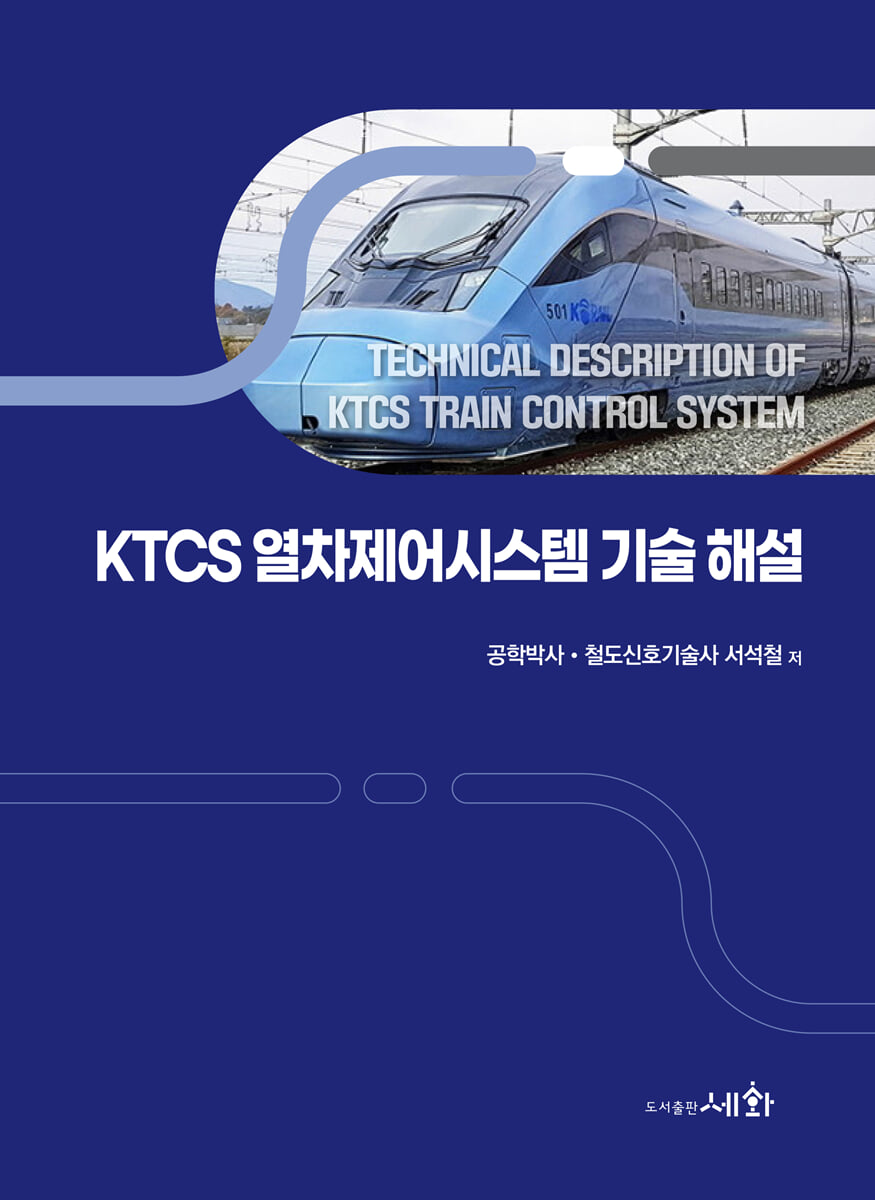
KTCS Train Control System Technology Explanation
 |
Description
index
Part 1: Understanding the KTCS Train Control System
Chapter 1: Background of the Development of the Train Control System (KTCS-2)
1.1 Development Background and Necessity: Standardization of Trunk and Urban Railway Signaling Systems 12
1.2 Overview of the Railway Signal Train Control System 12
1.3 Overview of ERTMS/ETCS and CBTC 14
1.4 Overview and Differences between ERTMS and KTCS-2 18
Chapter 2 Development of the Korean Train Control System (KTCS): Stages 1, 2, and 3
2.1 KTCS-1 (ETCS Level 1) 31
2.2 KTCS-2 (ETCS Level 2) 32
2.3 KTCS-3 (ETCS Level 3) 33
Chapter 3: KTCS-2 and KTCS-M: Comparison of Key Features and Differences
3.1. Key Features and System Structure of KTCS-2 35
3.2. Key Features and System Structure of KTCS-M 36
3.3. In-depth Analysis of Technical Similarities and Differences between KTCS-2 and KTCS-M 38
Part 2 Trunk/High-Speed Railway Standards - KTCS-2
Chapter 4 KTCS-2 System Configuration and Functions
4.1 Wayside Equipment 44
4.2 Onboard Equipment 81
Chapter 5: Analysis of Key Technology Elements
5.1.
Location Detection Technology 91
5.2.
Movement Authority (MA) Method 91
5.3. Summary of KTCS braking characteristics 92
5.4. DMI (Driver Machine Interface) Design and Operation Patterns 96
5.5. ETCS-2 Level Transition: Principles and Procedures 100
Chapter 6 Neural Networks of KTCS-2 and LTE-R
6.1.
LTE-R 102, a railway-specific communication technology
6.2.
Communication 103 that transmits voice, video, and data together
6.3.
3-Step Verification Safety 103
6.4.
Central Center Equipment for the Railway Wireless Communication Network (LTE-R) 104
6.5. LTE-R Features and Frequency Details 104
Chapter 7 Operational Logic of KTCS-2
7.1. The Role and Logic Algorithm of KTCS-2 RBC 106
7.2. KTCS-2's Inter-Train Spacing Maintenance Technology 122
7.3. KTCS-2 Route Setting and Train Route Processing 133
7.4. KTCS-2 Abnormal Situation Response Logic 136
7.5. KTCS - Operation Mode 138
Chapter 8: Effects and Challenges of KTCS-2 Introduction
8.1.
Analysis of increased transport capacity and reduced maintenance costs [Quantitative Effects] 145
8.2.
Breaking Free from Technology Dependency and Strengthening the K-Rail Brand [Qualitative Effects] 146
8.3.
Changes in the Work of Engineers and Controllers [Human Effects] 146
8.4.
Simplifying signaling devices and reducing equipment maintenance costs 148
8.5.
Improving the level of driving automation 149
8.6.
Communication Failure/EMI Problems and Countermeasures 150
Chapter 9 KTCS-2 Safety Certification and Authentication
9.1.
Fail-Safe Principle and Multi-Layered Implementation 152
9.2.
Development Life Cycle and Safety Activities (V&V) 155
9.3.
Understanding and Applying Safety Integrity Levels (SILs) 160
9.4.
Safety Function Assessment (GA & SA) 161
9.5.
System Approval and Certification Procedure 164
9.6.
Safety Case 166
Chapter 10 Performance Verification and Application Cases
10.1. KTCS-2 RAMS Requirements 169
10.2.
The First Testbed: The Success of the Jeolla Line Pilot Project 173
10.3.
Case 173: The first metropolitan railway outside the metropolitan area, the Daegyeong Line
10.4.
Expansion of the National High-Speed Rail Network: Plans to Implement the Gyeongbu and Honam High-Speed Rail Lines 174
Chapter 11: Comprehensive Analysis of ETCS-2 System Testing and Certification Procedures (Multitel Case Study)
11.1.
The Need and Purpose of Laboratory Validation 175
11.2. Understanding the ETCS Level 2 System 176
11.3.
Roles and Procedures of Testing and Certification Bodies 177
11.4.
Type 178 of Simulation Test Scenarios
11.5.
Interface and Performance Verification Test Procedure 182
11.6.
Integrated Performance Verification Based on Operational Scenarios 185
11.7.
Verification and Safety Assurance 187
Chapter 12 Training of Maintenance Technicians, Engineers, and Controllers for the Introduction of KTCS-2
12.1.
Maintainer 188
12.2.
Engineer 191
12.3.
Controller 196
Part 3 Urban Railway Standards - KTCS-M
Chapter 13 Understanding KTCS-M
13.1. KTCS-M (CBTC-based) - Urban Railway Standard 202
13.2.
Application of Urban Railway Signaling System (KTCS-M) 204
13.3. CBTC-based Mobile Blocking and Fully Autonomous Driving (GoA 4) 208
13.4. KTCS-M System Architecture and Features 209
Chapter 14: Effects and Prospects of KTCS-M Introduction
14.1. Maximizing Urban Rail Operational Efficiency and Reducing Costs with the Introduction of KTCS-M 214
14.2.
Changes in the duties of engineers and controllers 215
14.3. KTCS-M and National Railway Network Integrated Signaling System Linkage Project 218
Chapter 15: Analysis of KTCS-M Application Cases
15.1.
The Cornerstone of Technology Verification - Detailed Analysis of the Ilsan Line Pilot Project 226
15.2.
First Commercial Milestone: Fully Driverless Operation (GoA 4) on the Sillim Line 228
15.3.
The Diffusion of Standards - Expansion of Metropolitan Rail and Future Prospects 229
Part 4: Next-Generation Technologies, Future Development Directions, and Technology Standards
Chapter 16: Next-Generation Technologies: KTCS-3 and Virtual Combination
16.1.
True wireless control without orbital circuits 234
16.2. KTCS-3 System Features 234
Chapter 17: Future Railway Technologies: Virtual Coupling and Hybrid Level 3
17.1.
Virtual Coupling Technology: Trains Communicate Alone 244
17.2.
Hybrid Level 3 244
Chapter 18: Challenges and Development Directions of the K-Train Control System
18.1.
250 Challenges in the Global Market and Strengthening Competitiveness
18.2.
Challenge 251
18.3.
AI-based predictive maintenance system integration plan 252
18.4.
Cybersecurity, Resilience Enhancement, and Digital Twin Applications 254
18.5.
Comprehensive Development Direction 256
Chapter 19 Technical Criteria and Standards: KRS and International Standards
19.1.
National Railway Signal Standard (KRS) 258
19.2. See ERTMS/ETCS Level 2 Technical Documentation 259
19.3. Application of ISO/IEC/ITU related standards 260
Part 5: Technical Lectures for Signal Engineers
Chapter 20: Understanding the KTCS-2 Train Control System
20.1. The emergence and technical background of KTCS-2 268
20.2. KTCS-2 Fixed Blockage System Operation Analysis 277
20.3. KTCS (ETCS) Braking Model Technical Description 285
20.4.
Railway Signaling System Communication Protocol Technology Description 296
20.5.
Standardization of Train Control System (KTCS-2) Performance Indicators and RAMS Engineering 314
20.6. KTCS-2 Cybersecurity Description 321
20.7.
Testing and Certification Procedures for the Train Control System (KTCS-2) 337
20.8.
Manual for responding to malfunctions and deterioration of the train control system (KTCS-2) 346
20.9. KTCS-2 Communications Engineering for Signal Engineers 353
20.10.
Analysis of the Core Principles and Architecture of the Korean CBTC System (KTCS-M) 373
20.11.
Theory, Application, and Increase of Railway Track Capacity 389
20.12. RAMS Fundamentals for KTCS Signal Engineers 400
supplement
1.
Signal Abbreviation 416
2.
Signal Terminology 420
3. KTCS-2 Communication System Terminology and Abbreviations 435
4. EULYNX: A standardization initiative driving innovation in European rail signaling systems 443
5.
Communications-related Data 445
Reference 449
Conclusion
Chapter 1: Background of the Development of the Train Control System (KTCS-2)
1.1 Development Background and Necessity: Standardization of Trunk and Urban Railway Signaling Systems 12
1.2 Overview of the Railway Signal Train Control System 12
1.3 Overview of ERTMS/ETCS and CBTC 14
1.4 Overview and Differences between ERTMS and KTCS-2 18
Chapter 2 Development of the Korean Train Control System (KTCS): Stages 1, 2, and 3
2.1 KTCS-1 (ETCS Level 1) 31
2.2 KTCS-2 (ETCS Level 2) 32
2.3 KTCS-3 (ETCS Level 3) 33
Chapter 3: KTCS-2 and KTCS-M: Comparison of Key Features and Differences
3.1. Key Features and System Structure of KTCS-2 35
3.2. Key Features and System Structure of KTCS-M 36
3.3. In-depth Analysis of Technical Similarities and Differences between KTCS-2 and KTCS-M 38
Part 2 Trunk/High-Speed Railway Standards - KTCS-2
Chapter 4 KTCS-2 System Configuration and Functions
4.1 Wayside Equipment 44
4.2 Onboard Equipment 81
Chapter 5: Analysis of Key Technology Elements
5.1.
Location Detection Technology 91
5.2.
Movement Authority (MA) Method 91
5.3. Summary of KTCS braking characteristics 92
5.4. DMI (Driver Machine Interface) Design and Operation Patterns 96
5.5. ETCS-2 Level Transition: Principles and Procedures 100
Chapter 6 Neural Networks of KTCS-2 and LTE-R
6.1.
LTE-R 102, a railway-specific communication technology
6.2.
Communication 103 that transmits voice, video, and data together
6.3.
3-Step Verification Safety 103
6.4.
Central Center Equipment for the Railway Wireless Communication Network (LTE-R) 104
6.5. LTE-R Features and Frequency Details 104
Chapter 7 Operational Logic of KTCS-2
7.1. The Role and Logic Algorithm of KTCS-2 RBC 106
7.2. KTCS-2's Inter-Train Spacing Maintenance Technology 122
7.3. KTCS-2 Route Setting and Train Route Processing 133
7.4. KTCS-2 Abnormal Situation Response Logic 136
7.5. KTCS - Operation Mode 138
Chapter 8: Effects and Challenges of KTCS-2 Introduction
8.1.
Analysis of increased transport capacity and reduced maintenance costs [Quantitative Effects] 145
8.2.
Breaking Free from Technology Dependency and Strengthening the K-Rail Brand [Qualitative Effects] 146
8.3.
Changes in the Work of Engineers and Controllers [Human Effects] 146
8.4.
Simplifying signaling devices and reducing equipment maintenance costs 148
8.5.
Improving the level of driving automation 149
8.6.
Communication Failure/EMI Problems and Countermeasures 150
Chapter 9 KTCS-2 Safety Certification and Authentication
9.1.
Fail-Safe Principle and Multi-Layered Implementation 152
9.2.
Development Life Cycle and Safety Activities (V&V) 155
9.3.
Understanding and Applying Safety Integrity Levels (SILs) 160
9.4.
Safety Function Assessment (GA & SA) 161
9.5.
System Approval and Certification Procedure 164
9.6.
Safety Case 166
Chapter 10 Performance Verification and Application Cases
10.1. KTCS-2 RAMS Requirements 169
10.2.
The First Testbed: The Success of the Jeolla Line Pilot Project 173
10.3.
Case 173: The first metropolitan railway outside the metropolitan area, the Daegyeong Line
10.4.
Expansion of the National High-Speed Rail Network: Plans to Implement the Gyeongbu and Honam High-Speed Rail Lines 174
Chapter 11: Comprehensive Analysis of ETCS-2 System Testing and Certification Procedures (Multitel Case Study)
11.1.
The Need and Purpose of Laboratory Validation 175
11.2. Understanding the ETCS Level 2 System 176
11.3.
Roles and Procedures of Testing and Certification Bodies 177
11.4.
Type 178 of Simulation Test Scenarios
11.5.
Interface and Performance Verification Test Procedure 182
11.6.
Integrated Performance Verification Based on Operational Scenarios 185
11.7.
Verification and Safety Assurance 187
Chapter 12 Training of Maintenance Technicians, Engineers, and Controllers for the Introduction of KTCS-2
12.1.
Maintainer 188
12.2.
Engineer 191
12.3.
Controller 196
Part 3 Urban Railway Standards - KTCS-M
Chapter 13 Understanding KTCS-M
13.1. KTCS-M (CBTC-based) - Urban Railway Standard 202
13.2.
Application of Urban Railway Signaling System (KTCS-M) 204
13.3. CBTC-based Mobile Blocking and Fully Autonomous Driving (GoA 4) 208
13.4. KTCS-M System Architecture and Features 209
Chapter 14: Effects and Prospects of KTCS-M Introduction
14.1. Maximizing Urban Rail Operational Efficiency and Reducing Costs with the Introduction of KTCS-M 214
14.2.
Changes in the duties of engineers and controllers 215
14.3. KTCS-M and National Railway Network Integrated Signaling System Linkage Project 218
Chapter 15: Analysis of KTCS-M Application Cases
15.1.
The Cornerstone of Technology Verification - Detailed Analysis of the Ilsan Line Pilot Project 226
15.2.
First Commercial Milestone: Fully Driverless Operation (GoA 4) on the Sillim Line 228
15.3.
The Diffusion of Standards - Expansion of Metropolitan Rail and Future Prospects 229
Part 4: Next-Generation Technologies, Future Development Directions, and Technology Standards
Chapter 16: Next-Generation Technologies: KTCS-3 and Virtual Combination
16.1.
True wireless control without orbital circuits 234
16.2. KTCS-3 System Features 234
Chapter 17: Future Railway Technologies: Virtual Coupling and Hybrid Level 3
17.1.
Virtual Coupling Technology: Trains Communicate Alone 244
17.2.
Hybrid Level 3 244
Chapter 18: Challenges and Development Directions of the K-Train Control System
18.1.
250 Challenges in the Global Market and Strengthening Competitiveness
18.2.
Challenge 251
18.3.
AI-based predictive maintenance system integration plan 252
18.4.
Cybersecurity, Resilience Enhancement, and Digital Twin Applications 254
18.5.
Comprehensive Development Direction 256
Chapter 19 Technical Criteria and Standards: KRS and International Standards
19.1.
National Railway Signal Standard (KRS) 258
19.2. See ERTMS/ETCS Level 2 Technical Documentation 259
19.3. Application of ISO/IEC/ITU related standards 260
Part 5: Technical Lectures for Signal Engineers
Chapter 20: Understanding the KTCS-2 Train Control System
20.1. The emergence and technical background of KTCS-2 268
20.2. KTCS-2 Fixed Blockage System Operation Analysis 277
20.3. KTCS (ETCS) Braking Model Technical Description 285
20.4.
Railway Signaling System Communication Protocol Technology Description 296
20.5.
Standardization of Train Control System (KTCS-2) Performance Indicators and RAMS Engineering 314
20.6. KTCS-2 Cybersecurity Description 321
20.7.
Testing and Certification Procedures for the Train Control System (KTCS-2) 337
20.8.
Manual for responding to malfunctions and deterioration of the train control system (KTCS-2) 346
20.9. KTCS-2 Communications Engineering for Signal Engineers 353
20.10.
Analysis of the Core Principles and Architecture of the Korean CBTC System (KTCS-M) 373
20.11.
Theory, Application, and Increase of Railway Track Capacity 389
20.12. RAMS Fundamentals for KTCS Signal Engineers 400
supplement
1.
Signal Abbreviation 416
2.
Signal Terminology 420
3. KTCS-2 Communication System Terminology and Abbreviations 435
4. EULYNX: A standardization initiative driving innovation in European rail signaling systems 443
5.
Communications-related Data 445
Reference 449
Conclusion
Publisher's Review
preface
Imagine the sleek body of the KTX train traversing the autumn plains, overflowing with golden waves, at 300 km/h.
The sight of that giant lump of iron controlling itself without a single error, reading invisible signals, according to a tightly packed schedule, is now a familiar sight to us.
But behind that familiarity lies the decades of persistent struggle for independence in Korean railway technology, and the dazzling achievements we have finally achieved.
This is the Korean Train Control System (KTCS), represented by KTCS-2 for trunk and high-speed railways and KTCS-M for urban railways.
Having observed the development of our railways from the field for a long time, I have one regret.
Despite having developed a world-class train control system with our own hands, surpassing the past when we had to rely on foreign technology from countries like France and Germany, the fact is that this great achievement is known only to a small number of experts.
I wanted to share with more people how this amazing technology works and the story of the intense effort that goes into it.
This book began with that very thirst.
In particular, this technical commentary was written based on the author's experience of conducting technical specifications and on-site construction supervision (specification review, LAB simulation test, FAT, SA, comprehensive test operation, etc.) for three years on the KTCS-2 Jeolla Line pilot section.
We hope this book will serve as an in-depth guide for signal engineers developing expertise in the field, enabling them to penetrate the core of technology and apply it to their work.
We also aim to guide everyone, from students aspiring to become future railway professionals to readers interested in the present and future of our technology, to easily and deeply explore the world of KTCS.
This book is not a simple list of knowledge, but rather a complete journey.
Starting from the basic principles of train control, we will systematically examine the core technologies and system structures of KTCS-2, which has become the standard for trunk/high-speed railways, and KTCS-M, which is optimized for urban railway environments.
Furthermore, we will witness vivid examples of applications that are transforming the Korean railway landscape and even envision the future of railways, such as "virtual connections" where trains move wirelessly as one.
Above all, we have prepared a separate "Technical Lecture" chapter (Part 5) for engineers in the field, providing in-depth coverage of key topics they will encounter in practice, such as RAMS engineering, cybersecurity, and braking models.
I would also like to express my gratitude to Chairman Jeong and all the staff at Kyungin Technology Co., Ltd. for their support in writing and compiling this book.
I sincerely hope that this book will be an enjoyable and informative intellectual exploration that will allow you to feel the powerful pulse of KTCS, the new heart of K-rail, and to design its future together.
Author Seo Seok-cheol's dream
Imagine the sleek body of the KTX train traversing the autumn plains, overflowing with golden waves, at 300 km/h.
The sight of that giant lump of iron controlling itself without a single error, reading invisible signals, according to a tightly packed schedule, is now a familiar sight to us.
But behind that familiarity lies the decades of persistent struggle for independence in Korean railway technology, and the dazzling achievements we have finally achieved.
This is the Korean Train Control System (KTCS), represented by KTCS-2 for trunk and high-speed railways and KTCS-M for urban railways.
Having observed the development of our railways from the field for a long time, I have one regret.
Despite having developed a world-class train control system with our own hands, surpassing the past when we had to rely on foreign technology from countries like France and Germany, the fact is that this great achievement is known only to a small number of experts.
I wanted to share with more people how this amazing technology works and the story of the intense effort that goes into it.
This book began with that very thirst.
In particular, this technical commentary was written based on the author's experience of conducting technical specifications and on-site construction supervision (specification review, LAB simulation test, FAT, SA, comprehensive test operation, etc.) for three years on the KTCS-2 Jeolla Line pilot section.
We hope this book will serve as an in-depth guide for signal engineers developing expertise in the field, enabling them to penetrate the core of technology and apply it to their work.
We also aim to guide everyone, from students aspiring to become future railway professionals to readers interested in the present and future of our technology, to easily and deeply explore the world of KTCS.
This book is not a simple list of knowledge, but rather a complete journey.
Starting from the basic principles of train control, we will systematically examine the core technologies and system structures of KTCS-2, which has become the standard for trunk/high-speed railways, and KTCS-M, which is optimized for urban railway environments.
Furthermore, we will witness vivid examples of applications that are transforming the Korean railway landscape and even envision the future of railways, such as "virtual connections" where trains move wirelessly as one.
Above all, we have prepared a separate "Technical Lecture" chapter (Part 5) for engineers in the field, providing in-depth coverage of key topics they will encounter in practice, such as RAMS engineering, cybersecurity, and braking models.
I would also like to express my gratitude to Chairman Jeong and all the staff at Kyungin Technology Co., Ltd. for their support in writing and compiling this book.
I sincerely hope that this book will be an enjoyable and informative intellectual exploration that will allow you to feel the powerful pulse of KTCS, the new heart of K-rail, and to design its future together.
Author Seo Seok-cheol's dream
GOODS SPECIFICS
- Date of issue: November 20, 2025
- Page count, weight, size: 456 pages | 190*260*30mm
- ISBN13: 9788931713619
- ISBN10: 8931713614
You may also like
카테고리
korean


korean

![GQ KOREA Mark (Monthly): December [2025]](http://librairie.coreenne.fr/cdn/shop/files/8ef265dbbfbf186523ed75ba7319009d.jpg?v=1765340328&width=3840)


