

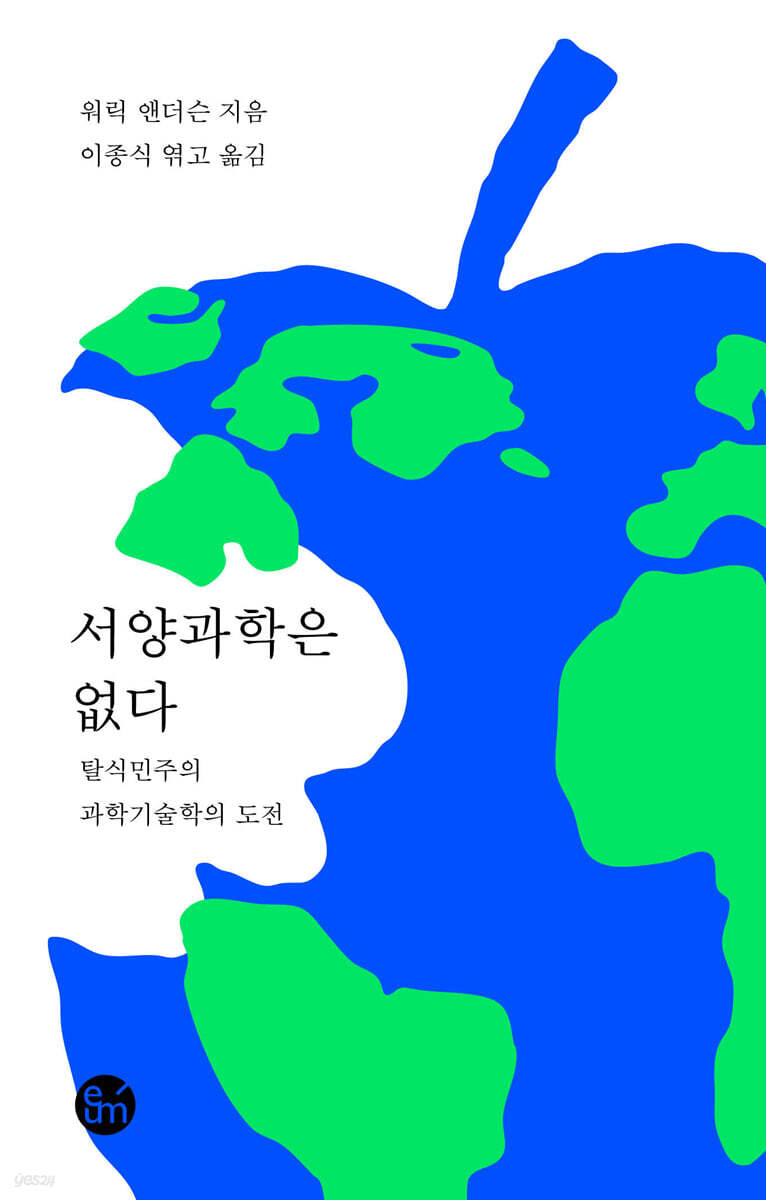
There is no Western science
 |
Description
Book Introduction
Is science the exclusive domain of Western modern civilization? Does the rest of the world benefit from science imported from the West? Postcolonial STS challenges the long-held perception that science is the exclusive domain of Western modernity.
Postcolonial science and technology studies blurs the neat lines between empire and colony, modernity and pre-modernity, subverts the relationship between periphery and center, and casts a magnifying glass over seemingly smooth and empty histories and spaces, effectively giving voice to those who have been silenced.
"There Is No Western Science" is a collection of six essays that reveal the critical awareness and theoretical world of Warwick Anderson, a leading science and technology scholar who advocated postcolonial science and technology studies.
Warwick Anderson is an Australian science and technology scholar renowned for his research on the history of science and medicine, focusing on colonialism and the Global South. He is at the forefront of theoretical thinking on postcolonial science and technology studies.
Through this book, edited and translated by Professor Jong-sik Lee of KAIST, a disciple of Warwick Anderson, and with annotations, readers will be able to understand the “feeling” of postcolonial science and technology studies.
Postcolonial science and technology studies blurs the neat lines between empire and colony, modernity and pre-modernity, subverts the relationship between periphery and center, and casts a magnifying glass over seemingly smooth and empty histories and spaces, effectively giving voice to those who have been silenced.
"There Is No Western Science" is a collection of six essays that reveal the critical awareness and theoretical world of Warwick Anderson, a leading science and technology scholar who advocated postcolonial science and technology studies.
Warwick Anderson is an Australian science and technology scholar renowned for his research on the history of science and medicine, focusing on colonialism and the Global South. He is at the forefront of theoretical thinking on postcolonial science and technology studies.
Through this book, edited and translated by Professor Jong-sik Lee of KAIST, a disciple of Warwick Anderson, and with annotations, readers will be able to understand the “feeling” of postcolonial science and technology studies.
- You can preview some of the book's contents.
Preview
index
Preface to the Korean edition
1.
Postcolonial Technoscience
2.
From subordinate knowledge to merged subjects
3.
Asia as a Method of Science and Technology Studies
4.
Remembering the spread of Western science
5.
Strengthening transregionalism
6.
STS with East Asian characteristics?
Translator's Note
main(?)
1.
Postcolonial Technoscience
2.
From subordinate knowledge to merged subjects
3.
Asia as a Method of Science and Technology Studies
4.
Remembering the spread of Western science
5.
Strengthening transregionalism
6.
STS with East Asian characteristics?
Translator's Note
main(?)
Into the book
For some time now I have been saying that we are all decolonial today.
I have said this not in the sense that we have escaped a particular colonial regime (although some of us may have formally done so), but in the sense that the colonial structures of inequality and discrimination are no longer invisible or hidden in our lives today.
We no longer take such colonial relationships for granted.
--- p.7, Preface to the Korean Edition
The title “Postcolonial Technoscience” is deliberately ambiguous and intended to provoke questions.
--- p.17, 「1.
Postcolonial Technoscience
Attempts to draw clear boundaries defining postcolonial science and technology studies are futile.
Postcolonial science and technology studies itself is as heterogeneous as its subject matter.
Attempting to list the classics of postcolonial science studies would also miss the point.
Because, like “modernity,” postcolonial science studies is also constantly changing.
--- p.43, 「1.
Postcolonial Technoscience
Whether we admit it or not, we are all in a state of feeling called decoloniality.
p55, 「2.
From subordinate knowledge to merged subjects"
Like Takeuchi, when I use the phrase “Asia as method,” I too feel that “it is impossible to say exactly what this means.”
Rather than describing or establishing a uniquely Asian norm or methodology, I want to talk about the experimental possibilities that Asia offers as a method for indicating a site of utterance.
I am not trying to put forward an epistemological counter-discourse, but rather an ethical perspective.
--- p.94, 「3.
Asia as a Method of Science and Technology Studies
It is no longer self-evident what can be considered “science” or even “Western.”
But as we become better able to reconstruct and situate scientific ideas and practices—that is, to produce multiple sciences—we struggle to understand their movements, adaptations, and translations.
I have said this not in the sense that we have escaped a particular colonial regime (although some of us may have formally done so), but in the sense that the colonial structures of inequality and discrimination are no longer invisible or hidden in our lives today.
We no longer take such colonial relationships for granted.
--- p.7, Preface to the Korean Edition
The title “Postcolonial Technoscience” is deliberately ambiguous and intended to provoke questions.
--- p.17, 「1.
Postcolonial Technoscience
Attempts to draw clear boundaries defining postcolonial science and technology studies are futile.
Postcolonial science and technology studies itself is as heterogeneous as its subject matter.
Attempting to list the classics of postcolonial science studies would also miss the point.
Because, like “modernity,” postcolonial science studies is also constantly changing.
--- p.43, 「1.
Postcolonial Technoscience
Whether we admit it or not, we are all in a state of feeling called decoloniality.
p55, 「2.
From subordinate knowledge to merged subjects"
Like Takeuchi, when I use the phrase “Asia as method,” I too feel that “it is impossible to say exactly what this means.”
Rather than describing or establishing a uniquely Asian norm or methodology, I want to talk about the experimental possibilities that Asia offers as a method for indicating a site of utterance.
I am not trying to put forward an epistemological counter-discourse, but rather an ethical perspective.
--- p.94, 「3.
Asia as a Method of Science and Technology Studies
It is no longer self-evident what can be considered “science” or even “Western.”
But as we become better able to reconstruct and situate scientific ideas and practices—that is, to produce multiple sciences—we struggle to understand their movements, adaptations, and translations.
--- p.137, 「4.
Remembering the spread of Western science
Remembering the spread of Western science
Publisher's Review
Is science exclusive to the West?
Breaking the science and technology studies centered on the modern West
Science and Technology Studies (STS) has been opening the black box of scientific activity, which is considered to be an objective truth, and dismantling its authority.
Attempts to understand science within its social and political context, rather than viewing it as absolute truth, have had some success in stripping away its sacred veneer.
Science is no longer seen as a 'report of truth', but rather as a complex social product created by humans.
However, it was still not easy to dismantle the perception that science was a product of Western modern civilization.
This is not unrelated to the fact that most science and technology researchers in the mid-to-late 20th century were from the West.
There was still a widespread perception that science was the exclusive domain of Western modern civilization, and that the rest of the world was importing Western science and reaping its benefits.
The colonies that imported science were often imagined as empty, smooth spaces without a scientific tradition.
Postcolonial STS is a work that cracks this framework of perception.
Postcolonial science and technology studies critically shakes the long-held understanding of science as the exclusive domain of Western modernity and redraws the power landscape surrounding the production and distribution of knowledge.
Researchers including Warwick Anderson reveal that science was not something created in the West and simply 'disseminated', but rather a system of knowledge formed through the interaction of empires and colonies.
The universality of science was a language created by empires to define themselves as civilized and others as barbaric.
So what is decoloniality? Warwick Anderson says, "Whether we acknowledge it or not, we are all in a state of feeling called decoloniality."
Decolonization is a critical awareness that recognizes that we have not yet escaped colonialism and that colonialism was one of the main driving forces that created the modern world.
In other words, it is the realization that the modern world, despite its shining achievements of reason, freedom, progress, and material abundance, could not have come into being without colonial violence and domination.
Through the lens of decolonialism, we can recognize, critique, and think beyond the dichotomies imbued with colonial values—modernity and primitiveness, culture and nature, civilization and barbarism, domination and obedience, innovation and imitation.
Blurring the lines, subverting relationships, and holding a magnifying glass over them,
Giving a voice to those who could not speak
Postcolonial science and technology studies blurs the clean lines between empire and colony, modernity and pre-modernity, subverts the relationship between periphery and center, and casts a magnifying glass over seemingly smooth and empty histories and spaces, giving voice to those who have been left speechless.
Postcolonial science and technology studies is more than just a theoretical framework; it is a political awareness and attitude toward Western modern science and colonialism, and at the same time, an ethical orientation.
It does not simply address the relationship between empires and colonies, but also connects with contemporary social discussions such as feminism, racism, inequality, and discrimination.
"There Is No Western Science" is a collection of six essays that reveal the critical awareness and theoretical world of Warwick Anderson, a leading science and technology scholar who advocated postcolonial science and technology studies.
Warwick Anderson is an Australian science and technology scholar renowned for his research on the history of science and medicine, focusing on colonialism and the Global South. He is at the forefront of theoretical thinking in postcolonial science and technology studies.
After training as a doctor, he turned to the study of the history of science and the study of science and technology, and has been actively researching topics such as imperialism and medicine, race and science, and biopolitics.
This is the first time that Warwick Anderson's writings and thoughts have been introduced to Korean readers.
Through this book, edited and translated by his disciple, Professor Jong-sik Lee of KAIST, and with commentary, readers will be able to understand the “sensuous feeling” of postcolonial science and technology studies.
Breaking the science and technology studies centered on the modern West
Science and Technology Studies (STS) has been opening the black box of scientific activity, which is considered to be an objective truth, and dismantling its authority.
Attempts to understand science within its social and political context, rather than viewing it as absolute truth, have had some success in stripping away its sacred veneer.
Science is no longer seen as a 'report of truth', but rather as a complex social product created by humans.
However, it was still not easy to dismantle the perception that science was a product of Western modern civilization.
This is not unrelated to the fact that most science and technology researchers in the mid-to-late 20th century were from the West.
There was still a widespread perception that science was the exclusive domain of Western modern civilization, and that the rest of the world was importing Western science and reaping its benefits.
The colonies that imported science were often imagined as empty, smooth spaces without a scientific tradition.
Postcolonial STS is a work that cracks this framework of perception.
Postcolonial science and technology studies critically shakes the long-held understanding of science as the exclusive domain of Western modernity and redraws the power landscape surrounding the production and distribution of knowledge.
Researchers including Warwick Anderson reveal that science was not something created in the West and simply 'disseminated', but rather a system of knowledge formed through the interaction of empires and colonies.
The universality of science was a language created by empires to define themselves as civilized and others as barbaric.
So what is decoloniality? Warwick Anderson says, "Whether we acknowledge it or not, we are all in a state of feeling called decoloniality."
Decolonization is a critical awareness that recognizes that we have not yet escaped colonialism and that colonialism was one of the main driving forces that created the modern world.
In other words, it is the realization that the modern world, despite its shining achievements of reason, freedom, progress, and material abundance, could not have come into being without colonial violence and domination.
Through the lens of decolonialism, we can recognize, critique, and think beyond the dichotomies imbued with colonial values—modernity and primitiveness, culture and nature, civilization and barbarism, domination and obedience, innovation and imitation.
Blurring the lines, subverting relationships, and holding a magnifying glass over them,
Giving a voice to those who could not speak
Postcolonial science and technology studies blurs the clean lines between empire and colony, modernity and pre-modernity, subverts the relationship between periphery and center, and casts a magnifying glass over seemingly smooth and empty histories and spaces, giving voice to those who have been left speechless.
Postcolonial science and technology studies is more than just a theoretical framework; it is a political awareness and attitude toward Western modern science and colonialism, and at the same time, an ethical orientation.
It does not simply address the relationship between empires and colonies, but also connects with contemporary social discussions such as feminism, racism, inequality, and discrimination.
"There Is No Western Science" is a collection of six essays that reveal the critical awareness and theoretical world of Warwick Anderson, a leading science and technology scholar who advocated postcolonial science and technology studies.
Warwick Anderson is an Australian science and technology scholar renowned for his research on the history of science and medicine, focusing on colonialism and the Global South. He is at the forefront of theoretical thinking in postcolonial science and technology studies.
After training as a doctor, he turned to the study of the history of science and the study of science and technology, and has been actively researching topics such as imperialism and medicine, race and science, and biopolitics.
This is the first time that Warwick Anderson's writings and thoughts have been introduced to Korean readers.
Through this book, edited and translated by his disciple, Professor Jong-sik Lee of KAIST, and with commentary, readers will be able to understand the “sensuous feeling” of postcolonial science and technology studies.
GOODS SPECIFICS
- Date of issue: November 3, 2025
- Page count, weight, size: 252 pages | 115*180*20mm
- ISBN13: 9791194172178
- ISBN10: 1194172172
You may also like
카테고리
korean


korean

![ELLE 엘르 스페셜 에디션 A형 : 12월 [2025]](http://librairie.coreenne.fr/cdn/shop/files/b8e27a3de6c9538896439686c6b0e8fb.jpg?v=1766436872&width=3840)


