

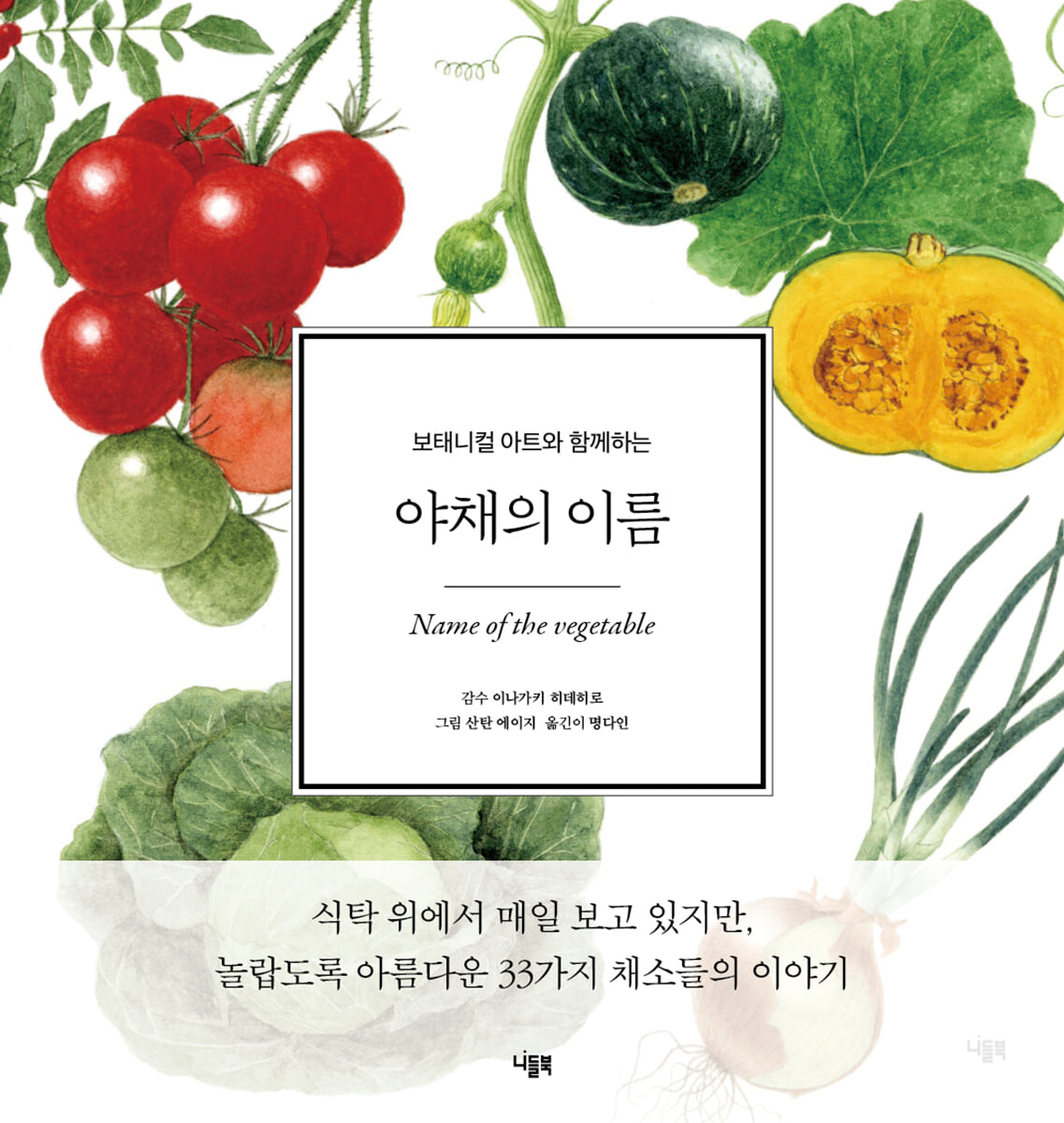
Name of vegetable
 |
Description
Book Introduction
Vegetables that are always on the table,
But how much do we know about vegetables?
Onions, are they the edible part of the fruit? Roots? Stems? Burdocks, only two countries in the world eat them? Strawberries, the queen of desserts, but they're not fruits, but vegetables? Tomatoes, once toxic and not eaten, they were only grown? Eggplants, in their native regions, they're white and round instead of long and purple, so they're called eggplants? Cucumbers, are ripe cucumbers round and yellow?
The beautiful world of vegetables seen through delicate and beautiful botanical art, not only the ecology of plants but also the appearance of flowers, seeds, and leaves that are difficult to see.
But how much do we know about vegetables?
Onions, are they the edible part of the fruit? Roots? Stems? Burdocks, only two countries in the world eat them? Strawberries, the queen of desserts, but they're not fruits, but vegetables? Tomatoes, once toxic and not eaten, they were only grown? Eggplants, in their native regions, they're white and round instead of long and purple, so they're called eggplants? Cucumbers, are ripe cucumbers round and yellow?
The beautiful world of vegetables seen through delicate and beautiful botanical art, not only the ecology of plants but also the appearance of flowers, seeds, and leaves that are difficult to see.
- You can preview some of the book's contents.
Preview
index
Entering | Vegetables sold at the supermarket are also alive |
Cabbage_Where do cabbage flowers bloom? | Onion_Vegetables that make people cry | Bamboo Shoots_Don't miss this momentous opportunity | Peas_White beans become peas? | Burdock_Burdock is only eaten in Japan and Korea | Strawberries_They say it's a vegetable, but I can't admit it | Lettuce_A vegetable that's completely different from cabbage | Potatoes_A representative vegetable that makes you feel full | Broad Beans_Luxurious beans comfortably covered with cotton | Asparagus_Standing upright | Tomatoes_The idol of the vegetable world, popular with everyone | Watermelon_Watermelon is a heretic in the gourd family | Okra_A graceful figure like a noblewoman | Corn_It's both a vegetable and a grain | Edamame_The "meat of the field" that is indispensable to the Japanese | Eggplant_Vegetables with various charms | Green Peppers_Empty inside but bitter | Chili Peppers_Conquering the world with their stimulating and spicy flavor | Yeoju_Agile and dynamic! | Cucumbers_Green and slender because they haven't ripened yet | Taro_Three generations together | Western pumpkin_A world-renowned celebrity who is tenacious and strong | Sweet potato_Every generation has memories | Peanut_The strange behavior of peanuts | Konjac_What on earth is this? | Carrot_The king of green-yellow vegetables | Lotus root_The vegetable that symbolizes good fortune | Yam_Eat without chewing | Spinach_The vegetable with the most iron | Broccoli_The ace in charge of green in lunch boxes | Radish_One of the oldest vegetables in the world | Turnip_It is a different story from radish | Crown daisy_Chrysanthemum leaves with a unique bitter taste |
Why Eat Vegetables? | Finally
Cabbage_Where do cabbage flowers bloom? | Onion_Vegetables that make people cry | Bamboo Shoots_Don't miss this momentous opportunity | Peas_White beans become peas? | Burdock_Burdock is only eaten in Japan and Korea | Strawberries_They say it's a vegetable, but I can't admit it | Lettuce_A vegetable that's completely different from cabbage | Potatoes_A representative vegetable that makes you feel full | Broad Beans_Luxurious beans comfortably covered with cotton | Asparagus_Standing upright | Tomatoes_The idol of the vegetable world, popular with everyone | Watermelon_Watermelon is a heretic in the gourd family | Okra_A graceful figure like a noblewoman | Corn_It's both a vegetable and a grain | Edamame_The "meat of the field" that is indispensable to the Japanese | Eggplant_Vegetables with various charms | Green Peppers_Empty inside but bitter | Chili Peppers_Conquering the world with their stimulating and spicy flavor | Yeoju_Agile and dynamic! | Cucumbers_Green and slender because they haven't ripened yet | Taro_Three generations together | Western pumpkin_A world-renowned celebrity who is tenacious and strong | Sweet potato_Every generation has memories | Peanut_The strange behavior of peanuts | Konjac_What on earth is this? | Carrot_The king of green-yellow vegetables | Lotus root_The vegetable that symbolizes good fortune | Yam_Eat without chewing | Spinach_The vegetable with the most iron | Broccoli_The ace in charge of green in lunch boxes | Radish_One of the oldest vegetables in the world | Turnip_It is a different story from radish | Crown daisy_Chrysanthemum leaves with a unique bitter taste |
Why Eat Vegetables? | Finally
Detailed image

Into the book
The vegetables you usually see in stores are neatly trimmed and displayed, and are sold in plastic bags for easy taking home.
But this appearance is only a part of them.
Vegetables also bloom.
However, most of the vegetables are still young and immature, before they flower.
Unlike wild flowers, they were originally grown for consumption and were improved by people to become commercial products.
The most splendid moment for a plant is when it blooms.
When the flower withers, it produces fruit and leaves seeds.
Vegetables were once plants that lived in the wild.
The traces can only be felt after the season has passed.
Vegetables you thought you knew well transform in the blink of an eye, changing color, growing in size, or blooming.
There are completely different vegetables that have the same flowers, or vegetables that have similar shapes but have completely different flowers.
You will be amazed by these changes.
You will come to know that vegetables are also plants.
--- p.004 From "Introduction"
Onions wrapped in layers.
It is round so you might think it is a 'fruit', but it is not a fruit.
When a flower dies, a fruit appears and contains seeds.
Then, since it is buried in the ground, I thought it might be a root, but it is not a root.
The root of an onion is the part that sticks out further down than the onion.
So is it a stem? No, not that either.
The hard core at the very bottom of the onion is the stem.
So then, what part is called an onion?
It's just part of the leaf.
The part that looks like a wave growing upwards is also a leaf.
Also the part that looks like a wave.
The round parts buried in the ground are also all leaves.
Onions are a vegetable with rounded leaves and roots.
--- p.018 From "ONION"
Burdock flowers are more beautiful than I imagined.
Its appearance is almost identical to that of a thistle flower.
What is surprising is that both burdock and thistle are members of the Asteraceae family.
You might be thinking, 'What? Asteraceae? They look completely different?'
The Asteraceae family is one of the largest plant groups in the world.
Dandelions, cosmos, sunflowers, mugwort, and ragweed are all members of the Asteraceae family.
When the thistle flower bears fruit, its thorns, which look like fishhooks, stick to things like clothing and then spread the seeds.
So the flower language is also 'persistently every month'
It's 'Lee Da'.
In China, it is considered a 'bad' plant, and in the United States, it is considered a dangerous weed.
--- p.031 From "Burdock BURDOCK"
There are many things in the world that are difficult to understand, and vegetable classification is one of them.
I can understand watermelon since it is a relative of cantaloupe, but it is difficult to accept strawberries.
Strawberries are part of the rose family.
Fruits such as peaches, apples, and pears are also members of the rose family.
But why are only strawberries considered vegetables?
The answer lies in the difference between becoming a tree and becoming grass.
Basically, if it comes from a 'tree' it becomes a fruit, and if it comes from a 'grass' it becomes a vegetable.
--- p.034 From "Strawberry STRAWBERRY"
Why do plants produce red fruits? It's because they signal that the fruit is sweetest and most delicious at the moment, and animals eat the fruit and carry its seeds far and wide.
But the peppers are red in color, but they taste spicy and don't seem to be eaten.
It is natural for animals to avoid it because the spicy and bitter taste is similar to the taste of poison.
But birds are different.
There are many poisonous tree fruits that are so spicy and toxic that only birds can eat them.
Chili peppers are one of them.
Birds must digest and excrete food as quickly as possible to lighten their bodies in order to fly.
For plants that want their seeds to be transported widely, flying birds are a fantastic companion.
The fruits of the flowers facing downwards turn red and ripen upwards, perhaps to catch the eyes of birds.
--- p.082 From "Chili Pepper"
Peanuts do not produce fruit above the ground like other legumes.
When the flower withers, the tip extends downward and sticks to the ground(!).
And then it digs deeper and makes a pod underground.
He is a strange guy of a different dimension.
The part we eat is the seed itself, so if you don't boil or roast it, it will sprout even if you sow it in the ground.
This is where the question arises.
Why bother going underground to make seeds with shells?
Usually, a hard shell is to protect oneself from external enemies.
Besides, other plants try to spread their seeds a little further, so it seems like peanuts will have a hard time expanding their territory the way they do.
Why do we stick to this strategy?
--- p.106 From "PEANUT"
For those who make lunch boxes every day, broccoli is the green guy.
Remove the small pieces and put them in your lunch box.
It is dark green and ripens quickly, so the color becomes a little brighter when blanched.
Adding broccoli to your lunchbox is a great way to add variety.
It doesn't taste bitter, so kids like it too.
The ancestor of this easy-to-eat broccoli is kale, which is notoriously difficult to eat.
Throughout history, humans have improved kale to create a variety of vegetables.
Cabbage's ancestor is also kale.
If you look at the scientific name, both cabbage and broccoli are 'Brassica oleracea'.
Although they look completely different to our eyes, broccoli is classified as the same species as cabbage.
But this appearance is only a part of them.
Vegetables also bloom.
However, most of the vegetables are still young and immature, before they flower.
Unlike wild flowers, they were originally grown for consumption and were improved by people to become commercial products.
The most splendid moment for a plant is when it blooms.
When the flower withers, it produces fruit and leaves seeds.
Vegetables were once plants that lived in the wild.
The traces can only be felt after the season has passed.
Vegetables you thought you knew well transform in the blink of an eye, changing color, growing in size, or blooming.
There are completely different vegetables that have the same flowers, or vegetables that have similar shapes but have completely different flowers.
You will be amazed by these changes.
You will come to know that vegetables are also plants.
--- p.004 From "Introduction"
Onions wrapped in layers.
It is round so you might think it is a 'fruit', but it is not a fruit.
When a flower dies, a fruit appears and contains seeds.
Then, since it is buried in the ground, I thought it might be a root, but it is not a root.
The root of an onion is the part that sticks out further down than the onion.
So is it a stem? No, not that either.
The hard core at the very bottom of the onion is the stem.
So then, what part is called an onion?
It's just part of the leaf.
The part that looks like a wave growing upwards is also a leaf.
Also the part that looks like a wave.
The round parts buried in the ground are also all leaves.
Onions are a vegetable with rounded leaves and roots.
--- p.018 From "ONION"
Burdock flowers are more beautiful than I imagined.
Its appearance is almost identical to that of a thistle flower.
What is surprising is that both burdock and thistle are members of the Asteraceae family.
You might be thinking, 'What? Asteraceae? They look completely different?'
The Asteraceae family is one of the largest plant groups in the world.
Dandelions, cosmos, sunflowers, mugwort, and ragweed are all members of the Asteraceae family.
When the thistle flower bears fruit, its thorns, which look like fishhooks, stick to things like clothing and then spread the seeds.
So the flower language is also 'persistently every month'
It's 'Lee Da'.
In China, it is considered a 'bad' plant, and in the United States, it is considered a dangerous weed.
--- p.031 From "Burdock BURDOCK"
There are many things in the world that are difficult to understand, and vegetable classification is one of them.
I can understand watermelon since it is a relative of cantaloupe, but it is difficult to accept strawberries.
Strawberries are part of the rose family.
Fruits such as peaches, apples, and pears are also members of the rose family.
But why are only strawberries considered vegetables?
The answer lies in the difference between becoming a tree and becoming grass.
Basically, if it comes from a 'tree' it becomes a fruit, and if it comes from a 'grass' it becomes a vegetable.
--- p.034 From "Strawberry STRAWBERRY"
Why do plants produce red fruits? It's because they signal that the fruit is sweetest and most delicious at the moment, and animals eat the fruit and carry its seeds far and wide.
But the peppers are red in color, but they taste spicy and don't seem to be eaten.
It is natural for animals to avoid it because the spicy and bitter taste is similar to the taste of poison.
But birds are different.
There are many poisonous tree fruits that are so spicy and toxic that only birds can eat them.
Chili peppers are one of them.
Birds must digest and excrete food as quickly as possible to lighten their bodies in order to fly.
For plants that want their seeds to be transported widely, flying birds are a fantastic companion.
The fruits of the flowers facing downwards turn red and ripen upwards, perhaps to catch the eyes of birds.
--- p.082 From "Chili Pepper"
Peanuts do not produce fruit above the ground like other legumes.
When the flower withers, the tip extends downward and sticks to the ground(!).
And then it digs deeper and makes a pod underground.
He is a strange guy of a different dimension.
The part we eat is the seed itself, so if you don't boil or roast it, it will sprout even if you sow it in the ground.
This is where the question arises.
Why bother going underground to make seeds with shells?
Usually, a hard shell is to protect oneself from external enemies.
Besides, other plants try to spread their seeds a little further, so it seems like peanuts will have a hard time expanding their territory the way they do.
Why do we stick to this strategy?
--- p.106 From "PEANUT"
For those who make lunch boxes every day, broccoli is the green guy.
Remove the small pieces and put them in your lunch box.
It is dark green and ripens quickly, so the color becomes a little brighter when blanched.
Adding broccoli to your lunchbox is a great way to add variety.
It doesn't taste bitter, so kids like it too.
The ancestor of this easy-to-eat broccoli is kale, which is notoriously difficult to eat.
Throughout history, humans have improved kale to create a variety of vegetables.
Cabbage's ancestor is also kale.
If you look at the scientific name, both cabbage and broccoli are 'Brassica oleracea'.
Although they look completely different to our eyes, broccoli is classified as the same species as cabbage.
--- p.130 From "Broccoli BROCCOLI"
Publisher's Review
Vegetables on the table blossom into botanical art, creating a special story.
These days, many people need the comfort of green plants, whether it's as a food butler, planter, companion plant, or gardening.
The fascinating stories hidden within the 33 vegetables on our tables, which we only ever see as food, are presented through delicate and beautiful botanical art by Santan Eiji, supervised by the renowned Japanese botanist Hidehiro Inagaki.
The charm of vegetables, a plant that we had been missing due to our familiarity
Cabbage, onions, tomatoes, cucumbers, sweet potatoes, lotus roots, broccoli, etc. are all familiar vegetables, but have you ever seen them as plants rather than as food ingredients?
Unless you grow your own garden, it's difficult to recognize that vegetables are plants when we buy them at the market.
Potatoes are on the table every day, but I've never seen them bloom.
Why are strawberries considered a vegetable and not a fruit? Cabbage, pumpkin, and broccoli are all very different vegetables, yet they all produce similar-looking yellow flowers? Have you ever heard that the flowers of the crown daisy, popular for its distinctive fragrance, resemble chrysanthemums?
Let's fall in love with the charm of vegetables as plants, hidden in familiarity.
These days, many people need the comfort of green plants, whether it's as a food butler, planter, companion plant, or gardening.
The fascinating stories hidden within the 33 vegetables on our tables, which we only ever see as food, are presented through delicate and beautiful botanical art by Santan Eiji, supervised by the renowned Japanese botanist Hidehiro Inagaki.
The charm of vegetables, a plant that we had been missing due to our familiarity
Cabbage, onions, tomatoes, cucumbers, sweet potatoes, lotus roots, broccoli, etc. are all familiar vegetables, but have you ever seen them as plants rather than as food ingredients?
Unless you grow your own garden, it's difficult to recognize that vegetables are plants when we buy them at the market.
Potatoes are on the table every day, but I've never seen them bloom.
Why are strawberries considered a vegetable and not a fruit? Cabbage, pumpkin, and broccoli are all very different vegetables, yet they all produce similar-looking yellow flowers? Have you ever heard that the flowers of the crown daisy, popular for its distinctive fragrance, resemble chrysanthemums?
Let's fall in love with the charm of vegetables as plants, hidden in familiarity.
GOODS SPECIFICS
- Date of issue: August 30, 2025
- Page count, weight, size: 148 pages | 350g | 182*192*10mm
- ISBN13: 9791142326301
- ISBN10: 1142326306
You may also like
카테고리
korean


korean

![GQ KOREA Mark (Monthly): December [2025]](http://librairie.coreenne.fr/cdn/shop/files/8ef265dbbfbf186523ed75ba7319009d.jpg?v=1765340328&width=3840)


