

page
 |
Description
Book Introduction
Everything you need to know about Jang from Chef Kang Min-goo of Mingles
The New York Times' Best Cookbooks of 2024, now translated and published.
“This book is my love letter to Jang.”
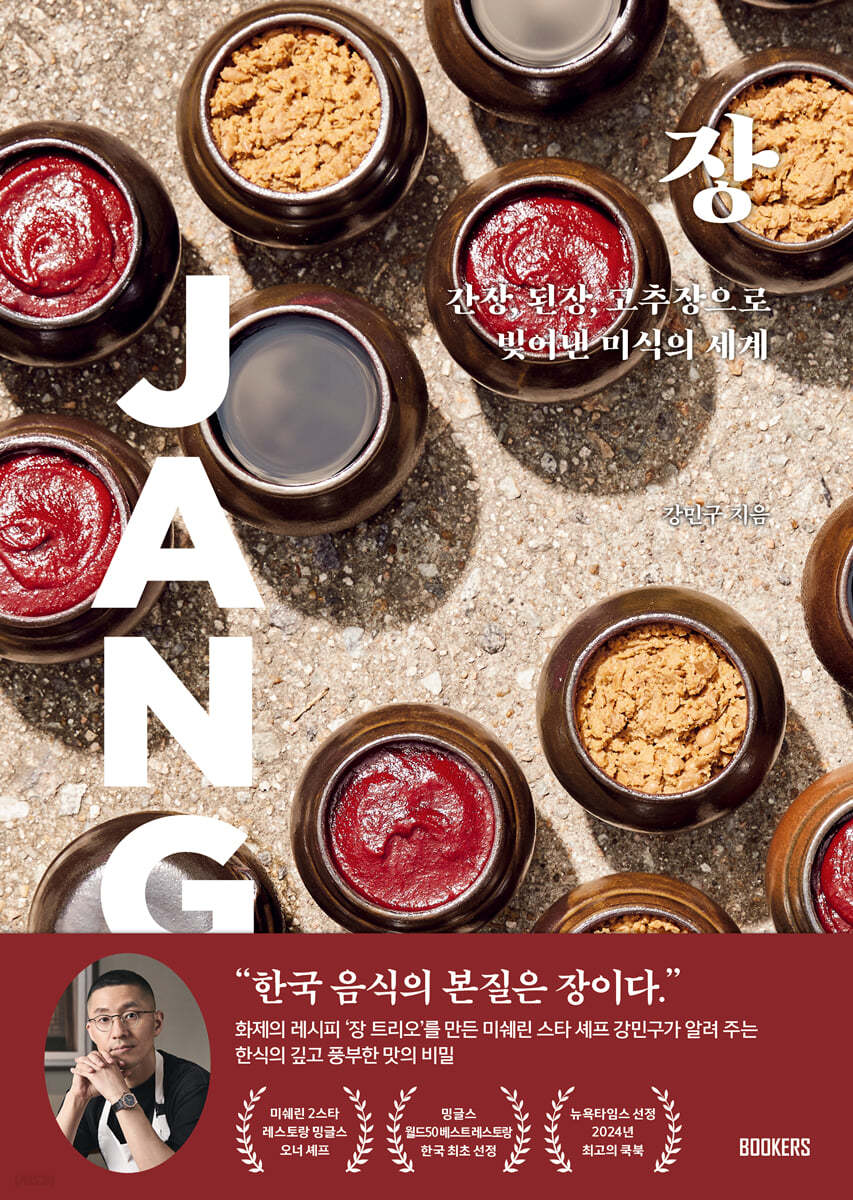
Kang Min-gu, the owner and chef of the Korean fine dining restaurant 'Mingles', published this book filled with his deep affection for 'jang', the core ingredient of Korean cuisine.
After four years of planning, filming, and editing, JANG: The Soul of Korean Cooking was published by Artisan Publishing in the US in the spring of 2024 and generated much buzz, being selected as the best cookbook of 2024 by The New York Times.
This book, filled with trust in jang, respect for its history and its masters, demonstrates his passion for exploring new possibilities for Korean cuisine through a modern interpretation of the traditions of Korea's traditional fermented seasonings: soy sauce, doenjang, and gochujang.
Kang Min-goo, an outstanding chef and storyteller
Recipes that embody his cooking philosophy
Soy sauce, doenjang, and gochujang, which are seasonings made by naturally fermenting using only soybeans, water, and salt in a traditional way, are key elements that add depth to Korean food.
It adds unexpected flavors to everyday soups, stews, and various side dishes, as well as special dishes and even desserts.
Chef Kang Min-goo, who has explored the new possibilities of Jang and the expandability of Korean cuisine by adding Western cuisine to traditional Korean food, introduces over 60 recipes in this book that allow you to experience fine dining in everyday life.
In addition, it helps people understand Jang by telling the stories of masters who make Jang while preserving tradition, as well as the history and manufacturing process of Jang.
The New York Times' Best Cookbooks of 2024, now translated and published.
“This book is my love letter to Jang.”
Kang Min-gu, the owner and chef of the Korean fine dining restaurant 'Mingles', published this book filled with his deep affection for 'jang', the core ingredient of Korean cuisine.
After four years of planning, filming, and editing, JANG: The Soul of Korean Cooking was published by Artisan Publishing in the US in the spring of 2024 and generated much buzz, being selected as the best cookbook of 2024 by The New York Times.
This book, filled with trust in jang, respect for its history and its masters, demonstrates his passion for exploring new possibilities for Korean cuisine through a modern interpretation of the traditions of Korea's traditional fermented seasonings: soy sauce, doenjang, and gochujang.
Kang Min-goo, an outstanding chef and storyteller
Recipes that embody his cooking philosophy
Soy sauce, doenjang, and gochujang, which are seasonings made by naturally fermenting using only soybeans, water, and salt in a traditional way, are key elements that add depth to Korean food.
It adds unexpected flavors to everyday soups, stews, and various side dishes, as well as special dishes and even desserts.
Chef Kang Min-goo, who has explored the new possibilities of Jang and the expandability of Korean cuisine by adding Western cuisine to traditional Korean food, introduces over 60 recipes in this book that allow you to experience fine dining in everyday life.
In addition, it helps people understand Jang by telling the stories of masters who make Jang while preserving tradition, as well as the history and manufacturing process of Jang.
- You can preview some of the book's contents.
Preview
index
Recommendation (by Eric Ripert)
To begin with
History of the funeral
How are chapters made?
How to Use This Book
Basic ingredients of Korean cuisine
Seasoning sauce based on soy sauce
Recipes using soy sauce
Pickled vegetables
Broccolini greens
Pumpkin ship
Tofu Endive Salad with Sesame Soy Dressing
Kongguksu
seaweed soup
dumpling stew
Soy Sauce Ragu Tagliatelle
chop suey
Asparagus Bibimbap
Soy Sauce Mushroom Tteokbokki
Eomandu
Seafood pancake
soy sauce shrimp paste
Soy sauce braised mackerel
galbijjim
LA Galbi Grill
Tteokgalbi
medicinal rice
Soy Granola and Yogurt
(Masters of the funeral) Amisan mugwort tea
Recipes using soybean paste
Green Beans with Sesame Vinaigrette
Root vegetable salad
Greek Barley Salad with Miso Vinaigrette Dressing
Miso Hummus
Cabbage Beef Soybean Paste Stew
Doenjang Jjajangmyeon
mussel soybean paste soup
soybean paste bibimbap
Ssamjang Cacio e Pepe
Steamed fish with soybean paste béarnaise sauce
Grilled Pollack with Soybean Paste and Caper Sauce
BBQ Chicken and Miso Risotto
Boiled pork belly and radish salad
Doenjang Yanggalbi BBQ
Almond Miso Croissant
Miso Vanilla Crème Brulee
Brie Cheese and Miso Compote
(Masters of the funeral) Mackrum
Recipes using gochujang
Cucumber salad
Stir-fried anchovies
Gochujang ranch sauce and fresh vegetables
Gochujang stew
Dakbokkeumtang
Korean-style seasoned chicken
Kimchi fried rice and white kimchi coleslaw
Yukhoe bibimbap
Kimchi Bibim Guksu
Seafood Platter with Gochujang Salsa and Gochujang Cocktail Sauce
spicy raw fish salad with red pepper paste
Grilled Scallop and Spinach Salad with Gochujang Sauce
Camping Gochujang BBQ
Stir-fried pork
Gochujang Pulled Pork Sandwich
Gochujang Chocolate Mousse
Jang Bon-ga (Masters of Jang)
Recommended ingredients
Acknowledgements
Search
About the Author
To begin with
History of the funeral
How are chapters made?
How to Use This Book
Basic ingredients of Korean cuisine
Seasoning sauce based on soy sauce
Recipes using soy sauce
Pickled vegetables
Broccolini greens
Pumpkin ship
Tofu Endive Salad with Sesame Soy Dressing
Kongguksu
seaweed soup
dumpling stew
Soy Sauce Ragu Tagliatelle
chop suey
Asparagus Bibimbap
Soy Sauce Mushroom Tteokbokki
Eomandu
Seafood pancake
soy sauce shrimp paste
Soy sauce braised mackerel
galbijjim
LA Galbi Grill
Tteokgalbi
medicinal rice
Soy Granola and Yogurt
(Masters of the funeral) Amisan mugwort tea
Recipes using soybean paste
Green Beans with Sesame Vinaigrette
Root vegetable salad
Greek Barley Salad with Miso Vinaigrette Dressing
Miso Hummus
Cabbage Beef Soybean Paste Stew
Doenjang Jjajangmyeon
mussel soybean paste soup
soybean paste bibimbap
Ssamjang Cacio e Pepe
Steamed fish with soybean paste béarnaise sauce
Grilled Pollack with Soybean Paste and Caper Sauce
BBQ Chicken and Miso Risotto
Boiled pork belly and radish salad
Doenjang Yanggalbi BBQ
Almond Miso Croissant
Miso Vanilla Crème Brulee
Brie Cheese and Miso Compote
(Masters of the funeral) Mackrum
Recipes using gochujang
Cucumber salad
Stir-fried anchovies
Gochujang ranch sauce and fresh vegetables
Gochujang stew
Dakbokkeumtang
Korean-style seasoned chicken
Kimchi fried rice and white kimchi coleslaw
Yukhoe bibimbap
Kimchi Bibim Guksu
Seafood Platter with Gochujang Salsa and Gochujang Cocktail Sauce
spicy raw fish salad with red pepper paste
Grilled Scallop and Spinach Salad with Gochujang Sauce
Camping Gochujang BBQ
Stir-fried pork
Gochujang Pulled Pork Sandwich
Gochujang Chocolate Mousse
Jang Bon-ga (Masters of Jang)
Recommended ingredients
Acknowledgements
Search
About the Author
Detailed image

Publisher's Review
A journey to discover the essence of Korean food
Meeting Jang as if by fate
“How do you make such simple yet amazing dishes?
Could it have been created? The secret was the intestines.”
Chef Kang Min-goo, who had been building his career as a chef in the United States, the Bahamas, and the Basque region of Spain, eventually returned to Korea to create his own cuisine.
In 2014, he opened the Korean fine dining restaurant Mingles, and he wanted to harmoniously combine traditional Korean and Western cuisines, which he called "mingle," and he wanted to gain a deeper understanding of Korean food.
So I went to see Chef Jo Hee-sook, a master of Korean cuisine, and Monk Jeong-gwan, an authority on temple cuisine, and there I met ‘Jang.’
It is no exaggeration to say that the taste of Korean food is determined by the taste of the sauce.
That's how important soy sauce is in Korean food.
I've always wondered what the essence of Korean food is, and the secret was very close.
Chef Kang Min-gu rediscovered the value of soy sauce by meeting master soy sauce makers from all over the country, tasting and exploring their recipes, and began actively incorporating soy sauce into his cooking.
Because soybeans are a flexible ingredient, they are great for experimenting with a variety of dishes and pair surprisingly well with Western cuisine.
The recipes introduced in this book, such as 'Soy Sauce Ragu Tagliatelle', 'Ssamjang Cacio e Pepe', 'Steamed Fish with Soybean Paste Bearnaise Sauce', 'Gochujang Pulled Pork Sandwich', and 'Jang Trio', which applies soy sauce, soybean paste, and gochujang to the dessert crème brûlée, are recipes that demonstrate the potential of these sauces.
Made with soy sauce, soybean paste, and red pepper paste
Fine dining every day
“Jang is when I cook, season, and enjoy food.
“It gives you the richest ideas.”
《Jang》 is full of dishes that showcase the unique characteristics of various Jang, from various Korean dishes such as soups, stews, steamed dishes, and stir-fries made with soy sauce, soybean paste, and red pepper paste, to Western main dishes such as pasta, risotto, and sandwiches.
Each recipe is divided into soy sauce, soybean paste, and red pepper paste.
What's important is that all the recipes in this book are dishes that Chef Kang Min-gu personally makes at home for his family and friends, and are dishes made at Mingles.
His love for the intestines is naturally reflected in every menu.
For Chef Kang Min-goo, soy sauce is a source of ideas.
The diverse variations of the chapters he presents in this book will guide us to experience the deep and diverse flavors of Korean fine dining at our everyday tables.
Meeting Jang as if by fate
“How do you make such simple yet amazing dishes?
Could it have been created? The secret was the intestines.”
Chef Kang Min-goo, who had been building his career as a chef in the United States, the Bahamas, and the Basque region of Spain, eventually returned to Korea to create his own cuisine.
In 2014, he opened the Korean fine dining restaurant Mingles, and he wanted to harmoniously combine traditional Korean and Western cuisines, which he called "mingle," and he wanted to gain a deeper understanding of Korean food.
So I went to see Chef Jo Hee-sook, a master of Korean cuisine, and Monk Jeong-gwan, an authority on temple cuisine, and there I met ‘Jang.’
It is no exaggeration to say that the taste of Korean food is determined by the taste of the sauce.
That's how important soy sauce is in Korean food.
I've always wondered what the essence of Korean food is, and the secret was very close.
Chef Kang Min-gu rediscovered the value of soy sauce by meeting master soy sauce makers from all over the country, tasting and exploring their recipes, and began actively incorporating soy sauce into his cooking.
Because soybeans are a flexible ingredient, they are great for experimenting with a variety of dishes and pair surprisingly well with Western cuisine.
The recipes introduced in this book, such as 'Soy Sauce Ragu Tagliatelle', 'Ssamjang Cacio e Pepe', 'Steamed Fish with Soybean Paste Bearnaise Sauce', 'Gochujang Pulled Pork Sandwich', and 'Jang Trio', which applies soy sauce, soybean paste, and gochujang to the dessert crème brûlée, are recipes that demonstrate the potential of these sauces.
Made with soy sauce, soybean paste, and red pepper paste
Fine dining every day
“Jang is when I cook, season, and enjoy food.
“It gives you the richest ideas.”
《Jang》 is full of dishes that showcase the unique characteristics of various Jang, from various Korean dishes such as soups, stews, steamed dishes, and stir-fries made with soy sauce, soybean paste, and red pepper paste, to Western main dishes such as pasta, risotto, and sandwiches.
Each recipe is divided into soy sauce, soybean paste, and red pepper paste.
What's important is that all the recipes in this book are dishes that Chef Kang Min-gu personally makes at home for his family and friends, and are dishes made at Mingles.
His love for the intestines is naturally reflected in every menu.
For Chef Kang Min-goo, soy sauce is a source of ideas.
The diverse variations of the chapters he presents in this book will guide us to experience the deep and diverse flavors of Korean fine dining at our everyday tables.
GOODS SPECIFICS
- Date of issue: March 10, 2025
- Format: Hardcover book binding method guide
- Page count, weight, size: 216 pages | 782g | 180*250*20mm
- ISBN13: 9791190118798
- ISBN10: 1190118793
You may also like
카테고리
korean


korean

![GQ KOREA Mark (Monthly): December [2025]](http://librairie.coreenne.fr/cdn/shop/files/8ef265dbbfbf186523ed75ba7319009d.jpg?v=1765340328&width=3840)


