

Complete front-end with React and Next.js
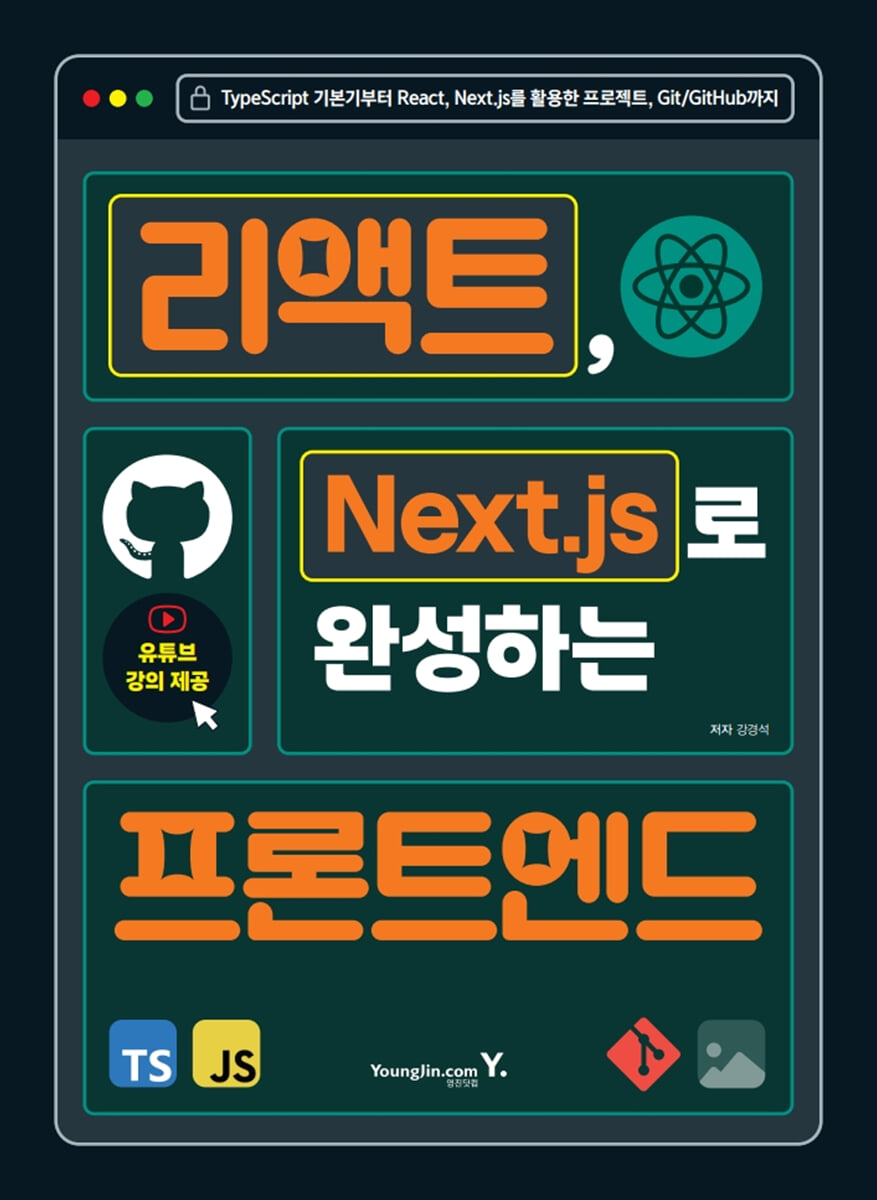 |
Description
Book Introduction
A practical guide to becoming a smart front-end developer!
This book doesn't simply teach you how to use React and Next.js.
From the perspective of a front-end developer who creates actual services, we present the reasons and standards for 'how to configure' and 'why to design this way.'
It shows how to develop practical issues such as structuring components and hooks, separating server/client components, fetch strategies, ensuring type safety, metadata configuration, translation processing, caching strategies, and data fetching into “judgable designs” rather than simple functions.
This book, consisting of 14 chapters, is broadly divided into three parts.
Chapters 1-6: Fundamentals of Front-End Development
Covers the language fundamentals and core concepts that front-end developers must understand and master.
The main concepts of JavaScript and TypeScript, as well as React's component structure, state management, and rendering methods.
You can learn the fundamental technologies and design thinking that form the basis of React's philosophy.
Chapters 7-10: Practical Front-End Development
From the perspective of configuring an actual service, component styling and design system implementation, through Next.js
We focus on practical app structure design and framework application up to project composition.
Especially 9~10
Chapter 1 is a hands-on structure that allows you to implement a project from start to just before deployment.
Chapters 11-14: Collaboration and the Future of Front-End Development
How to use tools to fully develop your skills as a front-end developer and how to grow as a developer
It is structured around strategy.
Productivity required in a practical environment, including Git, CI/CD, and debugging tools
It covers how to use tools, and the last 14 chapters discuss what philosophy and standards developers should have in the AI era.
It contains the author's reflections on whether or not it is.
【 Target Readership 】
- Beginners who want to learn React and Next.js and apply them in practice.
- A development team operating a project based on React and Next.js
- Developers who want systematic learning covering the entire front-end
This book doesn't simply teach you how to use React and Next.js.
From the perspective of a front-end developer who creates actual services, we present the reasons and standards for 'how to configure' and 'why to design this way.'
It shows how to develop practical issues such as structuring components and hooks, separating server/client components, fetch strategies, ensuring type safety, metadata configuration, translation processing, caching strategies, and data fetching into “judgable designs” rather than simple functions.
This book, consisting of 14 chapters, is broadly divided into three parts.
Chapters 1-6: Fundamentals of Front-End Development
Covers the language fundamentals and core concepts that front-end developers must understand and master.
The main concepts of JavaScript and TypeScript, as well as React's component structure, state management, and rendering methods.
You can learn the fundamental technologies and design thinking that form the basis of React's philosophy.
Chapters 7-10: Practical Front-End Development
From the perspective of configuring an actual service, component styling and design system implementation, through Next.js
We focus on practical app structure design and framework application up to project composition.
Especially 9~10
Chapter 1 is a hands-on structure that allows you to implement a project from start to just before deployment.
Chapters 11-14: Collaboration and the Future of Front-End Development
How to use tools to fully develop your skills as a front-end developer and how to grow as a developer
It is structured around strategy.
Productivity required in a practical environment, including Git, CI/CD, and debugging tools
It covers how to use tools, and the last 14 chapters discuss what philosophy and standards developers should have in the AI era.
It contains the author's reflections on whether or not it is.
【 Target Readership 】
- Beginners who want to learn React and Next.js and apply them in practice.
- A development team operating a project based on React and Next.js
- Developers who want systematic learning covering the entire front-end
- You can preview some of the book's contents.
Preview
index
Chapter 1: What is React?
1.1 React's popularity
1.2 React's philosophy and emergence
1.3 Limitations of React
React Summary
Chapter 2 JavaScript
2.1 JavaScript Roles
2.2 Current State of JavaScript
2.3 Variables and Functions
2.4 Objects and Arrays
2.5 Classes and Prototypes
2.6 Asynchronous and Single-Threaded
2.7 Module System and Import/Export
JavaScript Summary
Chapter 3 TypeScript
3.1 TypeScript Overview
3.2 Introducing TypeScript
3.3 Type System
3.4 Type Aliases and Interfaces
3.5 Generic
3.6 Duck Typing
3.7 Utility Type
TypeScript Summary
Chapter 4: React Basics
4.1 How to Create a React App
4.2 Components
4.3 State and Props
4.4 JSX
React Basics Summary
Chapter 5: Advanced React
5.1 Function Components vs. Class Components
5.2 Prop Drilling
5.3 Built-in Hooks
5.4 Custom Hooks
5.5 Rendering
React Advanced Edition Summary
Chapter 6: React in Practice (Patterns and State Management)
6.1 Design Patterns
6.2 State Management Library (Part 1)
6.3 State Management Library (Part 2)
React Practical Guide (Patterns and State Management)
Chapter 7: React in Practice (Components)
7.1 Unusual Components
7.2 CSS and Styling
7.3 Modular Styling
7.4 Component Styling
7.5 Component Library
React Practical Guide (Components) Summary
Chapter 8 Next.js
8.1 Why Use Next.js?
8.2 SPA and MPA
8.3 CSR and SSR
8.4 Next.js Overview
Next.js Summary
Chapter 9: Next.js Practical Project (Part 1)
9.1 Software Development Methodology
9.2 Technology Stack
9.3 Starting a Project
9.4 Creating a Service with Next.js
9.5 Electric Vehicle Charging Station Search Service
Next.js Practical Project (Part 1) Summary
Chapter 10: Next.js Practical Projects (Part 2)
10.1 Function Definition and Planning
10.2 Data Fetching and Management
10.3 UI Improvement Work
10.4 Server Status and Client Status
Next.js Practical Project (Part 2) Summary
Chapter 11: Git and GitHub
11.1 Version Control System
11.2 Git
11.3 GitHub
11.4 Branch Management Strategy
Git and GitHub Summary
Chapter 12 CI/CD
12.1 CI/CD Overview
12.2 CI/CD on the frontend
12.3 Test Code
CI/CD Summary
Chapter 13 Developer Tools and Debugging
13.1 React Developer Tools
13.2 Developer Tools
Developer Tools and Debugging Cleanup
Chapter 14: AI and Developers
14.1 AI
14.2 Epilogue
Closing remarks
1.1 React's popularity
1.2 React's philosophy and emergence
1.3 Limitations of React
React Summary
Chapter 2 JavaScript
2.1 JavaScript Roles
2.2 Current State of JavaScript
2.3 Variables and Functions
2.4 Objects and Arrays
2.5 Classes and Prototypes
2.6 Asynchronous and Single-Threaded
2.7 Module System and Import/Export
JavaScript Summary
Chapter 3 TypeScript
3.1 TypeScript Overview
3.2 Introducing TypeScript
3.3 Type System
3.4 Type Aliases and Interfaces
3.5 Generic
3.6 Duck Typing
3.7 Utility Type
TypeScript Summary
Chapter 4: React Basics
4.1 How to Create a React App
4.2 Components
4.3 State and Props
4.4 JSX
React Basics Summary
Chapter 5: Advanced React
5.1 Function Components vs. Class Components
5.2 Prop Drilling
5.3 Built-in Hooks
5.4 Custom Hooks
5.5 Rendering
React Advanced Edition Summary
Chapter 6: React in Practice (Patterns and State Management)
6.1 Design Patterns
6.2 State Management Library (Part 1)
6.3 State Management Library (Part 2)
React Practical Guide (Patterns and State Management)
Chapter 7: React in Practice (Components)
7.1 Unusual Components
7.2 CSS and Styling
7.3 Modular Styling
7.4 Component Styling
7.5 Component Library
React Practical Guide (Components) Summary
Chapter 8 Next.js
8.1 Why Use Next.js?
8.2 SPA and MPA
8.3 CSR and SSR
8.4 Next.js Overview
Next.js Summary
Chapter 9: Next.js Practical Project (Part 1)
9.1 Software Development Methodology
9.2 Technology Stack
9.3 Starting a Project
9.4 Creating a Service with Next.js
9.5 Electric Vehicle Charging Station Search Service
Next.js Practical Project (Part 1) Summary
Chapter 10: Next.js Practical Projects (Part 2)
10.1 Function Definition and Planning
10.2 Data Fetching and Management
10.3 UI Improvement Work
10.4 Server Status and Client Status
Next.js Practical Project (Part 2) Summary
Chapter 11: Git and GitHub
11.1 Version Control System
11.2 Git
11.3 GitHub
11.4 Branch Management Strategy
Git and GitHub Summary
Chapter 12 CI/CD
12.1 CI/CD Overview
12.2 CI/CD on the frontend
12.3 Test Code
CI/CD Summary
Chapter 13 Developer Tools and Debugging
13.1 React Developer Tools
13.2 Developer Tools
Developer Tools and Debugging Cleanup
Chapter 14: AI and Developers
14.1 AI
14.2 Epilogue
Closing remarks
Detailed image

Publisher's Review
The basic skills required for a front-end developer are the ability to handle HTML, JavaScript, and CSS fluently.
In addition, management and deployment must be handled naturally through usability, maintainability, and smooth communication between team members.
I highly recommend this book to anyone who wants to go beyond simply following along and become a "developer who can make their own judgments and decisions."
■ Author's Note
This book shares the struggles of a developer who longed for unwavering standards and direction in a rapidly changing front-end ecosystem. I hope it serves as a reference point and compass for those struggling with similar concerns.
In addition, management and deployment must be handled naturally through usability, maintainability, and smooth communication between team members.
I highly recommend this book to anyone who wants to go beyond simply following along and become a "developer who can make their own judgments and decisions."
■ Author's Note
This book shares the struggles of a developer who longed for unwavering standards and direction in a rapidly changing front-end ecosystem. I hope it serves as a reference point and compass for those struggling with similar concerns.
GOODS SPECIFICS
- Date of issue: October 20, 2025
- Page count, weight, size: 592 pages | 188*257*35mm
- ISBN13: 9788931481105
- ISBN10: 8931481101
You may also like
카테고리
korean


korean

![GQ KOREA Mark (Monthly): December [2025]](http://librairie.coreenne.fr/cdn/shop/files/8ef265dbbfbf186523ed75ba7319009d.jpg?v=1765340328&width=3840)


