

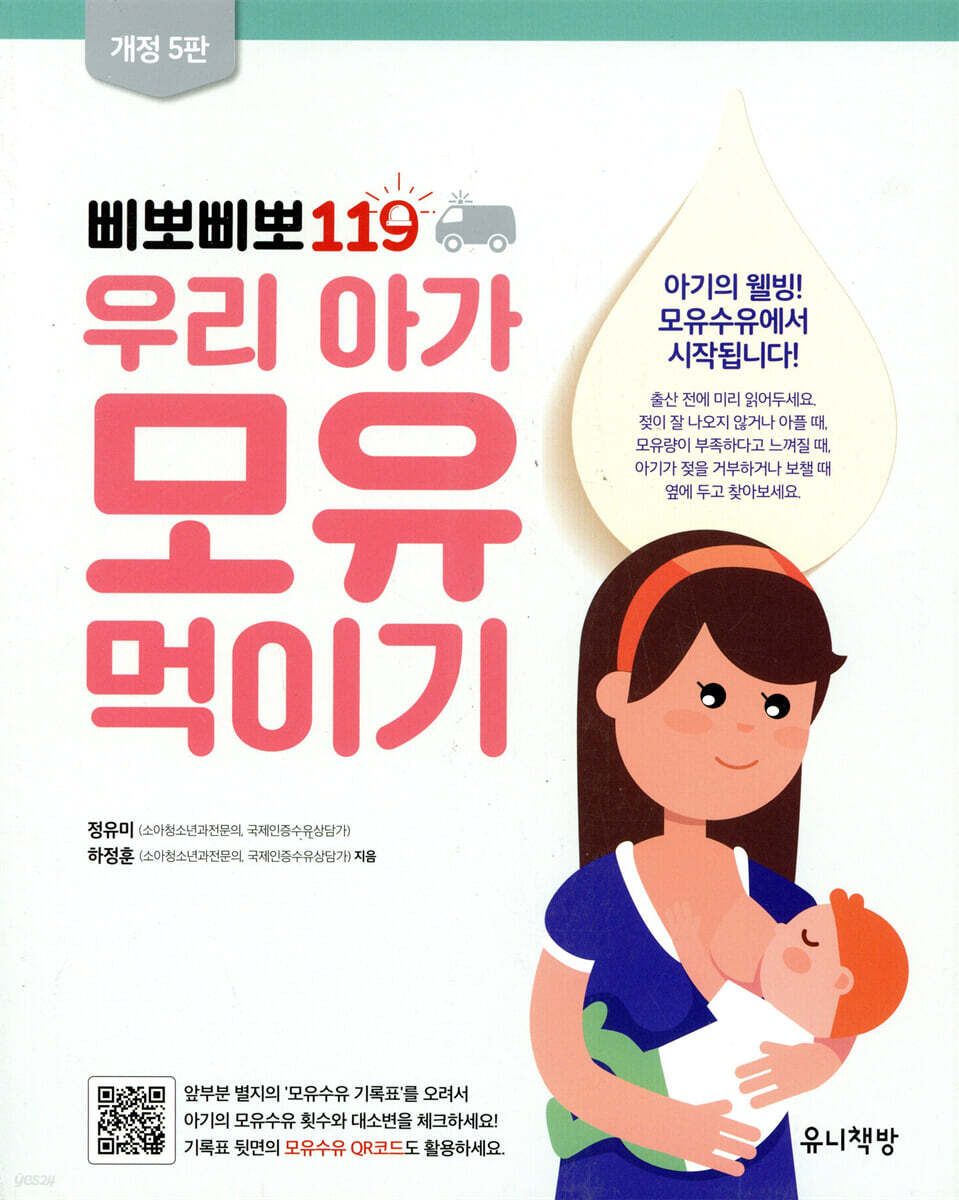
Beep beep 119 Breastfeeding my baby
 |
Description
Book Introduction
The best way to raise your baby healthy and smart is breastfeeding!
Breastfeeding is not difficult with the help of 『Beep Beep 119 Breastfeeding Your Baby』 (Revised 5th Edition)
Since its first publication in 2004, 『Pippo Pippo 119 Breastfeeding Your Baby』, which has served as a breastfeeding consultant for mothers, has been given a new look.
It has been updated with the latest information and republished with a more readable design.
The most important food for a newborn baby is mother's milk.
However, due to incorrect parenting information, there are cases where raising a baby without breastfeeding makes it more difficult.
If you breastfeed your baby, the baby will grow up healthy and the mother will recover quickly after giving birth.
I recommend this book to new mothers and fathers who want to shake off vague fears about breastfeeding and gain accurate and safe information.
Breastfeeding is not difficult with the help of 『Beep Beep 119 Breastfeeding Your Baby』 (Revised 5th Edition)
Since its first publication in 2004, 『Pippo Pippo 119 Breastfeeding Your Baby』, which has served as a breastfeeding consultant for mothers, has been given a new look.
It has been updated with the latest information and republished with a more readable design.
The most important food for a newborn baby is mother's milk.
However, due to incorrect parenting information, there are cases where raising a baby without breastfeeding makes it more difficult.
If you breastfeed your baby, the baby will grow up healthy and the mother will recover quickly after giving birth.
I recommend this book to new mothers and fathers who want to shake off vague fears about breastfeeding and gain accurate and safe information.
- You can preview some of the book's contents.
Preview
index
Recommendation
preface
Part 1: What You Need to Know About Breastfeeding
Why breastfeeding is good
Breastfeeding, this is a must!
To succeed in breastfeeding
16 Things You Need to Know to Successfully Breastfeed Your Newborn
17 Things You Shouldn't Do to Successfully Breastfeed Your Newborn
Composition and characteristics of breast milk
Part 2: Breastfeeding Your Newborn and Beyond
Things every mother should know before her baby is born
Supplements for Pregnant Women & Birth and Breastfeeding
Breastfeeding a newborn
Proper breastfeeding posture and method
About night feeding
About mixed feeding
The Story of Formula Milk Alongside Breastfeeding
Growth and development of breastfed infants
Stool in breastfed infants
Part 3: Breastfeeding When the Mother Has Problems
When there is a problem with the mother's breasts
When there is a problem with the milk secretion pattern
When a nursing mother needs to take medicine
When the mother has chronic hepatitis B or diabetes
Part 4: Breastfeeding When Your Baby Has Problems
When the baby refuses or cries for milk
Different Types of Breastfeeding Problems in Babies
Breastfeeding and Baby Diseases
Breastfeeding a premature baby
Part 5: Problems Mothers Face While Breastfeeding
Breastfeeding and Mother's Daily Life
How working mothers can successfully breastfeed
How to Express and Store Breast Milk
Feeding the baby with mother's milk in a bottle
When weaning, do this
Part 6: Frequently Asked Questions About Breastfeeding
About breast milk and formula
About the milk
About breastfeeding positions and times
About baby's illness and breastfeeding
About Mother's Breasts and Breastfeeding
About mothers and breastfeeding
About Breastfeeding and Medications 266
About what breastfeeding mothers eat
Other frequently asked questions
supplement
Baby-Friendly Hospital (10 Steps to Successful Breastfeeding)
Short-term surgery hospital
List of Korean Breastfeeding Doctors' Counseling Center Instructors
World Health Organization's International Code on the Promotion of Breast-milk Substitutes
Breastfeeding Academy Clinical Protocol
World Health Organization Infant and Child Growth Standards
Search
preface
Part 1: What You Need to Know About Breastfeeding
Why breastfeeding is good
Breastfeeding, this is a must!
To succeed in breastfeeding
16 Things You Need to Know to Successfully Breastfeed Your Newborn
17 Things You Shouldn't Do to Successfully Breastfeed Your Newborn
Composition and characteristics of breast milk
Part 2: Breastfeeding Your Newborn and Beyond
Things every mother should know before her baby is born
Supplements for Pregnant Women & Birth and Breastfeeding
Breastfeeding a newborn
Proper breastfeeding posture and method
About night feeding
About mixed feeding
The Story of Formula Milk Alongside Breastfeeding
Growth and development of breastfed infants
Stool in breastfed infants
Part 3: Breastfeeding When the Mother Has Problems
When there is a problem with the mother's breasts
When there is a problem with the milk secretion pattern
When a nursing mother needs to take medicine
When the mother has chronic hepatitis B or diabetes
Part 4: Breastfeeding When Your Baby Has Problems
When the baby refuses or cries for milk
Different Types of Breastfeeding Problems in Babies
Breastfeeding and Baby Diseases
Breastfeeding a premature baby
Part 5: Problems Mothers Face While Breastfeeding
Breastfeeding and Mother's Daily Life
How working mothers can successfully breastfeed
How to Express and Store Breast Milk
Feeding the baby with mother's milk in a bottle
When weaning, do this
Part 6: Frequently Asked Questions About Breastfeeding
About breast milk and formula
About the milk
About breastfeeding positions and times
About baby's illness and breastfeeding
About Mother's Breasts and Breastfeeding
About mothers and breastfeeding
About Breastfeeding and Medications 266
About what breastfeeding mothers eat
Other frequently asked questions
supplement
Baby-Friendly Hospital (10 Steps to Successful Breastfeeding)
Short-term surgery hospital
List of Korean Breastfeeding Doctors' Counseling Center Instructors
World Health Organization's International Code on the Promotion of Breast-milk Substitutes
Breastfeeding Academy Clinical Protocol
World Health Organization Infant and Child Growth Standards
Search
Publisher's Review
Mom's milk is the best!
Breast milk is the best food for babies as it contains all the nutrients they need, including protein, fat, carbohydrates, vitamins, and iron.
For example, in the case of iron, although the amount is small, the absorption rate is much higher, and breast milk is superior in quality regardless of the amount.
Additionally, breast milk contains adequate amounts of substances such as DHA and arachidonic acid, which are essential for the baby's brain development.
During the rapid brain growth period of childhood, not only does the brain increase in size, but brain cells mature and form connections between cells, and breast milk's unique components play a role in this.
In other words, babies who are raised on breast milk grow up with strong bodies and strong minds.
And eating in the comfortable sanctuary of mother's arms helps children grow mentally strong.
Breastfeeding your baby is good for you too.
Breastfeeding plays a beneficial role in soothing the tired body after giving birth and helping the body transform into a mother who breastfeeds.
When a baby sucks, a hormone called oxytocin is secreted, which helps the milk flow and helps the uterus contract, reducing postpartum bleeding.
In short, breastfeeding helps with postpartum recovery.
Because the mother gives the baby plenty of love, it is easy to raise the baby, and it also helps in managing the body by losing a lot of fat accumulated in the body.
Books to Read Before Having a Baby
For expectant parents, the question of how to raise a baby can feel vague.
Why not start with breastfeeding as your specific starting point and begin preparing for childbirth and postpartum care while you're still pregnant? Get breastfeeding education before birth (preferably with both parents) and choose a hospital (postpartum care center) that's conducive to breastfeeding.
The reason for preparing in advance is that it is no exaggeration to say that the success or failure of breastfeeding is determined within a week of the baby being born.
If you are busy right after giving birth and miss the right time, breastfeeding will take several times more effort.
So, this book emphasizes studying in advance, and also includes a breastfeeding record chart at the very front so that you can track your baby's eating patterns for a week.
Please use this to receive regular checkups and help your baby grow up healthy.
16 Things You Need to Know to Successfully Breastfeed Your Newborn
1.
Receive education on breastfeeding, including breastfeeding positions and how to latch on before birth.
2.
Choose an obstetrics and gynecology clinic and postpartum care center that provides 24-hour rooming.
3.
Check with the hospital where you will give birth to see if they will support breastfeeding.
4.
If possible, choose natural childbirth.
5.
Start breastfeeding within 30 minutes to 1 hour after birth.
6.
Feed your baby whenever he or she is hungry.
7.
Newborns wake up hungry, so feed them before they cry.
8.
From the first day before your milk supply starts, breastfeed at least 8 to 12 times a day.
9.
During each feeding, feed from one breast for at least 15 minutes before feeding from the other breast.
10.
If the baby falls asleep after eating less, wake him up by pressing the palms and soles of his feet to make sure he eats enough.
11.
Even at night, the mother takes the baby to sleep and feeds the baby directly. If the baby sleeps for more than 4 hours, the mother wakes the baby up to feed the baby.
12.
Breastfeed your baby 24 hours a day, 7 days a week, and do not express milk and bottle feed unless there is a medical reason not to do so.
13.
Learn how to hand express milk within 24 hours after giving birth.
14.
3-4 days after giving birth, as the milk supply increases and the breasts become firmer, you should breastfeed directly by correcting the breastfeeding position and latching on.
15.
Feed only breast milk and do not feed formula milk unless medically necessary (no water, sugar water, or barley tea).
16.
Besides mother's breast, the baby does not suck on bottles or pacifiers.
A Practical Guide to Breastfeeding Success
This book provides practical guidance on questions about breastfeeding and problems encountered while breastfeeding.
It also contains detailed information on common concerns mothers have when breastfeeding, such as whether it is okay to take medicine, what to do when going to work, whether it is okay to drink alcohol, and if so, how much.
It also provides friendly, accurate treatment methods based on medical knowledge for breast engorgement and mastitis, which breastfeeding mothers commonly experience.
It contains detailed information on medicines that can be taken and medicines that should be avoided when sick, which is the biggest concern for mothers while breastfeeding.
This book also provides expert information on diseases in breastfed babies in a way that mothers can easily understand. It also provides detailed information on how to breastfeed when a breastfed baby has diarrhea, a cold, jaundice, atopy, etc., and what the possible causes are when a breastfed baby is fussy, and how to deal with each cause.
In addition, it provides friendly explanations based on medical knowledge on how to deal with low or high breast milk production, how to use a breast pump when you need to express breast milk, how to stop breastfeeding and then start feeding again, and what to keep in mind when stopping breastfeeding.
To help breastfeeding, which can be difficult and painful, become a joyful and enjoyable experience, I recommend reading this book before giving birth and while breastfeeding.
Breast milk is the best food for babies as it contains all the nutrients they need, including protein, fat, carbohydrates, vitamins, and iron.
For example, in the case of iron, although the amount is small, the absorption rate is much higher, and breast milk is superior in quality regardless of the amount.
Additionally, breast milk contains adequate amounts of substances such as DHA and arachidonic acid, which are essential for the baby's brain development.
During the rapid brain growth period of childhood, not only does the brain increase in size, but brain cells mature and form connections between cells, and breast milk's unique components play a role in this.
In other words, babies who are raised on breast milk grow up with strong bodies and strong minds.
And eating in the comfortable sanctuary of mother's arms helps children grow mentally strong.
Breastfeeding your baby is good for you too.
Breastfeeding plays a beneficial role in soothing the tired body after giving birth and helping the body transform into a mother who breastfeeds.
When a baby sucks, a hormone called oxytocin is secreted, which helps the milk flow and helps the uterus contract, reducing postpartum bleeding.
In short, breastfeeding helps with postpartum recovery.
Because the mother gives the baby plenty of love, it is easy to raise the baby, and it also helps in managing the body by losing a lot of fat accumulated in the body.
Books to Read Before Having a Baby
For expectant parents, the question of how to raise a baby can feel vague.
Why not start with breastfeeding as your specific starting point and begin preparing for childbirth and postpartum care while you're still pregnant? Get breastfeeding education before birth (preferably with both parents) and choose a hospital (postpartum care center) that's conducive to breastfeeding.
The reason for preparing in advance is that it is no exaggeration to say that the success or failure of breastfeeding is determined within a week of the baby being born.
If you are busy right after giving birth and miss the right time, breastfeeding will take several times more effort.
So, this book emphasizes studying in advance, and also includes a breastfeeding record chart at the very front so that you can track your baby's eating patterns for a week.
Please use this to receive regular checkups and help your baby grow up healthy.
16 Things You Need to Know to Successfully Breastfeed Your Newborn
1.
Receive education on breastfeeding, including breastfeeding positions and how to latch on before birth.
2.
Choose an obstetrics and gynecology clinic and postpartum care center that provides 24-hour rooming.
3.
Check with the hospital where you will give birth to see if they will support breastfeeding.
4.
If possible, choose natural childbirth.
5.
Start breastfeeding within 30 minutes to 1 hour after birth.
6.
Feed your baby whenever he or she is hungry.
7.
Newborns wake up hungry, so feed them before they cry.
8.
From the first day before your milk supply starts, breastfeed at least 8 to 12 times a day.
9.
During each feeding, feed from one breast for at least 15 minutes before feeding from the other breast.
10.
If the baby falls asleep after eating less, wake him up by pressing the palms and soles of his feet to make sure he eats enough.
11.
Even at night, the mother takes the baby to sleep and feeds the baby directly. If the baby sleeps for more than 4 hours, the mother wakes the baby up to feed the baby.
12.
Breastfeed your baby 24 hours a day, 7 days a week, and do not express milk and bottle feed unless there is a medical reason not to do so.
13.
Learn how to hand express milk within 24 hours after giving birth.
14.
3-4 days after giving birth, as the milk supply increases and the breasts become firmer, you should breastfeed directly by correcting the breastfeeding position and latching on.
15.
Feed only breast milk and do not feed formula milk unless medically necessary (no water, sugar water, or barley tea).
16.
Besides mother's breast, the baby does not suck on bottles or pacifiers.
A Practical Guide to Breastfeeding Success
This book provides practical guidance on questions about breastfeeding and problems encountered while breastfeeding.
It also contains detailed information on common concerns mothers have when breastfeeding, such as whether it is okay to take medicine, what to do when going to work, whether it is okay to drink alcohol, and if so, how much.
It also provides friendly, accurate treatment methods based on medical knowledge for breast engorgement and mastitis, which breastfeeding mothers commonly experience.
It contains detailed information on medicines that can be taken and medicines that should be avoided when sick, which is the biggest concern for mothers while breastfeeding.
This book also provides expert information on diseases in breastfed babies in a way that mothers can easily understand. It also provides detailed information on how to breastfeed when a breastfed baby has diarrhea, a cold, jaundice, atopy, etc., and what the possible causes are when a breastfed baby is fussy, and how to deal with each cause.
In addition, it provides friendly explanations based on medical knowledge on how to deal with low or high breast milk production, how to use a breast pump when you need to express breast milk, how to stop breastfeeding and then start feeding again, and what to keep in mind when stopping breastfeeding.
To help breastfeeding, which can be difficult and painful, become a joyful and enjoyable experience, I recommend reading this book before giving birth and while breastfeeding.
GOODS SPECIFICS
- Date of issue: May 1, 2017
- Page count, weight, size: 308 pages | 760g | 187*233*20mm
- ISBN13: 9791195795512
- ISBN10: 1195795513
You may also like
카테고리
korean


korean

![GQ KOREA Mark (Monthly): December [2025]](http://librairie.coreenne.fr/cdn/shop/files/8ef265dbbfbf186523ed75ba7319009d.jpg?v=1765340328&width=3840)


