

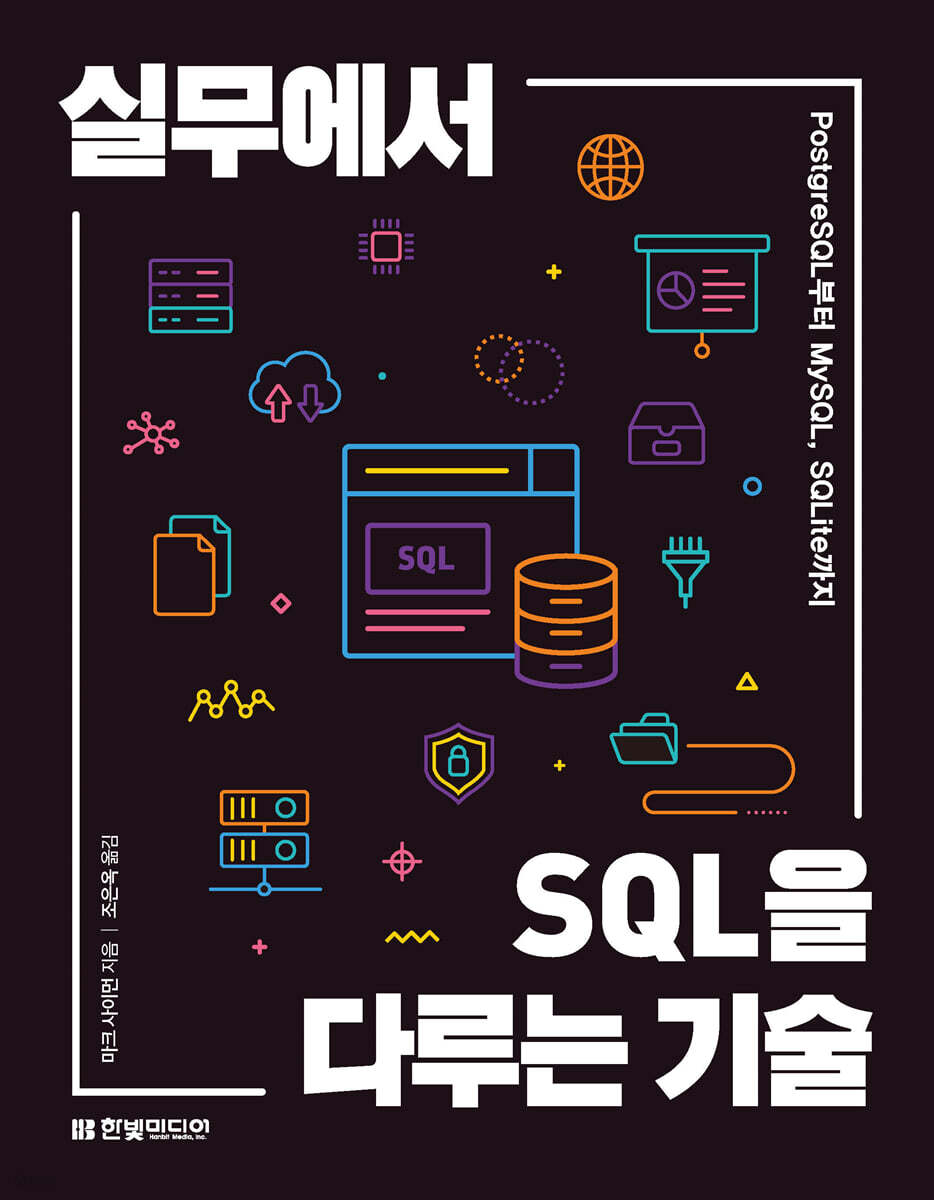
Skills for handling SQL in practice
 |
Description
Book Introduction
“I know the query, but what if it’s difficult to apply in practice?”
SQL design, optimization, and analysis know-how that cultivates practical experience by following real-world scenarios.
"SQL in Practice" is based on the scenario of operating an online bookstore. It follows a practical, hands-on structure, focusing on a single sample database and learning SQL step-by-step along the practical flow from customer registration to shopping cart, ordering and payment, and delivery.
After covering basic SQL syntax, this book covers practical SQL techniques that can be applied immediately in real-world situations, including efficient database design, advanced query writing, establishing relationships between tables, Common Table Expressions (CTEs), subqueries, and window functions. If you're already familiar with SQL fundamentals, this book will help you take your data extraction, management, and analysis capabilities to the next level!
SQL design, optimization, and analysis know-how that cultivates practical experience by following real-world scenarios.
"SQL in Practice" is based on the scenario of operating an online bookstore. It follows a practical, hands-on structure, focusing on a single sample database and learning SQL step-by-step along the practical flow from customer registration to shopping cart, ordering and payment, and delivery.
After covering basic SQL syntax, this book covers practical SQL techniques that can be applied immediately in real-world situations, including efficient database design, advanced query writing, establishing relationships between tables, Common Table Expressions (CTEs), subqueries, and window functions. If you're already familiar with SQL fundamentals, this book will help you take your data extraction, management, and analysis capabilities to the next level!
- You can preview some of the book's contents.
Preview
index
CHAPTER 01 Getting Ready
_1.1 About the sample database
_1.2 Setting up
_1.3 What you may know
CHAPTER 02 Table Design Work
_2.1 Understanding Normalized Tables
_2.2 Columns that must be independent
_2.3 Improving Database Integrity
_2.4 Adding an index
_2.5 Review
_2.6 What we will cover next
CHAPTER 03 Table Relationships and JOINs
_3.1 Overview of Relationships
_3.2 One-to-many relationships
_3.3 One-to-one relationships
_3.4 Multiple values
_3.5 Another example of a many-to-many relationship
_3.6 Inserting data into related tables
_3.7 Review
_3.8 What we will cover next
CHAPTER 04 Working with Calculated Data
_4.1 Basic Concepts of Calculation
_4.2 A closer look at the calculations
_4.3 CASE expression
_4.4 Review
_4.5 What we will cover next
CHAPTER 05 DATA AGGREGATION
_5.1 Basic Aggregation Functions
_5.2 Understanding Aggregation
_5.3 Aggregating some values
_5.4 Grouping by calculated values
_5.5 Connecting Groups
_5.6 Adding Summary Data with GROUPING SETS
_5.7 Histogram, mean, mode, median
_5.8 Review
_5.9 What we will cover next
CHAPTER 06 Using Views and Related Tools
_6.1 Working with Views
_6.2 Table-valued functions
_6.3 Things you can do with View
_6.4 Data Caching and Temporary Tables
_6.5 Calculated Columns
_6.6 Review
_6.7 What we will cover next
CHAPTER 07 Subqueries and Common Table Expressions (CTEs)
_7.1 Correlated and Uncorrelated Subqueries
_7.2 Subqueries in the SELECT clause
_7.3 Subqueries in the WHERE clause
_7.4 Subqueries in the FROM clause
_7.5 Using WHERE EXISTS
_7.6 LATERAL JOIN (CROSS APPLY) and related functions
_7.7 Working with Common Table Expressions
_7.8 Review
_7.9 What we will cover next
CHAPTER 08 Window Functions
_8.1 Writing a Windows Function
_8.2 Aggregate functions
_8.3 Aggregate Window Functions and ORDER BY
_8.4 Window Function Subtotal
_8.5 Ranking function
_8.6 Working with ntile
_8.7 Handling Previous and Next Rows
_8.8 Review
_8.9 What we will cover next
CHAPTER 09: Learning More About Common Table Expressions (CTEs)
_9.1 Using CTE as a variable
_9.2 Using Aggregate Functions in CTEs
_9.3 CTE parameter names
_9.4 Using Multiple Common Table Expressions
_9.5 Recursive CTE
_9.6 Handling Table Literals
_9.7 Review
_9.8 What we will cover next
CHAPTER 10: Learn more techniques like triggers, pivot tables, and variables.
_10.1 Understanding Triggers
_10.2 Data Pivoting
_10.3 Handling SQL Variables
_10.4 Review
_10.5 In conclusion
APPENDIX A Cultural Notes
APPENDIX B Differences by DBMS
APPENDIX C Using SQL in Python
_1.1 About the sample database
_1.2 Setting up
_1.3 What you may know
CHAPTER 02 Table Design Work
_2.1 Understanding Normalized Tables
_2.2 Columns that must be independent
_2.3 Improving Database Integrity
_2.4 Adding an index
_2.5 Review
_2.6 What we will cover next
CHAPTER 03 Table Relationships and JOINs
_3.1 Overview of Relationships
_3.2 One-to-many relationships
_3.3 One-to-one relationships
_3.4 Multiple values
_3.5 Another example of a many-to-many relationship
_3.6 Inserting data into related tables
_3.7 Review
_3.8 What we will cover next
CHAPTER 04 Working with Calculated Data
_4.1 Basic Concepts of Calculation
_4.2 A closer look at the calculations
_4.3 CASE expression
_4.4 Review
_4.5 What we will cover next
CHAPTER 05 DATA AGGREGATION
_5.1 Basic Aggregation Functions
_5.2 Understanding Aggregation
_5.3 Aggregating some values
_5.4 Grouping by calculated values
_5.5 Connecting Groups
_5.6 Adding Summary Data with GROUPING SETS
_5.7 Histogram, mean, mode, median
_5.8 Review
_5.9 What we will cover next
CHAPTER 06 Using Views and Related Tools
_6.1 Working with Views
_6.2 Table-valued functions
_6.3 Things you can do with View
_6.4 Data Caching and Temporary Tables
_6.5 Calculated Columns
_6.6 Review
_6.7 What we will cover next
CHAPTER 07 Subqueries and Common Table Expressions (CTEs)
_7.1 Correlated and Uncorrelated Subqueries
_7.2 Subqueries in the SELECT clause
_7.3 Subqueries in the WHERE clause
_7.4 Subqueries in the FROM clause
_7.5 Using WHERE EXISTS
_7.6 LATERAL JOIN (CROSS APPLY) and related functions
_7.7 Working with Common Table Expressions
_7.8 Review
_7.9 What we will cover next
CHAPTER 08 Window Functions
_8.1 Writing a Windows Function
_8.2 Aggregate functions
_8.3 Aggregate Window Functions and ORDER BY
_8.4 Window Function Subtotal
_8.5 Ranking function
_8.6 Working with ntile
_8.7 Handling Previous and Next Rows
_8.8 Review
_8.9 What we will cover next
CHAPTER 09: Learning More About Common Table Expressions (CTEs)
_9.1 Using CTE as a variable
_9.2 Using Aggregate Functions in CTEs
_9.3 CTE parameter names
_9.4 Using Multiple Common Table Expressions
_9.5 Recursive CTE
_9.6 Handling Table Literals
_9.7 Review
_9.8 What we will cover next
CHAPTER 10: Learn more techniques like triggers, pivot tables, and variables.
_10.1 Understanding Triggers
_10.2 Data Pivoting
_10.3 Handling SQL Variables
_10.4 Review
_10.5 In conclusion
APPENDIX A Cultural Notes
APPENDIX B Differences by DBMS
APPENDIX C Using SQL in Python
Detailed image

Publisher's Review
Learn everything you need to know about SQL in one scenario.
Practical SQL training across various DBMSs
Just because you've learned the basics of SQL doesn't mean you can immediately apply it in practice.
In practice, the ability to process and analyze data according to various requirements is required, and in the process, thinking and application skills beyond SQL grammar are required.
This book is an excellent guide that will help you develop that 'practical sense'.
This book goes beyond simple grammar explanations and feature lists to demonstrate how SQL can be practically utilized through the specific scenario of running an online bookstore.
You can naturally gain practical experience by following the data handling process in a practical workflow from customer registration to shopping cart, payment, and delivery.
It covers various DBMSs such as PostgreSQL, MariaDB, MySQL, SQLite, Oracle, and MSSQL, and provides differences between DBMSs based on ANSI SQL and practical application tips, enabling more practical learning.
There are many books for beginners in SQL, but few are structured so systematically to cover advanced features from a practical perspective like this one.
This book is a useful reference for a wide range of readers, from beginners to practitioners who deal with SQL on a daily basis.
I confidently recommend this book, which will serve as a stepping stone to improving your practical skills.
Who is this book for?
● Those who know basic SQL grammar such as SELECT, FROM, and WHERE, but feel lost when faced with a practical project
● Those who know JOIN but are not sure which JOIN to use when dealing with complex data
● Junior developers and data analysts who have acquired SQLD certification but lack experience handling actual data
● Those who want to develop standard SQL writing skills in an environment where they have to deal with multiple DBMSs
Key Contents
● [DB Design and Performance Optimization]: Table structure improvement and index optimization techniques for efficient database design
● [Advanced SQL Practical Applications]: Practical application of advanced SQL functions such as CTE, subqueries, and window functions.
● [Table Relationships and JOIN Utilization]: How to handle complex data by establishing relationships between tables.
● [Data Analysis and Automation Strategy]: Data analysis and result storage strategy using views and aggregate queries
Practical SQL training across various DBMSs
Just because you've learned the basics of SQL doesn't mean you can immediately apply it in practice.
In practice, the ability to process and analyze data according to various requirements is required, and in the process, thinking and application skills beyond SQL grammar are required.
This book is an excellent guide that will help you develop that 'practical sense'.
This book goes beyond simple grammar explanations and feature lists to demonstrate how SQL can be practically utilized through the specific scenario of running an online bookstore.
You can naturally gain practical experience by following the data handling process in a practical workflow from customer registration to shopping cart, payment, and delivery.
It covers various DBMSs such as PostgreSQL, MariaDB, MySQL, SQLite, Oracle, and MSSQL, and provides differences between DBMSs based on ANSI SQL and practical application tips, enabling more practical learning.
There are many books for beginners in SQL, but few are structured so systematically to cover advanced features from a practical perspective like this one.
This book is a useful reference for a wide range of readers, from beginners to practitioners who deal with SQL on a daily basis.
I confidently recommend this book, which will serve as a stepping stone to improving your practical skills.
Who is this book for?
● Those who know basic SQL grammar such as SELECT, FROM, and WHERE, but feel lost when faced with a practical project
● Those who know JOIN but are not sure which JOIN to use when dealing with complex data
● Junior developers and data analysts who have acquired SQLD certification but lack experience handling actual data
● Those who want to develop standard SQL writing skills in an environment where they have to deal with multiple DBMSs
Key Contents
● [DB Design and Performance Optimization]: Table structure improvement and index optimization techniques for efficient database design
● [Advanced SQL Practical Applications]: Practical application of advanced SQL functions such as CTE, subqueries, and window functions.
● [Table Relationships and JOIN Utilization]: How to handle complex data by establishing relationships between tables.
● [Data Analysis and Automation Strategy]: Data analysis and result storage strategy using views and aggregate queries
GOODS SPECIFICS
- Date of issue: June 30, 2025
- Page count, weight, size: 488 pages | 183*235*19mm
- ISBN13: 9791169214001
- ISBN10: 1169214002
You may also like
카테고리
korean


korean

![GQ KOREA Mark (Monthly): December [2025]](http://librairie.coreenne.fr/cdn/shop/files/8ef265dbbfbf186523ed75ba7319009d.jpg?v=1765340328&width=3840)


