

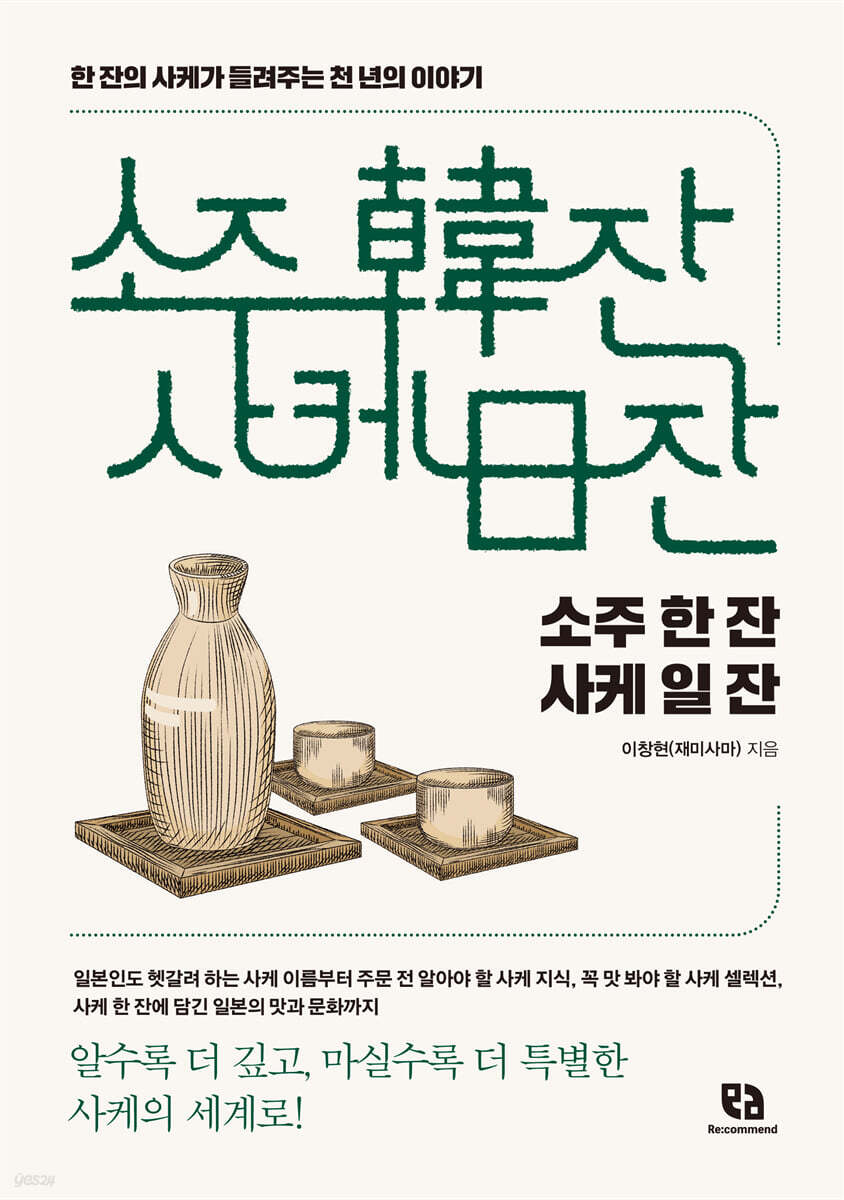
A glass of soju, a glass of sake
 |
Description
Book Introduction
A Thousand-Year Story Told Through a Glass of Sake, Beyond Alcohol and Art
A friendly sake bible for sake beginners and enthusiasts!
"A Glass of Soju, a Glass of Sake" is a guide to sake that delves into how sake is not just a simple drink, but how Japanese aesthetics and philosophy, and the harmony between nature and humanity, are condensed into a single glass.
This book, which covers sake, Japan's representative alcohol, clearly defines and distinguishes various terms related to sake, such as nihonshu, shochu, and cheongju. It also includes the history of sake, the brewing process, regional characteristics of sake, hidden stories of breweries, sake brand stories, and even pairing know-how to enjoy sake more deeply.
It provides practical information, such as label reading, pairing tips, and introductions to regional sake, to help even beginners easily understand the essence of sake, and provides ways to enjoy sake more deeply.
In particular, the author records and notes the moments every time he drinks sake, and has accumulated data on over 1,900 types of sake to date. The stories of nature, customs, and culture contained in various sakes, which he personally experienced while traveling through all 47 prefectures of Japan, offer a new perspective on understanding Japanese culture and philosophy beyond alcohol.
Discover the unique flavor secrets of sake brewed in each region of Japan, and the new charm of sake through the brewery philosophy and craftsmanship behind it. Let's embark on a journey into the world of sake, a world you've never known before, where the more you drink, the more special it becomes.
For beginners, it will serve as a first step into the world of sake, and for enthusiasts, it will be a gift-like opportunity to understand and appreciate sake on a deeper level.
A friendly sake bible for sake beginners and enthusiasts!
"A Glass of Soju, a Glass of Sake" is a guide to sake that delves into how sake is not just a simple drink, but how Japanese aesthetics and philosophy, and the harmony between nature and humanity, are condensed into a single glass.
This book, which covers sake, Japan's representative alcohol, clearly defines and distinguishes various terms related to sake, such as nihonshu, shochu, and cheongju. It also includes the history of sake, the brewing process, regional characteristics of sake, hidden stories of breweries, sake brand stories, and even pairing know-how to enjoy sake more deeply.
It provides practical information, such as label reading, pairing tips, and introductions to regional sake, to help even beginners easily understand the essence of sake, and provides ways to enjoy sake more deeply.
In particular, the author records and notes the moments every time he drinks sake, and has accumulated data on over 1,900 types of sake to date. The stories of nature, customs, and culture contained in various sakes, which he personally experienced while traveling through all 47 prefectures of Japan, offer a new perspective on understanding Japanese culture and philosophy beyond alcohol.
Discover the unique flavor secrets of sake brewed in each region of Japan, and the new charm of sake through the brewery philosophy and craftsmanship behind it. Let's embark on a journey into the world of sake, a world you've never known before, where the more you drink, the more special it becomes.
For beginners, it will serve as a first step into the world of sake, and for enthusiasts, it will be a gift-like opportunity to understand and appreciate sake on a deeper level.
- You can preview some of the book's contents.
Preview
index
_Recommended Reading | A Meaningful Book to Understand and Enjoy Sake
_Prologue | A Glimpse into Japan with a Glass of Sake
_Introduction | Would you like a glass of sake?
PART 01 Sake, the More You Know, the Better It Tastes: Understanding the Fascinating Sake Culture
CHAPTER 01 Knowing This Is All You Need to Become a Sake Expert: Essential Knowledge for Sake Beginners
_Sake, which even Japanese people find confusing. What is your name?: Definition and types of sake
_Predicting the Flavor of Sake Just by Looking at the Label: The Basics of Reading Sake Labels
How is sake made?: The sake-making process
_Specific Appellation Sake, Conditions for Premium Sake: Understanding Specific Appellation Sake
Rice Varieties That Affect the Flavor of Sake: Understanding Sake-Specific Rice
_Sake glasses that bring out the flavor and style of sake: Learn about sake-specific glasses and tokkuri.
_Cold and Hot Sake: Recommended Sake by Temperature
_Measuring the Sweetness and Dryness of Sake: Understanding Nihonshu
_Sake Storage and Methods for Deliciousness: Understanding the Manufacturing Date and Best Before Date
The charm of sake with its diverse flavors: Classification of sake flavor and aroma
CHAPTER 02 Essential Knowledge Before Ordering Sake: Preliminary Information for Tasting Sake
Why Sake Doesn't Pair with Kimchi Jjigae: The Meaning of Pairing
_Japanese Restaurant Sake Omakase for Me: Understanding the Japanese Restaurant Sake Menu
How to Order Sake: How to Order Sake at an Izakaya
How to make a snack when there are no pictures and you can't read: Basic essential snacks at an izakaya
_Sake Drinking Culture You Must Know: Manners and Common Sense at Izakayas
PART 02 Sake Master Class: A Selection of Must-Try Sake
CHAPTER 03 Now, let's go to Japan to drink sake: Sake in Japan
_Nada Gogoro GO GO!: Kobe Nada
A Glass of Sake in Kyoto, the Millennium-Old Capital: Kyoto Fushimi
_Visit a winery in France, a sake brewery in Japan!: Touring a sake brewery
_You're in Japan, so you have to buy a bottle of sake!: How to choose sake at airport duty-free shops
CHAPTER 04 Hot Sake, but Keep It Cool: Introduction to Sake Brands
_I don't know sake, but I know Kubota Manju: The story of the iconic Kubota.
Dassai, a representative Japanese sake brand: The story of the world-renowned Dassai
Local sake from Tokyo, Osaka, and Fukuoka: Hidden gems of the big cities, the story of local sake
_Friend, I'll have a glass of sake!: Sake to recommend to a friend
_A sake that will 'love' you forever: A sake perfect for enjoying with your lover
_Have a great business trip to Japan!: A classy sake gift for your boss.
The World of Sake Beyond Kubota and Dassai: The Top 10 Sake Brands
_Appendix to the Book | Sake Terminology
_Prologue | A Glimpse into Japan with a Glass of Sake
_Introduction | Would you like a glass of sake?
PART 01 Sake, the More You Know, the Better It Tastes: Understanding the Fascinating Sake Culture
CHAPTER 01 Knowing This Is All You Need to Become a Sake Expert: Essential Knowledge for Sake Beginners
_Sake, which even Japanese people find confusing. What is your name?: Definition and types of sake
_Predicting the Flavor of Sake Just by Looking at the Label: The Basics of Reading Sake Labels
How is sake made?: The sake-making process
_Specific Appellation Sake, Conditions for Premium Sake: Understanding Specific Appellation Sake
Rice Varieties That Affect the Flavor of Sake: Understanding Sake-Specific Rice
_Sake glasses that bring out the flavor and style of sake: Learn about sake-specific glasses and tokkuri.
_Cold and Hot Sake: Recommended Sake by Temperature
_Measuring the Sweetness and Dryness of Sake: Understanding Nihonshu
_Sake Storage and Methods for Deliciousness: Understanding the Manufacturing Date and Best Before Date
The charm of sake with its diverse flavors: Classification of sake flavor and aroma
CHAPTER 02 Essential Knowledge Before Ordering Sake: Preliminary Information for Tasting Sake
Why Sake Doesn't Pair with Kimchi Jjigae: The Meaning of Pairing
_Japanese Restaurant Sake Omakase for Me: Understanding the Japanese Restaurant Sake Menu
How to Order Sake: How to Order Sake at an Izakaya
How to make a snack when there are no pictures and you can't read: Basic essential snacks at an izakaya
_Sake Drinking Culture You Must Know: Manners and Common Sense at Izakayas
PART 02 Sake Master Class: A Selection of Must-Try Sake
CHAPTER 03 Now, let's go to Japan to drink sake: Sake in Japan
_Nada Gogoro GO GO!: Kobe Nada
A Glass of Sake in Kyoto, the Millennium-Old Capital: Kyoto Fushimi
_Visit a winery in France, a sake brewery in Japan!: Touring a sake brewery
_You're in Japan, so you have to buy a bottle of sake!: How to choose sake at airport duty-free shops
CHAPTER 04 Hot Sake, but Keep It Cool: Introduction to Sake Brands
_I don't know sake, but I know Kubota Manju: The story of the iconic Kubota.
Dassai, a representative Japanese sake brand: The story of the world-renowned Dassai
Local sake from Tokyo, Osaka, and Fukuoka: Hidden gems of the big cities, the story of local sake
_Friend, I'll have a glass of sake!: Sake to recommend to a friend
_A sake that will 'love' you forever: A sake perfect for enjoying with your lover
_Have a great business trip to Japan!: A classy sake gift for your boss.
The World of Sake Beyond Kubota and Dassai: The Top 10 Sake Brands
_Appendix to the Book | Sake Terminology
Detailed image
.jpg)
Into the book
“If a glass of soju is imbued with longing, joy, and excitement, a glass of sake is imbued with Japanese culture, tradition, and craftsmanship, all melted into art.”
--- p.5
Representative specific designations include Junmai Daiginjo, the highest-quality sake made by polishing rice to the fullest extent; Ginjo, which is characterized by a clean and fragrant taste; and Honjozo, which is made by polishing rice to less than 70% and adhering to traditional manufacturing methods.
These specific appellation sakes are high-quality sakes that are clearly distinct from the common table sake, Futsushu.
To use a specific appellation label, it must meet strict criteria set by the Japanese government.
--- p.71
Storage methods are also important for maintaining the quality of sake.
Brews should be bottled in a way that blocks out light and maintains temperature to maintain their flavor, so it's best to avoid cheap liquor in paper cartons.
Many people tend to conclude that sake is not for them after trying these cheap futsushu, but once they taste a properly designated sake, their perception of sake can completely change.
--- p.79
It was while drinking sake at an izakaya in a provincial city in Japan.
The shop owner recommended drinking it from a specific glass, saying, “Sake tastes different depending on the glass.”
At the time, I could feel the difference in taste depending on the glass, but I thought it was just my mood.
But later I realized that there is ample scientific evidence that the material and shape of the glass affect the taste of sake.
Depending on the thermal conductivity and material of the glass, the way the aroma spreads will also change, and even the same sake will give a completely different feeling depending on the thickness and size of the part that touches your lips.
--- p.105
Sake is classified as reishu, which is served cold, hiya, which is served at room temperature, and kan, or kanzake, which is served warm.
In particular, Atsukan is a type of sake heated to about 50℃ and is a type of Kan.
Sake, which has a variety of charms depending on the temperature, can be enjoyed in a wide range of ways, from reishu to atsukan.
--- p.110
The recommended storage period for each type of sake varies.
Heat-treated regular sake is best consumed within a year, ginjo and daiginjo within about eight months, and namazake within six months.
After opening, the shelf life becomes even shorter, with regular sake recommended to be consumed within a month, ginjo and daiginjo within two weeks, and namazake within one week.
Many of the popular sakes these days are recommended to be consumed within three months of release.
The most important things in sake storage are UV protection and temperature control.
--- p.134
For those new to sake, the most important thing is to find a sake that suits your taste.
Some people like a dry Karagucci, while others prefer a full-bodied wine like Cabernet Sauvignon.
Rather than declaring a particular sake as “better,” the key is to find one that suits your personal taste.
--- p.149
Korean and Japanese drinking cultures also show clear differences in their pairings with food.
Korea pursues simplicity, so food and drink combinations are standardized, such as chicken and beer, or raw fish and soju.
In contrast, Japan attaches profound meaning to even a single glass of sake, pursuing harmony with cuisine while considering the subtle differences in flavor depending on region, brand, and even temperature.
--- p.5
Representative specific designations include Junmai Daiginjo, the highest-quality sake made by polishing rice to the fullest extent; Ginjo, which is characterized by a clean and fragrant taste; and Honjozo, which is made by polishing rice to less than 70% and adhering to traditional manufacturing methods.
These specific appellation sakes are high-quality sakes that are clearly distinct from the common table sake, Futsushu.
To use a specific appellation label, it must meet strict criteria set by the Japanese government.
--- p.71
Storage methods are also important for maintaining the quality of sake.
Brews should be bottled in a way that blocks out light and maintains temperature to maintain their flavor, so it's best to avoid cheap liquor in paper cartons.
Many people tend to conclude that sake is not for them after trying these cheap futsushu, but once they taste a properly designated sake, their perception of sake can completely change.
--- p.79
It was while drinking sake at an izakaya in a provincial city in Japan.
The shop owner recommended drinking it from a specific glass, saying, “Sake tastes different depending on the glass.”
At the time, I could feel the difference in taste depending on the glass, but I thought it was just my mood.
But later I realized that there is ample scientific evidence that the material and shape of the glass affect the taste of sake.
Depending on the thermal conductivity and material of the glass, the way the aroma spreads will also change, and even the same sake will give a completely different feeling depending on the thickness and size of the part that touches your lips.
--- p.105
Sake is classified as reishu, which is served cold, hiya, which is served at room temperature, and kan, or kanzake, which is served warm.
In particular, Atsukan is a type of sake heated to about 50℃ and is a type of Kan.
Sake, which has a variety of charms depending on the temperature, can be enjoyed in a wide range of ways, from reishu to atsukan.
--- p.110
The recommended storage period for each type of sake varies.
Heat-treated regular sake is best consumed within a year, ginjo and daiginjo within about eight months, and namazake within six months.
After opening, the shelf life becomes even shorter, with regular sake recommended to be consumed within a month, ginjo and daiginjo within two weeks, and namazake within one week.
Many of the popular sakes these days are recommended to be consumed within three months of release.
The most important things in sake storage are UV protection and temperature control.
--- p.134
For those new to sake, the most important thing is to find a sake that suits your taste.
Some people like a dry Karagucci, while others prefer a full-bodied wine like Cabernet Sauvignon.
Rather than declaring a particular sake as “better,” the key is to find one that suits your personal taste.
--- p.149
Korean and Japanese drinking cultures also show clear differences in their pairings with food.
Korea pursues simplicity, so food and drink combinations are standardized, such as chicken and beer, or raw fish and soju.
In contrast, Japan attaches profound meaning to even a single glass of sake, pursuing harmony with cuisine while considering the subtle differences in flavor depending on region, brand, and even temperature.
--- p.156
Publisher's Review
* A sensory journey into the allure of sake
"A Glass of Sake, a Glass of Soju" goes beyond simply introducing sake, Japan's traditional alcoholic beverage, and illuminates the cultural, historical, and aesthetic values of Japan contained in sake.
This book vividly portrays the nature, region, and philosophy of Japan contained in sake, along with the craftsmanship of sake-makers.
As you follow this journey, you will come to understand that sake is more than just a drink; it is a work of art.
* A friendly guide for sake beginners and an in-depth guide for sake enthusiasts!
From basic knowledge and terminology about sake to how to read sake labels and dishes that pair well with sake, the experience of tasting sake is explained in an easy and interesting way so that even readers who are new to sake can easily understand.
For sake lovers, the taste of sake is further enriched through an in-depth exploration of Japanese culture and history that connects traditional and modern Japan, including the characteristics and history of regional sake, the secret and remarkable regional rice varieties and brewing methods of traditional breweries with over 100 years of history, and the unique flavors of sake created by the climate, rice varieties, and water of each region.
* An interesting story in a glass of sake
It tells the fascinating story of Japan's representative sake brands and breweries.
The hidden story of Kubota, loved by many, the story of the world-famous Dassai, the story of the hidden famous Jizake in the big city, sake to recommend to a friend, sake to enjoy with a lover, classy sake recommendations that are perfect as a gift for your boss, stories of sake that you can definitely find at duty-free shops, the BEST TOP 10 sake list selected based on AI analysis data on the Sakenowa site will be an exciting story that you won't hear anywhere else.
* Readers who need this book
_Those who want to experience a new intellectual pleasure about sake
_Those who want to upgrade their knowledge of sake from 'knowing the taste' to 'pretending to know it'
_Those who want to understand and appreciate the drinking culture of Korea and Japan more deeply
_Those who want to make a good choice when choosing a drink to give as a gift to a friend, lover, or boss
"A Glass of Sake, a Glass of Soju" goes beyond simply introducing sake, Japan's traditional alcoholic beverage, and illuminates the cultural, historical, and aesthetic values of Japan contained in sake.
This book vividly portrays the nature, region, and philosophy of Japan contained in sake, along with the craftsmanship of sake-makers.
As you follow this journey, you will come to understand that sake is more than just a drink; it is a work of art.
* A friendly guide for sake beginners and an in-depth guide for sake enthusiasts!
From basic knowledge and terminology about sake to how to read sake labels and dishes that pair well with sake, the experience of tasting sake is explained in an easy and interesting way so that even readers who are new to sake can easily understand.
For sake lovers, the taste of sake is further enriched through an in-depth exploration of Japanese culture and history that connects traditional and modern Japan, including the characteristics and history of regional sake, the secret and remarkable regional rice varieties and brewing methods of traditional breweries with over 100 years of history, and the unique flavors of sake created by the climate, rice varieties, and water of each region.
* An interesting story in a glass of sake
It tells the fascinating story of Japan's representative sake brands and breweries.
The hidden story of Kubota, loved by many, the story of the world-famous Dassai, the story of the hidden famous Jizake in the big city, sake to recommend to a friend, sake to enjoy with a lover, classy sake recommendations that are perfect as a gift for your boss, stories of sake that you can definitely find at duty-free shops, the BEST TOP 10 sake list selected based on AI analysis data on the Sakenowa site will be an exciting story that you won't hear anywhere else.
* Readers who need this book
_Those who want to experience a new intellectual pleasure about sake
_Those who want to upgrade their knowledge of sake from 'knowing the taste' to 'pretending to know it'
_Those who want to understand and appreciate the drinking culture of Korea and Japan more deeply
_Those who want to make a good choice when choosing a drink to give as a gift to a friend, lover, or boss
GOODS SPECIFICS
- Date of issue: February 14, 2025
- Page count, weight, size: 328 pages | 540g | 148*210*19mm
- ISBN13: 9791194084105
You may also like
카테고리
korean


korean

![GQ KOREA Mark (Monthly): December [2025]](http://librairie.coreenne.fr/cdn/shop/files/8ef265dbbfbf186523ed75ba7319009d.jpg?v=1765340328&width=3840)


