

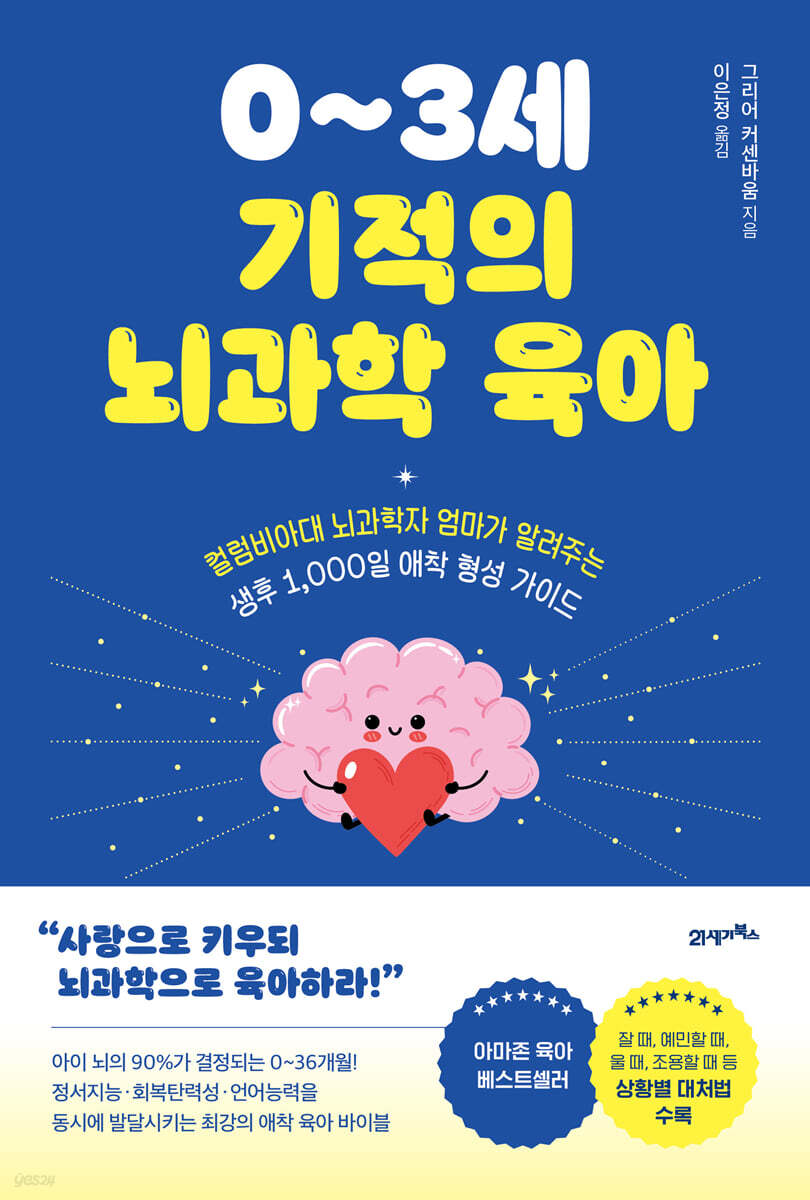
Miracle Brain Science Parenting for 0-3 Year Olds
 |
Description
Book Introduction
Amazon Bestseller in Parenting and Brain Science!
“Raise your children with love, but raise them with brain science!”
90% of your brain is formed between 0 and 36 months! The ultimate attachment parenting bible for developing your child's resilience.
It is clear why brain science is necessary for parenting.
This is because if we accurately understand the brain development of children aged 0 to 3 through brain science, we can establish clear principles and standards for parenting.
The 'brain', which determines many aspects of life, is 90% completed within the first 1,000 days after birth.
Many brain abilities, including emotional intelligence, resilience, and language skills, are determined by the type of parenting received between the ages of 0 and 3.
If you properly understand how a child's brain develops, you will see the right direction for parenting.
In raising children aged 0 to 3, forming a proper attachment relationship is most important.
A stable relationship with parents helps children's brains develop resilient stress-regulating abilities.
For infants whose brain areas responsible for regulating stress are not yet developed, careful parental assistance is absolutely necessary.
When a child's 'emotional brain' grows steadily with the help of parents, emotional intelligence, thinking ability, and even language expression ability develop.
In that sense, the period from 0 to 3 years of age is truly a ‘miraculous’ time for parenting.
There is no need to understand difficult theories or put them into complicated practices.
The most important attitude is 'empathetic parenting', which involves actively responding to the child's signals.
The author of this book, a mother of one child and a doctor of neuroscience from Columbia University, has identified the core of neuroscience parenting and the timing of parenting for each situation that parents face throughout the 24 hours of the day, from when the child is awake until he or she goes to bed.
This book, which shatters 30 misconceptions about parenting, is a true bible of attachment and empathy that you can rely on in the daunting real-life parenting world.
“Raise your children with love, but raise them with brain science!”
90% of your brain is formed between 0 and 36 months! The ultimate attachment parenting bible for developing your child's resilience.
It is clear why brain science is necessary for parenting.
This is because if we accurately understand the brain development of children aged 0 to 3 through brain science, we can establish clear principles and standards for parenting.
The 'brain', which determines many aspects of life, is 90% completed within the first 1,000 days after birth.
Many brain abilities, including emotional intelligence, resilience, and language skills, are determined by the type of parenting received between the ages of 0 and 3.
If you properly understand how a child's brain develops, you will see the right direction for parenting.
In raising children aged 0 to 3, forming a proper attachment relationship is most important.
A stable relationship with parents helps children's brains develop resilient stress-regulating abilities.
For infants whose brain areas responsible for regulating stress are not yet developed, careful parental assistance is absolutely necessary.
When a child's 'emotional brain' grows steadily with the help of parents, emotional intelligence, thinking ability, and even language expression ability develop.
In that sense, the period from 0 to 3 years of age is truly a ‘miraculous’ time for parenting.
There is no need to understand difficult theories or put them into complicated practices.
The most important attitude is 'empathetic parenting', which involves actively responding to the child's signals.
The author of this book, a mother of one child and a doctor of neuroscience from Columbia University, has identified the core of neuroscience parenting and the timing of parenting for each situation that parents face throughout the 24 hours of the day, from when the child is awake until he or she goes to bed.
This book, which shatters 30 misconceptions about parenting, is a true bible of attachment and empathy that you can rely on in the daunting real-life parenting world.
- You can preview some of the book's contents.
Preview
index
Introduction - Why Brain Science is Necessary for Parenting, Exactly Up to Age 3
A healthy and resilient mind is developed in infancy.
Three years to develop your child's emotional intelligence, resilience, and language skills.
From theory to practice, the fundamentals of brain science parenting.
30 Parenting Concerns New Parents Most Frequently Ask: Brain Science Explains Them
PART 1: Theory - Why Brain Science is Necessary for Raising Children Aged 0-3
CHAPTER 1 - 0-3 Years Old: The Golden Time for Our Children's Brains
90% of a child's brain develops in the first three years of life.
The Importance of Attachment Formation as Seen Through Brain Science
Understand your child's signals and emotions and respond actively.
CHAPTER 2 - Understanding the Principles of Brain Development Makes Parenting a Simplified Task
3 Stages of Brain Development by Age
Causes of stress in children aged 0-3
CHAPTER 3 - The Power of Parenting for 0-3 Year Olds: Transforming Innate Temperament
Mental health is something you can pass on to your children.
Are you worried that your mother's depression may have been inherited?
CHAPTER 4 - Leverage the "Parental Mind" Optimized for Parenting
Parenting even changes parents' brains.
The brain changes that both mom and dad will experience
Four Parenting Superpowers in Every Parent's Heart
Don't be swayed by unverified parenting wisdom.
The Miracle of Brain Change That Heals Even Parents
What You Need to Know About the Transition to Parenthood
PART 2: Practical - Practical Attachment Parenting Methods for Children Ages 0-3
CHAPTER 5: Learning Empathy Through Brain Science: A Roadmap for Attachment Parenting
Between the ages of 0 and 3, children need parents who can give them absolute love.
Empathetic Parenting: Helping Children Manage Their First-Time Stress
Why empathetic parenting is the most important, even if it's difficult.
CHAPTER 6 When Your Child is Quiet and Calm - The Optimal Parenting Timing to Build a Connection with Your Child
Baby Chat - Conversations with your child that are essential for forming healthy attachments
From smell to touch, the A to Z of communication methods that awaken a child's senses.
This is how parents should react to their newborn when they first meet him.
Fostering a Strong Connection Between Parents and Children - Applying Empathetic Parenting in Practice
CHAPTER 7 When Your Child Cries or Throws a Tantrum - Parenting Timings to Teach Your Child Stress Management
First, let's understand your child's stress response patterns and stages.
Empathetic parenting can also teach children rules.
How to Correct a Child's Moment of Irritation and Parenting Mistakes
Be sure to distinguish between your child's stress and your parent's emotions.
The Child Who Won't Stop Crying - Applying Empathy Parenting in Practice
CHAPTER 8 When Your Child Is Sleepy or Asleep - The Best Parenting Timing to Form a Healthy Attachment
Why Sleep Training Is Never Good for Your Child's Brain
Understanding Normal Infant Sleep Patterns
The Practical Guide to Sleep Parenting for Children Aged 0-3
The more you sleep with your child, the more stable their brain becomes.
Developing Healthy Sleep Patterns in Your Child - Applying Empathetic Parenting in Practice
CHAPTER 9: Recharge Your Tired Parenting Brain with Parenting Energy
Two Essential Energy Recharge Methods for Parenting Without Tire
Long-Term Strategy for Recovering Parenting Energy - The "I CARE" Practice
A Short-Term Strategy to Recover Parenting Energy - The "Space Raising" Exercise
In conclusion - Raise your children with love, but with brain science.
A healthy and resilient mind is developed in infancy.
Three years to develop your child's emotional intelligence, resilience, and language skills.
From theory to practice, the fundamentals of brain science parenting.
30 Parenting Concerns New Parents Most Frequently Ask: Brain Science Explains Them
PART 1: Theory - Why Brain Science is Necessary for Raising Children Aged 0-3
CHAPTER 1 - 0-3 Years Old: The Golden Time for Our Children's Brains
90% of a child's brain develops in the first three years of life.
The Importance of Attachment Formation as Seen Through Brain Science
Understand your child's signals and emotions and respond actively.
CHAPTER 2 - Understanding the Principles of Brain Development Makes Parenting a Simplified Task
3 Stages of Brain Development by Age
Causes of stress in children aged 0-3
CHAPTER 3 - The Power of Parenting for 0-3 Year Olds: Transforming Innate Temperament
Mental health is something you can pass on to your children.
Are you worried that your mother's depression may have been inherited?
CHAPTER 4 - Leverage the "Parental Mind" Optimized for Parenting
Parenting even changes parents' brains.
The brain changes that both mom and dad will experience
Four Parenting Superpowers in Every Parent's Heart
Don't be swayed by unverified parenting wisdom.
The Miracle of Brain Change That Heals Even Parents
What You Need to Know About the Transition to Parenthood
PART 2: Practical - Practical Attachment Parenting Methods for Children Ages 0-3
CHAPTER 5: Learning Empathy Through Brain Science: A Roadmap for Attachment Parenting
Between the ages of 0 and 3, children need parents who can give them absolute love.
Empathetic Parenting: Helping Children Manage Their First-Time Stress
Why empathetic parenting is the most important, even if it's difficult.
CHAPTER 6 When Your Child is Quiet and Calm - The Optimal Parenting Timing to Build a Connection with Your Child
Baby Chat - Conversations with your child that are essential for forming healthy attachments
From smell to touch, the A to Z of communication methods that awaken a child's senses.
This is how parents should react to their newborn when they first meet him.
Fostering a Strong Connection Between Parents and Children - Applying Empathetic Parenting in Practice
CHAPTER 7 When Your Child Cries or Throws a Tantrum - Parenting Timings to Teach Your Child Stress Management
First, let's understand your child's stress response patterns and stages.
Empathetic parenting can also teach children rules.
How to Correct a Child's Moment of Irritation and Parenting Mistakes
Be sure to distinguish between your child's stress and your parent's emotions.
The Child Who Won't Stop Crying - Applying Empathy Parenting in Practice
CHAPTER 8 When Your Child Is Sleepy or Asleep - The Best Parenting Timing to Form a Healthy Attachment
Why Sleep Training Is Never Good for Your Child's Brain
Understanding Normal Infant Sleep Patterns
The Practical Guide to Sleep Parenting for Children Aged 0-3
The more you sleep with your child, the more stable their brain becomes.
Developing Healthy Sleep Patterns in Your Child - Applying Empathetic Parenting in Practice
CHAPTER 9: Recharge Your Tired Parenting Brain with Parenting Energy
Two Essential Energy Recharge Methods for Parenting Without Tire
Long-Term Strategy for Recovering Parenting Energy - The "I CARE" Practice
A Short-Term Strategy to Recover Parenting Energy - The "Space Raising" Exercise
In conclusion - Raise your children with love, but with brain science.
Detailed image

Into the book
Aren't you already feeling the pressure and responsibility of raising a child almost entirely on your own? Do you really need another approach to raising your child? Despite the internet overflowing with feeds and the "best parenting" advice you hear from everyone around you?
I understand.
I am also a parent raising children.
So I want to reduce your anxiety, confusion, and to-do list.
What I'm about to tell you is simpler, more intuitive, and has irrefutable information backed by brain science.
---From "A Resilient Brain Created with Secure Attachment"
An infant's brain is not yet able to process stress and emotions on its own.
But when adults care for a child, it's like lending the child a piece of their brain, so the infant's brain releases hormones and neurotransmitters necessary for parenting, starting with oxytocin and continuing through dopamine, serotonin, endorphins, and GABA.
When children have confidence that they will receive a steady supply of oxytocin from their caregivers, they gradually build resilience that lasts a lifetime.
---From "Understanding the Principles of Brain Development Makes Parenting Easy"
Research has shown that becoming a parent leads to the formation of new, specialized "parenting brain circuits," and this phenomenon continues to be observed.
The parenting brain circuit does not exist in non-parents.
A parent's brain doesn't function like an adult's brain when facing a child; it's specialized for raising children.
The way our brains are organized is something we both lose and gain when we become parents.
---From "Use the 'Parental Mind' Optimized for Childcare"
Empathetic parenting is an alternative to behavior-based parenting.
Rather than behavior-based parenting that rewards or punishes children to encourage or discourage certain behaviors, we should practice empathic parenting that teaches children how to explore their feelings, desires, thoughts, and behaviors.
Empathetic parenting is not a question of what to do, but how to do it.
In other words, it is an attitude of paying attention to what is happening inside the child.
---From "Empathetic Parenting: Helping Children Manage Their First Stress"
Helping your child deal with stress and emotions doesn't mean you should unconditionally embrace all of their behavior.
You must be able to guide them when they engage in risky, antisocial, or unhealthy behavior.
Guiding behavior helps children feel protected and safe.
By using empathic parenting to teach your child to recognize their own emotions, needs, and behaviors, you can guide them toward safe, social, and healthy behaviors.
---From "You can teach your child rules through empathetic parenting"
Parenting your child while they sleep has unique advantages over parenting while they are awake.
Sleep through nurturing fosters brain connections that nurture the developing infant brain's stress system and other systems, strengthening resilience to various mental, neurological, and physical ailments.
I understand.
I am also a parent raising children.
So I want to reduce your anxiety, confusion, and to-do list.
What I'm about to tell you is simpler, more intuitive, and has irrefutable information backed by brain science.
---From "A Resilient Brain Created with Secure Attachment"
An infant's brain is not yet able to process stress and emotions on its own.
But when adults care for a child, it's like lending the child a piece of their brain, so the infant's brain releases hormones and neurotransmitters necessary for parenting, starting with oxytocin and continuing through dopamine, serotonin, endorphins, and GABA.
When children have confidence that they will receive a steady supply of oxytocin from their caregivers, they gradually build resilience that lasts a lifetime.
---From "Understanding the Principles of Brain Development Makes Parenting Easy"
Research has shown that becoming a parent leads to the formation of new, specialized "parenting brain circuits," and this phenomenon continues to be observed.
The parenting brain circuit does not exist in non-parents.
A parent's brain doesn't function like an adult's brain when facing a child; it's specialized for raising children.
The way our brains are organized is something we both lose and gain when we become parents.
---From "Use the 'Parental Mind' Optimized for Childcare"
Empathetic parenting is an alternative to behavior-based parenting.
Rather than behavior-based parenting that rewards or punishes children to encourage or discourage certain behaviors, we should practice empathic parenting that teaches children how to explore their feelings, desires, thoughts, and behaviors.
Empathetic parenting is not a question of what to do, but how to do it.
In other words, it is an attitude of paying attention to what is happening inside the child.
---From "Empathetic Parenting: Helping Children Manage Their First Stress"
Helping your child deal with stress and emotions doesn't mean you should unconditionally embrace all of their behavior.
You must be able to guide them when they engage in risky, antisocial, or unhealthy behavior.
Guiding behavior helps children feel protected and safe.
By using empathic parenting to teach your child to recognize their own emotions, needs, and behaviors, you can guide them toward safe, social, and healthy behaviors.
---From "You can teach your child rules through empathetic parenting"
Parenting your child while they sleep has unique advantages over parenting while they are awake.
Sleep through nurturing fosters brain connections that nurture the developing infant brain's stress system and other systems, strengthening resilience to various mental, neurological, and physical ailments.
---From "Why Sleep Training Is Never Good for Your Child's Brain"
Publisher's Review
Only for children up to 3 years old, brain science when raising children!
A Roadmap for Empathetic Parenting: Learning About Attachment Between Ages 0-3 Using the Latest Brain Science
In today's world overflowing with parenting information, which stories should new parents align with? Is there a book that offers clear and specific guidance on parenting, based on accurate facts? The author, a neuroscience researcher at Columbia University and a mother of one, wrote this book to share precise parenting guidance with new parents.
This book contains practical parenting guidelines based on the latest brain science that will free parents from the “difficult situation of having to try all the parenting methods floating around on the Internet” amidst the vast amount of parenting information.
The authors, who originally studied the adult brain and mental health, discovered that much of the brain is determined in the first 1,000 days of life.
The period from 0 to 3 years of age, when the brain grows to 90% of its adult size, is an incredible time for the development of children's mental health, emotional intelligence, resilience, and even language skills.
Above all, what is important in brain development during this period is the ability to control stress.
The resilient stress management skills developed through a stable attachment relationship with parents serve as the most important foundation for brain region development.
Forming a secure attachment is not as complicated as you might think.
Help your child feel secure by actively responding to his or her various signals.
Hug and love your child enough as your heart leads you.
Of course, the author also knows that the reality of parenting is not as easy as it seems.
Having faced countless unexpected situations while giving birth and raising a child, the author realized that “you can’t completely control everything during the process of becoming a parent.”
But knowing and not knowing are different.
Amidst the abundance of parenting information, understanding parenting through brain science reveals the fundamental direction of parenting.
Brain Science Parenting Secrets That Shatter Conventional Parenting Doctrine
How to nurture your child's emotional brain and build a resilient and healthy mind.
Let's start the first step in parenting by understanding the child's brain development process.
The brain of infants aged 0 to 3 develops in the order of survival brain, emotional brain, and thinking brain.
A child's brain is made up of a survival brain that has been functioning since birth, an immature emotional brain, and a newly formed thinking brain.
The most important thing during this period is the ‘emotional brain.’
If parents respond reliably to stress signals in a child whose emotional brain is not yet mature enough to properly cope with stress, the child's emotional brain will gradually develop into a more resilient one.
Through repeated experiences of appropriately managing stress with the help of parents, a child's emotional brain gradually matures.
In that context, the conventional wisdom about parenting that hugging a crying child too much can cause the child to grow up to be spoiled is wrong.
The brain area is not yet developed and cannot regulate stress on its own.
If we understand parenting through brain science, we can find a clear direction for parenting from existing parenting practices.
Neither sleep training that forces children to sleep through the night nor training that fosters independence are good for a child's brain.
When parents hug their children as much as they want and respond as much as the child wants, a stable stress regulation system is established in the child's brain.
By understanding brain science and listening to your own parenting instincts, you can effectively support your child's brain without being swayed by unproven parenting practices and common sense.
Solving real-life parenting concerns!
Fact-checking the 30 most common parenting concerns for new parents!
New parents face countless concerns, such as whether they should always feed their babies at set times, whether they should stop nighttime feedings after 36 months, and when to start teaching their babies to sleep on their own.
This book neatly addresses 30 of the most common parenting concerns parents have, based on the latest brain science.
At the beginning of the book, 30 misunderstandings and their answers are organized in advance, and clear answers based on scientific facts are provided at appropriate places.
The 'Learn More' section, inserted separately, provides a clear overview of specific information that can be encountered in the realities of parenting.
Parenting is never easy, but with brain science, you can clearly see the path to parenting.
There are no perfect parents in this world.
You may not have enough time to devote to your child, and you may make mistakes.
But what is clear is that parenting is ultimately a product of the will to actively respond to the child.
A child never ignores the stable love of his parents.
When we learn how to recharge our parenting energy when we are tired, and when we parent with understanding and empathy for the brains of both children and parents, children can grow up properly and sufficiently within a healthy attachment.
Raise them with love, but also with brain science.
You have the miraculous power to change your child's brain.
A guide to forming attachment in the first 1,000 days after birth to help your child develop emotional intelligence!
From easy-to-understand brain science theories to practical parenting guidelines for every situation!
【PART 1: Theory】 What Parents Need to Know: The Brain Science of Raising Children Ages 0-3
The reason why the first 1,000 days after birth are the most important in parenting is because of the 'neuroplasticity' of the brain during this period.
Neuroplasticity is the brain's ability to change its neural circuits through experience. The brains of children aged 0 to 3 form circuits that will be fixed in the future through 'experience.'
Since it is difficult for brain circuits to change once they are established, parenting during this period, when the brain has the strongest neuroplasticity, has a powerful impact on the child's brain.
Of course, the brain is fundamentally shaped by our innate genes and DNA, and some children are genetically more sensitive to stress.
But proper parenting can help any child, no matter what their genes, become more resilient.
The research on 'epigenetics', which has received much attention over the past 20 years, has revealed the influence of parenting on genes.
Even though we cannot change our innate genes, we can increase or decrease the influence of certain genes through parenting.
If nothing else, you can pass on a healthy mind to your children.
Just as a child's brain changes rapidly, a parent's brain actually changes too.
Specific brain regions optimized for parenting are activated, and the brain's ability to respond sensitively to and empathize with the child's signals increases.
When parents approach parenting with the will to actively respond to their children, their brains change even more dramatically.
Only by recognizing the changes in one's own brain and actively parenting can parents and children create a healthy mind together.
【PART 2: Practical】 Practical Attachment Parenting for 0-3 Year Olds: Anyone Can Follow
Practice is more important than theory.
This book, based on advanced brain science theories, provides practical parenting principles that can help children develop their brains and form healthy attachments, tailored to each situation and timing.
Once you understand that "empathetic parenting," which involves actively responding to your child, is the most effective for brain development, practical parenting guidelines become easier to understand.
When your child is quiet, calm, and awake, this is the best time to build a connection with them.
If your child smiles or moves and 'serves', you can gradually form an attachment by communicating with your child and 'returning' the same response to him or her.
Through interactions with parents and exposure to various touches and sensations, children develop their brains within a secure attachment relationship.
When your child cries or throws a tantrum, it's a valuable opportunity to teach them how to manage stress.
The 'empathetic parenting' this book talks about does not mean that you should blindly accept whatever your child does.
When a child expresses stress, you should understand the cause of the stress from the child's perspective, encourage them sufficiently, and teach them how to manage stress.
When your child is sufficiently stable, you can teach him or her the correct behavior.
When your child is sleepy or asleep, you can form a healthy attachment with your child.
Children aged 0 to 3, who have not yet developed the ability to regulate regular sleep, show sleep signals in different ways.
Don't just stick to regular times; pay attention to your child's signals.
When you put your child to sleep in response to their sleep cues, your child forms a healthy attachment through a sense of security and gradually develops resilient brain regions.
A Roadmap for Empathetic Parenting: Learning About Attachment Between Ages 0-3 Using the Latest Brain Science
In today's world overflowing with parenting information, which stories should new parents align with? Is there a book that offers clear and specific guidance on parenting, based on accurate facts? The author, a neuroscience researcher at Columbia University and a mother of one, wrote this book to share precise parenting guidance with new parents.
This book contains practical parenting guidelines based on the latest brain science that will free parents from the “difficult situation of having to try all the parenting methods floating around on the Internet” amidst the vast amount of parenting information.
The authors, who originally studied the adult brain and mental health, discovered that much of the brain is determined in the first 1,000 days of life.
The period from 0 to 3 years of age, when the brain grows to 90% of its adult size, is an incredible time for the development of children's mental health, emotional intelligence, resilience, and even language skills.
Above all, what is important in brain development during this period is the ability to control stress.
The resilient stress management skills developed through a stable attachment relationship with parents serve as the most important foundation for brain region development.
Forming a secure attachment is not as complicated as you might think.
Help your child feel secure by actively responding to his or her various signals.
Hug and love your child enough as your heart leads you.
Of course, the author also knows that the reality of parenting is not as easy as it seems.
Having faced countless unexpected situations while giving birth and raising a child, the author realized that “you can’t completely control everything during the process of becoming a parent.”
But knowing and not knowing are different.
Amidst the abundance of parenting information, understanding parenting through brain science reveals the fundamental direction of parenting.
Brain Science Parenting Secrets That Shatter Conventional Parenting Doctrine
How to nurture your child's emotional brain and build a resilient and healthy mind.
Let's start the first step in parenting by understanding the child's brain development process.
The brain of infants aged 0 to 3 develops in the order of survival brain, emotional brain, and thinking brain.
A child's brain is made up of a survival brain that has been functioning since birth, an immature emotional brain, and a newly formed thinking brain.
The most important thing during this period is the ‘emotional brain.’
If parents respond reliably to stress signals in a child whose emotional brain is not yet mature enough to properly cope with stress, the child's emotional brain will gradually develop into a more resilient one.
Through repeated experiences of appropriately managing stress with the help of parents, a child's emotional brain gradually matures.
In that context, the conventional wisdom about parenting that hugging a crying child too much can cause the child to grow up to be spoiled is wrong.
The brain area is not yet developed and cannot regulate stress on its own.
If we understand parenting through brain science, we can find a clear direction for parenting from existing parenting practices.
Neither sleep training that forces children to sleep through the night nor training that fosters independence are good for a child's brain.
When parents hug their children as much as they want and respond as much as the child wants, a stable stress regulation system is established in the child's brain.
By understanding brain science and listening to your own parenting instincts, you can effectively support your child's brain without being swayed by unproven parenting practices and common sense.
Solving real-life parenting concerns!
Fact-checking the 30 most common parenting concerns for new parents!
New parents face countless concerns, such as whether they should always feed their babies at set times, whether they should stop nighttime feedings after 36 months, and when to start teaching their babies to sleep on their own.
This book neatly addresses 30 of the most common parenting concerns parents have, based on the latest brain science.
At the beginning of the book, 30 misunderstandings and their answers are organized in advance, and clear answers based on scientific facts are provided at appropriate places.
The 'Learn More' section, inserted separately, provides a clear overview of specific information that can be encountered in the realities of parenting.
Parenting is never easy, but with brain science, you can clearly see the path to parenting.
There are no perfect parents in this world.
You may not have enough time to devote to your child, and you may make mistakes.
But what is clear is that parenting is ultimately a product of the will to actively respond to the child.
A child never ignores the stable love of his parents.
When we learn how to recharge our parenting energy when we are tired, and when we parent with understanding and empathy for the brains of both children and parents, children can grow up properly and sufficiently within a healthy attachment.
Raise them with love, but also with brain science.
You have the miraculous power to change your child's brain.
A guide to forming attachment in the first 1,000 days after birth to help your child develop emotional intelligence!
From easy-to-understand brain science theories to practical parenting guidelines for every situation!
【PART 1: Theory】 What Parents Need to Know: The Brain Science of Raising Children Ages 0-3
The reason why the first 1,000 days after birth are the most important in parenting is because of the 'neuroplasticity' of the brain during this period.
Neuroplasticity is the brain's ability to change its neural circuits through experience. The brains of children aged 0 to 3 form circuits that will be fixed in the future through 'experience.'
Since it is difficult for brain circuits to change once they are established, parenting during this period, when the brain has the strongest neuroplasticity, has a powerful impact on the child's brain.
Of course, the brain is fundamentally shaped by our innate genes and DNA, and some children are genetically more sensitive to stress.
But proper parenting can help any child, no matter what their genes, become more resilient.
The research on 'epigenetics', which has received much attention over the past 20 years, has revealed the influence of parenting on genes.
Even though we cannot change our innate genes, we can increase or decrease the influence of certain genes through parenting.
If nothing else, you can pass on a healthy mind to your children.
Just as a child's brain changes rapidly, a parent's brain actually changes too.
Specific brain regions optimized for parenting are activated, and the brain's ability to respond sensitively to and empathize with the child's signals increases.
When parents approach parenting with the will to actively respond to their children, their brains change even more dramatically.
Only by recognizing the changes in one's own brain and actively parenting can parents and children create a healthy mind together.
【PART 2: Practical】 Practical Attachment Parenting for 0-3 Year Olds: Anyone Can Follow
Practice is more important than theory.
This book, based on advanced brain science theories, provides practical parenting principles that can help children develop their brains and form healthy attachments, tailored to each situation and timing.
Once you understand that "empathetic parenting," which involves actively responding to your child, is the most effective for brain development, practical parenting guidelines become easier to understand.
When your child is quiet, calm, and awake, this is the best time to build a connection with them.
If your child smiles or moves and 'serves', you can gradually form an attachment by communicating with your child and 'returning' the same response to him or her.
Through interactions with parents and exposure to various touches and sensations, children develop their brains within a secure attachment relationship.
When your child cries or throws a tantrum, it's a valuable opportunity to teach them how to manage stress.
The 'empathetic parenting' this book talks about does not mean that you should blindly accept whatever your child does.
When a child expresses stress, you should understand the cause of the stress from the child's perspective, encourage them sufficiently, and teach them how to manage stress.
When your child is sufficiently stable, you can teach him or her the correct behavior.
When your child is sleepy or asleep, you can form a healthy attachment with your child.
Children aged 0 to 3, who have not yet developed the ability to regulate regular sleep, show sleep signals in different ways.
Don't just stick to regular times; pay attention to your child's signals.
When you put your child to sleep in response to their sleep cues, your child forms a healthy attachment through a sense of security and gradually develops resilient brain regions.
GOODS SPECIFICS
- Date of issue: July 3, 2024
- Page count, weight, size: 276 pages | 422g | 152*225*20mm
- ISBN13: 9791171174348
- ISBN10: 1171174349
You may also like
카테고리
korean


korean

![GQ KOREA Mark (Monthly): December [2025]](http://librairie.coreenne.fr/cdn/shop/files/8ef265dbbfbf186523ed75ba7319009d.jpg?v=1765340328&width=3840)


