

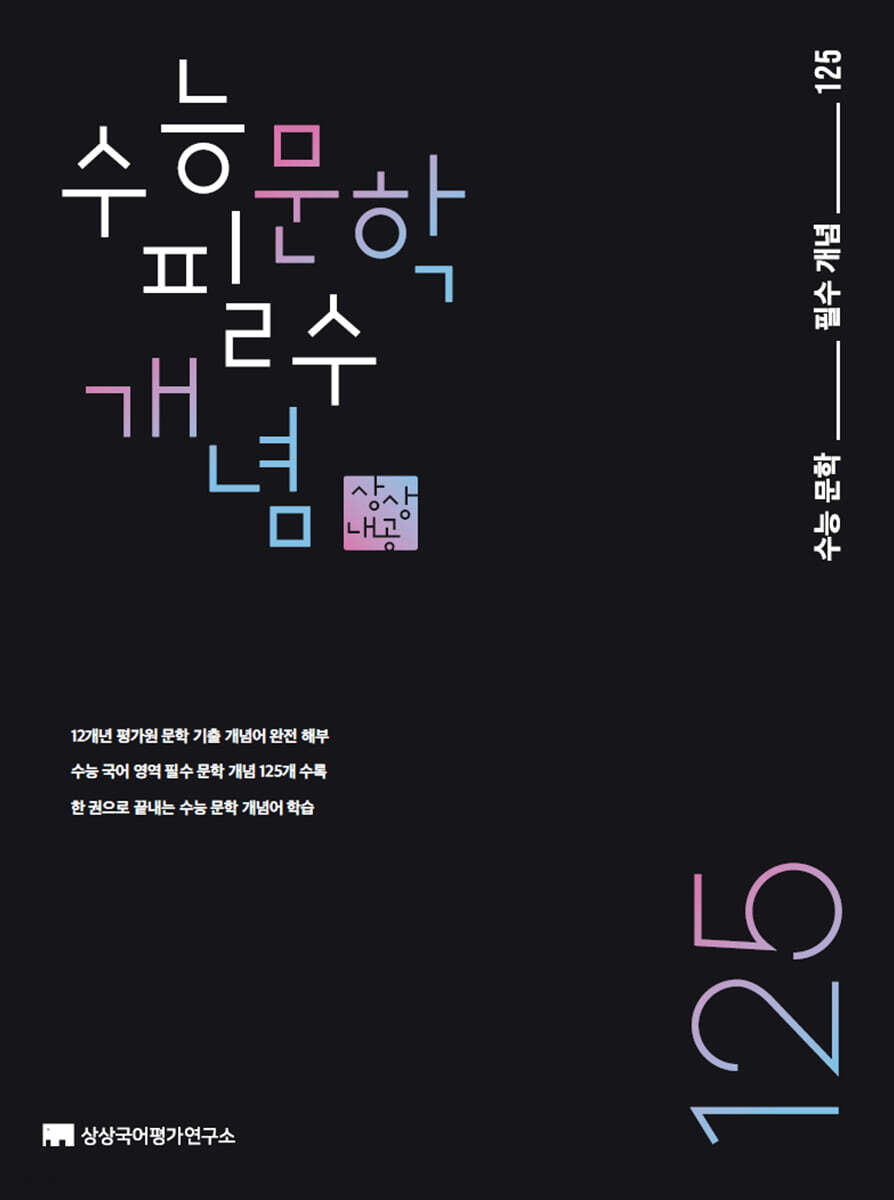
Essential Literature Concepts for the College Scholastic Ability Test (CSAT) 125
 |
Description
Book Introduction
『College Scholastic Ability Test Literature Concepts 125』completely analyzes the literary concepts that appear in the College Scholastic Ability Test and mock exams.
It is characterized by its concise and clear explanations that correct ‘misconceptions’ while dealing with practical concepts.
It is characterized by its concise and clear explanations that correct ‘misconceptions’ while dealing with practical concepts.
- You can preview some of the book's contents.
Preview
index
Part 1.
Unraveling the concept
01 | Literary expressions Sensory images / Empathy / Synesthetic images / Exaggeration / Antithesis / Contrast / Inversion / Dynamic images vs. static images / Rhythm / Repetitive expressions / Metaphors / Rising images vs. falling images / Symbols / Color images vs. color words / Narrative expressions / Irony & sarcasm / Word play / Echo phrases / Paradox / Chain / Enumeration / Expressions of lamentation / Phonetic symbols: Onomatopoeia, mimetic words / Intentionally transformed poetic words / Personification & personification / Quotation / Graduation / Referential words / Projection / Satire / Implication / Caricature
02 | Awards Presentation
The development of the situation / the flow of time / movement of gaze vs. movement of space / the scenery and the afterlife / the relationship between the two
03 | Story Structure Development
Conflict: Internal conflict, external conflict / probability / space / intersection / good triumphing over evil / drama / tension / medium / motif / reversal / juxtaposition & parallelism / foreshadowing / episodic format / narrative / sequential flow of time vs. time reversal / divine beings & divine powers / heroic novel / cause and effect / scene transition / delay / heaven vs. earth / fiction / flashback
04 | Speaking style, narrative style
Statement of hypothesis / Objective description vs. subjective description / Assertive description vs. speculative statement / Monologue vs. dialogue / Imperative tone vs. request tone / Description / Question-and-answer format & question-and-answer format / Narrator / Narrator's intervention / Temporal expression / Summary presentation / Euphemistic expression vs. direct expression / Interrogative expression / Character presentation method: direct presentation, indirect presentation / Three-dimensional delivery / Setting the audience & speaking method / Narrator relying on the perspective of a specific character / Present tense statement vs. past tense statement
05 | Attitude, How to Respond to Reality
Life in the world of martial arts / Idealistic & Idealistic / Contemplative / Optimistic vs. Pessimistic / Cynical & Self-deprecating / Escape & Avoidance / Critical / Reflective / Worldly Life / Conformist vs. Resistant / Praising / Friendly vs. Hostile / Selfish vs. Self-sacrificing / Idealistic / Subjective / Aspirational & Pursuit / Lamentation & Lament / Retrospective / Regressive vs. Future-oriented
06 | Mood, Emotion, Attribute
Distance / Deficiency vs. Fulfillment / Wonder vs. Awe / Seasonality / Concrete vs. Abstract / Urgency / Identification / Homogeneous vs. Heterogeneous / Helplessness / Transience / Tragedy / Loss / Vitality / Dynamism / Bonding vs. Disconnection / Finitude vs. Permanence / Natural (Water) vs. Artificial (Water) / Oneness with Nature / Nature's Cyclical Order / Magic / Unworldliness / Sadness / Humor / Sense of Reality / Fantasy / Skepticism
Part 2.
Concept Building: Practical Workbook
Appendix 1: Quick Concept Check
Appendix 2: Index
Unraveling the concept
01 | Literary expressions Sensory images / Empathy / Synesthetic images / Exaggeration / Antithesis / Contrast / Inversion / Dynamic images vs. static images / Rhythm / Repetitive expressions / Metaphors / Rising images vs. falling images / Symbols / Color images vs. color words / Narrative expressions / Irony & sarcasm / Word play / Echo phrases / Paradox / Chain / Enumeration / Expressions of lamentation / Phonetic symbols: Onomatopoeia, mimetic words / Intentionally transformed poetic words / Personification & personification / Quotation / Graduation / Referential words / Projection / Satire / Implication / Caricature
02 | Awards Presentation
The development of the situation / the flow of time / movement of gaze vs. movement of space / the scenery and the afterlife / the relationship between the two
03 | Story Structure Development
Conflict: Internal conflict, external conflict / probability / space / intersection / good triumphing over evil / drama / tension / medium / motif / reversal / juxtaposition & parallelism / foreshadowing / episodic format / narrative / sequential flow of time vs. time reversal / divine beings & divine powers / heroic novel / cause and effect / scene transition / delay / heaven vs. earth / fiction / flashback
04 | Speaking style, narrative style
Statement of hypothesis / Objective description vs. subjective description / Assertive description vs. speculative statement / Monologue vs. dialogue / Imperative tone vs. request tone / Description / Question-and-answer format & question-and-answer format / Narrator / Narrator's intervention / Temporal expression / Summary presentation / Euphemistic expression vs. direct expression / Interrogative expression / Character presentation method: direct presentation, indirect presentation / Three-dimensional delivery / Setting the audience & speaking method / Narrator relying on the perspective of a specific character / Present tense statement vs. past tense statement
05 | Attitude, How to Respond to Reality
Life in the world of martial arts / Idealistic & Idealistic / Contemplative / Optimistic vs. Pessimistic / Cynical & Self-deprecating / Escape & Avoidance / Critical / Reflective / Worldly Life / Conformist vs. Resistant / Praising / Friendly vs. Hostile / Selfish vs. Self-sacrificing / Idealistic / Subjective / Aspirational & Pursuit / Lamentation & Lament / Retrospective / Regressive vs. Future-oriented
06 | Mood, Emotion, Attribute
Distance / Deficiency vs. Fulfillment / Wonder vs. Awe / Seasonality / Concrete vs. Abstract / Urgency / Identification / Homogeneous vs. Heterogeneous / Helplessness / Transience / Tragedy / Loss / Vitality / Dynamism / Bonding vs. Disconnection / Finitude vs. Permanence / Natural (Water) vs. Artificial (Water) / Oneness with Nature / Nature's Cyclical Order / Magic / Unworldliness / Sadness / Humor / Sense of Reality / Fantasy / Skepticism
Part 2.
Concept Building: Practical Workbook
Appendix 1: Quick Concept Check
Appendix 2: Index
GOODS SPECIFICS
- Publication date: December 23, 2021
- Page count, weight, size: 368 pages | 193*258*30mm
- ISBN13: 9791161123202
- ISBN10: 1161123202
You may also like
카테고리
korean


korean

![GQ KOREA Mark (Monthly): December [2025]](http://librairie.coreenne.fr/cdn/shop/files/8ef265dbbfbf186523ed75ba7319009d.jpg?v=1765340328&width=3840)


