

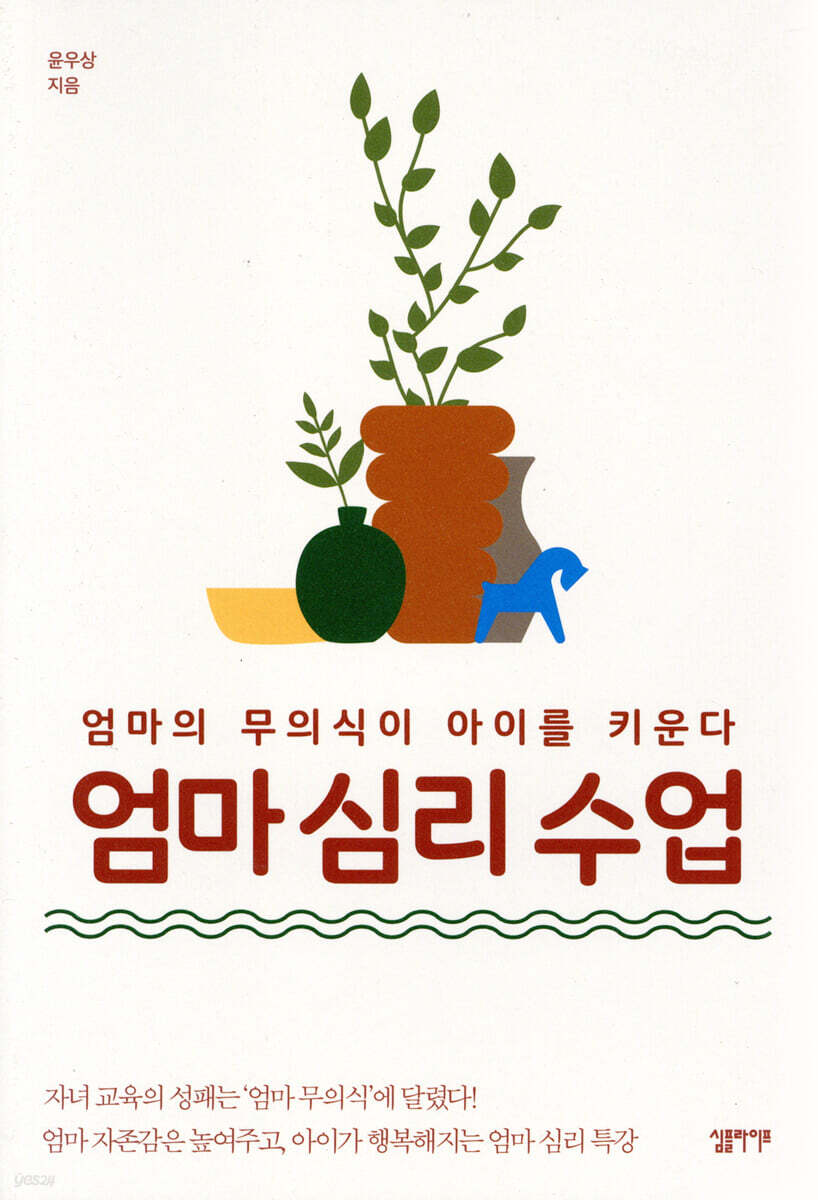
Mom Psychology Class
 |
Description
Book Introduction
When a mother knows herself, her child sees her. A mother's unconscious, desires, guilt, anxiety, and wounds: the hidden psychology of my heart that every mother must know. "How can I raise my child in a better environment?" "Will he fall behind or become twisted if I continue like this?" "Should I force him to study, or help him find other qualities?" "Am I doing something wrong as a mother?" The book "Mom's Psychology Class" has been published to provide a soothing solution to the various concerns of mothers who are constantly worried about their children, and to present an unwavering philosophy on child education. This book explains how the various emotions and psychological mechanisms that mothers experience while raising their children, such as anxiety, guilt, inferiority complex, hurt, worry, doubt, and anger, affect their children on a daily basis. In particular, it delves into the unconsciousness of mothers that they may not have noticed, and helps mothers recognize and manage their core emotions to have a positive influence on their children. In particular, it deeply deals with major emotions and their influence, such as anxiety about making mistakes or falling behind, guilt about blaming even a cold on yourself, comparison and inferiority complex that start whenever you meet the mom next door, the hardships and wounds of working moms, the changing role of stay-at-home moms, doubts about the uncertain future of children, and natural anger and rage that arise while raising children. Dr. Woo-Sang Yoon, a psychiatrist with 30 years of experience, spent six years writing and revising this book. The author, who has been giving special lectures on mother psychology for a long time and has met mothers from all walks of life, noticed that the concerns of mothers these days are more serious than expected and that they are struggling to find answers. So, adding her thoughts and convictions to her counseling and healing experience, she completed the book, “Mom Psychology Class.” The author says, “All mothers in the world are great in their own right. But somehow, in this day and age, it has become so difficult to live as a mother that she doesn't want to get married or have children. “I hope that through this book, mothers can experience the joy of being a mother and find a way for both mother and child to be happy,” she said, explaining her motivation for writing the book. |
- You can preview some of the book's contents.
Preview
index
-Prologue: Love for a Child: Medicine or Poison?
Part 1: Mother's Unconscious
1.
Discover the Secret Code to Raising Your Children
-A mother's two hearts as she looks at her child
Two secret codes in a mother's subconscious
2.
A peek into my mother's unconscious
-My thoughts that I don't even know
-Consciousness, preconsciousness, unconsciousness
-Maternal psychology as seen through psychodrama
Projection: The Core of Maternal Psychology
Tip: Understanding Your Mind: "The Observer Me"
3.
If something goes wrong with my child!
-There's someone hiding inside my child.
-If you're shy, will you have low self-esteem?
-Temperament is a 'survival skill' given by heaven.
-Children listen to their mother, not what is said.
-Temperament is spontaneity
-Criteria for introversion and extroversion
-A side of me that others don't know about
-Ototake's mother's first words
The '1-degree rule' that saves children
· Tip? Sentence Completion Test
Part 2: Mother's Superego
1.
What kind of mother am I?
-There are three people inside me.
-The conflict between three people, the mother is suffering
-Characteristics of a superego mother
-Perfect Mom: 'Why are you like this?'
-Harsh Mother: 'If you do something wrong, you should be punished.'
-Dangerous behaviors of mothers that ruin their children's souls
-Face Mom: 'What will other people think?'
· Tip: What is my child's self-esteem?
2.
The impact of a mother's 'ego ideal' on her child
-My child is gone!
-The superego is also inherited.
-The psychological state of a child who hears the words “I gave up”
-The revolution to get my child back
-Become a meticulous mother
-Characteristics of an Id mother
· Tip? Am I a superego mom or an id mom?
Part 3: Mother's Desire
1.
Crisis signals from children
-Where does greed hide?
-The combination of mother and child's desires is important.
-The four desires hidden behind a mother's greed
-The child who became the avatar of desire
-Children who suffer from mask depression
- Detecting signals sent by children
- Practice biting your tongue and holding back
· Tip? Bite your tongue!
2.
Should I live as a mother or as a woman?
-The most powerful persona, Mom
-The concerns and roles of a stay-at-home mom
-The dangers of being a coaching mom
-The process of becoming a manager mom
-Correlation between maternal and child power
-The pros and cons of reading coaching
-Practice letting go of the child
-Two characteristics of a helicopter mom
-The strength that a mother absolutely needs
· Tip? The difference between open and closed coaching
Part 4: Mother's Guilt
1.
Finding the Roots of Mother's Guilt
“I think it’s my fault,” said the sorry mother.
-Because I did prenatal education wrong?
-The inside story of the problematic son
-Guilt is self-comfort.
-The Reality of an Ugly Mother, an Unqualified Mother
-The Tragedy of a Guilty Mother
-How to shake off guilt
-I'm a good mom just like this
-A mother who has no affection for her child
-False stereotypes about motherhood
-There is no such thing as an unqualified mother.
· Tip? What kind of mom am I?
2.
Three Parenting Myths to Discard
-The stigma of being 'three years old'
-Misunderstandings about attachment theory
-The problem with being stuck in attachment theory
-A child's early memories, each with its own universe
-Prenatal education, the first three years of life, the illusion of attachment theory
· Tip: How to avoid being trapped by three determinisms
Part 5: Mom's Anxiety
1.
Study Anxiety: Change Your Subject
-“I’m worried I’ll fall behind.”
-Is studying really a habit?
-The anxiety of mothers who refuse private education
-Why I Can't Give Up on Studying
-Let's change the subject from studying to spontaneity.
-In the end, spontaneity wins.
Tips for Children Who Prioritize Studying
2.
Safety concerns: Disconnect
-“I get so anxious when I can’t get in touch with you.”
Fences built for safety increase children's anxiety.
-Worry leads to surveillance, surveillance leads to restraint
-If you disconnect, your anxiety will also disappear.
-A spell you need whenever you feel anxious
· Tip? Training to disconnect from your child
3.
Abnormal Anxiety: Changing the Standard of Normal
-Should I take a psychological test?
-What happens after the psychological test
- Limitations of learning, personality, and psychological tests
-Is my child normal or average?
· Tip? Psychological Testing: How to Do It
Part 6: Mother's Wounds
1.
Is a wounded mother a problematic mother?
-Mother's Wound Theory
-The problem with the maternal wound theory
-There is no one without scars.
-The unconsciousness of a mother who cannot control her anger
· Tip? The Rule of 1 Degrees: The Beginning of the Mom Revolution
2.
A child is stronger than its mother.
-The inner child is a unique color.
-If the mother is okay, the child will be okay.
-Epilogue: A Small Revolution That Saved My Child
Part 1: Mother's Unconscious
1.
Discover the Secret Code to Raising Your Children
-A mother's two hearts as she looks at her child
Two secret codes in a mother's subconscious
2.
A peek into my mother's unconscious
-My thoughts that I don't even know
-Consciousness, preconsciousness, unconsciousness
-Maternal psychology as seen through psychodrama
Projection: The Core of Maternal Psychology
Tip: Understanding Your Mind: "The Observer Me"
3.
If something goes wrong with my child!
-There's someone hiding inside my child.
-If you're shy, will you have low self-esteem?
-Temperament is a 'survival skill' given by heaven.
-Children listen to their mother, not what is said.
-Temperament is spontaneity
-Criteria for introversion and extroversion
-A side of me that others don't know about
-Ototake's mother's first words
The '1-degree rule' that saves children
· Tip? Sentence Completion Test
Part 2: Mother's Superego
1.
What kind of mother am I?
-There are three people inside me.
-The conflict between three people, the mother is suffering
-Characteristics of a superego mother
-Perfect Mom: 'Why are you like this?'
-Harsh Mother: 'If you do something wrong, you should be punished.'
-Dangerous behaviors of mothers that ruin their children's souls
-Face Mom: 'What will other people think?'
· Tip: What is my child's self-esteem?
2.
The impact of a mother's 'ego ideal' on her child
-My child is gone!
-The superego is also inherited.
-The psychological state of a child who hears the words “I gave up”
-The revolution to get my child back
-Become a meticulous mother
-Characteristics of an Id mother
· Tip? Am I a superego mom or an id mom?
Part 3: Mother's Desire
1.
Crisis signals from children
-Where does greed hide?
-The combination of mother and child's desires is important.
-The four desires hidden behind a mother's greed
-The child who became the avatar of desire
-Children who suffer from mask depression
- Detecting signals sent by children
- Practice biting your tongue and holding back
· Tip? Bite your tongue!
2.
Should I live as a mother or as a woman?
-The most powerful persona, Mom
-The concerns and roles of a stay-at-home mom
-The dangers of being a coaching mom
-The process of becoming a manager mom
-Correlation between maternal and child power
-The pros and cons of reading coaching
-Practice letting go of the child
-Two characteristics of a helicopter mom
-The strength that a mother absolutely needs
· Tip? The difference between open and closed coaching
Part 4: Mother's Guilt
1.
Finding the Roots of Mother's Guilt
“I think it’s my fault,” said the sorry mother.
-Because I did prenatal education wrong?
-The inside story of the problematic son
-Guilt is self-comfort.
-The Reality of an Ugly Mother, an Unqualified Mother
-The Tragedy of a Guilty Mother
-How to shake off guilt
-I'm a good mom just like this
-A mother who has no affection for her child
-False stereotypes about motherhood
-There is no such thing as an unqualified mother.
· Tip? What kind of mom am I?
2.
Three Parenting Myths to Discard
-The stigma of being 'three years old'
-Misunderstandings about attachment theory
-The problem with being stuck in attachment theory
-A child's early memories, each with its own universe
-Prenatal education, the first three years of life, the illusion of attachment theory
· Tip: How to avoid being trapped by three determinisms
Part 5: Mom's Anxiety
1.
Study Anxiety: Change Your Subject
-“I’m worried I’ll fall behind.”
-Is studying really a habit?
-The anxiety of mothers who refuse private education
-Why I Can't Give Up on Studying
-Let's change the subject from studying to spontaneity.
-In the end, spontaneity wins.
Tips for Children Who Prioritize Studying
2.
Safety concerns: Disconnect
-“I get so anxious when I can’t get in touch with you.”
Fences built for safety increase children's anxiety.
-Worry leads to surveillance, surveillance leads to restraint
-If you disconnect, your anxiety will also disappear.
-A spell you need whenever you feel anxious
· Tip? Training to disconnect from your child
3.
Abnormal Anxiety: Changing the Standard of Normal
-Should I take a psychological test?
-What happens after the psychological test
- Limitations of learning, personality, and psychological tests
-Is my child normal or average?
· Tip? Psychological Testing: How to Do It
Part 6: Mother's Wounds
1.
Is a wounded mother a problematic mother?
-Mother's Wound Theory
-The problem with the maternal wound theory
-There is no one without scars.
-The unconsciousness of a mother who cannot control her anger
· Tip? The Rule of 1 Degrees: The Beginning of the Mom Revolution
2.
A child is stronger than its mother.
-The inner child is a unique color.
-If the mother is okay, the child will be okay.
-Epilogue: A Small Revolution That Saved My Child
Detailed image

Into the book
A mother's unconsciousness raises her child.
Yes, that's right.
A mother's unconsciousness has a decisive influence on raising a child.
The invisible unconscious controls the mother.
Even mothers instinctively know, even if they are not aware of it, that their psychological state has a great influence on their children.
But it is not easy to know one's own mind.
It is more difficult to know the unconscious.
An anxious mother, an anxious child, an anxious world.
In these times of anxiety, a ‘mother’s philosophy’ is more necessary than ever.
When a mother knows herself well, she develops her own philosophy.
I sincerely hope that you will raise your child well with a firm philosophy.
There are two secret codes hidden in Mom's subconscious.
The reason it is called a secret code is because it is an important principle, but it is hidden deep and not easily known.
You can become a wise mother only by discovering the secret code in your subconscious.
Studying mother psychology is all about finding the secret code and how to fix it.
What are these two secret codes?
We have lived well without knowing the unconscious.
But whether we like it or not, our unconscious influences our entire lives.
A mother's way of raising a child is also governed by the unconscious.
Although mothers say they raise their children by worrying and planning, in reality, their children are being raised unconsciously without even knowing it.
Many daughters in the world decide, "I won't be like my mother," but end up behaving like their mothers, and many daughters say, "I won't marry a man like my father," but end up living with someone who resembles their father.
It is enough to take a good look at how I am acting towards my child now and how I feel when I meet my child.
The path to encountering the unconscious begins with ‘self-reflection.’
A wise mother is one who is good at self-reflection.
How can we effectively engage in self-reflection? The best way to do this is to recognize when we are "projecting."
Projection is central to maternal psychology.
All of the judgments I make about my child right now could be projections.
This kind of motherly love becomes ‘salty love’ in the subconscious.
That love is 'sick love'.
I don't love my child as a 'complete whole', but rather accept him as a 'child with problems, but whom I love'.
It's important to recognize this subtle difference: do you truly love your child as a whole or as an imperfect being?
A mother must examine whether there is a difference between what she says with her mouth and what she says with her heart.
This is what it means for a mother to look into her own unconscious.
Strictly speaking, it is looking into the preconscious mind.
Consciously, you may think it's okay, but if you look closely at your preconscious mind, you can tell whether you really think it's okay or not.
A good mother is one whose words and actions are consistent.
There is also a battle between the superego and the id in a mother's life.
The mother resolves not to hit her child, but it is no use.
When a child doesn't listen and whines, his mother shows up at some point.
The mother gets annoyed and hits the child on the back.
“Why don’t you listen to your mom!” he whines.
When the anger subsides a bit, the id mother disappears and the superego mother emerges.
'Are you crazy? Are you a mother?' I reproach myself.
Self-reproach is when one blames oneself, and from a psychological perspective, it is the 'superego' self blaming the 'ego' self.
My superego lives as a loving and noble 'ideal mother', but in reality, all I see is my id mother who yells and curses.
So, would the superego just sit still?
It punishes with self-reproach and anxiety, saying things like, ‘Are you really a mother?’ and ‘You’ll ruin the kids if you do that.’
Mother suffers in the triangle of superego, id, and ego.
Among harsh mothers, there are those who say, “I never use violence.”
But there is something more frightening than physical violence.
It is verbal violence and eye violence.
The tone and look in his eyes that say, ‘What’s wrong with you…?’
This is scarier.
Don't hit with your hands and feet, hit with your mouth and eyes.
A harsh mother doesn't know she has a problem.
Because he is a person who pursues justice and goodness, he believes that his thoughts and actions are right.
There is no child in the world who deserves to be despised.
It is not the child who should be despised, but the mother herself.
Contempt is 100 percent projection.
The problem is not the child, but the mother.
It's because the mother views the child through high-standard, prejudiced glasses.
The more the mother disdains, the more the child becomes timid or rebellious, which becomes further evidence of the disdain and fuels the disdain.
It's a vicious cycle.
There is no child in the world worse than his mother.
The moment I think my child is inferior to me is the moment I kill my child.
A mother throws her child off a cliff.
You shouldn't be disappointed in your children.
When parents are disappointed in their children, the children die mentally.
There is no such thing as an 'ugly child' in this world.
There is only an 'ugly mother' who sees the 'ugly child' as an 'ugly child'.
Mothers who are always on the lookout for gaps often worry.
Other mothers are doing it so well that they worry that they don't know anything or have any talent.
I also blame myself, thinking, 'Why am I like this?'
Moms who are always on the fence, let's take a moment to reflect, grumble, and laugh.
A mother who is thorough is a good mother.
A beloved child enters through the mother's gap.
The child will fill the void left by the mother.
Usually, children recover and live on even if they fail to advance to higher education.
However, it is difficult for a child who has shouldered the burden of 'mother's life' to recover from the shock of failure.
Because he is a ‘son who could not protect his mother’.
Because of their mother's greed, children suffer from invisible diseases.
It's not just depression that causes masks.
A bigger problem is the damage to self-esteem.
The child's existence is shaken by the mother's pitiful gaze and persecution.
When a child is denied existence by his most beloved mother, he dies mentally.
The child's unconscious mind perceives itself as a useless, worthless child.
Before even experiencing the world properly, children enter society with a sense of worthlessness and incompetence.
So, it easily collapses even with a small failure.
It's a very dangerous thing.
Well, let's not miss this opportunity.
The mother's unconsciousness, which causes the child to repeatedly become irritated or show soulless reactions, is what raises the child.
Yes, that's right.
A mother's unconsciousness has a decisive influence on raising a child.
The invisible unconscious controls the mother.
Even mothers instinctively know, even if they are not aware of it, that their psychological state has a great influence on their children.
But it is not easy to know one's own mind.
It is more difficult to know the unconscious.
An anxious mother, an anxious child, an anxious world.
In these times of anxiety, a ‘mother’s philosophy’ is more necessary than ever.
When a mother knows herself well, she develops her own philosophy.
I sincerely hope that you will raise your child well with a firm philosophy.
There are two secret codes hidden in Mom's subconscious.
The reason it is called a secret code is because it is an important principle, but it is hidden deep and not easily known.
You can become a wise mother only by discovering the secret code in your subconscious.
Studying mother psychology is all about finding the secret code and how to fix it.
What are these two secret codes?
We have lived well without knowing the unconscious.
But whether we like it or not, our unconscious influences our entire lives.
A mother's way of raising a child is also governed by the unconscious.
Although mothers say they raise their children by worrying and planning, in reality, their children are being raised unconsciously without even knowing it.
Many daughters in the world decide, "I won't be like my mother," but end up behaving like their mothers, and many daughters say, "I won't marry a man like my father," but end up living with someone who resembles their father.
It is enough to take a good look at how I am acting towards my child now and how I feel when I meet my child.
The path to encountering the unconscious begins with ‘self-reflection.’
A wise mother is one who is good at self-reflection.
How can we practice self-reflection effectively? The best way to do this is to recognize when we are "projecting."
Projection is central to maternal psychology.
All of the judgments I make about my child right now could be projections.
This kind of motherly love becomes ‘salty love’ in the subconscious.
That love is 'sick love'.
I don't love my child as a 'complete whole', but rather accept him as a 'child with problems, but whom I love'.
It's important to recognize this subtle difference: do you truly love your child as a whole or as an imperfect being?
A mother must examine whether there is a difference between what she says with her mouth and what she says with her heart.
This is what it means for a mother to look into her own unconscious.
Strictly speaking, it is looking into the preconscious mind.
Consciously, you may think it's okay, but if you look closely at your preconscious mind, you can tell whether you really think it's okay or not.
A good mother is one whose words and actions are consistent.
There is also a battle between the superego and the id in a mother's life.
The mother resolves not to hit her child, but it is no use.
When a child doesn't listen and whines, his mother shows up at some point.
The mother gets annoyed and hits the child on the back.
“Why don’t you listen to your mom!” he whines.
When the anger subsides a bit, the id mother disappears and the superego mother emerges.
'Are you crazy? Are you a mother?' I reproach myself.
Self-reproach is when one blames oneself, and from a psychological perspective, it is the 'superego' self blaming the 'ego' self.
My superego lives as a loving and noble 'ideal mother', but in reality, all I see is my id mother who yells and curses.
So, would the superego just sit still?
It punishes with self-reproach and anxiety, saying things like, ‘Are you really a mother?’ and ‘You’ll ruin the kids if you do that.’
Mother suffers in the triangle of superego, id, and ego.
Among harsh mothers, there are those who say, “I never use violence.”
But there is something more frightening than physical violence.
It is verbal abuse and eye violence.
The tone and look in his eyes that say, ‘What’s wrong with you…?’
This is scarier.
Don't hit with your hands and feet, hit with your mouth and eyes.
A harsh mother doesn't know she has a problem.
Because he is a person who pursues justice and goodness, he believes that his thoughts and actions are right.
There is no child in the world who deserves to be despised.
It is not the child who should be despised, but the mother herself.
Contempt is 100 percent projection.
The problem is not the child, but the mother.
It's because the mother views the child through high-standard, prejudiced glasses.
The more the mother disdains, the more the child becomes timid or rebellious, which becomes further evidence of the disdain and fuels the disdain.
It's a vicious cycle.
There is no child in the world worse than his mother.
The moment I think my child is inferior to me is the moment I kill my child.
A mother throws her child off a cliff.
You shouldn't be disappointed in your children.
When parents are disappointed in their children, the children die mentally.
There is no such thing as an 'ugly child' in this world.
There is only an 'ugly mother' who sees the 'ugly child' as an 'ugly child'.
Mothers who are always on the lookout for gaps often worry.
Other mothers are doing it so well that they worry that they don't know anything or have any talent.
I also blame myself, thinking, 'Why am I like this?'
Moms who are always on the fence, let's take a moment to reflect, grumble, and laugh.
A mother who is thorough is a good mother.
A beloved child enters through the mother's gap.
The child will fill the void left by the mother.
Usually, children recover and live on even if they fail to advance to higher education.
However, it is difficult for a child who has shouldered the burden of 'mother's life' to recover from the shock of failure.
Because he is a ‘son who could not protect his mother’.
Because of their mother's greed, children suffer from invisible diseases.
It's not just depression that causes masks.
A bigger problem is the damage to self-esteem.
The child's existence is shaken by the mother's pitiful gaze and persecution.
When a child is denied existence by his most beloved mother, he dies mentally.
The child's unconscious mind perceives itself as a useless, worthless child.
Before even experiencing the world properly, children enter society with a sense of worthlessness and incompetence.
So, it easily collapses even with a small failure.
It's a very dangerous thing.
Well, let's not miss this opportunity.
When your child starts throwing tantrums repeatedly or exhibiting mindless reactions! When you look at your child and wonder, "Why is he acting like that?" - that's when the mother needs to snap to her senses.
A red light should go on in your head and a beeping alarm should go off.
If you can recognize this crisis, you are a good mother.
That's how smart a mother is.
This alone is enough to qualify me as a mother.
If you detect a red light, what should you do next?
What great person in the world was created through their mother's coaching?
Were the world's greatest orators born from their mothers' coaching? Were the world's greatest writers born from their mothers' coaching? All outstanding people created their own worlds through the power of spontaneity.
What should I live for? Where should I find meaning and joy in my life? I must confront these existential questions again.
We need to shed the persona of being an 'active mom' or a 'capable mom'.
We need to return to living as a human being, not as a 'mother's life'.
It's time to start anew! When you look at your child and wonder, "Why is that happening?" That's when a mother needs to snap to her senses.
A red light should go on in your head and a beeping alarm should go off.
If you can recognize this crisis, you are a good mother.
That's how smart a mother is.
This alone is enough to qualify me as a mother.
If you detect a red light, what should you do next?
What great person in the world was created through their mother's coaching?
Were the world's greatest orators shaped by their mothers' coaching? Were the world's greatest writers shaped by their mothers' coaching? All outstanding people created their own worlds through the power of spontaneity.
What should I live for? Where should I find meaning and joy in my life? I must confront these existential questions again.
We need to shed the persona of being an 'active mom' or a 'capable mom'.
We need to return to living as a human being, not as a 'mother's life'.
I need to start my life anew.
Yes, that's right.
A mother's unconsciousness has a decisive influence on raising a child.
The invisible unconscious controls the mother.
Even mothers instinctively know, even if they are not aware of it, that their psychological state has a great influence on their children.
But it is not easy to know one's own mind.
It is more difficult to know the unconscious.
An anxious mother, an anxious child, an anxious world.
In these times of anxiety, a ‘mother’s philosophy’ is more necessary than ever.
When a mother knows herself well, she develops her own philosophy.
I sincerely hope that you will raise your child well with a firm philosophy.
There are two secret codes hidden in Mom's subconscious.
The reason it is called a secret code is because it is an important principle, but it is hidden deep and not easily known.
You can become a wise mother only by discovering the secret code in your subconscious.
Studying mother psychology is all about finding the secret code and how to fix it.
What are these two secret codes?
We have lived well without knowing the unconscious.
But whether we like it or not, our unconscious influences our entire lives.
A mother's way of raising a child is also governed by the unconscious.
Although mothers say they raise their children by worrying and planning, in reality, their children are being raised unconsciously without even knowing it.
Many daughters in the world decide, "I won't be like my mother," but end up behaving like their mothers, and many daughters say, "I won't marry a man like my father," but end up living with someone who resembles their father.
It is enough to take a good look at how I am acting towards my child now and how I feel when I meet my child.
The path to encountering the unconscious begins with ‘self-reflection.’
A wise mother is one who is good at self-reflection.
How can we effectively engage in self-reflection? The best way to do this is to recognize when we are "projecting."
Projection is central to maternal psychology.
All of the judgments I make about my child right now could be projections.
This kind of motherly love becomes ‘salty love’ in the subconscious.
That love is 'sick love'.
I don't love my child as a 'complete whole', but rather accept him as a 'child with problems, but whom I love'.
It's important to recognize this subtle difference: do you truly love your child as a whole or as an imperfect being?
A mother must examine whether there is a difference between what she says with her mouth and what she says with her heart.
This is what it means for a mother to look into her own unconscious.
Strictly speaking, it is looking into the preconscious mind.
Consciously, you may think it's okay, but if you look closely at your preconscious mind, you can tell whether you really think it's okay or not.
A good mother is one whose words and actions are consistent.
There is also a battle between the superego and the id in a mother's life.
The mother resolves not to hit her child, but it is no use.
When a child doesn't listen and whines, his mother shows up at some point.
The mother gets annoyed and hits the child on the back.
“Why don’t you listen to your mom!” he whines.
When the anger subsides a bit, the id mother disappears and the superego mother emerges.
'Are you crazy? Are you a mother?' I reproach myself.
Self-reproach is when one blames oneself, and from a psychological perspective, it is the 'superego' self blaming the 'ego' self.
My superego lives as a loving and noble 'ideal mother', but in reality, all I see is my id mother who yells and curses.
So, would the superego just sit still?
It punishes with self-reproach and anxiety, saying things like, ‘Are you really a mother?’ and ‘You’ll ruin the kids if you do that.’
Mother suffers in the triangle of superego, id, and ego.
Among harsh mothers, there are those who say, “I never use violence.”
But there is something more frightening than physical violence.
It is verbal violence and eye violence.
The tone and look in his eyes that say, ‘What’s wrong with you…?’
This is scarier.
Don't hit with your hands and feet, hit with your mouth and eyes.
A harsh mother doesn't know she has a problem.
Because he is a person who pursues justice and goodness, he believes that his thoughts and actions are right.
There is no child in the world who deserves to be despised.
It is not the child who should be despised, but the mother herself.
Contempt is 100 percent projection.
The problem is not the child, but the mother.
It's because the mother views the child through high-standard, prejudiced glasses.
The more the mother disdains, the more the child becomes timid or rebellious, which becomes further evidence of the disdain and fuels the disdain.
It's a vicious cycle.
There is no child in the world worse than his mother.
The moment I think my child is inferior to me is the moment I kill my child.
A mother throws her child off a cliff.
You shouldn't be disappointed in your children.
When parents are disappointed in their children, the children die mentally.
There is no such thing as an 'ugly child' in this world.
There is only an 'ugly mother' who sees the 'ugly child' as an 'ugly child'.
Mothers who are always on the lookout for gaps often worry.
Other mothers are doing it so well that they worry that they don't know anything or have any talent.
I also blame myself, thinking, 'Why am I like this?'
Moms who are always on the fence, let's take a moment to reflect, grumble, and laugh.
A mother who is thorough is a good mother.
A beloved child enters through the mother's gap.
The child will fill the void left by the mother.
Usually, children recover and live on even if they fail to advance to higher education.
However, it is difficult for a child who has shouldered the burden of 'mother's life' to recover from the shock of failure.
Because he is a ‘son who could not protect his mother’.
Because of their mother's greed, children suffer from invisible diseases.
It's not just depression that causes masks.
A bigger problem is the damage to self-esteem.
The child's existence is shaken by the mother's pitiful gaze and persecution.
When a child is denied existence by his most beloved mother, he dies mentally.
The child's unconscious mind perceives itself as a useless, worthless child.
Before even experiencing the world properly, children enter society with a sense of worthlessness and incompetence.
So, it easily collapses even with a small failure.
It's a very dangerous thing.
Well, let's not miss this opportunity.
The mother's unconsciousness, which causes the child to repeatedly become irritated or show soulless reactions, is what raises the child.
Yes, that's right.
A mother's unconsciousness has a decisive influence on raising a child.
The invisible unconscious controls the mother.
Even mothers instinctively know, even if they are not aware of it, that their psychological state has a great influence on their children.
But it is not easy to know one's own mind.
It is more difficult to know the unconscious.
An anxious mother, an anxious child, an anxious world.
In these times of anxiety, a ‘mother’s philosophy’ is more necessary than ever.
When a mother knows herself well, she develops her own philosophy.
I sincerely hope that you will raise your child well with a firm philosophy.
There are two secret codes hidden in Mom's subconscious.
The reason it is called a secret code is because it is an important principle, but it is hidden deep and not easily known.
You can become a wise mother only by discovering the secret code in your subconscious.
Studying mother psychology is all about finding the secret code and how to fix it.
What are these two secret codes?
We have lived well without knowing the unconscious.
But whether we like it or not, our unconscious influences our entire lives.
A mother's way of raising a child is also governed by the unconscious.
Although mothers say they raise their children by worrying and planning, in reality, their children are being raised unconsciously without even knowing it.
Many daughters in the world decide, "I won't be like my mother," but end up behaving like their mothers, and many daughters say, "I won't marry a man like my father," but end up living with someone who resembles their father.
It is enough to take a good look at how I am acting towards my child now and how I feel when I meet my child.
The path to encountering the unconscious begins with ‘self-reflection.’
A wise mother is one who is good at self-reflection.
How can we practice self-reflection effectively? The best way to do this is to recognize when we are "projecting."
Projection is central to maternal psychology.
All of the judgments I make about my child right now could be projections.
This kind of motherly love becomes ‘salty love’ in the subconscious.
That love is 'sick love'.
I don't love my child as a 'complete whole', but rather accept him as a 'child with problems, but whom I love'.
It's important to recognize this subtle difference: do you truly love your child as a whole or as an imperfect being?
A mother must examine whether there is a difference between what she says with her mouth and what she says with her heart.
This is what it means for a mother to look into her own unconscious.
Strictly speaking, it is looking into the preconscious mind.
Consciously, you may think it's okay, but if you look closely at your preconscious mind, you can tell whether you really think it's okay or not.
A good mother is one whose words and actions are consistent.
There is also a battle between the superego and the id in a mother's life.
The mother resolves not to hit her child, but it is no use.
When a child doesn't listen and whines, his mother shows up at some point.
The mother gets annoyed and hits the child on the back.
“Why don’t you listen to your mom!” he whines.
When the anger subsides a bit, the id mother disappears and the superego mother emerges.
'Are you crazy? Are you a mother?' I reproach myself.
Self-reproach is when one blames oneself, and from a psychological perspective, it is the 'superego' self blaming the 'ego' self.
My superego lives as a loving and noble 'ideal mother', but in reality, all I see is my id mother who yells and curses.
So, would the superego just sit still?
It punishes with self-reproach and anxiety, saying things like, ‘Are you really a mother?’ and ‘You’ll ruin the kids if you do that.’
Mother suffers in the triangle of superego, id, and ego.
Among harsh mothers, there are those who say, “I never use violence.”
But there is something more frightening than physical violence.
It is verbal abuse and eye violence.
The tone and look in his eyes that say, ‘What’s wrong with you…?’
This is scarier.
Don't hit with your hands and feet, hit with your mouth and eyes.
A harsh mother doesn't know she has a problem.
Because he is a person who pursues justice and goodness, he believes that his thoughts and actions are right.
There is no child in the world who deserves to be despised.
It is not the child who should be despised, but the mother herself.
Contempt is 100 percent projection.
The problem is not the child, but the mother.
It's because the mother views the child through high-standard, prejudiced glasses.
The more the mother disdains, the more the child becomes timid or rebellious, which becomes further evidence of the disdain and fuels the disdain.
It's a vicious cycle.
There is no child in the world worse than his mother.
The moment I think my child is inferior to me is the moment I kill my child.
A mother throws her child off a cliff.
You shouldn't be disappointed in your children.
When parents are disappointed in their children, the children die mentally.
There is no such thing as an 'ugly child' in this world.
There is only an 'ugly mother' who sees the 'ugly child' as an 'ugly child'.
Mothers who are always on the lookout for gaps often worry.
Other mothers are doing it so well that they worry that they don't know anything or have any talent.
I also blame myself, thinking, 'Why am I like this?'
Moms who are always on the fence, let's take a moment to reflect, grumble, and laugh.
A mother who is thorough is a good mother.
A beloved child enters through the mother's gap.
The child will fill the void left by the mother.
Usually, children recover and live on even if they fail to advance to higher education.
However, it is difficult for a child who has shouldered the burden of 'mother's life' to recover from the shock of failure.
Because he is a ‘son who could not protect his mother’.
Because of their mother's greed, children suffer from invisible diseases.
It's not just depression that causes masks.
A bigger problem is the damage to self-esteem.
The child's existence is shaken by the mother's pitiful gaze and persecution.
When a child is denied existence by his most beloved mother, he dies mentally.
The child's unconscious mind perceives itself as a useless, worthless child.
Before even experiencing the world properly, children enter society with a sense of worthlessness and incompetence.
So, it easily collapses even with a small failure.
It's a very dangerous thing.
Well, let's not miss this opportunity.
When your child starts throwing tantrums repeatedly or exhibiting mindless reactions! When you look at your child and wonder, "Why is he acting like that?" - that's when the mother needs to snap to her senses.
A red light should go on in your head and a beeping alarm should go off.
If you can recognize this crisis, you are a good mother.
That's how smart a mother is.
This alone is enough to qualify me as a mother.
If you detect a red light, what should you do next?
What great person in the world was created through their mother's coaching?
Were the world's greatest orators born from their mothers' coaching? Were the world's greatest writers born from their mothers' coaching? All outstanding people created their own worlds through the power of spontaneity.
What should I live for? Where should I find meaning and joy in my life? I must confront these existential questions again.
We need to shed the persona of being an 'active mom' or a 'capable mom'.
We need to return to living as a human being, not as a 'mother's life'.
It's time to start anew! When you look at your child and wonder, "Why is that happening?" That's when a mother needs to snap to her senses.
A red light should go on in your head and a beeping alarm should go off.
If you can recognize this crisis, you are a good mother.
That's how smart a mother is.
This alone is enough to qualify me as a mother.
If you detect a red light, what should you do next?
What great person in the world was created through their mother's coaching?
Were the world's greatest orators shaped by their mothers' coaching? Were the world's greatest writers shaped by their mothers' coaching? All outstanding people created their own worlds through the power of spontaneity.
What should I live for? Where should I find meaning and joy in my life? I must confront these existential questions again.
We need to shed the persona of being an 'active mom' or a 'capable mom'.
We need to return to living as a human being, not as a 'mother's life'.
I need to start my life anew.
--- From the text
Publisher's Review
The success or failure of a child's education depends on the mother's unconsciousness!
The mothering style created by the unconscious: What kind of mother am I?
This is a book that every mother with children should read at least once.
It is especially recommended for parents whose children are in the process of forming their identity and personality, from new mothers with three- or four-year-old children to parents with high school-aged children.
Because it allows mothers to distinguish between poison and medicine the love they give their children at a time when they have a significant influence on them.
Among them, the author paid particular attention to the mother's unconsciousness.
The author cites "mother's scent" and "mother's colored glasses" as the secret codes for child education, saying that these two things are connected to the mother's unconscious and have a very strong and direct influence on the child.
Depending on the eyes and heart with which a mother looks at her child, the smell and color that the child is given will change, such as love, sadness, hatred, or displeasure.
She also says that many mothers think they are seeing their children as they are, but in reality, they are unknowingly wearing colored glasses and having a negative influence on their children by projecting someone onto them.
The book analyzed the temperamental characteristics of mothers into superego, ego, and id tendencies based on Freud's theory of the unconscious.
This book introduces the characteristics, pros and cons of the strict and rational 'superego type mother', the 'id type mother' who values her own happiness more than her child's, and the 'slightly id type mother' who struggles between the two.
The author says, “If a mother’s superego is too strong, the child’s life becomes difficult.
“A mother who is full of flaws will make her child healthier,” she says, arguing that the more flaws a mother has, the more her child can fill in those gaps and grow into a stronger and more perfect child.
In particular, working mothers are likely to view themselves as 'selfish id mothers' because they think they have chosen work over their children's happiness, but on the contrary, they are more likely to be superego mothers with an ego ideal of wanting to play a social role.
Through this book, mothers can identify their own personality type, capitalize on their strengths, improve their problems, and adapt to their children's personality.
Analysis of the hidden desires of a mother who is all-in on studying &
Introducing study methods, coaching methods, and motherly roles that foster children's spontaneity.
Recently, the drama [Sky Castle], which vividly portrayed the desire and reality of the upper 1% for success, was a hot topic.
The author meticulously analyzes the desires and hardships of parents hidden in the excessive child education craze that arises from having and raising only one or two children.
Among them, the four desires engraved in the hearts of parents who want their children to be good at studying were organized into four keywords: 'complex', 'regret for dreams one could not achieve', 'mother's competitiveness', and 'proof of mother's existence'. If parents do not look closely at these desires, the child may end up becoming an avatar of the parent or may even suffer from depression, so they warn that they should catch the crisis signals that their child is sending now and not miss the opportunity.
He also advises on the dangers of various coaching methods, especially reading coaching, which have become popular recently, and persuasively argues that the most important thing is to preserve and develop children's imagination and spontaneity, which are much greater than those of adults.
The author explains the process of becoming a helicopter mom, coaching mom, or manager mom without realizing it, and provides detailed guidance on how to coach wisely while keeping the boundaries in place while allowing children to study, how to foster imagination, how to avoid helping children develop their own abilities as mothers, and how to maximize spontaneity, helping mothers move from being “child repairmen” to “spontaneity coaches.”
How does my child's self-esteem score? How does my mom score?
Tips containing important questions and solutions for each chapter
The book is divided into six parts.
Part 1 [Mother's Unconscious] examines two secret codes for child education and the influence of a mother's unconscious on her child.
Part 2 [Mother's Superego] examines the mother's superego, ego, id, and ego ideal, and allows us to reflect on what kind of mother we are.
Part 3 [Mother's Desire] presents the problems and solutions of how a mother's hidden desire changes her child.
Part 4 [Mother's Guilt] analyzes the various feelings of guilt felt by mothers and their causes, and corrects incorrect parenting myths to relieve mothers' fears and anxieties.
Part 5 [Mom's Anxiety] examines the causes of anxiety about the biggest concerns, 'studying', 'safety issues', and 'abnormalities', and suggests solutions to overcome that anxiety.
Lastly, Part 6 [Mother's Wounds] explains how the wounds suffered by a mother in childhood are manifested in the child and how to accept and deal with them.
Each chapter contains various tests and tips that mothers can try themselves to resolve their questions and check the reality.
Tip: It contains a wealth of information on how mothers can understand their own minds, sentence completion tests, how to know their child's self-esteem score, what kind of mothering style I am, how to bite your tongue, wise coaching methods, your current score as a mother, how not to be caught up in parenting determinism, tips for children who study well, training to disconnect from your child, tips for psychological testing, and the 1-degree change law.
Breaking Free from False Parenting Myths: Prenatal Education, the First Three Years, and the Harmful Effects of Attachment Theory
A powerful psychological prescription to boost a mother's self-esteem.
Our society is particularly rife with distorted and exaggerated educational theories, such as, "A good mother should do this much," "Motherly love should be like this," "Be careful of this and that even when giving love," and "A mother's abilities can change her child's future."
The problem is that these common methodologies are accepted as the correct answer, making it difficult for mothers and creating various problems.
They set one-sided guidelines that ignore the unique characteristics and environments of the child and mother, and mothers who fail to follow them become discouraged and treat themselves as sinners.
Ordinary, ordinary mothers are stressed out, making themselves into inadequate mothers, sorry mothers, and strange mothers.
The author strongly objects to this uniform theory of love and flawed child-rearing methodology, and instills a firm belief that there is no set method or framework for motherly love, and that children can grow up healthy and strong simply by giving them a full gaze and their own way of loving.
In particular, the author said, “Korean mothers have a particularly strong sense of guilt.
“The regret and guilt felt by working mothers in particular is very serious,” she said, adding that guilt is a habitual self-comfort that ruins both mothers and children, and the longer it lasts and deepens, the more it becomes a fatal poison to the child’s emotions and personality.
And it pokes fun at four parenting myths that fuel feelings of guilt.
That is, ① due to poor prenatal education - prenatal education theory ② due to not being able to raise the child directly for 3 years after birth - 3-year postnatal theory ③ due to lack of attachment relationship - attachment relationship theory ④ due to the mother's wounds being passed down to the child - mother's wound theory.
The author laments the rare reality of mothers who are free from these four determinisms, and analyzes the truth and falsehood of these theories point by point, providing an in-depth explanation of the negative impact on children's minds when mothers cling to uniform determinisms.
Should I take a psychological test, personality test, or developmental test?
When? Who? How to properly take a psychological test.
The author also expressed concern about various development-related tests, such as ‘psychological tests’ and ‘personality tests’, which have recently become popular after appearing on TV children’s programs. He said, “Those who really need them should take them, but they should never be abused.
“If I had my way, I would create a law that prohibits the recommendation of psychological tests for children from kindergarten through third grade,” he said.
In doing so, he warns of the dangers of unconditional psychological testing and asks people to be careful about the effects it can have on their children by introducing anecdotes about the process by which people around him or her received psychological testing, what happened to the parents after receiving it, and how a perfectly normal child changed after the test.
A psychiatrist with 30 years of experience tells you
An educational philosophy that brings happiness to mothers and children together
The strength of this book is that it guides children to acquire the necessary educational views and values while eliminating the negative emotions that mothers feel that are toxic to their children.
By doing so, it soothes the hearts of mothers who are exhausted from impatience and anxiety, and confused about whether this path is right or that path is wrong, and brings relief and peace.
It also helps parents to raise their children according to their own convictions, focusing solely on their children and their own emotions, without being swayed by the various educational trends that are flooding the market like fads.
Furthermore, the book reminds us that mothers and children are complete beings in themselves, so we no longer doubt a mother's love.
It also teaches us that children can be healthy and safe simply by loving, watching, and supporting them in their own way.
We will restore the self-esteem of mothers who have suffered from low self-esteem, give them the freedom to see their children as they are, and guide them to enjoy the joy and happiness of being a mother, free from excessive responsibility and anxiety.
This is a must-read for parents who feel their children have problems, parents who want to reflect on themselves, parents who want to raise their children brightly with faith and love rather than coercion or restraint, parents who want to raise children with initiative and imagination, and parents who want to raise children who know what makes them happy and respect others.
The mothering style created by the unconscious: What kind of mother am I?
This is a book that every mother with children should read at least once.
It is especially recommended for parents whose children are in the process of forming their identity and personality, from new mothers with three- or four-year-old children to parents with high school-aged children.
Because it allows mothers to distinguish between poison and medicine the love they give their children at a time when they have a significant influence on them.
Among them, the author paid particular attention to the mother's unconsciousness.
The author cites "mother's scent" and "mother's colored glasses" as the secret codes for child education, saying that these two things are connected to the mother's unconscious and have a very strong and direct influence on the child.
Depending on the eyes and heart with which a mother looks at her child, the smell and color that the child is given will change, such as love, sadness, hatred, or displeasure.
She also says that many mothers think they are seeing their children as they are, but in reality, they are unknowingly wearing colored glasses and having a negative influence on their children by projecting someone onto them.
The book analyzed the temperamental characteristics of mothers into superego, ego, and id tendencies based on Freud's theory of the unconscious.
This book introduces the characteristics, pros and cons of the strict and rational 'superego type mother', the 'id type mother' who values her own happiness more than her child's, and the 'slightly id type mother' who struggles between the two.
The author says, “If a mother’s superego is too strong, the child’s life becomes difficult.
“A mother who is full of flaws will make her child healthier,” she says, arguing that the more flaws a mother has, the more her child can fill in those gaps and grow into a stronger and more perfect child.
In particular, working mothers are likely to view themselves as 'selfish id mothers' because they think they have chosen work over their children's happiness, but on the contrary, they are more likely to be superego mothers with an ego ideal of wanting to play a social role.
Through this book, mothers can identify their own personality type, capitalize on their strengths, improve their problems, and adapt to their children's personality.
Analysis of the hidden desires of a mother who is all-in on studying &
Introducing study methods, coaching methods, and motherly roles that foster children's spontaneity.
Recently, the drama [Sky Castle], which vividly portrayed the desire and reality of the upper 1% for success, was a hot topic.
The author meticulously analyzes the desires and hardships of parents hidden in the excessive child education craze that arises from having and raising only one or two children.
Among them, the four desires engraved in the hearts of parents who want their children to be good at studying were organized into four keywords: 'complex', 'regret for dreams one could not achieve', 'mother's competitiveness', and 'proof of mother's existence'. If parents do not look closely at these desires, the child may end up becoming an avatar of the parent or may even suffer from depression, so they warn that they should catch the crisis signals that their child is sending now and not miss the opportunity.
He also advises on the dangers of various coaching methods, especially reading coaching, which have become popular recently, and persuasively argues that the most important thing is to preserve and develop children's imagination and spontaneity, which are much greater than those of adults.
The author explains the process of becoming a helicopter mom, coaching mom, or manager mom without realizing it, and provides detailed guidance on how to coach wisely while keeping the boundaries in place while allowing children to study, how to foster imagination, how to avoid helping children develop their own abilities as mothers, and how to maximize spontaneity, helping mothers move from being “child repairmen” to “spontaneity coaches.”
How does my child's self-esteem score? How does my mom score?
Tips containing important questions and solutions for each chapter
The book is divided into six parts.
Part 1 [Mother's Unconscious] examines two secret codes for child education and the influence of a mother's unconscious on her child.
Part 2 [Mother's Superego] examines the mother's superego, ego, id, and ego ideal, and allows us to reflect on what kind of mother we are.
Part 3 [Mother's Desire] presents the problems and solutions of how a mother's hidden desire changes her child.
Part 4 [Mother's Guilt] analyzes the various feelings of guilt felt by mothers and their causes, and corrects incorrect parenting myths to relieve mothers' fears and anxieties.
Part 5 [Mom's Anxiety] examines the causes of anxiety about the biggest concerns, 'studying', 'safety issues', and 'abnormalities', and suggests solutions to overcome that anxiety.
Lastly, Part 6 [Mother's Wounds] explains how the wounds suffered by a mother in childhood are manifested in the child and how to accept and deal with them.
Each chapter contains various tests and tips that mothers can try themselves to resolve their questions and check the reality.
Tip: It contains a wealth of information on how mothers can understand their own minds, sentence completion tests, how to know their child's self-esteem score, what kind of mothering style I am, how to bite your tongue, wise coaching methods, your current score as a mother, how not to be caught up in parenting determinism, tips for children who study well, training to disconnect from your child, tips for psychological testing, and the 1-degree change law.
Breaking Free from False Parenting Myths: Prenatal Education, the First Three Years, and the Harmful Effects of Attachment Theory
A powerful psychological prescription to boost a mother's self-esteem.
Our society is particularly rife with distorted and exaggerated educational theories, such as, "A good mother should do this much," "Motherly love should be like this," "Be careful of this and that even when giving love," and "A mother's abilities can change her child's future."
The problem is that these common methodologies are accepted as the correct answer, making it difficult for mothers and creating various problems.
They set one-sided guidelines that ignore the unique characteristics and environments of the child and mother, and mothers who fail to follow them become discouraged and treat themselves as sinners.
Ordinary, ordinary mothers are stressed out, making themselves into inadequate mothers, sorry mothers, and strange mothers.
The author strongly objects to this uniform theory of love and flawed child-rearing methodology, and instills a firm belief that there is no set method or framework for motherly love, and that children can grow up healthy and strong simply by giving them a full gaze and their own way of loving.
In particular, the author said, “Korean mothers have a particularly strong sense of guilt.
“The regret and guilt felt by working mothers in particular is very serious,” she said, adding that guilt is a habitual self-comfort that ruins both mothers and children, and the longer it lasts and deepens, the more it becomes a fatal poison to the child’s emotions and personality.
And it pokes fun at four parenting myths that fuel feelings of guilt.
That is, ① due to poor prenatal education - prenatal education theory ② due to not being able to raise the child directly for 3 years after birth - 3-year postnatal theory ③ due to lack of attachment relationship - attachment relationship theory ④ due to the mother's wounds being passed down to the child - mother's wound theory.
The author laments the rare reality of mothers who are free from these four determinisms, and analyzes the truth and falsehood of these theories point by point, providing an in-depth explanation of the negative impact on children's minds when mothers cling to uniform determinisms.
Should I take a psychological test, personality test, or developmental test?
When? Who? How to properly take a psychological test.
The author also expressed concern about various development-related tests, such as ‘psychological tests’ and ‘personality tests’, which have recently become popular after appearing on TV children’s programs. He said, “Those who really need them should take them, but they should never be abused.
“If I had my way, I would create a law that prohibits the recommendation of psychological tests for children from kindergarten through third grade,” he said.
In doing so, he warns of the dangers of unconditional psychological testing and asks people to be careful about the effects it can have on their children by introducing anecdotes about the process by which people around him or her received psychological testing, what happened to the parents after receiving it, and how a perfectly normal child changed after the test.
A psychiatrist with 30 years of experience tells you
An educational philosophy that brings happiness to mothers and children together
The strength of this book is that it guides children to acquire the necessary educational views and values while eliminating the negative emotions that mothers feel that are toxic to their children.
By doing so, it soothes the hearts of mothers who are exhausted from impatience and anxiety, and confused about whether this path is right or that path is wrong, and brings relief and peace.
It also helps parents to raise their children according to their own convictions, focusing solely on their children and their own emotions, without being swayed by the various educational trends that are flooding the market like fads.
Furthermore, the book reminds us that mothers and children are complete beings in themselves, so we no longer doubt a mother's love.
It also teaches us that children can be healthy and safe simply by loving, watching, and supporting them in their own way.
We will restore the self-esteem of mothers who have suffered from low self-esteem, give them the freedom to see their children as they are, and guide them to enjoy the joy and happiness of being a mother, free from excessive responsibility and anxiety.
This is a must-read for parents who feel their children have problems, parents who want to reflect on themselves, parents who want to raise their children brightly with faith and love rather than coercion or restraint, parents who want to raise children with initiative and imagination, and parents who want to raise children who know what makes them happy and respect others.
GOODS SPECIFICS
- Date of issue: May 25, 2019
- Page count, weight, size: 296 pages | 460g | 145*210*18mm
- ISBN13: 9791186757420
- ISBN10: 1186757426
You may also like
카테고리
korean


korean

![GQ KOREA Mark (Monthly): December [2025]](http://librairie.coreenne.fr/cdn/shop/files/8ef265dbbfbf186523ed75ba7319009d.jpg?v=1765340328&width=3840)


