

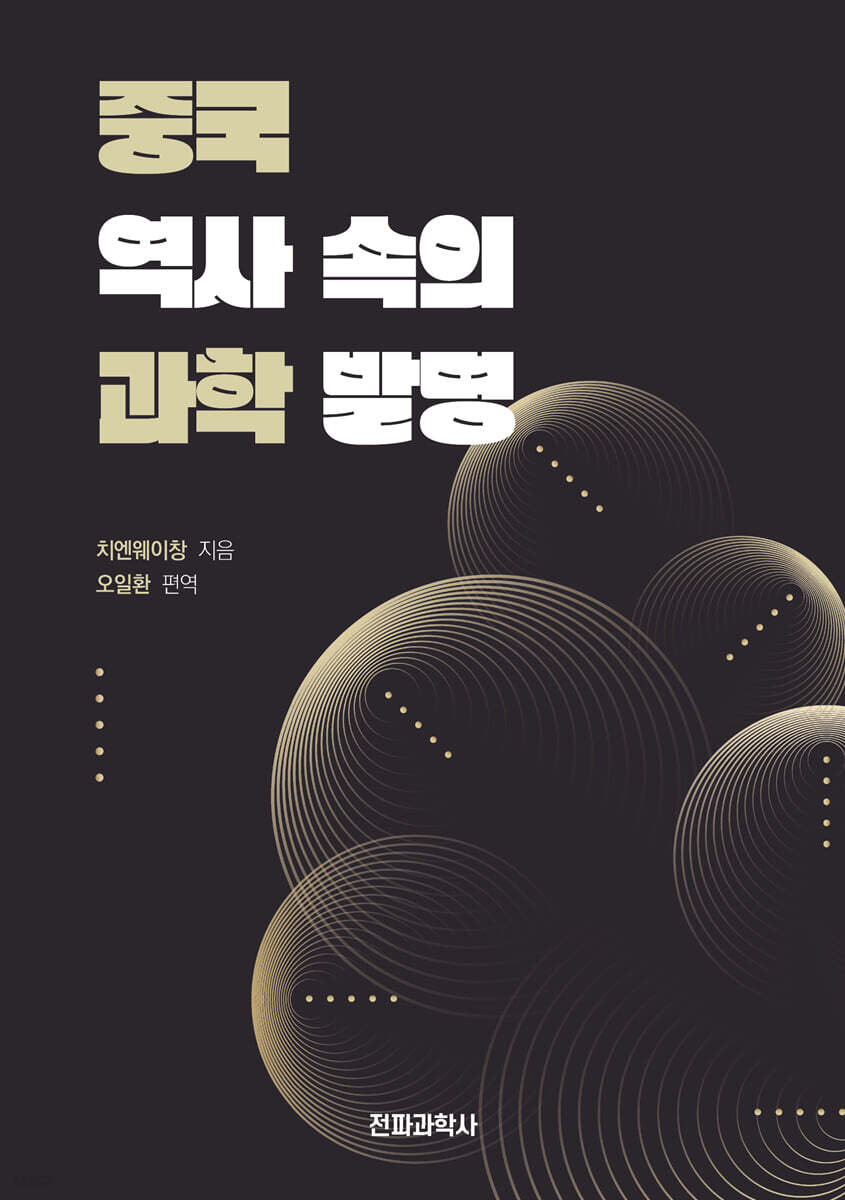
Scientific inventions in Chinese history
 |
Description
Book Introduction
From Compass to Printing: How Chinese Innovation Shaped World History
This book provides insight into China's scientific and technological contributions over thousands of years.
Written by renowned Chinese scientist Qian Weichang, this book details the various inventions that not only shaped Chinese civilization but also had a profound impact on the world.
From agriculture to hydraulic engineering, mathematics to printing and gunpowder, it offers a rich exploration of how Chinese ingenuity and innovation played a pivotal role in the advancement of science.
Through illustrations, diagrams, and explanations, the text brings these inventions to life and makes complex ideas accessible to everyone.
The book is divided into nine chapters, each covering a specific area of Chinese science and technology.
These include agriculture, water conservation projects, mathematics, astronomy and calendar systems, the compass, printing, gunpowder, machinery, and architecture.
Each chapter explores the historical background of an invention and explains how it emerged and evolved.
By including lesser-known discoveries alongside well-known anecdotes, readers can appreciate the breadth and depth of China's scientific achievements.
It also highlights how many of these innovations are deeply connected to the social and political structures of ancient China, illustrating how science and technology emerged in response to specific cultural and practical needs.
With carefully selected illustrations, footnotes, and historical terminology, this book serves as a bridge between cultures, providing readers with a glimpse into China's past while also highlighting the global significance of these inventions.
As China's influence in modern technology continues to grow, "Scientific Inventions in Chinese History" serves as a timely reminder of China's long-standing role in the advancement of human knowledge.
This book is a must-read for history buffs, science enthusiasts, and anyone interested in understanding the origins of some of the world's most influential inventions.
This book provides insight into China's scientific and technological contributions over thousands of years.
Written by renowned Chinese scientist Qian Weichang, this book details the various inventions that not only shaped Chinese civilization but also had a profound impact on the world.
From agriculture to hydraulic engineering, mathematics to printing and gunpowder, it offers a rich exploration of how Chinese ingenuity and innovation played a pivotal role in the advancement of science.
Through illustrations, diagrams, and explanations, the text brings these inventions to life and makes complex ideas accessible to everyone.
The book is divided into nine chapters, each covering a specific area of Chinese science and technology.
These include agriculture, water conservation projects, mathematics, astronomy and calendar systems, the compass, printing, gunpowder, machinery, and architecture.
Each chapter explores the historical background of an invention and explains how it emerged and evolved.
By including lesser-known discoveries alongside well-known anecdotes, readers can appreciate the breadth and depth of China's scientific achievements.
It also highlights how many of these innovations are deeply connected to the social and political structures of ancient China, illustrating how science and technology emerged in response to specific cultural and practical needs.
With carefully selected illustrations, footnotes, and historical terminology, this book serves as a bridge between cultures, providing readers with a glimpse into China's past while also highlighting the global significance of these inventions.
As China's influence in modern technology continues to grow, "Scientific Inventions in Chinese History" serves as a timely reminder of China's long-standing role in the advancement of human knowledge.
This book is a must-read for history buffs, science enthusiasts, and anyone interested in understanding the origins of some of the world's most influential inventions.
- You can preview some of the book's contents.
Preview
index
Translator's Note
Chapter 1 Agricultural Science
Chapter 2 Repair Work
Chapter 3 Mathematics
Chapter 4 Astronomy and Calendar
Chapter 5: The Compass and the Compass Wheel
Chapter 6 Papermaking and Printing
Chapter 7 Gunpowder
Chapter 8 Machines
Chapter 9 Architecture
Chronology
Chinese territory during the Ming Dynasty (15th century)
Chinese territory during the Qing Dynasty (19th century)
Chapter 1 Agricultural Science
Chapter 2 Repair Work
Chapter 3 Mathematics
Chapter 4 Astronomy and Calendar
Chapter 5: The Compass and the Compass Wheel
Chapter 6 Papermaking and Printing
Chapter 7 Gunpowder
Chapter 8 Machines
Chapter 9 Architecture
Chronology
Chinese territory during the Ming Dynasty (15th century)
Chinese territory during the Qing Dynasty (19th century)
Detailed image

Into the book
The editors' work on scientific inventions in Chinese history is an impressive contribution that bridges the gap between ancient Chinese scientific achievements and modern readers.
By carefully selecting and translating Qian Weichang's original text, the editors have made complex topics such as mathematics, astronomy, and engineering accessible to a wider audience.
Including additional illustrations and notes further enhances readability, allowing readers to visualize inventions like the compass and gunpowder while understanding the historical context of their development.
The editors also skillfully balance technical accuracy with an engaging narrative, making the book appealing to both general readers and scholars.
What truly stands out about the editor's approach is his attention to detail in preserving the authenticity of the original work while making necessary adjustments for a contemporary audience.
By contextualizing Chinese terminology and historical references, the editors ensure that the essence of China's scientific heritage is preserved without alienating non-specialist readers.
This thoughtful content curation, combined with a clear, flowing structure, makes this book not only informative but also a pleasure to read.
The editors' work in this book is both an important teaching tool and a tribute to the rich history of Chinese science.
By carefully selecting and translating Qian Weichang's original text, the editors have made complex topics such as mathematics, astronomy, and engineering accessible to a wider audience.
Including additional illustrations and notes further enhances readability, allowing readers to visualize inventions like the compass and gunpowder while understanding the historical context of their development.
The editors also skillfully balance technical accuracy with an engaging narrative, making the book appealing to both general readers and scholars.
What truly stands out about the editor's approach is his attention to detail in preserving the authenticity of the original work while making necessary adjustments for a contemporary audience.
By contextualizing Chinese terminology and historical references, the editors ensure that the essence of China's scientific heritage is preserved without alienating non-specialist readers.
This thoughtful content curation, combined with a clear, flowing structure, makes this book not only informative but also a pleasure to read.
The editors' work in this book is both an important teaching tool and a tribute to the rich history of Chinese science.
--- From the text
GOODS SPECIFICS
- Date of issue: November 26, 2024
- Page count, weight, size: 266 pages | 148*210*20mm
- ISBN13: 9788970446875
- ISBN10: 8970446877
You may also like
카테고리
korean


korean

![GQ KOREA Mark (Monthly): December [2025]](http://librairie.coreenne.fr/cdn/shop/files/8ef265dbbfbf186523ed75ba7319009d.jpg?v=1765340328&width=3840)


