

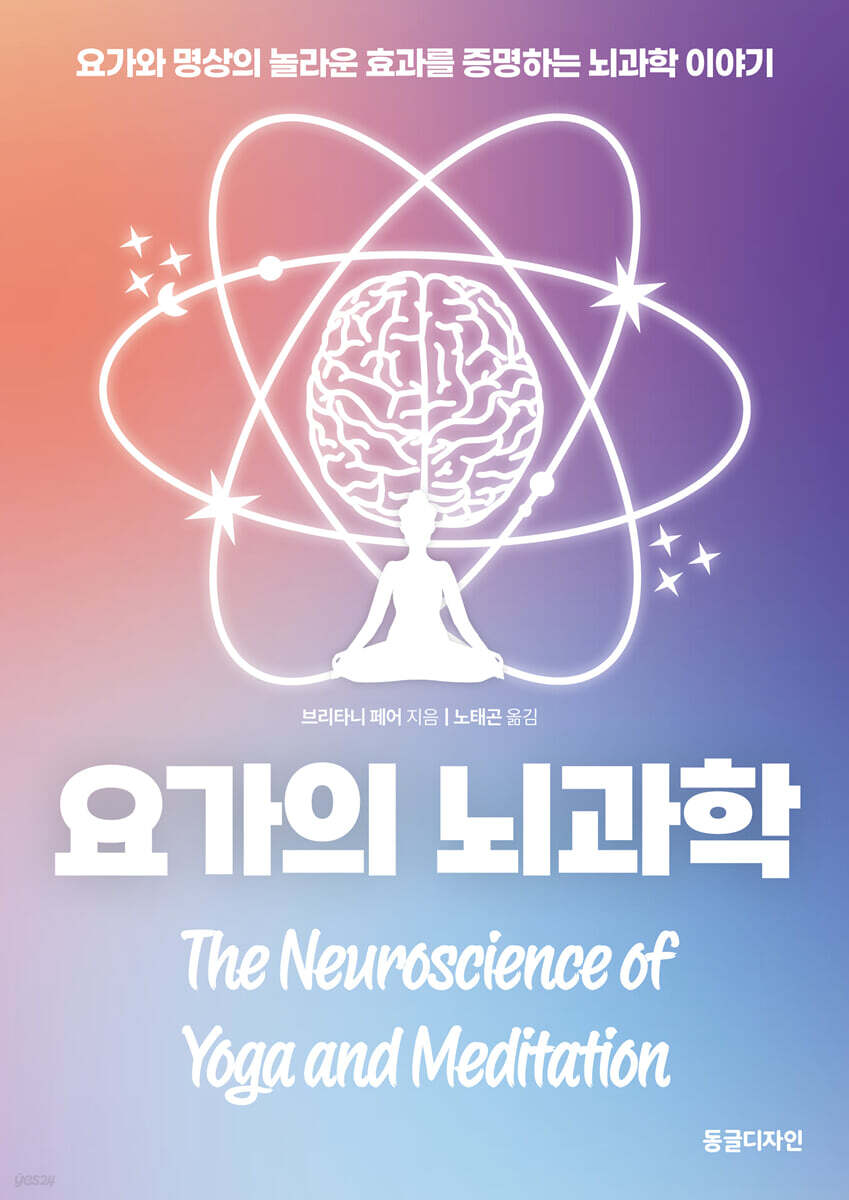
The Brain Science of Yoga
 |
Description
Book Introduction
The first book to explain the connection between yoga and the brain!
A complete understanding of the psychological effects and principles of yoga and meditation
Understand the scientific effects of yoga in detail
Create richer, more in-depth yoga classes!
《The Brain Science of Yoga》 is the first book to explain, from a neuroscientific perspective, the numerous mental and physical health benefits of yoga and meditation.
Until now, the effects of yoga on the brain and psychology have only been conveyed through the direct experiences and sensations of many practitioners.
Even yoga instructors and leaders are often unable to explain specifically how yoga can bring about positive changes in our minds.
However, to further advance yoga instruction, such as highlighting the benefits of yoga to those who are not yet experienced, or constructing effective sequences tailored to their goals, we must first understand the scientific impact of yoga on us and the effects of meditation.
This book scientifically explains the psychological benefits of yoga by explaining the connection between the centuries-old practice of yoga and the relatively new field of research, neuroscience.
The author, who has long studied the psychological effects of yoga, explains how yoga and meditation help reduce stress and increase happiness, and the principles behind this, based on various studies.
In this book, readers will learn in detail about the mental benefits and rationale behind yoga and meditation.
In addition, it includes brain-scientifically effective yoga routines and meditation practices, as well as guides tailored to individual conditions and goals, which instructors can use as a reference when creating new sequences.
Understanding the anatomy of the brain and the characteristics of the nervous system, the relationship between yoga and meditation, and the psychological effects of yoga will help you enjoy the practice more deeply.
Veteran yoga instructors who have read this book first have praised it as “a unique asset that will make your yoga classes very beneficial.”
Now it's your turn.
A complete understanding of the psychological effects and principles of yoga and meditation
Understand the scientific effects of yoga in detail
Create richer, more in-depth yoga classes!
《The Brain Science of Yoga》 is the first book to explain, from a neuroscientific perspective, the numerous mental and physical health benefits of yoga and meditation.
Until now, the effects of yoga on the brain and psychology have only been conveyed through the direct experiences and sensations of many practitioners.
Even yoga instructors and leaders are often unable to explain specifically how yoga can bring about positive changes in our minds.
However, to further advance yoga instruction, such as highlighting the benefits of yoga to those who are not yet experienced, or constructing effective sequences tailored to their goals, we must first understand the scientific impact of yoga on us and the effects of meditation.
This book scientifically explains the psychological benefits of yoga by explaining the connection between the centuries-old practice of yoga and the relatively new field of research, neuroscience.
The author, who has long studied the psychological effects of yoga, explains how yoga and meditation help reduce stress and increase happiness, and the principles behind this, based on various studies.
In this book, readers will learn in detail about the mental benefits and rationale behind yoga and meditation.
In addition, it includes brain-scientifically effective yoga routines and meditation practices, as well as guides tailored to individual conditions and goals, which instructors can use as a reference when creating new sequences.
Understanding the anatomy of the brain and the characteristics of the nervous system, the relationship between yoga and meditation, and the psychological effects of yoga will help you enjoy the practice more deeply.
Veteran yoga instructors who have read this book first have praised it as “a unique asset that will make your yoga classes very beneficial.”
Now it's your turn.
- You can preview some of the book's contents.
Preview
index
Recommendation
Acknowledgements
preface
CHAPTER 1 Introduction to Yoga and Meditation Studies
CHAPTER 2 The Nervous System
CHAPTER 3 Anatomical Features of the Brain
CHAPTER 4 The Sensory Experience of Yoga and Meditation
CHAPTER 5 The Source of Movement
CHAPTER 6 NEUROPHYSIOLOGY OF RESPIRATION
CHAPTER 7 Meditation and the Brain
CHAPTER 8: STRESS, TRAUMA, AND RESILIENCE
CHAPTER 9: The Brain Impact of Yoga and Meditation on Neurological Disorders, Chronic Pain, and Addiction
CHAPTER 10 Healthy Aging, Yoga, and the Brain
Glossary
Acknowledgements
preface
CHAPTER 1 Introduction to Yoga and Meditation Studies
CHAPTER 2 The Nervous System
CHAPTER 3 Anatomical Features of the Brain
CHAPTER 4 The Sensory Experience of Yoga and Meditation
CHAPTER 5 The Source of Movement
CHAPTER 6 NEUROPHYSIOLOGY OF RESPIRATION
CHAPTER 7 Meditation and the Brain
CHAPTER 8: STRESS, TRAUMA, AND RESILIENCE
CHAPTER 9: The Brain Impact of Yoga and Meditation on Neurological Disorders, Chronic Pain, and Addiction
CHAPTER 10 Healthy Aging, Yoga, and the Brain
Glossary
Detailed image

Into the book
For centuries, practitioners have reported that practicing yoga and meditation leaves them feeling calm, refreshed, and centered.
Archaeologists and historians date the first meditation practice to around 1500 BC.
However, no one knows the exact origins of meditation practice.
Only recently have scientists begun to understand how these meditative practices affect the brain.
The human brain is flexible.
New research suggests that regular yoga and meditation practices can change the brain in a number of ways.
--- p.11 From 「 CHAPTER 1 Introduction to Yoga and Meditation Research」
Although the brain directs most movements, it is the motor neurons that carry them out.
These specialized neurons project from the brain or spinal cord to each muscle fiber, sending commands to tell which muscle to move and how to move it.
Motor neurons transmit commands to muscle fibers at the neuromuscular junction.
Here, electrical signals trigger the release of a neurotransmitter called acetylcholine, among other substances.
The released acetylcholine passes through the synapse and binds to receptors on the muscle, causing muscle contraction and movement.
--- p.84 From “CHAPTER 5: The Origin of Movement”
In one study involving 100 participants, scientists from the University of California, Los Angeles School of Medicine, and the University of Jena in Germany examined cortical folds between meditators and controls to see if there were any differences in their brains.
Scientists found that meditators had significantly more wrinkles in their insula compared to controls.
They also found that the insula of experienced meditators had more wrinkles than that of less experienced meditators.
The results suggest that meditation may be associated with cortical folds in this region, particularly in experienced meditators.
Archaeologists and historians date the first meditation practice to around 1500 BC.
However, no one knows the exact origins of meditation practice.
Only recently have scientists begun to understand how these meditative practices affect the brain.
The human brain is flexible.
New research suggests that regular yoga and meditation practices can change the brain in a number of ways.
--- p.11 From 「 CHAPTER 1 Introduction to Yoga and Meditation Research」
Although the brain directs most movements, it is the motor neurons that carry them out.
These specialized neurons project from the brain or spinal cord to each muscle fiber, sending commands to tell which muscle to move and how to move it.
Motor neurons transmit commands to muscle fibers at the neuromuscular junction.
Here, electrical signals trigger the release of a neurotransmitter called acetylcholine, among other substances.
The released acetylcholine passes through the synapse and binds to receptors on the muscle, causing muscle contraction and movement.
--- p.84 From “CHAPTER 5: The Origin of Movement”
In one study involving 100 participants, scientists from the University of California, Los Angeles School of Medicine, and the University of Jena in Germany examined cortical folds between meditators and controls to see if there were any differences in their brains.
Scientists found that meditators had significantly more wrinkles in their insula compared to controls.
They also found that the insula of experienced meditators had more wrinkles than that of less experienced meditators.
The results suggest that meditation may be associated with cortical folds in this region, particularly in experienced meditators.
--- p.124 From “CHAPTER 7 Meditation and the Brain”
Publisher's Review
The scientific benefits of yoga and meditation have finally been revealed!
A must-read for yoga instructors seeking a deeper understanding of the principles of yoga.
In modern society, the number of people seeking yoga to recover from stress-induced body and mind is gradually increasing.
Medical experts also recognize the effectiveness of yoga and meditation and are actively recommending them.
But what specific benefits do yoga, a non-strenuous exercise, and meditation, a seemingly static practice, offer? Until now, the health benefits of yoga and meditation have been reported only through the direct experiences and experiences of numerous practitioners.
Even instructors and educators often struggle to explain specifically why and how yoga brings about positive changes in our minds.
However, to utilize yoga more deeply, such as explaining its benefits to someone who has not yet experienced it or designing an effective class tailored to the purpose of the practice, it is necessary to understand the psychological impact and effects of yoga.
Yoga, with its centuries-old history, and the relatively new field of study of brain science are much more closely linked than previously thought.
Expanding our knowledge of the neuroscience of yoga—how it affects the body, especially the brain, and the resulting psychological and cellular changes—will allow us to offer better programs tailored to individual needs and goals.
《The Brain Science of Yoga》 is the first book to explore the neuroscientific principles that explain the numerous mental and physical health benefits of yoga and meditation.
For example, meditation during yoga practice can improve aging by changing brain structure, and conscious breathing can change brain neural networks to improve cognition and attention.
This book supports the remarkable psychological effects of yoga with scientific research results, helping yoga practitioners and instructors unfamiliar with brain science to systematically understand them.
Instructors who are well-versed in the neuroscience of yoga will be able to properly understand the effects of yoga on the body and mind and explain its benefits, thereby enhancing their expertise and improving the quality of their classes.
The author, a veteran yoga instructor and neuroscientist, has incorporated findings from neuroscientific research, ranging from brain anatomy to how senses work, psychological disorders and neurological conditions, and brain plasticity, into this book, connecting them to the benefits of yoga.
This book was written with the aim of sharing the numerous mental and physical health benefits of yoga and meditation with a wider audience.
Through this book, readers will gain scientific insight into the benefits of yoga, including how yoga and meditation help reduce stress and increase happiness, and what plays a role in these benefits.
A glance at the current state of yoga and brain science research!
The latest data compiled through the eyes of a neuroscience expert.
Author Brittany Fair is an experienced yoga instructor and neuroscientist with a master's degree in neuroscience from medical school.
The author, who has long studied the connection between yoga and brain science, presents a comprehensive review of the latest research findings in this book.
By analyzing research conducted across topics and countries, this book sheds light on the science behind yoga and meditation research, enabling readers to understand yoga from a scientific perspective and explore its potential, yet-to-be-discovered, benefits.
It is especially useful for instructors as it provides a basis for yoga practice and can be used as reference material for yoga classes, along with various examples.
For example, based on research findings such as "Practicing loving-kindness meditation, which cultivates positive emotions, activates the insular cortex, which is associated with empathy," we can design a new program tailored to our specific needs, and lead to a much deeper yoga practice with scientific advice and explanations.
Yoga instructor and Sangha Studio founder Caitlin Pascucci highly recommends this book, calling it “a unique asset that allows you to create powerful classes in a way that is easy to understand.”
This book focuses on explaining how yoga instructors and practitioners can seamlessly integrate scientific theory and practical practice.
It delves into everything from movement and proprioception to how the brain perceives sensations and the anatomical features of the brain.
Rather than simply listing information, it provides a detailed account of the process by which scientific research results were derived, making it an interesting read.
It is highly useful because it teaches us how to examine not only what has already been discovered about yoga and brain science, but also new scientific research findings that will emerge in the future.
Additionally, the comprehensive list of references and neuroscience terminology enhances the reliability of the content and enables further exploration.
Each of the 10 chapters, covering everything from basic to advanced content, provides a concise summary of key messages, and is rich in illustrations and diagrams to help readers grasp even difficult content at a glance.
Yoga and meditation poses that activate the brain are easy to follow with pictures attached.
This is a must-read for any yoga instructor or practitioner who wants to advance to a deeper level of practice.
A must-read for yoga instructors seeking a deeper understanding of the principles of yoga.
In modern society, the number of people seeking yoga to recover from stress-induced body and mind is gradually increasing.
Medical experts also recognize the effectiveness of yoga and meditation and are actively recommending them.
But what specific benefits do yoga, a non-strenuous exercise, and meditation, a seemingly static practice, offer? Until now, the health benefits of yoga and meditation have been reported only through the direct experiences and experiences of numerous practitioners.
Even instructors and educators often struggle to explain specifically why and how yoga brings about positive changes in our minds.
However, to utilize yoga more deeply, such as explaining its benefits to someone who has not yet experienced it or designing an effective class tailored to the purpose of the practice, it is necessary to understand the psychological impact and effects of yoga.
Yoga, with its centuries-old history, and the relatively new field of study of brain science are much more closely linked than previously thought.
Expanding our knowledge of the neuroscience of yoga—how it affects the body, especially the brain, and the resulting psychological and cellular changes—will allow us to offer better programs tailored to individual needs and goals.
《The Brain Science of Yoga》 is the first book to explore the neuroscientific principles that explain the numerous mental and physical health benefits of yoga and meditation.
For example, meditation during yoga practice can improve aging by changing brain structure, and conscious breathing can change brain neural networks to improve cognition and attention.
This book supports the remarkable psychological effects of yoga with scientific research results, helping yoga practitioners and instructors unfamiliar with brain science to systematically understand them.
Instructors who are well-versed in the neuroscience of yoga will be able to properly understand the effects of yoga on the body and mind and explain its benefits, thereby enhancing their expertise and improving the quality of their classes.
The author, a veteran yoga instructor and neuroscientist, has incorporated findings from neuroscientific research, ranging from brain anatomy to how senses work, psychological disorders and neurological conditions, and brain plasticity, into this book, connecting them to the benefits of yoga.
This book was written with the aim of sharing the numerous mental and physical health benefits of yoga and meditation with a wider audience.
Through this book, readers will gain scientific insight into the benefits of yoga, including how yoga and meditation help reduce stress and increase happiness, and what plays a role in these benefits.
A glance at the current state of yoga and brain science research!
The latest data compiled through the eyes of a neuroscience expert.
Author Brittany Fair is an experienced yoga instructor and neuroscientist with a master's degree in neuroscience from medical school.
The author, who has long studied the connection between yoga and brain science, presents a comprehensive review of the latest research findings in this book.
By analyzing research conducted across topics and countries, this book sheds light on the science behind yoga and meditation research, enabling readers to understand yoga from a scientific perspective and explore its potential, yet-to-be-discovered, benefits.
It is especially useful for instructors as it provides a basis for yoga practice and can be used as reference material for yoga classes, along with various examples.
For example, based on research findings such as "Practicing loving-kindness meditation, which cultivates positive emotions, activates the insular cortex, which is associated with empathy," we can design a new program tailored to our specific needs, and lead to a much deeper yoga practice with scientific advice and explanations.
Yoga instructor and Sangha Studio founder Caitlin Pascucci highly recommends this book, calling it “a unique asset that allows you to create powerful classes in a way that is easy to understand.”
This book focuses on explaining how yoga instructors and practitioners can seamlessly integrate scientific theory and practical practice.
It delves into everything from movement and proprioception to how the brain perceives sensations and the anatomical features of the brain.
Rather than simply listing information, it provides a detailed account of the process by which scientific research results were derived, making it an interesting read.
It is highly useful because it teaches us how to examine not only what has already been discovered about yoga and brain science, but also new scientific research findings that will emerge in the future.
Additionally, the comprehensive list of references and neuroscience terminology enhances the reliability of the content and enables further exploration.
Each of the 10 chapters, covering everything from basic to advanced content, provides a concise summary of key messages, and is rich in illustrations and diagrams to help readers grasp even difficult content at a glance.
Yoga and meditation poses that activate the brain are easy to follow with pictures attached.
This is a must-read for any yoga instructor or practitioner who wants to advance to a deeper level of practice.
GOODS SPECIFICS
- Date of issue: December 2, 2024
- Page count, weight, size: 232 pages | 170*240*20mm
- ISBN13: 9791191925241
- ISBN10: 1191925242
You may also like
카테고리
korean


korean

![GQ KOREA Mark (Monthly): December [2025]](http://librairie.coreenne.fr/cdn/shop/files/8ef265dbbfbf186523ed75ba7319009d.jpg?v=1765340328&width=3840)


