

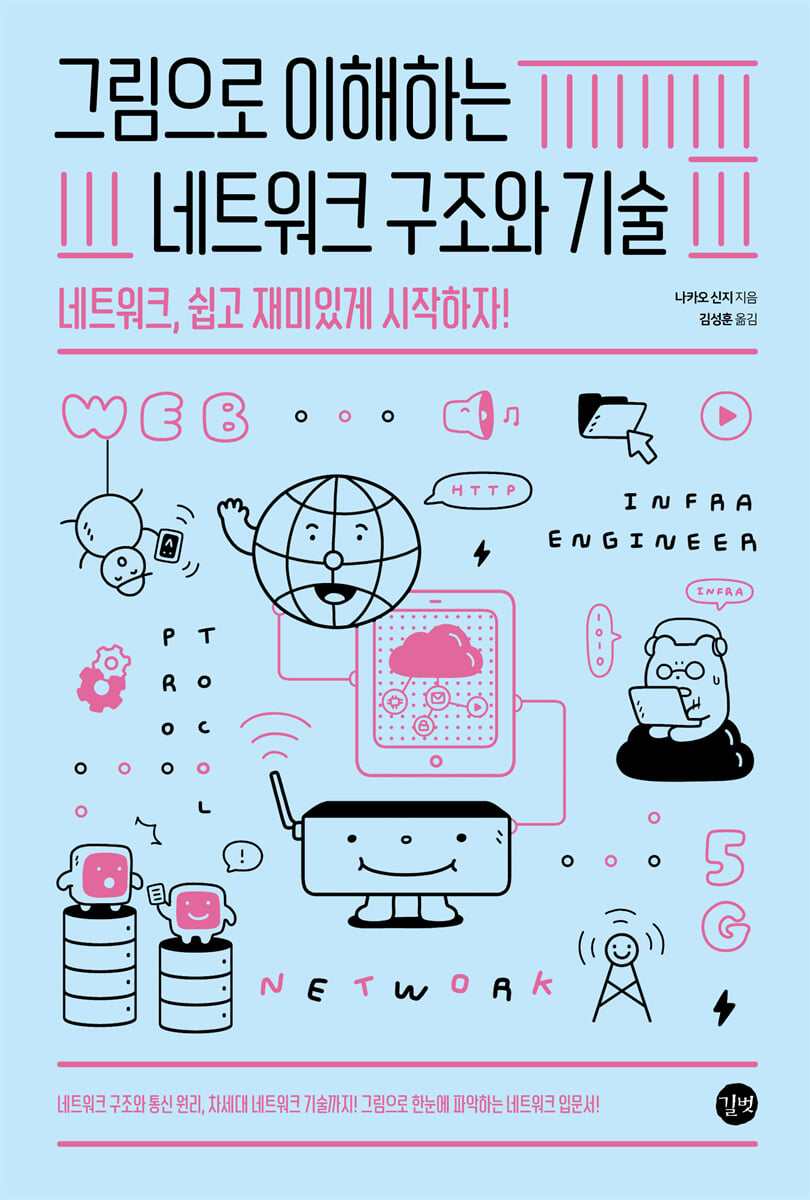
Understanding Network Structure and Technology through Pictures
 |
Description
Book Introduction
Starting a network is easy and fun!
The Internet, which is indispensable to our daily lives, and Ethernet and TCP/IP, which form its basis, all fall into the category of networks.
Networks are widely used in various fields today, and their role and significance are expanding.
It is undeniable that networks play a major role in the technologies that connect and support modern society.
This book covers the entire network, from basic network concepts to data transmission and reception, network elements, protocols, network types, and Internet structure, and even includes the latest technologies such as cloud computing.
Because the structure and operating principles are all shown in a diagram, it is easy to imagine how the data is transmitted.
Additionally, we have included corners such as Glossary Notes and ONE POINT to provide more detailed explanations of the content mentioned in the text.
If you want to learn about networks easily and lightly, I recommend starting with this book!
The Internet, which is indispensable to our daily lives, and Ethernet and TCP/IP, which form its basis, all fall into the category of networks.
Networks are widely used in various fields today, and their role and significance are expanding.
It is undeniable that networks play a major role in the technologies that connect and support modern society.
This book covers the entire network, from basic network concepts to data transmission and reception, network elements, protocols, network types, and Internet structure, and even includes the latest technologies such as cloud computing.
Because the structure and operating principles are all shown in a diagram, it is easy to imagine how the data is transmitted.
Additionally, we have included corners such as Glossary Notes and ONE POINT to provide more detailed explanations of the content mentioned in the text.
If you want to learn about networks easily and lightly, I recommend starting with this book!
- You can preview some of the book's contents.
Preview
index
Chapter 1: Understanding Basic Network Concepts
01 Network Meaning: What is a network?
02 Network connection types and types: Network connection methods
03 Network Components: What you need to connect to a network
04 Data Transmission Principles: Transmitting Data Over a Network
Chapter 2: Let's learn the principles of exchanging data.
05 Protocol: The agreement required for communication
06 Network Layer: A hierarchical structure for efficient communication
07 Network Model: A model of the layer through which each device communicates.
08 TCP/IP: Protocol for communicating over the Internet
09 IP address: An identifier that specifies the source and destination networks.
10 IPv4/IPv6: Two IP addresses of different lengths
11 MAC address: A unique identifier for a device or terminal.
12 ARP: Protocol for investigating MAC addresses when communicating
13 Port Number: Application Type and Client Identifier
14 Circuit switching: A one-to-one connection method used in landline telephones.
15 Packet switching method: A communication method that divides and transmits data.
16 Router: A device that connects LANs and processes packets.
17 Access Point: A device that collects wireless LAN radio waves.
18 Hub (concentrator): a device that collects multiple lines
19 Switch (switching hub): A device that collects lines and switches the connection target.
20 Cable: A line that transmits data
21 Connector: A connection that connects cables
22 DHCP: A protocol that automatically assigns IP addresses
23 NAT/NAPT: Ability to translate IP addresses
24 Routing: The ability to control communication paths
25 Default Gateway: Where the router sends unknown packets that it cannot determine.
26 Subnet: A structure that divides a network into segments.
Chapter 3: Let's learn about network types and configurations.
27 Client-Server and Peer-to-Peer: Differences in How Devices Connect
28 LAN: Limited range network
29 Ethernet: Network connecting the office interior
30 Wireless LAN: A network that connects devices via radio waves.
31 IEEE 802.x standard: standard that defines LANs
32 WAN: A network that connects a wide area
33 VLAN: A technology for dividing or combining segments
34 SDN: Technology that integrates network management functions
35 LAN-to-LAN network: A corporate LAN that is formed by combining each segment.
36 Network connected to the Internet: A network that relays the Internet through a router.
37 Networks using mobile networks: Networks that connect to the Internet from mobile devices.
Chapter 4: Understanding the Internet's Structure
38 Internet Structure: A vast network of interconnected networks
39 Protocols used on the Internet: Rules that implement various functions on the Internet.
40 Email exchange structure: Sending and receiving email using SMTP and POP
41 Structure for viewing web pages: Communication between web server and web client
42 URL/URI: An identifier that specifies a location on the Internet.
43 HTTP/HTTPS: Protocols used on the web
44 DNS: A structure that manages domain names and IP addresses
45 ICMP: Protocol for checking communication status
46 Telnet: Protocol for remotely logging into a server
47 SSH: Protocol for encrypted remote access
48 FTP: Protocol for sending and receiving files
49 NTP: Protocol for synchronizing time
50 Ajax, REST API: Other Web Technologies and Protocols
Chapter 5: Understanding Cloud Architecture
51 Cloud Architecture: Cloud Components
52 Server Virtualization: A Technology for Logically Configuring Servers
53 Distributed technology: Technology in which nodes communicate autonomously
54 IaaS/PaaS/SaaS/DaaS: Cloud Service Usage Forms
55 Cloud Computing/On-Premises: Technology that utilizes resources on the Internet
56 Edge computing: A structure that distributes servers close to terminals.
57 Containers: A technology for building virtual application operating environments.
58 Microservices: A technology that combines functions to realize apps.
59 AWS: Cloud platform operated by Amazon
60 Microsoft Azure: A cloud platform operated by Microsoft
61 Google Cloud Platform: A cloud platform operated by Google
62 Private Cloud and Public Cloud: Cloud Service Usage
63 CDP/DDP: Platform for Managing Data
Chapter 6: Understanding the Structure of Mobile and Wireless Communications
64 Mobile network: a network connecting mobile terminals, base stations, and exchanges
65 4G/5G: Mobile Network Communication Standards
66 Local 5G: 5G networks deployed in specific areas
67 Mobile Communications: Communication services using mobile terminals
68 Wi-Fi: A technology for wireless connection in the IEEE 802.11 series
69 Public Wireless LAN: Wireless LAN available in public facilities or stores.
70 LPWA: Technology for Low-Power, Long-Range Communications 240
71 Bluetooth/NFC: Technology for communicating with peripheral devices or IC cards at close range
72 Sensor Network: A network that connects multiple sensors
Chapter 7: Let's Learn About Security Architecture
73 Security Fundamentals and Concepts: What You Need to Protect Your Assets
74 Malware/Computer Virus: Software or programs that cause harm
75 Encryption technology: technology that enables communication in an indecipherable state
76 Common key encryption/public key encryption: Technology for encryption and decryption using keys
77 Server Certificate/Certification Authority: A structure that proves the legitimacy of the location to be connected.
78 SSL/TLS: Encrypted Communication Protocol
79 Firewall: A structure that controls attacks coming from outside.
80 DMZ: A segment separated from the internal network
81 IDS/IPS: A system that detects intrusions into internal networks.
82 VPN/Tunnel: A technology that creates a virtual dedicated line within a network.
83 Traffic Monitoring/Log Monitoring: How to Detect Network Anomalies
01 Network Meaning: What is a network?
02 Network connection types and types: Network connection methods
03 Network Components: What you need to connect to a network
04 Data Transmission Principles: Transmitting Data Over a Network
Chapter 2: Let's learn the principles of exchanging data.
05 Protocol: The agreement required for communication
06 Network Layer: A hierarchical structure for efficient communication
07 Network Model: A model of the layer through which each device communicates.
08 TCP/IP: Protocol for communicating over the Internet
09 IP address: An identifier that specifies the source and destination networks.
10 IPv4/IPv6: Two IP addresses of different lengths
11 MAC address: A unique identifier for a device or terminal.
12 ARP: Protocol for investigating MAC addresses when communicating
13 Port Number: Application Type and Client Identifier
14 Circuit switching: A one-to-one connection method used in landline telephones.
15 Packet switching method: A communication method that divides and transmits data.
16 Router: A device that connects LANs and processes packets.
17 Access Point: A device that collects wireless LAN radio waves.
18 Hub (concentrator): a device that collects multiple lines
19 Switch (switching hub): A device that collects lines and switches the connection target.
20 Cable: A line that transmits data
21 Connector: A connection that connects cables
22 DHCP: A protocol that automatically assigns IP addresses
23 NAT/NAPT: Ability to translate IP addresses
24 Routing: The ability to control communication paths
25 Default Gateway: Where the router sends unknown packets that it cannot determine.
26 Subnet: A structure that divides a network into segments.
Chapter 3: Let's learn about network types and configurations.
27 Client-Server and Peer-to-Peer: Differences in How Devices Connect
28 LAN: Limited range network
29 Ethernet: Network connecting the office interior
30 Wireless LAN: A network that connects devices via radio waves.
31 IEEE 802.x standard: standard that defines LANs
32 WAN: A network that connects a wide area
33 VLAN: A technology for dividing or combining segments
34 SDN: Technology that integrates network management functions
35 LAN-to-LAN network: A corporate LAN that is formed by combining each segment.
36 Network connected to the Internet: A network that relays the Internet through a router.
37 Networks using mobile networks: Networks that connect to the Internet from mobile devices.
Chapter 4: Understanding the Internet's Structure
38 Internet Structure: A vast network of interconnected networks
39 Protocols used on the Internet: Rules that implement various functions on the Internet.
40 Email exchange structure: Sending and receiving email using SMTP and POP
41 Structure for viewing web pages: Communication between web server and web client
42 URL/URI: An identifier that specifies a location on the Internet.
43 HTTP/HTTPS: Protocols used on the web
44 DNS: A structure that manages domain names and IP addresses
45 ICMP: Protocol for checking communication status
46 Telnet: Protocol for remotely logging into a server
47 SSH: Protocol for encrypted remote access
48 FTP: Protocol for sending and receiving files
49 NTP: Protocol for synchronizing time
50 Ajax, REST API: Other Web Technologies and Protocols
Chapter 5: Understanding Cloud Architecture
51 Cloud Architecture: Cloud Components
52 Server Virtualization: A Technology for Logically Configuring Servers
53 Distributed technology: Technology in which nodes communicate autonomously
54 IaaS/PaaS/SaaS/DaaS: Cloud Service Usage Forms
55 Cloud Computing/On-Premises: Technology that utilizes resources on the Internet
56 Edge computing: A structure that distributes servers close to terminals.
57 Containers: A technology for building virtual application operating environments.
58 Microservices: A technology that combines functions to realize apps.
59 AWS: Cloud platform operated by Amazon
60 Microsoft Azure: A cloud platform operated by Microsoft
61 Google Cloud Platform: A cloud platform operated by Google
62 Private Cloud and Public Cloud: Cloud Service Usage
63 CDP/DDP: Platform for Managing Data
Chapter 6: Understanding the Structure of Mobile and Wireless Communications
64 Mobile network: a network connecting mobile terminals, base stations, and exchanges
65 4G/5G: Mobile Network Communication Standards
66 Local 5G: 5G networks deployed in specific areas
67 Mobile Communications: Communication services using mobile terminals
68 Wi-Fi: A technology for wireless connection in the IEEE 802.11 series
69 Public Wireless LAN: Wireless LAN available in public facilities or stores.
70 LPWA: Technology for Low-Power, Long-Range Communications 240
71 Bluetooth/NFC: Technology for communicating with peripheral devices or IC cards at close range
72 Sensor Network: A network that connects multiple sensors
Chapter 7: Let's Learn About Security Architecture
73 Security Fundamentals and Concepts: What You Need to Protect Your Assets
74 Malware/Computer Virus: Software or programs that cause harm
75 Encryption technology: technology that enables communication in an indecipherable state
76 Common key encryption/public key encryption: Technology for encryption and decryption using keys
77 Server Certificate/Certification Authority: A structure that proves the legitimacy of the location to be connected.
78 SSL/TLS: Encrypted Communication Protocol
79 Firewall: A structure that controls attacks coming from outside.
80 DMZ: A segment separated from the internal network
81 IDS/IPS: A system that detects intrusions into internal networks.
82 VPN/Tunnel: A technology that creates a virtual dedicated line within a network.
83 Traffic Monitoring/Log Monitoring: How to Detect Network Anomalies
Detailed image

Into the book
We live in an age where we communicate with the world through the Internet.
Advances in Internet and wireless communication technology have made it easy to share information and access services anywhere in the world.
It's hard to imagine life without networks.
Connecting people to each other through a network requires a variety of technologies.
This book provides comprehensive network knowledge, covering a wide range of technologies, from basic network concepts to data transmission principles, network components, protocols, network types, Internet architecture, cloud computing, mobile communications, and security.
This book covers not only the operating principles of networks but also new technologies and trends such as cloud computing and mobile networks, so readers interested in networks will find a wide range of information to glean from this book.
Advances in Internet and wireless communication technology have made it easy to share information and access services anywhere in the world.
It's hard to imagine life without networks.
Connecting people to each other through a network requires a variety of technologies.
This book provides comprehensive network knowledge, covering a wide range of technologies, from basic network concepts to data transmission principles, network components, protocols, network types, Internet architecture, cloud computing, mobile communications, and security.
This book covers not only the operating principles of networks but also new technologies and trends such as cloud computing and mobile networks, so readers interested in networks will find a wide range of information to glean from this book.
---From the translator's preface
Publisher's Review
Just reading is enough!
Networking made easy and quick to understand!
Today, networks are the foundation of our universal communication architecture.
As various types of networks become more widely utilized across various fields, the meaning of the word network is expanding.
Ultimately, networks are an essential infrastructure in modern society, and understanding the structure and flow of networks will be a valuable asset for any profession.
This book introduces essential network fundamentals and the latest technologies, from network types and configurations to the Internet, cloud, and security.
It explains everything from the very basics, so anyone can read it without any prior knowledge.
In particular, concepts that can be abstract and complex are presented in 148 figures and 17 tables, so that the overall structure and operating principles can be understood at a glance.
Take a quick look around to get a feel for the network.
It will serve as a stepping stone to acquiring more knowledge and skills.
Networking made easy and quick to understand!
Today, networks are the foundation of our universal communication architecture.
As various types of networks become more widely utilized across various fields, the meaning of the word network is expanding.
Ultimately, networks are an essential infrastructure in modern society, and understanding the structure and flow of networks will be a valuable asset for any profession.
This book introduces essential network fundamentals and the latest technologies, from network types and configurations to the Internet, cloud, and security.
It explains everything from the very basics, so anyone can read it without any prior knowledge.
In particular, concepts that can be abstract and complex are presented in 148 figures and 17 tables, so that the overall structure and operating principles can be understood at a glance.
Take a quick look around to get a feel for the network.
It will serve as a stepping stone to acquiring more knowledge and skills.
GOODS SPECIFICS
- Date of issue: July 20, 2023
- Page count, weight, size: 288 pages | 152*225*20mm
- ISBN13: 9791140705184
You may also like
카테고리
korean


korean

![GQ KOREA Mark (Monthly): December [2025]](http://librairie.coreenne.fr/cdn/shop/files/8ef265dbbfbf186523ed75ba7319009d.jpg?v=1765340328&width=3840)


