

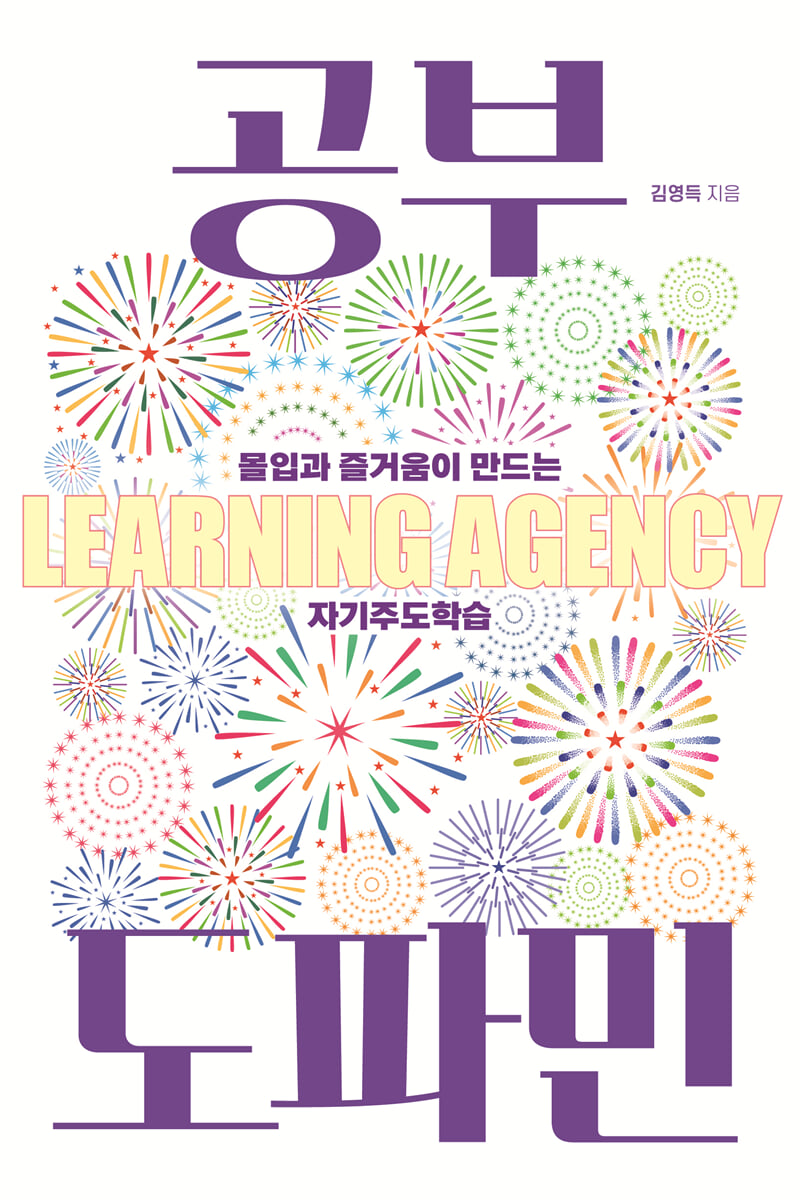
Study dopamine
 |
Description
Book Introduction
The moment when forced studying turns into exciting learning,
At the center of this change is ‘study dopamine’!
"Study Dopamine" is not just a simple study guide.
It is not a book that teaches you how to improve your grades in each subject.
More fundamentally, it talks about the inner energy that awakens the learning instinct dormant within a child, namely, 'study dopamine'.
A child who pretends not to listen no matter how much you tell them to study, a child whose grades don't improve no matter how long they sit at their desk.
What they need is not more study, but a desire to study.
"Study Dopamine" reveals where the mind comes from and helps children, from kindergarten through elementary school to middle and high school, to continue learning while experiencing the joy of immersion on their own.
Through this book, parents will gain insight into 'how to awaken the learning instinct', and children will gain 'the experience of making studying fun'.
At the center of this change is ‘study dopamine’!
"Study Dopamine" is not just a simple study guide.
It is not a book that teaches you how to improve your grades in each subject.
More fundamentally, it talks about the inner energy that awakens the learning instinct dormant within a child, namely, 'study dopamine'.
A child who pretends not to listen no matter how much you tell them to study, a child whose grades don't improve no matter how long they sit at their desk.
What they need is not more study, but a desire to study.
"Study Dopamine" reveals where the mind comes from and helps children, from kindergarten through elementary school to middle and high school, to continue learning while experiencing the joy of immersion on their own.
Through this book, parents will gain insight into 'how to awaken the learning instinct', and children will gain 'the experience of making studying fun'.
index
Prologue: Learning Begins with Fun
Chapter 1: The Beginning of Exciting Studying: Awaken Your Study Dopamine
Empowerment: The Power to Drive Self-Directed Learning
The ability to translate desire into study, self-regulation
Study dopamine, the energy that makes you want to study on your own
Chapter 2: Studying for a Longer, More Enjoyable Time with Dopamine
What's my study style? Hunter and Watcher
The three pillars of study: classes, problem solving, and conceptual understanding.
The Secret of Top Students: Super Focus
Metacognition: A higher-level ability that goes beyond study methods
Reading a report card that shows more than just the rank
When feelings of rebellion become the spark of study
Why only exciting studies last a long time
Chapter 1: The Beginning of Exciting Studying: Awaken Your Study Dopamine
Empowerment: The Power to Drive Self-Directed Learning
The ability to translate desire into study, self-regulation
Study dopamine, the energy that makes you want to study on your own
Chapter 2: Studying for a Longer, More Enjoyable Time with Dopamine
What's my study style? Hunter and Watcher
The three pillars of study: classes, problem solving, and conceptual understanding.
The Secret of Top Students: Super Focus
Metacognition: A higher-level ability that goes beyond study methods
Reading a report card that shows more than just the rank
When feelings of rebellion become the spark of study
Why only exciting studies last a long time
Detailed image

Into the book
To rekindle your desire to learn, or your study dopamine, you need to deeply understand what learning initiative is and consistently practice ways to cultivate it in your daily life.
Initiative is the power that allows a child to lead their own learning process and is a core competency that connects the world with their own life.
Studying without initiative is nothing more than 'doing what others tell you to do' and can be easily swayed, but studying with initiative firmly holds a child's entire life.
After all, studying is something you do on your own.
--- p.18, from “Empowerment, the Power that Leads Proactive Learning”
From an evolutionary psychology perspective, it's not surprising that children become addicted to games.
Humans have evolved over the years to be sensitive to external stimuli in order to survive, and through that response, they have increased their chances of survival.
These characteristics still remain within us, and we instinctively seek out new stimulation even in the monotony of everyday life.
And the thing that most easily satisfies that instinct is games.
--- pp.52-53, from “Why Are Children Addicted to Games?”
It is dangerous to hastily conclude that a child simply lacks study time or has poor concentration without considering his or her personality.
It can disrupt a child's study routine and even destroy their will to learn on their own.
Sitting at a desk for long periods of time isn't the secret that works for every student.
It is important to understand your child's tendencies and develop individualized strategies with them.
When reviewing test results, rather than focusing solely on the score, you should examine why the question was wrong and what steps the mistake was made in connection with the child's learning style.
As we talk about the details that hunter children tend to miss, or the flexibility that watcher children lack, at some point the child will realize, "I was leaning too far to one side."
Through these reflections, you learn about different types of strengths and grow into a well-rounded learner.
--- p.80, from "Hunter vs. Watchman, Who Wins the Test"
The period when this type of training is truly required is the upper grades of elementary school.
This period is often called the 'golden time'.
The reason this time is important is because while lower grades are the stage where students build the foundation, upper grades are the time to build concepts on that foundation and build a bridge to middle and high school.
This period is also a time for parents to check whether their child has sufficiently laid the foundation for studying, and for children, it is also a time when 'studying that they want to do' changes into 'studying that they have to do.'
The problem is that from this time onwards, many children lose their way in their studies.
The more diligently a child has been doing well, the more he or she will be shaken.
The method of simply memorizing and solving problems is reaching its limits when faced with increasingly complex concepts.
At the point when efforts stop producing results, children first experience the 'wall of learning.'
--- p.87, from “The Three Axes of Study: Classes, Problem Solving, and Concept Understanding”
There is a term called 'path dependency'.
Just as a train cannot leave its tracks, behavior patterns that have become ingrained into habits do not change easily and stick to the old ways.
The same goes for study methods.
Once a learning style is established, it is not easy to change.
This is especially true if you have not been actively studying since childhood, but have relied on private education.
Each child has his or her own familiar study method.
It is a habit that has naturally become established in a given environment.
The problem is that this environment is by no means easy.
In our country, parents' desires always come before children's study energy.
The child is now at a level where he or she can make no mistakes in addition and subtraction, but parents immediately demand that he or she memorize the multiplication tables.
If you can do it even though it's difficult, you'll be given the next task right away.
In such a high-pressure environment, children have no time to properly examine their study methods.
I just study like I always do, sit back down at my desk, and repeat.
--- p.131-132, from “Familiarity is Comfortable, Study Method Path Dependency”
A report card is not just a piece of paper with scores and ranks written on it.
There's so much more to it than that.
A report card shows not only the numerical results, but also the purpose and plan of study, the process, and the resulting results.
So when you look at a report card, don't just look at the numbers; you should also read what those numbers mean and what the overall flow of your child's learning process is like.
--- p.147, from “Why Do Report Cards Torment Us?”
Rebellion is a natural wave of emotion that everyone faces along the path of growth.
If the arrows of those emotions are directed at parents, they become conflict, but if they are directed at learning, they become energy for growth.
Rebellion is also the first attempt to break away from one's parents and venture out into the world on one's own.
As this mind grows, the child's sense of initiative and ability to 'do it on his own' also grows.
Therefore, rather than unconditionally suppressing rebellion, it is important to guide it so that its energy is transformed into initiative.
At such times, the child's inner strength to overcome adversity grows, and that strength goes beyond simple learning ability and becomes the most special talent that helps the child grow throughout his or her life.
Initiative is the power that allows a child to lead their own learning process and is a core competency that connects the world with their own life.
Studying without initiative is nothing more than 'doing what others tell you to do' and can be easily swayed, but studying with initiative firmly holds a child's entire life.
After all, studying is something you do on your own.
--- p.18, from “Empowerment, the Power that Leads Proactive Learning”
From an evolutionary psychology perspective, it's not surprising that children become addicted to games.
Humans have evolved over the years to be sensitive to external stimuli in order to survive, and through that response, they have increased their chances of survival.
These characteristics still remain within us, and we instinctively seek out new stimulation even in the monotony of everyday life.
And the thing that most easily satisfies that instinct is games.
--- pp.52-53, from “Why Are Children Addicted to Games?”
It is dangerous to hastily conclude that a child simply lacks study time or has poor concentration without considering his or her personality.
It can disrupt a child's study routine and even destroy their will to learn on their own.
Sitting at a desk for long periods of time isn't the secret that works for every student.
It is important to understand your child's tendencies and develop individualized strategies with them.
When reviewing test results, rather than focusing solely on the score, you should examine why the question was wrong and what steps the mistake was made in connection with the child's learning style.
As we talk about the details that hunter children tend to miss, or the flexibility that watcher children lack, at some point the child will realize, "I was leaning too far to one side."
Through these reflections, you learn about different types of strengths and grow into a well-rounded learner.
--- p.80, from "Hunter vs. Watchman, Who Wins the Test"
The period when this type of training is truly required is the upper grades of elementary school.
This period is often called the 'golden time'.
The reason this time is important is because while lower grades are the stage where students build the foundation, upper grades are the time to build concepts on that foundation and build a bridge to middle and high school.
This period is also a time for parents to check whether their child has sufficiently laid the foundation for studying, and for children, it is also a time when 'studying that they want to do' changes into 'studying that they have to do.'
The problem is that from this time onwards, many children lose their way in their studies.
The more diligently a child has been doing well, the more he or she will be shaken.
The method of simply memorizing and solving problems is reaching its limits when faced with increasingly complex concepts.
At the point when efforts stop producing results, children first experience the 'wall of learning.'
--- p.87, from “The Three Axes of Study: Classes, Problem Solving, and Concept Understanding”
There is a term called 'path dependency'.
Just as a train cannot leave its tracks, behavior patterns that have become ingrained into habits do not change easily and stick to the old ways.
The same goes for study methods.
Once a learning style is established, it is not easy to change.
This is especially true if you have not been actively studying since childhood, but have relied on private education.
Each child has his or her own familiar study method.
It is a habit that has naturally become established in a given environment.
The problem is that this environment is by no means easy.
In our country, parents' desires always come before children's study energy.
The child is now at a level where he or she can make no mistakes in addition and subtraction, but parents immediately demand that he or she memorize the multiplication tables.
If you can do it even though it's difficult, you'll be given the next task right away.
In such a high-pressure environment, children have no time to properly examine their study methods.
I just study like I always do, sit back down at my desk, and repeat.
--- p.131-132, from “Familiarity is Comfortable, Study Method Path Dependency”
A report card is not just a piece of paper with scores and ranks written on it.
There's so much more to it than that.
A report card shows not only the numerical results, but also the purpose and plan of study, the process, and the resulting results.
So when you look at a report card, don't just look at the numbers; you should also read what those numbers mean and what the overall flow of your child's learning process is like.
--- p.147, from “Why Do Report Cards Torment Us?”
Rebellion is a natural wave of emotion that everyone faces along the path of growth.
If the arrows of those emotions are directed at parents, they become conflict, but if they are directed at learning, they become energy for growth.
Rebellion is also the first attempt to break away from one's parents and venture out into the world on one's own.
As this mind grows, the child's sense of initiative and ability to 'do it on his own' also grows.
Therefore, rather than unconditionally suppressing rebellion, it is important to guide it so that its energy is transformed into initiative.
At such times, the child's inner strength to overcome adversity grows, and that strength goes beyond simple learning ability and becomes the most special talent that helps the child grow throughout his or her life.
--- pp.171-172, from “Rebellion and ‘Adversity-Overcoming’ Learners”
Publisher's Review
More important than making them study is awakening their desire to study!
Most people tilt their heads in disbelief when told that they can feel dopamine while studying.
This is because, when you reach middle or high school, it is considered natural to study out of a sense of duty.
But the author, who has been teaching children in schools for over a decade, asserts:
Studying can also release dopamine, and you can continue studying for a long time with excitement.
In fact, the author observed children who succeeded in college entrance exams without losing the joy of studying for a long time and discovered one thing in common.
They were all finding the meaning of studying on their own and repeating the experience of immersing themselves in learning itself.
As a result, studying naturally changed from something I 'had to do' to something I 'wanted to do'.
The author says the secret to the change lies in 'study dopamine', the inner energy that makes you want to learn.
Studying is often thought of as boring and difficult, but there is joy in the challenge and accomplishments it brings.
Everyone has moments when they feel excited while studying.
The thrill of opening a new textbook, the satisfaction of solving a difficult problem, and the thrill of understanding a concept for the first time.
At these moments, our brain releases dopamine, sending a signal that says, "Studying is fun."
The problem is that the pleasure doesn't last long.
As we move up in grade level and exams and competitions increase, the excitement we felt from studying turns into a duty, and the dopamine gradually dries up.
If you only receive dopamine as a temporary stimulus, its effects will quickly disappear.
Only when we recognize that energy as a result of self-determination and achievement does it transform into sustainable motivation for learning.
Because only dopamine, which comes from inner, proactive energy rather than external stimuli, is the real power that makes children study on their own.
Based on these principles, "Study Dopamine" systematically explores how to awaken and maintain the study dopamine that blossoms from learning initiative, from the perspectives of emotional and psychological factors and the learning environment.
Reading this book will help you rediscover the joy of studying and discover a new meaning to learning, even in the competitive world of entrance exam-centered education.
Most people tilt their heads in disbelief when told that they can feel dopamine while studying.
This is because, when you reach middle or high school, it is considered natural to study out of a sense of duty.
But the author, who has been teaching children in schools for over a decade, asserts:
Studying can also release dopamine, and you can continue studying for a long time with excitement.
In fact, the author observed children who succeeded in college entrance exams without losing the joy of studying for a long time and discovered one thing in common.
They were all finding the meaning of studying on their own and repeating the experience of immersing themselves in learning itself.
As a result, studying naturally changed from something I 'had to do' to something I 'wanted to do'.
The author says the secret to the change lies in 'study dopamine', the inner energy that makes you want to learn.
Studying is often thought of as boring and difficult, but there is joy in the challenge and accomplishments it brings.
Everyone has moments when they feel excited while studying.
The thrill of opening a new textbook, the satisfaction of solving a difficult problem, and the thrill of understanding a concept for the first time.
At these moments, our brain releases dopamine, sending a signal that says, "Studying is fun."
The problem is that the pleasure doesn't last long.
As we move up in grade level and exams and competitions increase, the excitement we felt from studying turns into a duty, and the dopamine gradually dries up.
If you only receive dopamine as a temporary stimulus, its effects will quickly disappear.
Only when we recognize that energy as a result of self-determination and achievement does it transform into sustainable motivation for learning.
Because only dopamine, which comes from inner, proactive energy rather than external stimuli, is the real power that makes children study on their own.
Based on these principles, "Study Dopamine" systematically explores how to awaken and maintain the study dopamine that blossoms from learning initiative, from the perspectives of emotional and psychological factors and the learning environment.
Reading this book will help you rediscover the joy of studying and discover a new meaning to learning, even in the competitive world of entrance exam-centered education.
GOODS SPECIFICS
- Date of issue: November 20, 2025
- Page count, weight, size: 192 pages | 270g | 140*210*20mm
- ISBN13: 9788958271543
- ISBN10: 895827154X
You may also like
카테고리
korean


korean

![GQ KOREA Mark (Monthly): December [2025]](http://librairie.coreenne.fr/cdn/shop/files/8ef265dbbfbf186523ed75ba7319009d.jpg?v=1765340328&width=3840)


