

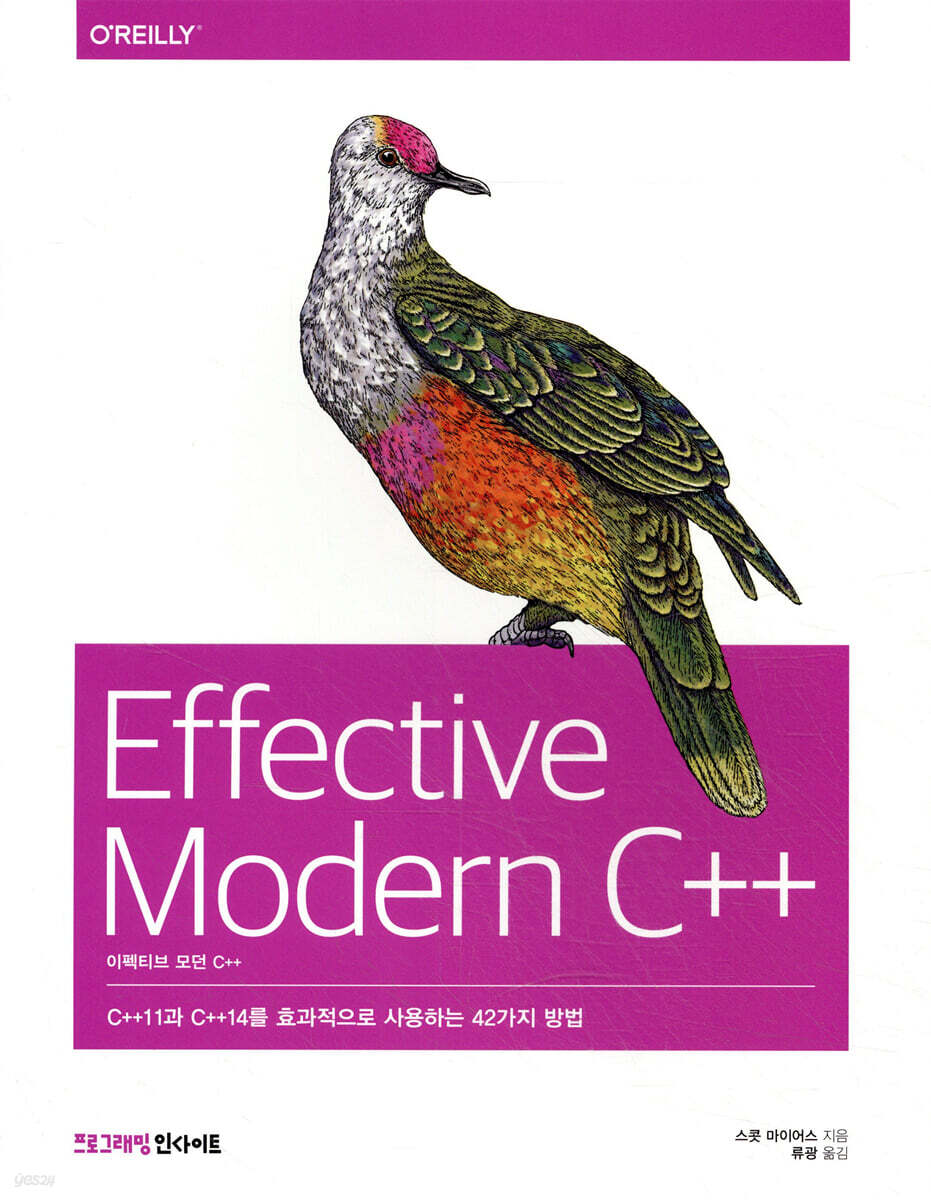
Effective Modern C++
 |
Description
Book Introduction
Mastering C++11 and C++14 requires more than just familiarizing yourself with the new features (such as auto type declarations, move semantics, lambda expressions, and concurrency support).
The real challenge is learning how to use those features effectively—how to leverage them to create software that is accurate, efficient, maintainable, and portable.
This book explains how to write truly great software using C++11 and C++14—that is, modern C++.
Effective Modern C++ follows the proven, guide-based, example-driven format of Scott Meyers's previous books, but covers entirely new material.
This book is a must-read for every modern C++ software developer.
The real challenge is learning how to use those features effectively—how to leverage them to create software that is accurate, efficient, maintainable, and portable.
This book explains how to write truly great software using C++11 and C++14—that is, modern C++.
Effective Modern C++ follows the proven, guide-based, example-driven format of Scott Meyers's previous books, but covers entirely new material.
This book is a must-read for every modern C++ software developer.
index
Chapter 1 Formal Deduction
Item 1: Know the template format deduction rules.
Item 2: Know the formal deduction rules for auto.
Item 3: Familiarize yourself with how decltype works.
Item 4: Know how to identify deduced forms.
Chapter 2 auto
Item 5: Prefer auto over explicit type declarations.
Item 6: Use an explicit initializer when auto deduces an undesirable type.
Chapter 3: Adapting to Modern C++
Item 7: Distinguish between parentheses (()) and braces ({}) when creating objects.
Item 8: Prefer nullptr to 0 and NULL
Item 9: Prefer alias declarations to typedefs.
Item 10: Prefer scoped enums over unscoped enums.
Item 11: Prefer deleted functions over undefined private functions.
Item 12: Declare override functions as overrides.
Item 13: Prefer const_iterator over iterator.
Item 14: Declare functions that do not throw exceptions as noexcept.
Item 15: Use constexpr whenever possible.
Item 16: Make const member functions thread-safe.
Item 17: Know the automatic generation conditions for special member functions.
Chapter 4 Smart Pointers
Item 18: Use std::unique_ptr for managing exclusive-ownership resources.
Item 19: Use std::shared_ptr for managing shared-ownership resources.
Item 20: If you need a pointer that behaves like std::shared_ptr but can lose its target, use std::weak_ptr.
Item 21: Prefer std::make_unique and std::make_shared to using new directly.
Item 22: When using the Pimpl idiom, define special member functions in the implementation file.
Chapter 5 Right-hand References, Move Semantics, and Perfect Forwarding
Item 23: Familiarize yourself with std::move and std::forward.
Item 24: Distinguish between universal references and rvalue references.
Item 25: Use std::move for rvalue references and std::forward for universal references.
Item 26: Avoid double-loading universal references.
Item 27: Know techniques to use instead of overloading universal references.
Item 28: Know your reference abbreviations.
Item 29: Assume that move operations do not exist, are not cheap, and are not applicable.
Item 30: Know when perfect communication fails.
Chapter 6 Lambda Expressions
Item 31: Avoid default galmuri mode
Item 32: Use initializers to move objects into closures.
Item 33: Use decltype for auto&& parameters passed via std::forward
Item 34: Prefer lambdas over std::bind
Chapter 7 Concurrency API
Item 35: Prefer task-based programming over thread-based programming.
Item 36: Specify std::launch::async when asynchrony is required.
Item 37: Make std::threads non-joinable on all paths.
Item 38: Beware of the Different Behaviors of Thread Handle Destructors
Item 39: Consider void future objects for one-shot event communication.
Item 40: Use std::atomic for concurrency, and volatile for special memory.
Chapter 8: Refining
Item 41: Consider passing by value for copyable parameters that are cheap to move and always copied.
Item 42: Consider constructive inserts instead of inserts.
Item 1: Know the template format deduction rules.
Item 2: Know the formal deduction rules for auto.
Item 3: Familiarize yourself with how decltype works.
Item 4: Know how to identify deduced forms.
Chapter 2 auto
Item 5: Prefer auto over explicit type declarations.
Item 6: Use an explicit initializer when auto deduces an undesirable type.
Chapter 3: Adapting to Modern C++
Item 7: Distinguish between parentheses (()) and braces ({}) when creating objects.
Item 8: Prefer nullptr to 0 and NULL
Item 9: Prefer alias declarations to typedefs.
Item 10: Prefer scoped enums over unscoped enums.
Item 11: Prefer deleted functions over undefined private functions.
Item 12: Declare override functions as overrides.
Item 13: Prefer const_iterator over iterator.
Item 14: Declare functions that do not throw exceptions as noexcept.
Item 15: Use constexpr whenever possible.
Item 16: Make const member functions thread-safe.
Item 17: Know the automatic generation conditions for special member functions.
Chapter 4 Smart Pointers
Item 18: Use std::unique_ptr for managing exclusive-ownership resources.
Item 19: Use std::shared_ptr for managing shared-ownership resources.
Item 20: If you need a pointer that behaves like std::shared_ptr but can lose its target, use std::weak_ptr.
Item 21: Prefer std::make_unique and std::make_shared to using new directly.
Item 22: When using the Pimpl idiom, define special member functions in the implementation file.
Chapter 5 Right-hand References, Move Semantics, and Perfect Forwarding
Item 23: Familiarize yourself with std::move and std::forward.
Item 24: Distinguish between universal references and rvalue references.
Item 25: Use std::move for rvalue references and std::forward for universal references.
Item 26: Avoid double-loading universal references.
Item 27: Know techniques to use instead of overloading universal references.
Item 28: Know your reference abbreviations.
Item 29: Assume that move operations do not exist, are not cheap, and are not applicable.
Item 30: Know when perfect communication fails.
Chapter 6 Lambda Expressions
Item 31: Avoid default galmuri mode
Item 32: Use initializers to move objects into closures.
Item 33: Use decltype for auto&& parameters passed via std::forward
Item 34: Prefer lambdas over std::bind
Chapter 7 Concurrency API
Item 35: Prefer task-based programming over thread-based programming.
Item 36: Specify std::launch::async when asynchrony is required.
Item 37: Make std::threads non-joinable on all paths.
Item 38: Beware of the Different Behaviors of Thread Handle Destructors
Item 39: Consider void future objects for one-shot event communication.
Item 40: Use std::atomic for concurrency, and volatile for special memory.
Chapter 8: Refining
Item 41: Consider passing by value for copyable parameters that are cheap to move and always copied.
Item 42: Consider constructive inserts instead of inserts.
GOODS SPECIFICS
- Date of issue: September 16, 2015
- Page count, weight, size: 359 pages | 709g | 188*240*18mm
- ISBN13: 9788966261642
- ISBN10: 8966261647
You may also like
카테고리
korean


korean

![GQ KOREA Mark (Monthly): December [2025]](http://librairie.coreenne.fr/cdn/shop/files/8ef265dbbfbf186523ed75ba7319009d.jpg?v=1765340328&width=3840)


