

Mom's First Origami
 |
Description
Book Introduction
Even the child who said 'I can't do it' folded on his own!
The first origami book that starts with one fold
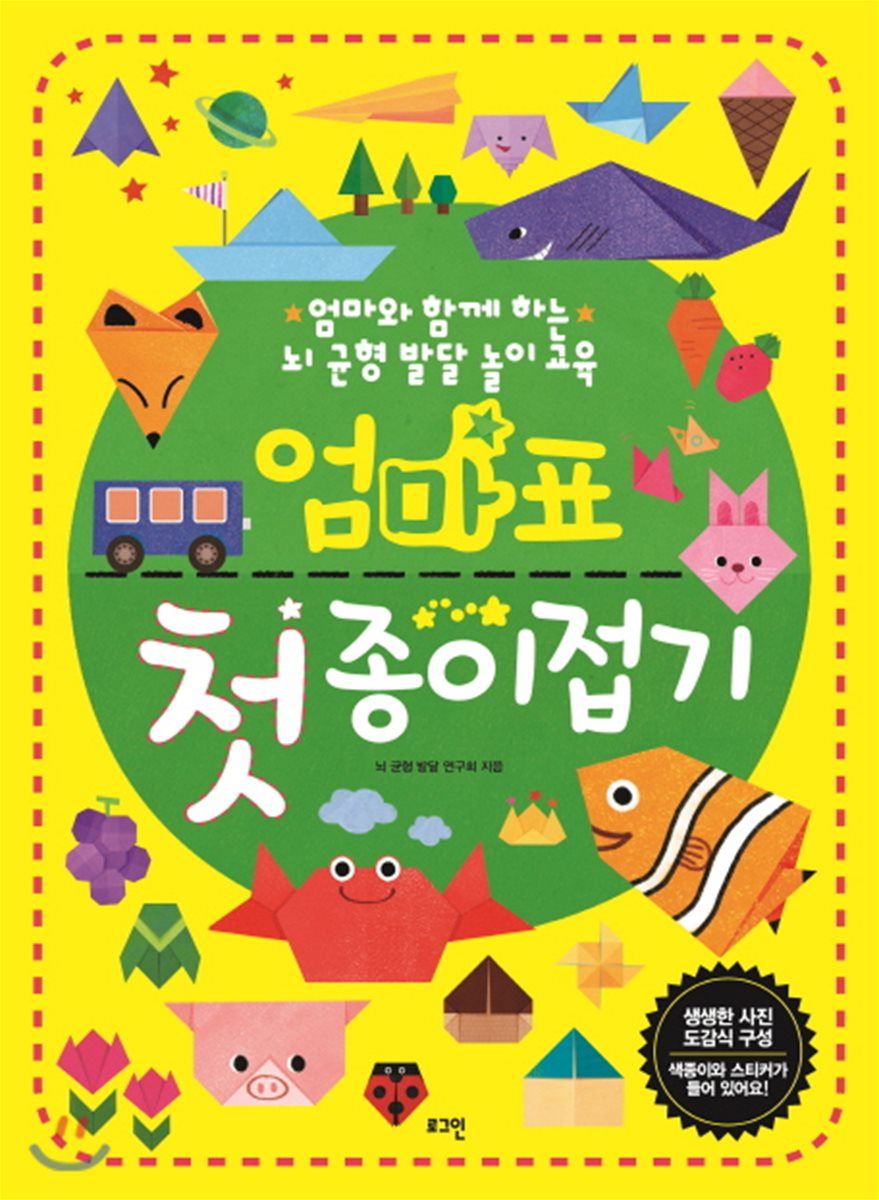
《Mom's First Origami》 is the first origami book for toddlers who cannot read.
The 'Brain Balance Development Research Group', which studies mother-style infant and toddler education methods, carefully selected 45 origami themes to help toddlers who cannot understand letters, numbers, and origami symbols become interested in origami, and devised a method for them to fold on their own, tailored to their beginner level.
True to its title, "First Origami," it contains contents such as a watermelon, school bus, and pyramid made by folding them only once; a sailboat, butterfly, and lion made by folding them twice; and a grasshopper, fish, goblin, and ice cream made by folding them three times.
As children become more confident and comfortable with origami, they can move on to the next level. The structure is structured in stages, starting with a watermelon, which is the first shape that children recognize, and gradually increasing the complexity of the shapes and the number of folds to reach their favorite shape, an alligator.
This book contains vivid pictures of plants, animals, and objects, so even children who cannot read can enjoy it.
In fact, the original concept of origami is to recognize the characteristics of an object and express them on paper.
Until now, origami books have focused only on explaining the process and overlooked this step.
This book contains close-up photos of plants and animals that are so vivid that they make you feel like you're looking at an illustrated guide, allowing you to observe and learn more about the objects you're folding.
The book includes round colored paper, rectangular colored paper, and colored paper with unique patterns that are difficult to find in the market, as well as stickers to make the work more realistic, such as school bus wheels and windows, refrigerator food, and Rudolph the Red-Nosed Reindeer antlers, as well as 45 praise stickers to be attached for each completed origami.
The first origami book that starts with one fold
《Mom's First Origami》 is the first origami book for toddlers who cannot read.
The 'Brain Balance Development Research Group', which studies mother-style infant and toddler education methods, carefully selected 45 origami themes to help toddlers who cannot understand letters, numbers, and origami symbols become interested in origami, and devised a method for them to fold on their own, tailored to their beginner level.
True to its title, "First Origami," it contains contents such as a watermelon, school bus, and pyramid made by folding them only once; a sailboat, butterfly, and lion made by folding them twice; and a grasshopper, fish, goblin, and ice cream made by folding them three times.
As children become more confident and comfortable with origami, they can move on to the next level. The structure is structured in stages, starting with a watermelon, which is the first shape that children recognize, and gradually increasing the complexity of the shapes and the number of folds to reach their favorite shape, an alligator.
This book contains vivid pictures of plants, animals, and objects, so even children who cannot read can enjoy it.
In fact, the original concept of origami is to recognize the characteristics of an object and express them on paper.
Until now, origami books have focused only on explaining the process and overlooked this step.
This book contains close-up photos of plants and animals that are so vivid that they make you feel like you're looking at an illustrated guide, allowing you to observe and learn more about the objects you're folding.
The book includes round colored paper, rectangular colored paper, and colored paper with unique patterns that are difficult to find in the market, as well as stickers to make the work more realistic, such as school bus wheels and windows, refrigerator food, and Rudolph the Red-Nosed Reindeer antlers, as well as 45 praise stickers to be attached for each completed origami.
- You can preview some of the book's contents.
Preview
index
Origami, why is it good?
What's different about "Mom's First Origami"?
How to Make Mom's First Origami
Basic origami symbols
(Fold 1) Plump, ripe watermelon
(Fold 1) Beautiful flower
(Fold 1) Ttu Ttu Bang Bang School Bus
(Fold 1) Pointed pyramid
(Fold 2 times) Floating sailboat
(Fold 2 times) Fluttering butterfly
(Fold twice) Whoa! Whoa! A lion
(Fold 3 times) A house with a pointed roof
(Fold 3 times) Fresh Refrigerator
(Fold 3 times) Flickering grasshopper
(Fold 3 times) Crackle Crackle Fish
(Fold 3 times) Tulip like a crown
(Fold 3 times) What if a goblin comes?
(Fold 3 times) Melting ice cream
(Fold 4 times) Fly! Rocket
(Fold 4 times) Cancan Fox
(Fold 4 times) Yummy yummy calf
(Fold 4 times) Meow meow cat
(Fold 4 times) Sparkling crown
(Fold 4 times) White crescent moon
(Fold 4 times) Snail wiggling
(Fold 5 times) Woof woof puppy
(Fold 5 times) Whale, the prince of the sea
(Fold 5 times) Twinkle, twinkle little star
(Fold 5 times) Little bird fluttering in the wind
(Fold 5 times) Swan Lake
(Fold 5 times) Sweep Sweep Yacht
(Fold 5 times) Hopping rabbit
(Fold 6) Elephant nose hand
(Fold 7 times) Rudolph the reindeer with a shiny nose
(Fold 7 times) Up, up, the airplane
(Fold 7 times) A tree that stretches out straight
(Fold 8 times) Croaking frog
(Fold 9 times) Oink Oink Pig
(Fold 9 times) Crunchy carrots
(Fold 9 times) Soft chestnuts
(Fold 10 times) Colorful ladybugs
(Fold 10 times) Mae-am-mae-am cicada
(Fold 10 times) Grapes in bunches
(Fold 11) The Terrifying Shark
(Fold 12 times) Tangled Tomato
(Fold 13 times) Crispy crab
(Fold 13) Sweet and Sour Strawberry
(Fold 14 times) Flapping pinwheel
(Fold 21) Crocodile with open mouth
What's different about "Mom's First Origami"?
How to Make Mom's First Origami
Basic origami symbols
(Fold 1) Plump, ripe watermelon
(Fold 1) Beautiful flower
(Fold 1) Ttu Ttu Bang Bang School Bus
(Fold 1) Pointed pyramid
(Fold 2 times) Floating sailboat
(Fold 2 times) Fluttering butterfly
(Fold twice) Whoa! Whoa! A lion
(Fold 3 times) A house with a pointed roof
(Fold 3 times) Fresh Refrigerator
(Fold 3 times) Flickering grasshopper
(Fold 3 times) Crackle Crackle Fish
(Fold 3 times) Tulip like a crown
(Fold 3 times) What if a goblin comes?
(Fold 3 times) Melting ice cream
(Fold 4 times) Fly! Rocket
(Fold 4 times) Cancan Fox
(Fold 4 times) Yummy yummy calf
(Fold 4 times) Meow meow cat
(Fold 4 times) Sparkling crown
(Fold 4 times) White crescent moon
(Fold 4 times) Snail wiggling
(Fold 5 times) Woof woof puppy
(Fold 5 times) Whale, the prince of the sea
(Fold 5 times) Twinkle, twinkle little star
(Fold 5 times) Little bird fluttering in the wind
(Fold 5 times) Swan Lake
(Fold 5 times) Sweep Sweep Yacht
(Fold 5 times) Hopping rabbit
(Fold 6) Elephant nose hand
(Fold 7 times) Rudolph the reindeer with a shiny nose
(Fold 7 times) Up, up, the airplane
(Fold 7 times) A tree that stretches out straight
(Fold 8 times) Croaking frog
(Fold 9 times) Oink Oink Pig
(Fold 9 times) Crunchy carrots
(Fold 9 times) Soft chestnuts
(Fold 10 times) Colorful ladybugs
(Fold 10 times) Mae-am-mae-am cicada
(Fold 10 times) Grapes in bunches
(Fold 11) The Terrifying Shark
(Fold 12 times) Tangled Tomato
(Fold 13 times) Crispy crab
(Fold 13) Sweet and Sour Strawberry
(Fold 14 times) Flapping pinwheel
(Fold 21) Crocodile with open mouth
Detailed image

Publisher's Review
Look at the pictures and observe the characteristics of plants and animals.
The first origami your child can fold on their own!
Origami is not only easy and safe, but it is also a very beneficial activity for young children's development.
When a child observes and follows along with his or her hands and folds, the left and right brains develop in a balanced way, and imagination and emotions become richer.
The experience of folding once or twice to create a plausible piece of work increases self-efficacy.
You can also naturally build the foundation of geometry by observing and learning the shapes and properties of various shapes.
This book is perfect for beginners who want to learn origami, as it has so many benefits.
No matter how good origami is as a game, it is of little use for brain development if the child does not fold it himself.
If you have been satisfied with having your parents fold the paper for you, this book will help you start folding origami on your own.
This is the first origami book that even a child who is new to origami can easily follow along and say, "I can do it," after watching the mother's demonstration.
The first origami your child can fold on their own!
Origami is not only easy and safe, but it is also a very beneficial activity for young children's development.
When a child observes and follows along with his or her hands and folds, the left and right brains develop in a balanced way, and imagination and emotions become richer.
The experience of folding once or twice to create a plausible piece of work increases self-efficacy.
You can also naturally build the foundation of geometry by observing and learning the shapes and properties of various shapes.
This book is perfect for beginners who want to learn origami, as it has so many benefits.
No matter how good origami is as a game, it is of little use for brain development if the child does not fold it himself.
If you have been satisfied with having your parents fold the paper for you, this book will help you start folding origami on your own.
This is the first origami book that even a child who is new to origami can easily follow along and say, "I can do it," after watching the mother's demonstration.
GOODS SPECIFICS
- Date of issue: August 1, 2015
- Page count, weight, size: 96 pages | 574g | 220*300*15mm
- ISBN13: 9791155091890
- ISBN10: 1155091892
You may also like
카테고리
korean


korean

![GQ KOREA Mark (Monthly): December [2025]](http://librairie.coreenne.fr/cdn/shop/files/8ef265dbbfbf186523ed75ba7319009d.jpg?v=1765340328&width=3840)


