

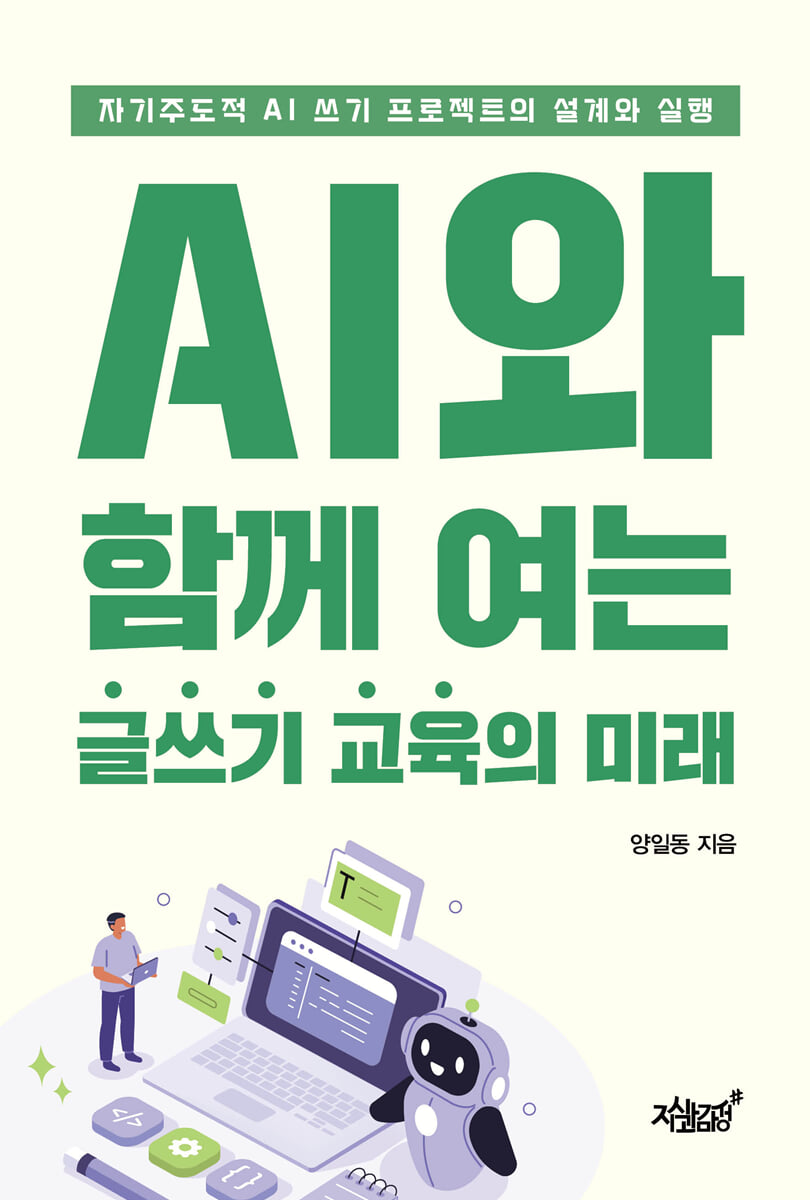
The Future of Writing Education: AI and the Future of Writing
 |
Description
Book Introduction
"Writing in collaboration with AI opens the future of education."
This book presents a new model for writing education that utilizes artificial intelligence not as a simple tool but as a companion that expands thinking.
This paper empirically demonstrates how AI can enhance learners' creativity and self-directedness in the core writing process of "content generation."
This book explores a paradigm shift beyond technology-centered education to a learner-centered one, offering practical strategies applicable to a wide range of subjects. This book will serve as a clear guide for those seeking the right direction for writing education in the AI era.
This book presents a new model for writing education that utilizes artificial intelligence not as a simple tool but as a companion that expands thinking.
This paper empirically demonstrates how AI can enhance learners' creativity and self-directedness in the core writing process of "content generation."
This book explores a paradigm shift beyond technology-centered education to a learner-centered one, offering practical strategies applicable to a wide range of subjects. This book will serve as a clear guide for those seeking the right direction for writing education in the AI era.
- You can preview some of the book's contents.
Preview
index
preface
Part 1: New Challenges in Writing Education - Encountering AI
1.
Why add AI to writing?
2. AI and Writing: Discussions That Have Already Begun
Part 2: Self-Directed Writing and AI Utilization - Writing Education and AI
1. Theoretical Basis of AI-Based Writing Instruction
Self-directed writing and AI utilization
Writing as a Learning Strategy
AI-powered writing and emotional factors
2.
Theoretical Basis of Teaching and Learning Design
Creating content as a writing process
Project-based learning
3.
Design of a self-directed AI writing project teaching and learning
Direction of Teaching and Learning Design
The Practice of Teaching and Learning Design
Part 3: Design and Implementation of a Self-Directed AI Writing Project - A Study on the Effectiveness of Self-Directed AI Writing Project Learning
1.
Research subjects and design
Research subjects
Study design
2.
Research Procedure
Pre-inspection
Experimental Treatment: Learning Self-Directed AI Writing Projects
Postmortem examination
Data analysis methods
3.
Data collection and analysis
measurement
Data analysis
Criteria for selecting and applying AI tools
4.
Results and Discussion
Research results
argument
The Effects and Potential of the Self-Directed AI Writing Project: Educational Applications of the Results
1.
Empirical Implications of Self-Directed AI Writing Project Learning
2.
The instrumental and cognitive roles of AI in building self-directed learning environments.
Clarifying AI's instrumental function as a cognitive scaffold
Promoting divergent thinking and fostering self-directed learning
Promoting convergent thinking and fostering self-directed learning
3.
AI Strategies for Designing Self-Directed AI Writing Project Lessons
Gradual differentiation of AI utilization timing and frequency
Setting a hierarchy for AI-human collaboration
Redefining the Teacher's Role: Instructional Strategies as Metacognitive Facilitators
Parallel AI Literacy Education: Creating Writing Classes Based on Ethics and Literacy
4.
The potential of community-based project-based classes and practical writing
Part 5: The Future of Writing Education with AI - A Look at the Self-Directed AI Writing Project
1.
Research Summary
2.
Limitations of the study and suggestions for future research
References
Appendix 1 - Teaching and Learning Details for the 'PSOEPRI' Self-Directed AI Writing Project
Appendix 2 - Self-Directed AI Writing Project Assignment Worksheet (Sessions 1-7)
Part 1: New Challenges in Writing Education - Encountering AI
1.
Why add AI to writing?
2. AI and Writing: Discussions That Have Already Begun
Part 2: Self-Directed Writing and AI Utilization - Writing Education and AI
1. Theoretical Basis of AI-Based Writing Instruction
Self-directed writing and AI utilization
Writing as a Learning Strategy
AI-powered writing and emotional factors
2.
Theoretical Basis of Teaching and Learning Design
Creating content as a writing process
Project-based learning
3.
Design of a self-directed AI writing project teaching and learning
Direction of Teaching and Learning Design
The Practice of Teaching and Learning Design
Part 3: Design and Implementation of a Self-Directed AI Writing Project - A Study on the Effectiveness of Self-Directed AI Writing Project Learning
1.
Research subjects and design
Research subjects
Study design
2.
Research Procedure
Pre-inspection
Experimental Treatment: Learning Self-Directed AI Writing Projects
Postmortem examination
Data analysis methods
3.
Data collection and analysis
measurement
Data analysis
Criteria for selecting and applying AI tools
4.
Results and Discussion
Research results
argument
The Effects and Potential of the Self-Directed AI Writing Project: Educational Applications of the Results
1.
Empirical Implications of Self-Directed AI Writing Project Learning
2.
The instrumental and cognitive roles of AI in building self-directed learning environments.
Clarifying AI's instrumental function as a cognitive scaffold
Promoting divergent thinking and fostering self-directed learning
Promoting convergent thinking and fostering self-directed learning
3.
AI Strategies for Designing Self-Directed AI Writing Project Lessons
Gradual differentiation of AI utilization timing and frequency
Setting a hierarchy for AI-human collaboration
Redefining the Teacher's Role: Instructional Strategies as Metacognitive Facilitators
Parallel AI Literacy Education: Creating Writing Classes Based on Ethics and Literacy
4.
The potential of community-based project-based classes and practical writing
Part 5: The Future of Writing Education with AI - A Look at the Self-Directed AI Writing Project
1.
Research Summary
2.
Limitations of the study and suggestions for future research
References
Appendix 1 - Teaching and Learning Details for the 'PSOEPRI' Self-Directed AI Writing Project
Appendix 2 - Self-Directed AI Writing Project Assignment Worksheet (Sessions 1-7)
Publisher's Review
The rapid development of artificial intelligence in the 21st century has affected education in general.
It calls for a fundamental paradigm restructuring.
This study focused on the ‘content creation’ stage of the writing process.
This is a key stage where divergent and convergent thinking operate organically, and we empirically analyzed how the use of AI at this point brings about changes in learners' cognitive and affective capabilities.
The self-directed AI writing project is designed to expand thinking and deepen expression through collaboration with technology, rather than relying on technology for writing.
This book is divided into five parts.
Part 1 presents the research background and problem awareness, and Part 2 examines the theoretical basis for writing education and AI utilization.
In Part 3, we analyzed the design and implementation process of actual writing projects and the results of empirical research on their effectiveness. In Part 4, we discussed the implications and applicability of these results in the educational field.
In the final fifth part, we explore the direction of sustainable writing education in the AI era by suggesting the limitations of this study and future tasks.
Writing education in the AI era must move beyond technology-centric delivery and toward expanding uniquely human thought and expression.
This study aimed to present a practical model for future writing education by using AI as a tool to complement learners' thinking and encourage creative thinking.
The self-directed AI writing project proposed in this book has potential for application not only to Korean language classes but also to writing classes in various subjects, and could contribute to the establishment of a new educational paradigm that simultaneously fosters learners' autonomy and creativity.
It calls for a fundamental paradigm restructuring.
This study focused on the ‘content creation’ stage of the writing process.
This is a key stage where divergent and convergent thinking operate organically, and we empirically analyzed how the use of AI at this point brings about changes in learners' cognitive and affective capabilities.
The self-directed AI writing project is designed to expand thinking and deepen expression through collaboration with technology, rather than relying on technology for writing.
This book is divided into five parts.
Part 1 presents the research background and problem awareness, and Part 2 examines the theoretical basis for writing education and AI utilization.
In Part 3, we analyzed the design and implementation process of actual writing projects and the results of empirical research on their effectiveness. In Part 4, we discussed the implications and applicability of these results in the educational field.
In the final fifth part, we explore the direction of sustainable writing education in the AI era by suggesting the limitations of this study and future tasks.
Writing education in the AI era must move beyond technology-centric delivery and toward expanding uniquely human thought and expression.
This study aimed to present a practical model for future writing education by using AI as a tool to complement learners' thinking and encourage creative thinking.
The self-directed AI writing project proposed in this book has potential for application not only to Korean language classes but also to writing classes in various subjects, and could contribute to the establishment of a new educational paradigm that simultaneously fosters learners' autonomy and creativity.
GOODS SPECIFICS
- Date of issue: September 10, 2025
- Page count, weight, size: 250 pages | 152*225*20mm
- ISBN13: 9791139227826
- ISBN10: 1139227823
You may also like
카테고리
korean


korean

![GQ KOREA Mark (Monthly): December [2025]](http://librairie.coreenne.fr/cdn/shop/files/8ef265dbbfbf186523ed75ba7319009d.jpg?v=1765340328&width=3840)


