

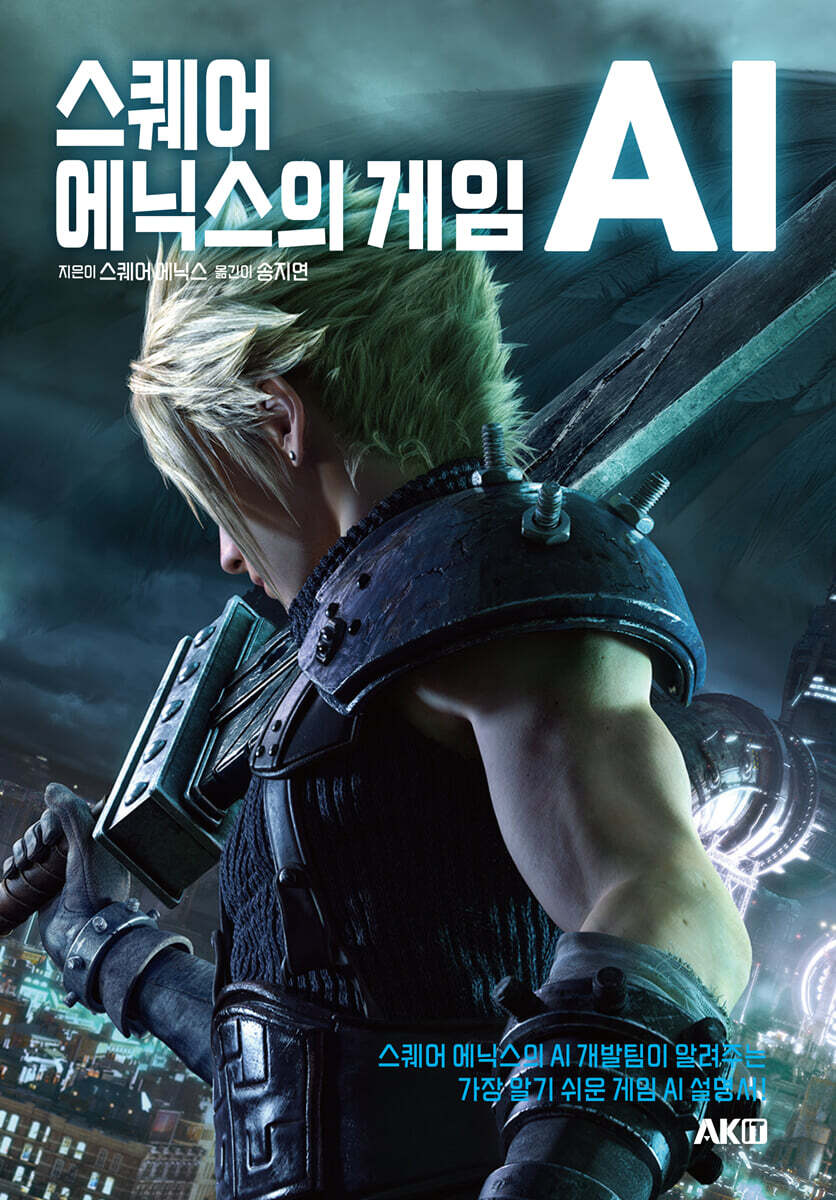
Square Enix's game AI
 |
Description
Book Introduction
The easiest-to-understand guide to game AI, from Square Enix's AI development team!
We take a look at the know-how and vision of the game developer that created numerous masterpieces such as "Final Fantasy" and "Dragon Quest."
The authors of each part have one goal in mind: to make it "unconditionally easy to understand!" and the first half of the explanations are explained in an easy-to-understand manner so that anyone can understand the content.
Of course, since the difficult content in the latter half has been explained as easily as possible, readers of this book will be able to easily understand game AI even without any background knowledge.
We take a look at the know-how and vision of the game developer that created numerous masterpieces such as "Final Fantasy" and "Dragon Quest."
The authors of each part have one goal in mind: to make it "unconditionally easy to understand!" and the first half of the explanations are explained in an easy-to-understand manner so that anyone can understand the content.
Of course, since the difficult content in the latter half has been explained as easily as possible, readers of this book will be able to easily understand game AI even without any background knowledge.
- You can preview some of the book's contents.
Preview
index
greetings
What kind of book is this?
The landscape of digital game AI
How to read this book
PART 1 GAME AI
-Entering
-Definition of character
1.
Character creation
2.
puppeteer
3.
Data, data, data!
-Navigation mesh
1.
Environmental awareness
2.
Mapping (map making)
3.
Voxelization
4.
connection
5.
Triangulation
6.
corrosion
-Path navigation, steering, and avoidance
1.
Simple query
2.
Pathfinding
3.
Steering
4.
evasion
5.
organize
-Expansion of Navimesh
1.
Off-mesh link
2.
Cost
3.
Preferences and other factors
4.
Navmesh modification
5.
Runtime generation
6.
Painting and maintenance
7.
organize
-3D navigation
1.
Full-world voxelization
2.
Problems to be solved
3.
Sparse voxel octree
dichotomy
Construction
4.
Other issues to be resolved
connection
pruning
Optimization
Streaming
Pathfinding
5.
Future Uses
Destruction and Obstacles
new environment
More sophisticated AI behavior
sound transmission
-conclusion
-Decision-making system using planning
1.
Planned AI
2.
Weaknesses of Planning AI
3.
Practical Examples of Planning AI
Responding to real-time changes
Corresponding to the vastness of state space
4.
Planning and Machine Learning
5.
The difficulties of developing new technologies
6.
Development Support Department's Work
-Character AI and animation
1.
How do we move our bodies?
2.
Problems with character AI
3.
Case studies of character AI adoption
4. MULS animation generation system
5.
organize
PART 2 CHARACTER INTERACTIONS
-What is character interaction?
A Journey Through Emotional AI: Does AI Really Feel Emotions?
1.
Has emotion existed in AI until now? The history of emotional AI.
mood, emotion, atmosphere
AI-powered characters
What I want to create
2.
Related research
Emotion model
mood model
Final decision on the model
3.
Emotional elements for games
Emotional Components
Emotion module
Event Evaluation System
Mood module
What is personality?
Expresses emotions, feelings, and personality
A way for designers to tailor characters in their own way
4.
What I Learned from Developing Emotional Components
5.
Appendix: Papers? Research
Emotion model
mood model
-Natural language processing
1.
Let's talk freely with game characters
2. Technology for handling 'language' in AI
3.
Development Case: NLP Adventure
Adventure game mode: 'Command input' and 'Command selection'
To realize the ‘new generation command input method’
Tech Preview 'SQUARE ENIX AI Tech Preview:
THE PORTOPIA SERIAL MURDER CASE' released
What's Needed for 'NLP for Digital Games'
4.
The World After ChatGPT
Games and Large-Scale Language Models
PART 3 Meta AI
-What is Meta AI?
-'Emotionally stimulating' meta AI
1.
What We Wanted to Achieve with Meta AI
2.
2D emotion map
3.
Meta AI based on two-dimensional emotion maps
4.
Estimation of Current EP
5.
Goal EP Planning
6.
Next EP updates and game adjustments
7.
Game elements that interface with meta AI
8.
A gameplay analysis tool that visualizes emotions
9.
Timeline display of emotional intensity
10.
Evaluation of Meta AI
Did the estimated results of Current EP match the players' feelings?
Could meta AI sway players' emotions?
Was the difficulty level acceptable?
Did the game designers find it easy to adjust the balance?
11.
organize
-Meta AI of shooting games
1.
How to Design Difficulty in a Shooting Game
General method
Dynamic difficulty adjustment
2.
Introducing Meta AI to a Shooting Game
2-Layer Risk Control
3 types of AI
3.
Things to keep in mind when adjusting dynamic difficulty
4.
Future tasks
5.
organize
-Meta AI of a table tennis robot
1.
Meta AI Breaks Out of the Gaming World
2.
I want to improve my skills in a fun way!
3.
I don't know how to play table tennis…
4.
What's the difference between table tennis and action games?
5.
Let's all sweat together and test the hypothesis!
6.
Operations that control the player's motivation
7.
Meta AI in action in the real world! Meta AI in a table tennis robot.
8.
Game AI, let's jump into the game world.
-Verifying the effectiveness of meta AI
1.
Correlation and causation
Correlation
causality
2.
Testing Causality: Controlled Experiments and Blinding
3.
organize
-Meta AI and Game User Experience (UX)
1.
Games that can and cannot use meta AI
2.
What is game UX?
3.
Analyzing the 'flow' of emotions
4.
A Common Language for Game UX: Pattern Language
5.
organize
-The Prospects of Meta AI
1.
Meta AI's applications are expanding.
Meta AI is coming to more games.
It is used in combination with other game AI.
It is also applied to interactions in fields other than games.
2.
Experiences realized through meta AI become deeper.
Meta AI appears before the player.
Meta AI supports player growth.
3.
Supporting the development of meta AI
Game UX becomes more visible and can be verified more objectively.
4.
organize
PART 4 DEEP LEARNING
-What is machine learning?
-Style Transfer
1.
Game AI and its emotions
2. Even AI can draw!
Style transfer and emotional expression
3.
Behind the Scenes of Image Generation AI Technology
How does AI draw images?
Structure of image data
CNN Basics
CNN in image generation
Overview of the Style Transfer Model
Injection of style information
Acquiring the Style Concept: Backpropagation of Style Transfer
Learning Hardware
inference
By the way
4. AI draws pictures
Emotions and Pictures
Emotional Components
Style selection and output
AI emotional expression through style transfer
5.
Expressing emotions through future drawings
-Automatic lip-sync animation using machine learning
1.
Representing sound as data
2.
Convert audio to images
3.
Absolute pitch and relative pitch
4.
Learn how voice changes over time
5.
Create animation
-Creating character animation using deep learning
1.
Animation production process
Specify a key frame
Bake
Perform automatic interpolation
2.
character animation
The entire process of character animation production
Character animation production
Use of motion capture
3.
Motivation for animation generation using deep learning
4.
The Basics of Character Animation Creation Using Deep Learning
5.
Research content
Premise of the study
Research subjects
Method Overview
model
6.
About current tasks and future research
7.
The Prospects of Character Animation Generation Using Deep Learning
Creating animations using natural language
Create real-time animations
Teaching AI how to act
8.
organize
TALK 1: Share Enix AI Department Roundtable - Young Members
The potential of new games born from AI
PART 5 Automating Quality Assurance Using AI
- Quality Assurance Overview
-Using game AI in QA
1.
Simulation test
2.
Exploration Test
3.
Script Test
4.
Non-invasive and invasive testing
5. ACRE's Purpose
6.
Manipulation records and replays
7.
Game State
8.
synchronization
9.
Map and route navigation
10.
quest
11.
Future tasks
-Backend system
1.
Development Background
2.
Workflow
3.
Test Scheduler
4.
Slice package and fixed package
5.
Equipment Utilization Distribution
6.
Sharing and allocating equipment
7.
Resilience (recovery function)
8.
Savings on downtime and weekends
Deleting test results based on priority
Merging and committing sessions
Automation of Windows Update
Collection and measurement of metrics (measured data)
-Bug classification and data analysis
1.
Bug classification
2.
Bug classification using fingerprints
3.
Bug Reproducibility and Resolution
4.
alarm
5.
data analysis
Metabase™
Sentry™
conclusion
TALK 2: Share Enix AI Department Roundtable - Section Leaders
Researchers' Vision for the Future of Gaming and AI
Reviews
Glossary
What kind of book is this?
The landscape of digital game AI
How to read this book
PART 1 GAME AI
-Entering
-Definition of character
1.
Character creation
2.
puppeteer
3.
Data, data, data!
-Navigation mesh
1.
Environmental awareness
2.
Mapping (map making)
3.
Voxelization
4.
connection
5.
Triangulation
6.
corrosion
-Path navigation, steering, and avoidance
1.
Simple query
2.
Pathfinding
3.
Steering
4.
evasion
5.
organize
-Expansion of Navimesh
1.
Off-mesh link
2.
Cost
3.
Preferences and other factors
4.
Navmesh modification
5.
Runtime generation
6.
Painting and maintenance
7.
organize
-3D navigation
1.
Full-world voxelization
2.
Problems to be solved
3.
Sparse voxel octree
dichotomy
Construction
4.
Other issues to be resolved
connection
pruning
Optimization
Streaming
Pathfinding
5.
Future Uses
Destruction and Obstacles
new environment
More sophisticated AI behavior
sound transmission
-conclusion
-Decision-making system using planning
1.
Planned AI
2.
Weaknesses of Planning AI
3.
Practical Examples of Planning AI
Responding to real-time changes
Corresponding to the vastness of state space
4.
Planning and Machine Learning
5.
The difficulties of developing new technologies
6.
Development Support Department's Work
-Character AI and animation
1.
How do we move our bodies?
2.
Problems with character AI
3.
Case studies of character AI adoption
4. MULS animation generation system
5.
organize
PART 2 CHARACTER INTERACTIONS
-What is character interaction?
A Journey Through Emotional AI: Does AI Really Feel Emotions?
1.
Has emotion existed in AI until now? The history of emotional AI.
mood, emotion, atmosphere
AI-powered characters
What I want to create
2.
Related research
Emotion model
mood model
Final decision on the model
3.
Emotional elements for games
Emotional Components
Emotion module
Event Evaluation System
Mood module
What is personality?
Expresses emotions, feelings, and personality
A way for designers to tailor characters in their own way
4.
What I Learned from Developing Emotional Components
5.
Appendix: Papers? Research
Emotion model
mood model
-Natural language processing
1.
Let's talk freely with game characters
2. Technology for handling 'language' in AI
3.
Development Case: NLP Adventure
Adventure game mode: 'Command input' and 'Command selection'
To realize the ‘new generation command input method’
Tech Preview 'SQUARE ENIX AI Tech Preview:
THE PORTOPIA SERIAL MURDER CASE' released
What's Needed for 'NLP for Digital Games'
4.
The World After ChatGPT
Games and Large-Scale Language Models
PART 3 Meta AI
-What is Meta AI?
-'Emotionally stimulating' meta AI
1.
What We Wanted to Achieve with Meta AI
2.
2D emotion map
3.
Meta AI based on two-dimensional emotion maps
4.
Estimation of Current EP
5.
Goal EP Planning
6.
Next EP updates and game adjustments
7.
Game elements that interface with meta AI
8.
A gameplay analysis tool that visualizes emotions
9.
Timeline display of emotional intensity
10.
Evaluation of Meta AI
Did the estimated results of Current EP match the players' feelings?
Could meta AI sway players' emotions?
Was the difficulty level acceptable?
Did the game designers find it easy to adjust the balance?
11.
organize
-Meta AI of shooting games
1.
How to Design Difficulty in a Shooting Game
General method
Dynamic difficulty adjustment
2.
Introducing Meta AI to a Shooting Game
2-Layer Risk Control
3 types of AI
3.
Things to keep in mind when adjusting dynamic difficulty
4.
Future tasks
5.
organize
-Meta AI of a table tennis robot
1.
Meta AI Breaks Out of the Gaming World
2.
I want to improve my skills in a fun way!
3.
I don't know how to play table tennis…
4.
What's the difference between table tennis and action games?
5.
Let's all sweat together and test the hypothesis!
6.
Operations that control the player's motivation
7.
Meta AI in action in the real world! Meta AI in a table tennis robot.
8.
Game AI, let's jump into the game world.
-Verifying the effectiveness of meta AI
1.
Correlation and causation
Correlation
causality
2.
Testing Causality: Controlled Experiments and Blinding
3.
organize
-Meta AI and Game User Experience (UX)
1.
Games that can and cannot use meta AI
2.
What is game UX?
3.
Analyzing the 'flow' of emotions
4.
A Common Language for Game UX: Pattern Language
5.
organize
-The Prospects of Meta AI
1.
Meta AI's applications are expanding.
Meta AI is coming to more games.
It is used in combination with other game AI.
It is also applied to interactions in fields other than games.
2.
Experiences realized through meta AI become deeper.
Meta AI appears before the player.
Meta AI supports player growth.
3.
Supporting the development of meta AI
Game UX becomes more visible and can be verified more objectively.
4.
organize
PART 4 DEEP LEARNING
-What is machine learning?
-Style Transfer
1.
Game AI and its emotions
2. Even AI can draw!
Style transfer and emotional expression
3.
Behind the Scenes of Image Generation AI Technology
How does AI draw images?
Structure of image data
CNN Basics
CNN in image generation
Overview of the Style Transfer Model
Injection of style information
Acquiring the Style Concept: Backpropagation of Style Transfer
Learning Hardware
inference
By the way
4. AI draws pictures
Emotions and Pictures
Emotional Components
Style selection and output
AI emotional expression through style transfer
5.
Expressing emotions through future drawings
-Automatic lip-sync animation using machine learning
1.
Representing sound as data
2.
Convert audio to images
3.
Absolute pitch and relative pitch
4.
Learn how voice changes over time
5.
Create animation
-Creating character animation using deep learning
1.
Animation production process
Specify a key frame
Bake
Perform automatic interpolation
2.
character animation
The entire process of character animation production
Character animation production
Use of motion capture
3.
Motivation for animation generation using deep learning
4.
The Basics of Character Animation Creation Using Deep Learning
5.
Research content
Premise of the study
Research subjects
Method Overview
model
6.
About current tasks and future research
7.
The Prospects of Character Animation Generation Using Deep Learning
Creating animations using natural language
Create real-time animations
Teaching AI how to act
8.
organize
TALK 1: Share Enix AI Department Roundtable - Young Members
The potential of new games born from AI
PART 5 Automating Quality Assurance Using AI
- Quality Assurance Overview
-Using game AI in QA
1.
Simulation test
2.
Exploration Test
3.
Script Test
4.
Non-invasive and invasive testing
5. ACRE's Purpose
6.
Manipulation records and replays
7.
Game State
8.
synchronization
9.
Map and route navigation
10.
quest
11.
Future tasks
-Backend system
1.
Development Background
2.
Workflow
3.
Test Scheduler
4.
Slice package and fixed package
5.
Equipment Utilization Distribution
6.
Sharing and allocating equipment
7.
Resilience (recovery function)
8.
Savings on downtime and weekends
Deleting test results based on priority
Merging and committing sessions
Automation of Windows Update
Collection and measurement of metrics (measured data)
-Bug classification and data analysis
1.
Bug classification
2.
Bug classification using fingerprints
3.
Bug Reproducibility and Resolution
4.
alarm
5.
data analysis
Metabase™
Sentry™
conclusion
TALK 2: Share Enix AI Department Roundtable - Section Leaders
Researchers' Vision for the Future of Gaming and AI
Reviews
Glossary
Publisher's Review
What makes a game fun? Everyone has different reasons, but most would agree that the fun comes from the various interactions between the character and the opponents in the game.
Simply put, AI in digital games makes you and your fellow characters smarter, and enemy characters more lifelike.
However, because of these abstract explanations and invisible roles, it is often difficult to easily understand what game AI is.
Accordingly, Square Enix's AI development team set out to create "the most accessible introduction to digital game AI," and directly explained the areas they were developing and researching, resulting in this book.
The authors of each part have one goal in mind: to make it "unconditionally easy to understand!" and the first half of the explanations are written in an easy-to-understand manner so that anyone can understand the content.
Of course, since the difficult content in the latter half has been explained as simply as possible, readers of this book will be able to easily understand game AI even without any background knowledge.
Since the order doesn't matter where you start, you can start slowly from the part you're curious about or have always been interested in.
Surely, readers will gain new knowledge and perspectives they have never encountered before.
Simply put, AI in digital games makes you and your fellow characters smarter, and enemy characters more lifelike.
However, because of these abstract explanations and invisible roles, it is often difficult to easily understand what game AI is.
Accordingly, Square Enix's AI development team set out to create "the most accessible introduction to digital game AI," and directly explained the areas they were developing and researching, resulting in this book.
The authors of each part have one goal in mind: to make it "unconditionally easy to understand!" and the first half of the explanations are written in an easy-to-understand manner so that anyone can understand the content.
Of course, since the difficult content in the latter half has been explained as simply as possible, readers of this book will be able to easily understand game AI even without any background knowledge.
Since the order doesn't matter where you start, you can start slowly from the part you're curious about or have always been interested in.
Surely, readers will gain new knowledge and perspectives they have never encountered before.
GOODS SPECIFICS
- Date of issue: July 10, 2025
- Page count, weight, size: 336 pages | 182*257*30mm
- ISBN13: 9791127462406
- ISBN10: 1127462407
You may also like
카테고리
korean


korean

![GQ KOREA Mark (Monthly): December [2025]](http://librairie.coreenne.fr/cdn/shop/files/8ef265dbbfbf186523ed75ba7319009d.jpg?v=1765340328&width=3840)


