

Things You Must Know About Whiskey
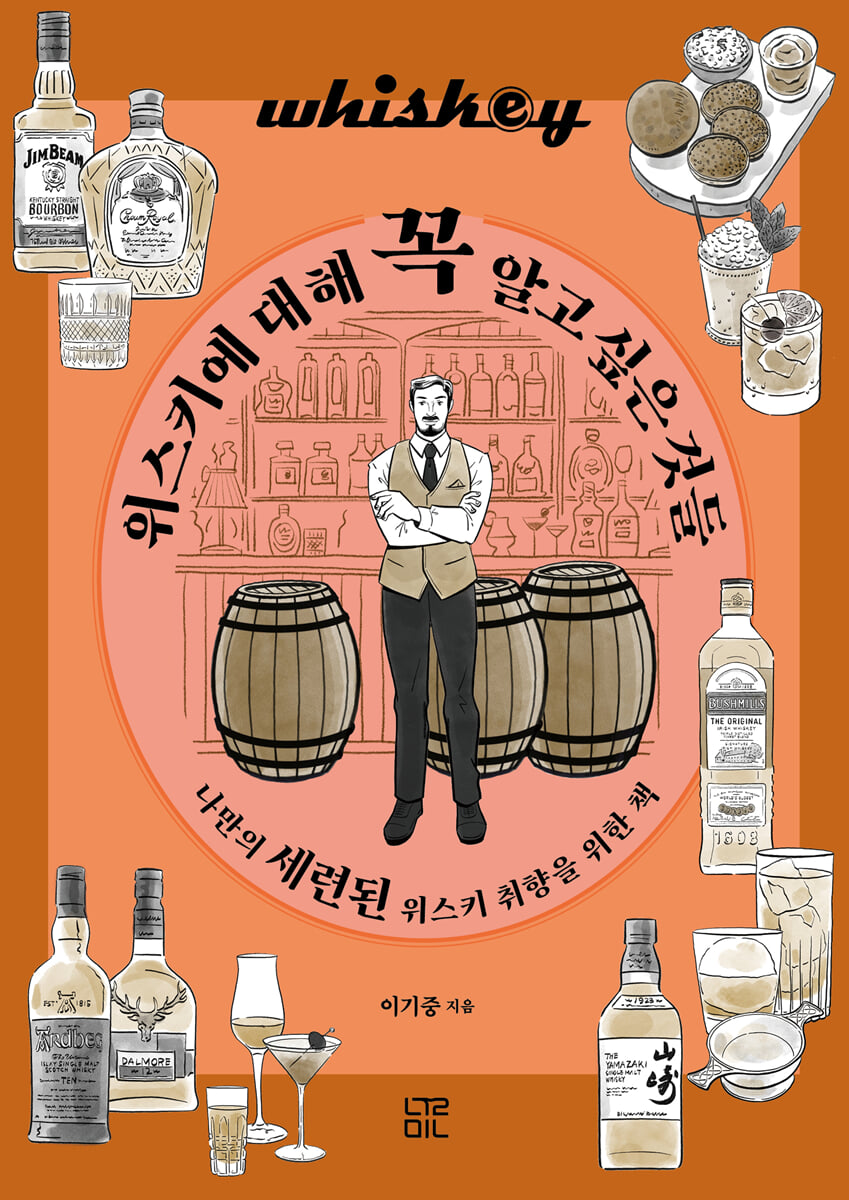 |
Description
Book Introduction
A book that introduces whiskey from the basics to expert knowledge in an easy, concise, and systematic way!
Detailed introduction to representative whiskies from 60 major distilleries around the world!
Through whiskey, your own sophisticated taste is completed with whiskey!
From A to Z of whiskey, everything you need to know about whiskey, organized in a simple and concise manner!
With the rise of solo drinking and the growing popularity of highballs among the MZ generation following COVID-19, a whiskey craze is brewing.
As whiskey has become more popular across all age groups, moving away from the perception that it is a drink for middle-aged people and an expensive, hard-to-approach alcoholic beverage, the number of enthusiasts who truly understand and enjoy whiskey is on the rise.
How can we go beyond simply consuming whiskey and develop our own refined taste? This isn't something that can be achieved simply by drinking a lot.
Above all, it is important to recognize that whiskey is a cultural product with a long tradition and to have knowledge and information about it.
This book introduces whiskey basics to expert knowledge in an easy, concise, and systematic manner, eliminating prejudice and misunderstanding about whiskey and guiding readers to enjoy a variety of whiskeys on their own and choose the one that suits them, thereby helping them develop their own unique and sophisticated whiskey taste.
First, this book systematically introduces the basic knowledge you need to know about whiskey, such as the definition and notation of whiskey, a brief history, classification, ingredients and manufacturing process of whiskey, distillation method and still, types of oak barrels, aging and maturation cellar, as well as the taste and aroma of whiskey, tasting tips, cocktails, and whiskey terminology, all of which are necessary to understand and enjoy whiskey.
Additionally, by introducing the history and characteristics of the world's five major whisky powerhouses, as well as representative distilleries and whiskies, it helps eliminate vague fears and barriers to entry regarding whisky and helps you find the whisky that's right for you, thereby helping you get closer to whisky as a social culture with a long history.
Detailed introduction to representative whiskies from 60 major distilleries around the world!
Through whiskey, your own sophisticated taste is completed with whiskey!
From A to Z of whiskey, everything you need to know about whiskey, organized in a simple and concise manner!
With the rise of solo drinking and the growing popularity of highballs among the MZ generation following COVID-19, a whiskey craze is brewing.
As whiskey has become more popular across all age groups, moving away from the perception that it is a drink for middle-aged people and an expensive, hard-to-approach alcoholic beverage, the number of enthusiasts who truly understand and enjoy whiskey is on the rise.
How can we go beyond simply consuming whiskey and develop our own refined taste? This isn't something that can be achieved simply by drinking a lot.
Above all, it is important to recognize that whiskey is a cultural product with a long tradition and to have knowledge and information about it.
This book introduces whiskey basics to expert knowledge in an easy, concise, and systematic manner, eliminating prejudice and misunderstanding about whiskey and guiding readers to enjoy a variety of whiskeys on their own and choose the one that suits them, thereby helping them develop their own unique and sophisticated whiskey taste.
First, this book systematically introduces the basic knowledge you need to know about whiskey, such as the definition and notation of whiskey, a brief history, classification, ingredients and manufacturing process of whiskey, distillation method and still, types of oak barrels, aging and maturation cellar, as well as the taste and aroma of whiskey, tasting tips, cocktails, and whiskey terminology, all of which are necessary to understand and enjoy whiskey.
Additionally, by introducing the history and characteristics of the world's five major whisky powerhouses, as well as representative distilleries and whiskies, it helps eliminate vague fears and barriers to entry regarding whisky and helps you find the whisky that's right for you, thereby helping you get closer to whisky as a social culture with a long history.
- You can preview some of the book's contents.
Preview
index
Part 1: All About Whiskey
1 How to Distinguish the World's "Alcohol" 18
2 What is whiskey? 19
3 Whiskey? Or Whiskey? 21
4 History of Distillation and Whiskey 21
5 Is whiskey the elixir of life? 23
6 What grain is whiskey made from? 23
7 The Whiskey Manufacturing Process 25
8 Does water determine the taste of whiskey? 39
9 white whiskey? 40
10 Angel's Share 41
11 Types of Oak Barrels 42
12 Aging Room 44
13. Does the aging period vary from country to country? 46
14 Should oak barrels be new or reused? 46
15 How many times can an oak barrel be reused? 47
16 barrels? Casks? 48
17 Single Barrel Whiskey 49
18 small batch 50
19 Wood Finishing 51
20 How are oak barrels made? 52
21 Coloring whiskey? 53
22 How to indicate alcohol content 54
23 Age of whiskey 55
24 Whiskey without age indication (NAS) 56
Will the taste of whiskey change in a bottle? 57
26 Peat 57
27 Single Malt Whiskey and Blended Whiskey 59
28 Key Malt 62
29 Single Malt Whiskey vs. Blended Whiskey: Which is Better? 63
30 Bottlers Whiskey 64
31 Label 64
32 Flavor Wheels 66
33 Aromas and Flavors of Whiskey 70
34 How to Drink Whiskey 73
35 Let's put a drop of water in the whiskey! 78
36 The Order of Whiskey Tasting 78
37 Vertical Tasting 81
38 drams 81
39 single, double? 82
40 whiskey glasses 82
41 flasks/skittles 84
42 Whiskey Cocktails 84
43 Snacks that Go Well with Whiskey 87
44 Scotch and Huggies 89
45 Whiskey Dinosaur Company 90
46 Whiskey Day 90
47 Cheers 91
Part 2: The World's Top 5 Whiskies
1 Scotland 95
2 Ireland 109
3 United States 114
4 Canada 122
5 Japan 125
Part 3: Whiskey and Distilleries of the World
The Granite City
1 Ardbeg Distillery 134
2 Auchentoshan Distillery 136
3 Balvenie Distillery 138
4 BenRiach Distillery 140
5 Bowmore Distillery 142
6 Bruichladdich Distillery 144
7 Bunnahabhain Distillery 146
8 Caol Ila Distillery 148
9 Cragganmore Distillery 150
10 Dalmore Distillery 152
11 Dalwhinnie Distillery 154
12 Glenfarclas Distillery 156
13 Glenfiddich Distillery 158
14 Glengoyne Distillery 160
15 The GlenGrant Distillery 162
16 Glenkinchie Distillery 164
17 The Glenlivet Distillery 166
18 Glenmorangie Distillery 168
19 Isle of Arran Distillery 170
20 Highland Park Distillery 172
21 Isle of Jura Distillery 174
22 Kilchoman Distillery 176
23 Lagavulin Distillery 178
24 Laphroaig Distillery 180
25 The Macallan Distillery 182
26 Oban Distillery 184
27 Old Pulteney Distillery 186
28 Springbank Distillery 188
29 Talisker Distillery 190
30 Ballantine's 192
31 Chivas Regal 194
32 Cutty Sark 196
33 Dewar's 198
34 The Famous Grouse 200
35 Grand Old Parr 202
36 J&B 204
37 Johnnie Walker 206
38 Monkey Shoulder 208
Ireland
1 Old Bushmills Distillery 212
2 Connemara 214
3 Jameson 216
4 Tullamore DEW
218
USA
1 Buffalo Trace Distillery 222
Four Roses Distillery 224
3 Jack Daniel's Distillery 226
4 Jim Beam Distillery 228
5 Knob Creek 230
6 Maker's Mark Distillery 232
7 Michter's Distillery 234
8 Wild Turkey Distillery 236
9 Woodford Reserve Distillery 238
Canada
1 Canadian Club 242
2 Crown Royal 244
japan
1 Suntory Yamazaki Distillery 248
2 Suntory Hakushu Distillery 250
3 Hibiki Japanese Harmony 252
4 Nikka Yoichi Distillery 254
5 Nikka Miyagikyo Distillery 256
6 Taketsuru 258
7 Fujisanroku 260
1 How to Distinguish the World's "Alcohol" 18
2 What is whiskey? 19
3 Whiskey? Or Whiskey? 21
4 History of Distillation and Whiskey 21
5 Is whiskey the elixir of life? 23
6 What grain is whiskey made from? 23
7 The Whiskey Manufacturing Process 25
8 Does water determine the taste of whiskey? 39
9 white whiskey? 40
10 Angel's Share 41
11 Types of Oak Barrels 42
12 Aging Room 44
13. Does the aging period vary from country to country? 46
14 Should oak barrels be new or reused? 46
15 How many times can an oak barrel be reused? 47
16 barrels? Casks? 48
17 Single Barrel Whiskey 49
18 small batch 50
19 Wood Finishing 51
20 How are oak barrels made? 52
21 Coloring whiskey? 53
22 How to indicate alcohol content 54
23 Age of whiskey 55
24 Whiskey without age indication (NAS) 56
Will the taste of whiskey change in a bottle? 57
26 Peat 57
27 Single Malt Whiskey and Blended Whiskey 59
28 Key Malt 62
29 Single Malt Whiskey vs. Blended Whiskey: Which is Better? 63
30 Bottlers Whiskey 64
31 Label 64
32 Flavor Wheels 66
33 Aromas and Flavors of Whiskey 70
34 How to Drink Whiskey 73
35 Let's put a drop of water in the whiskey! 78
36 The Order of Whiskey Tasting 78
37 Vertical Tasting 81
38 drams 81
39 single, double? 82
40 whiskey glasses 82
41 flasks/skittles 84
42 Whiskey Cocktails 84
43 Snacks that Go Well with Whiskey 87
44 Scotch and Huggies 89
45 Whiskey Dinosaur Company 90
46 Whiskey Day 90
47 Cheers 91
Part 2: The World's Top 5 Whiskies
1 Scotland 95
2 Ireland 109
3 United States 114
4 Canada 122
5 Japan 125
Part 3: Whiskey and Distilleries of the World
The Granite City
1 Ardbeg Distillery 134
2 Auchentoshan Distillery 136
3 Balvenie Distillery 138
4 BenRiach Distillery 140
5 Bowmore Distillery 142
6 Bruichladdich Distillery 144
7 Bunnahabhain Distillery 146
8 Caol Ila Distillery 148
9 Cragganmore Distillery 150
10 Dalmore Distillery 152
11 Dalwhinnie Distillery 154
12 Glenfarclas Distillery 156
13 Glenfiddich Distillery 158
14 Glengoyne Distillery 160
15 The GlenGrant Distillery 162
16 Glenkinchie Distillery 164
17 The Glenlivet Distillery 166
18 Glenmorangie Distillery 168
19 Isle of Arran Distillery 170
20 Highland Park Distillery 172
21 Isle of Jura Distillery 174
22 Kilchoman Distillery 176
23 Lagavulin Distillery 178
24 Laphroaig Distillery 180
25 The Macallan Distillery 182
26 Oban Distillery 184
27 Old Pulteney Distillery 186
28 Springbank Distillery 188
29 Talisker Distillery 190
30 Ballantine's 192
31 Chivas Regal 194
32 Cutty Sark 196
33 Dewar's 198
34 The Famous Grouse 200
35 Grand Old Parr 202
36 J&B 204
37 Johnnie Walker 206
38 Monkey Shoulder 208
Ireland
1 Old Bushmills Distillery 212
2 Connemara 214
3 Jameson 216
4 Tullamore DEW
218
USA
1 Buffalo Trace Distillery 222
Four Roses Distillery 224
3 Jack Daniel's Distillery 226
4 Jim Beam Distillery 228
5 Knob Creek 230
6 Maker's Mark Distillery 232
7 Michter's Distillery 234
8 Wild Turkey Distillery 236
9 Woodford Reserve Distillery 238
Canada
1 Canadian Club 242
2 Crown Royal 244
japan
1 Suntory Yamazaki Distillery 248
2 Suntory Hakushu Distillery 250
3 Hibiki Japanese Harmony 252
4 Nikka Yoichi Distillery 254
5 Nikka Miyagikyo Distillery 256
6 Taketsuru 258
7 Fujisanroku 260
Detailed image

Into the book
The idea I've always had in mind while writing this book was, "Let's cover whiskey from A to Z in a simple and concise manner, and systematically, from the basics to specialized knowledge."
--- p.6
What is the correct spelling for whiskey? Both 'whisky' and 'whiskey' are correct.
However, the notation method differs from country to country.
It is commonly called 'whisky' in the UK, Canada and Japan, and 'whiskey' in Ireland and the US.
--- p.21
Bourbon whiskey distilleries use different amounts of grain when making their whiskey, and this grain blend is called a "mash bill."
For example, the mash bill for bourbon whiskey made at the Jim Beam Distillery in Kentucky is made up of 77% corn, 13% rye, and 10% malted barley.
--- p.24
The most common wood used for aging whiskey is oak.
That's why whiskey maturation barrels are usually called 'oak barrels/oak casks'.
Meanwhile, oak can be said to have all the characteristics necessary for aging whiskey.
Oak wood is hard and durable, rich in compounds that impart flavor to whiskey, and is readily available.
--- p.35
Angel's share is usually calculated at around 3% per year, but the amount of angel's share varies depending on the type of oak barrel and the location of the whiskey maturation cellar.
[...] The distillery on the coastal island of Islay has high humidity and relatively constant temperatures year-round, resulting in an annual Angel's Share of only about 1%.
--- p.41
If single barrel whiskey is 'whiskey bottled and commercialized from whiskey contained in one oak cask', small batch (batch means 'oak cask') refers to 'whiskey bottled by mixing whiskey contained in a small number of oak cask'.
--- p.50
The main malt whisky used in blending blended whisky is called 'Key Malt'.
Because key malts play an important role in determining the taste of whisky, whisky from the Isle of Islay, which has a strong character, is often used in blended Scotch whisky.
--- p.62
Drinking whiskey without mixing it with anything is called 'straight', and in England it is also called 'neat'.
This is a great way to enjoy the unique flavor of single malt whiskey, and is usually enjoyed in a shot glass or tulip-shaped glass, about 30ml.
--- p.73
A term referring to the amount of whiskey poured into a glass.
Single is 30ml, double is 60ml, which is twice the size of single.
A single is sometimes called a 'one shot' or 'one finger' because it is the width of one knuckle of the index finger when placed in a tall tumbler glass.
--- p.82
There were also people who amassed enormous wealth during the Prohibition era, one of whom was Italian mobster Al Capone.
He is famous for making a fortune by smuggling and trafficking whiskey into Canada during Prohibition.
--- p.116
The history of Japanese whiskey began in earnest in the mid-1920s, and at this time, two important figures who shaped the history of Japanese whiskey, Shinjiro Torii and Masataka Taketsuru, appeared.
--- p.125
Ardbeg means “little headland” in Gaelic, and indeed, the Ardbeg Distillery is situated on a small, rocky headland.
--- p.134
Kalila Whiskey is characterized by a mild peat aroma and a spicy note reminiscent of herbs and nuts, and pairs well with seafood or smoked salmon.
It is also well known as Johnnie Walker's key malt.
--- p.148
Glenfiddich means “valley of the deer” in Gaelic, and the bottle label features an antler-bearing deer. A stream, a tributary of the River Fiddich, flows beside the distillery.
--- p.158
The Isle of Arran, located off the west of Scotland, is called “Scotland in miniature” because of its resemblance to Scottish scenery.
Additionally, the Isle of Arran was known as the “Island of Whiskey” with over 50 distilleries in the 19th century, and Arran whiskey was once considered the best alcohol in Scotland, to the point that the term “Arran Water” was once used synonymously with whiskey.
--- p.170
The Old Bushmills Distillery, located in the village of Bushmills in County Antrim, Northern Ireland, is renowned as the world's oldest distillery, having received the first distillation license from King James I of England in 1608.
--- p.212
Paul Jones Jr. proposed to a beautiful woman at a ball, and she promised to wear a rose to the ball as a token of her acceptance. It is said that she showed up at the next ball wearing a corsage with four red roses on her chest.
For this reason, the Four Roses Distillery began using four roses as its trademark in 1888.
--- p.224
1939 was the year that King George VI and Queen Elizabeth II of England visited Canada for the first time as British monarchs, and Crown Royal was the whisky that Samuel Bronfman, the chairman of Seagram, created as a gift to them.
--- p.244
Hibiki is a blend of Suntory's Yamazaki whisky, Hakushu whisky, and Chita's malt and grain whisky.
In 2009, the 17-year and 21-year old whiskies were released, and in 2015, a whisky without an age indication was released on the market.
The 24-sided bottle symbolizing the 24 solar terms is attractive.
--- p.252
Whisky from the Kirin Fuji Gotemba Distillery, located in Gotemba City, southeast of Mt. Fuji.
It is said that the reason Kirin built a distillery here is because the climate conditions in Gotemba are similar to those in Scotland.
--- p.6
What is the correct spelling for whiskey? Both 'whisky' and 'whiskey' are correct.
However, the notation method differs from country to country.
It is commonly called 'whisky' in the UK, Canada and Japan, and 'whiskey' in Ireland and the US.
--- p.21
Bourbon whiskey distilleries use different amounts of grain when making their whiskey, and this grain blend is called a "mash bill."
For example, the mash bill for bourbon whiskey made at the Jim Beam Distillery in Kentucky is made up of 77% corn, 13% rye, and 10% malted barley.
--- p.24
The most common wood used for aging whiskey is oak.
That's why whiskey maturation barrels are usually called 'oak barrels/oak casks'.
Meanwhile, oak can be said to have all the characteristics necessary for aging whiskey.
Oak wood is hard and durable, rich in compounds that impart flavor to whiskey, and is readily available.
--- p.35
Angel's share is usually calculated at around 3% per year, but the amount of angel's share varies depending on the type of oak barrel and the location of the whiskey maturation cellar.
[...] The distillery on the coastal island of Islay has high humidity and relatively constant temperatures year-round, resulting in an annual Angel's Share of only about 1%.
--- p.41
If single barrel whiskey is 'whiskey bottled and commercialized from whiskey contained in one oak cask', small batch (batch means 'oak cask') refers to 'whiskey bottled by mixing whiskey contained in a small number of oak cask'.
--- p.50
The main malt whisky used in blending blended whisky is called 'Key Malt'.
Because key malts play an important role in determining the taste of whisky, whisky from the Isle of Islay, which has a strong character, is often used in blended Scotch whisky.
--- p.62
Drinking whiskey without mixing it with anything is called 'straight', and in England it is also called 'neat'.
This is a great way to enjoy the unique flavor of single malt whiskey, and is usually enjoyed in a shot glass or tulip-shaped glass, about 30ml.
--- p.73
A term referring to the amount of whiskey poured into a glass.
Single is 30ml, double is 60ml, which is twice the size of single.
A single is sometimes called a 'one shot' or 'one finger' because it is the width of one knuckle of the index finger when placed in a tall tumbler glass.
--- p.82
There were also people who amassed enormous wealth during the Prohibition era, one of whom was Italian mobster Al Capone.
He is famous for making a fortune by smuggling and trafficking whiskey into Canada during Prohibition.
--- p.116
The history of Japanese whiskey began in earnest in the mid-1920s, and at this time, two important figures who shaped the history of Japanese whiskey, Shinjiro Torii and Masataka Taketsuru, appeared.
--- p.125
Ardbeg means “little headland” in Gaelic, and indeed, the Ardbeg Distillery is situated on a small, rocky headland.
--- p.134
Kalila Whiskey is characterized by a mild peat aroma and a spicy note reminiscent of herbs and nuts, and pairs well with seafood or smoked salmon.
It is also well known as Johnnie Walker's key malt.
--- p.148
Glenfiddich means “valley of the deer” in Gaelic, and the bottle label features an antler-bearing deer. A stream, a tributary of the River Fiddich, flows beside the distillery.
--- p.158
The Isle of Arran, located off the west of Scotland, is called “Scotland in miniature” because of its resemblance to Scottish scenery.
Additionally, the Isle of Arran was known as the “Island of Whiskey” with over 50 distilleries in the 19th century, and Arran whiskey was once considered the best alcohol in Scotland, to the point that the term “Arran Water” was once used synonymously with whiskey.
--- p.170
The Old Bushmills Distillery, located in the village of Bushmills in County Antrim, Northern Ireland, is renowned as the world's oldest distillery, having received the first distillation license from King James I of England in 1608.
--- p.212
Paul Jones Jr. proposed to a beautiful woman at a ball, and she promised to wear a rose to the ball as a token of her acceptance. It is said that she showed up at the next ball wearing a corsage with four red roses on her chest.
For this reason, the Four Roses Distillery began using four roses as its trademark in 1888.
--- p.224
1939 was the year that King George VI and Queen Elizabeth II of England visited Canada for the first time as British monarchs, and Crown Royal was the whisky that Samuel Bronfman, the chairman of Seagram, created as a gift to them.
--- p.244
Hibiki is a blend of Suntory's Yamazaki whisky, Hakushu whisky, and Chita's malt and grain whisky.
In 2009, the 17-year and 21-year old whiskies were released, and in 2015, a whisky without an age indication was released on the market.
The 24-sided bottle symbolizing the 24 solar terms is attractive.
--- p.252
Whisky from the Kirin Fuji Gotemba Distillery, located in Gotemba City, southeast of Mt. Fuji.
It is said that the reason Kirin built a distillery here is because the climate conditions in Gotemba are similar to those in Scotland.
--- p.260
Publisher's Review
From A to Z of whiskey, everything you need to know about whiskey, organized in a simple and concise manner!
With the rise of solo drinking and the growing popularity of highballs among the MZ generation following COVID-19, a whiskey craze is brewing.
As whiskey has become more popular across all age groups, moving away from the perception that it is a drink for middle-aged people and an expensive, hard-to-approach alcoholic beverage, the number of enthusiasts who truly understand and enjoy whiskey is on the rise.
How can we go beyond simply consuming whiskey and develop our own refined taste? This isn't something that can be achieved simply by drinking a lot.
Above all, it is important to recognize that whiskey is a cultural product with a long tradition and to have knowledge and information about it.
This book introduces whiskey basics to expert knowledge in an easy, concise, and systematic manner, eliminating prejudice and misunderstanding about whiskey and guiding readers to enjoy a variety of whiskeys on their own and choose the one that suits them, thereby helping them develop their own unique and sophisticated whiskey taste.
First, this book systematically introduces the basic knowledge you need to know about whiskey, such as the definition and notation of whiskey, a brief history, classification, ingredients and manufacturing process of whiskey, distillation method and still, types of oak barrels, aging and maturation cellar, as well as the taste and aroma of whiskey, tasting tips, cocktails, and whiskey terminology, all of which are necessary to understand and enjoy whiskey.
Additionally, by introducing the history and characteristics of the world's five major whisky powerhouses, as well as representative distilleries and whiskies, it helps eliminate vague fears and barriers to entry regarding whisky and helps you find the whisky that's right for you, thereby helping you get closer to whisky as a social culture with a long history.
Professor Lee Ki-jung, author of "European Beer Travelogue," which sparked a beer craze in Korea, shares his tips for creating your own sophisticated whiskey taste.
The author of this book, Professor Lee Ki-jung, is a self-proclaimed “Food Hunter” and “Beer Hunter.” He is an anthropologist who travels to the fields of food culture around the world, including traditional Korean food, to study it.
Based on his special love and extensive knowledge of food and alcohol, he is actively engaged in lectures and writing, and has already played a major role in broadening the horizons of domestic beer culture by creating a beer craze in Korea with his book, "European Beer Travelogue."
The author personally shared with people the common sense and history of whiskey, how to taste it, and interesting stories about it. At the request of a more systematic book, he wrote a whiskey guide for both beginners and enthusiasts based on the knowledge and experience he gained while visiting and tasting famous distilleries and bars in Scotland, Ireland, the United States, Canada, and Japan.
This book systematically and well organizes the questions that anyone who wants to truly enjoy whiskey would be curious about.
Additionally, specialized whiskey terminology and further knowledge are organized in a separate box to provide more in-depth information.
In addition, the illustrations placed throughout the book help you understand common sense about whiskey more intuitively, such as the whiskey manufacturing process, oak barrels and whiskey glasses, and the locations of whiskey distilleries around the world.
By selecting excellent whiskies from 36 Scottish distilleries including “Ardbeg”, “Balvenie”, “Craganmore”, “The Macallan”, “Kilhoman”, and “Oban”, 4 Irish distilleries including “Old Bushmills” and “Connemara”, 9 American distilleries including “Buffalo Trace”, “Four Roses”, “Maker’s Mark”, and “Wild Turkey”, 2 Canadian distilleries, and 7 Japanese distilleries including “Suntory Yamazaki”, “Hibiki”, and “Kikka Miyagikyo”, we intend to help you find the whisky that suits you and enjoy the taste of various whiskies by introducing 60 types of whisky representing the world’s top 5 whisky producing countries along with actual photos of bottles.
Includes 60 famous whiskey distilleries and their signature whiskies from around the world!
From whiskey common sense to whiskeys and distilleries around the world, all in one book!
This book is divided into three parts. Part 1, “All About Whiskey,” contains basic whiskey knowledge and information that is useful to know when enjoying whiskey, such as the definition and notation of whiskey, a brief history, whiskey terminology, whiskey ingredients and manufacturing process, distillation method and still, types of oak barrels, aging and maturation cellar, whiskey classification, how to read labels, the taste and aroma of whiskey, tasting tips, and cocktails.
Part 2, “The World’s Top 5 Whiskies,” covers the history and characteristics of whisky from the world’s top five whisky powerhouses: Scotland, Ireland, the United States, Canada, and Japan.
Part 3, “Whiskey and Distilleries of the World,” introduces representative distilleries and whiskeys from each of the world’s five major whiskey powerhouses.
We've organized it so you can see information about the whiskey at a glance, including photos of the whiskey representing the distillery, its characteristics, tasting notes, and other recommended whiskeys, so you can look them up whenever you need them.
This book will help anyone who wants to enjoy whiskey but feels like there's some kind of barrier to entry, anyone who's interested in whiskey and wants to learn the basics step by step, or anyone who enjoys whiskey and drinks it often but wants to learn more in-depth and systematic knowledge about it, become a more sophisticated and sophisticated whiskey lover.
Additionally, reading the same author's travelogue, "Whiskey Road" (Nulmin, 2024), which was published simultaneously with this book, will provide an opportunity to experience the whiskey culture more vividly.
With the rise of solo drinking and the growing popularity of highballs among the MZ generation following COVID-19, a whiskey craze is brewing.
As whiskey has become more popular across all age groups, moving away from the perception that it is a drink for middle-aged people and an expensive, hard-to-approach alcoholic beverage, the number of enthusiasts who truly understand and enjoy whiskey is on the rise.
How can we go beyond simply consuming whiskey and develop our own refined taste? This isn't something that can be achieved simply by drinking a lot.
Above all, it is important to recognize that whiskey is a cultural product with a long tradition and to have knowledge and information about it.
This book introduces whiskey basics to expert knowledge in an easy, concise, and systematic manner, eliminating prejudice and misunderstanding about whiskey and guiding readers to enjoy a variety of whiskeys on their own and choose the one that suits them, thereby helping them develop their own unique and sophisticated whiskey taste.
First, this book systematically introduces the basic knowledge you need to know about whiskey, such as the definition and notation of whiskey, a brief history, classification, ingredients and manufacturing process of whiskey, distillation method and still, types of oak barrels, aging and maturation cellar, as well as the taste and aroma of whiskey, tasting tips, cocktails, and whiskey terminology, all of which are necessary to understand and enjoy whiskey.
Additionally, by introducing the history and characteristics of the world's five major whisky powerhouses, as well as representative distilleries and whiskies, it helps eliminate vague fears and barriers to entry regarding whisky and helps you find the whisky that's right for you, thereby helping you get closer to whisky as a social culture with a long history.
Professor Lee Ki-jung, author of "European Beer Travelogue," which sparked a beer craze in Korea, shares his tips for creating your own sophisticated whiskey taste.
The author of this book, Professor Lee Ki-jung, is a self-proclaimed “Food Hunter” and “Beer Hunter.” He is an anthropologist who travels to the fields of food culture around the world, including traditional Korean food, to study it.
Based on his special love and extensive knowledge of food and alcohol, he is actively engaged in lectures and writing, and has already played a major role in broadening the horizons of domestic beer culture by creating a beer craze in Korea with his book, "European Beer Travelogue."
The author personally shared with people the common sense and history of whiskey, how to taste it, and interesting stories about it. At the request of a more systematic book, he wrote a whiskey guide for both beginners and enthusiasts based on the knowledge and experience he gained while visiting and tasting famous distilleries and bars in Scotland, Ireland, the United States, Canada, and Japan.
This book systematically and well organizes the questions that anyone who wants to truly enjoy whiskey would be curious about.
Additionally, specialized whiskey terminology and further knowledge are organized in a separate box to provide more in-depth information.
In addition, the illustrations placed throughout the book help you understand common sense about whiskey more intuitively, such as the whiskey manufacturing process, oak barrels and whiskey glasses, and the locations of whiskey distilleries around the world.
By selecting excellent whiskies from 36 Scottish distilleries including “Ardbeg”, “Balvenie”, “Craganmore”, “The Macallan”, “Kilhoman”, and “Oban”, 4 Irish distilleries including “Old Bushmills” and “Connemara”, 9 American distilleries including “Buffalo Trace”, “Four Roses”, “Maker’s Mark”, and “Wild Turkey”, 2 Canadian distilleries, and 7 Japanese distilleries including “Suntory Yamazaki”, “Hibiki”, and “Kikka Miyagikyo”, we intend to help you find the whisky that suits you and enjoy the taste of various whiskies by introducing 60 types of whisky representing the world’s top 5 whisky producing countries along with actual photos of bottles.
Includes 60 famous whiskey distilleries and their signature whiskies from around the world!
From whiskey common sense to whiskeys and distilleries around the world, all in one book!
This book is divided into three parts. Part 1, “All About Whiskey,” contains basic whiskey knowledge and information that is useful to know when enjoying whiskey, such as the definition and notation of whiskey, a brief history, whiskey terminology, whiskey ingredients and manufacturing process, distillation method and still, types of oak barrels, aging and maturation cellar, whiskey classification, how to read labels, the taste and aroma of whiskey, tasting tips, and cocktails.
Part 2, “The World’s Top 5 Whiskies,” covers the history and characteristics of whisky from the world’s top five whisky powerhouses: Scotland, Ireland, the United States, Canada, and Japan.
Part 3, “Whiskey and Distilleries of the World,” introduces representative distilleries and whiskeys from each of the world’s five major whiskey powerhouses.
We've organized it so you can see information about the whiskey at a glance, including photos of the whiskey representing the distillery, its characteristics, tasting notes, and other recommended whiskeys, so you can look them up whenever you need them.
This book will help anyone who wants to enjoy whiskey but feels like there's some kind of barrier to entry, anyone who's interested in whiskey and wants to learn the basics step by step, or anyone who enjoys whiskey and drinks it often but wants to learn more in-depth and systematic knowledge about it, become a more sophisticated and sophisticated whiskey lover.
Additionally, reading the same author's travelogue, "Whiskey Road" (Nulmin, 2024), which was published simultaneously with this book, will provide an opportunity to experience the whiskey culture more vividly.
GOODS SPECIFICS
- Date of issue: January 31, 2024
- Page count, weight, size: 264 pages | 340g | 133*188*15mm
- ISBN13: 9791187750710
- ISBN10: 1187750719
You may also like
카테고리
korean


korean

![GQ KOREA Mark (Monthly): December [2025]](http://librairie.coreenne.fr/cdn/shop/files/8ef265dbbfbf186523ed75ba7319009d.jpg?v=1765340328&width=3840)


