

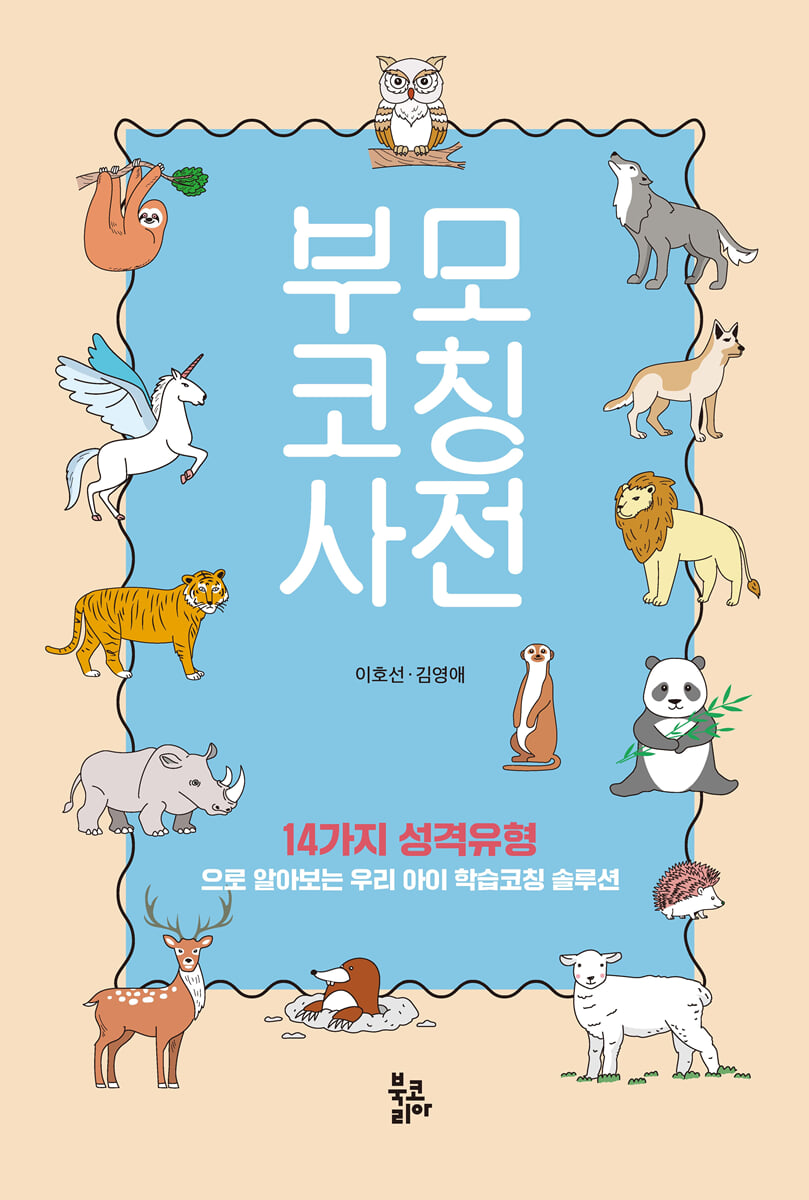
Parent Coaching Dictionary
 |
Description
Book Introduction
Does your child's learning method differ depending on their personality type?
“How can I help my child, who is like a rhinoceros and acts before thinking, learn?”
“Try using the ‘short-term resolution method’ of repeating the resolution for three days!”
The era of 20th-century teaching has ended and the era of 21st-century coaching has begun.
Parents are filled with a mixture of awe and worry when faced with an evolved human race where everyone is given the same information and their children can access it much faster than their parents.
I am amazed by my child's intelligence, but at the same time, I am losing my hair due to laziness that is ruining my intelligence.
There are many families where children do well on their own, but many parents are disappointed because their children are not like that, but I can say with certainty that in every family, children are a mystery to their parents.
21st century children, born with semiconductors, are an insurmountable puzzle to their 20th century parents, a homework assignment they may or may not know about.
We think we know everything about our children, but when we turn our heads for a moment, we see that these days' Alpha Generation children are unfamiliar, like people we've met for the first time.
What will the beta generation we will soon meet be like?
I've lost my way countless times in the jungle of parenting, but parenting is about tripping over the same rocks and getting lost even on the paths you've already walked.
The first and second children are completely different beings, and during infancy and childhood they appear to be mutated humans, and during adolescence they may not even seem human.
Not to mention the other aspects of the second and third.
When my spouse's dynamics and my own dynamics are mixed together, the family often becomes a mess.
Other houses are similar, but they just don't want to get caught.
As your child embarks on a long journey of learning, the world of parenting intersects with the world of learning, and soon a new Big Bang begins in the world of parenting.
A child who was clearly smart, excellent, and had his own unique shine suddenly loses interest in studying, hates going to school, is always intimidated by test results, and eventually fights with his parents due to personality differences and is bullied academically as he goes through puberty.
How wonderful it would be to have a learning coach in these moments, but private coaching is too expensive, and I don't know where to go to get a clear, long-term coaching that can identify my child's hidden complexes and potential talents and willingly help them develop them.
Couldn't parents provide tailored coaching for their children, who struggle to cope with their temperament and whose grades are often poor? Even if they're already doing well, can't we recognize their potential, understand their unique characteristics, and empower them to leap forward? If parents could understand their children's unique characteristics and coach them accordingly, how wonderful would it be if we could foster their initiative and even help them improve their grades on their own?
This book helps children adapt to their personality as they grow, and suggests learning coaching methods tailored to their child's personality traits to learning coaching experts, education experts, and parents.
We explain a total of 14 personality types and examine the characteristics of each personality type in detail, while suggesting learning coaching for parents according to each personality type.
Based on the four types of behavioral, normative, investigative, and idealistic types, a total of 14 personality types are presented through various combinations, and it also suggests children's unique characteristics, learning coaching methods, and occupations that fit them.
In particular, it provides an easy-to-understand explanation of how each type appears in reality and the process of dealing with it through examples.
I hope this book will give wings to our growing children and bring help and joy to the lives of parents who are still struggling with the so-called "no-work" parenting.
“How can I help my child, who is like a rhinoceros and acts before thinking, learn?”
“Try using the ‘short-term resolution method’ of repeating the resolution for three days!”
The era of 20th-century teaching has ended and the era of 21st-century coaching has begun.
Parents are filled with a mixture of awe and worry when faced with an evolved human race where everyone is given the same information and their children can access it much faster than their parents.
I am amazed by my child's intelligence, but at the same time, I am losing my hair due to laziness that is ruining my intelligence.
There are many families where children do well on their own, but many parents are disappointed because their children are not like that, but I can say with certainty that in every family, children are a mystery to their parents.
21st century children, born with semiconductors, are an insurmountable puzzle to their 20th century parents, a homework assignment they may or may not know about.
We think we know everything about our children, but when we turn our heads for a moment, we see that these days' Alpha Generation children are unfamiliar, like people we've met for the first time.
What will the beta generation we will soon meet be like?
I've lost my way countless times in the jungle of parenting, but parenting is about tripping over the same rocks and getting lost even on the paths you've already walked.
The first and second children are completely different beings, and during infancy and childhood they appear to be mutated humans, and during adolescence they may not even seem human.
Not to mention the other aspects of the second and third.
When my spouse's dynamics and my own dynamics are mixed together, the family often becomes a mess.
Other houses are similar, but they just don't want to get caught.
As your child embarks on a long journey of learning, the world of parenting intersects with the world of learning, and soon a new Big Bang begins in the world of parenting.
A child who was clearly smart, excellent, and had his own unique shine suddenly loses interest in studying, hates going to school, is always intimidated by test results, and eventually fights with his parents due to personality differences and is bullied academically as he goes through puberty.
How wonderful it would be to have a learning coach in these moments, but private coaching is too expensive, and I don't know where to go to get a clear, long-term coaching that can identify my child's hidden complexes and potential talents and willingly help them develop them.
Couldn't parents provide tailored coaching for their children, who struggle to cope with their temperament and whose grades are often poor? Even if they're already doing well, can't we recognize their potential, understand their unique characteristics, and empower them to leap forward? If parents could understand their children's unique characteristics and coach them accordingly, how wonderful would it be if we could foster their initiative and even help them improve their grades on their own?
This book helps children adapt to their personality as they grow, and suggests learning coaching methods tailored to their child's personality traits to learning coaching experts, education experts, and parents.
We explain a total of 14 personality types and examine the characteristics of each personality type in detail, while suggesting learning coaching for parents according to each personality type.
Based on the four types of behavioral, normative, investigative, and idealistic types, a total of 14 personality types are presented through various combinations, and it also suggests children's unique characteristics, learning coaching methods, and occupations that fit them.
In particular, it provides an easy-to-understand explanation of how each type appears in reality and the process of dealing with it through examples.
I hope this book will give wings to our growing children and bring help and joy to the lives of parents who are still struggling with the so-called "no-work" parenting.
- You can preview some of the book's contents.
Preview
index
Introduction: Does my child's learning method differ depending on his or her personality type?
ONE code basic type
1.
Action type: A child who acts before thinking
"Unpredictable yet brilliant reflexes"
2.
Normative: A child who tests a stone bridge before crossing it
“Perfectionist but timid”
3.
Exploratory: A child full of curiosity and quirky ideas
“Idea Bank, but Biased”
4.
Ideal type: A humane and affectionate child
"Full of distractions, but rich in sensitivity."
TWO code combination type
5.
Normative type: A child for whom compliance with law and order is important.
"Apostle of Justice, Prosecutor Style"
6.
Action-Exploration Type: A child who only does what he likes
“The Lupin-Catching Profiler”
7.
Behavioral Ideal Type: A Child Who Only Becomes Creative When They're Having Fun
“Celebrities who capture attention”
8.
Norm-seeking type: A cold and indifferent but accurate child
“Judges who implement justice”
9.
Ideal type: A kind and considerate child
“A compassionate and dedicated social worker.”
10.
Ideal explorer: A slow but creative child
AI experts with unique personalities
THREE code combination
11.
Behavioral Norm Exploration Type: A child who always moves forward toward his or her goal.
"Best execution, best ruler"
12.
Ideal behavioral norm: A trustworthy and loyal child
“Natural civil servant style”
13.
Action Exploration Ideal Type: The Child Who Will Change the World
“A multi-talented, all-rounder CEO”
14.
Ideal type of normative inquiry: A cultured and elegant child
References
ONE code basic type
1.
Action type: A child who acts before thinking
"Unpredictable yet brilliant reflexes"
2.
Normative: A child who tests a stone bridge before crossing it
“Perfectionist but timid”
3.
Exploratory: A child full of curiosity and quirky ideas
“Idea Bank, but Biased”
4.
Ideal type: A humane and affectionate child
"Full of distractions, but rich in sensitivity."
TWO code combination type
5.
Normative type: A child for whom compliance with law and order is important.
"Apostle of Justice, Prosecutor Style"
6.
Action-Exploration Type: A child who only does what he likes
“The Lupin-Catching Profiler”
7.
Behavioral Ideal Type: A Child Who Only Becomes Creative When They're Having Fun
“Celebrities who capture attention”
8.
Norm-seeking type: A cold and indifferent but accurate child
“Judges who implement justice”
9.
Ideal type: A kind and considerate child
“A compassionate and dedicated social worker.”
10.
Ideal explorer: A slow but creative child
AI experts with unique personalities
THREE code combination
11.
Behavioral Norm Exploration Type: A child who always moves forward toward his or her goal.
"Best execution, best ruler"
12.
Ideal behavioral norm: A trustworthy and loyal child
“Natural civil servant style”
13.
Action Exploration Ideal Type: The Child Who Will Change the World
“A multi-talented, all-rounder CEO”
14.
Ideal type of normative inquiry: A cultured and elegant child
References
GOODS SPECIFICS
- Date of issue: March 30, 2023
- Format: Hardcover book binding method guide
- Page count, weight, size: 380 pages | 692g | 152*225*23mm
- ISBN13: 9788963242736
- ISBN10: 8963242730
You may also like
카테고리
korean


korean

![GQ KOREA Mark (Monthly): December [2025]](http://librairie.coreenne.fr/cdn/shop/files/8ef265dbbfbf186523ed75ba7319009d.jpg?v=1765340328&width=3840)


