

Bad Bike Trip 4
 |
Description
Book Introduction
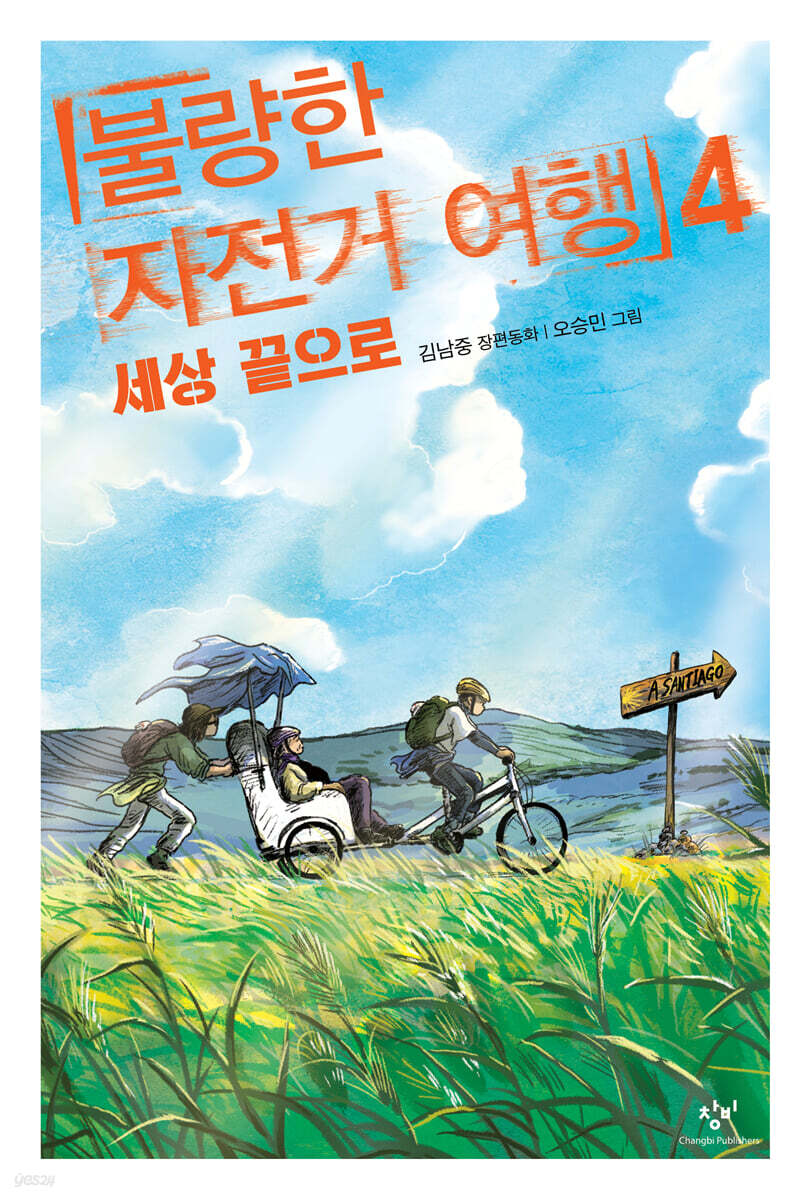
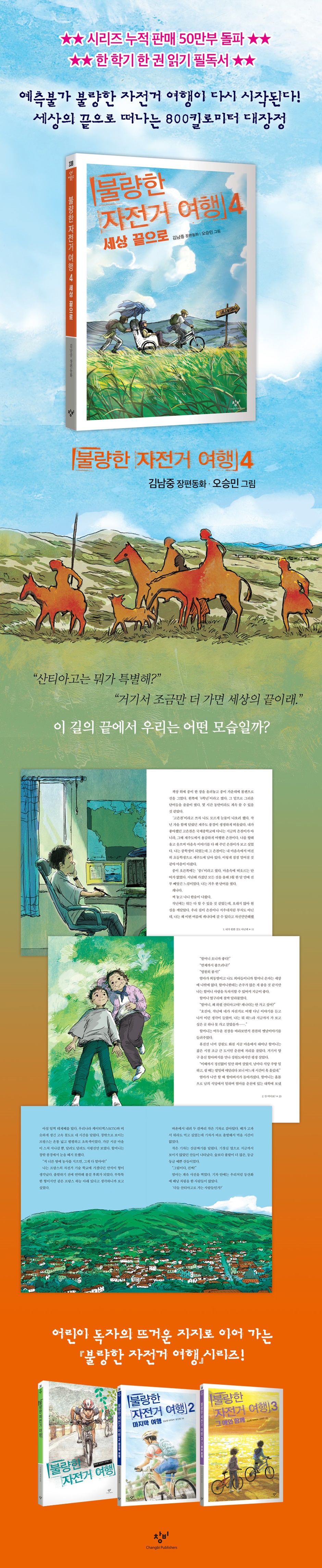
Cumulative series sales exceed 500,000 copies The fourth volume of the best-selling "Bad Bike Trip" series, a book-a-semester read-a-book series, has been released. Hojin's family's 800-kilometer journey to Santiago de Compostela! What will we look like at the end of this road? The fourth volume of 『Bad Bicycle Travel』, which was published in 2009 and has been loved by readers, has been published. The protagonist, Hojin, who has carved his own path by cycling thousands of kilometers from Jeolla-do to Gangwon-do, Busan to Seoul, and even around Jeju Island, is now going on a pilgrimage to Santiago de Compostela in Spain with his mother and maternal grandmother. Hojin walks the endless road on his own two feet and rides his bike, feeling the warmth of family love, and comes to the realization that life is like a pilgrimage that must be undertaken slowly but steadily, on one's own. Hojin, who has completed his trip, decides to end his wandering after entering middle school and take the initiative to move forward in his next stage of life. This scene leaves a calm and touching impression, making us feel the growth of the protagonist who began this 'bad' journey in the summer of his sixth grade due to his parents' discord. |
- You can preview some of the book's contents.
Preview
index
1.
It's not what I wanted
2.
Where is the mountain?
3.
Ready to go!
4.
Nothing is impossible for Grandma
5.
The Tortoise, the Hare, Hemingway, and the Explosion
6.
Today will be the same as yesterday, tomorrow will be the same
7.
Why did that happen then?
8.
Grandma's Secret
9.
Girlfriends reunited
10.
Pilgrims crossing the Great Plains on donkeys
11.
What a kiss
12.
Pilgrimage of Angels
13.
Concert at the end of the world
14.
Shinhojin Project 1, 2, 3
Author's Note │ We walked together, but apart
It's not what I wanted
2.
Where is the mountain?
3.
Ready to go!
4.
Nothing is impossible for Grandma
5.
The Tortoise, the Hare, Hemingway, and the Explosion
6.
Today will be the same as yesterday, tomorrow will be the same
7.
Why did that happen then?
8.
Grandma's Secret
9.
Girlfriends reunited
10.
Pilgrims crossing the Great Plains on donkeys
11.
What a kiss
12.
Pilgrimage of Angels
13.
Concert at the end of the world
14.
Shinhojin Project 1, 2, 3
Author's Note │ We walked together, but apart
Detailed image
Publisher's Review
“I want to go to Santiago.
“A little further from there, it’s the end of the world.”
An unpredictable and bizarre bike ride, this time to the end of the world!
"Bad Bike Trip" returns with its fourth story.
Volume 4 is the story of Hojin, who has just entered middle school and goes on a pilgrimage to Santiago, Spain with his mother and maternal grandmother.
One day, Hojin, who doesn't want to study and is full of worries about the future, is given an unexpected offer by his grandmother.
My mom and grandma want to walk the Camino de Santiago for a month.
Hojin didn't want to go on a walking trip, but he thought it was a chance to skip school, so he obediently went on the trip.
Contrary to their sweet imagination, the walking trip is not easy, and the three of them clash several times as they travel together for the first time in their lives.
But they walk and walk the endless path, and eventually confirm the warm love of family and gain the strength to face the difficulties that come to their family.
Author Kim Nam-joong, who actually completed the Camino de Santiago with his children and wrote the book, broadens readers' perspectives by drawing the unfamiliar space of the Camino de Santiago in an engaging way through his characteristically meticulous research and vivid descriptions.
The part where the 'real' family travel story of bickering over long-standing issues while walking along a beautiful road is told in a serious yet humorous tone brings laughter and emotion at the same time.
Halfway through the trip, the grandmother's secret is revealed, putting Hojin's family's trip in jeopardy.
Will they be able to complete their pilgrimage safely? Will they be able to reach Fisterra, the westernmost point of the Iberian Peninsula, the "end of the world" that their grandmother so desperately longed to visit? The heartwarming story of Hojin's family, who make a decision and move forward at a turning point in their lives, unfolds.
The path to becoming a strong team through sweat, tears, laughter, and song
Hojin, his mother, and his grandmother's colorful and tumultuous family travel story.
Before entering the Meseta, the central plain of Spain, the grandmother's illness is revealed.
Unlike her mother, who wants to return to Korea, her grandmother senses that she does not have much time left and does not give up on her will to continue her journey.
However, when Hojin was frustrated by the reality that it was impossible to continue the trip on foot, two members of a Korean cycling club, who were Hojin's strong supporters, appeared in front of Hojin's family and made a very special bicycle for his grandmother.
Thanks to the tricycle with a large sofa in the back seat, the grandmother can comfortably ride through the Meseta, up and down the snow-covered mountains, and after another hundreds of kilometers, finally arrive at her destination, the Cathedral of Santiago de Compostela.
The part where Hojin's family and friends he met by chance on the road join together to continue the pilgrimage by pulling their bicycles, overlaps with the image of ordinary people quietly moving forward on the path of life while taking care of their loved ones and one another, and moves the reader's heart.
It is also impressive to see Hojin, his mother, and his grandmother occasionally walking separately and proceeding at their own pace.
The three people have different tastes, different dreams, and different problems they face in reality.
Like the previous works in the series, this work focuses on Hojin's growth story, but it also naturally incorporates the concerns faced by Hojin, his parents, and his grandparents, allowing young readers to reflect on their families and even society as a whole rather than being trapped in their own concerns.
It provides food for thought by specifically depicting the experiences of ordinary Korean families, such as unemployment, low-wage labor, and unrealistic housing prices, while also showcasing the warm yet quirky charm of the grandmother and mother characters who live independently, making it a work that parents and children can enjoy together at home.
“I can trust myself when I walk and run.”
The meaning of travel realized at the end of the world, and a new beginning
Hojin's family and friends gather again at the Cathedral of Santiago and head to Fisterra to fulfill their grandmother's wish.
At the end of the world she had longed to see, Grandma sings her favorite songs with her loved ones, and looks back on her journey, filled with happiness and emotion.
In this passage, where readers will feel deeply moved after Hojin completes a long pilgrimage with his family, author Kim Nam-joong, instead of concluding with an idealistic happy ending, conveys an important truth about life by depicting the ordinary daily life that continues as before after the journey ends.
The end of the world is the beginning of a new world, and our lives, with their endless series of endings and beginnings, are like a pilgrimage that we must advance on our own, whether by bicycle or on foot. And just as the end and the beginning are connected, it is natural that life and death are intertwined like the changing of the seasons.
At the end of the piece, Hojin reflects on the meaning of his journey with his grandmother and resolves to end the period of wandering between childhood and adolescence and continue his own pilgrimage of life.
Hojin's final scene of overcoming pain and rising again leaves a lasting impression, and this story will be a gift that will bring a tingle to the hearts of readers who have followed Hojin's journey.
Until now, I thought life was like a bicycle trip.
When I got off my bike, I felt like a worthless person.
But even if I got off the bike, life was a pilgrimage that I had to continue on, even if it meant walking.
A journey where the process is more important than where you go or how you go.
If the process is beautiful, you don't have to worry about the outcome.
(Page 239)
“A little further from there, it’s the end of the world.”
An unpredictable and bizarre bike ride, this time to the end of the world!
"Bad Bike Trip" returns with its fourth story.
Volume 4 is the story of Hojin, who has just entered middle school and goes on a pilgrimage to Santiago, Spain with his mother and maternal grandmother.
One day, Hojin, who doesn't want to study and is full of worries about the future, is given an unexpected offer by his grandmother.
My mom and grandma want to walk the Camino de Santiago for a month.
Hojin didn't want to go on a walking trip, but he thought it was a chance to skip school, so he obediently went on the trip.
Contrary to their sweet imagination, the walking trip is not easy, and the three of them clash several times as they travel together for the first time in their lives.
But they walk and walk the endless path, and eventually confirm the warm love of family and gain the strength to face the difficulties that come to their family.
Author Kim Nam-joong, who actually completed the Camino de Santiago with his children and wrote the book, broadens readers' perspectives by drawing the unfamiliar space of the Camino de Santiago in an engaging way through his characteristically meticulous research and vivid descriptions.
The part where the 'real' family travel story of bickering over long-standing issues while walking along a beautiful road is told in a serious yet humorous tone brings laughter and emotion at the same time.
Halfway through the trip, the grandmother's secret is revealed, putting Hojin's family's trip in jeopardy.
Will they be able to complete their pilgrimage safely? Will they be able to reach Fisterra, the westernmost point of the Iberian Peninsula, the "end of the world" that their grandmother so desperately longed to visit? The heartwarming story of Hojin's family, who make a decision and move forward at a turning point in their lives, unfolds.
The path to becoming a strong team through sweat, tears, laughter, and song
Hojin, his mother, and his grandmother's colorful and tumultuous family travel story.
Before entering the Meseta, the central plain of Spain, the grandmother's illness is revealed.
Unlike her mother, who wants to return to Korea, her grandmother senses that she does not have much time left and does not give up on her will to continue her journey.
However, when Hojin was frustrated by the reality that it was impossible to continue the trip on foot, two members of a Korean cycling club, who were Hojin's strong supporters, appeared in front of Hojin's family and made a very special bicycle for his grandmother.
Thanks to the tricycle with a large sofa in the back seat, the grandmother can comfortably ride through the Meseta, up and down the snow-covered mountains, and after another hundreds of kilometers, finally arrive at her destination, the Cathedral of Santiago de Compostela.
The part where Hojin's family and friends he met by chance on the road join together to continue the pilgrimage by pulling their bicycles, overlaps with the image of ordinary people quietly moving forward on the path of life while taking care of their loved ones and one another, and moves the reader's heart.
It is also impressive to see Hojin, his mother, and his grandmother occasionally walking separately and proceeding at their own pace.
The three people have different tastes, different dreams, and different problems they face in reality.
Like the previous works in the series, this work focuses on Hojin's growth story, but it also naturally incorporates the concerns faced by Hojin, his parents, and his grandparents, allowing young readers to reflect on their families and even society as a whole rather than being trapped in their own concerns.
It provides food for thought by specifically depicting the experiences of ordinary Korean families, such as unemployment, low-wage labor, and unrealistic housing prices, while also showcasing the warm yet quirky charm of the grandmother and mother characters who live independently, making it a work that parents and children can enjoy together at home.
“I can trust myself when I walk and run.”
The meaning of travel realized at the end of the world, and a new beginning
Hojin's family and friends gather again at the Cathedral of Santiago and head to Fisterra to fulfill their grandmother's wish.
At the end of the world she had longed to see, Grandma sings her favorite songs with her loved ones, and looks back on her journey, filled with happiness and emotion.
In this passage, where readers will feel deeply moved after Hojin completes a long pilgrimage with his family, author Kim Nam-joong, instead of concluding with an idealistic happy ending, conveys an important truth about life by depicting the ordinary daily life that continues as before after the journey ends.
The end of the world is the beginning of a new world, and our lives, with their endless series of endings and beginnings, are like a pilgrimage that we must advance on our own, whether by bicycle or on foot. And just as the end and the beginning are connected, it is natural that life and death are intertwined like the changing of the seasons.
At the end of the piece, Hojin reflects on the meaning of his journey with his grandmother and resolves to end the period of wandering between childhood and adolescence and continue his own pilgrimage of life.
Hojin's final scene of overcoming pain and rising again leaves a lasting impression, and this story will be a gift that will bring a tingle to the hearts of readers who have followed Hojin's journey.
Until now, I thought life was like a bicycle trip.
When I got off my bike, I felt like a worthless person.
But even if I got off the bike, life was a pilgrimage that I had to continue on, even if it meant walking.
A journey where the process is more important than where you go or how you go.
If the process is beautiful, you don't have to worry about the outcome.
(Page 239)
GOODS SPECIFICS
- Date of issue: September 13, 2024
- Page count, weight, size: 248 pages | 448g | 152*225*15mm
- ISBN13: 9788936443382
- ISBN10: 8936443380
- KC Certification: Certification Type: Conformity Confirmation
You may also like
카테고리
korean


korean

![GQ KOREA Mark (Monthly): December [2025]](http://librairie.coreenne.fr/cdn/shop/files/8ef265dbbfbf186523ed75ba7319009d.jpg?v=1765340328&width=3840)


