

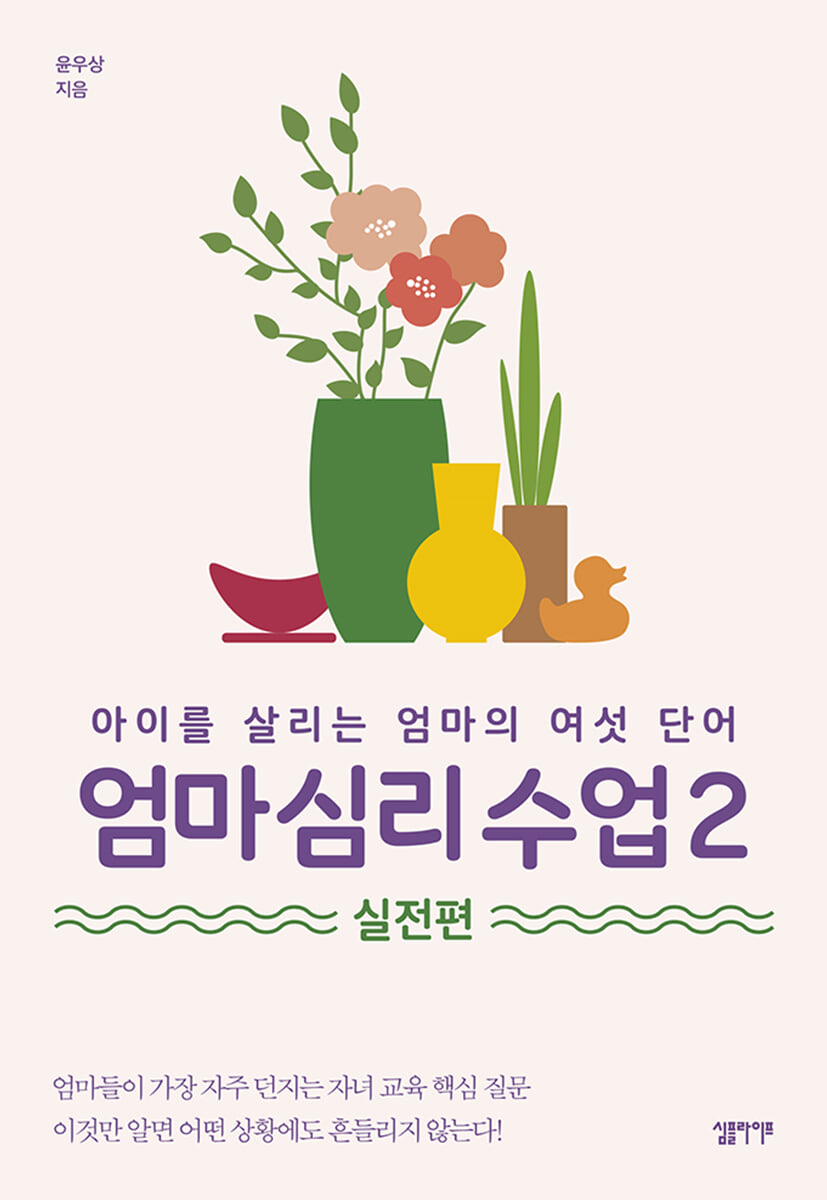
Mom Psychology Lesson 2: Practical
 |
Description
Book Introduction
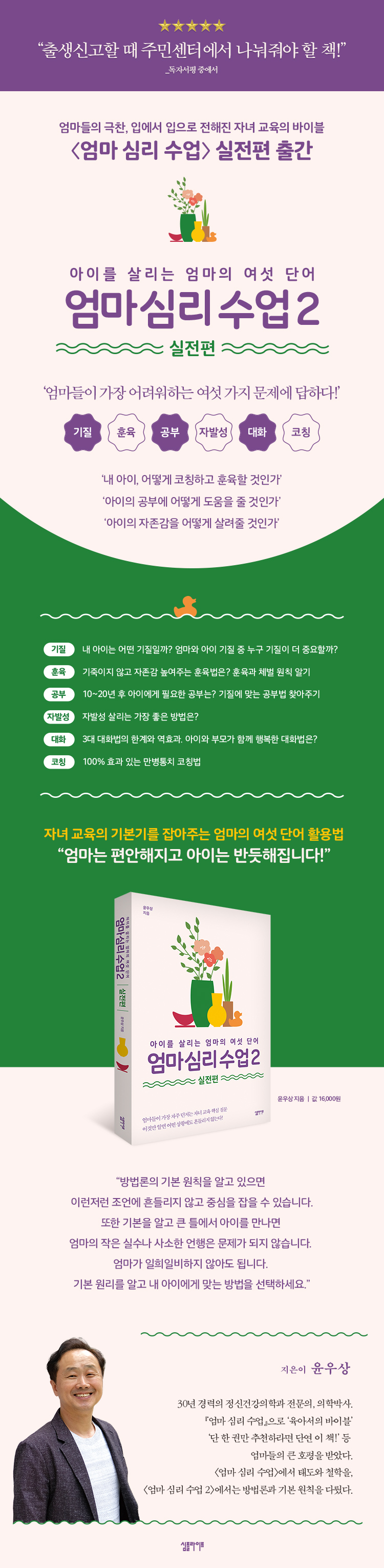
Temperament / Discipline / Study / Spontaneity / Conversation / Coaching
Answering the six most difficult concerns for mothers!
“The issue of child education is all encompassed in these six topics.”
◆ Childcare philosophy shared by a psychiatrist with 30 years of experience
◆ Child education: Knowing the basics makes it easier for mothers!
As one reader commented, "This is a book that should be distributed at the district office where you register your child's birth," this is a book that every parent with children should read at least once.
It is full of information necessary for raising children, but above all, it warms the hearts of mothers exhausted from the hardships of childcare, housework, and anxiety, and provides comfort and support.
For mothers who are doing their best but still carrying a sense of guilt in their hearts, I offer my utmost support, saying, “You are doing well,” and “Your child will be okay.”
Above all, it is easy, informative, fun and touching.
This is a book that all mothers and fathers living in this era, as well as all educators, social workers, and any adult who deals with children, must read at least once.
It is especially essential for mothers who are overwhelmed with childcare, parents who feel that their children have problems, and parents who suffer from conflicts with their children.
Furthermore, I recommend this book to all parents who want to reflect on themselves, to parents who want to raise independent and self-motivated children, and to all parents who want to communicate closely with their children.
It is perfect to read along with Volume 1, “Mom Psychology Class.”
Answering the six most difficult concerns for mothers!
“The issue of child education is all encompassed in these six topics.”
◆ Childcare philosophy shared by a psychiatrist with 30 years of experience
◆ Child education: Knowing the basics makes it easier for mothers!
As one reader commented, "This is a book that should be distributed at the district office where you register your child's birth," this is a book that every parent with children should read at least once.
It is full of information necessary for raising children, but above all, it warms the hearts of mothers exhausted from the hardships of childcare, housework, and anxiety, and provides comfort and support.
For mothers who are doing their best but still carrying a sense of guilt in their hearts, I offer my utmost support, saying, “You are doing well,” and “Your child will be okay.”
Above all, it is easy, informative, fun and touching.
This is a book that all mothers and fathers living in this era, as well as all educators, social workers, and any adult who deals with children, must read at least once.
It is especially essential for mothers who are overwhelmed with childcare, parents who feel that their children have problems, and parents who suffer from conflicts with their children.
Furthermore, I recommend this book to all parents who want to reflect on themselves, to parents who want to raise independent and self-motivated children, and to all parents who want to communicate closely with their children.
It is perfect to read along with Volume 1, “Mom Psychology Class.”
- You can preview some of the book's contents.
Preview
index
· Prologue: Motherhood: There's No Right Answer, But There Are Ways
Part 1 Temperament
1.
If you know the temperament, you can do the basics.
· Offensive or defensive?
· Coaching, discipline, study, and self-esteem
· Basic Framework: Challenge and Response
Limitations of personality analysis tools
· Strong/Weak, FM/AM
· The mother's temperament is more important
· Stable prenatal care and elite prenatal care
2.
Why I Hate My Child
· Is there any ill will between parents and children?
· The other person inside the child
Shadow, Mom's Achilles' Heel
Masculinity and femininity
· With the help of femininity
· How to find the right parenting book for you
· Temperament is destiny
3.
Dad Psychology
· “You look like me.”
· Differences between mom and dad
· Listen to your wife
· Be a cool dad when it comes to education
Part 2 Discipline
1.
A discipline method of a different dimension
· Marshmallows and control
· The process of creating a superego
· The terrifying power of internalization
· Two dimensions of discipline
2.
How much discipline should I go through?
· Characteristics of excessive discipline
· There is anxiety behind strictness.
· Discipline according to temperament
· Love's hawk?
· Four types of parents who punish their children
· Corporal punishment and temperament
· Conditions for healthy corporal punishment
Misconceptions about corporal punishment
· The shock of the first class
3.
The problem of weak discipline
· A mother who finds discipline burdensome
· A child who curses at his mother
· Use your power
· A son asking for money
· You shouldn't discourage children?
Should Mom Apologize Too?
· If there is a MammaGo like AlphaGo
· Studying cannot be an indulgence
· You can just go to the middle
Study Part 3
1.
Study and temperament
· Average mom, average greed
· Once you get on the study train
· It depends on what mom does?
· Studying is also a temperament
· FM+FM: Obedient children are at risk.
· FM+AM, learn to let go
· AM+AM, as much as possible
· AM+FM, whatever your child wants to do
2.
The future of studying
· The craze for advanced learning and early study abroad
· The tin can insurance called college
· Grades that have become a mother's pride
· Children who have been lifting weights since they were five years old
· Let's ask ourselves whether greed is healthy.
· For the beloved last place
· Marshmallow of Betrayal
Part 4: Spontaneity
1.
Spontaneity is the answer
· We are originally voluntary beings
· Play, the source of spontaneity
· Allow gestures and other things
· Play has no purpose.
· It has to be fun to be meaningful.
Parents who don't read books
· Is there fun in my life?
· Changing your space changes your life.
· Games: Voluntary or Addictive?
2.
Children's future
· The rules of the game have changed
How to Survive in the New Normal
· Let's provide resilience, not safety.
· Just let it be training
3.
The importance of timing
Parents who are anxious about their children's brain development
· Framework of developmental stages
· The paradox of a salty heart
· Learning Disabilities: Thinking Like This
· Drama about people who stutter
· As is, beyond boundaries
· Corrective emotional experience
· Jultakdongsi, the power to create change
· What Mom Really Needs to Believe
Part 5 Dialogue
1.
Naturally, in my own way
· Problematic advice
· Conversation should be natural.
· Would you like a chatty mom?
2.
Problems with the three major conversation methods
· What are the three major conversation methods?
· There is a suitable age group
· The adverse effect of 'I see'
· Home is not a counseling center.
· Consistency is important
· Blocking emotions, disconnecting from communication
· Moments when the three major conversation techniques are absolutely necessary
· My own conversation is the best
· Questions and answers with counselors
3.
Principles of Good Conversation
· How to prevent communication breakdowns
Mirroring is more about feelings than facts.
· Vaccines that protect children's brains
· This is a must for your teenage children.
Part 6 Coaching
1.
The Problem with Mom Coaching
· Monitor and manage
· Correct answer mom, wrong answer love
· Teaching Bottle Mom, Playing is Like Studying
· A mother who does everything, a hand that feeds
· Schedule Mom, Trapped in Time
· Operation Mom, a show with hidden intentions
· A relationship formed through pathological intimacy
· Don't do your best
2.
Good Mom Coaching Method
· The three major psychotherapy methods
· According to temperament and timing
· Best coaching method
· Giving orders and opportunities
· If I am comfortable, my child will be comfortable too.
· Mom's Ten Commandments
Part 7: Mother's Love
1.
Why You Are the Best Mom
· There is no such thing as a salty child.
· The best meeting, the cosmic event
· Why were you born?
2.
My child saves the world
· Is it enough to just eat well and live well?
· Ungnyeo and Sarah Connor
· Epilogue: To all the great mothers in the world
Part 1 Temperament
1.
If you know the temperament, you can do the basics.
· Offensive or defensive?
· Coaching, discipline, study, and self-esteem
· Basic Framework: Challenge and Response
Limitations of personality analysis tools
· Strong/Weak, FM/AM
· The mother's temperament is more important
· Stable prenatal care and elite prenatal care
2.
Why I Hate My Child
· Is there any ill will between parents and children?
· The other person inside the child
Shadow, Mom's Achilles' Heel
Masculinity and femininity
· With the help of femininity
· How to find the right parenting book for you
· Temperament is destiny
3.
Dad Psychology
· “You look like me.”
· Differences between mom and dad
· Listen to your wife
· Be a cool dad when it comes to education
Part 2 Discipline
1.
A discipline method of a different dimension
· Marshmallows and control
· The process of creating a superego
· The terrifying power of internalization
· Two dimensions of discipline
2.
How much discipline should I go through?
· Characteristics of excessive discipline
· There is anxiety behind strictness.
· Discipline according to temperament
· Love's hawk?
· Four types of parents who punish their children
· Corporal punishment and temperament
· Conditions for healthy corporal punishment
Misconceptions about corporal punishment
· The shock of the first class
3.
The problem of weak discipline
· A mother who finds discipline burdensome
· A child who curses at his mother
· Use your power
· A son asking for money
· You shouldn't discourage children?
Should Mom Apologize Too?
· If there is a MammaGo like AlphaGo
· Studying cannot be an indulgence
· You can just go to the middle
Study Part 3
1.
Study and temperament
· Average mom, average greed
· Once you get on the study train
· It depends on what mom does?
· Studying is also a temperament
· FM+FM: Obedient children are at risk.
· FM+AM, learn to let go
· AM+AM, as much as possible
· AM+FM, whatever your child wants to do
2.
The future of studying
· The craze for advanced learning and early study abroad
· The tin can insurance called college
· Grades that have become a mother's pride
· Children who have been lifting weights since they were five years old
· Let's ask ourselves whether greed is healthy.
· For the beloved last place
· Marshmallow of Betrayal
Part 4: Spontaneity
1.
Spontaneity is the answer
· We are originally voluntary beings
· Play, the source of spontaneity
· Allow gestures and other things
· Play has no purpose.
· It has to be fun to be meaningful.
Parents who don't read books
· Is there fun in my life?
· Changing your space changes your life.
· Games: Voluntary or Addictive?
2.
Children's future
· The rules of the game have changed
How to Survive in the New Normal
· Let's provide resilience, not safety.
· Just let it be training
3.
The importance of timing
Parents who are anxious about their children's brain development
· Framework of developmental stages
· The paradox of a salty heart
· Learning Disabilities: Thinking Like This
· Drama about people who stutter
· As is, beyond boundaries
· Corrective emotional experience
· Jultakdongsi, the power to create change
· What Mom Really Needs to Believe
Part 5 Dialogue
1.
Naturally, in my own way
· Problematic advice
· Conversation should be natural.
· Would you like a chatty mom?
2.
Problems with the three major conversation methods
· What are the three major conversation methods?
· There is a suitable age group
· The adverse effect of 'I see'
· Home is not a counseling center.
· Consistency is important
· Blocking emotions, disconnecting from communication
· Moments when the three major conversation techniques are absolutely necessary
· My own conversation is the best
· Questions and answers with counselors
3.
Principles of Good Conversation
· How to prevent communication breakdowns
Mirroring is more about feelings than facts.
· Vaccines that protect children's brains
· This is a must for your teenage children.
Part 6 Coaching
1.
The Problem with Mom Coaching
· Monitor and manage
· Correct answer mom, wrong answer love
· Teaching Bottle Mom, Playing is Like Studying
· A mother who does everything, a hand that feeds
· Schedule Mom, Trapped in Time
· Operation Mom, a show with hidden intentions
· A relationship formed through pathological intimacy
· Don't do your best
2.
Good Mom Coaching Method
· The three major psychotherapy methods
· According to temperament and timing
· Best coaching method
· Giving orders and opportunities
· If I am comfortable, my child will be comfortable too.
· Mom's Ten Commandments
Part 7: Mother's Love
1.
Why You Are the Best Mom
· There is no such thing as a salty child.
· The best meeting, the cosmic event
· Why were you born?
2.
My child saves the world
· Is it enough to just eat well and live well?
· Ungnyeo and Sarah Connor
· Epilogue: To all the great mothers in the world
Detailed image
Publisher's Review
◆ The 'Practical Edition' following the best-selling 'Mom Psychology Class'
◆ Answering the key questions that mothers are most curious about
"I shudder to think what would have happened if I hadn't read this book." "A book I want to give 100 stars to because five stars aren't enough," and other such comments have garnered much love from Korean mothers. The sequel to the best-selling book "Mom Psychology Class" has been published, "Mom Psychology Class 2: Practical Edition."
This book, written with dedication and long-term research by Dr. Woo-Sang Yoon, a psychiatrist with 30 years of experience, provides refreshing answers to the core questions about child education that mothers most frequently ask.
In other words, this book provides practical help for parenting and educating children by answering all the questions mothers have about six topics: temperament, discipline, study, spontaneity, conversation, and coaching, and by informing them of the basic principles and philosophy of child education.
If Part 1, "Mom Psychology Class," was a general introduction to the attitude and philosophy parents should have, Part 2, "Mom Psychology Class 2: Practical Edition," covered the basic principles and methodologies for dealing with problems encountered in various aspects of life.
Volume 1 teaches you how to establish your mindset and attitude, and Volume 2 teaches you how to put it into practice, completing a masterpiece set that can truly be called the 'Bible of Child Education.'
What temperament does my child have? Which temperament is more important, the mother's or the child's? What are the proper discipline methods that boost self-esteem without discouraging them? What precautions should I take when using corporal punishment? How can I get a child who hates studying to study independently? What's the best way to foster a child's initiative? How can parents and children communicate happily together? What coaching methods are truly beneficial for children? If you're a mother who's always asked these questions, this book will be the perfect resource you won't find anywhere else.
It can completely resolve all your doubts about child education, including temperament, discipline, study, and conversation methods.
As a practical book, this book is full of vivid real-life examples and lively questions from mothers.
The stories of mothers who struggle with childcare are permeated throughout the book, including how to deal with confusing situations that make you wonder whether to do this or that, and the difficulties of real life that are completely different from theories.
The author sincerely answers, comforts, and seeks solutions at every moment.
This book, filled with the deep and warm insights of experts and their respect and affection for mothers, unfolds on every page. It leaves readers with a profound sense of emotion and enlightenment that will leave them unable to put down once they pick it up.
The greatest strength of this book is that it helps mothers maintain a proper balance between being too absorbed in their role as mothers and being indifferent while clearly establishing the standards (principles) for raising children.
So, mothers can comfortably have principles and develop the discernment to discern and choose what is good for their children.
It is filled with information that can help both mother and child be happy without harming the child's innate temperament.
This book is like a weighty counterweight that keeps you balanced whenever you feel unsettled in the never-ending journey of motherhood and parenting.
◆ Six words from a mother that will save her child
Temperament / Discipline / Study / Spontaneity / Conversation / Coaching: Basic Principles and Methodologies
From infants to adults, there are concerns that no mother can avoid.
'How should I coach and discipline my child?'
'How can I help my child with his or her studies?'
How can we boost a child's self-esteem?
The six keywords covered in this book—temperament, discipline, study, spontaneity, conversation, and coaching—are essential topics that cannot be left out in child education.
The author has completed this topic, which he has researched for a long time, by adding many cases and educational philosophy, into two books.
I am proud to say that I poured all the know-how and love I have accumulated over the past 30 years into these books.
It is my hope that mothers will feel at ease and that children will be happy.
I am confident that if you just know the basic principles of these six topics, you will be able to raise your children much more easily.
In each part, the author reveals mothers' concerns, realities, and alternatives. "These six topics contain all the concerns about raising children.
However, if you know the basic principles of the methodology, you can stay centered and not be swayed by various advice.
“If you know the basics and meet your child in the big picture, your small mistakes or trivial words and actions will not be a problem,” he says.
It sets standards for mothers who are struggling under the burden of excessive duties and roles to decide what to hold on to and what to let go of in their limited time.
◆ Coaching, discipline, study, and self-esteem
◆ If you know this, you won't be shaken by any situation!
The book is divided into seven parts.
In Part 1: Temperament, we analyze the temperaments of mothers and children by type and provide guidance on how to treat children according to their temperament.
It guides you to respond appropriately depending on whether you are an offensive or defensive type, strong or weak, FM or AM type.
In Part 2, Discipline, we introduce discipline methods that are tailored to the child's temperament and that boost self-esteem without destroying morale.
You can also encounter conditions for healthy discipline and corporal punishment, as well as misunderstandings about corporal punishment.
In "Study Part 3," we will tell you what studies are truly necessary for the world children will live in 10 to 20 years from now and the changed future, and help mothers wisely prepare for the future.
You can find hints on how to find a study method that suits your child's temperament.
In Part 4, Spontaneity, we learn about the mother's role in fostering her child's spontaneity.
In particular, it provides tips on how to deal with children who are addicted to games and smartphones.
In "Part 5: Conversation," we examine the limitations and adverse effects of various conversation methods that are spreading like wildfire, while also introducing effective conversation methods that raise children's self-esteem while avoiding hurting either parents or children.
In Part 6, Coaching, we examine the problems of mother coaching that can actually be harmful and introduce a 100% effective panacea coaching method.
You can find the 'Ten Commandments of Mom' that you can unfold whenever you feel shaken or anxious.
In Part 7, Mother's Love, we reflect on the meaning and value of motherhood and comfort and encourage mothers who are suffering from guilt and anxiety to regain their confidence.
◆ No matter how good a parenting method is, it is poisonous if it does not suit my child.
Finding the right discipline, study, conversation, and coaching methods for your child's temperament.
The author advises that the focus of child education should be on 'my child'.
No matter how good a parenting method is, if it doesn't suit my child, it can be toxic.
The author points out the dangers of blindly following the advice presented in various parenting books that delve into the anxious minds of mothers.
No matter how good the advice is, it can be helpful or counterproductive depending on the combination of parent and child.
In particular, I express concern about the attitude of blindly believing excessive generalizations and the trend of accepting and following certain advice as if it were the correct answer.
The author identified three criteria for advice that could be more poisonous than medicine.
First, it is advice that is too difficult for mothers to put into practice and instead causes feelings of inferiority and guilt. Second, it is advice that has good content but does not fit the temperament of the mother or child, so following it will have negative consequences. Third, it is advice that is toxic if practiced.
For example, it shows, through vivid examples, the limitations and side effects of using the 'three major conversation methods (~you're right / I'm telling you / Reading emotions)', which are considered the standard for conversation methods, in real life.
It also warns of the dangers of using the overflowing information indiscriminately, such as the dangers of personality analysis tools that are popular these days, the problems of prenatal education that is out of sync with temperament, the limitations of study methods that are stuck in the mold of the past, the adverse effects of excessive corporal punishment and discipline, and cases where a normal child is turned into a disabled or problem child by being obsessed with the principle of 'developmental stage'.
◆ Answering the key questions that mothers are most curious about
"I shudder to think what would have happened if I hadn't read this book." "A book I want to give 100 stars to because five stars aren't enough," and other such comments have garnered much love from Korean mothers. The sequel to the best-selling book "Mom Psychology Class" has been published, "Mom Psychology Class 2: Practical Edition."
This book, written with dedication and long-term research by Dr. Woo-Sang Yoon, a psychiatrist with 30 years of experience, provides refreshing answers to the core questions about child education that mothers most frequently ask.
In other words, this book provides practical help for parenting and educating children by answering all the questions mothers have about six topics: temperament, discipline, study, spontaneity, conversation, and coaching, and by informing them of the basic principles and philosophy of child education.
If Part 1, "Mom Psychology Class," was a general introduction to the attitude and philosophy parents should have, Part 2, "Mom Psychology Class 2: Practical Edition," covered the basic principles and methodologies for dealing with problems encountered in various aspects of life.
Volume 1 teaches you how to establish your mindset and attitude, and Volume 2 teaches you how to put it into practice, completing a masterpiece set that can truly be called the 'Bible of Child Education.'
What temperament does my child have? Which temperament is more important, the mother's or the child's? What are the proper discipline methods that boost self-esteem without discouraging them? What precautions should I take when using corporal punishment? How can I get a child who hates studying to study independently? What's the best way to foster a child's initiative? How can parents and children communicate happily together? What coaching methods are truly beneficial for children? If you're a mother who's always asked these questions, this book will be the perfect resource you won't find anywhere else.
It can completely resolve all your doubts about child education, including temperament, discipline, study, and conversation methods.
As a practical book, this book is full of vivid real-life examples and lively questions from mothers.
The stories of mothers who struggle with childcare are permeated throughout the book, including how to deal with confusing situations that make you wonder whether to do this or that, and the difficulties of real life that are completely different from theories.
The author sincerely answers, comforts, and seeks solutions at every moment.
This book, filled with the deep and warm insights of experts and their respect and affection for mothers, unfolds on every page. It leaves readers with a profound sense of emotion and enlightenment that will leave them unable to put down once they pick it up.
The greatest strength of this book is that it helps mothers maintain a proper balance between being too absorbed in their role as mothers and being indifferent while clearly establishing the standards (principles) for raising children.
So, mothers can comfortably have principles and develop the discernment to discern and choose what is good for their children.
It is filled with information that can help both mother and child be happy without harming the child's innate temperament.
This book is like a weighty counterweight that keeps you balanced whenever you feel unsettled in the never-ending journey of motherhood and parenting.
◆ Six words from a mother that will save her child
Temperament / Discipline / Study / Spontaneity / Conversation / Coaching: Basic Principles and Methodologies
From infants to adults, there are concerns that no mother can avoid.
'How should I coach and discipline my child?'
'How can I help my child with his or her studies?'
How can we boost a child's self-esteem?
The six keywords covered in this book—temperament, discipline, study, spontaneity, conversation, and coaching—are essential topics that cannot be left out in child education.
The author has completed this topic, which he has researched for a long time, by adding many cases and educational philosophy, into two books.
I am proud to say that I poured all the know-how and love I have accumulated over the past 30 years into these books.
It is my hope that mothers will feel at ease and that children will be happy.
I am confident that if you just know the basic principles of these six topics, you will be able to raise your children much more easily.
In each part, the author reveals mothers' concerns, realities, and alternatives. "These six topics contain all the concerns about raising children.
However, if you know the basic principles of the methodology, you can stay centered and not be swayed by various advice.
“If you know the basics and meet your child in the big picture, your small mistakes or trivial words and actions will not be a problem,” he says.
It sets standards for mothers who are struggling under the burden of excessive duties and roles to decide what to hold on to and what to let go of in their limited time.
◆ Coaching, discipline, study, and self-esteem
◆ If you know this, you won't be shaken by any situation!
The book is divided into seven parts.
In Part 1: Temperament, we analyze the temperaments of mothers and children by type and provide guidance on how to treat children according to their temperament.
It guides you to respond appropriately depending on whether you are an offensive or defensive type, strong or weak, FM or AM type.
In Part 2, Discipline, we introduce discipline methods that are tailored to the child's temperament and that boost self-esteem without destroying morale.
You can also encounter conditions for healthy discipline and corporal punishment, as well as misunderstandings about corporal punishment.
In "Study Part 3," we will tell you what studies are truly necessary for the world children will live in 10 to 20 years from now and the changed future, and help mothers wisely prepare for the future.
You can find hints on how to find a study method that suits your child's temperament.
In Part 4, Spontaneity, we learn about the mother's role in fostering her child's spontaneity.
In particular, it provides tips on how to deal with children who are addicted to games and smartphones.
In "Part 5: Conversation," we examine the limitations and adverse effects of various conversation methods that are spreading like wildfire, while also introducing effective conversation methods that raise children's self-esteem while avoiding hurting either parents or children.
In Part 6, Coaching, we examine the problems of mother coaching that can actually be harmful and introduce a 100% effective panacea coaching method.
You can find the 'Ten Commandments of Mom' that you can unfold whenever you feel shaken or anxious.
In Part 7, Mother's Love, we reflect on the meaning and value of motherhood and comfort and encourage mothers who are suffering from guilt and anxiety to regain their confidence.
◆ No matter how good a parenting method is, it is poisonous if it does not suit my child.
Finding the right discipline, study, conversation, and coaching methods for your child's temperament.
The author advises that the focus of child education should be on 'my child'.
No matter how good a parenting method is, if it doesn't suit my child, it can be toxic.
The author points out the dangers of blindly following the advice presented in various parenting books that delve into the anxious minds of mothers.
No matter how good the advice is, it can be helpful or counterproductive depending on the combination of parent and child.
In particular, I express concern about the attitude of blindly believing excessive generalizations and the trend of accepting and following certain advice as if it were the correct answer.
The author identified three criteria for advice that could be more poisonous than medicine.
First, it is advice that is too difficult for mothers to put into practice and instead causes feelings of inferiority and guilt. Second, it is advice that has good content but does not fit the temperament of the mother or child, so following it will have negative consequences. Third, it is advice that is toxic if practiced.
For example, it shows, through vivid examples, the limitations and side effects of using the 'three major conversation methods (~you're right / I'm telling you / Reading emotions)', which are considered the standard for conversation methods, in real life.
It also warns of the dangers of using the overflowing information indiscriminately, such as the dangers of personality analysis tools that are popular these days, the problems of prenatal education that is out of sync with temperament, the limitations of study methods that are stuck in the mold of the past, the adverse effects of excessive corporal punishment and discipline, and cases where a normal child is turned into a disabled or problem child by being obsessed with the principle of 'developmental stage'.
GOODS SPECIFICS
- Date of issue: May 10, 2021
- Page count, weight, size: 288 pages | 446g | 145*210*17mm
- ISBN13: 9791186757703
- ISBN10: 1186757701
You may also like
카테고리
korean


korean

![GQ KOREA Mark (Monthly): December [2025]](http://librairie.coreenne.fr/cdn/shop/files/8ef265dbbfbf186523ed75ba7319009d.jpg?v=1765340328&width=3840)


