

Stories of First-Century Church Worship
 |
Description
Book Introduction
The True Form of Church That the Modern Church Must Reclaim
Experience the vivid first-century church!
The Secret Book That Made Us Dream of the Early Church
The return of a must-read for home churches, small groups, and cell groups!
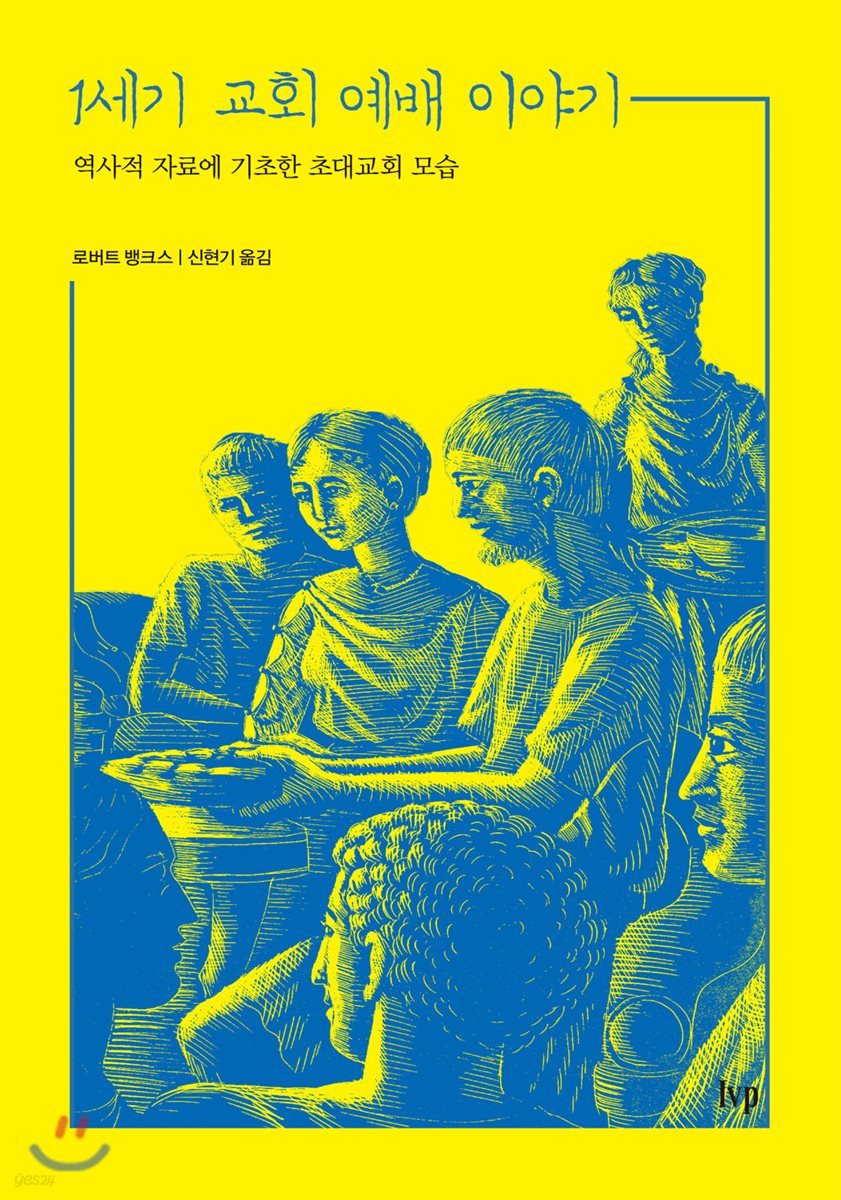
One afternoon in the first century, the Roman soldier Publius was invited by a Christian couple to visit their home.
There he witnesses the astonishing sight of strangers being warmly welcomed, women and men, children and adults, servants and masters, those who came first and those who came last, believers and unbelievers, talking, eating and drinking together, discussing and singing freely without any distinction or distinction.
I am also impressed by the unadorned worship that takes place in the context of everyday life, without priests or special rituals.
In fact, the worship of the early church was both a festival and a daily routine that fully embodied the revolutionary nature of the gospel that overturned the world's order.
This book, reconstructed based on historical research and theological data, vividly shows the original form of the church to those who dream of restoring the early church, to small groups or cell groups within the church, and to Christians in home churches.
Experience the vivid first-century church!
The Secret Book That Made Us Dream of the Early Church
The return of a must-read for home churches, small groups, and cell groups!
One afternoon in the first century, the Roman soldier Publius was invited by a Christian couple to visit their home.
There he witnesses the astonishing sight of strangers being warmly welcomed, women and men, children and adults, servants and masters, those who came first and those who came last, believers and unbelievers, talking, eating and drinking together, discussing and singing freely without any distinction or distinction.
I am also impressed by the unadorned worship that takes place in the context of everyday life, without priests or special rituals.
In fact, the worship of the early church was both a festival and a daily routine that fully embodied the revolutionary nature of the gospel that overturned the world's order.
This book, reconstructed based on historical research and theological data, vividly shows the original form of the church to those who dream of restoring the early church, to small groups or cell groups within the church, and to Christians in home churches.
- You can preview some of the book's contents.
Preview
index
Preface to the Korean edition
Preface to the first edition
Preface to the Revised Edition
My name is Publius
Aquila and Bris meet the couple
Participate in the Lord's Supper
share fellowship
Felix brings his friend Duro
Discuss Lucia's liberation
A gathering not bound by religious formalities
Play group
Singing and interactive prayer
Aquila's Teachings on Grace
The meeting concluded after exhortation and prayer for one another.
As I set out at night
Translator's Note
Preface to the first edition
Preface to the Revised Edition
My name is Publius
Aquila and Bris meet the couple
Participate in the Lord's Supper
share fellowship
Felix brings his friend Duro
Discuss Lucia's liberation
A gathering not bound by religious formalities
Play group
Singing and interactive prayer
Aquila's Teachings on Grace
The meeting concluded after exhortation and prayer for one another.
As I set out at night
Translator's Note
Into the book
I am so happy that the revised Korean edition of “The Story of the First Century Church Worship” has been published.
The Korean edition, published 30 years ago, was the first translation of this book.
During my subsequent visits to Korea, I have heard from many people that this book opened their minds, enabled them to understand the church more deeply, and helped them recover more of the spirit and vitality of Christian fellowship that was evident in the first church gatherings.
Over the years this little book has been translated into many languages.
This book seems to have filled a need felt by Christians in many countries: something to 'add' vitality to their gatherings.
Those involved in missionary work? Korean Christians are on the front lines today. Many of them are converts, eager to experience the freshness and power seen in the early spread of the Christian movement.
The impact the first Christians had on their world stemmed from the quality of life they demonstrated with their families, friends, neighbors, colleagues, and fellow citizens.
That is why we are publishing a companion book to this book, A Day in the Life of a First Century Christian (published by IVP Korea).
I pray that readers of this story will be able to imagine themselves entering the lives of first-century Christians and discover something that could “overturn the world” (Acts 17:6).
_Preface to the Korean edition
My name is Publius.
To be more precise, it is Publius Valerius Amycius Rufus.
He is from Philippi, Macedonia, a relatively new colony.
Although Philippi is located within Macedonian territory, it is a city that prides itself on being Roman to the core.
I am currently staying in Rome for a while with my old friends Clement and Euodia.
I went to a nearby family's dinner earlier today, and it was such a unique experience that I wanted to share it with you.
The friends who accompanied them were a Jewish couple named Aquila and Priscilla who had been invited to their regular meal every seventh day.
Since it was open to visitors, I didn't need a separate invitation to attend.
It was around 9 o'clock in the afternoon (3 o'clock in the afternoon) when we left the house.
Even in Rome, it was customary to have a leisurely dinner in the summer.
This was especially true when there were guests.
After walking for a while on the street, I felt suffocated because the street was so narrow.
There were roads that were less than three meters wide.
Moreover, the floor was so muddy that it was unstable underfoot.
Most of the work had already been done and so many people had poured out that it was difficult to even move forward.
The road was so messy that I wandered around here and there and even lost my sense of direction.
I couldn't possibly get to my destination on my own.
It would have been nearly impossible for a stranger to find his way around, as the buildings had few house numbers and few street signs. --- From "My Name is Publius"
When Aquila appeared, my friends didn't wait for him to come to the door, but went straight inside to meet him.
As usual, the men hugged and kissed each other, but it was more affectionate than ceremonial. “Welcome.
Welcome.
“May the grace and peace of God be with you,” Aquila greeted him in his heart.
“It’s a pleasure to have you back, Aquila,” Clement replied.
Then something very unusual happened.
Because Aquila also hugged Euodia and kissed her.
You probably thought they were siblings or something similar! Even the poet Martial would have been surprised.
He detested the Roman men's habit of kissing each other, and I tend to agree with him.
Then Brisga came into the room, wearing a brightly colored woolen gown with simple decorations.
Everyone took turns greeting each other as before.
This time, there was also an introduction and greeting.
I immediately thanked him very politely.
---From "Aquila and Bris Meet a Couple"
“Lucia, Lucia,” the children called his name.
Then he said, pretending to be scared.
“Yeah, yeah, don’t tell me the barbarians have already invaded Rome!” He was obviously popular with the children, and he seemed to enjoy watching them too.
He affectionately patted the boys' heads and complimented the girls' outfits.
(The girls wore loose blouses and white shawls that reached to their ankles, and the boys wore short dresses with belts appropriate for their age.) I was soon introduced to the owner of the servant.
His name was Aristobulus, and he was a relatively high-ranking civil servant.
Not long after I started talking to him about what he was doing, Aquila clapped her hands to get my attention.
He made a common joke, such as that two philosophers are more in agreement than two water clocks (Seneca may have been the first to say this, but Aquila probably heard it from someone else). Then he said that he had just received word that other guests were coming, and that it would be best for them to go to the dining room and prepare the meal.
As I left the drawing room, I saw Clement and Euodia again. “Is the service about to begin?” I asked Clement.
Then he looked at me with a puzzled look and answered with a smile on his face.
“The actual worship service began as we entered the house.”
---From "Aquila and Bris Meet a Couple"
Agulha continued speaking.
“Just before he offered himself as a sacrifice for us, he ate a meal with his disciples, just as we do now.
During the meal, he gave them bread and said that it represented himself.
Just as the body needs bread to live, we need Him even more to experience true life.
Therefore, we also do this.
This is precisely why He wants us to continue eating together, and why we are gathered together today.” I could never understand how a dead person could do all this.
Moreover, Aquila even said that this man actually came back to life after his execution.
I couldn't believe my ears, but Aquila had said exactly what he said! He had died, risen from the dead, and gone to his father, and because of this, he was in a position to give his life to anyone who would follow him.
No matter where they are or how many there are.
That is to say, a part of him lives on in those who follow him.
At least that's how I understood it.
---From “Participating in the Lord’s Supper”
Brisga asked Aquila.
“Didn’t Paul say something about this?” Aquila answered.
“Yes, in one of Paul’s letters to the church in Corinth, where we used to belong, he said something.” “Do you remember which letter?” He thought for a moment and then said, “I think it was in the first letter, the part about marriage and single life.
It will be in the box in the bedroom with the other documents.
“Excuse me, could you bring me some?” Agulha said to me while Brisga was out of the room.
Paul, their old friend who had started several meetings throughout the Roman Empire, was now under house arrest somewhere in Rome, awaiting trial on trumped-up charges brought against him in Judea.
Paul had special wisdom in dealing with issues affecting daily life, so it was often helpful to consult him personally or consult his writings on such matters.
When Brisga returned, Aquila quickly found the passage in the scroll and read it to him.
Paul generally advised to be content with the status quo and not to change it.
Those who are servants should consider their status as servants as an opportunity to serve others.
Because no matter what our position, that is the fundamental responsibility of all of us.
But when the opportunity to gain freedom arises, he said, do not hesitate to become a free man like other people.
Because if you approach new situations correctly, you will actually discover new ways to help others.
He then told the masters to remember that they themselves are in fact servants of Christ, and that servants are in fact free in essence.
This advice definitely shifted the discussion in a more productive direction, and even gave me something to think about myself.
The conversation now revolved around the basis for Paul's judgment.
There was some discussion about how Lucia could serve Aristobulus more satisfactorily by gaining her freedom, or whether there were special circumstances in Lucia's case that warranted an exception to the principle Paul had laid down.
Through all this, Lucia and those who supported her views seemed to have formed a more positive attitude toward Aristobulus' proposal.
But clearly Lucia had more questions to ponder.
As he said that, he got up from his seat, saying that he had to help Brisga for the next turn.
---From "Discussing Lucia's Liberation"
The girl said.
“It’s a song.
I made it.
“It’s about all the things God has made,” the girl sang.
It was a very confident, clear, and sincere voice.
When the song ended, everyone applauded.
Of course, the children's applause was the loudest.
Aristobulus shouted "Bravo!" in a clear voice! Brisga and the others waited at the door so as not to disturb him, then came in with dessert.
Apples, grapes, pears, and figs were visible.
We washed our fingers with water from a bowl, dried them with a towel, and then picked out the fruit.
As we gathered here and there, chatting in small groups (a discussion was going on in the next group about the ethics of chariot racing in the stadium), I reflected on the level of engagement shown by the attendees.
This was the first time I had ever experienced such a heated debate.
At every dinner party I've ever attended, guests have been free to write letters or have them dictated to them, conduct business with neighbors, or simply nod off, oblivious to what's going on around them.
The attendees of this gathering were polite and did not even carelessly throw away leftover food and wine on the floor.
It was a bit distracting, but neat and not overly so.
He didn't even commit the common rudeness.
However, I felt that there were many things about this entire gathering that were religiously questionable.
As far as I know, there was very little religious content in what had happened up until then.
Why aren't there even priests, let alone the old framework that people expected?
Or was there something more like true religiosity?
---From "A Gathering Not Bound by Religious Formalities"
I reflected on what had happened after I left home in the afternoon.
It was quite different from what I expected, but overall I enjoyed the evening.
The people themselves were certainly impressive.
That wasn't all.
I was worried about whether they would ignore certain etiquette, adhere to certain creeds, or become fanatic.
But there was something strangely compelling about their conversation, both during and after dinner.
There was definitely something real about their actions.
However, there were many aspects of their gatherings that were inappropriate from a religious point of view, and some of their behavior was so eccentric that it was quite disconcerting.
I'm not sure if I'll accept Aquila and Brisga's invitation to go to next week's meeting.
It's hard to say.
I'm not sure.
But somehow I have a feeling that you will respond.
The Korean edition, published 30 years ago, was the first translation of this book.
During my subsequent visits to Korea, I have heard from many people that this book opened their minds, enabled them to understand the church more deeply, and helped them recover more of the spirit and vitality of Christian fellowship that was evident in the first church gatherings.
Over the years this little book has been translated into many languages.
This book seems to have filled a need felt by Christians in many countries: something to 'add' vitality to their gatherings.
Those involved in missionary work? Korean Christians are on the front lines today. Many of them are converts, eager to experience the freshness and power seen in the early spread of the Christian movement.
The impact the first Christians had on their world stemmed from the quality of life they demonstrated with their families, friends, neighbors, colleagues, and fellow citizens.
That is why we are publishing a companion book to this book, A Day in the Life of a First Century Christian (published by IVP Korea).
I pray that readers of this story will be able to imagine themselves entering the lives of first-century Christians and discover something that could “overturn the world” (Acts 17:6).
_Preface to the Korean edition
My name is Publius.
To be more precise, it is Publius Valerius Amycius Rufus.
He is from Philippi, Macedonia, a relatively new colony.
Although Philippi is located within Macedonian territory, it is a city that prides itself on being Roman to the core.
I am currently staying in Rome for a while with my old friends Clement and Euodia.
I went to a nearby family's dinner earlier today, and it was such a unique experience that I wanted to share it with you.
The friends who accompanied them were a Jewish couple named Aquila and Priscilla who had been invited to their regular meal every seventh day.
Since it was open to visitors, I didn't need a separate invitation to attend.
It was around 9 o'clock in the afternoon (3 o'clock in the afternoon) when we left the house.
Even in Rome, it was customary to have a leisurely dinner in the summer.
This was especially true when there were guests.
After walking for a while on the street, I felt suffocated because the street was so narrow.
There were roads that were less than three meters wide.
Moreover, the floor was so muddy that it was unstable underfoot.
Most of the work had already been done and so many people had poured out that it was difficult to even move forward.
The road was so messy that I wandered around here and there and even lost my sense of direction.
I couldn't possibly get to my destination on my own.
It would have been nearly impossible for a stranger to find his way around, as the buildings had few house numbers and few street signs. --- From "My Name is Publius"
When Aquila appeared, my friends didn't wait for him to come to the door, but went straight inside to meet him.
As usual, the men hugged and kissed each other, but it was more affectionate than ceremonial. “Welcome.
Welcome.
“May the grace and peace of God be with you,” Aquila greeted him in his heart.
“It’s a pleasure to have you back, Aquila,” Clement replied.
Then something very unusual happened.
Because Aquila also hugged Euodia and kissed her.
You probably thought they were siblings or something similar! Even the poet Martial would have been surprised.
He detested the Roman men's habit of kissing each other, and I tend to agree with him.
Then Brisga came into the room, wearing a brightly colored woolen gown with simple decorations.
Everyone took turns greeting each other as before.
This time, there was also an introduction and greeting.
I immediately thanked him very politely.
---From "Aquila and Bris Meet a Couple"
“Lucia, Lucia,” the children called his name.
Then he said, pretending to be scared.
“Yeah, yeah, don’t tell me the barbarians have already invaded Rome!” He was obviously popular with the children, and he seemed to enjoy watching them too.
He affectionately patted the boys' heads and complimented the girls' outfits.
(The girls wore loose blouses and white shawls that reached to their ankles, and the boys wore short dresses with belts appropriate for their age.) I was soon introduced to the owner of the servant.
His name was Aristobulus, and he was a relatively high-ranking civil servant.
Not long after I started talking to him about what he was doing, Aquila clapped her hands to get my attention.
He made a common joke, such as that two philosophers are more in agreement than two water clocks (Seneca may have been the first to say this, but Aquila probably heard it from someone else). Then he said that he had just received word that other guests were coming, and that it would be best for them to go to the dining room and prepare the meal.
As I left the drawing room, I saw Clement and Euodia again. “Is the service about to begin?” I asked Clement.
Then he looked at me with a puzzled look and answered with a smile on his face.
“The actual worship service began as we entered the house.”
---From "Aquila and Bris Meet a Couple"
Agulha continued speaking.
“Just before he offered himself as a sacrifice for us, he ate a meal with his disciples, just as we do now.
During the meal, he gave them bread and said that it represented himself.
Just as the body needs bread to live, we need Him even more to experience true life.
Therefore, we also do this.
This is precisely why He wants us to continue eating together, and why we are gathered together today.” I could never understand how a dead person could do all this.
Moreover, Aquila even said that this man actually came back to life after his execution.
I couldn't believe my ears, but Aquila had said exactly what he said! He had died, risen from the dead, and gone to his father, and because of this, he was in a position to give his life to anyone who would follow him.
No matter where they are or how many there are.
That is to say, a part of him lives on in those who follow him.
At least that's how I understood it.
---From “Participating in the Lord’s Supper”
Brisga asked Aquila.
“Didn’t Paul say something about this?” Aquila answered.
“Yes, in one of Paul’s letters to the church in Corinth, where we used to belong, he said something.” “Do you remember which letter?” He thought for a moment and then said, “I think it was in the first letter, the part about marriage and single life.
It will be in the box in the bedroom with the other documents.
“Excuse me, could you bring me some?” Agulha said to me while Brisga was out of the room.
Paul, their old friend who had started several meetings throughout the Roman Empire, was now under house arrest somewhere in Rome, awaiting trial on trumped-up charges brought against him in Judea.
Paul had special wisdom in dealing with issues affecting daily life, so it was often helpful to consult him personally or consult his writings on such matters.
When Brisga returned, Aquila quickly found the passage in the scroll and read it to him.
Paul generally advised to be content with the status quo and not to change it.
Those who are servants should consider their status as servants as an opportunity to serve others.
Because no matter what our position, that is the fundamental responsibility of all of us.
But when the opportunity to gain freedom arises, he said, do not hesitate to become a free man like other people.
Because if you approach new situations correctly, you will actually discover new ways to help others.
He then told the masters to remember that they themselves are in fact servants of Christ, and that servants are in fact free in essence.
This advice definitely shifted the discussion in a more productive direction, and even gave me something to think about myself.
The conversation now revolved around the basis for Paul's judgment.
There was some discussion about how Lucia could serve Aristobulus more satisfactorily by gaining her freedom, or whether there were special circumstances in Lucia's case that warranted an exception to the principle Paul had laid down.
Through all this, Lucia and those who supported her views seemed to have formed a more positive attitude toward Aristobulus' proposal.
But clearly Lucia had more questions to ponder.
As he said that, he got up from his seat, saying that he had to help Brisga for the next turn.
---From "Discussing Lucia's Liberation"
The girl said.
“It’s a song.
I made it.
“It’s about all the things God has made,” the girl sang.
It was a very confident, clear, and sincere voice.
When the song ended, everyone applauded.
Of course, the children's applause was the loudest.
Aristobulus shouted "Bravo!" in a clear voice! Brisga and the others waited at the door so as not to disturb him, then came in with dessert.
Apples, grapes, pears, and figs were visible.
We washed our fingers with water from a bowl, dried them with a towel, and then picked out the fruit.
As we gathered here and there, chatting in small groups (a discussion was going on in the next group about the ethics of chariot racing in the stadium), I reflected on the level of engagement shown by the attendees.
This was the first time I had ever experienced such a heated debate.
At every dinner party I've ever attended, guests have been free to write letters or have them dictated to them, conduct business with neighbors, or simply nod off, oblivious to what's going on around them.
The attendees of this gathering were polite and did not even carelessly throw away leftover food and wine on the floor.
It was a bit distracting, but neat and not overly so.
He didn't even commit the common rudeness.
However, I felt that there were many things about this entire gathering that were religiously questionable.
As far as I know, there was very little religious content in what had happened up until then.
Why aren't there even priests, let alone the old framework that people expected?
Or was there something more like true religiosity?
---From "A Gathering Not Bound by Religious Formalities"
I reflected on what had happened after I left home in the afternoon.
It was quite different from what I expected, but overall I enjoyed the evening.
The people themselves were certainly impressive.
That wasn't all.
I was worried about whether they would ignore certain etiquette, adhere to certain creeds, or become fanatic.
But there was something strangely compelling about their conversation, both during and after dinner.
There was definitely something real about their actions.
However, there were many aspects of their gatherings that were inappropriate from a religious point of view, and some of their behavior was so eccentric that it was quite disconcerting.
I'm not sure if I'll accept Aquila and Brisga's invitation to go to next week's meeting.
It's hard to say.
I'm not sure.
But somehow I have a feeling that you will respond.
---From "Setting Out at Night"
Publisher's Review
What kind of church was the early church?
What was worship like in the early church?
How did the Christians of the early church live?
When the church is in crisis, everyone says we need to go back to the early church.
But it doesn't really tell us what the early church was like.
There are also growing voices calling for a return to home churches and small churches to revitalize the church.
Clearly, the appearance and structure of the church are closely related to the essence of the church.
However, the church has existed and can exist in many different forms depending on the times and circumstances.
This book is not simply a guide to the early church and home churches.
This book opens up new possibilities for the church through the image of a living church in which the essence of the church is dynamically revealed.
Despite its small size, it vividly shows the wide variety of aspects that the church should embrace.
Servant and master, woman and man, poor and rich, child and adult and old, family and singleness, liberation and freedom, the world and the church, vocation and status, the Lord's Supper and baptism, debate and adjustment, situation and word, meal and sacrament, everyday life and transcendence, space and time, surprise and regularity, participation and authority, essence and form, treatment and healing, and Jesus Christ! In this small community made up of a small number of people, we discover the essence of the church and its diverse and rich aspects that we have long lost, more than in any of today's large but monotonous megachurches.
We believe in a church where saints have fellowship with one another.
The church is not a place you go to or don't go to, but a living organism that is renewed and reborn every moment.
I hope that by becoming a visitor to the original church that gathered in Rome two thousand years ago with Publius, I can cultivate imagination and conviction for the church today.
So different from our church and the worship we offer today,
So, this is an amazing book that makes us dream more about the early church and the worship they offered!
GOODS SPECIFICS
- Date of publication: June 16, 2017
- Page count, weight, size: 80 pages | 140g | 130*190*15mm
- ISBN13: 9788932814827
- ISBN10: 8932814821
You may also like
카테고리
korean


korean

![GQ KOREA Mark (Monthly): December [2025]](http://librairie.coreenne.fr/cdn/shop/files/8ef265dbbfbf186523ed75ba7319009d.jpg?v=1765340328&width=3840)


