

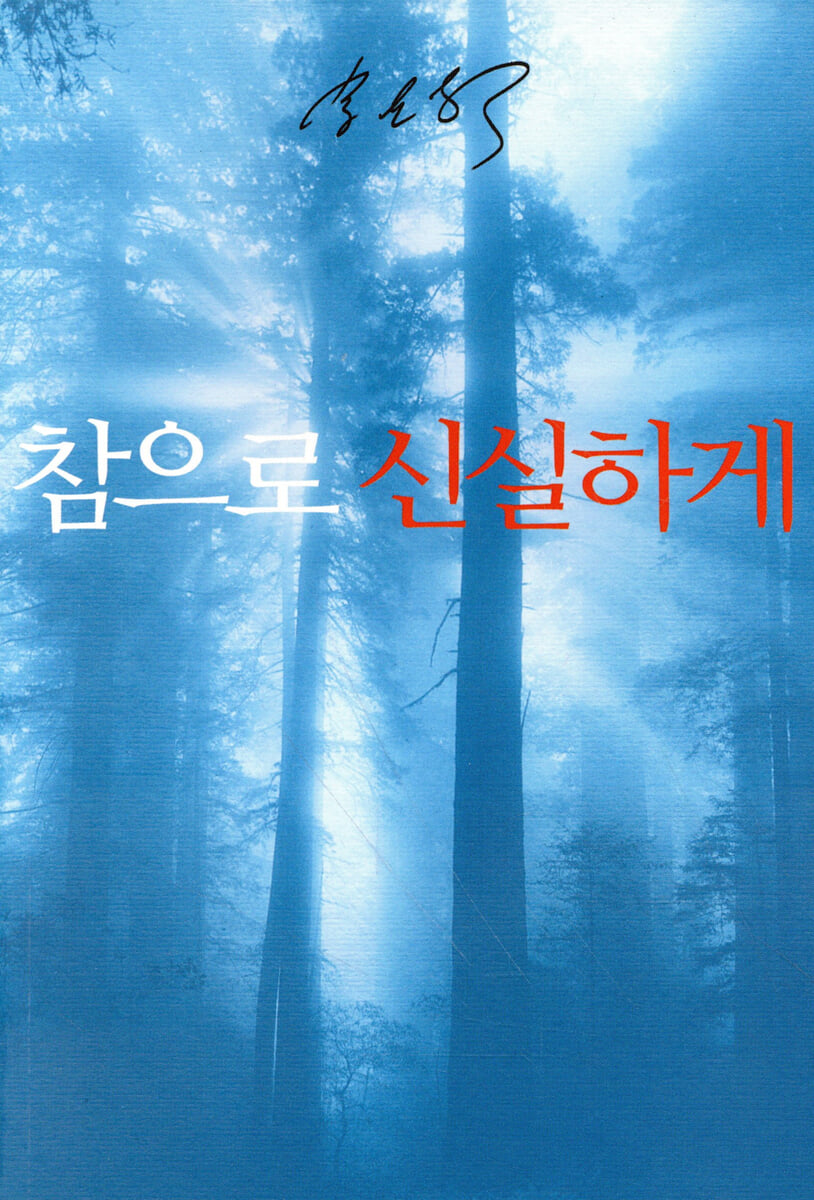
Truly faithful
 |
Description
Book Introduction
A Youth Letter Urging the Restoration of the Essence of Faith
It is, in a way, a very easy argument to criticize everything and also acknowledge everything.
But the world's most important values have one name.
Self, spouse, parents...
And God.
Christianity is a religion that knows how to regard such precious values as unique.
This book firmly defines the essence of faith through the four core values of Christianity: Word, Faith, Salvation, and Life.
“During the three years I lived in Geneva, Switzerland, the geopolitical heart of Europe, I was forced to think about essential things.
In the middle of Europe, where there is a Christian history but no ministry of the Word, where Christian culture flourishes but the life of rebirth is lost, where churches are numerous but believers are disappearing, where theology is alive but faith is absent, and where humans exist but God is denied.
In it, I couldn't help but ponder what God's word meant to me, what faith and salvation specifically meant, and what it ultimately meant to live as a Christian.
And there was a very simple conclusion to be reached.
“Faith is sincerity, and sincerity is faithfulness to essence.” - From the preface
Pastor Lee Jae-cheol's second youth letter, which will stop the always busy people in their tracks.
If the first letter clearly addressed 20 spiritual questions that young people are concerned about, the second letter deals with four topics in depth: the word, faith, salvation, and life.
The author provides answers to the most fundamental questions for Christians who are wondering what true faith is.
Faith is faithfulness, and faithfulness is faithfulness to essence.
And I urge you to make the knowledge of essence a true knowledge that you can live out in your life.
The words have meaning only when they are brought to life, and only through faith can we dream of a perfect tomorrow, and through the miracle of salvation, we can possess eternity.
And finally, he emphasizes that wherever God calls us on this earth, we will be used as God's faithful instruments when we live faithfully in that place.
But the world's most important values have one name.
Self, spouse, parents...
And God.
Christianity is a religion that knows how to regard such precious values as unique.
This book firmly defines the essence of faith through the four core values of Christianity: Word, Faith, Salvation, and Life.
“During the three years I lived in Geneva, Switzerland, the geopolitical heart of Europe, I was forced to think about essential things.
In the middle of Europe, where there is a Christian history but no ministry of the Word, where Christian culture flourishes but the life of rebirth is lost, where churches are numerous but believers are disappearing, where theology is alive but faith is absent, and where humans exist but God is denied.
In it, I couldn't help but ponder what God's word meant to me, what faith and salvation specifically meant, and what it ultimately meant to live as a Christian.
And there was a very simple conclusion to be reached.
“Faith is sincerity, and sincerity is faithfulness to essence.” - From the preface
Pastor Lee Jae-cheol's second youth letter, which will stop the always busy people in their tracks.
If the first letter clearly addressed 20 spiritual questions that young people are concerned about, the second letter deals with four topics in depth: the word, faith, salvation, and life.
The author provides answers to the most fundamental questions for Christians who are wondering what true faith is.
Faith is faithfulness, and faithfulness is faithfulness to essence.
And I urge you to make the knowledge of essence a true knowledge that you can live out in your life.
The words have meaning only when they are brought to life, and only through faith can we dream of a perfect tomorrow, and through the miracle of salvation, we can possess eternity.
And finally, he emphasizes that wherever God calls us on this earth, we will be used as God's faithful instruments when we live faithfully in that place.
Into the book
We come to clearly understand what values God demands of humans, or in other words, what values Christians must pursue.
It goes without saying that it is to practice God's word, that is, to live according to the word.
Faith is belief in the Word of God, and faith in the Word necessarily entails living a life according to the Word.
It goes without saying that it is to practice God's word, that is, to live according to the word.
Faith is belief in the Word of God, and faith in the Word necessarily entails living a life according to the Word.
--- From the text
The human eye cannot see things that are far away, nor can it see things that are very close, that is, right in front of its eyes.
We cannot see things as large as the universe, nor can we see things as small as bacteria.
I cannot see anything as bright as the sun, nor anything as dark as darkness.
If there is an obstacle blocking your view, you have no way of seeing what is happening beyond it.
Even though it is clearly a part of my body, I cannot even see what disease is inside me.
No matter how close you are, there is no way to see a person's heart.
If human eyes could see into the human heart, the words 'deceived' and 'betrayed' would not exist at all.
Above all, human eyes cannot see even an inch ahead of themselves.
You have no idea what will happen in just one second.
If the thousands of people who lost their lives senselessly in the 9/11 terrorist attacks had been able to foresee their future, they would not have been present at the scene of the disaster on that day, at that time.
Although it is true that seeing is believing, the human ability to see is imperfect.
It seems like you can see everything, but you can't see anything that really matters.
If this is the truth about human vision, then hearing goes without saying.
The saying that seeing once is better than hearing a hundred times means that hearing is only one-hundredth as efficient as sight.
So what about hearing, which is only one-hundredth of the imperfect human vision? Human cognitive abilities, including sight and hearing, are thus insignificant and extremely limited.
This is where faith begins.
As I write this, I cannot see or hear where my family is or what they are doing.
If I could see them now, it would be enough to recognize their appearance and condition.
But since they are now beyond my current range of awareness, I continue to write at this moment, believing that they are safe.
(...)
Our relationship with God is exactly like this.
It is impossible for finite humans to fully recognize the infinite God.
If that were possible, God would be sufficient as an object of knowledge.
However, since complete human knowledge of God is impossible, that is, since humans cannot fully see or hear God with their limited eyesight and hearing, God always exists only as an object of faith.
In other words, a relationship with God cannot be established without faith.
So Hebrews 11:1, which is called the 'hall of faith', begins like this:
Now faith is the substance of things hoped for, the evidence of things not seen.
The human eye cannot see things that are far away, nor can it see things that are very close, that is, right in front of its eyes.
We cannot see things as large as the universe, nor can we see things as small as bacteria.
I cannot see anything as bright as the sun, nor anything as dark as darkness.
If there is an obstacle blocking your view, you have no way of seeing what is happening beyond it.
Even though it is clearly a part of my body, I cannot even see what disease is inside me.
No matter how close you are, there is no way to see a person's heart.
If human eyes could see into the human heart, the words 'deceived' and 'betrayed' would not exist at all.
Above all, human eyes cannot see even an inch ahead of themselves.
You have no idea what will happen in just one second.
If the thousands of people who lost their lives senselessly in the 9/11 terrorist attacks had been able to foresee their future, they would not have been present at the scene of the disaster on that day, at that time.
Although it is true that seeing is believing, the human ability to see is imperfect.
It seems like you can see everything, but you can't see anything that really matters.
If this is the truth about human vision, then hearing goes without saying.
The saying that seeing once is better than hearing a hundred times means that hearing is only one-hundredth as efficient as sight.
So what about hearing, which is only one-hundredth of the imperfect human vision? Human cognitive abilities, including sight and hearing, are thus insignificant and extremely limited.
This is where faith begins.
As I write this, I cannot see or hear where my family is or what they are doing.
If I could see them now, it would be enough to recognize their appearance and condition.
But since they are now beyond my current range of awareness, I continue to write at this moment, believing that they are safe.
(...)
Our relationship with God is exactly like this.
It is impossible from the beginning for finite humans to fully recognize the infinite God.
If that were possible, God would be sufficient as an object of knowledge.
However, since complete human knowledge of God is impossible, that is, since humans cannot fully see or hear God with their limited eyesight and hearing, God always exists only as an object of faith.
In other words, a relationship with God cannot be established without faith.
So Hebrews 11:1, which is called the 'hall of faith', begins like this:
Now faith is the substance of things hoped for, the evidence of things not seen.
We cannot see things as large as the universe, nor can we see things as small as bacteria.
I cannot see anything as bright as the sun, nor anything as dark as darkness.
If there is an obstacle blocking your view, you have no way of seeing what is happening beyond it.
Even though it is clearly a part of my body, I cannot even see what disease is inside me.
No matter how close you are, there is no way to see a person's heart.
If human eyes could see into the human heart, the words 'deceived' and 'betrayed' would not exist at all.
Above all, human eyes cannot see even an inch ahead of themselves.
You have no idea what will happen in just one second.
If the thousands of people who lost their lives senselessly in the 9/11 terrorist attacks had been able to foresee their future, they would not have been present at the scene of the disaster on that day, at that time.
Although it is true that seeing is believing, the human ability to see is imperfect.
It seems like you can see everything, but you can't see anything that really matters.
If this is the truth about human vision, then hearing goes without saying.
The saying that seeing once is better than hearing a hundred times means that hearing is only one-hundredth as efficient as sight.
So what about hearing, which is only one-hundredth of the imperfect human vision? Human cognitive abilities, including sight and hearing, are thus insignificant and extremely limited.
This is where faith begins.
As I write this, I cannot see or hear where my family is or what they are doing.
If I could see them now, it would be enough to recognize their appearance and condition.
But since they are now beyond my current range of awareness, I continue to write at this moment, believing that they are safe.
(...)
Our relationship with God is exactly like this.
It is impossible for finite humans to fully recognize the infinite God.
If that were possible, God would be sufficient as an object of knowledge.
However, since complete human knowledge of God is impossible, that is, since humans cannot fully see or hear God with their limited eyesight and hearing, God always exists only as an object of faith.
In other words, a relationship with God cannot be established without faith.
So Hebrews 11:1, which is called the 'hall of faith', begins like this:
Now faith is the substance of things hoped for, the evidence of things not seen.
The human eye cannot see things that are far away, nor can it see things that are very close, that is, right in front of its eyes.
We cannot see things as large as the universe, nor can we see things as small as bacteria.
I cannot see anything as bright as the sun, nor anything as dark as darkness.
If there is an obstacle blocking your view, you have no way of seeing what is happening beyond it.
Even though it is clearly a part of my body, I cannot even see what disease is inside me.
No matter how close you are, there is no way to see a person's heart.
If human eyes could see into the human heart, the words 'deceived' and 'betrayed' would not exist at all.
Above all, human eyes cannot see even an inch ahead of themselves.
You have no idea what will happen in just one second.
If the thousands of people who lost their lives senselessly in the 9/11 terrorist attacks had been able to foresee their future, they would not have been present at the scene of the disaster on that day, at that time.
Although it is true that seeing is believing, the human ability to see is imperfect.
It seems like you can see everything, but you can't see anything that really matters.
If this is the truth about human vision, then hearing goes without saying.
The saying that seeing once is better than hearing a hundred times means that hearing is only one-hundredth as efficient as sight.
So what about hearing, which is only one-hundredth of the imperfect human vision? Human cognitive abilities, including sight and hearing, are thus insignificant and extremely limited.
This is where faith begins.
As I write this, I cannot see or hear where my family is or what they are doing.
If I could see them now, it would be enough to recognize their appearance and condition.
But since they are now beyond my current range of awareness, I continue to write at this moment, believing that they are safe.
(...)
Our relationship with God is exactly like this.
It is impossible from the beginning for finite humans to fully recognize the infinite God.
If that were possible, God would be sufficient as an object of knowledge.
However, since complete human knowledge of God is impossible, that is, since humans cannot fully see or hear God with their limited eyesight and hearing, God always exists only as an object of faith.
In other words, a relationship with God cannot be established without faith.
So Hebrews 11:1, which is called the 'hall of faith', begins like this:
Now faith is the substance of things hoped for, the evidence of things not seen.
--- From the text
In a patriarchal society like Judea two thousand years ago, it would have been unthinkable for a married woman to be the first to file for divorce.
But there was one case where the impossible was possible.
If a woman found out after marriage that her husband was a blacksmith, she could unconditionally file for divorce and have it executed.
The unclean thief was not human.
Given this fact, it was impossible for anyone but a normal person to sleep in Pijang's house.
To sleep in the janitor's house, you must cover yourself with the janitor's blanket, wipe your face with the janitor's towel, eat with the janitor's eating utensils, and relieve yourself in the janitor's toilet.
It was something that no normal person would even think about, as it meant throwing oneself into the pond of negativity.
Nevertheless, Peter refused the requests of many Christians who wanted to host him, and stayed at the house of Simon the tanner, and not just for one day, but for several days.
So people understand this as evidence that the early church broke down class consciousness about occupation.
That's certainly true, but it's not the whole story.
Peter's sleeping in the tanner's house contains a much more profound message.
If touching the carcass of an unclean animal is considered unclean, not to mention physical contact with a tanner, then leather products made by a tanner should also be considered unclean.
Because leather products are made by the unclean hands of unclean tanners, the uncleanness of the tanners is bound to be transferred to all leather products.
But the Jews were different in that regard.
Far from being considered unscrupulous, leather products such as belts, clothes, shoes, and bags were indispensable and valuable necessities in Jewish life.
Of course, I would have preferred a more luxurious product.
So how frightening is this duality and contradiction?
If a tanner is considered unclean and not even treated as a human being, then leather products made by the hands of an unclean tanner should also be considered unclean.
If you value leather products as precious necessities, the tanner who provides them should also treat them with respect.
No, at least they should not be denied as subhuman beings.
(...) So now we know why the Acts of the Apostles emphasizes the fact that Peter stayed at the house of Simon the tanner.
The reason Peter refused the invitations of many people in Joppa and slept in the tanner's house was because he was a man who had achieved self-integration in the Word.
Given that Peter was a Jew, it is easy to guess that he too was a man of duality and self-contradiction, preferring leather products while treating tanners as less than human.
However, as we see in God's word, the tanner was also a child of God who bore God's image, and a servant of God who faithfully guarded a part of this world that God had created.
So Peter chose the tanner's house without hesitation and stayed there for several days, using the tanner's bedding, towels, and utensils.
It was a repentance for the wrong life he had led until then, which had been denying the truth, and at the same time, it was a self-affirmation of himself, who had overcome self-contradiction and duality and achieved self-integration in the Word.
In a patriarchal society like Judea two thousand years ago, it would have been unthinkable for a married woman to be the first to file for divorce.
But there was one case where the impossible was possible.
If a woman found out after marriage that her husband was a blacksmith, she could unconditionally file for divorce and have it executed.
The unclean thief was not human.
Given this fact, it was impossible for anyone but a normal person to sleep in Pijang's house.
To sleep in the janitor's house, you must cover yourself with the janitor's blanket, wipe your face with the janitor's towel, eat with the janitor's eating utensils, and relieve yourself in the janitor's toilet.
It was something that no normal person would even think about, as it meant throwing oneself into the pond of negativity.
Nevertheless, Peter refused the requests of many Christians who wanted to host him, and stayed at the house of Simon the tanner, and not just for one day, but for several days.
So people understand this as evidence that the early church broke down class consciousness about occupation.
That's certainly true, but it's not the whole story.
Peter's sleeping in the tanner's house contains a much more profound message.
If touching the carcass of an unclean animal is considered unclean, not to mention physical contact with a tanner, then leather products made by a tanner should also be considered unclean.
Because leather products are made by the unclean hands of unclean tanners, the uncleanness of the tanners is bound to be transferred to all leather products.
But the Jews were different in that regard.
Far from being considered unwholesome, leather products such as belts, clothes, shoes, and bags were indispensable and valuable necessities in Jewish life.
Of course, I would have preferred a more luxurious product.
So how frightening is this duality and contradiction?
If a tanner is considered unclean and not even treated as a human being, then leather products made by the hands of an unclean tanner should also be considered unclean.
If you value leather products as precious necessities, the tanner who provides them should also treat them with respect.
No, at least they should not be denied as subhuman beings.
(...) So now we know why the Acts of the Apostles emphasizes the fact that Peter stayed at the house of Simon the tanner.
The reason Peter refused the invitations of many people in Joppa and slept in the tanner's house was because he was a man who had achieved self-integration in the Word.
Given that Peter was a Jew, it is easy to guess that he too was a man of duality and self-contradiction, preferring leather products while treating tanners as less than human.
However, as we see in God's word, the tanner was also a child of God who bore God's image, and a servant of God who faithfully guarded a part of this world that God had created.
So Peter chose the tanner's house without hesitation and stayed there for several days, using the tanner's bedding, towels, and utensils.
It was a repentance for the wrong life he had led until then, which had been denying the truth, and at the same time, it was a self-affirmation of himself, who had overcome self-contradiction and duality and achieved self-integration in the Word.
But there was one case where the impossible was possible.
If a woman found out after marriage that her husband was a blacksmith, she could unconditionally file for divorce and have it executed.
The unclean thief was not human.
Given this fact, it was impossible for anyone but a normal person to sleep in Pijang's house.
To sleep in the janitor's house, you must cover yourself with the janitor's blanket, wipe your face with the janitor's towel, eat with the janitor's eating utensils, and relieve yourself in the janitor's toilet.
It was something that no normal person would even think about, as it meant throwing oneself into the pond of negativity.
Nevertheless, Peter refused the requests of many Christians who wanted to host him, and stayed at the house of Simon the tanner, and not just for one day, but for several days.
So people understand this as evidence that the early church broke down class consciousness about occupation.
That's certainly true, but it's not the whole story.
Peter's sleeping in the tanner's house contains a much more profound message.
If touching the carcass of an unclean animal is considered unclean, not to mention physical contact with a tanner, then leather products made by a tanner should also be considered unclean.
Because leather products are made by the unclean hands of unclean tanners, the uncleanness of the tanners is bound to be transferred to all leather products.
But the Jews were different in that regard.
Far from being considered unscrupulous, leather products such as belts, clothes, shoes, and bags were indispensable and valuable necessities in Jewish life.
Of course, I would have preferred a more luxurious product.
So how frightening is this duality and contradiction?
If a tanner is considered unclean and not even treated as a human being, then leather products made by the hands of an unclean tanner should also be considered unclean.
If you value leather products as precious necessities, the tanner who provides them should also treat them with respect.
No, at least they should not be denied as subhuman beings.
(...) So now we know why the Acts of the Apostles emphasizes the fact that Peter stayed at the house of Simon the tanner.
The reason Peter refused the invitations of many people in Joppa and slept in the tanner's house was because he was a man who had achieved self-integration in the Word.
Given that Peter was a Jew, it is easy to guess that he too was a man of duality and self-contradiction, preferring leather products while treating tanners as less than human.
However, as we see in God's word, the tanner was also a child of God who bore God's image, and a servant of God who faithfully guarded a part of this world that God had created.
So Peter chose the tanner's house without hesitation and stayed there for several days, using the tanner's bedding, towels, and utensils.
It was a repentance for the wrong life he had led until then, which had been denying the truth, and at the same time, it was a self-affirmation of himself, who had overcome self-contradiction and duality and achieved self-integration in the Word.
In a patriarchal society like Judea two thousand years ago, it would have been unthinkable for a married woman to be the first to file for divorce.
But there was one case where the impossible was possible.
If a woman found out after marriage that her husband was a blacksmith, she could unconditionally file for divorce and have it executed.
The unclean thief was not human.
Given this fact, it was impossible for anyone but a normal person to sleep in Pijang's house.
To sleep in the janitor's house, you must cover yourself with the janitor's blanket, wipe your face with the janitor's towel, eat with the janitor's eating utensils, and relieve yourself in the janitor's toilet.
It was something that no normal person would even think about, as it meant throwing oneself into the pond of negativity.
Nevertheless, Peter refused the requests of many Christians who wanted to host him, and stayed at the house of Simon the tanner, and not just for one day, but for several days.
So people understand this as evidence that the early church broke down class consciousness about occupation.
That's certainly true, but it's not the whole story.
Peter's sleeping in the tanner's house contains a much more profound message.
If touching the carcass of an unclean animal is considered unclean, not to mention physical contact with a tanner, then leather products made by a tanner should also be considered unclean.
Because leather products are made by the unclean hands of unclean tanners, the uncleanness of the tanners is bound to be transferred to all leather products.
But the Jews were different in that regard.
Far from being considered unwholesome, leather products such as belts, clothes, shoes, and bags were indispensable and valuable necessities in Jewish life.
Of course, I would have preferred a more luxurious product.
So how frightening is this duality and contradiction?
If a tanner is considered unclean and not even treated as a human being, then leather products made by the hands of an unclean tanner should also be considered unclean.
If you value leather products as precious necessities, the tanner who provides them should also treat them with respect.
No, at least they should not be denied as subhuman beings.
(...) So now we know why the Acts of the Apostles emphasizes the fact that Peter stayed at the house of Simon the tanner.
The reason Peter refused the invitations of many people in Joppa and slept in the tanner's house was because he was a man who had achieved self-integration in the Word.
Given that Peter was a Jew, it is easy to guess that he too was a man of duality and self-contradiction, preferring leather products while treating tanners as less than human.
However, as we see in God's word, the tanner was also a child of God who bore God's image, and a servant of God who faithfully guarded a part of this world that God had created.
So Peter chose the tanner's house without hesitation and stayed there for several days, using the tanner's bedding, towels, and utensils.
It was a repentance for the wrong life he had led until then, which had been denying the truth, and at the same time, it was a self-affirmation of himself, who had overcome self-contradiction and duality and achieved self-integration in the Word.
--- From the text
(...) It tells the story of how the newborn baby Moses was saved after being thrown into the Nile River.
Ironically, the person who rescued the child was the daughter of Pharaoh, the Egyptian king who had ordered that all newborn Jewish male babies be thrown into the river and killed.
And the more I think about all of this, the more mysterious it becomes.
Just as the reed basket containing the child was being set afloat on the Nile, the Egyptian princess suddenly felt the urge to take a bath.
If he had bathed in the golden palace bathhouse, history would not have happened.
That day she insisted on bathing in the Nile River.
In the Nile River, where there is a box with a child in it.
While the princess was bathing, several maids began walking along the riverbank.
If they had walked in the opposite direction, history would have been impossible.
The maids happened to walk towards the reeds where the child's box was hanging, and thanks to that, the box caught the princess's eye.
Hadn't the princess's curiosity been piqued by the sight of that insignificant reed box? Yet, she had her maid bring it to her and open it.
Inside the box was a Hebrew child.
He was the son of a slave whom his father had ordered to be killed.
What if the child hadn't cried at that moment? But the child cried so loudly that the princess's maternal instincts began to stir.
At that moment, the child's sister, who had been hiding, approached the princess.
What if the princess's bodyguards had stopped the child's sister then? But there were no bodyguards that day.
So, a Hebrew slave girl could go to the princess of the great Egyptian Empire without anyone's permission and recommend her child's biological mother as a wet nurse.
What if the princess had rejected the offer of a lowly slave girl and hired an Egyptian woman as her child's wet nurse? But the princess believed the words of a complete stranger and accepted.
So, the child was saved as the princess's adopted child, but was able to grow up as an Israelite in the arms of his biological mother.
If just one of the above-mentioned processes had been out of order, Moses would not have existed.
(...) The Old Testament book of Esther also reminds us of this fact.
Esther 1 begins with the story of King Ahasuerus of the Persian Empire.
He called together all the people of the city, big and small, and threw a great feast that lasted seven days.
On the last day of the banquet, King Ahasuerus, in the midst of his drinking, sent for Queen Vashti to come out to the banquet table.
But for some reason, the queen refused the king's request.
When the king was enraged and asked his officials for a solution, Memucan suggested that the king depose Queen Vashti, and the king did so on the spot.
Even though she was a queen, it was difficult to imagine at the time that she would refuse the orders of the king, who was an absolute monarch.
Even though the queen had disobeyed the king's orders, it was also absurd for a subject to dare to advise the king to depose the queen.
If the king does not accept the advice, the minister who suggested the dethronement of the queen will not be able to survive.
Even if the advice of his subjects had been a hundred times correct, deposing the queen for a single act of disobedience was an extremely reckless act for the king of a great empire.
And yet, that absurd thing actually happened in the palace.
And we know very well what happens next in Esther chapter 2.
After the deposed queen Vashti, Esther, a Jewish woman, was chosen as queen.
If Vashti had not been deposed, Esther would never have become queen.
If so, we can see that the deposed Queen Vashti incident was God's work to prepare the Jewish woman Esther to become queen.
No, it was God's providence to protect the Jewish people from Haman's plot to massacre all the Jews through Esther, who became queen.
(...) It tells the story of how the newborn baby Moses was saved after being thrown into the Nile River.
Ironically, the person who rescued the child was the daughter of Pharaoh, the Egyptian king who had ordered that all newborn Jewish male babies be thrown into the river and killed.
And the more I think about all of this, the more mysterious it becomes.
Just as the reed basket containing the child was being set afloat on the Nile, the Egyptian princess suddenly felt the urge to take a bath.
If he had bathed in the golden palace bathhouse, history would not have happened.
That day she insisted on bathing in the Nile River.
In the Nile River, where there is a box with a child in it.
While the princess was bathing, several maids began walking along the riverbank.
If they had walked in the opposite direction, history would have been impossible.
The maids happened to walk towards the reeds where the child's box was hanging, and thanks to that, the box caught the princess's eye.
Hadn't the princess's curiosity been piqued by the sight of that insignificant reed box? Yet, she had her maid bring it to her and open it.
Inside the box was a Hebrew child.
He was the son of a slave whom his father had ordered to be killed.
What if the child hadn't cried at that moment? But the child cried so loudly that the princess's maternal instincts began to stir.
At that moment, the child's sister, who had been hiding, approached the princess.
What if the princess's bodyguards had stopped the child's sister then? But there were no bodyguards that day.
So, a Hebrew slave girl could go to the princess of the great Egyptian Empire without anyone's permission and recommend her child's biological mother as a wet nurse.
What if the princess had rejected the offer of a lowly slave girl and hired an Egyptian woman as her child's wet nurse? But the princess believed the words of a complete stranger and accepted.
So, the child was saved as the princess's adopted child, but was able to grow up as an Israelite in the arms of his biological mother.
If just one of the above-listed processes had been out of order, Moses would not have existed.
(...) The Old Testament book of Esther also reminds us of this fact.
Esther 1 begins with the story of King Ahasuerus of the Persian Empire.
He called together all the people of the city, big and small, and threw a great feast that lasted seven days.
On the last day of the banquet, King Ahasuerus, in the midst of his drinking, sent for Queen Vashti to come out to the banquet table.
But for some reason, the queen refused the king's request.
When the king was enraged and asked his officials for advice, Memucan suggested that the king depose Queen Vashti, and the king did so immediately.
Even though she was a queen, it was difficult to imagine at the time that she would refuse the orders of the king, who was an absolute monarch.
Even though the queen had disobeyed the king's orders, it was also absurd for a subject to dare to advise the king to depose the queen.
If the king does not accept the advice, the minister who suggested the dethronement of the queen will not be able to survive.
Even if the advice of his subjects had been right a hundred times over, deposing the queen for a single act of disobedience was an incredibly reckless act for the king of a great empire.
And yet, that absurd thing actually happened in the palace.
And we know very well what happens next in Esther chapter 2.
After the deposed queen Vashti, Esther, a Jewish woman, was chosen as queen.
If Vashti had not been deposed, Esther would never have become queen.
If so, we can see that the deposed Queen Vashti incident was God's work to prepare the Jewish woman Esther to become queen.
No, it was God's providence to protect the Jewish people from Haman's plot to massacre all the Jews through Esther, who became queen.
Ironically, the person who rescued the child was the daughter of Pharaoh, the Egyptian king who had ordered that all newborn Jewish male babies be thrown into the river and killed.
And the more I think about all of this, the more mysterious it becomes.
Just as the reed basket containing the child was being set afloat on the Nile, the Egyptian princess suddenly felt the urge to take a bath.
If he had bathed in the golden palace bathhouse, history would not have happened.
That day she insisted on bathing in the Nile River.
In the Nile River, where there is a box with a child in it.
While the princess was bathing, several maids began walking along the riverbank.
If they had walked in the opposite direction, history would have been impossible.
The maids happened to walk towards the reeds where the child's box was hanging, and thanks to that, the box caught the princess's eye.
Hadn't the princess's curiosity been piqued by the sight of that insignificant reed box? Yet, she had her maid bring it to her and open it.
Inside the box was a Hebrew child.
He was the son of a slave whom his father had ordered to be killed.
What if the child hadn't cried at that moment? But the child cried so loudly that the princess's maternal instincts began to stir.
At that moment, the child's sister, who had been hiding, approached the princess.
What if the princess's bodyguards had stopped the child's sister then? But there were no bodyguards that day.
So, a Hebrew slave girl could go to the princess of the great Egyptian Empire without anyone's permission and recommend her child's biological mother as a wet nurse.
What if the princess had rejected the offer of a lowly slave girl and hired an Egyptian woman as her child's wet nurse? But the princess believed the words of a complete stranger and accepted.
So, the child was saved as the princess's adopted child, but was able to grow up as an Israelite in the arms of his biological mother.
If just one of the above-mentioned processes had been out of order, Moses would not have existed.
(...) The Old Testament book of Esther also reminds us of this fact.
Esther 1 begins with the story of King Ahasuerus of the Persian Empire.
He called together all the people of the city, big and small, and threw a great feast that lasted seven days.
On the last day of the banquet, King Ahasuerus, in the midst of his drinking, sent for Queen Vashti to come out to the banquet table.
But for some reason, the queen refused the king's request.
When the king was enraged and asked his officials for a solution, Memucan suggested that the king depose Queen Vashti, and the king did so on the spot.
Even though she was a queen, it was difficult to imagine at the time that she would refuse the orders of the king, who was an absolute monarch.
Even though the queen had disobeyed the king's orders, it was also absurd for a subject to dare to advise the king to depose the queen.
If the king does not accept the advice, the minister who suggested the dethronement of the queen will not be able to survive.
Even if the advice of his subjects had been a hundred times correct, deposing the queen for a single act of disobedience was an extremely reckless act for the king of a great empire.
And yet, that absurd thing actually happened in the palace.
And we know very well what happens next in Esther chapter 2.
After the deposed queen Vashti, Esther, a Jewish woman, was chosen as queen.
If Vashti had not been deposed, Esther would never have become queen.
If so, we can see that the deposed Queen Vashti incident was God's work to prepare the Jewish woman Esther to become queen.
No, it was God's providence to protect the Jewish people from Haman's plot to massacre all the Jews through Esther, who became queen.
(...) It tells the story of how the newborn baby Moses was saved after being thrown into the Nile River.
Ironically, the person who rescued the child was the daughter of Pharaoh, the Egyptian king who had ordered that all newborn Jewish male babies be thrown into the river and killed.
And the more I think about all of this, the more mysterious it becomes.
Just as the reed basket containing the child was being set afloat on the Nile, the Egyptian princess suddenly felt the urge to take a bath.
If he had bathed in the golden palace bathhouse, history would not have happened.
That day she insisted on bathing in the Nile River.
In the Nile River, where there is a box with a child in it.
While the princess was bathing, several maids began walking along the riverbank.
If they had walked in the opposite direction, history would have been impossible.
The maids happened to walk towards the reeds where the child's box was hanging, and thanks to that, the box caught the princess's eye.
Hadn't the princess's curiosity been piqued by the sight of that insignificant reed box? Yet, she had her maid bring it to her and open it.
Inside the box was a Hebrew child.
He was the son of a slave whom his father had ordered to be killed.
What if the child hadn't cried at that moment? But the child cried so loudly that the princess's maternal instincts began to stir.
At that moment, the child's sister, who had been hiding, approached the princess.
What if the princess's bodyguards had stopped the child's sister then? But there were no bodyguards that day.
So, a Hebrew slave girl could go to the princess of the great Egyptian Empire without anyone's permission and recommend her child's biological mother as a wet nurse.
What if the princess had rejected the offer of a lowly slave girl and hired an Egyptian woman as her child's wet nurse? But the princess believed the words of a complete stranger and accepted.
So, the child was saved as the princess's adopted child, but was able to grow up as an Israelite in the arms of his biological mother.
If just one of the above-listed processes had been out of order, Moses would not have existed.
(...) The Old Testament book of Esther also reminds us of this fact.
Esther 1 begins with the story of King Ahasuerus of the Persian Empire.
He called together all the people of the city, big and small, and threw a great feast that lasted seven days.
On the last day of the banquet, King Ahasuerus, in the midst of his drinking, sent for Queen Vashti to come out to the banquet table.
But for some reason, the queen refused the king's request.
When the king was enraged and asked his officials for advice, Memucan suggested that the king depose Queen Vashti, and the king did so immediately.
Even though she was a queen, it was difficult to imagine at the time that she would refuse the orders of the king, who was an absolute monarch.
Even though the queen had disobeyed the king's orders, it was also absurd for a subject to dare to advise the king to depose the queen.
If the king does not accept the advice, the minister who suggested the dethronement of the queen will not be able to survive.
Even if the advice of his subjects had been right a hundred times over, deposing the queen for a single act of disobedience was an incredibly reckless act for the king of a great empire.
And yet, that absurd thing actually happened in the palace.
And we know very well what happens next in Esther chapter 2.
After the deposed queen Vashti, Esther, a Jewish woman, was chosen as queen.
If Vashti had not been deposed, Esther would never have become queen.
If so, we can see that the deposed Queen Vashti incident was God's work to prepare the Jewish woman Esther to become queen.
No, it was God's providence to protect the Jewish people from Haman's plot to massacre all the Jews through Esther, who became queen.
--- From the text
GOODS SPECIFICS
- Date of issue: May 17, 2002
- Page count, weight, size: 278 pages | 389g | 153*224*20mm
- ISBN13: 9788936501914
- ISBN10: 8936501917
You may also like
카테고리
korean


korean

![ELLE 엘르 스페셜 에디션 A형 : 12월 [2025]](http://librairie.coreenne.fr/cdn/shop/files/b8e27a3de6c9538896439686c6b0e8fb.jpg?v=1766436872&width=3840)


