

How to get angry easily
 |
Description
Book Introduction
Children also get angry often.
Kids these days are even more like that.
The stress of school alone is immense, isn't it? Some parents may worry that their children become irritated or angry over trivial matters.
But anger isn't a bad thing.
Anger is a natural emotion, like joy or sadness, that arises when things don't go our way.
If you think about it, it is absolutely necessary to protect us, but it is often dismissed as something negative.
However, if we suppress anger by thinking of it as something negative, it can lead to what we all know as 'hwabyeong'.
Illness caused by anger can harm our bodies and minds, disrupt relationships with those around us, and lead us to make poor decisions when faced with important choices.
The illness of children with limitless potential can lead to even more fatal consequences.
Because if you can't control your anger well and let it sway you, you might end up giving up on something you could do well with just a little more effort, or you might give up and close off your own potential.
It's natural that anger can lead to poor interpersonal relationships.
If you want to steadily and tirelessly move toward your life goals from a young age, you need training that helps you face and manage your anger.
Getting angry also requires practice.
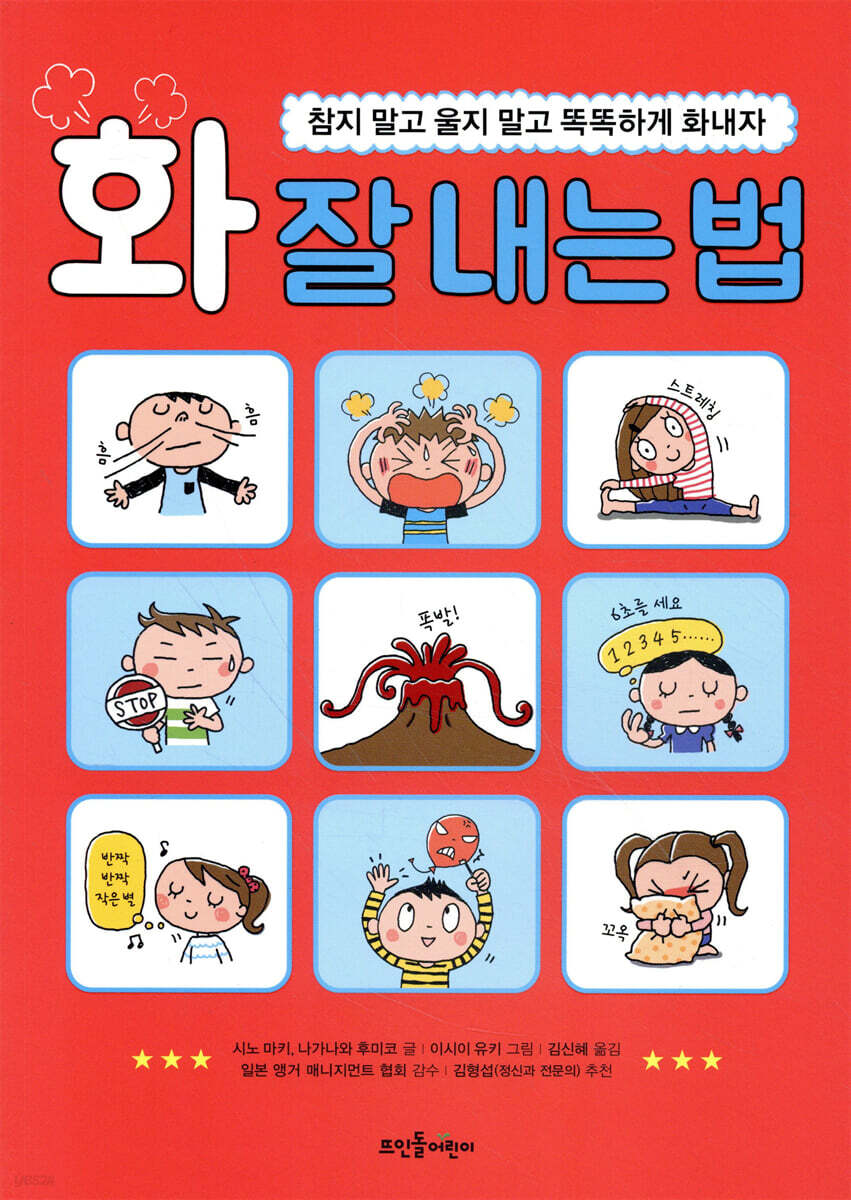
"How to Get Angry" is a book that helps children correctly understand the anger they often encounter in their daily lives and teaches them how to manage their anger and express it appropriately.
It is structured so that you can gradually learn what emotions you feel, what it looks like when you express those emotions, and what the consequences are when you express your emotions in the wrong way.
After reading stories of anger shared by friends of the same age, I learned how to get angry and practiced the methods related to those stories.
As you read the vivid experiences of friends, accompanied by fun illustrations, you will empathize and say, "I've felt this way too."
Also, the 'how to get angry' and activities taught in this book are logical, specific, and practical enough to be useful even for adults.
As you follow the activities in this book, you will realize that how you express your anger is ultimately your choice.
Sometimes there may be things that are difficult for children to do on their own.
Why not try keeping a book handy and talking with your child, solving each problem one by one with your parents or teacher? This can be a valuable opportunity to hear your child's inner thoughts, understanding why they're angry and what emotions lie beneath.
It will be a time for adults to reflect and realize things.
Getting angry easily is a skill, so just like learning to exercise or cook, the more you practice and refine it, the better you will become at it.
Even if you don't get it right the first time, there's a big difference between knowing the method and not knowing it.
If you keep practicing without getting discouraged, you'll get better, right?
For a healthy society where people don't take out their anger on each other
This book is based on work developed by the National Anger Management Association, headquartered in New York.
Anger management, which originated in the United States in the 1970s, has two main purposes.
The first is to become responsible for one's own life choices, and the second is to create healthy relationships and become a good member of society.
When you get caught up in anger, it's easy to end up blaming someone.
It becomes easy to take out your anger on someone you have no relationship with.
Anger is highly contagious, so the anger one person feels can have a negative impact on those around them.
This is why managing anger isn't just a personal matter.
The term 'intermittent explosive disorder' appears frequently in the news.
We've all seen incidents that literally resulted from poor anger management.
My anger management problem is not only ruining my life, but it is also causing great harm to those around me.
It is a serious problem that could lead to a huge tragedy if we just ignore it.
If adults realize how important it is to manage anger well and set an example for children, we can make our society healthier.
Wouldn't a society led by children who have learned how to control their anger be a better place?
Kids these days are even more like that.
The stress of school alone is immense, isn't it? Some parents may worry that their children become irritated or angry over trivial matters.
But anger isn't a bad thing.
Anger is a natural emotion, like joy or sadness, that arises when things don't go our way.
If you think about it, it is absolutely necessary to protect us, but it is often dismissed as something negative.
However, if we suppress anger by thinking of it as something negative, it can lead to what we all know as 'hwabyeong'.
Illness caused by anger can harm our bodies and minds, disrupt relationships with those around us, and lead us to make poor decisions when faced with important choices.
The illness of children with limitless potential can lead to even more fatal consequences.
Because if you can't control your anger well and let it sway you, you might end up giving up on something you could do well with just a little more effort, or you might give up and close off your own potential.
It's natural that anger can lead to poor interpersonal relationships.
If you want to steadily and tirelessly move toward your life goals from a young age, you need training that helps you face and manage your anger.
Getting angry also requires practice.
"How to Get Angry" is a book that helps children correctly understand the anger they often encounter in their daily lives and teaches them how to manage their anger and express it appropriately.
It is structured so that you can gradually learn what emotions you feel, what it looks like when you express those emotions, and what the consequences are when you express your emotions in the wrong way.
After reading stories of anger shared by friends of the same age, I learned how to get angry and practiced the methods related to those stories.
As you read the vivid experiences of friends, accompanied by fun illustrations, you will empathize and say, "I've felt this way too."
Also, the 'how to get angry' and activities taught in this book are logical, specific, and practical enough to be useful even for adults.
As you follow the activities in this book, you will realize that how you express your anger is ultimately your choice.
Sometimes there may be things that are difficult for children to do on their own.
Why not try keeping a book handy and talking with your child, solving each problem one by one with your parents or teacher? This can be a valuable opportunity to hear your child's inner thoughts, understanding why they're angry and what emotions lie beneath.
It will be a time for adults to reflect and realize things.
Getting angry easily is a skill, so just like learning to exercise or cook, the more you practice and refine it, the better you will become at it.
Even if you don't get it right the first time, there's a big difference between knowing the method and not knowing it.
If you keep practicing without getting discouraged, you'll get better, right?
For a healthy society where people don't take out their anger on each other
This book is based on work developed by the National Anger Management Association, headquartered in New York.
Anger management, which originated in the United States in the 1970s, has two main purposes.
The first is to become responsible for one's own life choices, and the second is to create healthy relationships and become a good member of society.
When you get caught up in anger, it's easy to end up blaming someone.
It becomes easy to take out your anger on someone you have no relationship with.
Anger is highly contagious, so the anger one person feels can have a negative impact on those around them.
This is why managing anger isn't just a personal matter.
The term 'intermittent explosive disorder' appears frequently in the news.
We've all seen incidents that literally resulted from poor anger management.
My anger management problem is not only ruining my life, but it is also causing great harm to those around me.
It is a serious problem that could lead to a huge tragedy if we just ignore it.
If adults realize how important it is to manage anger well and set an example for children, we can make our society healthier.
Wouldn't a society led by children who have learned how to control their anger be a better place?
- You can preview some of the book's contents.
Preview
index
1 Know what anger is
1.
What is a prickly tingle? 2.
Getting angry isn't necessarily a bad thing 3.
This kind of anger is a problem 4.
Anger has these characteristics: 5.
This is the process of getting angry 6.
It's up to you to control your anger.
Smart Anger - Words to Express Anger
2 Don't get angry impulsively
7.
First, remember the 6-second rule. 8.
9. When you are fooled by a friend's trick.
10. When a toy is taken away.
11. When the meeting is not going well.
12. When you are cut off while waiting in line.
13. When you are treated unfairly without reason.
When you are forced to do something you don't want to do
Getting Angry Smart - Practice Impulse Control
3 Change your mindset
14.
If I insist on my own thoughts, it will cause trouble. 15.
Expand your tolerant mind 16.
17. When a fight broke out.
18. When you are paired with a child you dislike.
19. When your friend suddenly gets angry.
20. When your friends won't let you play.
21. When I got scolded by my teacher.
When I feel like I'm the only one suffering a loss
Wait! - Let's record the anger
Getting angry smartly - not getting angry because you 'have to'
4. Learn how to express your anger well
22.
23 Three Rules to Follow When You're Angry
Four Taboos to Avoid When You're Angry 24.
25. When you do not return something you borrowed.
26. When a friend tries to manipulate me according to his will.
27. When the same friend hurts you every time.
28. When you become a laughing stock.
29. When a friend breaks a promise.
When your friend lies
Getting Angry Smartly - How Our Body Reacts When We Get Angry
5 Decide my own actions
30.
Which way should I take at the crossroads? - 31.
Which way should I choose at the crossroads? -② 32.
33. When you are suspected by your friends.
34. When there is something that cannot be done no matter how much you practice.
35. When the teacher doesn't believe me.
36. When I feel like my friend is badmouthing me.
37. When your grades don't improve as much as you expected.
When you don't know why, but you feel irritated
Getting Angry the Smart Way - Step-by-Step Guide to Getting Angry
6 ways to get angry well - a complete summary
38.
My own method for when I get angry 39.
40 Things That Calm You Down.
Words to express emotions 41.
42 things I regret doing because I got angry.
43 Things That Worked Out Because I Got Angry
How to Get Angry Quiz
* To parents or teachers who read this book together
* Tasks and objectives of each chapter
1.
What is a prickly tingle? 2.
Getting angry isn't necessarily a bad thing 3.
This kind of anger is a problem 4.
Anger has these characteristics: 5.
This is the process of getting angry 6.
It's up to you to control your anger.
Smart Anger - Words to Express Anger
2 Don't get angry impulsively
7.
First, remember the 6-second rule. 8.
9. When you are fooled by a friend's trick.
10. When a toy is taken away.
11. When the meeting is not going well.
12. When you are cut off while waiting in line.
13. When you are treated unfairly without reason.
When you are forced to do something you don't want to do
Getting Angry Smart - Practice Impulse Control
3 Change your mindset
14.
If I insist on my own thoughts, it will cause trouble. 15.
Expand your tolerant mind 16.
17. When a fight broke out.
18. When you are paired with a child you dislike.
19. When your friend suddenly gets angry.
20. When your friends won't let you play.
21. When I got scolded by my teacher.
When I feel like I'm the only one suffering a loss
Wait! - Let's record the anger
Getting angry smartly - not getting angry because you 'have to'
4. Learn how to express your anger well
22.
23 Three Rules to Follow When You're Angry
Four Taboos to Avoid When You're Angry 24.
25. When you do not return something you borrowed.
26. When a friend tries to manipulate me according to his will.
27. When the same friend hurts you every time.
28. When you become a laughing stock.
29. When a friend breaks a promise.
When your friend lies
Getting Angry Smartly - How Our Body Reacts When We Get Angry
5 Decide my own actions
30.
Which way should I take at the crossroads? - 31.
Which way should I choose at the crossroads? -② 32.
33. When you are suspected by your friends.
34. When there is something that cannot be done no matter how much you practice.
35. When the teacher doesn't believe me.
36. When I feel like my friend is badmouthing me.
37. When your grades don't improve as much as you expected.
When you don't know why, but you feel irritated
Getting Angry the Smart Way - Step-by-Step Guide to Getting Angry
6 ways to get angry well - a complete summary
38.
My own method for when I get angry 39.
40 Things That Calm You Down.
Words to express emotions 41.
42 things I regret doing because I got angry.
43 Things That Worked Out Because I Got Angry
How to Get Angry Quiz
* To parents or teachers who read this book together
* Tasks and objectives of each chapter
GOODS SPECIFICS
- Date of issue: October 31, 2017
- Page count, weight, size: 120 pages | 436g | 182*257*20mm
- ISBN13: 9788958076643
- ISBN10: 895807664X
You may also like
카테고리
korean


korean

![GQ KOREA Mark (Monthly): December [2025]](http://librairie.coreenne.fr/cdn/shop/files/8ef265dbbfbf186523ed75ba7319009d.jpg?v=1765340328&width=3840)


