

Herman Bavinck's Guide to the Christian Faith
 |
Description
Book Introduction
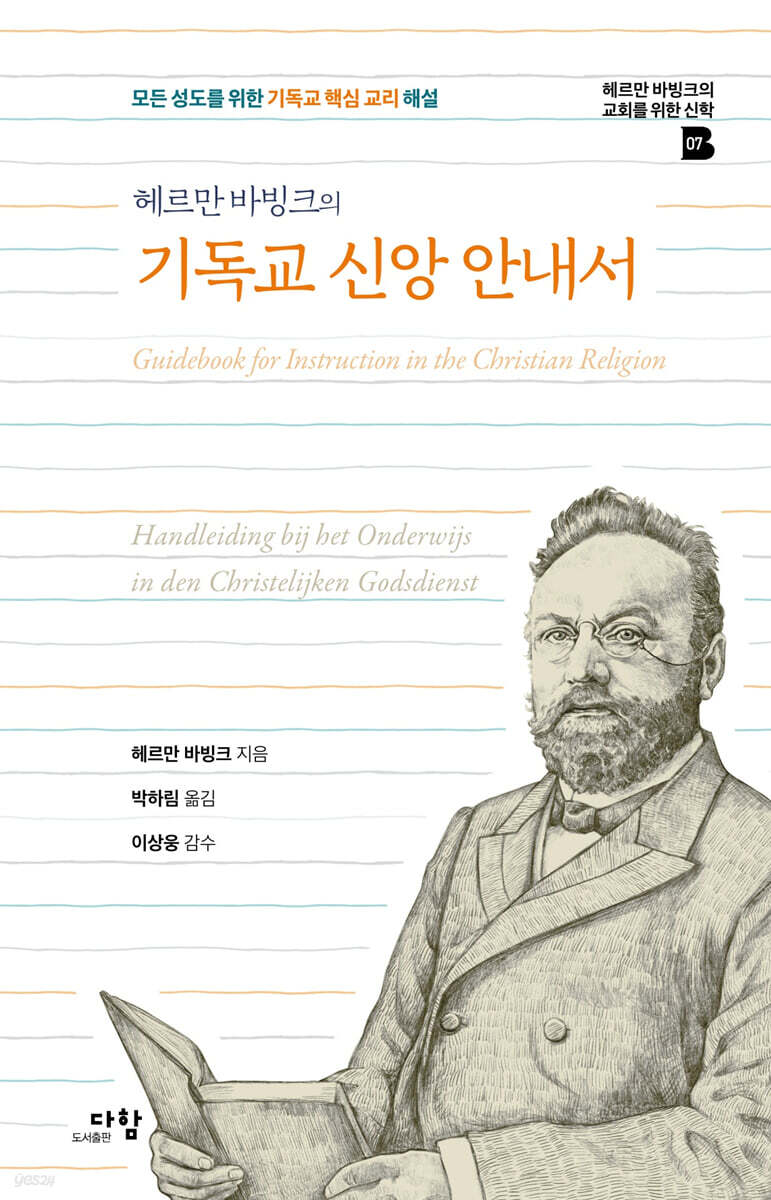
The Core of Christian Faith: Learning from the Greatest Theologians A concise and clear, excellent doctrinal teaching book A Useful and Wholesome Guide to the Christian Faith Herman Bavinck taught seminary students for many years and wrote his major work, Reformed Dogmatics (1906-1911), aimed at academics, pastors, and seminarians. After completing the revision of 『Reformed Dogmatics』, he wrote 『The Great Work of God』 (1909), a slightly easier book of dogmatics for young intellectuals and professionals. A few years later, he published the Guide to the Christian Faith (1913), a doctrinal book aimed at college freshmen and high school students, the future and next generation of the church. At the time, Bavinck was 59 years old, eight years before his death. This book contains the core of his extensive doctrinal knowledge that he has taught for a long time and his sincere heart toward the universal Church. |
- You can preview some of the book's contents.
Preview
index
Recommendation ㆍ 006
Acknowledgments ㆍ 023
Preface ㆍ 027
Preface ㆍ 030
Introduction ㆍ 035
1.
Knowledge of God ㆍ 057
2.
(General) Revelation ㆍ 071
3.
(Special) Revelation ㆍ 089
4.
Bible ㆍ 105
5.
The Bible and the Confession of Faith ㆍ 127
6.
The Essence and Attributes of God ㆍ 139
7.
Trinity ㆍ 159
8.
Creation and Providence ㆍ 181
9.
The Origin, Nature, and Destiny of Humanity ㆍ 203
10.
Sin and Death ㆍ 215
11.
Covenant of Grace ㆍ 233
12.
The Person of Christ ㆍ 251
13.
The Ministry of Christ ㆍ 279
14.
The Outpouring of the Holy Spirit ㆍ 303
15.
Calling ㆍ 317
16.
Justification ㆍ 339
17.
Holy Fire ㆍ 355
18.
Church of Christ ㆍ 375
19.
The Means of Grace ㆍ 395
20.
The Perfection of the World ㆍ 407
index
Subject Index ㆍ 442
Bible Index ㆍ 454
Acknowledgments ㆍ 023
Preface ㆍ 027
Preface ㆍ 030
Introduction ㆍ 035
1.
Knowledge of God ㆍ 057
2.
(General) Revelation ㆍ 071
3.
(Special) Revelation ㆍ 089
4.
Bible ㆍ 105
5.
The Bible and the Confession of Faith ㆍ 127
6.
The Essence and Attributes of God ㆍ 139
7.
Trinity ㆍ 159
8.
Creation and Providence ㆍ 181
9.
The Origin, Nature, and Destiny of Humanity ㆍ 203
10.
Sin and Death ㆍ 215
11.
Covenant of Grace ㆍ 233
12.
The Person of Christ ㆍ 251
13.
The Ministry of Christ ㆍ 279
14.
The Outpouring of the Holy Spirit ㆍ 303
15.
Calling ㆍ 317
16.
Justification ㆍ 339
17.
Holy Fire ㆍ 355
18.
Church of Christ ㆍ 375
19.
The Means of Grace ㆍ 395
20.
The Perfection of the World ㆍ 407
index
Subject Index ㆍ 442
Bible Index ㆍ 454
Detailed image
Into the book
Religious education must be truly educational, and it must be the most gentle and holy religious education that the human soul can have.
--- From the "Preface"
The highest good of man is God, and God alone.
Human beings were created in the beginning in the image and likeness of God.
And man can never completely uproot or destroy the fact that he originated from God and the relationship he has with God.
Although man has lost the attributes of knowledge, righteousness, and holiness contained in the image of God through sin, some 'small traces' still remain within him.
These traces are not only sufficient to deny the complete purity of human beings, but also serve as evidence of their former greatness and a constant reminder of their God-given calling and their goal of reaching heaven.
--- 「Chapter 1.
From “Knowledge of God”
While general revelation can in itself restrain sin, special revelation, with its content of Christ, full of grace and truth, must completely destroy sin and all its terrible consequences, including misery and death, for one man, for humanity, and for the whole world.
Until now, the history of mankind has not clearly developed.
But we live in the dispensation of the fullness of times, when we are gathered together under Christ, who is the head over all things (Eph. 1:9-10; 2:14-15).
Also, “according to his promise we look forward to new heavens and a new earth, in which righteousness dwells” (2 Pet. 3:13).
--- 「Chapter 3.
From “Special Revelation”
All believers and all churches truly confess that the Word of God is truth, as the Holy Spirit testifies.
As errors become more sophisticated, the Church is called upon to explain more carefully the truths she professes and to express in clear and unambiguous terms what she believes.
Therefore, because of the urgency of the situation, the oral confession of faith develops into a written confession of faith (a creed or confession of faith).
--- Chapter 5.
From “The Bible and the Confession of Faith”
The origin of man is consistent with the nature of man.
Although the human body was made from the dust of the earth, the breath of life was received from above and was created directly by God.
Therefore, humans have their own unique existence and nature.
The nature of man lies in the fact that he is made in the image of God and resembles God.
This is what distinguishes humans from animals and angels.
--- Chapter 9.
From “The Origin, Nature, and Destiny of Humanity”
God's work of redemption belongs to Him alone, both objectively and subjectively.
It is not of him who wills, nor of him who runs, but of God who shows mercy (Romans 9:16).
While many are given an external calling (Matt. 22:14), there is also an effective internal calling that is the result of election (Rom. 8:28-30).
God not only gives the gospel, but also spreads it through the manifestation and power of the Holy Spirit (1 Cor. 2:4; 1 Thess. 1:5-6), and He Himself causes growth (1 Cor. 3:6-9).
--- Chapter 15.
From "Calling"
If the image of God exists not only in knowledge and righteousness but also in holiness, then re-creation must restore humanity to a right relationship with God and renew it internally according to the demands of the holy law.
Sin is not only guilt, but also pollution.
Justification frees man from the guilt of sin, and sanctification frees him from the pollution of sin.
Through justification, human consciousness is transformed, and through sanctification, human existence is transformed.
Through justification, man becomes good again, and through sanctification, man becomes good again and is able to do good.
--- Chapter 17.
From "Holy Fire"
Besides the three signs mentioned in Article 29 of the Belgic Confession—the pure preaching of the Gospel, the pure administration of the Sacraments, and the preservation of Church discipline—there are many other ways in which this unique sign of the Word can be maintained.
All of this can be traced back to a single sign: the Word.
To the extent that a church conforms to or deviates from the Word, whether larger or smaller, it becomes a true and pure church or a false church.
Through the Word, which is truly a means of grace, all true members of the Church are regenerated, brought to faith and repentance, purified and sanctified, gathered together, and strengthened.
--- Chapter 19.
From “The Means of Grace”
This rich diversity will not harm unity.
For all people will see God's face and be like Him (Matthew 5:8; John 3:2; Revelation 22:4).
We will all know God fully, just as He fully knows us (1 Corinthians 13:12), and we will all become prophets, priests, and kings.
At that time, God's purpose for creation will be fulfilled.
For creation will declare His glory, and His power will be seen everywhere.
God will look at all that he has made and be pleased with what he has done, saying, “It is very good!” (1 Corinthians 15:24-28).
--- From the "Preface"
The highest good of man is God, and God alone.
Human beings were created in the beginning in the image and likeness of God.
And man can never completely uproot or destroy the fact that he originated from God and the relationship he has with God.
Although man has lost the attributes of knowledge, righteousness, and holiness contained in the image of God through sin, some 'small traces' still remain within him.
These traces are not only sufficient to deny the complete purity of human beings, but also serve as evidence of their former greatness and a constant reminder of their God-given calling and their goal of reaching heaven.
--- 「Chapter 1.
From “Knowledge of God”
While general revelation can in itself restrain sin, special revelation, with its content of Christ, full of grace and truth, must completely destroy sin and all its terrible consequences, including misery and death, for one man, for humanity, and for the whole world.
Until now, the history of mankind has not clearly developed.
But we live in the dispensation of the fullness of times, when we are gathered together under Christ, who is the head over all things (Eph. 1:9-10; 2:14-15).
Also, “according to his promise we look forward to new heavens and a new earth, in which righteousness dwells” (2 Pet. 3:13).
--- 「Chapter 3.
From “Special Revelation”
All believers and all churches truly confess that the Word of God is truth, as the Holy Spirit testifies.
As errors become more sophisticated, the Church is called upon to explain more carefully the truths she professes and to express in clear and unambiguous terms what she believes.
Therefore, because of the urgency of the situation, the oral confession of faith develops into a written confession of faith (a creed or confession of faith).
--- Chapter 5.
From “The Bible and the Confession of Faith”
The origin of man is consistent with the nature of man.
Although the human body was made from the dust of the earth, the breath of life was received from above and was created directly by God.
Therefore, humans have their own unique existence and nature.
The nature of man lies in the fact that he is made in the image of God and resembles God.
This is what distinguishes humans from animals and angels.
--- Chapter 9.
From “The Origin, Nature, and Destiny of Humanity”
God's work of redemption belongs to Him alone, both objectively and subjectively.
It is not of him who wills, nor of him who runs, but of God who shows mercy (Romans 9:16).
While many are given an external calling (Matt. 22:14), there is also an effective internal calling that is the result of election (Rom. 8:28-30).
God not only gives the gospel, but also spreads it through the manifestation and power of the Holy Spirit (1 Cor. 2:4; 1 Thess. 1:5-6), and He Himself causes growth (1 Cor. 3:6-9).
--- Chapter 15.
From "Calling"
If the image of God exists not only in knowledge and righteousness but also in holiness, then re-creation must restore humanity to a right relationship with God and renew it internally according to the demands of the holy law.
Sin is not only guilt, but also pollution.
Justification frees man from the guilt of sin, and sanctification frees him from the pollution of sin.
Through justification, human consciousness is transformed, and through sanctification, human existence is transformed.
Through justification, man becomes good again, and through sanctification, man becomes good again and is able to do good.
--- Chapter 17.
From "Holy Fire"
Besides the three signs mentioned in Article 29 of the Belgic Confession—the pure preaching of the Gospel, the pure administration of the Sacraments, and the preservation of Church discipline—there are many other ways in which this unique sign of the Word can be maintained.
All of this can be traced back to a single sign: the Word.
To the extent that a church conforms to or deviates from the Word, whether larger or smaller, it becomes a true and pure church or a false church.
Through the Word, which is truly a means of grace, all true members of the Church are regenerated, brought to faith and repentance, purified and sanctified, gathered together, and strengthened.
--- Chapter 19.
From “The Means of Grace”
This rich diversity will not harm unity.
For all people will see God's face and be like Him (Matthew 5:8; John 3:2; Revelation 22:4).
We will all know God fully, just as He fully knows us (1 Corinthians 13:12), and we will all become prophets, priests, and kings.
At that time, God's purpose for creation will be fulfilled.
For creation will declare His glory, and His power will be seen everywhere.
God will look at all that he has made and be pleased with what he has done, saying, “It is very good!” (1 Corinthians 15:24-28).
--- 「Chapter 20.
From “The Perfection of the World”
From “The Perfection of the World”
Publisher's Review
In the book's preface, Bavinck states that he wrote the book with college and high school students in mind as its target audience.
Bavinck had one daughter, who was 19 years old when this book was published.
I imagine that perhaps Bavinck had his daughter in mind as he wrote this book.
If you actually read the book, you will feel the father's heart trying to convey the truth of Christianity and the core teachings of faith to his children.
Because this book was written for believers without professional theological training, it minimizes complex and difficult arguments and explanations and presents the contents of the Christian faith systematically and concisely, following the Bible from beginning to end.
At the end of each chapter, we have included 'Questions for Discussion and Sharing' that are not found in the original book.
Using questions appropriately in catechetical instruction and reading groups will yield better results.
The text is punctuated with Bible verses, most of which were added by Bavinck himself.
I encourage you to look up this Bible verse yourself.
This will not only help you realize that the doctrine is thoroughly grounded in Scripture, but will also enrich your understanding of the Bible.
I also recommend using the index to review information and corresponding Bible verses on each topic.
In this era, people say that faith is about judging and selecting Christian beliefs based on one's own beliefs and values rather than the truth of the Bible.
The same pattern was observed in Bavinck's time.
So, as you read the book, you will discover so many timely insights that it is hard to believe that it was written by someone over 100 years ago.
Through this book, I hope you will learn and experience the meaning and value of the Christian faith more deeply and broadly, and be blessed with the ability to share that faith with others.
Bavinck had one daughter, who was 19 years old when this book was published.
I imagine that perhaps Bavinck had his daughter in mind as he wrote this book.
If you actually read the book, you will feel the father's heart trying to convey the truth of Christianity and the core teachings of faith to his children.
Because this book was written for believers without professional theological training, it minimizes complex and difficult arguments and explanations and presents the contents of the Christian faith systematically and concisely, following the Bible from beginning to end.
At the end of each chapter, we have included 'Questions for Discussion and Sharing' that are not found in the original book.
Using questions appropriately in catechetical instruction and reading groups will yield better results.
The text is punctuated with Bible verses, most of which were added by Bavinck himself.
I encourage you to look up this Bible verse yourself.
This will not only help you realize that the doctrine is thoroughly grounded in Scripture, but will also enrich your understanding of the Bible.
I also recommend using the index to review information and corresponding Bible verses on each topic.
In this era, people say that faith is about judging and selecting Christian beliefs based on one's own beliefs and values rather than the truth of the Bible.
The same pattern was observed in Bavinck's time.
So, as you read the book, you will discover so many timely insights that it is hard to believe that it was written by someone over 100 years ago.
Through this book, I hope you will learn and experience the meaning and value of the Christian faith more deeply and broadly, and be blessed with the ability to share that faith with others.
GOODS SPECIFICS
- Date of issue: July 15, 2024
- Format: Hardcover book binding method guide
- Page count, weight, size: 488 pages | 140*200*30mm
- ISBN13: 9791190584975
- ISBN10: 1190584972
You may also like
카테고리
korean


korean

![GQ KOREA Mark (Monthly): December [2025]](http://librairie.coreenne.fr/cdn/shop/files/8ef265dbbfbf186523ed75ba7319009d.jpg?v=1765340328&width=3840)


