

Flavor Masterclass
 |
Description
Book Introduction
Bestselling cookbooks: Pasta Master Class and Vegetable Master Class
The star of the 'Carrot Rösti' and 'Dry Tomato Soup' craze
The latest work by Baek Ji-hye, the popular cooking class in Yeonnam-dong, 'Jericho Recipe'!
There was a book that contributed to the cooking craze that heated up Korea: 『Pasta Master Class』(2020) and 『Vegetable Master Class』(2022) by Baek Ji-hye, the creator of the popular Yeonnam-dong cooking class 'Jericho Recipe'.
After about three years since 『Vegetable Master Class』, which caused a sensation with its certification of ‘Carrot Rösti’ and ‘Anhydrous Tomato Soup’ and confidently made its way onto the bestseller list, we have returned with our third ‘Master Class’, ‘Flavor Master Class’.
This week's theme is 'flavor'.
What is flavor?
Baek Ji-hye's 'pursuit of flavor' is not a complex flavor created by adding many ingredients, but rather an advanced technique and her own cooking philosophy that brings out simple, yet delicate and sophisticated flavors with just a touch of difference.
Olives, butter, spices, herbs, cheese, anchovies… Discover the harmonious flavors created by the combination of charred vegetables, ripe kimchi, and a final drop of lemon juice in this book.
The flavorful dishes suggested in this 『Flavor Master Class』 are also vegetable-based.
But now, it is served with additional ingredients such as fish sauce, butter, and anchovies to enhance the flavor.
Here are 36 recipes for a more flexible and flavorful vegetarian diet that are suitable for a pesco-vegetarian diet.
However, it goes without saying that we have included a proper list of ingredients that can be substituted for a complete vegan diet, as well as additional ingredients for non-vegans.
For example, vegans can season their Thai Coconut Vegetable Soup with soy sauce or soy sauce instead of fish sauce, or replace the broth in their Creamy Mushroom Risotto with shiitake mushroom stock.
Additionally, for non-vegans, we recommend trying the proprietary flavor powder that is generously sprinkled on the 'Sichuan Crispy Tofu' dish, as well as dipping it in various meats and eggs.
The star of the 'Carrot Rösti' and 'Dry Tomato Soup' craze
The latest work by Baek Ji-hye, the popular cooking class in Yeonnam-dong, 'Jericho Recipe'!
There was a book that contributed to the cooking craze that heated up Korea: 『Pasta Master Class』(2020) and 『Vegetable Master Class』(2022) by Baek Ji-hye, the creator of the popular Yeonnam-dong cooking class 'Jericho Recipe'.
After about three years since 『Vegetable Master Class』, which caused a sensation with its certification of ‘Carrot Rösti’ and ‘Anhydrous Tomato Soup’ and confidently made its way onto the bestseller list, we have returned with our third ‘Master Class’, ‘Flavor Master Class’.
This week's theme is 'flavor'.
What is flavor?
Baek Ji-hye's 'pursuit of flavor' is not a complex flavor created by adding many ingredients, but rather an advanced technique and her own cooking philosophy that brings out simple, yet delicate and sophisticated flavors with just a touch of difference.
Olives, butter, spices, herbs, cheese, anchovies… Discover the harmonious flavors created by the combination of charred vegetables, ripe kimchi, and a final drop of lemon juice in this book.
The flavorful dishes suggested in this 『Flavor Master Class』 are also vegetable-based.
But now, it is served with additional ingredients such as fish sauce, butter, and anchovies to enhance the flavor.
Here are 36 recipes for a more flexible and flavorful vegetarian diet that are suitable for a pesco-vegetarian diet.
However, it goes without saying that we have included a proper list of ingredients that can be substituted for a complete vegan diet, as well as additional ingredients for non-vegans.
For example, vegans can season their Thai Coconut Vegetable Soup with soy sauce or soy sauce instead of fish sauce, or replace the broth in their Creamy Mushroom Risotto with shiitake mushroom stock.
Additionally, for non-vegans, we recommend trying the proprietary flavor powder that is generously sprinkled on the 'Sichuan Crispy Tofu' dish, as well as dipping it in various meats and eggs.
- You can preview some of the book's contents.
Preview
index
prolog
My Flavor Pantry
Ingredients that should always be stored at room temperature
Ingredients to always keep in the fridge
Ingredients to always keep in the freezer
soup
Clear barley soup
Bok Choy Mushroom Soup
Creamy Lentil Soup
Cold Green Soup
Thai Coconut Vegetable Soup
Spanish Garlic Bread Soup
French Christmas Chestnut Soup
Cold dishes
Raw Asparagus Salad
Anchovy Pear Salad
Corn salsa and tortilla chips
Roasted Vegetable Marinade
Beet Hummus and Pickled Olives
Roasted Leek Vinaigrette
Pickled Cabbage and Ginger
Romaine Caesar Salad
Sicilian Caponata
Olive Parsley Bowl and Grilled Peaches
warm dishes
Tomato fritters and cucumber tzatziki sauce
Kimchi Frittata
Stir-fried garlic chives
Lebanese Spicy Potatoes
Broccoli Bagna Cauda
Coconut Allspice Cauliflower
Sichuan-style crispy tofu
Mushroom Steak
Egg Curry
Dried seaweed and cabbage stew
noodles and rice
Tomato cold noodles
Soba with Yubu Soboro
Oriental Noodle Salad
Cold tofu noodle and cucumber salad
Chive Japchae and Burdock Rösti
Eggplant Puree Rice
Cypress Lentil Pilaf
Creamy Mushroom Risotto
Rice cooked in a pot with aged sesame oil
My Flavor Pantry
Ingredients that should always be stored at room temperature
Ingredients to always keep in the fridge
Ingredients to always keep in the freezer
soup
Clear barley soup
Bok Choy Mushroom Soup
Creamy Lentil Soup
Cold Green Soup
Thai Coconut Vegetable Soup
Spanish Garlic Bread Soup
French Christmas Chestnut Soup
Cold dishes
Raw Asparagus Salad
Anchovy Pear Salad
Corn salsa and tortilla chips
Roasted Vegetable Marinade
Beet Hummus and Pickled Olives
Roasted Leek Vinaigrette
Pickled Cabbage and Ginger
Romaine Caesar Salad
Sicilian Caponata
Olive Parsley Bowl and Grilled Peaches
warm dishes
Tomato fritters and cucumber tzatziki sauce
Kimchi Frittata
Stir-fried garlic chives
Lebanese Spicy Potatoes
Broccoli Bagna Cauda
Coconut Allspice Cauliflower
Sichuan-style crispy tofu
Mushroom Steak
Egg Curry
Dried seaweed and cabbage stew
noodles and rice
Tomato cold noodles
Soba with Yubu Soboro
Oriental Noodle Salad
Cold tofu noodle and cucumber salad
Chive Japchae and Burdock Rösti
Eggplant Puree Rice
Cypress Lentil Pilaf
Creamy Mushroom Risotto
Rice cooked in a pot with aged sesame oil
Detailed image

Into the book
The dishes introduced in this book are vegetable-based, but use fish sauce, butter, eggs, and other ingredients. They also feature a variety of herbs and spices to create a sense of color and harmony with the ingredients, and they showcase a variety of wonderful flavors and elements of flavor.
We sometimes experience a numbness in our sense of taste and smell when faced with excessive and stimulating seasoning.
Conversely, when we encounter raw ingredients and lightly seasoned food, our senses become more sensitive and activate various antennae.
Sometimes, it's as if we can sense the essence of taste and the unique flavor of ingredients through the aesthetics of emptiness.
---From the "Prologue"
As someone who has considered pursuing the ultimate taste in vegetable dishes a lifelong mission, I can confidently present this Cold Green Soup as a dish that is both nutritious and delicious, yet easy to make.
The predecessor of cold green soup is Spain's gazpacho, a dish made by adding your favorite vegetables such as onions, cucumbers, and celery to the main ingredient, tomatoes, adding lemon juice, olive oil, salt, and pepper, and blending them in a blender until cold.
Now, summers in Korea are just as humid and hot as those in Southeast Asia, so I think a siesta is urgent, but since that's not possible, I'd like to find comfort in food.
---From "Cold Green Soup"
Chestnuts are similar in sweetness to sweet potatoes or pumpkins, but their flavor and aroma are exceptional, making them versatile, from gourmet desserts like chestnuts, chestnut jam, and Mont Blanc cake to alcoholic beverages like makgeolli or beer.
It's delicious to boil chestnuts, add whipping cream, and grind them as is, but on winter nights when I want to comfort myself with food, I make French-style chestnut soup.
How much more special would French chestnut soup taste if it were enhanced with bourbon whiskey and ground cinnamon?
---From "French Christmas Chestnut Soup"
A frittata is a firmer version of a classic omelet, allowing for more flexibility in your ingredient choices.
Some days, you can eat it soft with eggs, spinach, and onions, while others, with the deep flavor of well-fermented kimchi and the flavor of butter, go well together.
You can fry the filling in advance so that it doesn't have to be cooked for a long time, but the key is to cook it slowly over low heat so that the eggs don't burn.
Don't skimp on the butter.
If you find it difficult to flip the egg batter in a frying pan, fry the filling, mix it into the egg batter, place it on aluminum foil or pour it into a bowl, put it in an air fryer, and cook it at 170 degrees for 20-30 minutes to complete the fluffy frittata.
---From "Kimchi Frittata"
The original recipe calls for frying the potatoes, but you can also simply bake them in an air fryer and they'll be just as crispy.
The greatest appeal of this dish lies in the wonderful flavor of the stir-fried coriander and the harmony of paprika powder.
Even if you put in a lot of coriander, it will quickly lose its flavor, so if you are a coriander lover, you should prepare plenty.
Paprika powder has a completely different spiciness from Korean chili powder, so I highly recommend purchasing it, even in small quantities.
---From "Lebanese Spicy Potatoes"
Bagna Cauda, which suddenly became popular in Korea a few years ago, can trace its origins to the Piedmont region of Italy.
It is a simple dish that farmers would eat with wine to celebrate the harvest. It is easy to make and store.
After a hard day's work, you're bound to crave comforting comfort food, and every time I eat bagna cauda, I feel recharged.
It's a simple recipe of garlic and anchovies simmered with herbs, but the flavor always surpasses expectations.
It is similar to fondue in that the bagna cauda sauce is warmed and smoothed, and eaten as a dip for bread and steamed or raw vegetables.
---From "Broccoli Bagna Cauda"
Dried seaweed and cabbage stew is one of my most popular recipes on social media. It was even featured on the TV show [Convenience Store Restaurant].
The difference from regular stew is that dried seaweed is added right from the beginning of cooking without having to soak it in water. The chewy texture of the seaweed is the key point.
Here, we use commercially available products such as shabu-shabu broth or yaki broth to reduce cooking time, and add wakame, the main ingredient in the savory flavor that coats your mouth, and naturally sweet cabbage to enhance the flavor of the broth.
---From "Dried Seaweed and Cabbage Stew"
Do you remember the carrot rosti from "Vegetable Master Class"? It's the dish that made "Vegetable Master Class" an instant bestseller, a cult hit that still sees proof photos posted on social media.
Just like how I made carrot rösti, this time I roasted burdock rösti and served it alongside.
Burdock contains less moisture than carrots, so it takes less time to cook, making it much faster and easier to make. Be sure to try it with chive japchae.
---From "Chive Japchae and Burdock Rosti"
For the sesame oil aged kimchi rice pot, you don't need aged kimchi; all you need is well-fermented kimchi and sesame oil.
Washing kimchi thoroughly in water before cooking it will give it a clean aftertaste and enhance its mild flavor.
Because you cook rice with kimchi, the flavor of the aged kimchi spreads evenly to the scorched rice stuck to the pot.
A generous amount of sesame oil and 1-2 tablespoons of soy sauce is enough for seasoning.
Enjoy the scent and texture of finely chopped water parsley!
We sometimes experience a numbness in our sense of taste and smell when faced with excessive and stimulating seasoning.
Conversely, when we encounter raw ingredients and lightly seasoned food, our senses become more sensitive and activate various antennae.
Sometimes, it's as if we can sense the essence of taste and the unique flavor of ingredients through the aesthetics of emptiness.
---From the "Prologue"
As someone who has considered pursuing the ultimate taste in vegetable dishes a lifelong mission, I can confidently present this Cold Green Soup as a dish that is both nutritious and delicious, yet easy to make.
The predecessor of cold green soup is Spain's gazpacho, a dish made by adding your favorite vegetables such as onions, cucumbers, and celery to the main ingredient, tomatoes, adding lemon juice, olive oil, salt, and pepper, and blending them in a blender until cold.
Now, summers in Korea are just as humid and hot as those in Southeast Asia, so I think a siesta is urgent, but since that's not possible, I'd like to find comfort in food.
---From "Cold Green Soup"
Chestnuts are similar in sweetness to sweet potatoes or pumpkins, but their flavor and aroma are exceptional, making them versatile, from gourmet desserts like chestnuts, chestnut jam, and Mont Blanc cake to alcoholic beverages like makgeolli or beer.
It's delicious to boil chestnuts, add whipping cream, and grind them as is, but on winter nights when I want to comfort myself with food, I make French-style chestnut soup.
How much more special would French chestnut soup taste if it were enhanced with bourbon whiskey and ground cinnamon?
---From "French Christmas Chestnut Soup"
A frittata is a firmer version of a classic omelet, allowing for more flexibility in your ingredient choices.
Some days, you can eat it soft with eggs, spinach, and onions, while others, with the deep flavor of well-fermented kimchi and the flavor of butter, go well together.
You can fry the filling in advance so that it doesn't have to be cooked for a long time, but the key is to cook it slowly over low heat so that the eggs don't burn.
Don't skimp on the butter.
If you find it difficult to flip the egg batter in a frying pan, fry the filling, mix it into the egg batter, place it on aluminum foil or pour it into a bowl, put it in an air fryer, and cook it at 170 degrees for 20-30 minutes to complete the fluffy frittata.
---From "Kimchi Frittata"
The original recipe calls for frying the potatoes, but you can also simply bake them in an air fryer and they'll be just as crispy.
The greatest appeal of this dish lies in the wonderful flavor of the stir-fried coriander and the harmony of paprika powder.
Even if you put in a lot of coriander, it will quickly lose its flavor, so if you are a coriander lover, you should prepare plenty.
Paprika powder has a completely different spiciness from Korean chili powder, so I highly recommend purchasing it, even in small quantities.
---From "Lebanese Spicy Potatoes"
Bagna Cauda, which suddenly became popular in Korea a few years ago, can trace its origins to the Piedmont region of Italy.
It is a simple dish that farmers would eat with wine to celebrate the harvest. It is easy to make and store.
After a hard day's work, you're bound to crave comforting comfort food, and every time I eat bagna cauda, I feel recharged.
It's a simple recipe of garlic and anchovies simmered with herbs, but the flavor always surpasses expectations.
It is similar to fondue in that the bagna cauda sauce is warmed and smoothed, and eaten as a dip for bread and steamed or raw vegetables.
---From "Broccoli Bagna Cauda"
Dried seaweed and cabbage stew is one of my most popular recipes on social media. It was even featured on the TV show [Convenience Store Restaurant].
The difference from regular stew is that dried seaweed is added right from the beginning of cooking without having to soak it in water. The chewy texture of the seaweed is the key point.
Here, we use commercially available products such as shabu-shabu broth or yaki broth to reduce cooking time, and add wakame, the main ingredient in the savory flavor that coats your mouth, and naturally sweet cabbage to enhance the flavor of the broth.
---From "Dried Seaweed and Cabbage Stew"
Do you remember the carrot rosti from "Vegetable Master Class"? It's the dish that made "Vegetable Master Class" an instant bestseller, a cult hit that still sees proof photos posted on social media.
Just like how I made carrot rösti, this time I roasted burdock rösti and served it alongside.
Burdock contains less moisture than carrots, so it takes less time to cook, making it much faster and easier to make. Be sure to try it with chive japchae.
---From "Chive Japchae and Burdock Rosti"
For the sesame oil aged kimchi rice pot, you don't need aged kimchi; all you need is well-fermented kimchi and sesame oil.
Washing kimchi thoroughly in water before cooking it will give it a clean aftertaste and enhance its mild flavor.
Because you cook rice with kimchi, the flavor of the aged kimchi spreads evenly to the scorched rice stuck to the pot.
A generous amount of sesame oil and 1-2 tablespoons of soy sauce is enough for seasoning.
Enjoy the scent and texture of finely chopped water parsley!
---From "Rice cooked in a pot with aged sesame oil"
Publisher's Review
Beyond the direct sensations of sweet, sour, salty, bitter, and spicy tastes
The 'Style of Taste' that is simple yet delicate and sophisticated.
The flavor of Baek Ji-hye's cooking comes from using certain ingredients, but that's not all.
It exists in many ways, such as unexpected differences in the handling of ingredients or small details in a recipe.
This creates a delicate and sophisticated flavor that goes beyond the intuitive tastes of sweet, sour, salty, bitter, and spicy that you feel the moment you put it in your mouth.
In particular, this book shows that efforts were made to include as much information and story as possible in the introductory text introducing each dish.
This letter is a friendly invitation to readers into the world of 'flavor', and it is a detailed guide to the areas where the recipe was developed and what the flavor points of this dish are.
If you read this first and then follow the recipe step by step, you will be able to make food that is closer to the recipe developer's intention.
Can I use commercial lemon juice instead of lemon? Which olive oil is good and when should I use extra virgin olive oil? How do the uses of different types of salt differ? What ingredients are good to always have at room temperature/in the fridge/freezer? How do I differentiate between black pepper and white pepper? Based on frequently asked questions from cooking classes I've taught for many years, you can find friendly answers to practical questions that cooks in the kitchen might have throughout the book.
Soup, cold food, warm food, rice and noodles
Salivary Gland Explosion Vegetable Recipe Suggested in Four Components
『Flavor Master Class』 is composed of four parts.
'Soup', 'cold food', 'warm food', 'rice and noodles'.
It is fun to be able to choose the right one for the right situation with a more practical configuration or to prepare a table with various combinations.
You can choose three or five dishes from the recipes introduced here and prepare them as a full course meal at home.
The dishes are not as difficult or complicated as those at fine dining restaurants, but every dish is a feast that fills your mouth with the words, “It’s me, it’s flavor.”
It's perfect for a meal alone or as a shared meal with friends and family.
The first part, 'Soup', is a selection of soup recipes that the author has developed so many times that he seriously considered opening a soup shop that only opens in the morning.
The seven soup recipes included here each invite us to discover the charm of different flavors.
For those who only know of corn cream soup and mushroom soup from Western restaurants, this is a truly dazzling bowl of colorful dishes.
Each bowl of this soup, with its interesting international flavors and diverse textures, showcases Baek Ji-hye's unique flavor expertise.
The 'Cold Dishes' section features dishes such as salads, corn salsa served with tortilla chips, marinated roasted vegetables, beet hummus, and Sicilian caponata.
What's special about this book is that it contains many creative dishes made with recipes you don't usually come across. Even if you happen to have heard of a dish, it doesn't just cook the original recipe, but includes a special twist through Baek Ji-hye's unique interpretation.
In the 'Warm Food' section, singer Jang Min-ho introduces 'Dried Seaweed and Cabbage Stew', which he received permission to make on the TV show [Convenience Store Restaurant], as well as tomato fritters, kimchi frittata, Lebanese spicy potatoes, bagna cauda, and oyster mushroom steak.
In particular, the dried seaweed and cabbage stew, the recipe of which was posted on the author's SNS, received numerous certifications after the broadcast.
The book suggests oyster mushrooms and shiitake mushrooms, but you can easily substitute other mushrooms to suit your taste, resulting in different versions of dried seaweed and cabbage stew.
The recipe is super simple and it only takes 15 minutes to cook, so there's no reason not to try it when the cold wind blows.
It would not be an exaggeration to say that 'rice and noodles' are like the heart of Koreans.
The feast of international noodle and rice dishes shines brightly, from tomato cold noodles to soba with fried tofu, cucumber cold noodles with dried tofu, chive japchae, burdock roesti, creamy mushroom risotto, and sesame oil and aged kimchi stew.
Every page is filled with Baek Ji-hye's unique flavor know-how, providing a variety of flavors and a pleasant feeling of fullness without being too heavy.
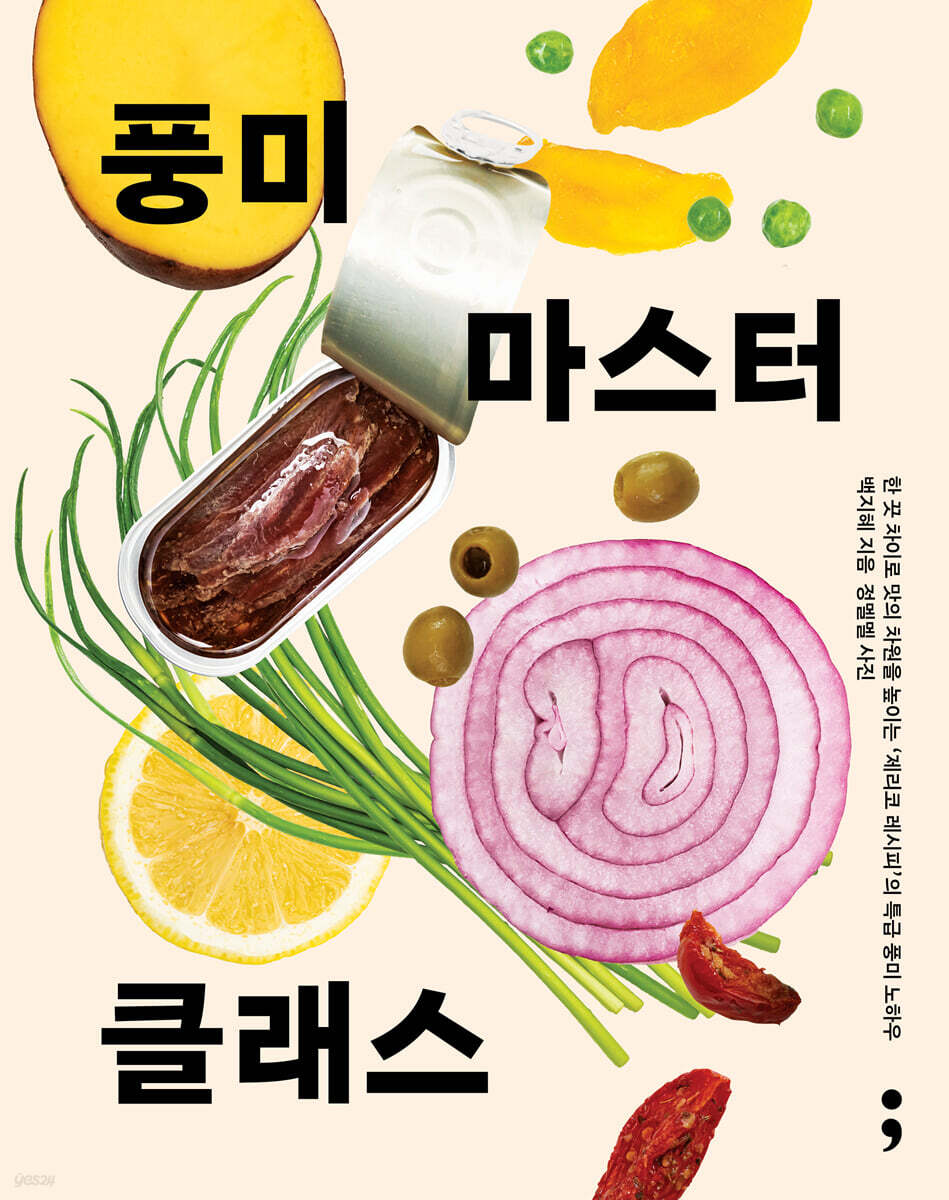
A photo that is more than just a photo, beautifully and vividly captured with the unique sensibility of artist Jeong Mel Mel.
"Vegetable Hip," a collage of materials reborn as a work of art
We worked together again with photographer Jeong Mel Mel, who we had worked with on 『Vegetable Master Class』, for this 『Flavor Master Class』.
Jeongmelmel's delicate photos, imbued with a unique emotion while not missing even the smallest texture of the dish, are more than just simple photographs.
Although it is a cookbook, the moment you open it, you will be captivated by the charming cooking photos, but this 『Flavor Master Class』 has one more point.
It's a collage of the basic vegetables used in each dish and the main ingredients that complete the kick of flavor.
Each ingredient was photographed up close to capture every detail, and each was beautifully arranged on a single page for each dish.
These are also works of art, each created with the utmost care by Jeongmelmel.
Jeongmelmel put a lot of effort and love into not only the photography but also the collage work.
This allows us to perceive the intangible 'flavor' so clearly that it seems as if it were unfolding before our eyes.
Another unique point of appreciation in 『Flavor Master Class』 that further enhances the value of this book is the newly created 'Vegetable Hip'.
The 'Style of Taste' that is simple yet delicate and sophisticated.
The flavor of Baek Ji-hye's cooking comes from using certain ingredients, but that's not all.
It exists in many ways, such as unexpected differences in the handling of ingredients or small details in a recipe.
This creates a delicate and sophisticated flavor that goes beyond the intuitive tastes of sweet, sour, salty, bitter, and spicy that you feel the moment you put it in your mouth.
In particular, this book shows that efforts were made to include as much information and story as possible in the introductory text introducing each dish.
This letter is a friendly invitation to readers into the world of 'flavor', and it is a detailed guide to the areas where the recipe was developed and what the flavor points of this dish are.
If you read this first and then follow the recipe step by step, you will be able to make food that is closer to the recipe developer's intention.
Can I use commercial lemon juice instead of lemon? Which olive oil is good and when should I use extra virgin olive oil? How do the uses of different types of salt differ? What ingredients are good to always have at room temperature/in the fridge/freezer? How do I differentiate between black pepper and white pepper? Based on frequently asked questions from cooking classes I've taught for many years, you can find friendly answers to practical questions that cooks in the kitchen might have throughout the book.
Soup, cold food, warm food, rice and noodles
Salivary Gland Explosion Vegetable Recipe Suggested in Four Components
『Flavor Master Class』 is composed of four parts.
'Soup', 'cold food', 'warm food', 'rice and noodles'.
It is fun to be able to choose the right one for the right situation with a more practical configuration or to prepare a table with various combinations.
You can choose three or five dishes from the recipes introduced here and prepare them as a full course meal at home.
The dishes are not as difficult or complicated as those at fine dining restaurants, but every dish is a feast that fills your mouth with the words, “It’s me, it’s flavor.”
It's perfect for a meal alone or as a shared meal with friends and family.
The first part, 'Soup', is a selection of soup recipes that the author has developed so many times that he seriously considered opening a soup shop that only opens in the morning.
The seven soup recipes included here each invite us to discover the charm of different flavors.
For those who only know of corn cream soup and mushroom soup from Western restaurants, this is a truly dazzling bowl of colorful dishes.
Each bowl of this soup, with its interesting international flavors and diverse textures, showcases Baek Ji-hye's unique flavor expertise.
The 'Cold Dishes' section features dishes such as salads, corn salsa served with tortilla chips, marinated roasted vegetables, beet hummus, and Sicilian caponata.
What's special about this book is that it contains many creative dishes made with recipes you don't usually come across. Even if you happen to have heard of a dish, it doesn't just cook the original recipe, but includes a special twist through Baek Ji-hye's unique interpretation.
In the 'Warm Food' section, singer Jang Min-ho introduces 'Dried Seaweed and Cabbage Stew', which he received permission to make on the TV show [Convenience Store Restaurant], as well as tomato fritters, kimchi frittata, Lebanese spicy potatoes, bagna cauda, and oyster mushroom steak.
In particular, the dried seaweed and cabbage stew, the recipe of which was posted on the author's SNS, received numerous certifications after the broadcast.
The book suggests oyster mushrooms and shiitake mushrooms, but you can easily substitute other mushrooms to suit your taste, resulting in different versions of dried seaweed and cabbage stew.
The recipe is super simple and it only takes 15 minutes to cook, so there's no reason not to try it when the cold wind blows.
It would not be an exaggeration to say that 'rice and noodles' are like the heart of Koreans.
The feast of international noodle and rice dishes shines brightly, from tomato cold noodles to soba with fried tofu, cucumber cold noodles with dried tofu, chive japchae, burdock roesti, creamy mushroom risotto, and sesame oil and aged kimchi stew.
Every page is filled with Baek Ji-hye's unique flavor know-how, providing a variety of flavors and a pleasant feeling of fullness without being too heavy.
A photo that is more than just a photo, beautifully and vividly captured with the unique sensibility of artist Jeong Mel Mel.
"Vegetable Hip," a collage of materials reborn as a work of art
We worked together again with photographer Jeong Mel Mel, who we had worked with on 『Vegetable Master Class』, for this 『Flavor Master Class』.
Jeongmelmel's delicate photos, imbued with a unique emotion while not missing even the smallest texture of the dish, are more than just simple photographs.
Although it is a cookbook, the moment you open it, you will be captivated by the charming cooking photos, but this 『Flavor Master Class』 has one more point.
It's a collage of the basic vegetables used in each dish and the main ingredients that complete the kick of flavor.
Each ingredient was photographed up close to capture every detail, and each was beautifully arranged on a single page for each dish.
These are also works of art, each created with the utmost care by Jeongmelmel.
Jeongmelmel put a lot of effort and love into not only the photography but also the collage work.
This allows us to perceive the intangible 'flavor' so clearly that it seems as if it were unfolding before our eyes.
Another unique point of appreciation in 『Flavor Master Class』 that further enhances the value of this book is the newly created 'Vegetable Hip'.
GOODS SPECIFICS
- Date of issue: November 11, 2024
- Page count, weight, size: 300 pages | 812g | 190*240*20mm
- ISBN13: 9791194087588
- ISBN10: 1194087582
You may also like
카테고리
korean


korean

![GQ KOREA Mark (Monthly): December [2025]](http://librairie.coreenne.fr/cdn/shop/files/8ef265dbbfbf186523ed75ba7319009d.jpg?v=1765340328&width=3840)


