

Sutta Nipata
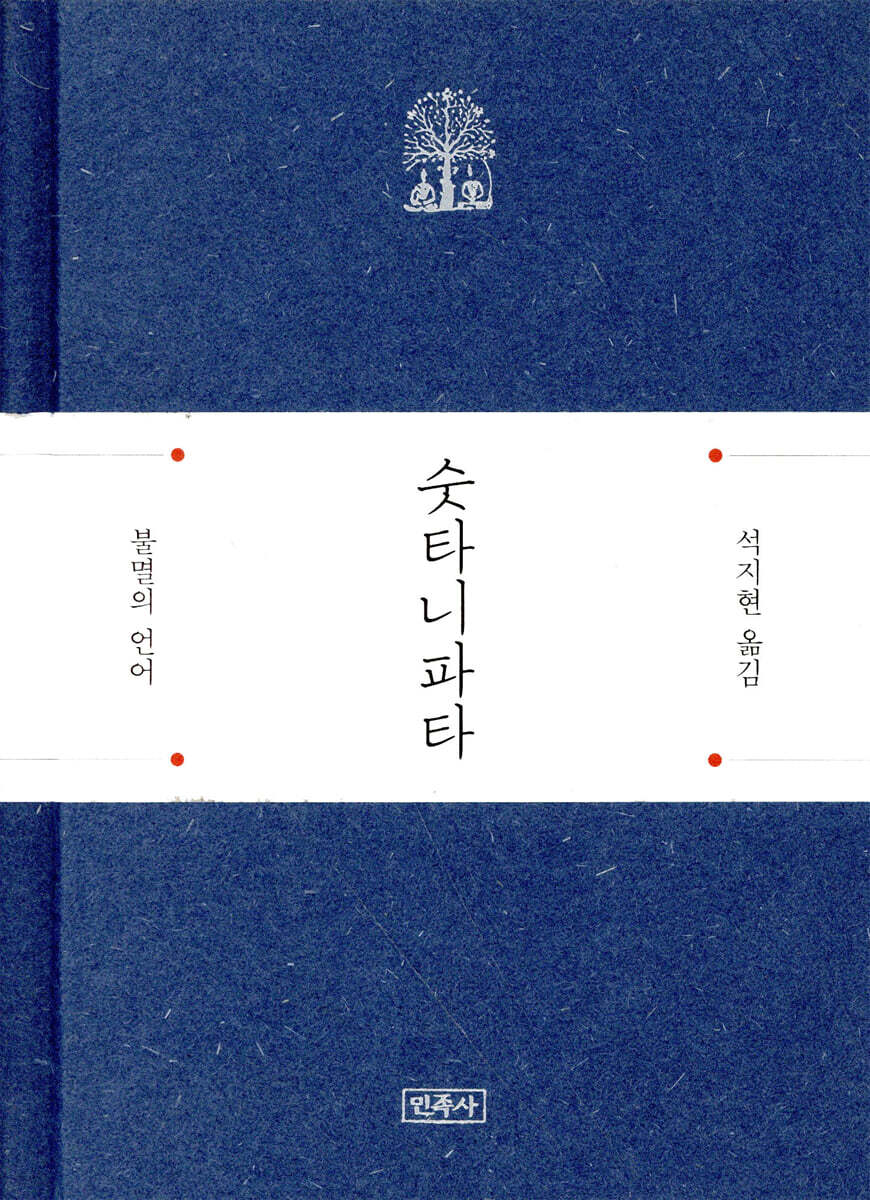 |
Description
Book Introduction
The Immortal Language, Suttanipāta
The Suttanipāta is a collection of Buddha's poems that is on par with the Dhammapada.
And chronologically speaking, the Suttanipata is much earlier than the Dhammapada.
The date of compilation of the Suttanipāta is approximately AD
It is estimated to be around the 3rd century.
The Sutta Nipata, the oldest Buddhist scripture, contains the Buddha's voice in its original form before his teachings were systematized into a single scripture.
The translator says that readers can feel the clear and pure dawn energy through the Suttanipāta, which is free of difficult Buddhist terminology or rigid philosophical concepts, but instead contains simple phrases that are repeated.
'Sutta' means 'a collection of words (經)', and 'Nipata' means 'collection (集)'. These two words combined form 'a collection of words (Sutta-Nipata, 經集)'.
After the Buddha entered Nirvana, his disciples summarized his words into a verse form to make them easier to remember.
In this way, early Buddhist scriptures were passed down orally from mouth to mouth without written records.
Therefore, the spiritual waves contained in the Buddha's voice were also passed down through oral tradition.
However, this oral tradition in the form of verse poetry began in AD
Around the 3rd century, it was collected in one place under the name of ‘Suttanipāta’.
The fact that there are many similar phrases and repetitions among the verses of the Suttanipāta is because what was passed down orally was written down as it was.
The Suttanipāta is a collection of Buddha's poems that is on par with the Dhammapada.
And chronologically speaking, the Suttanipata is much earlier than the Dhammapada.
The date of compilation of the Suttanipāta is approximately AD
It is estimated to be around the 3rd century.
The Sutta Nipata, the oldest Buddhist scripture, contains the Buddha's voice in its original form before his teachings were systematized into a single scripture.
The translator says that readers can feel the clear and pure dawn energy through the Suttanipāta, which is free of difficult Buddhist terminology or rigid philosophical concepts, but instead contains simple phrases that are repeated.
'Sutta' means 'a collection of words (經)', and 'Nipata' means 'collection (集)'. These two words combined form 'a collection of words (Sutta-Nipata, 經集)'.
After the Buddha entered Nirvana, his disciples summarized his words into a verse form to make them easier to remember.
In this way, early Buddhist scriptures were passed down orally from mouth to mouth without written records.
Therefore, the spiritual waves contained in the Buddha's voice were also passed down through oral tradition.
However, this oral tradition in the form of verse poetry began in AD
Around the 3rd century, it was collected in one place under the name of ‘Suttanipāta’.
The fact that there are many similar phrases and repetitions among the verses of the Suttanipāta is because what was passed down orally was written down as it was.
index
Sutta Nipata
First _ The first chapter
1.
Like a snake shedding its old skin _ 013
2.
The Sochi Man _ 016
3.
Like the horn of a rhinoceros going through the wilderness _ 022
4.
The Plowman _ 036
5.
Metalworker Chunda _ 038
6.
Destruction _ 040
7.
The Lowly One _ 043
8.
On Mercy _ 045
9.
Yaksha Living in the Snowy Mountains _ 048
10.
The Story of Alabaka _ 051
11.
Victory _ 054
12.
Saint _ 058
Second _ Small Chapter
1.
Treasure _ 061
2.
Unclean Food _ 063
3.
On True Friendship _ 066
4.
Bliss _ 067
5.
Sukilloma Yasha _ 069
6.
Living in Truth _ 071
7.
True Practitioner _ 074
8.
Ferry _ 075
9.
The Best Purpose _ 077
10.
Work hard _ 079
11.
Rahula, listen _ 081
12.
Performer Ban-knight _ 084
13.
The Seeker's Path _ 086
14.
Disciple Dammika's Question _ 092
Third _ Big Chapter
1.
Abandoning Home (Leaving Home) _ 098
2.
Do Your Best _ 106
3.
The Secret to Speaking Well _ 114
4.
Sundarika, the Fire-Servant _ 115
5.
Young Mark's Question _ 116
6.
Sabiya, the Wandering Seeker _ 117
7.
The Story of Brahman Sela _ 121
8.
Arrow _ 122
9.
Young Bassetta _ 127
10.
The Critic Kokaliya _ 134
11.
The Solo Practitioner Nalaka _ 134
12.
Two Considerations _ 140
Fourth _ Chapter of Poetry
1.
Desire _ 144
2.
Cave _ 145
3.
Malice _ 148
4.
Clean _ 149
5.
Best _ 151
6.
Old Age _ 153
7.
Seeker Tisametiya _ 156
8.
Pasura _ 157
9.
Magandiya _ 158
10.
Before Death Comes _ 163
11.
Struggle _ 165
12.
Questions and Answers, Part 1_166
13.
Questions and Answers, Part 2 _ 172
14.
Fast _ 181
15.
About Weapons _ 187
16.
Sariputra _ 194
Fifth _ Chapter of the Other Shore
1.
Prologue _ 201
2.
Ajita's Question _ 202
3.
Tisametiya's Question _ 203
4.
Punnaka's Question _ 204
5.
Metagu's Question _ 205
6.
Dotaka's Question _ 206
7.
Upashiva's Question _ 207
8.
Nanda's Question _ 208
9.
Hemaka's Question _ 209
10.
Todeya's Question _ 210
11.
Kappa's Question _ 211
12.
Gatukanni's Question _ 213
13.
Bhadrabuddha's Question _ 214
14.
Udaya's Question _ 215
15.
Posala's Question _ 216
16.
Mogarajya's Question _ 217
17.
Pingya's Question _ 218
18.
Summary of Questions _ 219
Commentary on the Suttanipāta _ 221
First _ The first chapter
1.
Like a snake shedding its old skin _ 013
2.
The Sochi Man _ 016
3.
Like the horn of a rhinoceros going through the wilderness _ 022
4.
The Plowman _ 036
5.
Metalworker Chunda _ 038
6.
Destruction _ 040
7.
The Lowly One _ 043
8.
On Mercy _ 045
9.
Yaksha Living in the Snowy Mountains _ 048
10.
The Story of Alabaka _ 051
11.
Victory _ 054
12.
Saint _ 058
Second _ Small Chapter
1.
Treasure _ 061
2.
Unclean Food _ 063
3.
On True Friendship _ 066
4.
Bliss _ 067
5.
Sukilloma Yasha _ 069
6.
Living in Truth _ 071
7.
True Practitioner _ 074
8.
Ferry _ 075
9.
The Best Purpose _ 077
10.
Work hard _ 079
11.
Rahula, listen _ 081
12.
Performer Ban-knight _ 084
13.
The Seeker's Path _ 086
14.
Disciple Dammika's Question _ 092
Third _ Big Chapter
1.
Abandoning Home (Leaving Home) _ 098
2.
Do Your Best _ 106
3.
The Secret to Speaking Well _ 114
4.
Sundarika, the Fire-Servant _ 115
5.
Young Mark's Question _ 116
6.
Sabiya, the Wandering Seeker _ 117
7.
The Story of Brahman Sela _ 121
8.
Arrow _ 122
9.
Young Bassetta _ 127
10.
The Critic Kokaliya _ 134
11.
The Solo Practitioner Nalaka _ 134
12.
Two Considerations _ 140
Fourth _ Chapter of Poetry
1.
Desire _ 144
2.
Cave _ 145
3.
Malice _ 148
4.
Clean _ 149
5.
Best _ 151
6.
Old Age _ 153
7.
Seeker Tisametiya _ 156
8.
Pasura _ 157
9.
Magandiya _ 158
10.
Before Death Comes _ 163
11.
Struggle _ 165
12.
Questions and Answers, Part 1_166
13.
Questions and Answers, Part 2 _ 172
14.
Fast _ 181
15.
About Weapons _ 187
16.
Sariputra _ 194
Fifth _ Chapter of the Other Shore
1.
Prologue _ 201
2.
Ajita's Question _ 202
3.
Tisametiya's Question _ 203
4.
Punnaka's Question _ 204
5.
Metagu's Question _ 205
6.
Dotaka's Question _ 206
7.
Upashiva's Question _ 207
8.
Nanda's Question _ 208
9.
Hemaka's Question _ 209
10.
Todeya's Question _ 210
11.
Kappa's Question _ 211
12.
Gatukanni's Question _ 213
13.
Bhadrabuddha's Question _ 214
14.
Udaya's Question _ 215
15.
Posala's Question _ 216
16.
Mogarajya's Question _ 217
17.
Pingya's Question _ 218
18.
Summary of Questions _ 219
Commentary on the Suttanipāta _ 221
Into the book
Sutta Nipata
20. At that time Mara (the devil) said:
People who have children are happy about their children.
He who has a cow is glad to have a cow.
This kind of material obsession is
It cannot be anything other than human joy.
But for those who don't have this
There can be no joy.
21.
The Master answered:
People who have children worry about their children,
A person who has a cow worries about the cow.
Human worries and concerns
It comes from this kind of obsessive mind.
For those who are not obsessed
There can be no worries or concerns.
22.
Do not use violence against living things.
Do not harass living things.
Don't try to have too many children and friends,
Like the horn of a rhinoceros going through the wilderness
Go alone.
23.
As your relationship deepens, affection blossoms.
If there is love, there is a shadow of pain that follows.
I have observed deeply that misfortune begins from love.
Like the horn of a rhinoceros going through the wilderness
Go alone.
24.
I like my friends and people around me too much
When your heart becomes entangled with them
You can't achieve what you set out to do.
Observing that intimacy has these side effects:
Like the horn of a rhinoceros going through the wilderness
Go alone.
25.
Being attached to your children or wife (husband)
It's like large bamboo branches intertwined with each other.
But just as bamboo shoots do not stick to other branches,
Like the horn of a rhinoceros going through the wilderness
Go alone.
26.
Like a free deer in the forest going out to find food
A wise man thinks only of his own way.
Like the horn of a rhinoceros going through the wilderness
Go alone.
27.
When you are among your colleagues
Whether sitting, standing, walking, or even traveling
I always feel overly interfered with.
But free from desire
According to his own will
Like the horn of a rhinoceros going through the wilderness
Go alone.
28.
When you are among your peers, there is fun and joy there.
Also, the love for children only seems to deepen.
But I hate being separated from my loved ones
Like the horn of a rhinoceros going through the wilderness
Go alone.
29.
Go wherever you want.
Don't have any intention of harming anyone.
Be content with whatever you get.
Silently enduring all these hardships
Like the horn of a rhinoceros going through the wilderness
Go alone.
20. At that time Mara (the devil) said:
People who have children are happy about their children.
He who has a cow is glad to have a cow.
This kind of material obsession is
It cannot be anything other than human joy.
But for those who don't have this
There can be no joy.
21.
The Master answered:
People who have children worry about their children,
A person who has a cow worries about the cow.
Human worries and concerns
It comes from this kind of obsessive mind.
For those who are not obsessed
There can be no worries or concerns.
22.
Do not use violence against living things.
Do not harass living things.
Don't try to have too many children and friends,
Like the horn of a rhinoceros going through the wilderness
Go alone.
23.
As your relationship deepens, affection blossoms.
If there is love, there is a shadow of pain that follows.
I have observed deeply that misfortune begins from love.
Like the horn of a rhinoceros going through the wilderness
Go alone.
24.
I like my friends and people around me too much
When your heart becomes entangled with them
You can't achieve what you set out to do.
Observing that intimacy has these side effects:
Like the horn of a rhinoceros going through the wilderness
Go alone.
25.
Being attached to your children or wife (husband)
It's like large bamboo branches intertwined with each other.
But just as bamboo shoots do not stick to other branches,
Like the horn of a rhinoceros going through the wilderness
Go alone.
26.
Like a free deer in the forest going out to find food
A wise man thinks only of his own way.
Like the horn of a rhinoceros going through the wilderness
Go alone.
27.
When you are among your colleagues
Whether sitting, standing, walking, or even traveling
I always feel overly interfered with.
But free from desire
According to his own will
Like the horn of a rhinoceros going through the wilderness
Go alone.
28.
When you are among your peers, there is fun and joy there.
Also, the love for children only seems to deepen.
But I hate being separated from my loved ones
Like the horn of a rhinoceros going through the wilderness
Go alone.
29.
Go wherever you want.
Don't have any intention of harming anyone.
Be content with whatever you get.
Silently enduring all these hardships
Like the horn of a rhinoceros going through the wilderness
Go alone.
--- From the text
Publisher's Review
The new year of the Rooster has arrived, but the country is still in turmoil both inside and outside the country.
In times like these, you must control your mind and not lose your center.
There are many ways to control a mind that is always rushing outward, but I think the best one is reading books that contain the words of truth.
Coincidentally, a notable new book was published by Minjoksa, a Buddhist publishing company, at the end of the year.
The gift scripture set is the main character.
Among the sutra series published by Minjoksa, the most beloved ones among readers are the Beopgukyung, Suttanipata, and Avatamsaka Sutra, published in a stylish text design and a classy Korean paper-like cover, bound in hardcover, and published as a gift.
These three volumes are also sold as a set.
Beautiful body design and cover,
A gift set of scriptures elegantly crafted in hardcover
Consists of the Dhammapada, Suttanipata, and Avatamsaka Sutra
This time, the gift set of scriptures published by Minjoksa consists of the Dhammapada, Suttanipata, and Avatamsaka Sutra, which are popular not only among Buddhists but also among the general public.
Although it is a small format that can be carried around and read at all times, the font is as large as possible and the design is sophisticated, giving a new image to Buddhist scriptures.
It is practical and has high-quality hardcover, making it a worthy collection item, making it a gift that will bring joy and excitement to both the giver and receiver.
The Dhammapada and Sutta Nipata, which contain the vivid voice of the Buddha, were translated into Korean by Monk Seok Ji-hyeon, and the Avatamsaka Sutra, which is considered the essence of the Mahayana sutras, was translated into Korean by Dr. Kim Ji-gyeon, a master of Avatamsaka studies, in an easy-to-understand and readable way.
A gift for a happy life
What should I practice for myself and for society? The Dhammapada, the Sutta Nipata, and the Avatamsaka Sutra.
Let us contemplate our own destiny through these three scriptures and unravel the tangled and complicated threads of our minds.
This is the practice that will change my destiny and the destiny of the world, and it is the shortcut to a happy life.
Therefore, the sutras containing the Buddha's words are the most precious gift, and giving them to yourself and your loved ones is the greatest way to build virtue.
This is why numerous sutras praise the Dharma as the greatest virtue.
On a meaningful day, a special day, or when you need to give a gift but are having trouble deciding what to give, this book is a great recommendation. This gift set of scriptures published by Minjoksa is the best gift among gifts that share hearts.
In times like these, you must control your mind and not lose your center.
There are many ways to control a mind that is always rushing outward, but I think the best one is reading books that contain the words of truth.
Coincidentally, a notable new book was published by Minjoksa, a Buddhist publishing company, at the end of the year.
The gift scripture set is the main character.
Among the sutra series published by Minjoksa, the most beloved ones among readers are the Beopgukyung, Suttanipata, and Avatamsaka Sutra, published in a stylish text design and a classy Korean paper-like cover, bound in hardcover, and published as a gift.
These three volumes are also sold as a set.
Beautiful body design and cover,
A gift set of scriptures elegantly crafted in hardcover
Consists of the Dhammapada, Suttanipata, and Avatamsaka Sutra
This time, the gift set of scriptures published by Minjoksa consists of the Dhammapada, Suttanipata, and Avatamsaka Sutra, which are popular not only among Buddhists but also among the general public.
Although it is a small format that can be carried around and read at all times, the font is as large as possible and the design is sophisticated, giving a new image to Buddhist scriptures.
It is practical and has high-quality hardcover, making it a worthy collection item, making it a gift that will bring joy and excitement to both the giver and receiver.
The Dhammapada and Sutta Nipata, which contain the vivid voice of the Buddha, were translated into Korean by Monk Seok Ji-hyeon, and the Avatamsaka Sutra, which is considered the essence of the Mahayana sutras, was translated into Korean by Dr. Kim Ji-gyeon, a master of Avatamsaka studies, in an easy-to-understand and readable way.
A gift for a happy life
What should I practice for myself and for society? The Dhammapada, the Sutta Nipata, and the Avatamsaka Sutra.
Let us contemplate our own destiny through these three scriptures and unravel the tangled and complicated threads of our minds.
This is the practice that will change my destiny and the destiny of the world, and it is the shortcut to a happy life.
Therefore, the sutras containing the Buddha's words are the most precious gift, and giving them to yourself and your loved ones is the greatest way to build virtue.
This is why numerous sutras praise the Dharma as the greatest virtue.
On a meaningful day, a special day, or when you need to give a gift but are having trouble deciding what to give, this book is a great recommendation. This gift set of scriptures published by Minjoksa is the best gift among gifts that share hearts.
GOODS SPECIFICS
- Date of issue: December 30, 2016
- Format: Hardcover book binding method guide
- Page count, weight, size: 240 pages | 260g | 130*175*20mm
- ISBN13: 9788998742799
- ISBN10: 8998742799
You may also like
카테고리
korean


korean

![GQ KOREA Mark (Monthly): December [2025]](http://librairie.coreenne.fr/cdn/shop/files/8ef265dbbfbf186523ed75ba7319009d.jpg?v=1765340328&width=3840)


