

Forced Christianity
 |
Description
Book Introduction
“The first edition of Institutes of the Christian Religion, dated 1536, can be said to be the core of Calvin’s theology.
The reason for publishing several supplementary editions thereafter was not to correct or revise the content, but simply to increase the volume by refuting the theological errors of the Roman Catholic Church and the Anabaptists at the time.
Therefore, the first edition can be considered a summary of the final edition.
“Therefore, the first edition is read as much in academic circles as the final edition in terms of historical value.” - Park Hee-seok, former professor at Chongshin University
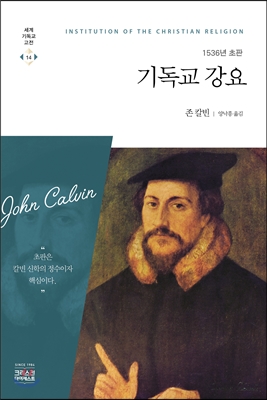
This book is a complete translation of the first edition of The Institutes of the Christian Religion.
This first edition is called the essence and core of Calvin's theology because the ideas of the first edition are carried over almost unchanged to the final edition.
The first edition was in Latin and had about 300 pages, and the final edition had about 1,500 pages, making the first edition one-fifth the length of the final edition.
When this first edition of Institutes of the Christian Religion came out in 1536, it shook the Christian world and moved history.
The Roman Catholic Church was most afraid of the imposition of Christianity, and the Reformed Church was able to establish a system through this book and confidently walk the path toward becoming the true church.
With this book, Calvin was recognized as a first-class theologian and was invited to the Church of Geneva.
As the Roman Catholic Church relied on Aquinas' Summa Theologica, the Protestant Church relied on Calvin's Institutes of the Christian Religion.
American theologian Paul T.
Fuhrmann) said: “To understand the vast final version, one must understand the position of all Calvin’s opponents.
This is not easy.
So, the first edition, which lacks such controversy, is much more understandable to modern readers.”
Furthermore, while the first edition of Institutes of the Christian Religion was written for all believers, the final edition was written with theologians and opponents in mind, so that while the first edition contained the essence of Calvin's theological thought, it was written so that anyone could read and understand it.
The final edition was expanded over 20 years through responses to opponents and supplements, becoming five times the length of the first edition.
The reason for publishing several supplementary editions thereafter was not to correct or revise the content, but simply to increase the volume by refuting the theological errors of the Roman Catholic Church and the Anabaptists at the time.
Therefore, the first edition can be considered a summary of the final edition.
“Therefore, the first edition is read as much in academic circles as the final edition in terms of historical value.” - Park Hee-seok, former professor at Chongshin University
This book is a complete translation of the first edition of The Institutes of the Christian Religion.
This first edition is called the essence and core of Calvin's theology because the ideas of the first edition are carried over almost unchanged to the final edition.
The first edition was in Latin and had about 300 pages, and the final edition had about 1,500 pages, making the first edition one-fifth the length of the final edition.
When this first edition of Institutes of the Christian Religion came out in 1536, it shook the Christian world and moved history.
The Roman Catholic Church was most afraid of the imposition of Christianity, and the Reformed Church was able to establish a system through this book and confidently walk the path toward becoming the true church.
With this book, Calvin was recognized as a first-class theologian and was invited to the Church of Geneva.
As the Roman Catholic Church relied on Aquinas' Summa Theologica, the Protestant Church relied on Calvin's Institutes of the Christian Religion.
American theologian Paul T.
Fuhrmann) said: “To understand the vast final version, one must understand the position of all Calvin’s opponents.
This is not easy.
So, the first edition, which lacks such controversy, is much more understandable to modern readers.”
Furthermore, while the first edition of Institutes of the Christian Religion was written for all believers, the final edition was written with theologians and opponents in mind, so that while the first edition contained the essence of Calvin's theological thought, it was written so that anyone could read and understand it.
The final edition was expanded over 20 years through responses to opponents and supplements, becoming five times the length of the first edition.
index
preface
Introduction
Ⅰ.
Until the publication of the 1536 edition of the Code (1532-1535)
Ⅱ.
First edition of The Institutes of the Christian Religion (1536)
Tribute - To King Francis of France
1.
Background of this book
2.
A Petition for Persecuted Evangelicals
3.
Refutation of the opponents' accusations - that it is new and uncertain
The value of claims and miracles
4.
Unfair claims that the Church Fathers opposed the teachings of the Reformation.
5.
Appeal to customs contrary to truth
6.
Errors Concerning the Nature of the Church
7.
The disturbances caused by the reformed doctrine
8.
The king should beware of acting on the basis of false accusations: innocent
They wait for God's judgment.
Chapter 1: The Law - Includes Commentary on the Ten Commandments
A.
Knowledge of God (1)
B.
Knowledge of Humans (2-3)
C.
Law (4)
D.
God's Love in Christ (5-6)
E.
Exposition of the Ten Commandments (7-23)
West Gate (7-8)
First Commandment (9)
Second Commandment (10-11)
Third Commandment (12)
The Fourth Commandment (13-16)
The Fifth Commandment (17)
The 6th Commandment (18)
The Seventh Commandment (19)
The Eighth Commandment (20)
The 9th Commandment (21)
The Tenth Commandment (22-23)
F.
Summary (24-25)
G.
Justification (26-32)
H.
The Use of the Law (33)
I.
Justification (continued) (34-38)
Chapter 2: Faith - Includes Commentary on the Apostles' Creed
A.
Faith and Belief in One God (1-9)
B.
Commentary on the Apostles' Creed (10-34)
First part (10)
Part 2 (11-19)
Third part (20)
Fourth part (21-34)
C.
Faith, Hope, Love (35)
Chapter 3 Prayer - Includes commentary on the Lord's Prayer
A.
Prayer in General Sense (1-13)
B.
Commentary on the Lord's Prayer (14-30)
Introduction (14-16)
First petition (17)
Second Petition (18-19)
Third Petition (20-21)
Fourth Petition (22-24)
Fifth Petition (25-26)
Sixth Petition (27-30)
C.
The Reality of Prayer (31-33)
Chapter 4 Sacraments
A.
Sacraments in a general sense (1-10)
B.
Baptism (11-23)
C.
Holy Communion (24-52)
D.
Administration of the Sacrament (53)
Chapter 5: False Sacraments
Introduction (1)
A.
Confirmation (2-10)
B.
Confession (11-44)
C.
(Generally) The Sacrament of the Last Supper (45-48)
D.
The Order of the Priests - The Sacrament of Holy Orders (49-67)
E.
Sacrament of Marriage (68-70)
Chapter 6: Christian Liberty, Church Power, and Political Organization
A.
Christian Freedom (1-13)
B.
The Power of the Church (14-34)
C.
World Politics (35-56)
Introduction
Ⅰ.
Until the publication of the 1536 edition of the Code (1532-1535)
Ⅱ.
First edition of The Institutes of the Christian Religion (1536)
Tribute - To King Francis of France
1.
Background of this book
2.
A Petition for Persecuted Evangelicals
3.
Refutation of the opponents' accusations - that it is new and uncertain
The value of claims and miracles
4.
Unfair claims that the Church Fathers opposed the teachings of the Reformation.
5.
Appeal to customs contrary to truth
6.
Errors Concerning the Nature of the Church
7.
The disturbances caused by the reformed doctrine
8.
The king should beware of acting on the basis of false accusations: innocent
They wait for God's judgment.
Chapter 1: The Law - Includes Commentary on the Ten Commandments
A.
Knowledge of God (1)
B.
Knowledge of Humans (2-3)
C.
Law (4)
D.
God's Love in Christ (5-6)
E.
Exposition of the Ten Commandments (7-23)
West Gate (7-8)
First Commandment (9)
Second Commandment (10-11)
Third Commandment (12)
The Fourth Commandment (13-16)
The Fifth Commandment (17)
The 6th Commandment (18)
The Seventh Commandment (19)
The Eighth Commandment (20)
The 9th Commandment (21)
The Tenth Commandment (22-23)
F.
Summary (24-25)
G.
Justification (26-32)
H.
The Use of the Law (33)
I.
Justification (continued) (34-38)
Chapter 2: Faith - Includes Commentary on the Apostles' Creed
A.
Faith and Belief in One God (1-9)
B.
Commentary on the Apostles' Creed (10-34)
First part (10)
Part 2 (11-19)
Third part (20)
Fourth part (21-34)
C.
Faith, Hope, Love (35)
Chapter 3 Prayer - Includes commentary on the Lord's Prayer
A.
Prayer in General Sense (1-13)
B.
Commentary on the Lord's Prayer (14-30)
Introduction (14-16)
First petition (17)
Second Petition (18-19)
Third Petition (20-21)
Fourth Petition (22-24)
Fifth Petition (25-26)
Sixth Petition (27-30)
C.
The Reality of Prayer (31-33)
Chapter 4 Sacraments
A.
Sacraments in a general sense (1-10)
B.
Baptism (11-23)
C.
Holy Communion (24-52)
D.
Administration of the Sacrament (53)
Chapter 5: False Sacraments
Introduction (1)
A.
Confirmation (2-10)
B.
Confession (11-44)
C.
(Generally) The Sacrament of the Last Supper (45-48)
D.
The Order of the Priests - The Sacrament of Holy Orders (49-67)
E.
Sacrament of Marriage (68-70)
Chapter 6: Christian Liberty, Church Power, and Political Organization
A.
Christian Freedom (1-13)
B.
The Power of the Church (14-34)
C.
World Politics (35-56)
GOODS SPECIFICS
- Date of issue: May 2, 2016
- Page count, weight, size: 423 pages | 150*225*30mm
- ISBN13: 9788944724145
- ISBN10: 8944724148
You may also like
카테고리
korean


korean

![GQ KOREA Mark (Monthly): December [2025]](http://librairie.coreenne.fr/cdn/shop/files/8ef265dbbfbf186523ed75ba7319009d.jpg?v=1765340328&width=3840)


