

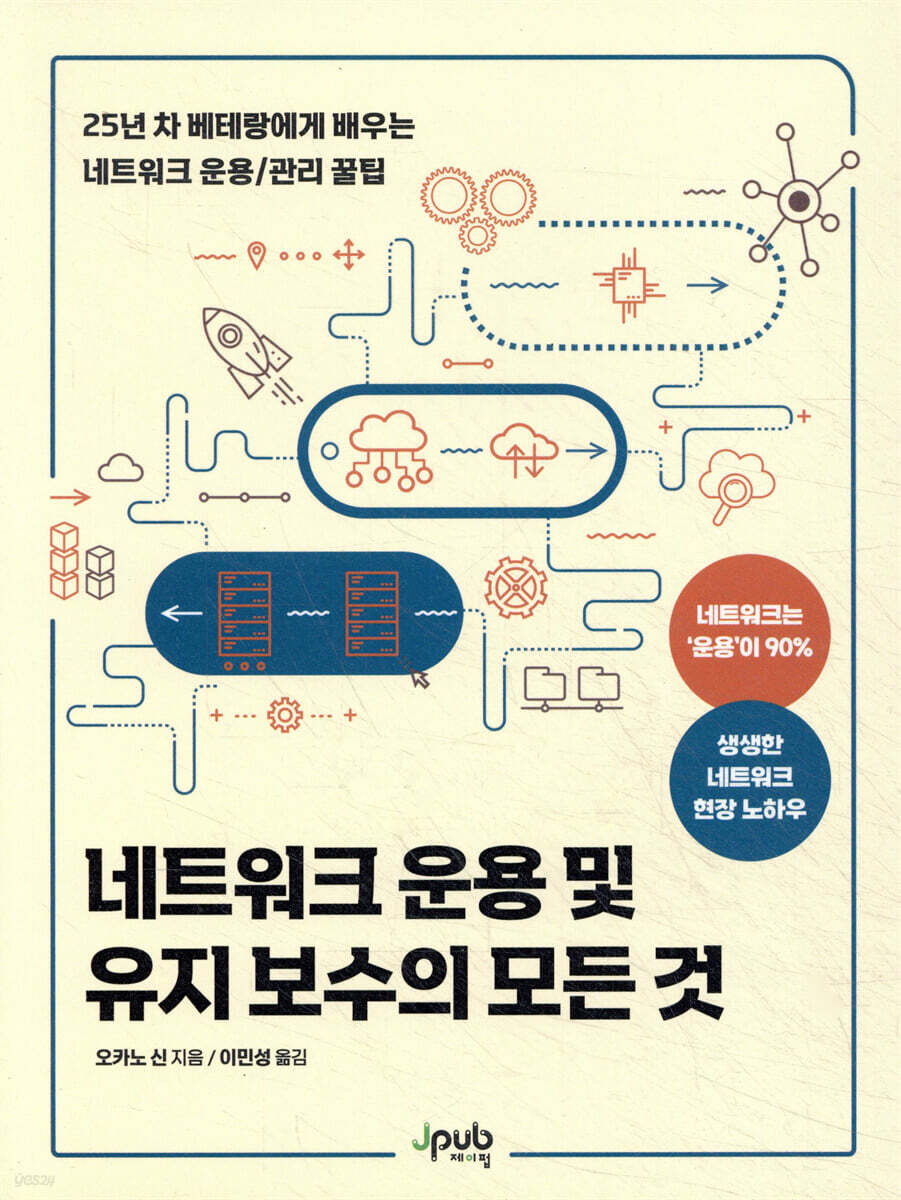
Everything about network operations and maintenance
 |
Description
Book Introduction
A single volume contains 25 years of network operation know-how.
The most important thing in network operation is to quickly identify problems and restore them to their original state.
How can we quickly identify and resolve issues? From hardware failures to software failures, identifying and quickly addressing a wide range of issues requires more than textbook knowledge.
What is needed at this time is experience and know-how accumulated in the field.
This book provides the author's know-how gained from over 25 years of field experience.
This book will provide you with hands-on experience on the front lines of networking.
The most important thing in network operation is to quickly identify problems and restore them to their original state.
How can we quickly identify and resolve issues? From hardware failures to software failures, identifying and quickly addressing a wide range of issues requires more than textbook knowledge.
What is needed at this time is experience and know-how accumulated in the field.
This book provides the author's know-how gained from over 25 years of field experience.
This book will provide you with hands-on experience on the front lines of networking.
- You can preview some of the book's contents.
Preview
index
Translator's Preface ⅹ
Beta Reader Review ⅹⅱ
Preface ⅹⅳ
CHAPTER 1 Overall Structure of Network Operation and Maintenance
1-1 Current status of on-site operation and maintenance work 3
What is Network Operations and Maintenance? 3
__It is important for network operations and maintenance engineers to be aware of the upper process 5
__Network operations and maintenance engineers are involved from the design and construction stages. 6
1-2 Characters in Operation and Maintenance 8
Customer 8
__Operations and Maintenance Company 10
1-3 General flow of response to a failure 14
__Fault Detection and Reception 14
__Causal Analysis 17
__Recovery Operation 19
1-4 General Configuration Management 21
What is Configuration Management? 21
__Items needed for configuration management 22
__IP Address Management Table 23
__Device Management Table 24
__[Practical Points] Creating a Hostname Naming Rule 26
1-5 General Performance Management 27
What is Performance Management? 27
__Performance Management Cycle 28
__29 frequently used tools for performance management
CHAPTER 2: Fundamentals of Network Operations Management
2-1 Network Operation Management 33
__Overview of Network Operations Management 33
2-2 Incident Management 36
__Incident Management Overview 36
__Operational Incident Management 36
__Enactment of Escalation Rules 37
__[Practical Points] 38 Actual Inquiries or Requests
2-3 Problem Management 40
__Overview of Problem Management 40
2-4 Access Management 43
__Access Management Overview 43
__Access Request Response 43
2-5 The Role of the Help Desk 44
__[Practical Points] Help Desk Operation 45
2-6 Network Operations Management Tools 46
__Tools to Support Your Help Desk 46
__Tools to support network operation monitoring 46
CHAPTER 3: Fundamentals of Network Operations Monitoring
3-1 Network Operation Monitoring Task 51
__Network Monitoring Device 52
__Features required for network monitoring devices 53
3-2 Main Functions of Network Monitoring Devices 57
__Configuration Management 57
__Disability Management 58
__[Practical Point] Non-monitoring Settings for Network Monitoring Devices 62
__Performance Management 62
3-3 General Operational Monitoring 64
__Operational monitoring methods vary depending on the size of the network 64
__Network Monitoring Device Structure 66
3-4 Introduction of Network Monitoring Devices 68
__Individual surveillance 68
__Public Surveillance 70
3-5 Operational Monitoring Using SNMP 72
What is SNMP? 72
__Conditions for using SNMP 72
__SNMP Components 73
__The Role of Managers and Agents 76
__Polling 77
__Trap 81
__What is the community name? 83
The Need for SNMP 83
__[Practical Point] Why UDP is Used in SNMP 85
__[Practical Points] 85 Pitfalls of SNMP Monitoring
3-6 Traffic Analysis Using NetFlow 87
__NetFlow Usage Example 89
__[Practical Point] Pay Attention to Maximum Burst Traffic Volume 91
CHAPTER 4 Basics of Network Maintenance
4-1 Overview of the Maintenance Network 95
Separation of business and maintenance networks 95
4-2 Maintenance Network Maintenance 97
__Requirements for Maintenance Networks 98
__Change the path of maintenance communication 99
4-3 Advanced Remote Login 101
__Remote Access Limitations 101
__Managing Protocols Used for Remote Access 101
4-4 Connecting using the console server 106
__Engineers go to the site 106
__Remote serial connection structure 107
__[Practical Points] How to Use Console Servers 112
CHAPTER 5: Fundamentals of Network Operation Design and Fault Response
5-1 Network Availability Design 115
__Network Availability 115
Level 118 of 5-2 Dualization
__Dual configuration method 118
5-3 Overall structure of duplication 121
__The impact of failure when it is a single configuration is 121
__Place to duplicate 123
__[Practical Point] Understanding Communication Paths 127
5-4 Advanced Dualization Measures 135
__Multi-Chassis Link Aggregation 135
5-5 Loop Prevention Function 142
__Network loops occur simply 142
Why is the __loop construct bad? 143
__Measures to Prevent Broadcast Storms 144
__Storm Control Settings 146
5-6 Preparation for the Disability Diagnosis Task 150
__Note: First, grasp the overall structure 150
__Check the situation on site 151
__Before going out to the field 157
__Precautions for the environment where the device will be installed 158
__[Practical Points] 159 Common Failure Cases
5-7 Where is the network failure? 161
__Network failure of telecommunications carrier 161
__Internal network failure 163
__[Practical Point] Confirming Communication via ICMP 164
Network Quality Issue 165
__Other Issues 166
__Network System Failure 167
5-8 Response to Device Failure 169
__Hardware failure 170
__[Practical Points] Precautions for Safe Work 172
__Software failure 173
__When it is not possible to distinguish whether the cause of the failure is hardware or software 173
5-9 Network Device Maintenance 175
__Basic Recovery Procedure 175
__A rough outline of the process until complete recovery 179
5-10 Maintenance-Required Backups Mindset 188
__What to back up? 188
__When do you back up? 191
__Where do you back up? 191
5-11 Packet Capture Methods 193
Using the __L1 switch 194
__Building a Packet Capture Network 196
Countermeasures against 5-12 targeted attacks 199
What is a targeted attack? 199
__Future Security Measures from an Operational Management Perspective 200
How to Install a Targeted Attack Countermeasure Appliance 201
supplement
Operation and Maintenance Considering A-1 Cloud Services 207
__Operation and Maintenance Flow from Each Perspective 207
__Future network operations and maintenance resulting from the migration to cloud services 209
How to Collect Job Logs with A-2 Tera Term 212
__Procedure 212
Search 215
Beta Reader Review ⅹⅱ
Preface ⅹⅳ
CHAPTER 1 Overall Structure of Network Operation and Maintenance
1-1 Current status of on-site operation and maintenance work 3
What is Network Operations and Maintenance? 3
__It is important for network operations and maintenance engineers to be aware of the upper process 5
__Network operations and maintenance engineers are involved from the design and construction stages. 6
1-2 Characters in Operation and Maintenance 8
Customer 8
__Operations and Maintenance Company 10
1-3 General flow of response to a failure 14
__Fault Detection and Reception 14
__Causal Analysis 17
__Recovery Operation 19
1-4 General Configuration Management 21
What is Configuration Management? 21
__Items needed for configuration management 22
__IP Address Management Table 23
__Device Management Table 24
__[Practical Points] Creating a Hostname Naming Rule 26
1-5 General Performance Management 27
What is Performance Management? 27
__Performance Management Cycle 28
__29 frequently used tools for performance management
CHAPTER 2: Fundamentals of Network Operations Management
2-1 Network Operation Management 33
__Overview of Network Operations Management 33
2-2 Incident Management 36
__Incident Management Overview 36
__Operational Incident Management 36
__Enactment of Escalation Rules 37
__[Practical Points] 38 Actual Inquiries or Requests
2-3 Problem Management 40
__Overview of Problem Management 40
2-4 Access Management 43
__Access Management Overview 43
__Access Request Response 43
2-5 The Role of the Help Desk 44
__[Practical Points] Help Desk Operation 45
2-6 Network Operations Management Tools 46
__Tools to Support Your Help Desk 46
__Tools to support network operation monitoring 46
CHAPTER 3: Fundamentals of Network Operations Monitoring
3-1 Network Operation Monitoring Task 51
__Network Monitoring Device 52
__Features required for network monitoring devices 53
3-2 Main Functions of Network Monitoring Devices 57
__Configuration Management 57
__Disability Management 58
__[Practical Point] Non-monitoring Settings for Network Monitoring Devices 62
__Performance Management 62
3-3 General Operational Monitoring 64
__Operational monitoring methods vary depending on the size of the network 64
__Network Monitoring Device Structure 66
3-4 Introduction of Network Monitoring Devices 68
__Individual surveillance 68
__Public Surveillance 70
3-5 Operational Monitoring Using SNMP 72
What is SNMP? 72
__Conditions for using SNMP 72
__SNMP Components 73
__The Role of Managers and Agents 76
__Polling 77
__Trap 81
__What is the community name? 83
The Need for SNMP 83
__[Practical Point] Why UDP is Used in SNMP 85
__[Practical Points] 85 Pitfalls of SNMP Monitoring
3-6 Traffic Analysis Using NetFlow 87
__NetFlow Usage Example 89
__[Practical Point] Pay Attention to Maximum Burst Traffic Volume 91
CHAPTER 4 Basics of Network Maintenance
4-1 Overview of the Maintenance Network 95
Separation of business and maintenance networks 95
4-2 Maintenance Network Maintenance 97
__Requirements for Maintenance Networks 98
__Change the path of maintenance communication 99
4-3 Advanced Remote Login 101
__Remote Access Limitations 101
__Managing Protocols Used for Remote Access 101
4-4 Connecting using the console server 106
__Engineers go to the site 106
__Remote serial connection structure 107
__[Practical Points] How to Use Console Servers 112
CHAPTER 5: Fundamentals of Network Operation Design and Fault Response
5-1 Network Availability Design 115
__Network Availability 115
Level 118 of 5-2 Dualization
__Dual configuration method 118
5-3 Overall structure of duplication 121
__The impact of failure when it is a single configuration is 121
__Place to duplicate 123
__[Practical Point] Understanding Communication Paths 127
5-4 Advanced Dualization Measures 135
__Multi-Chassis Link Aggregation 135
5-5 Loop Prevention Function 142
__Network loops occur simply 142
Why is the __loop construct bad? 143
__Measures to Prevent Broadcast Storms 144
__Storm Control Settings 146
5-6 Preparation for the Disability Diagnosis Task 150
__Note: First, grasp the overall structure 150
__Check the situation on site 151
__Before going out to the field 157
__Precautions for the environment where the device will be installed 158
__[Practical Points] 159 Common Failure Cases
5-7 Where is the network failure? 161
__Network failure of telecommunications carrier 161
__Internal network failure 163
__[Practical Point] Confirming Communication via ICMP 164
Network Quality Issue 165
__Other Issues 166
__Network System Failure 167
5-8 Response to Device Failure 169
__Hardware failure 170
__[Practical Points] Precautions for Safe Work 172
__Software failure 173
__When it is not possible to distinguish whether the cause of the failure is hardware or software 173
5-9 Network Device Maintenance 175
__Basic Recovery Procedure 175
__A rough outline of the process until complete recovery 179
5-10 Maintenance-Required Backups Mindset 188
__What to back up? 188
__When do you back up? 191
__Where do you back up? 191
5-11 Packet Capture Methods 193
Using the __L1 switch 194
__Building a Packet Capture Network 196
Countermeasures against 5-12 targeted attacks 199
What is a targeted attack? 199
__Future Security Measures from an Operational Management Perspective 200
How to Install a Targeted Attack Countermeasure Appliance 201
supplement
Operation and Maintenance Considering A-1 Cloud Services 207
__Operation and Maintenance Flow from Each Perspective 207
__Future network operations and maintenance resulting from the migration to cloud services 209
How to Collect Job Logs with A-2 Tera Term 212
__Procedure 212
Search 215
Detailed image

Into the book
The purpose of network operations is to keep the network operating normally.
You can think of it as an action taken in advance to prevent problems from occurring, rather than dealing with them after they occur.
These days, this task is given importance in the field.
Network construction is finished once it is created, but network operation work continues.
--- p.3
The purpose of network maintenance work is to restore the network to its original state after a network failure.
If there is a hardware problem, replace the part.
Imagine calling a repairman when a large appliance in your home breaks down.
/ However, hardware failures in network devices are rare these days, and even when they do occur, most are initial defects.
Meanwhile, half of the responses are related to issues stemming from the network design phase, such as software bugs or delays caused by increased traffic, or software support.
--- p.4
Network operations tasks include routine tasks such as network monitoring and preparing monthly traffic reports, as well as non-routine tasks such as responding to network issues.
The task of maintaining the smooth operation of these network operation processes is called operations management.
--- p.33
Network operation monitoring is a central task in operations.
This is because the current network operation and maintenance work involves more preventative measures than response measures.
The preventative action we are talking about here is monitoring whether the network is operating normally.
Good network operation monitoring can reduce the frequency of outage responses and enable immediate response in emergencies.
--- p.51
Network operations and maintenance work is not just about maintaining the network.
Of course, keeping the current network running stably is the minimum role.
However, future network operation and maintenance must be conscious of the advancement of operational tasks.
In other words, in today's environment where network traffic is increasing and security is essential, a more robust network infrastructure is needed.
--- p.95
Network availability simply refers to the extent to which a network can tolerate interruptions.
In other words, it is a way of thinking that clearly defines where to prevent and where to discard, rather than trying to completely prevent failures 100%, with thoughts like, "There's no need to introduce such expensive products or spend so much time building a network in the first place," "Let's tolerate some network outages and use the remaining money elsewhere," and "Selection and focus are necessary when investing in networks or servers."
You can think of it as an action taken in advance to prevent problems from occurring, rather than dealing with them after they occur.
These days, this task is given importance in the field.
Network construction is finished once it is created, but network operation work continues.
--- p.3
The purpose of network maintenance work is to restore the network to its original state after a network failure.
If there is a hardware problem, replace the part.
Imagine calling a repairman when a large appliance in your home breaks down.
/ However, hardware failures in network devices are rare these days, and even when they do occur, most are initial defects.
Meanwhile, half of the responses are related to issues stemming from the network design phase, such as software bugs or delays caused by increased traffic, or software support.
--- p.4
Network operations tasks include routine tasks such as network monitoring and preparing monthly traffic reports, as well as non-routine tasks such as responding to network issues.
The task of maintaining the smooth operation of these network operation processes is called operations management.
--- p.33
Network operation monitoring is a central task in operations.
This is because the current network operation and maintenance work involves more preventative measures than response measures.
The preventative action we are talking about here is monitoring whether the network is operating normally.
Good network operation monitoring can reduce the frequency of outage responses and enable immediate response in emergencies.
--- p.51
Network operations and maintenance work is not just about maintaining the network.
Of course, keeping the current network running stably is the minimum role.
However, future network operation and maintenance must be conscious of the advancement of operational tasks.
In other words, in today's environment where network traffic is increasing and security is essential, a more robust network infrastructure is needed.
--- p.95
Network availability simply refers to the extent to which a network can tolerate interruptions.
In other words, it is a way of thinking that clearly defines where to prevent and where to discard, rather than trying to completely prevent failures 100%, with thoughts like, "There's no need to introduce such expensive products or spend so much time building a network in the first place," "Let's tolerate some network outages and use the remaining money elsewhere," and "Selection and focus are necessary when investing in networks or servers."
--- p.115
Publisher's Review
A Network Operations Management Guidebook with 25 Years of Experience
Are you responsible for network operations or aspiring to become a network engineer? To effectively operate and manage networks in any situation, you need field experience.
Network problems can arise unexpectedly from a variety of sources, including hardware and software.
In order to respond appropriately at each situation, extensive field experience is essential.
However, we cannot just vaguely wait for experience to accumulate.
To gain experience in a short period of time, you need to learn the know-how of a trustworthy senior.
Here is a senior who has stepped forward to share his know-how.
Author Shin Okano wrote this book to share with you his 25+ years of networking experience.
Learn the know-how of network operation management through vivid stories from the network front lines.
It consists of five chapters, and Chapters 1 and 2 explain the types of operations and maintenance, and operation management tasks.
Chapter 3 talks about network monitoring.
We deliver vivid on-site information on how to use network monitoring devices and tools.
Chapter 4 discusses infrastructure maintenance.
Finally, Chapter 5 contains operational design considering operation and maintenance, as well as know-how for maintenance work in the field.
Even if you go out into the field alone, you can move forward with the feeling of having a reliable senior by your side with this book.
I hope that through this book, you will develop the strength to navigate any unexpected situations that may arise while working in network operations without panicking.
Target audience
■ Engineers who will be responsible for network operation and maintenance in the future
■ Corporate network administrator
■ Manager in charge of network operation and maintenance sites
■ Business owners who want to expand their network operation and maintenance business
■ Customers who will order network operation and management work
■ Readers who are curious about what elements are involved in network operation
Are you responsible for network operations or aspiring to become a network engineer? To effectively operate and manage networks in any situation, you need field experience.
Network problems can arise unexpectedly from a variety of sources, including hardware and software.
In order to respond appropriately at each situation, extensive field experience is essential.
However, we cannot just vaguely wait for experience to accumulate.
To gain experience in a short period of time, you need to learn the know-how of a trustworthy senior.
Here is a senior who has stepped forward to share his know-how.
Author Shin Okano wrote this book to share with you his 25+ years of networking experience.
Learn the know-how of network operation management through vivid stories from the network front lines.
It consists of five chapters, and Chapters 1 and 2 explain the types of operations and maintenance, and operation management tasks.
Chapter 3 talks about network monitoring.
We deliver vivid on-site information on how to use network monitoring devices and tools.
Chapter 4 discusses infrastructure maintenance.
Finally, Chapter 5 contains operational design considering operation and maintenance, as well as know-how for maintenance work in the field.
Even if you go out into the field alone, you can move forward with the feeling of having a reliable senior by your side with this book.
I hope that through this book, you will develop the strength to navigate any unexpected situations that may arise while working in network operations without panicking.
Target audience
■ Engineers who will be responsible for network operation and maintenance in the future
■ Corporate network administrator
■ Manager in charge of network operation and maintenance sites
■ Business owners who want to expand their network operation and maintenance business
■ Customers who will order network operation and management work
■ Readers who are curious about what elements are involved in network operation
GOODS SPECIFICS
- Publication date: October 6, 2022
- Page count, weight, size: 236 pages | 474g | 170*225*14mm
- ISBN13: 9791192469287
- ISBN10: 1192469283
You may also like
카테고리
korean


korean

![GQ KOREA Mark (Monthly): December [2025]](http://librairie.coreenne.fr/cdn/shop/files/8ef265dbbfbf186523ed75ba7319009d.jpg?v=1765340328&width=3840)


