

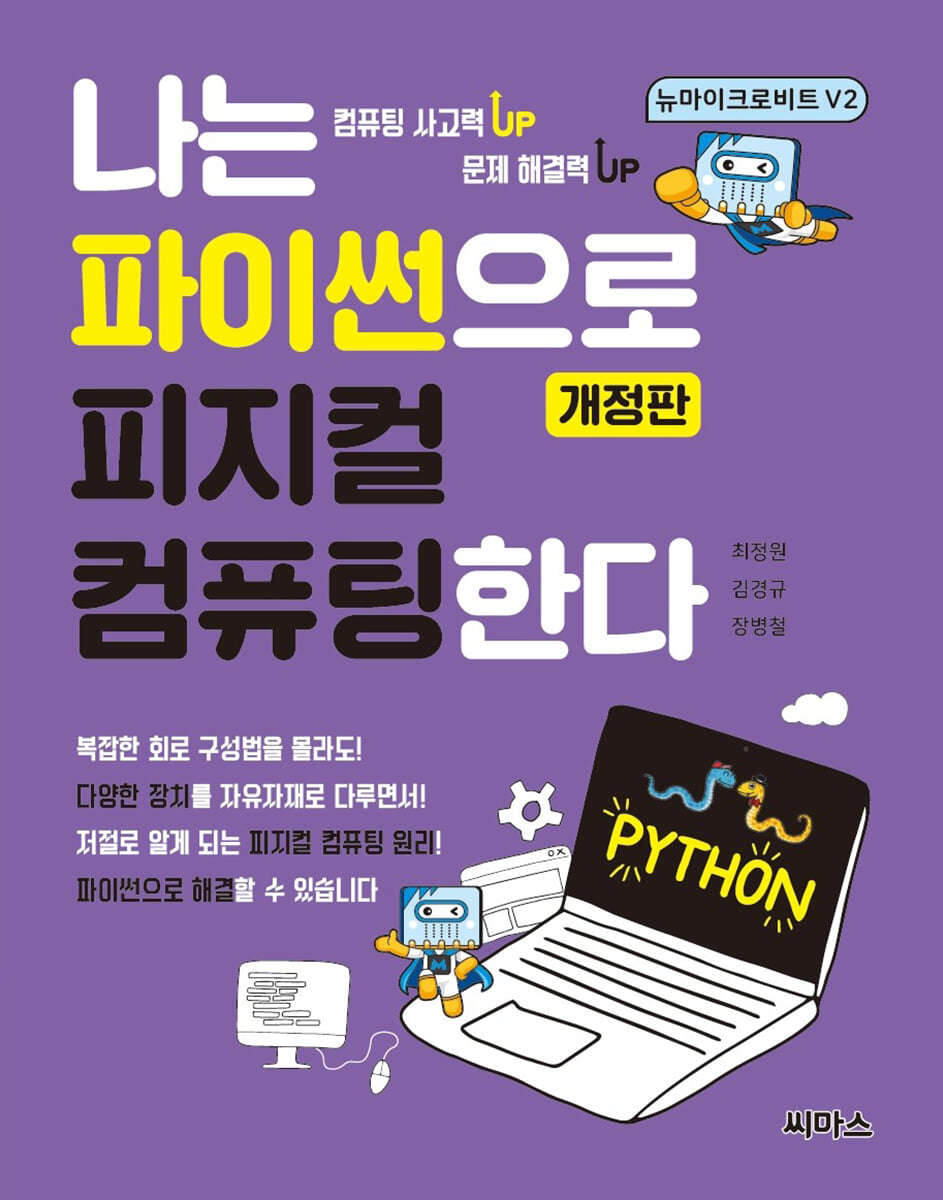
I do physical computing with Python
 |
Description
Book Introduction
UP your computational thinking and problem-solving skills
Programming is a magical tool that turns imagination into reality.
It is also a tool that makes many physical devices in the world operate automatically.
When programming and physical devices come together, there's nothing you can't create if you have the idea.
However, when you first learn physical computing, which refers to programming that controls physical devices, you may find yourself in a difficult situation.
This is because I am not familiar with programming and I have to learn the names and principles of new devices and even design circuits to control them.
Moreover, the explanations in the book are too long and numerous.
This book aims to address these issues by providing a friendly, simple explanation of key content and easy-to-understand illustrations that are easy for many students and teachers to understand at a glance and study independently.
This book is also based on the know-how of experienced information teachers in middle and high schools who have been thinking for over 10 years about how to teach easily, enjoyably, and effectively.
Among text-based programming languages, Python was selected as the programming language because its grammar is not difficult and it is easy to learn, and the burden of circuit design was minimized by utilizing the micro:bit, which has various sensors and actuators built in.
It covers not only the basics of controlling the operation of physical input/output devices such as sensors and actuators, but also the application part of creating physical devices to solve various problems in real life. It is structured so that not only interested elementary and middle school students but also high school regular classes, club activities, and even each individual can study on their own at home.
Programming is a magical tool that turns imagination into reality.
It is also a tool that makes many physical devices in the world operate automatically.
When programming and physical devices come together, there's nothing you can't create if you have the idea.
However, when you first learn physical computing, which refers to programming that controls physical devices, you may find yourself in a difficult situation.
This is because I am not familiar with programming and I have to learn the names and principles of new devices and even design circuits to control them.
Moreover, the explanations in the book are too long and numerous.
This book aims to address these issues by providing a friendly, simple explanation of key content and easy-to-understand illustrations that are easy for many students and teachers to understand at a glance and study independently.
This book is also based on the know-how of experienced information teachers in middle and high schools who have been thinking for over 10 years about how to teach easily, enjoyably, and effectively.
Among text-based programming languages, Python was selected as the programming language because its grammar is not difficult and it is easy to learn, and the burden of circuit design was minimized by utilizing the micro:bit, which has various sensors and actuators built in.
It covers not only the basics of controlling the operation of physical input/output devices such as sensors and actuators, but also the application part of creating physical devices to solve various problems in real life. It is structured so that not only interested elementary and middle school students but also high school regular classes, club activities, and even each individual can study on their own at home.
- You can preview some of the book's contents.
Preview
index
Part 1: Getting to Know Python
1.
What is Python?
2.
Introduction to commands used in this book
3.
How to install the Python editor (Mu)
Part 2: Meeting the Micro:bit
1.
What is micro:bit?
2.
Taking a look at the micro:bit configuration
3.
Micro:bit devices and achievement criteria
4.
Physical Computing
Part 3: Learning Physical Computing with Python
PROJECT 01 My own emoticon
PROJECT 02 Picture Traffic Light
PROJECT 03 Cheering Scoreboard
PROJECT 04 Automatic Brightness Control Light
PROJECT 05 Smart Traffic Light
PROJECT 06 Music Performance
PROJECT 07 A card that conveys my feelings
PROJECT 08 Sound-sensitive face
PROJECT 09 Heatwave Notification
PROJECT 10 Morse Code Transmitter
PROJECT 11 Wireless Sensor Device
PROJECT 12 Smart Fan
PROJECT 13 Fan of My Choice
PROJECT 14 Balloon Drone
PROJECT 15 Caterpillar Robot
PROJECT 16 Digital Dice
PROJECT 17 Automatic Parachute
PROJECT 18 Electronic Compass
PROJECT 19 Christmas Tree
PROJECT 20 Dancing LED
PROJECT 21 rangefinder
1.
What is Python?
2.
Introduction to commands used in this book
3.
How to install the Python editor (Mu)
Part 2: Meeting the Micro:bit
1.
What is micro:bit?
2.
Taking a look at the micro:bit configuration
3.
Micro:bit devices and achievement criteria
4.
Physical Computing
Part 3: Learning Physical Computing with Python
PROJECT 01 My own emoticon
PROJECT 02 Picture Traffic Light
PROJECT 03 Cheering Scoreboard
PROJECT 04 Automatic Brightness Control Light
PROJECT 05 Smart Traffic Light
PROJECT 06 Music Performance
PROJECT 07 A card that conveys my feelings
PROJECT 08 Sound-sensitive face
PROJECT 09 Heatwave Notification
PROJECT 10 Morse Code Transmitter
PROJECT 11 Wireless Sensor Device
PROJECT 12 Smart Fan
PROJECT 13 Fan of My Choice
PROJECT 14 Balloon Drone
PROJECT 15 Caterpillar Robot
PROJECT 16 Digital Dice
PROJECT 17 Automatic Parachute
PROJECT 18 Electronic Compass
PROJECT 19 Christmas Tree
PROJECT 20 Dancing LED
PROJECT 21 rangefinder
Detailed image
.jpg)
Publisher's Review
Special features
· Includes 21 projects utilizing novel topics and easy-to-use materials.
· Physical computing that you learn by handling various devices without having to know complex circuit configurations.
· Designed to be easy to use for students who have experienced physical computing with block-based programming languages and are moving on to text-based coding for the first time.
· Structured to allow students to gain experience defining and solving problems while working on real-world projects.
· Includes 21 projects utilizing novel topics and easy-to-use materials.
· Physical computing that you learn by handling various devices without having to know complex circuit configurations.
· Designed to be easy to use for students who have experienced physical computing with block-based programming languages and are moving on to text-based coding for the first time.
· Structured to allow students to gain experience defining and solving problems while working on real-world projects.
GOODS SPECIFICS
- Publication date: March 14, 2022
- Page count, weight, size: 208 pages | 704g | 220*280*11mm
- ISBN13: 9791156724766
- ISBN10: 1156724767
- KC Certification: Certification Type: Conformity Confirmation
You may also like
카테고리
korean


korean

![GQ KOREA Mark (Monthly): December [2025]](http://librairie.coreenne.fr/cdn/shop/files/8ef265dbbfbf186523ed75ba7319009d.jpg?v=1765340328&width=3840)


