

That's how this idiom came to be.
 |
Description
Book Introduction
Want to learn some confusing idioms properly?
A book that makes learning languages fun and helps build vocabulary and literacy skills.
Words like 'to have a big liver', 'to be caught by the ankle', and 'to wear a hat' are called 'idioms'.
It refers to a word that is formed by combining two or more words to create a new meaning that is completely different from the original meaning.
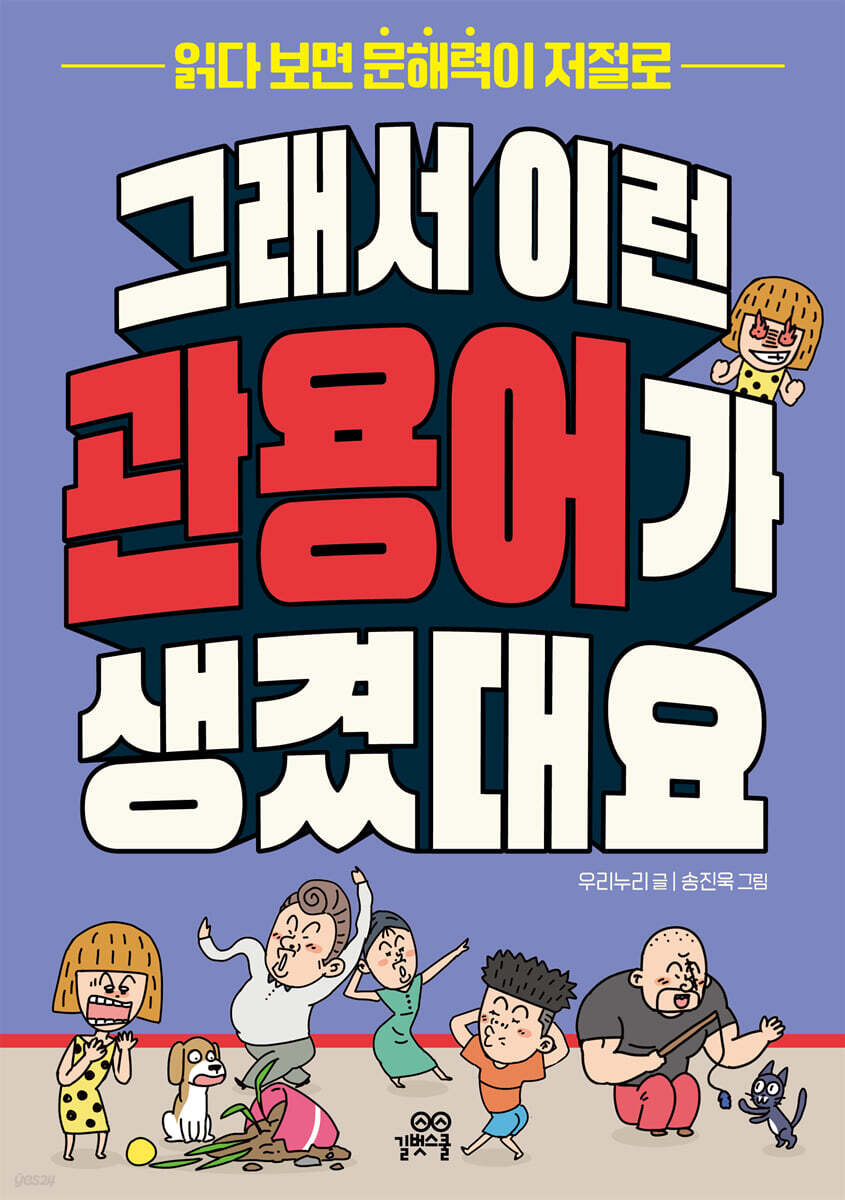
"So That's How These Idioms Came to Be" is a book that explains in an interesting way the background of how the idioms we commonly use first came to be.
As you read the book, you will naturally come to understand the meaning and usage of idioms.
Knowing a lot of idioms will help you grow your vocabulary and literacy skills, and you will be able to express your thoughts and words better.
Also, idioms contain our culture, so it's fun to get a glimpse into our old culture.
I recommend this book to parents concerned about their children's vocabulary being significantly lower than that of their peers, friends who want to have fun learning vocabulary, and teachers looking for a helpful learning resource related to idioms.
A book that makes learning languages fun and helps build vocabulary and literacy skills.
Words like 'to have a big liver', 'to be caught by the ankle', and 'to wear a hat' are called 'idioms'.
It refers to a word that is formed by combining two or more words to create a new meaning that is completely different from the original meaning.
"So That's How These Idioms Came to Be" is a book that explains in an interesting way the background of how the idioms we commonly use first came to be.
As you read the book, you will naturally come to understand the meaning and usage of idioms.
Knowing a lot of idioms will help you grow your vocabulary and literacy skills, and you will be able to express your thoughts and words better.
Also, idioms contain our culture, so it's fun to get a glimpse into our old culture.
I recommend this book to parents concerned about their children's vocabulary being significantly lower than that of their peers, friends who want to have fun learning vocabulary, and teachers looking for a helpful learning resource related to idioms.
- You can preview some of the book's contents.
Preview
index
Chapter 1 Idioms related to faces
Wrack your brain 8
Thin ears 10
Listen 12
14. Get a callus on your ear
Cover your face 16
18 in the blink of an eye
Keep an eye on 20
Eyes meet 22
I have no face 24
Thick face 26
Grind your teeth 28
My mouth is dry 30
Kiss 32
High-nosed 34
snort 36
Click your tongue 38
Chapter 2 Idioms Related to the Body
Engrave on your heart 42
The liver is large 44
Sleep with your legs stretched out 46
Get hit in the back of the head 48
Heads Together 50
Sit on top of the head 52
Buying a Body 54
Kneel 56
Knee slap 58
Fire on the instep 60
Get caught by the ankle 62
Wide feet 64
My stomach hurts 66
Wash your hands 68
Hold hands 70
My shoulders are heavy 72
Chapter 3 Idioms Related to Food
There's no soup 76
Eat noodles 78
Cake in the Sky 80
The sesame seeds are pouring out 82
Taste the Hot 84
Take a break 86
Eating like rice 88
Do as you like 90
Stirring the Death 92
Covering cold rice and hot rice 94
Hit the 96
Eating from the same pot 98
Chapter 4 Idioms Using Objects
Take Off Your Mask 102
Wearing a Hat 104
Screw loose 106
Building a Bridge 108
Build a Wall 110
Wearing colored glasses 112
Drive a wedge 114
Button the first button 116
nitpicking 118
120 on the board
Grass is dying 122
Tighten your belt 124
Chapter 5 Idioms Based on Nature
128 Thorns
Blooming 130
Spread Your Wings 132
Rising Star 134
Catching Clouds 136
Fish in Water 138
140 No matter what
It's as clear as day 142
See the Light 144
Uproot 146
The medicine is rising 148
150 without anyone knowing
Flying Paris 152
The Sky is Yellow 154
The sun rises in the west 156
Wrack your brain 8
Thin ears 10
Listen 12
14. Get a callus on your ear
Cover your face 16
18 in the blink of an eye
Keep an eye on 20
Eyes meet 22
I have no face 24
Thick face 26
Grind your teeth 28
My mouth is dry 30
Kiss 32
High-nosed 34
snort 36
Click your tongue 38
Chapter 2 Idioms Related to the Body
Engrave on your heart 42
The liver is large 44
Sleep with your legs stretched out 46
Get hit in the back of the head 48
Heads Together 50
Sit on top of the head 52
Buying a Body 54
Kneel 56
Knee slap 58
Fire on the instep 60
Get caught by the ankle 62
Wide feet 64
My stomach hurts 66
Wash your hands 68
Hold hands 70
My shoulders are heavy 72
Chapter 3 Idioms Related to Food
There's no soup 76
Eat noodles 78
Cake in the Sky 80
The sesame seeds are pouring out 82
Taste the Hot 84
Take a break 86
Eating like rice 88
Do as you like 90
Stirring the Death 92
Covering cold rice and hot rice 94
Hit the 96
Eating from the same pot 98
Chapter 4 Idioms Using Objects
Take Off Your Mask 102
Wearing a Hat 104
Screw loose 106
Building a Bridge 108
Build a Wall 110
Wearing colored glasses 112
Drive a wedge 114
Button the first button 116
nitpicking 118
120 on the board
Grass is dying 122
Tighten your belt 124
Chapter 5 Idioms Based on Nature
128 Thorns
Blooming 130
Spread Your Wings 132
Rising Star 134
Catching Clouds 136
Fish in Water 138
140 No matter what
It's as clear as day 142
See the Light 144
Uproot 146
The medicine is rising 148
150 without anyone knowing
Flying Paris 152
The Sky is Yellow 154
The sun rises in the west 156
Detailed image

Into the book
The nose is the highest part of the face and is located in the center, so it is often compared to the nose when expressing pride or self-esteem.
So, the attitude of making fun of others or showing off is called 'being arrogant'.
--- p.35
People who act boldly and fearlessly are often said to have “big guts.”
This saying comes from our country's traditional Korean medicine.
In fact, if there is a lot of heat in the liver, the liver becomes larger and bolder.
Conversely, if the liver is cold, it shrinks and becomes afraid of small things.
So, when you are fearless and brave, we say you have a big liver, and when you are timid, we say you have a small liver.
--- p.45
'Sari-da' refers to the appearance of a snake coiling its body like a coil, or an animal curling its tail in fear.
Not only animals, but also people crouch down when they hesitate to take action.
The expression ‘to sacrifice one’s body’ came from this appearance.
--- p.55
Our ancestors ate noodles on special occasions such as ancestral rites and feasts.
Especially at wedding banquets, noodles were always eaten.
It also means to live as long as a long strand of noodles, and to overcome difficulties as easily as noodles go down one's throat.
So, the act of getting married came to be metaphorically referred to as 'eating noodles'.
--- p.79
In the phrase 'to hit the cho', 'cho' refers to vinegar.
Vinegar is a seasoning that is mainly used to add sourness, but if you use too much of it or put it in food that it shouldn't be used in, it can ruin the taste of the food.
Just as adding vinegar to food ruins its flavor, the expression 'pouring vinegar' refers to interfering with and ruining something that is going well.
So, the attitude of making fun of others or showing off is called 'being arrogant'.
--- p.35
People who act boldly and fearlessly are often said to have “big guts.”
This saying comes from our country's traditional Korean medicine.
In fact, if there is a lot of heat in the liver, the liver becomes larger and bolder.
Conversely, if the liver is cold, it shrinks and becomes afraid of small things.
So, when you are fearless and brave, we say you have a big liver, and when you are timid, we say you have a small liver.
--- p.45
'Sari-da' refers to the appearance of a snake coiling its body like a coil, or an animal curling its tail in fear.
Not only animals, but also people crouch down when they hesitate to take action.
The expression ‘to sacrifice one’s body’ came from this appearance.
--- p.55
Our ancestors ate noodles on special occasions such as ancestral rites and feasts.
Especially at wedding banquets, noodles were always eaten.
It also means to live as long as a long strand of noodles, and to overcome difficulties as easily as noodles go down one's throat.
So, the act of getting married came to be metaphorically referred to as 'eating noodles'.
--- p.79
In the phrase 'to hit the cho', 'cho' refers to vinegar.
Vinegar is a seasoning that is mainly used to add sourness, but if you use too much of it or put it in food that it shouldn't be used in, it can ruin the taste of the food.
Just as adding vinegar to food ruins its flavor, the expression 'pouring vinegar' refers to interfering with and ruining something that is going well.
--- p.97
Publisher's Review
Children these days lack literacy skills,
Is it right to force myself to memorize vocabulary and solve Korean language workbook problems?
There is something that school teachers often say these days.
“Students these days don’t understand the meaning of the problem.”
This is because, due to the influence of digital devices, people are only accustomed to using slang or jargon in videos, or they have difficulty reading long lines of text because they do not know the meaning of the words.
This is also a common occurrence for children who mainly read educational comics.
So, even in math problems that everyone knows, there are many cases where people make mistakes because they don't understand the meaning of the problem.
But is it really the right thing to force these children to memorize vocabulary and solve literacy workbooks?
Knowing the origins makes vocabulary study more fun and improves comprehension.
Learn idioms properly and have fun!
"That's how these idioms came to be" is a book that explains the origins of idioms in the Korean language.
Because it is explained in short, four-panel comics and fairy tale formats, anyone can read it with interest.
Rather than mechanically memorizing vocabulary, you will naturally understand the meaning and usage, and it will be easier to remember.
If you build a solid vocabulary like this, your literacy skills will naturally improve.
I hope that through this book, children will find learning vocabulary fun and gain confidence in reading.
Book Features
Learn the meaning and usage of idioms through fun stories about their origins.
“Oh my god, a thief robbed the police station.
When we say, “The liver is big,” why do we say, “The liver is big”? Instead of saying, “The stomach is big” or “The heart is big.”
In fact, in Oriental medicine, it is said that if there is a lot of heat in the liver, the liver becomes larger and bolder.
That's how the expression 'big liver' came about.
Like this, each of the idioms we commonly use has its own reason and process for being created.
As you learn this process, the meaning and usage of idioms will become ingrained in your head.
Not only can you have fun studying vocabulary, you can also develop your knowledge of our history and culture.
We've collected key idioms that elementary school students must know.
I selected idioms that are frequently used in everyday life and elementary school Korean language textbooks.
The meaning of each idiom was mainly referenced from the 『Standard Korean Dictionary』 published by the National Institute of the Korean Language, and the accuracy of the content was increased by reflecting the latest grammar rules.
Also, since similar idioms and their usage examples are organized at the bottom of each four-panel cartoon, you can learn all the essential idioms that elementary school students need to know just by reading this one book.
There is a 'Search' section at the end of the book, so you can look up just the idioms you need.
It will be the best textbook for diverse and rich reading, speaking, and writing skills.
Even children who only like educational comics can read it without any burden.
On each left page where the story begins, there is a fun four-panel comic.
Just by reading the comics, you can immediately understand how the idioms are used in everyday life.
On the right page, the origin story of the idiom is written in a short fairy tale format, making it easy to read.
This book is fun to read for children who are only familiar with educational comics or have difficulty reading long texts, so it is a book that both parents and children can enjoy.
Is it right to force myself to memorize vocabulary and solve Korean language workbook problems?
There is something that school teachers often say these days.
“Students these days don’t understand the meaning of the problem.”
This is because, due to the influence of digital devices, people are only accustomed to using slang or jargon in videos, or they have difficulty reading long lines of text because they do not know the meaning of the words.
This is also a common occurrence for children who mainly read educational comics.
So, even in math problems that everyone knows, there are many cases where people make mistakes because they don't understand the meaning of the problem.
But is it really the right thing to force these children to memorize vocabulary and solve literacy workbooks?
Knowing the origins makes vocabulary study more fun and improves comprehension.
Learn idioms properly and have fun!
"That's how these idioms came to be" is a book that explains the origins of idioms in the Korean language.
Because it is explained in short, four-panel comics and fairy tale formats, anyone can read it with interest.
Rather than mechanically memorizing vocabulary, you will naturally understand the meaning and usage, and it will be easier to remember.
If you build a solid vocabulary like this, your literacy skills will naturally improve.
I hope that through this book, children will find learning vocabulary fun and gain confidence in reading.
Book Features
Learn the meaning and usage of idioms through fun stories about their origins.
“Oh my god, a thief robbed the police station.
When we say, “The liver is big,” why do we say, “The liver is big”? Instead of saying, “The stomach is big” or “The heart is big.”
In fact, in Oriental medicine, it is said that if there is a lot of heat in the liver, the liver becomes larger and bolder.
That's how the expression 'big liver' came about.
Like this, each of the idioms we commonly use has its own reason and process for being created.
As you learn this process, the meaning and usage of idioms will become ingrained in your head.
Not only can you have fun studying vocabulary, you can also develop your knowledge of our history and culture.
We've collected key idioms that elementary school students must know.
I selected idioms that are frequently used in everyday life and elementary school Korean language textbooks.
The meaning of each idiom was mainly referenced from the 『Standard Korean Dictionary』 published by the National Institute of the Korean Language, and the accuracy of the content was increased by reflecting the latest grammar rules.
Also, since similar idioms and their usage examples are organized at the bottom of each four-panel cartoon, you can learn all the essential idioms that elementary school students need to know just by reading this one book.
There is a 'Search' section at the end of the book, so you can look up just the idioms you need.
It will be the best textbook for diverse and rich reading, speaking, and writing skills.
Even children who only like educational comics can read it without any burden.
On each left page where the story begins, there is a fun four-panel comic.
Just by reading the comics, you can immediately understand how the idioms are used in everyday life.
On the right page, the origin story of the idiom is written in a short fairy tale format, making it easy to read.
This book is fun to read for children who are only familiar with educational comics or have difficulty reading long texts, so it is a book that both parents and children can enjoy.
GOODS SPECIFICS
- Publication date: November 27, 2023
- Page count, weight, size: 160 pages | 350g | 148*210*13mm
- ISBN13: 9791164066209
You may also like
카테고리
korean


korean

![GQ KOREA Mark (Monthly): December [2025]](http://librairie.coreenne.fr/cdn/shop/files/8ef265dbbfbf186523ed75ba7319009d.jpg?v=1765340328&width=3840)


