

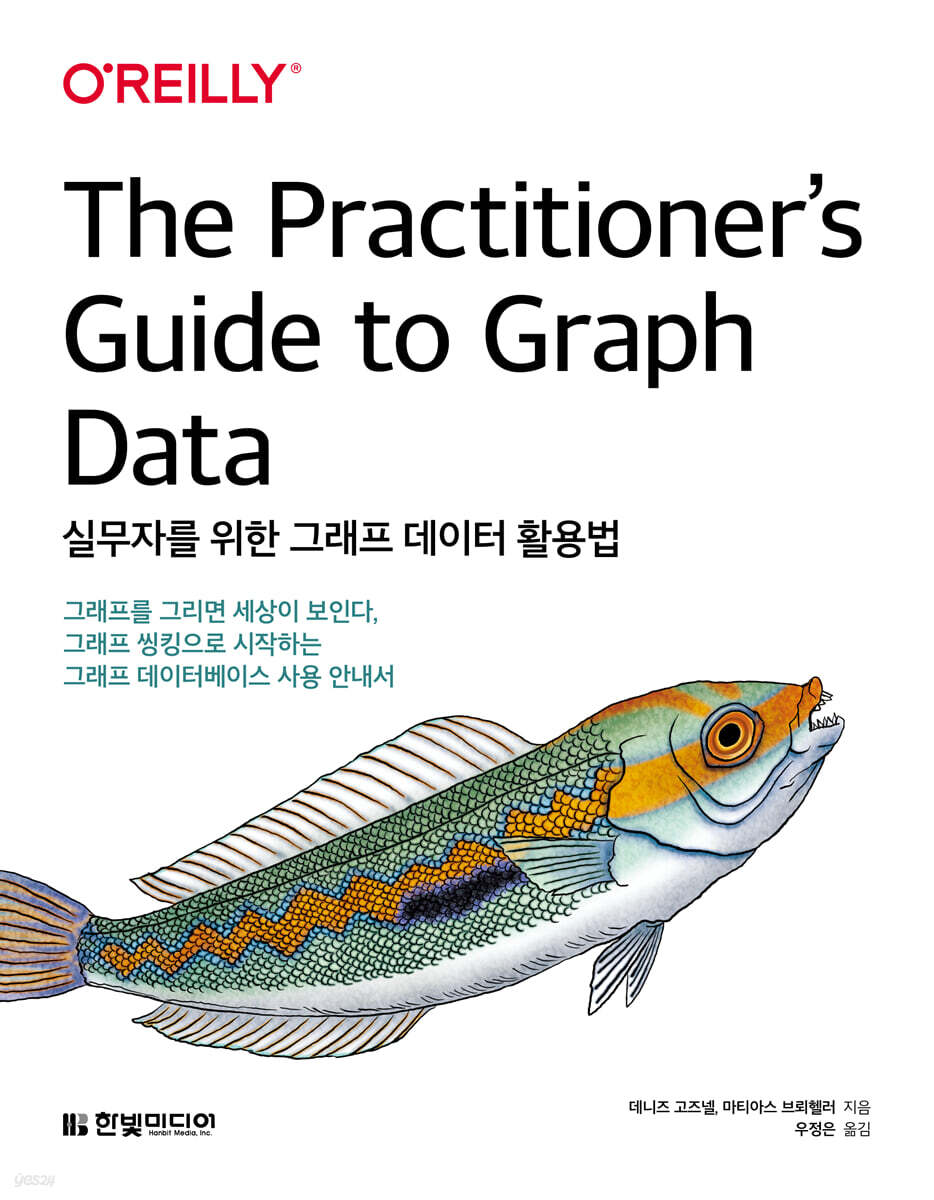
How to Use Graph Data for Practitioners
 |
Description
Book Introduction
Korea's first graph thinking guide,
The Complete Guide to Graph Thinking to Develop Problem-Solving Skills
Data is becoming increasingly massive and complex.
If you're looking for a helping hand amidst the deluge of data, open this book.
Computers rely on static data in rows and columns, while people navigate and infer life through relationships.
Graph data bridges the gap between how people and computers view the world.
This book introduces a new way of thinking, graph thinking, and guides you through two approaches to working with graph data.
By following this book, you will master graph thinking, graph theory, database schemas, distributed systems, and data analysis, and learn how to efficiently build graph data to solve complex problems.
The Complete Guide to Graph Thinking to Develop Problem-Solving Skills
Data is becoming increasingly massive and complex.
If you're looking for a helping hand amidst the deluge of data, open this book.
Computers rely on static data in rows and columns, while people navigate and infer life through relationships.
Graph data bridges the gap between how people and computers view the world.
This book introduces a new way of thinking, graph thinking, and guides you through two approaches to working with graph data.
By following this book, you will master graph thinking, graph theory, database schemas, distributed systems, and data analysis, and learn how to efficiently build graph data to solve complex problems.
- You can preview some of the book's contents.
Preview
index
CHAPTER 1: Graph Thinking
1.1 Emerging Graph Technologies
1.2 What is Graph Thinking?
1.3 Choosing a technology to solve complex problems
1.4 Starting Your Graph Thinking Journey
CHAPTER 2 From Relational to Graph Thinking
2.1 Preview of Chapter 2: Translating Relational Concepts into Graph Terms
2.2 Differences between Relational and Graph
2.3 Relational Data Modeling
2.4 Concept of graph data
2.5 Graph Schema Language
2.6 Relational vs. Graph: Decision Considerations
2.7 In conclusion
CHAPTER 3: Simple Customer 360
3.1 Chapter 3 Preview: Relational vs. Graph
3.2 Graph Data Basic Use Case: Customer 360 (C360)
3.3 Implementing C360 Applications with Relational Systems
3.4 Implementing C360 Applications with Graph Systems
3.5 Relational vs. Graph: When to Choose
3.6 In conclusion
CHAPTER 4 DEVELOPING NEIGHBORHOOD EXPLORATION
4.1 Chapter 4 Preview: Creating a More Realistic C360
4.2 Graph Data Modeling 101
4.3 Neighborhood Search Development Detailed Implementation
4.4 Basic Gremlin Exploration
4.5 Advanced Gremlin: Refining Query Results
4.6 Moving from the Development Stage to the Product Stage
CHAPTER 5: PRODUCING NEIGHBORHOOD EXPLORATION
5.1 Chapter 5 Preview: Understanding Distributed Graph Data in Apache Cassandra
5.2 Using Graph Data in Apache Cassandra
5.3 Graph Data Modeling 201
5.4 Final Product Implementation
5.5 More complex, distributed graph problems
CHAPTER 6: DEVELOPMENT USING TREES
6.1 Preview of Chapter 6: Tree Traversal, Hierarchical Data, and Recursion
6.2 Hierarchical, nested data in three examples
6.3 Finding Your Way Through the Forest of Terminology
6.4 Understanding Hierarchy with Sensor Data
6.5 Development Mode: Querying from Leaf to Root
6.6 Development Mode: Querying from Root to Leaf
6.7 Check time information
CHAPTER 7 PRODUCING TREES
7.1 Chapter 7 Preview: Understanding Branching Coefficients, Depth, and Edge Timing
7.2 Understanding the Time of Sensor Data
7.3 Understanding Branching Coefficients
7.4 Sensor Data Product Schema
7.5 Product Mode: Querying from Leaf to Root
7.6 Product Mode: Querying from Root to Leaf
7.7 Applying Queries to Tower Failure Scenarios
7.8 Seeing the forest for the trees
CHAPTER 8 Path Finding Development
8.1 Chapter 8 Preview: Quantifying Trust in a Network
8.2 Trust through Three Examples
8.3 Path Basic Concepts
8.4 Finding Paths in a Trust Network
8.5 Understanding Navigation with the Bitcoin Trust Network
8.6 Shortest Path Queries
CHAPTER 9 PRODUCING PATH FINDING
9.1 Chapter 9 Preview: Understanding Weights, Distances, and Pruning
9.2 Weighted Paths and Search Algorithms
9.3 Normalizing Edge Weights for the Shortest Path Problem
9.4 Shortest Weighted Path Query
9.5 Weighted path and trust of the product
CHAPTER 10 RECOMMENDED DEVELOPMENT
10.1 Preview of Chapter 10: Collaborative Filtering for Movie Recommendations
10.2 Recommendation System Example
10.3 Introduction to Collaborative Filtering
10.4 Movie Data: Schema, Loading, and Query Review
10.5 Item-Based Collaborative Filtering in Gremlin
CHAPTER 11 Simple Object Interpretation of Graphs
11.1 Chapter 11 Preview: Merging Multiple Datasets into a Single Graph
11.2 Defining another complex problem: object interpretation
11.3 Analyzing Two Movie Datasets
11.4 Movie Data Matching and Merging
11.5 Addressing False Positives
CHAPTER 12 RECOMMENDED PRODUCTION
12.1 Preview of Chapter 12: Understanding Shortcut Edges, Precomputation, and Advanced Pruning Techniques
12.2 Shortcut trunk lines for real-time recommendations
12.3 Computing Shortcut Edges in Movie Data
12.4 Movie Recommendation Product Schema and Data Loading
12.5 Recommendation Queries Using Shortcut Edges
CHAPTER 13 Conclusion
13.1 Where to go now
13.2 Exchanging Contacts
1.1 Emerging Graph Technologies
1.2 What is Graph Thinking?
1.3 Choosing a technology to solve complex problems
1.4 Starting Your Graph Thinking Journey
CHAPTER 2 From Relational to Graph Thinking
2.1 Preview of Chapter 2: Translating Relational Concepts into Graph Terms
2.2 Differences between Relational and Graph
2.3 Relational Data Modeling
2.4 Concept of graph data
2.5 Graph Schema Language
2.6 Relational vs. Graph: Decision Considerations
2.7 In conclusion
CHAPTER 3: Simple Customer 360
3.1 Chapter 3 Preview: Relational vs. Graph
3.2 Graph Data Basic Use Case: Customer 360 (C360)
3.3 Implementing C360 Applications with Relational Systems
3.4 Implementing C360 Applications with Graph Systems
3.5 Relational vs. Graph: When to Choose
3.6 In conclusion
CHAPTER 4 DEVELOPING NEIGHBORHOOD EXPLORATION
4.1 Chapter 4 Preview: Creating a More Realistic C360
4.2 Graph Data Modeling 101
4.3 Neighborhood Search Development Detailed Implementation
4.4 Basic Gremlin Exploration
4.5 Advanced Gremlin: Refining Query Results
4.6 Moving from the Development Stage to the Product Stage
CHAPTER 5: PRODUCING NEIGHBORHOOD EXPLORATION
5.1 Chapter 5 Preview: Understanding Distributed Graph Data in Apache Cassandra
5.2 Using Graph Data in Apache Cassandra
5.3 Graph Data Modeling 201
5.4 Final Product Implementation
5.5 More complex, distributed graph problems
CHAPTER 6: DEVELOPMENT USING TREES
6.1 Preview of Chapter 6: Tree Traversal, Hierarchical Data, and Recursion
6.2 Hierarchical, nested data in three examples
6.3 Finding Your Way Through the Forest of Terminology
6.4 Understanding Hierarchy with Sensor Data
6.5 Development Mode: Querying from Leaf to Root
6.6 Development Mode: Querying from Root to Leaf
6.7 Check time information
CHAPTER 7 PRODUCING TREES
7.1 Chapter 7 Preview: Understanding Branching Coefficients, Depth, and Edge Timing
7.2 Understanding the Time of Sensor Data
7.3 Understanding Branching Coefficients
7.4 Sensor Data Product Schema
7.5 Product Mode: Querying from Leaf to Root
7.6 Product Mode: Querying from Root to Leaf
7.7 Applying Queries to Tower Failure Scenarios
7.8 Seeing the forest for the trees
CHAPTER 8 Path Finding Development
8.1 Chapter 8 Preview: Quantifying Trust in a Network
8.2 Trust through Three Examples
8.3 Path Basic Concepts
8.4 Finding Paths in a Trust Network
8.5 Understanding Navigation with the Bitcoin Trust Network
8.6 Shortest Path Queries
CHAPTER 9 PRODUCING PATH FINDING
9.1 Chapter 9 Preview: Understanding Weights, Distances, and Pruning
9.2 Weighted Paths and Search Algorithms
9.3 Normalizing Edge Weights for the Shortest Path Problem
9.4 Shortest Weighted Path Query
9.5 Weighted path and trust of the product
CHAPTER 10 RECOMMENDED DEVELOPMENT
10.1 Preview of Chapter 10: Collaborative Filtering for Movie Recommendations
10.2 Recommendation System Example
10.3 Introduction to Collaborative Filtering
10.4 Movie Data: Schema, Loading, and Query Review
10.5 Item-Based Collaborative Filtering in Gremlin
CHAPTER 11 Simple Object Interpretation of Graphs
11.1 Chapter 11 Preview: Merging Multiple Datasets into a Single Graph
11.2 Defining another complex problem: object interpretation
11.3 Analyzing Two Movie Datasets
11.4 Movie Data Matching and Merging
11.5 Addressing False Positives
CHAPTER 12 RECOMMENDED PRODUCTION
12.1 Preview of Chapter 12: Understanding Shortcut Edges, Precomputation, and Advanced Pruning Techniques
12.2 Shortcut trunk lines for real-time recommendations
12.3 Computing Shortcut Edges in Movie Data
12.4 Movie Recommendation Product Schema and Data Loading
12.5 Recommendation Queries Using Shortcut Edges
CHAPTER 13 Conclusion
13.1 Where to go now
13.2 Exchanging Contacts
Detailed image

Publisher's Review
Now is the era of graph databases!
Meet the new paradigm of graph thinking
A guide to using graph databases, co-written by the CDO and CTO of data management company Datastax! This book captures the knowledge and expertise they've gained from advising various teams.
We present the concept of "graph thinking" as a way to extract value from massive and complex data, and kindly guide you to transform your way of thinking into graph thinking.
With rich illustrations and practical examples that help you understand the concepts, we give you the secret key to understanding the world in the era of graph databases.
Learn how to efficiently structure data with graph thinking and become a more advanced data engineer.
Target audience
● Data engineers and data architects who want to use graph data effectively
● Data scientists and data analysts who want to learn graph thinking
Anyone curious about graph thinking (having basic database knowledge will make the concept easier to understand)
Key Contents
● Building architectures with relational and graph databases
● Implementing the Customer 360 Application with the Popular Graph Data Pattern
● Troubleshooting issues that arise when working with graph data in hierarchical data
● Examine different ways to find a route and how the route affects preference.
● Designing a Netflix-like movie recommendation system using collaborative filtering
Meet the new paradigm of graph thinking
A guide to using graph databases, co-written by the CDO and CTO of data management company Datastax! This book captures the knowledge and expertise they've gained from advising various teams.
We present the concept of "graph thinking" as a way to extract value from massive and complex data, and kindly guide you to transform your way of thinking into graph thinking.
With rich illustrations and practical examples that help you understand the concepts, we give you the secret key to understanding the world in the era of graph databases.
Learn how to efficiently structure data with graph thinking and become a more advanced data engineer.
Target audience
● Data engineers and data architects who want to use graph data effectively
● Data scientists and data analysts who want to learn graph thinking
Anyone curious about graph thinking (having basic database knowledge will make the concept easier to understand)
Key Contents
● Building architectures with relational and graph databases
● Implementing the Customer 360 Application with the Popular Graph Data Pattern
● Troubleshooting issues that arise when working with graph data in hierarchical data
● Examine different ways to find a route and how the route affects preference.
● Designing a Netflix-like movie recommendation system using collaborative filtering
GOODS SPECIFICS
- Date of issue: May 10, 2022
- Page count, weight, size: 448 pages | 183*235*30mm
- ISBN13: 9791162245590
- ISBN10: 116224559X
You may also like
카테고리
korean


korean

![GQ KOREA Mark (Monthly): December [2025]](http://librairie.coreenne.fr/cdn/shop/files/8ef265dbbfbf186523ed75ba7319009d.jpg?v=1765340328&width=3840)


