

Aestheticizing Buddhism
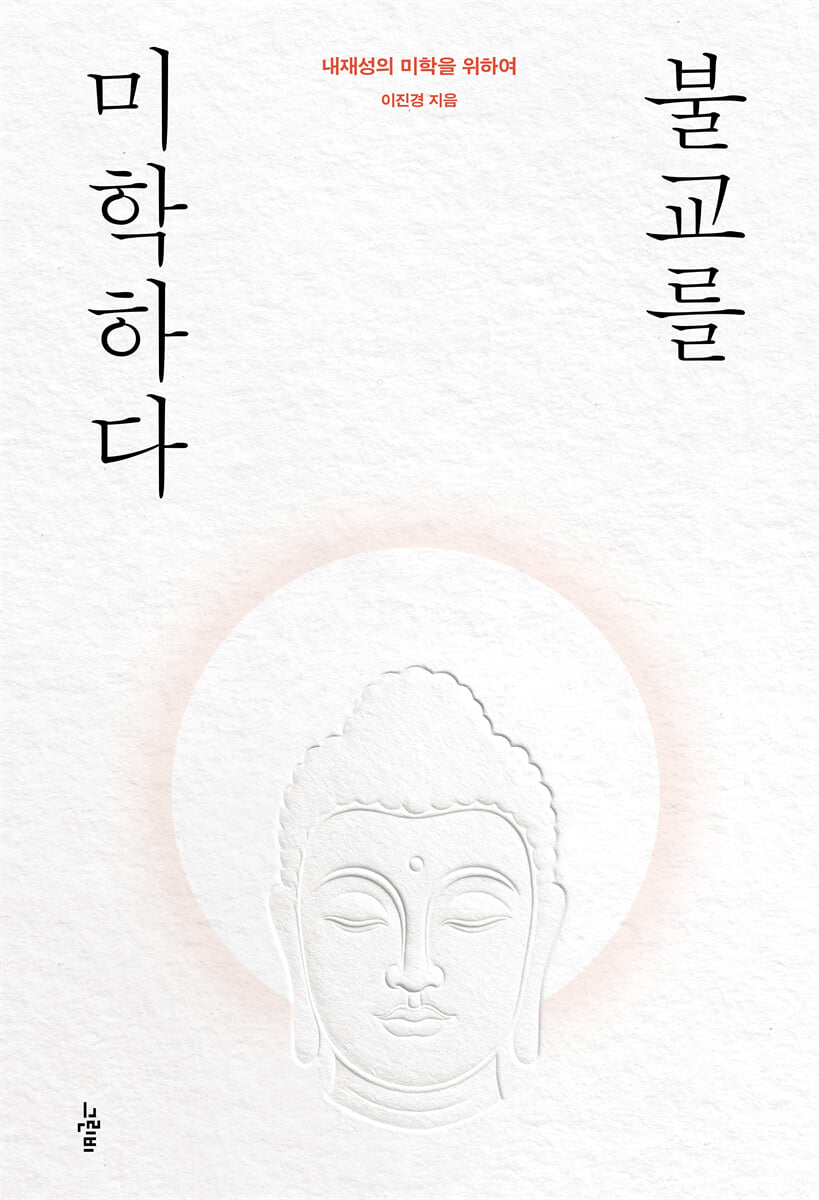 |
Description
Book Introduction
This book attempts to pair Buddhist aesthetics with the thought of immanence, in contrast to Western aesthetics that corresponds to the thought of transcendence.
In this way, the aesthetics discovered in Buddhist art can become a door leading to a new path: the aesthetics of immanence, as opposed to the aesthetics of transcendence.
Although it originated in Buddhism, it is hoped that aesthetic attempts to trace the aesthetic that connects to the idea of immanence and the aesthetic that can be found in any field, even in the West, and pair it with new aesthetic concepts will begin in earnest.
With this problem in mind, this book opens the door to a new aesthetic that is still absent: the aesthetics of immanence.
It also proposes intrinsic criteria for viewing and critiquing Buddhist art according to Buddhist aesthetics.
Thus, on the one hand, it proposes aesthetic concepts that can be applied to very different types of works, such as Tibetan temples, Thai pagodas, and Korean rock-carved Buddhas, and on the other hand, it proposes concepts that can be used to understand and analyze Buddhist statues, paintings, and sculptures that are just that.
In this way, the aesthetics discovered in Buddhist art can become a door leading to a new path: the aesthetics of immanence, as opposed to the aesthetics of transcendence.
Although it originated in Buddhism, it is hoped that aesthetic attempts to trace the aesthetic that connects to the idea of immanence and the aesthetic that can be found in any field, even in the West, and pair it with new aesthetic concepts will begin in earnest.
With this problem in mind, this book opens the door to a new aesthetic that is still absent: the aesthetics of immanence.
It also proposes intrinsic criteria for viewing and critiquing Buddhist art according to Buddhist aesthetics.
Thus, on the one hand, it proposes aesthetic concepts that can be applied to very different types of works, such as Tibetan temples, Thai pagodas, and Korean rock-carved Buddhas, and on the other hand, it proposes concepts that can be used to understand and analyze Buddhist statues, paintings, and sculptures that are just that.
- You can preview some of the book's contents.
Preview
index
Opening Remarks: Buddhist Aesthetics, the Aesthetics of Immanence
01 The Aesthetics of Transcendence and Aesthetic Colonialism: Toward an Immanentist Turn in Aesthetics
Events and Art
The Illusion of Universality and Aesthetic Colonialism: The Aesthetic Trinity of Western Art
Transcendence and immanence
Aesthetics as a continuum of sense, aesthetics, and concepts
Buddhist Aesthetics: Making Silent Aesthetics Speak
02 Aesthetic Tathagata and the Aesthetics of the Sublime: Beyond the Aesthetics of the Sublime
The aesthetics of transcendence in Gothic cathedrals
Borobudur Temple, or the Path to Liberation - Machine
Bayon Temple: The Distance of Esoteric Ambiguity and Attraction
Two figures of the transcendent and the sublime
The secular sublime and the aesthetics of the sublime
Aesthetic Tathagata
The aesthetics of mystery
03 From the tyranny of form to the aesthetics of craftsmanship: Materials are not slaves to form!
Fascination with wrinkles
The aesthetics of form, the absolutism of form
The uprising of materials and material flow
Shape and Material as Co-Subjects
Overflow of materials and disruption of shape
Respect for materials, or compromise with materials
Two-in-one of shape and material
04 The Aesthetics of Roughness and the Power of Imperfection: The World of 'Roughness' Created by Three Aesthetic Senses
The entasis form and the pilaster: The illusion of 'illusion correction' theory.
Geometry of Perfection and Obsessive Rigorism
A sense of ideological correctness and appropriateness
Terrific pillars and unconventional aesthetics
On the aesthetic of incompleteness, or 'completeness without completion'
Dancing Pillars and Crooked Bodhisattvas: The Aesthetics of Crookedness
The Aesthetics of Roughness and the Three Aesthetics: Incompleteness, Unconventionality, and Crookedness
05 The Aesthetics of Hanging and the Aesthetics of Ascent: From Geometric Aesthetics to Aesthetic Geometry
The Unfamiliar 'Modernism' of the Tibetan Plateau
The aesthetic of hanging
Geometry of Hanging
The Sensation of Soaring and the Aesthetics of Ascent: Temples and Stupas in Myanmar
The Sensation of Soaring and the Aesthetics of Ascent: Temples and Stupas of Thailand
Different senses, different geometries
06 The aesthetics of finitude and externality embracing infinity: the aesthetics of a centerless center and a grotesque
A wall that is not a wall, a door without a door
courtyard, internalized exterior
Seowon, hierarchical centralization and symmetrical integration
The aesthetic of centerlessness and asymmetry
Subjective centralization: the eyes of the owner and the eyes of the outsider
The aesthetic of the building and the yard's embrace, or the roar
The finite embracing the infinite, or the continuum of the finite and the infinite
07 The Aesthetics of Subtlety, or the Power of Pianissimo: The Strength of Subtlety and the Aesthetics of Flatness
The countless expressions on an indifferent face
The beauty of fortissimo and the beauty of pianissimo
The Aesthetics of Pianissimo, or the Art of Subtlety and Subtlety
Flattening and three-dimensionalization
The Mathematics of Flattening and Defocusing
Depthless depth and sensual perfection
08 The Gaze of the Friend and the Aesthetics of Surrender: Impersonal Buddha Statues Awaiting the Coming Event
Face and gaze
Half-open eyes and a gaze of surrender
Friendly Buddha and Friendly Buddha
The middle ground of 'entrustment'
A Buddha statue with a 'personality-less' form and 'just that'
The aesthetics of waiting and surrender
09 Philosophy of Laughter and Aesthetics of Humor: Between Tragedy and Comedy, Between Two Kinds of Laughter
Extreme laughter, extreme laughter
Tragic Reason and Fidelity
Philosophical Laughter and the Philosophy of Laughter
The Physics of Laughter
The Politics of Humor
Humor as wit, or content
Humor as a form of humor, or expression
The laughter of reason and the reason of laughter
10 Black Buddha and the Aesthetics of Darkness: The Darkness of the Stone Grottoes and the Mountain Temple in the Darkness
Grottoes and Darkness
Light and Darkness
Ontological Tathagata and Aesthetic Tathagata
Aesthetics of Darkness
The Aesthetics of Darkness and the Mountain Temple in the Darkness
11 Ontological Tathagata and the Aesthetics of 'My Own': Three Aesthetic Tathagatas and the Trap of Transcendence
The Impossibility of Buddhist Aesthetics, or the Aesthetics of Impossibility
The aesthetics of Tathagata
The Aesthetics of the Tathagata and Immanent Criticism
The Aesthetics of Fire and the Religion of Wabi
'Dasunilyeo' and the aesthetics of tea
Unique aesthetics and unconventional style
The three poles of aesthetic Tathagata: Golden Tathagata, Black Tathagata, and White Tathagata
The Aesthetics of the Combination and Transversality of 12 Forms: The Sense of Hybridity and Buddhist Transnationalism
Feminized body, or hybrid aesthetic
The image of the ruler and the image of the Bodhisattva
Animals, monsters, and hybrid figures
'Yeonhyeong': Cross-sectional solidarity of microscopic elements
The formative power of horizontal architecture
The philosophy of paradox, the aesthetics of reversibility
The Aesthetics of Crossing and the Transnationalism of Buddhism
Closing Remarks_ Faces of Buddhist Aesthetics
References
01 The Aesthetics of Transcendence and Aesthetic Colonialism: Toward an Immanentist Turn in Aesthetics
Events and Art
The Illusion of Universality and Aesthetic Colonialism: The Aesthetic Trinity of Western Art
Transcendence and immanence
Aesthetics as a continuum of sense, aesthetics, and concepts
Buddhist Aesthetics: Making Silent Aesthetics Speak
02 Aesthetic Tathagata and the Aesthetics of the Sublime: Beyond the Aesthetics of the Sublime
The aesthetics of transcendence in Gothic cathedrals
Borobudur Temple, or the Path to Liberation - Machine
Bayon Temple: The Distance of Esoteric Ambiguity and Attraction
Two figures of the transcendent and the sublime
The secular sublime and the aesthetics of the sublime
Aesthetic Tathagata
The aesthetics of mystery
03 From the tyranny of form to the aesthetics of craftsmanship: Materials are not slaves to form!
Fascination with wrinkles
The aesthetics of form, the absolutism of form
The uprising of materials and material flow
Shape and Material as Co-Subjects
Overflow of materials and disruption of shape
Respect for materials, or compromise with materials
Two-in-one of shape and material
04 The Aesthetics of Roughness and the Power of Imperfection: The World of 'Roughness' Created by Three Aesthetic Senses
The entasis form and the pilaster: The illusion of 'illusion correction' theory.
Geometry of Perfection and Obsessive Rigorism
A sense of ideological correctness and appropriateness
Terrific pillars and unconventional aesthetics
On the aesthetic of incompleteness, or 'completeness without completion'
Dancing Pillars and Crooked Bodhisattvas: The Aesthetics of Crookedness
The Aesthetics of Roughness and the Three Aesthetics: Incompleteness, Unconventionality, and Crookedness
05 The Aesthetics of Hanging and the Aesthetics of Ascent: From Geometric Aesthetics to Aesthetic Geometry
The Unfamiliar 'Modernism' of the Tibetan Plateau
The aesthetic of hanging
Geometry of Hanging
The Sensation of Soaring and the Aesthetics of Ascent: Temples and Stupas in Myanmar
The Sensation of Soaring and the Aesthetics of Ascent: Temples and Stupas of Thailand
Different senses, different geometries
06 The aesthetics of finitude and externality embracing infinity: the aesthetics of a centerless center and a grotesque
A wall that is not a wall, a door without a door
courtyard, internalized exterior
Seowon, hierarchical centralization and symmetrical integration
The aesthetic of centerlessness and asymmetry
Subjective centralization: the eyes of the owner and the eyes of the outsider
The aesthetic of the building and the yard's embrace, or the roar
The finite embracing the infinite, or the continuum of the finite and the infinite
07 The Aesthetics of Subtlety, or the Power of Pianissimo: The Strength of Subtlety and the Aesthetics of Flatness
The countless expressions on an indifferent face
The beauty of fortissimo and the beauty of pianissimo
The Aesthetics of Pianissimo, or the Art of Subtlety and Subtlety
Flattening and three-dimensionalization
The Mathematics of Flattening and Defocusing
Depthless depth and sensual perfection
08 The Gaze of the Friend and the Aesthetics of Surrender: Impersonal Buddha Statues Awaiting the Coming Event
Face and gaze
Half-open eyes and a gaze of surrender
Friendly Buddha and Friendly Buddha
The middle ground of 'entrustment'
A Buddha statue with a 'personality-less' form and 'just that'
The aesthetics of waiting and surrender
09 Philosophy of Laughter and Aesthetics of Humor: Between Tragedy and Comedy, Between Two Kinds of Laughter
Extreme laughter, extreme laughter
Tragic Reason and Fidelity
Philosophical Laughter and the Philosophy of Laughter
The Physics of Laughter
The Politics of Humor
Humor as wit, or content
Humor as a form of humor, or expression
The laughter of reason and the reason of laughter
10 Black Buddha and the Aesthetics of Darkness: The Darkness of the Stone Grottoes and the Mountain Temple in the Darkness
Grottoes and Darkness
Light and Darkness
Ontological Tathagata and Aesthetic Tathagata
Aesthetics of Darkness
The Aesthetics of Darkness and the Mountain Temple in the Darkness
11 Ontological Tathagata and the Aesthetics of 'My Own': Three Aesthetic Tathagatas and the Trap of Transcendence
The Impossibility of Buddhist Aesthetics, or the Aesthetics of Impossibility
The aesthetics of Tathagata
The Aesthetics of the Tathagata and Immanent Criticism
The Aesthetics of Fire and the Religion of Wabi
'Dasunilyeo' and the aesthetics of tea
Unique aesthetics and unconventional style
The three poles of aesthetic Tathagata: Golden Tathagata, Black Tathagata, and White Tathagata
The Aesthetics of the Combination and Transversality of 12 Forms: The Sense of Hybridity and Buddhist Transnationalism
Feminized body, or hybrid aesthetic
The image of the ruler and the image of the Bodhisattva
Animals, monsters, and hybrid figures
'Yeonhyeong': Cross-sectional solidarity of microscopic elements
The formative power of horizontal architecture
The philosophy of paradox, the aesthetics of reversibility
The Aesthetics of Crossing and the Transnationalism of Buddhism
Closing Remarks_ Faces of Buddhist Aesthetics
References
Into the book
To say that the universal essence of beauty is proportion does not mean that all proportions are beautiful, but that only certain proportions are beautiful.
It is an aesthetic that uses a specific proportion as a standard.
But which proportions are truly aesthetically universal? Westerners believed geometry and proportion held universal universality, yet Renaissance architects favored circles and squares, Baroque architects favored rectangles, and Michelangelo actively incorporated the ellipse into his architecture—what would previously have been called a "crooked circle."
What constitutes "true" aesthetic proportion? Renaissance advocate Jakob Burckhardt called the Baroque style ugly, but his disciple Heinrich Wölfflin considered it also beautiful.
Even without knowing that Burckhardt hated Wölfflin so much that he refused to even attend his funeral, it is not difficult to see that these two aesthetics of different proportions were in competition even in the history of Western art.
This conflict surrounding what is beautiful demonstrates that even among Western art historians and aestheticians, it is difficult to easily persuade them in the name of a single 'universality.'
--- p.31
Where there is a consistent pattern of work, aesthetics exists even without explicit theory.
It exists within the work without being explained.
It was already in operation when the work was created, and it exists as a created work.
No, before that, it would have existed in the form of teaching and guiding apprentices who would create works first.
When we give a proper 'name' to the aesthetic that has remained unexplained or remained silent, the aesthetic is called out in the work and becomes 'aesthetics.'
Aesthetics is the aesthetics that sleeps silently in a work of art, and aesthetics is the aesthetics that wakes up and has its own name.
--- pp.50-51
However, the desire for a 'really similar' shape does not necessarily aim only at an accurate reproduction of appearance.
Such desires often lead artists to appearances that seem too good to be true.
This is the case with the excessive folds of clothing found in many Buddhist statues from the Northern Wei Dynasty, including those in the Longmen Grottoes and the Maijishan Grottoes.
For example, if you look at the vertical proportions of the Buddha statues in Cave 44 of Maijisan, more than half of them are folds of clothing hanging down, and the surface area of the clothing visible from the front is more than twice that of the Buddha statue.
Moreover, the extravagance of the folds of the garment is so excessive that it draws our gaze downwards, away from the Buddha statue's beautifully smiling face and the two hands forming mudras.
It is difficult to find a reason in everyday life or religion for the folds of clothing on a Buddhist statue to be so large.
The same goes for the Buddha statues in Cave 1 of the Gongxian Grottoes in China.
Although this style, often called the 'Lungmen style', is dramatically evident, the attention to folds in Buddhist sculpture is also found in other periods and regions, although to varying degrees.
For example, the famous Bangasayusang from the Three Kingdoms period and the Buddhist statues of the Kei school from Japan's Kamakura period are examples.
--- p.106
The aesthetics of 'completeness' assumes a single, uniform correct answer.
Such notions of completeness assume the 'accuracy' of the correct answer, while 'precision' or 'sophistication' refers to attempts to get as close to the correct answer as possible.
'Ordinariness' would be an attempt to arrange shapes along those precise lines.
Either one embodies or complements the simplicity of a single correct answer.
On the other hand, the ship's keel shows that even one expressive purpose does not have a single answer but multiple answers.
As long as there is expressive adequacy, either a little more or a little less protruding is a possible answer.
So, you just have to 'roughly' choose one of the many possible answers.
Since you are making a rough selection, each selection will result in a slightly different pillar.
That doesn't mean we can't judge which one is better or more appropriate.
There is clearly something more appropriate.
But it doesn't have a solid theoretical basis.
It is a sensory judgment, not a theoretical judgment.
Therefore, different answers are possible depending on the creator or production conditions.
There is a correct answer, but not just one, but several.
These differences, which make each pillar different, create a subtle variety that, unlike a single, correct pillar, doesn't easily become boring.
--- p.169
Although it was a building composed of horizontal and vertical lines and squares, it had a very different feel from the West.
It was a very geometrically beautiful building, yet it was not at all like a structure where pillars were erected on a solid foundation and the entire building was supported by those pillars.
How can something so geometric yet so different? There was such a diverse range of geometric architecture.
Geometry isn't all the same! So, isn't there another geometry, one used differently by different senses and shaped differently? As I wandered from temple to temple, feeling the 3,700-meter elevation, a splitting headache, I was nearing the end of my tour when a word suddenly popped into my head, like some kind of epiphany.
'Hanging'.
'Yes, this is the geometry of hanging!' Thinking about it, the slightly tilted, water-laden walls were not straight, rigid lines, but rather concave inward, resembling hanging fabric.
--- p.208
Instead of surrounding a building with a wall to give it 'order', buildings are sometimes arranged in a quadrilateral shape.
Of course, there are cases where it is not a quadrilateral.
However, when buildings surround a yard like this, the relationship between the building and the yard is sometimes reversed.
This is because the surrounding buildings serve as a frame and the courtyard within them takes center stage.
A courtyard at the center, surrounded and protected by buildings.
At this time, the shape of the surrounding buildings becomes the 'outline' of the yard, giving expression to the yard.
In this case, the yard that has the expression becomes the shape, and the buildings surrounding it become the background.
In other words, the courtyard surrounded by buildings becomes the main character of the landscape.
When the outline of the yard ceases to be a quadrilateral and the paths that run alongside it begin to deviate from parallelism and right angles, the yard takes on a more diverse expression.
It becomes a body that breathes, narrows and expands, and often even has the expression of a body that moves and dances.
--- p.301
There is also a focus on Buddhist paintings and statues.
The focus of the Samjonbul or Ojonbul is the central Buddha statue, and the focus of the Vulture Peak Assembly painting is the Sakyamuni Buddha in the middle of many figures.
Usually, there is a difference in size so that the viewer does not miss it.
That is, the focused figure is drawn large or made large.
It is also indicated by the size or splendor of the halo.
However, when there are too many people and it is difficult to increase the size difference, as in the Yeongsan Hoesangdo, the effect of focusing is not great.
In fact, it seems that they are not trying to increase the number of dimensions significantly.
Moreover, it also increases focus by multiplying characters with similar status.
It is an aesthetic that uses a specific proportion as a standard.
But which proportions are truly aesthetically universal? Westerners believed geometry and proportion held universal universality, yet Renaissance architects favored circles and squares, Baroque architects favored rectangles, and Michelangelo actively incorporated the ellipse into his architecture—what would previously have been called a "crooked circle."
What constitutes "true" aesthetic proportion? Renaissance advocate Jakob Burckhardt called the Baroque style ugly, but his disciple Heinrich Wölfflin considered it also beautiful.
Even without knowing that Burckhardt hated Wölfflin so much that he refused to even attend his funeral, it is not difficult to see that these two aesthetics of different proportions were in competition even in the history of Western art.
This conflict surrounding what is beautiful demonstrates that even among Western art historians and aestheticians, it is difficult to easily persuade them in the name of a single 'universality.'
--- p.31
Where there is a consistent pattern of work, aesthetics exists even without explicit theory.
It exists within the work without being explained.
It was already in operation when the work was created, and it exists as a created work.
No, before that, it would have existed in the form of teaching and guiding apprentices who would create works first.
When we give a proper 'name' to the aesthetic that has remained unexplained or remained silent, the aesthetic is called out in the work and becomes 'aesthetics.'
Aesthetics is the aesthetics that sleeps silently in a work of art, and aesthetics is the aesthetics that wakes up and has its own name.
--- pp.50-51
However, the desire for a 'really similar' shape does not necessarily aim only at an accurate reproduction of appearance.
Such desires often lead artists to appearances that seem too good to be true.
This is the case with the excessive folds of clothing found in many Buddhist statues from the Northern Wei Dynasty, including those in the Longmen Grottoes and the Maijishan Grottoes.
For example, if you look at the vertical proportions of the Buddha statues in Cave 44 of Maijisan, more than half of them are folds of clothing hanging down, and the surface area of the clothing visible from the front is more than twice that of the Buddha statue.
Moreover, the extravagance of the folds of the garment is so excessive that it draws our gaze downwards, away from the Buddha statue's beautifully smiling face and the two hands forming mudras.
It is difficult to find a reason in everyday life or religion for the folds of clothing on a Buddhist statue to be so large.
The same goes for the Buddha statues in Cave 1 of the Gongxian Grottoes in China.
Although this style, often called the 'Lungmen style', is dramatically evident, the attention to folds in Buddhist sculpture is also found in other periods and regions, although to varying degrees.
For example, the famous Bangasayusang from the Three Kingdoms period and the Buddhist statues of the Kei school from Japan's Kamakura period are examples.
--- p.106
The aesthetics of 'completeness' assumes a single, uniform correct answer.
Such notions of completeness assume the 'accuracy' of the correct answer, while 'precision' or 'sophistication' refers to attempts to get as close to the correct answer as possible.
'Ordinariness' would be an attempt to arrange shapes along those precise lines.
Either one embodies or complements the simplicity of a single correct answer.
On the other hand, the ship's keel shows that even one expressive purpose does not have a single answer but multiple answers.
As long as there is expressive adequacy, either a little more or a little less protruding is a possible answer.
So, you just have to 'roughly' choose one of the many possible answers.
Since you are making a rough selection, each selection will result in a slightly different pillar.
That doesn't mean we can't judge which one is better or more appropriate.
There is clearly something more appropriate.
But it doesn't have a solid theoretical basis.
It is a sensory judgment, not a theoretical judgment.
Therefore, different answers are possible depending on the creator or production conditions.
There is a correct answer, but not just one, but several.
These differences, which make each pillar different, create a subtle variety that, unlike a single, correct pillar, doesn't easily become boring.
--- p.169
Although it was a building composed of horizontal and vertical lines and squares, it had a very different feel from the West.
It was a very geometrically beautiful building, yet it was not at all like a structure where pillars were erected on a solid foundation and the entire building was supported by those pillars.
How can something so geometric yet so different? There was such a diverse range of geometric architecture.
Geometry isn't all the same! So, isn't there another geometry, one used differently by different senses and shaped differently? As I wandered from temple to temple, feeling the 3,700-meter elevation, a splitting headache, I was nearing the end of my tour when a word suddenly popped into my head, like some kind of epiphany.
'Hanging'.
'Yes, this is the geometry of hanging!' Thinking about it, the slightly tilted, water-laden walls were not straight, rigid lines, but rather concave inward, resembling hanging fabric.
--- p.208
Instead of surrounding a building with a wall to give it 'order', buildings are sometimes arranged in a quadrilateral shape.
Of course, there are cases where it is not a quadrilateral.
However, when buildings surround a yard like this, the relationship between the building and the yard is sometimes reversed.
This is because the surrounding buildings serve as a frame and the courtyard within them takes center stage.
A courtyard at the center, surrounded and protected by buildings.
At this time, the shape of the surrounding buildings becomes the 'outline' of the yard, giving expression to the yard.
In this case, the yard that has the expression becomes the shape, and the buildings surrounding it become the background.
In other words, the courtyard surrounded by buildings becomes the main character of the landscape.
When the outline of the yard ceases to be a quadrilateral and the paths that run alongside it begin to deviate from parallelism and right angles, the yard takes on a more diverse expression.
It becomes a body that breathes, narrows and expands, and often even has the expression of a body that moves and dances.
--- p.301
There is also a focus on Buddhist paintings and statues.
The focus of the Samjonbul or Ojonbul is the central Buddha statue, and the focus of the Vulture Peak Assembly painting is the Sakyamuni Buddha in the middle of many figures.
Usually, there is a difference in size so that the viewer does not miss it.
That is, the focused figure is drawn large or made large.
It is also indicated by the size or splendor of the halo.
However, when there are too many people and it is difficult to increase the size difference, as in the Yeongsan Hoesangdo, the effect of focusing is not great.
In fact, it seems that they are not trying to increase the number of dimensions significantly.
Moreover, it also increases focus by multiplying characters with similar status.
--- p.362
Publisher's Review
Is Buddhist art all "just the same"? No, that's not true at all!
A new and surprising exploration of authentic Buddhist aesthetics
The aesthetics of Buddhist art that existed in silence
Awakening with a new philosophical basis
Buddhist aesthetics is the theory of aesthetics condensed in Buddhist works of art.
Although Buddhism did not explicitly develop aesthetics due to its doctrine of not discriminating between good and evil, it left behind numerous 'works of art' in extremely diverse forms throughout Asia.
It is clear that the way they were made and the feeling we have when looking at those works are the result of a specific aesthetic sensibility.
Even without the knowledge or concept of aesthetics, aesthetics exists embedded in works of art.
This book is an attempt to awaken the silent aesthetics embedded in Buddhist artworks and make them speak.
The first person to use the term 'Buddhist aesthetics' was Yanagi Muneyoshi, who is well known for his work 'Korean Beauty'.
But what he actually discovered there was the aesthetics of nameless potters, the aesthetics of folk crafts, so it cannot be called Buddhist aesthetics.
Buddhist art encompasses a wide range of fields, including not only crafts like tea urns but also Buddhist statues, Buddhist paintings, architecture, pagodas, and grottoes, as well as many works without artists, which were intentionally created through the intervention of artists, monks, and sometimes even the state.
Writers from Korea, Japan, China, Tibet, Thailand, Cambodia, Indonesia, and the regions known as the "Western Regions" created their own wonderful works.
Expanding new horizons through Buddhist art
The aesthetic sense of the realm of the 'Orient' and its works of art
When studying Eastern aesthetics or Eastern thought, the imagination that brings to mind China, Korea, and Japan when thinking of the word "East" is in fact too small a vessel to contain the Buddhist aesthetics that crosses all of Asia.
Rather, the term 'East' should be expanded to encompass the entire cultural realm created in each region through exchange and mixing through Buddhist art.
This is precisely what this book attempts to do with the theme of ‘Buddhist aesthetics.’
Of course, since there have been many aesthetic evaluations of Buddhist art in literature, it could be said that Buddhist aesthetics already existed.
However, the evaluation was made through concepts such as ‘proportion’, ‘realism’, ‘sublimity’, and ‘transcendence’, which were borrowed from Western aesthetics.
Borrowing itself cannot be said to be bad.
However, it is extremely unfair to directly borrow the aesthetic concept of a world that presupposes a transcendent being such as an idea or God from the works of art of a world that claims there is no transcendent being and that everything depends on relationships, and especially from the works of art of a world that had little interest in realistic representation and enjoyed using 'funny proportions' for humor and creating seemingly unfinished works.
By these standards, it is difficult to escape the second-rate proportions, third-rate realism, and the fact that no matter what you look at, it is 'just the same' in Buddhist statues or paintings.
A new standard to set
The concept of postcolonial aesthetics!
It is inevitable that an aesthetic sense that regards Buddhist artworks as 'that's it' has taken hold, arising from the fact that there was no independent aesthetic concept.
However, if we wish to move beyond the outdated notion that Westernization equates to civilization or enlightenment, or the Western-centric and colonialist perspective that uses Western sensibilities as a criterion for judgment, we must, on the contrary, seek out what aesthetics the works that have existed up to this point have been attempting to pursue in such forms.
We need to conceptualize the aesthetics contained within the works and use them as a new standard for evaluating them.
Although the issue of decolonization has been raised for a long time, such attempts in aesthetics have not gone beyond the local.
This book's attempt to reestablish a non-Western aesthetic through Buddhist art in the postcolonial era is significant in this sense.
The following sentence summarizes this attempt.
“What I want to do in this book is to draw the constellations of aesthetic singularities found in various Buddhist works of art into the sky of immanence where the transcendent has disappeared.
Instead of the “sky of transcendence, simple and clear, shining brightly against the background of other stars, with the aesthetic trinity of proportion, representation, and sublimity corresponding to the Father, Son, and Holy Spirit,” we will see “a sky of immanence, where the constellations shine individually, often connecting, blending, and sometimes overlapping.”
-From the opening text
Going beyond existing Western aesthetic concepts
Focus on the aesthetics created by materials and shapes together.
Starting from this critical awareness, this book moves beyond the conceptual trinity of Western aesthetics—proportion, representation, and the sublime—and beyond the Hellenistic sensibility to find concepts that allow us to view Buddhist art, and furthermore, Eastern art.
That is, instead of the sublime that arises from being overwhelmed by the enormous, the concept of 'aesthetic Tathagata' is proposed to refer to the microscopic action that forms an image without an image, and instead of the long-standing tyranny of form in art, attention is paid to the aesthetics of craftsmanship created by material and form together.
It discovers a different type of geometry created by aesthetics that replaces the universality of Euclidean geometry, and shows the power of imperfection over ‘perfection’, and thus the existence of an ‘aesthetics of roughness’ that cooperates with the unconventional, the incomplete, and the crooked.
In addition, it derives the aesthetics of the building and the yard creating each other, and the aesthetics of 'externality' that embraces the infinite as it is within the finite yard.
Furthermore, the aesthetic of flatness, which is opposed to three-dimensionality, is paired with the power of pianissimo, and in Buddhist statues or paintings that are 'just that,' we see the 'aesthetics of surrender' that does not try to pull or drag the viewer along.
On the other hand, we can also see the philosophy of laughter in the aesthetics of humor that willingly makes Buddhist monks and Buddhist disciples the objects of laughter.
The aesthetics of darkness, which buries painstakingly created awards and paintings in the dark, and the 'aesthetics of one's own', which tells us to see the beauty of everything, are also added here.
Buddhist art is all about the common sense of 'that's it, isn't it?'
Answer clearly that it is not!
The aesthetics of hybridity and hybridity, which mix men and women, humans and animals, and create shapes by repeating and adding microscopic elements, are placed at the end of the book to indicate that the aesthetic concepts 'excavated' in this way are not intended to be closed systems, but rather to remain open to new concepts discovered later.
This book attempts to pair Buddhist aesthetics with the thought of immanence, in contrast to Western aesthetics that corresponds to the thought of transcendence.
In this way, the aesthetics discovered in Buddhist art can become a door leading to a new path: the aesthetics of immanence, as opposed to the aesthetics of transcendence.
Although it originated in Buddhism, it is hoped that aesthetic attempts to trace the aesthetic that connects to the idea of immanence and the aesthetic that can be found in any field, even in the West, and pair it with new aesthetic concepts will begin in earnest.
With this problem in mind, this book opens the door to a new aesthetic that is still absent: the aesthetics of immanence.
It also proposes intrinsic criteria for viewing and critiquing Buddhist art according to Buddhist aesthetics.
Thus, on the one hand, it proposes aesthetic concepts that can be applied to very different types of works, such as Tibetan temples, Thai pagodas, and Korean rock-carved Buddhas, and on the other hand, it proposes concepts that can be used to understand and analyze Buddhist statues, paintings, and sculptures that are just that.
Not only is it excellent as an aesthetic book,
A book that also excels as a philosophy book: "Buddhism: Aesthetics"
『Buddhism in Aesthetics』 is a book that makes an uncommon attempt.
The perspectives presented in this book are highly original and the innovative concepts defy common expectations.
Philosophers Deleuze and Guattari once said, “Philosophy is the work of creating concepts.”
In that respect, this book can also be said to be an excellent philosophy book.
The author has written nearly 40 solo books, of which this is perhaps his best.
There may be an opinion that the issues raised in 『Aesthetics of Buddhism』 are not all that new.
Yet, the fact that such work was rare may be due to the fact that in the world of scholars who value specialization, such "miscellaneous" knowledge as knowledge of philosophy and aesthetics that can handle Western thinking at hand, knowledge of Western art and architecture, and at the same time, digested thoughts on Buddhist philosophy and knowledge of Buddhist art, which are difficult to gather together, were not common.
As is known, the author has written over forty books in a wide variety of fields.
He then declared himself to be a 'miscellaneous major'.
That is why the results we have now were possible.
The readers of this book will primarily be those who major in Buddhist art or those interested in Buddhist art.
When attempting to make aesthetic judgments about works of art, independent of knowledge of art history or iconography, the aesthetic concepts proposed here will be effective tools.
I believe this book will be a good friend to those who are interested in Buddhism, even if they do not have a special interest in Buddhist art, or to those who have many opportunities to encounter temples or Buddhist art through travel.
For those who, despite seeing the works with their eyes, have been unable to find anything to look at beyond the temple name, temple name, or work name, and for those who, despite looking closely, have been given a cursory glance because they all look similar after a few repetitions, this book will provide a new opportunity to encounter Buddhist aesthetics.
About Western aesthetics and aesthetic sensibility
Critical contrast and contrast!
This book will also be of interest to those interested in Buddhism as a philosophy or religion, as well as to those specializing in related fields.
This is because Western and Buddhist thought, Western and Buddhist sensibilities are contrasted through art and aesthetics, and the uniqueness and religious specificity of Buddhist thought that differ from those of the West are clearly highlighted.
I believe that those who have an interest in aesthetics or philosophy beyond Buddhism will also find this book interesting.
This book is not only about Buddhist art, but also deals with aesthetics, the thoughts and senses of immanence, and as a thesis for the 'aesthetics of immanence,' it will appropriately respond to interests in aesthetics and philosophy.
This book will also be highly stimulating for those interested in postcolonial theory or research, or those interested in non-Western or anti-Western thought and sensibilities.
The Buddhist aesthetics attempted in this book, on the one hand, captures the positive specificity of Buddhist aesthetics, but at the same time, it is achieved by critically contrasting and juxtaposing the Western aesthetics and aesthetic sensibilities that have been used to view Buddhist art up to this point. As such, readers will encounter a critical awareness of the West at various points of contact.
A new and surprising exploration of authentic Buddhist aesthetics
The aesthetics of Buddhist art that existed in silence
Awakening with a new philosophical basis
Buddhist aesthetics is the theory of aesthetics condensed in Buddhist works of art.
Although Buddhism did not explicitly develop aesthetics due to its doctrine of not discriminating between good and evil, it left behind numerous 'works of art' in extremely diverse forms throughout Asia.
It is clear that the way they were made and the feeling we have when looking at those works are the result of a specific aesthetic sensibility.
Even without the knowledge or concept of aesthetics, aesthetics exists embedded in works of art.
This book is an attempt to awaken the silent aesthetics embedded in Buddhist artworks and make them speak.
The first person to use the term 'Buddhist aesthetics' was Yanagi Muneyoshi, who is well known for his work 'Korean Beauty'.
But what he actually discovered there was the aesthetics of nameless potters, the aesthetics of folk crafts, so it cannot be called Buddhist aesthetics.
Buddhist art encompasses a wide range of fields, including not only crafts like tea urns but also Buddhist statues, Buddhist paintings, architecture, pagodas, and grottoes, as well as many works without artists, which were intentionally created through the intervention of artists, monks, and sometimes even the state.
Writers from Korea, Japan, China, Tibet, Thailand, Cambodia, Indonesia, and the regions known as the "Western Regions" created their own wonderful works.
Expanding new horizons through Buddhist art
The aesthetic sense of the realm of the 'Orient' and its works of art
When studying Eastern aesthetics or Eastern thought, the imagination that brings to mind China, Korea, and Japan when thinking of the word "East" is in fact too small a vessel to contain the Buddhist aesthetics that crosses all of Asia.
Rather, the term 'East' should be expanded to encompass the entire cultural realm created in each region through exchange and mixing through Buddhist art.
This is precisely what this book attempts to do with the theme of ‘Buddhist aesthetics.’
Of course, since there have been many aesthetic evaluations of Buddhist art in literature, it could be said that Buddhist aesthetics already existed.
However, the evaluation was made through concepts such as ‘proportion’, ‘realism’, ‘sublimity’, and ‘transcendence’, which were borrowed from Western aesthetics.
Borrowing itself cannot be said to be bad.
However, it is extremely unfair to directly borrow the aesthetic concept of a world that presupposes a transcendent being such as an idea or God from the works of art of a world that claims there is no transcendent being and that everything depends on relationships, and especially from the works of art of a world that had little interest in realistic representation and enjoyed using 'funny proportions' for humor and creating seemingly unfinished works.
By these standards, it is difficult to escape the second-rate proportions, third-rate realism, and the fact that no matter what you look at, it is 'just the same' in Buddhist statues or paintings.
A new standard to set
The concept of postcolonial aesthetics!
It is inevitable that an aesthetic sense that regards Buddhist artworks as 'that's it' has taken hold, arising from the fact that there was no independent aesthetic concept.
However, if we wish to move beyond the outdated notion that Westernization equates to civilization or enlightenment, or the Western-centric and colonialist perspective that uses Western sensibilities as a criterion for judgment, we must, on the contrary, seek out what aesthetics the works that have existed up to this point have been attempting to pursue in such forms.
We need to conceptualize the aesthetics contained within the works and use them as a new standard for evaluating them.
Although the issue of decolonization has been raised for a long time, such attempts in aesthetics have not gone beyond the local.
This book's attempt to reestablish a non-Western aesthetic through Buddhist art in the postcolonial era is significant in this sense.
The following sentence summarizes this attempt.
“What I want to do in this book is to draw the constellations of aesthetic singularities found in various Buddhist works of art into the sky of immanence where the transcendent has disappeared.
Instead of the “sky of transcendence, simple and clear, shining brightly against the background of other stars, with the aesthetic trinity of proportion, representation, and sublimity corresponding to the Father, Son, and Holy Spirit,” we will see “a sky of immanence, where the constellations shine individually, often connecting, blending, and sometimes overlapping.”
-From the opening text
Going beyond existing Western aesthetic concepts
Focus on the aesthetics created by materials and shapes together.
Starting from this critical awareness, this book moves beyond the conceptual trinity of Western aesthetics—proportion, representation, and the sublime—and beyond the Hellenistic sensibility to find concepts that allow us to view Buddhist art, and furthermore, Eastern art.
That is, instead of the sublime that arises from being overwhelmed by the enormous, the concept of 'aesthetic Tathagata' is proposed to refer to the microscopic action that forms an image without an image, and instead of the long-standing tyranny of form in art, attention is paid to the aesthetics of craftsmanship created by material and form together.
It discovers a different type of geometry created by aesthetics that replaces the universality of Euclidean geometry, and shows the power of imperfection over ‘perfection’, and thus the existence of an ‘aesthetics of roughness’ that cooperates with the unconventional, the incomplete, and the crooked.
In addition, it derives the aesthetics of the building and the yard creating each other, and the aesthetics of 'externality' that embraces the infinite as it is within the finite yard.
Furthermore, the aesthetic of flatness, which is opposed to three-dimensionality, is paired with the power of pianissimo, and in Buddhist statues or paintings that are 'just that,' we see the 'aesthetics of surrender' that does not try to pull or drag the viewer along.
On the other hand, we can also see the philosophy of laughter in the aesthetics of humor that willingly makes Buddhist monks and Buddhist disciples the objects of laughter.
The aesthetics of darkness, which buries painstakingly created awards and paintings in the dark, and the 'aesthetics of one's own', which tells us to see the beauty of everything, are also added here.
Buddhist art is all about the common sense of 'that's it, isn't it?'
Answer clearly that it is not!
The aesthetics of hybridity and hybridity, which mix men and women, humans and animals, and create shapes by repeating and adding microscopic elements, are placed at the end of the book to indicate that the aesthetic concepts 'excavated' in this way are not intended to be closed systems, but rather to remain open to new concepts discovered later.
This book attempts to pair Buddhist aesthetics with the thought of immanence, in contrast to Western aesthetics that corresponds to the thought of transcendence.
In this way, the aesthetics discovered in Buddhist art can become a door leading to a new path: the aesthetics of immanence, as opposed to the aesthetics of transcendence.
Although it originated in Buddhism, it is hoped that aesthetic attempts to trace the aesthetic that connects to the idea of immanence and the aesthetic that can be found in any field, even in the West, and pair it with new aesthetic concepts will begin in earnest.
With this problem in mind, this book opens the door to a new aesthetic that is still absent: the aesthetics of immanence.
It also proposes intrinsic criteria for viewing and critiquing Buddhist art according to Buddhist aesthetics.
Thus, on the one hand, it proposes aesthetic concepts that can be applied to very different types of works, such as Tibetan temples, Thai pagodas, and Korean rock-carved Buddhas, and on the other hand, it proposes concepts that can be used to understand and analyze Buddhist statues, paintings, and sculptures that are just that.
Not only is it excellent as an aesthetic book,
A book that also excels as a philosophy book: "Buddhism: Aesthetics"
『Buddhism in Aesthetics』 is a book that makes an uncommon attempt.
The perspectives presented in this book are highly original and the innovative concepts defy common expectations.
Philosophers Deleuze and Guattari once said, “Philosophy is the work of creating concepts.”
In that respect, this book can also be said to be an excellent philosophy book.
The author has written nearly 40 solo books, of which this is perhaps his best.
There may be an opinion that the issues raised in 『Aesthetics of Buddhism』 are not all that new.
Yet, the fact that such work was rare may be due to the fact that in the world of scholars who value specialization, such "miscellaneous" knowledge as knowledge of philosophy and aesthetics that can handle Western thinking at hand, knowledge of Western art and architecture, and at the same time, digested thoughts on Buddhist philosophy and knowledge of Buddhist art, which are difficult to gather together, were not common.
As is known, the author has written over forty books in a wide variety of fields.
He then declared himself to be a 'miscellaneous major'.
That is why the results we have now were possible.
The readers of this book will primarily be those who major in Buddhist art or those interested in Buddhist art.
When attempting to make aesthetic judgments about works of art, independent of knowledge of art history or iconography, the aesthetic concepts proposed here will be effective tools.
I believe this book will be a good friend to those who are interested in Buddhism, even if they do not have a special interest in Buddhist art, or to those who have many opportunities to encounter temples or Buddhist art through travel.
For those who, despite seeing the works with their eyes, have been unable to find anything to look at beyond the temple name, temple name, or work name, and for those who, despite looking closely, have been given a cursory glance because they all look similar after a few repetitions, this book will provide a new opportunity to encounter Buddhist aesthetics.
About Western aesthetics and aesthetic sensibility
Critical contrast and contrast!
This book will also be of interest to those interested in Buddhism as a philosophy or religion, as well as to those specializing in related fields.
This is because Western and Buddhist thought, Western and Buddhist sensibilities are contrasted through art and aesthetics, and the uniqueness and religious specificity of Buddhist thought that differ from those of the West are clearly highlighted.
I believe that those who have an interest in aesthetics or philosophy beyond Buddhism will also find this book interesting.
This book is not only about Buddhist art, but also deals with aesthetics, the thoughts and senses of immanence, and as a thesis for the 'aesthetics of immanence,' it will appropriately respond to interests in aesthetics and philosophy.
This book will also be highly stimulating for those interested in postcolonial theory or research, or those interested in non-Western or anti-Western thought and sensibilities.
The Buddhist aesthetics attempted in this book, on the one hand, captures the positive specificity of Buddhist aesthetics, but at the same time, it is achieved by critically contrasting and juxtaposing the Western aesthetics and aesthetic sensibilities that have been used to view Buddhist art up to this point. As such, readers will encounter a critical awareness of the West at various points of contact.
GOODS SPECIFICS
- Date of issue: September 23, 2025
- Format: Hardcover book binding method guide
- Page count, weight, size: 640 pages | 152*224*36mm
- ISBN13: 9791194513308
You may also like
카테고리
korean


korean

![ELLE 엘르 스페셜 에디션 A형 : 12월 [2025]](http://librairie.coreenne.fr/cdn/shop/files/b8e27a3de6c9538896439686c6b0e8fb.jpg?v=1766436872&width=3840)


