

SQL tuning for immediate use in business
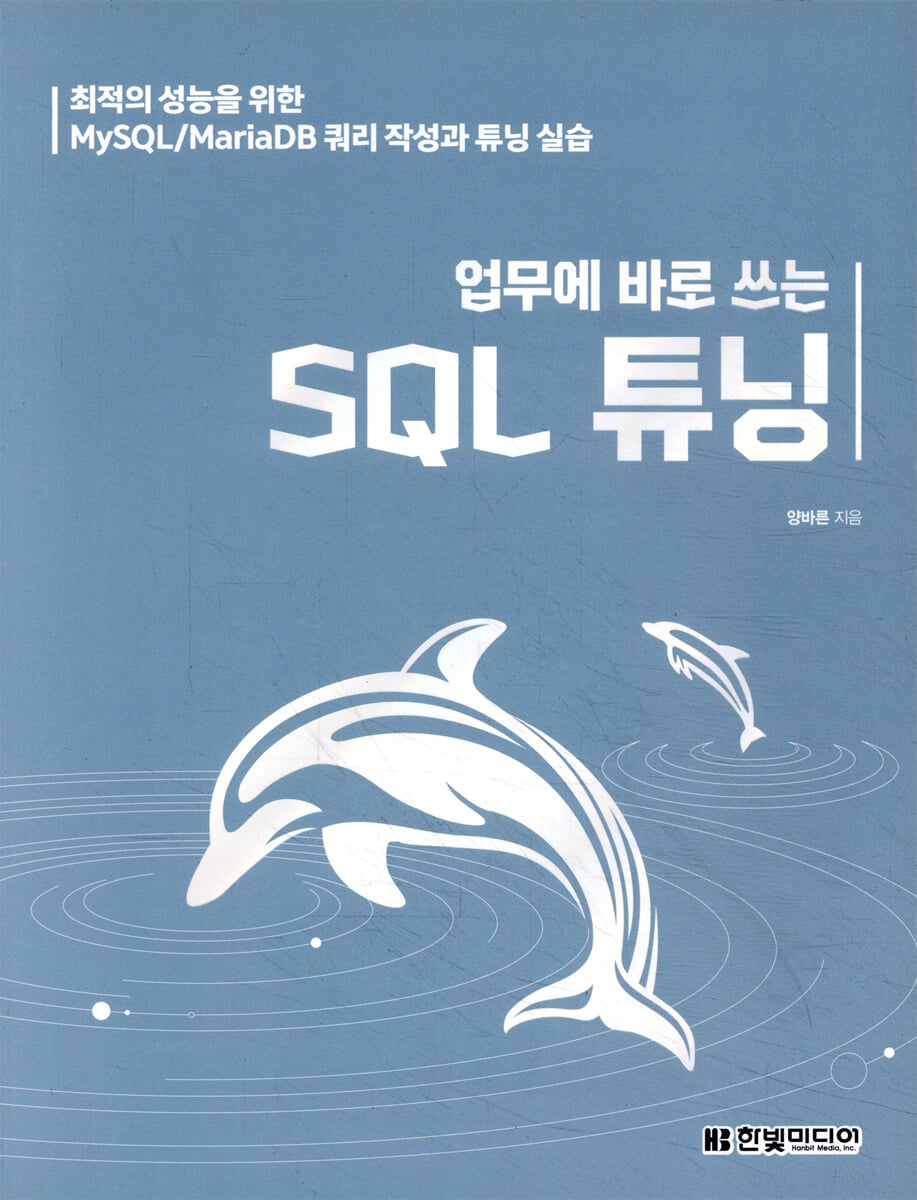 |
Description
Book Introduction
Learn the fundamental principles of SQL tuning and how to tune it for specific situations with case studies.
SQL tuning is the most important technique for processing large amounts of data faster and more powerfully.
However, many developers feel burdened and cannot even start because of the difficult content.
This book is composed of intuitive illustrations and examples so that anyone with basic knowledge of SQL can easily understand tuning.
Additionally, you'll gain hands-on experience analyzing and tuning SQL statements through malicious cases that can arise in real-world work. Readers with little experience writing SQL statements need not worry.
Even a newly hired database developer can learn to create "good queries" using this book and apply them to their work right away!
SQL tuning is the most important technique for processing large amounts of data faster and more powerfully.
However, many developers feel burdened and cannot even start because of the difficult content.
This book is composed of intuitive illustrations and examples so that anyone with basic knowledge of SQL can easily understand tuning.
Additionally, you'll gain hands-on experience analyzing and tuning SQL statements through malicious cases that can arise in real-world work. Readers with little experience writing SQL statements need not worry.
Even a newly hired database developer can learn to create "good queries" using this book and apply them to their work right away!
- You can preview some of the book's contents.
Preview
index
Chapter 1.
MySQL and MariaDB Overview
1.1 Status
1.2 Differences from commercial RDBMS
1.3 The Importance of MySQL and MariaDB Tuning
1.4 In conclusion
Chapter 2. Intuitively Understanding SQL Tuning Terminology
2.1 Physics Engine and Object Terminology
2.2 Logical SQL Concept Terminology
2.3 Conceptual Tuning Terminology
2.4 In conclusion
Chapter 3. Digging into SQL Tuning's Execution Plans
3.1 Setting up the practice environment
3.2 Executing the execution plan
3.3 Profiling
3.4 In conclusion
Chapter 4.
Escape the Beginner's Path with Malicious SQL Tuning
4.1 Preparing for SQL Tuning
4.2 Creating Good Queries by Simply Modifying SQL Statements
4.3 Creating Good Queries by Changing Table Join Settings
4.4 In conclusion
Chapter 5.
Become an expert with malicious SQL tuning
5.1 Create good queries by rewriting SQL statements
5.2 Creating Good Queries with Index Tuning
5.3 Creating Good Queries with Appropriate Table and Column Properties
5.4 In conclusion
MySQL and MariaDB Overview
1.1 Status
1.2 Differences from commercial RDBMS
1.3 The Importance of MySQL and MariaDB Tuning
1.4 In conclusion
Chapter 2. Intuitively Understanding SQL Tuning Terminology
2.1 Physics Engine and Object Terminology
2.2 Logical SQL Concept Terminology
2.3 Conceptual Tuning Terminology
2.4 In conclusion
Chapter 3. Digging into SQL Tuning's Execution Plans
3.1 Setting up the practice environment
3.2 Executing the execution plan
3.3 Profiling
3.4 In conclusion
Chapter 4.
Escape the Beginner's Path with Malicious SQL Tuning
4.1 Preparing for SQL Tuning
4.2 Creating Good Queries by Simply Modifying SQL Statements
4.3 Creating Good Queries by Changing Table Join Settings
4.4 In conclusion
Chapter 5.
Become an expert with malicious SQL tuning
5.1 Create good queries by rewriting SQL statements
5.2 Creating Good Queries with Index Tuning
5.3 Creating Good Queries with Appropriate Table and Column Properties
5.4 In conclusion
Detailed image

Publisher's Review
Structure of this book
Chapter 1: Overview of MySQL and MariaDB
We'll explore the background and market share of MySQL and MariaDB, the differences between them and commercial DBMSs, and the importance of tuning MySQL and MariaDB, both open-source DBMSs.
Chapter 2: Intuitively Understanding SQL Tuning Terminology
Before performing SQL tuning, learn about the structure of the physics engine, terms related to DB objects, terms related to writing logical queries, and conceptually common tuning terms.
Chapter 3: Understanding SQL Tuning Execution Plans
Let's set up a hands-on environment required to perform SQL tuning.
We'll look at how execution plans are executed to determine the direction of tuning, what the output means, and understand profiling, which is physical time-unit information.
Chapter 4: Escape the Beginner's Path with Malicious SQL Tuning
This hands-on exercise involves tuning a given SQL statement by making simple text changes. We'll explore examples of query tuning achieved by changing specific syntax or table join methods in a SQL statement.
Chapter 5: Becoming an Expert with Malicious SQL Tuning
This hands-on exercise involves tuning a given SQL statement by rewriting the query or modifying objects using the DDL data definition language. We'll explore examples of query tuning that involve rewriting the entire SQL statement, adjusting indexes, and modifying table and column properties.
Chapter 1: Overview of MySQL and MariaDB
We'll explore the background and market share of MySQL and MariaDB, the differences between them and commercial DBMSs, and the importance of tuning MySQL and MariaDB, both open-source DBMSs.
Chapter 2: Intuitively Understanding SQL Tuning Terminology
Before performing SQL tuning, learn about the structure of the physics engine, terms related to DB objects, terms related to writing logical queries, and conceptually common tuning terms.
Chapter 3: Understanding SQL Tuning Execution Plans
Let's set up a hands-on environment required to perform SQL tuning.
We'll look at how execution plans are executed to determine the direction of tuning, what the output means, and understand profiling, which is physical time-unit information.
Chapter 4: Escape the Beginner's Path with Malicious SQL Tuning
This hands-on exercise involves tuning a given SQL statement by making simple text changes. We'll explore examples of query tuning achieved by changing specific syntax or table join methods in a SQL statement.
Chapter 5: Becoming an Expert with Malicious SQL Tuning
This hands-on exercise involves tuning a given SQL statement by rewriting the query or modifying objects using the DDL data definition language. We'll explore examples of query tuning that involve rewriting the entire SQL statement, adjusting indexes, and modifying table and column properties.
GOODS SPECIFICS
- Date of issue: July 1, 2021
- Page count, weight, size: 296 pages | 562g | 183*235*20mm
- ISBN13: 9791162244500
- ISBN10: 116224450X
You may also like
카테고리
korean


korean

![GQ KOREA Mark (Monthly): December [2025]](http://librairie.coreenne.fr/cdn/shop/files/8ef265dbbfbf186523ed75ba7319009d.jpg?v=1765340328&width=3840)


