

Developer's Writing
 |
Description
Book Introduction
Everything you need to know about writing just for developers!
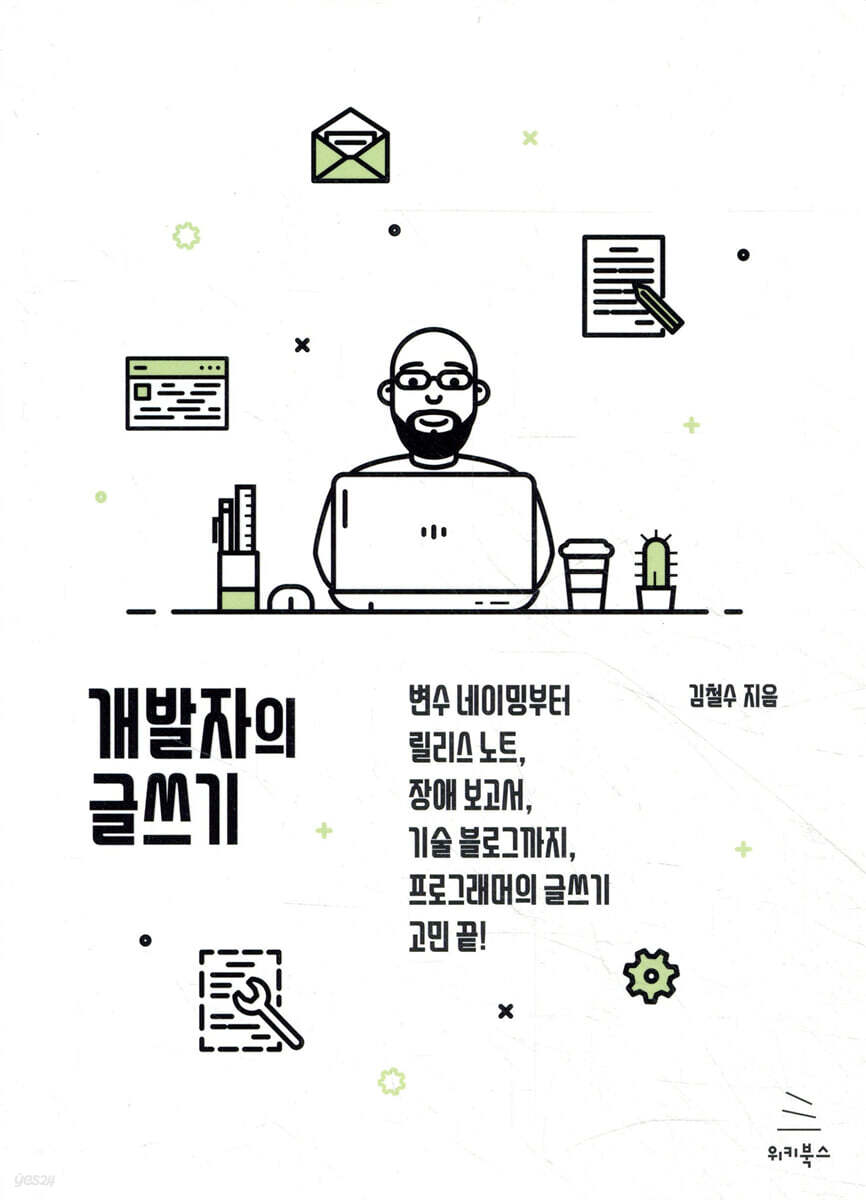
This book is designed to comprehensively improve developers' writing skills.
Within the code, it teaches you everything from naming functions and variables to writing comments and error messages.
Outside of code, it teaches you how to write good release notes, bug reports, and development guides.
We also didn't miss out on how to write a persuasive technical section of an SI proposal for developers who do outsourced development.
It also contains tips on how to write and run a technical blog for developers or IT companies who want to run a blog.
This book is designed to comprehensively improve developers' writing skills.
Within the code, it teaches you everything from naming functions and variables to writing comments and error messages.
Outside of code, it teaches you how to write good release notes, bug reports, and development guides.
We also didn't miss out on how to write a persuasive technical section of an SI proposal for developers who do outsourced development.
It also contains tips on how to write and run a technical blog for developers or IT companies who want to run a blog.
- You can preview some of the book's contents.
Preview
index
[Prologue] Developers' Writing Must Be Different
Developers can't write?
Characteristics of developer writing: accuracy, conciseness, and readability.
Developer's Writing
Chapter 1: Writing Basics Developers Need to Know
01 How to structure sentences and paragraphs
How to structure ___ sentences
___Difference between descriptive, reductive, and schematic
___Revised narrative style and bullet points
___Hierarchy that structures paragraphs
02 Easy-to-use spacing and punctuation
___The easiest spacing rule
___Easy to misunderstand punctuation marks (double quotation marks, single quotation marks)
03 English word selection and foreign word notation
___Similar but different, word choice
___Foreign product labeling and foreign word labeling
Chapter 2: Naming and Commenting to Save Development Time
01 Naming Conventions: Know the Reason and Use Them
___The biggest concern for developers is naming.
___Naming is not creation, but combination
___The naming convention of code inherits the English notation.
___Name your classes in Pascal notation
___Naming functions and variables using camel notation
___Constants are written in all capital letters.
___Packages and modules are written in lowercase
___BEM notation
___Readability and communication come first
02 How to name variables well
___i is a variable name, but d is not
___Long name? Short name? Which name is more searchable?
Should I add s to indicate plural ___ or not?
Should I use the ___ abbreviation or not?
___Put important words first
___Function naming order
03 The Standard for a Good Name, SMART
___You can't come up with a good name in one go
___5 Characteristics of a Good Name
___easy to Search: How to name things for easy searching
___easy to Mix: How to name things that are easy to combine
___easy to Agree: How to Name Things Easy to Agree
___easy to Remember: How to make names easy to remember
___easy to Type: How to name things so they're easy to type
04 Good code has no comments?
___Names well can reduce comments
___Let's practice coding without comments from the beginning.
___There are many times when comments are needed.
05 Write comments that are considerate of other developers
___Code conveys meaning, comments convey intent
___Repetition of comment
Excerpts and summaries of ___'s comments
___Comments are also code
Chapter 3: Writing Error Messages That Communicate with Users
01 Let's eliminate errors before writing error messages.
___Friendly 404, Unfriendly 404
Is a ___404 error something to be sorry about?
___Broken links are the developer's responsibility
___Let's separate error messages for developers and users.
02 How to write user error messages correctly
___Message to deal with user errors
___order to display error messages
___Back and forth messages and button messages
03 Message Structuring to Reduce User Errors
___ button order
___How to prevent users from making repeated errors
04 Use preventive messages instead of error messages.
Understanding the ___ service can help you prevent errors.
Understanding your ___users can help you prevent errors.
___Which came first, the chicken or the egg?
Chapter 4: Writing Release Documents and Bug Reports from a Reader's Perspective
01 How to classify, summarize, and synthesize change logs
___Relationship between the amount of change logs and satisfaction
Step 1: Select
Step 2: Classify
Step 3: Summarize
Step 4: Synthesize
02 Write useful information for customers.
___Developer Perspective and Customer Perspective
___Let's review the past and show the future
___Semantic Versioning
03 Let's write the release document like a troubleshooting report.
Let's distinguish between problems and issues.
Write down the problem, issue, solution, and follow-up plan in that order.
___Let's write with legal issues in mind
04 Writing a Business Understanding Obstacle Report
___Features of the Disability Report
___Quick writing to answer questions
Analytical writing that seeks causes and reasons for ___
Writing from a business perspective that takes ___your boss into account
Political writing that gets you what you want
Chapter 5: Writing a Development Guide with Description, Description, Argument, and Narrative
01 Let's explain the service concept in terms of categories, purposes, and characteristics.
___Category, Use, Characteristics
Let's choose the ___ category accurately and appropriately.
Let's describe the ___purpose as a core function of the category.
Let's pick out ___'s characteristics from the advantages and strengths.
02 Let's describe it with pictures and words so that it can be understood accurately.
___If you add descriptions to the text, it will be easier to understand.
___Match the text and the picture
___Let's do both objective and subjective descriptions
03 Provide useful information through arguments
If you want to write an opinion, provide evidence.
___Let's not write roughly or politely.
___Let's write by narrowing the gap between the claim and the reason.
___Let's write by narrowing the distance between the question and the answer.
04 Create a table of contents using narrative
___Development and Narrative
Let's write based on the universality of the technology rather than the level of the reader.
Let's create a table of contents from the steps in the ___ order.
Chapter 6: Writing SI Proposals to Help Win Orders
01 Proposal Writing Principles Developers Should Know
___Differences between developers and proposal PMs
The essence of the ___system architecture is not a picture.
___First, analyze the RFP
___Second, logical completeness
02 Customer's problem recognition and the proposer's problem-solving ability
___Problem recognition and problem-solving skills
______① Make a suggestion by comparing it with your competitors.
______② First, agree and then suggest another solution.
______③ Make the customer aware of the seriousness of the problem.
______④ Check your competitors' strategies and respond accordingly.
03 Customer needs are bound to change.
___Development is about realizing customer needs
Don't analyze ___requirements, present them.
___Prepare for changing requirements
04 Increase overall customer satisfaction
Not all ___ demands are the same.
___Three Types of Demands Based on the Kano Model
Chapter 7: Easily Writing and Running a Tech Blog
01 3 Easy Ways to Write a Tech Blog
___Why Developers Write Bad Tech Blogs
______First, let's write with a focus on the material and not on the subject.
______Second, write at your own level, not at the reader's level.
______Third, let's write in a fun way.
02 How to Create a Table of Contents by Type of Writing I - Writing
___4 Types of Tech Blogs, by, alcohol, editor, home
______I: Let's write the development log from the main text, with a good table of contents.
______alcohol: Let's compare and experiment with the original text and write an explanation.
03 How to Create a Table of Contents by Type of Article II - Editing
______: Let's summarize the order
______house: If you're afraid of writing, gather your data, summarize the main points, and write.
04 Tips for Running a Corporate Technology Blog
___Tech blogs increase the value of your company.
___Tech blogs also need investment to survive.
___Developers' writing reflects the company's culture.
Let's try writing collaboratively, pair writing.
[Epilogue] Let's Provide Developer Writing Training for Our Company
Developers can't write?
Characteristics of developer writing: accuracy, conciseness, and readability.
Developer's Writing
Chapter 1: Writing Basics Developers Need to Know
01 How to structure sentences and paragraphs
How to structure ___ sentences
___Difference between descriptive, reductive, and schematic
___Revised narrative style and bullet points
___Hierarchy that structures paragraphs
02 Easy-to-use spacing and punctuation
___The easiest spacing rule
___Easy to misunderstand punctuation marks (double quotation marks, single quotation marks)
03 English word selection and foreign word notation
___Similar but different, word choice
___Foreign product labeling and foreign word labeling
Chapter 2: Naming and Commenting to Save Development Time
01 Naming Conventions: Know the Reason and Use Them
___The biggest concern for developers is naming.
___Naming is not creation, but combination
___The naming convention of code inherits the English notation.
___Name your classes in Pascal notation
___Naming functions and variables using camel notation
___Constants are written in all capital letters.
___Packages and modules are written in lowercase
___BEM notation
___Readability and communication come first
02 How to name variables well
___i is a variable name, but d is not
___Long name? Short name? Which name is more searchable?
Should I add s to indicate plural ___ or not?
Should I use the ___ abbreviation or not?
___Put important words first
___Function naming order
03 The Standard for a Good Name, SMART
___You can't come up with a good name in one go
___5 Characteristics of a Good Name
___easy to Search: How to name things for easy searching
___easy to Mix: How to name things that are easy to combine
___easy to Agree: How to Name Things Easy to Agree
___easy to Remember: How to make names easy to remember
___easy to Type: How to name things so they're easy to type
04 Good code has no comments?
___Names well can reduce comments
___Let's practice coding without comments from the beginning.
___There are many times when comments are needed.
05 Write comments that are considerate of other developers
___Code conveys meaning, comments convey intent
___Repetition of comment
Excerpts and summaries of ___'s comments
___Comments are also code
Chapter 3: Writing Error Messages That Communicate with Users
01 Let's eliminate errors before writing error messages.
___Friendly 404, Unfriendly 404
Is a ___404 error something to be sorry about?
___Broken links are the developer's responsibility
___Let's separate error messages for developers and users.
02 How to write user error messages correctly
___Message to deal with user errors
___order to display error messages
___Back and forth messages and button messages
03 Message Structuring to Reduce User Errors
___ button order
___How to prevent users from making repeated errors
04 Use preventive messages instead of error messages.
Understanding the ___ service can help you prevent errors.
Understanding your ___users can help you prevent errors.
___Which came first, the chicken or the egg?
Chapter 4: Writing Release Documents and Bug Reports from a Reader's Perspective
01 How to classify, summarize, and synthesize change logs
___Relationship between the amount of change logs and satisfaction
Step 1: Select
Step 2: Classify
Step 3: Summarize
Step 4: Synthesize
02 Write useful information for customers.
___Developer Perspective and Customer Perspective
___Let's review the past and show the future
___Semantic Versioning
03 Let's write the release document like a troubleshooting report.
Let's distinguish between problems and issues.
Write down the problem, issue, solution, and follow-up plan in that order.
___Let's write with legal issues in mind
04 Writing a Business Understanding Obstacle Report
___Features of the Disability Report
___Quick writing to answer questions
Analytical writing that seeks causes and reasons for ___
Writing from a business perspective that takes ___your boss into account
Political writing that gets you what you want
Chapter 5: Writing a Development Guide with Description, Description, Argument, and Narrative
01 Let's explain the service concept in terms of categories, purposes, and characteristics.
___Category, Use, Characteristics
Let's choose the ___ category accurately and appropriately.
Let's describe the ___purpose as a core function of the category.
Let's pick out ___'s characteristics from the advantages and strengths.
02 Let's describe it with pictures and words so that it can be understood accurately.
___If you add descriptions to the text, it will be easier to understand.
___Match the text and the picture
___Let's do both objective and subjective descriptions
03 Provide useful information through arguments
If you want to write an opinion, provide evidence.
___Let's not write roughly or politely.
___Let's write by narrowing the gap between the claim and the reason.
___Let's write by narrowing the distance between the question and the answer.
04 Create a table of contents using narrative
___Development and Narrative
Let's write based on the universality of the technology rather than the level of the reader.
Let's create a table of contents from the steps in the ___ order.
Chapter 6: Writing SI Proposals to Help Win Orders
01 Proposal Writing Principles Developers Should Know
___Differences between developers and proposal PMs
The essence of the ___system architecture is not a picture.
___First, analyze the RFP
___Second, logical completeness
02 Customer's problem recognition and the proposer's problem-solving ability
___Problem recognition and problem-solving skills
______① Make a suggestion by comparing it with your competitors.
______② First, agree and then suggest another solution.
______③ Make the customer aware of the seriousness of the problem.
______④ Check your competitors' strategies and respond accordingly.
03 Customer needs are bound to change.
___Development is about realizing customer needs
Don't analyze ___requirements, present them.
___Prepare for changing requirements
04 Increase overall customer satisfaction
Not all ___ demands are the same.
___Three Types of Demands Based on the Kano Model
Chapter 7: Easily Writing and Running a Tech Blog
01 3 Easy Ways to Write a Tech Blog
___Why Developers Write Bad Tech Blogs
______First, let's write with a focus on the material and not on the subject.
______Second, write at your own level, not at the reader's level.
______Third, let's write in a fun way.
02 How to Create a Table of Contents by Type of Writing I - Writing
___4 Types of Tech Blogs, by, alcohol, editor, home
______I: Let's write the development log from the main text, with a good table of contents.
______alcohol: Let's compare and experiment with the original text and write an explanation.
03 How to Create a Table of Contents by Type of Article II - Editing
______: Let's summarize the order
______house: If you're afraid of writing, gather your data, summarize the main points, and write.
04 Tips for Running a Corporate Technology Blog
___Tech blogs increase the value of your company.
___Tech blogs also need investment to survive.
___Developers' writing reflects the company's culture.
Let's try writing collaboratively, pair writing.
[Epilogue] Let's Provide Developer Writing Training for Our Company
Detailed image

GOODS SPECIFICS
- Date of publication: October 4, 2019
- Page count, weight, size: 276 pages | 152*210*14mm
- ISBN13: 9791158391744
- ISBN10: 1158391749
You may also like
카테고리
korean


korean

![GQ KOREA Mark (Monthly): December [2025]](http://librairie.coreenne.fr/cdn/shop/files/8ef265dbbfbf186523ed75ba7319009d.jpg?v=1765340328&width=3840)


