

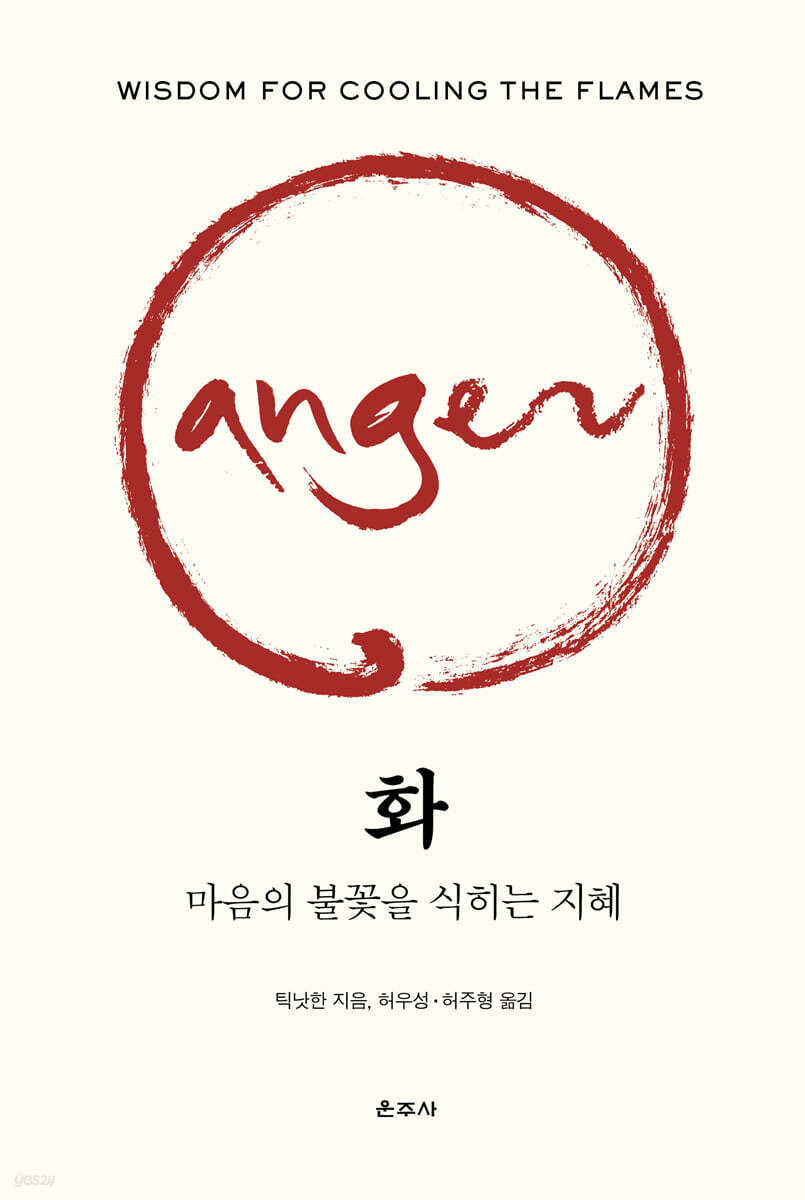
Fire: Wisdom that cools the flames of the heart
 |
Description
Book Introduction
Thich Nhat Hanh's "Fire" is being re-released after 20 years.
When it comes to Thich Nhat Hanh, his book 『The Fire』 (first edition 2002)
4. 3) This book left a deep impression on Korean readers, to the extent that it is reminiscent of
However, it is regrettable that the original color, that is, the Buddhist identity, was forgotten while translating it into popular style and terminology.
A representative example is that the original text's "mindfulless" is a core concept in Thich Nhat Hanh's teachings and is usually translated as "mindfulness" or "awareness," but this is being translated as "awareness."
This translation began with a sense of problem in mind, and was based on a thorough translation of the original text.
In other words, I paid close attention to every single sentence and word in the original text while translating, and during this process, I also received help from Korean monks practicing at Plum Village.
Therefore, it can be said that this translation fully contains the teachings that Thich Nhat Hanh wanted to convey.
When it comes to Thich Nhat Hanh, his book 『The Fire』 (first edition 2002)
4. 3) This book left a deep impression on Korean readers, to the extent that it is reminiscent of
However, it is regrettable that the original color, that is, the Buddhist identity, was forgotten while translating it into popular style and terminology.
A representative example is that the original text's "mindfulless" is a core concept in Thich Nhat Hanh's teachings and is usually translated as "mindfulness" or "awareness," but this is being translated as "awareness."
This translation began with a sense of problem in mind, and was based on a thorough translation of the original text.
In other words, I paid close attention to every single sentence and word in the original text while translating, and during this process, I also received help from Korean monks practicing at Plum Village.
Therefore, it can be said that this translation fully contains the teachings that Thich Nhat Hanh wanted to convey.
- You can preview some of the book's contents.
Preview
index
Introduction 7
Chapter 1: Consumption of Fire 19
Chapter 2: Extinguishing the Flames of Fire 31
Chapter 3: Words of True Love 57
Chapter 4 Change 77
Chapter 5: Compassionate Communication 101
Chapter 6 Your Heart Sutra 121
Chapter 7: No Enemies 139
Chapter 8 David and Angelina: 159
Anger is a habitual energy.
Chapter 9: Embracing Anger with Mindfulness 175
Chapter 10 Mindful Breathing 193
Chapter 11: Restoration of the Pure Land 205
Appendix
Appendix A 221
Appendix B: Five Mindfulness Practices 225
Appendix C: A Deep Look into Anger 233
Guided meditation for release
Appendix D: Deep Relaxation 241
Chapter 1: Consumption of Fire 19
Chapter 2: Extinguishing the Flames of Fire 31
Chapter 3: Words of True Love 57
Chapter 4 Change 77
Chapter 5: Compassionate Communication 101
Chapter 6 Your Heart Sutra 121
Chapter 7: No Enemies 139
Chapter 8 David and Angelina: 159
Anger is a habitual energy.
Chapter 9: Embracing Anger with Mindfulness 175
Chapter 10 Mindful Breathing 193
Chapter 11: Restoration of the Pure Land 205
Appendix
Appendix A 221
Appendix B: Five Mindfulness Practices 225
Appendix C: A Deep Look into Anger 233
Guided meditation for release
Appendix D: Deep Relaxation 241
Publisher's Review
Modern people live in a society that triggers and promotes 'anger' both personally and socially.
Behind this lie materialism, selfishness, and endless competition, which fuel human desires.
Nevertheless, humans have the right to be happy and live in pursuit of happiness.
How can we become happy? Thich Nhat Hanh says this.
“In the Buddha’s teachings, the most basic condition for happiness is freedom.
The freedom we are talking about here is not political freedom, but freedom from mental aggression such as anger, despair, jealousy, and delusion.
Buddha called this mental activity poison.
“We cannot be happy as long as these poisons are in our hearts.”
In this way, this book teaches us how to escape from anger, despair, and frustration and how to make ourselves and others happy.
And it doesn't require difficult or deep theoretical study or extreme practice.
Just practice mindfulness.
To be free from ‘anger’, you must first know about ‘anger’.
The monk believes that anger is a mental and psychological phenomenon, but is also closely related to biological and biochemical factors.
In other words, the body and mind are not separate; the body is the mind and the mind is the body.
Therefore, the root of anger exists not only in the mind but also in the body, and ultimately, we are told to practice 'mindful eating' in our daily lives, such as how we eat, drink, consume, and how we treat our bodies.
The monk shows a surprising(?) beginning to this book by starting with the problem of controlling the body and the core of it, the problem of eating.
This also shows that daily life and practice are not separate things.
The monk sees anger as something to be cared for, like a child.
Therefore, we must become mothers who listen to the cries of their babies.
Going one step further, we see 'anger' as a part of us.
When there is pain anywhere in the body, we first pay attention to and care for the painful area.
“Please embrace your anger very gently.
Anger is not your enemy, it is your baby.
It's like your stomach or lungs.
We don't want to throw it away every time there's a problem with our lungs or stomach.
“Your anger is the same.”
In this way, anger is not something we should drive away, nor is it something we should fight against and overcome.
We just need to notice the anger as it is, embrace it, and smile at it.
What is needed here is the practice of mindfulness.
“The Buddha gave us a very effective tool to extinguish the flame within our hearts.
It's about how to practice mindful breathing and mindful walking, how to embrace anger, how to look deeply into the nature of how we perceive things… ”
A good teaching should be able to directly apply it to our lives and transform our suffering.
Mindfulness practice is not something only great beings can do.
Me, you, we all can do it.
Anger exists within us in the form of seeds, and the seeds of love and compassion also exist in the same place.
Practice is about watering positive seeds, not negative seeds.
This is called 'selective watering'.
Sometimes, incorrect popular beliefs about anger can become a problem.
That is, some say that the solution is to vent anger, but this is a very dangerous idea.
When you vent your anger, you are supplying energy that feeds the anger, and therefore the more you vent your anger, the more it only makes the seeds of anger grow.
No one can avoid getting angry.
The key is whether you vent your anger and blow it out on the other person, or whether you recognize the anger in that moment, embrace it, and smile.
And it depends on the practice of mindfulness.
In this way, mindfulness is not about suppressing anger, but about noticing it.
Mindfulness is about approaching, recognizing, greeting, and embracing, without fighting or suppressing.
The role of mindfulness is like that of a mother who holds and soothes a sick child.
The anger inside us is a baby that we must take good care of.
A practitioner is one who knows how to take care of anger and suffering as soon as they arise.
On the other hand, those who do not practice are easily overwhelmed and dominated by anger when the energy of anger appears.
The main cause of our suffering and unhappiness is not others, but the seeds of anger within us.
So there is no need to blame others for your suffering.
The opponent is only a secondary factor.
If you are tied down by something—anger, frustration, despair, even love—you are not free.
To truly live, to truly be happy, to truly live as the protagonist of one's life, one must become a free person.
And the way lies in the practice of mindfulness.
Through this book, I hope to understand the nature of 'anger' and become free from it, so that not only myself but also those who need my help can come closer to happiness.
Behind this lie materialism, selfishness, and endless competition, which fuel human desires.
Nevertheless, humans have the right to be happy and live in pursuit of happiness.
How can we become happy? Thich Nhat Hanh says this.
“In the Buddha’s teachings, the most basic condition for happiness is freedom.
The freedom we are talking about here is not political freedom, but freedom from mental aggression such as anger, despair, jealousy, and delusion.
Buddha called this mental activity poison.
“We cannot be happy as long as these poisons are in our hearts.”
In this way, this book teaches us how to escape from anger, despair, and frustration and how to make ourselves and others happy.
And it doesn't require difficult or deep theoretical study or extreme practice.
Just practice mindfulness.
To be free from ‘anger’, you must first know about ‘anger’.
The monk believes that anger is a mental and psychological phenomenon, but is also closely related to biological and biochemical factors.
In other words, the body and mind are not separate; the body is the mind and the mind is the body.
Therefore, the root of anger exists not only in the mind but also in the body, and ultimately, we are told to practice 'mindful eating' in our daily lives, such as how we eat, drink, consume, and how we treat our bodies.
The monk shows a surprising(?) beginning to this book by starting with the problem of controlling the body and the core of it, the problem of eating.
This also shows that daily life and practice are not separate things.
The monk sees anger as something to be cared for, like a child.
Therefore, we must become mothers who listen to the cries of their babies.
Going one step further, we see 'anger' as a part of us.
When there is pain anywhere in the body, we first pay attention to and care for the painful area.
“Please embrace your anger very gently.
Anger is not your enemy, it is your baby.
It's like your stomach or lungs.
We don't want to throw it away every time there's a problem with our lungs or stomach.
“Your anger is the same.”
In this way, anger is not something we should drive away, nor is it something we should fight against and overcome.
We just need to notice the anger as it is, embrace it, and smile at it.
What is needed here is the practice of mindfulness.
“The Buddha gave us a very effective tool to extinguish the flame within our hearts.
It's about how to practice mindful breathing and mindful walking, how to embrace anger, how to look deeply into the nature of how we perceive things… ”
A good teaching should be able to directly apply it to our lives and transform our suffering.
Mindfulness practice is not something only great beings can do.
Me, you, we all can do it.
Anger exists within us in the form of seeds, and the seeds of love and compassion also exist in the same place.
Practice is about watering positive seeds, not negative seeds.
This is called 'selective watering'.
Sometimes, incorrect popular beliefs about anger can become a problem.
That is, some say that the solution is to vent anger, but this is a very dangerous idea.
When you vent your anger, you are supplying energy that feeds the anger, and therefore the more you vent your anger, the more it only makes the seeds of anger grow.
No one can avoid getting angry.
The key is whether you vent your anger and blow it out on the other person, or whether you recognize the anger in that moment, embrace it, and smile.
And it depends on the practice of mindfulness.
In this way, mindfulness is not about suppressing anger, but about noticing it.
Mindfulness is about approaching, recognizing, greeting, and embracing, without fighting or suppressing.
The role of mindfulness is like that of a mother who holds and soothes a sick child.
The anger inside us is a baby that we must take good care of.
A practitioner is one who knows how to take care of anger and suffering as soon as they arise.
On the other hand, those who do not practice are easily overwhelmed and dominated by anger when the energy of anger appears.
The main cause of our suffering and unhappiness is not others, but the seeds of anger within us.
So there is no need to blame others for your suffering.
The opponent is only a secondary factor.
If you are tied down by something—anger, frustration, despair, even love—you are not free.
To truly live, to truly be happy, to truly live as the protagonist of one's life, one must become a free person.
And the way lies in the practice of mindfulness.
Through this book, I hope to understand the nature of 'anger' and become free from it, so that not only myself but also those who need my help can come closer to happiness.
GOODS SPECIFICS
- Date of issue: August 26, 2024
- Page count, weight, size: 252 pages | 400g | 141*210*15mm
- ISBN13: 9788957467848
- ISBN10: 895746784X
You may also like
카테고리
korean


korean

![ELLE 엘르 스페셜 에디션 A형 : 12월 [2025]](http://librairie.coreenne.fr/cdn/shop/files/b8e27a3de6c9538896439686c6b0e8fb.jpg?v=1766436872&width=3840)


