

prophetic imagination
 |
Description
Book Introduction
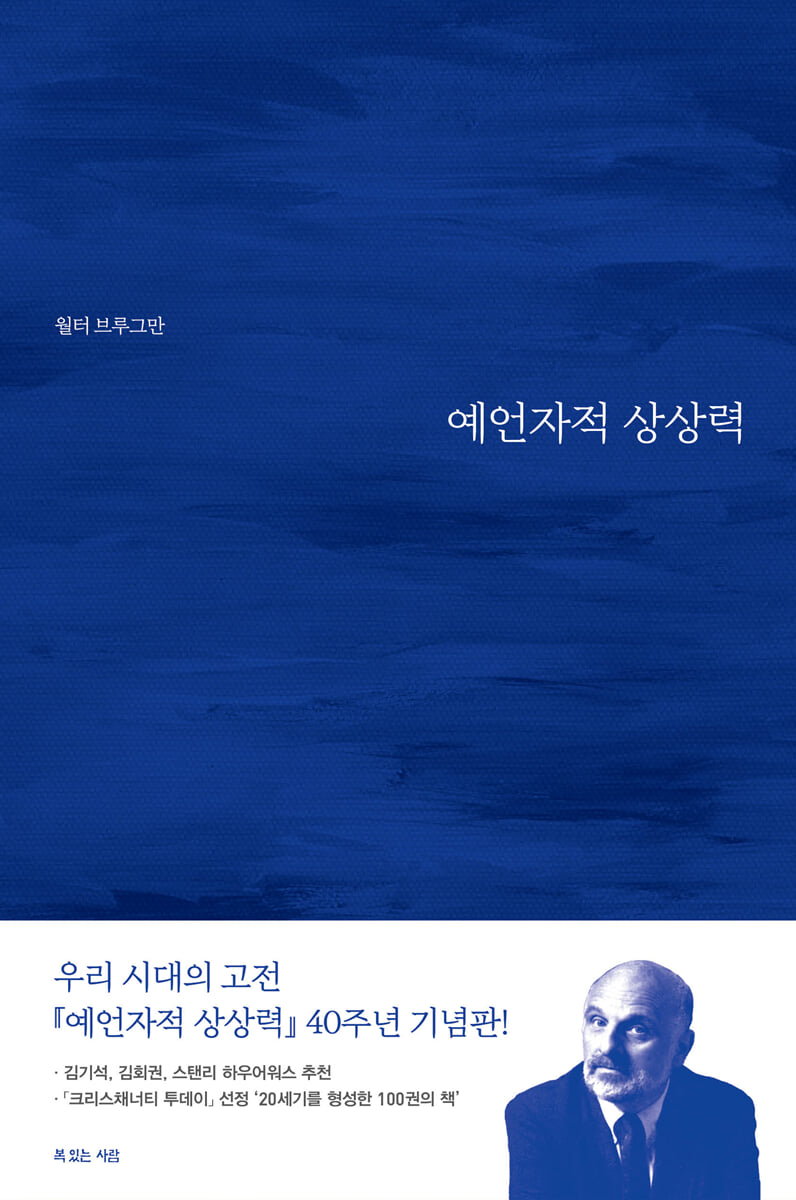
A 40th anniversary edition of the classic of our time, The Prophetic Imagination!
Recommended by Kim Ki-seok, Kim Hoe-kwon, and Stanley Hauerwas
· Selected as one of Christianity Today's "100 Books That Shaped the 20th Century"
Today, the world is experiencing human alienation within the capitalist worldview.
The marginalization of human beings is the inevitable collapse of a capitalist consumer society that has strayed from God's truth.
A consumerist society satisfies the desires of a certain class of people, but leaves the vast majority experiencing inhumane deprivation.
Such a society fails to empathize with the tears of the vulnerable and marginalized members within the community.
Moreover, people's hearts are becoming increasingly hardened, causing God to worry and sigh.
Capitalist society can be said to be a transformation of the oppressive system of the insensitive Pharaoh, which can no longer respond to the voice of the prophet, and ultimately a society that gives rise to prophetic resistance.
Walter Brueggemann's "The Prophetic Imagination" restores the spiritual sensitivity to empathize with the pain of others and respond to God's word in a capitalist society that excessively encourages individual desires.
Meanwhile, for those oppressed and powerless by the greed of the elite and the ruling ideology, this book, "Prophetic Imagination," inspires hope and encourages participation in God's new work.
While the book employs a seemingly binary opposition between royal consciousness and prophetic imagination, it actually vividly reproduces the original sound of the gospel preached by Jesus of Nazareth, who invites all flesh to contemplate the glory of God.
This book is the 40th anniversary edition of the author's book, The Prophetic Imagination, first published in 1978.
Although it reflects the 2001 revision and subsequent changes in the field of biblical studies, the book's central argument remains the same.
In both the first and the revised editions, Brueggemann defines a prophet not simply as a diviner of the future or a social protester, but as someone who triggers a fundamental change in a community against the totalitarianism that homogenizes and enslaves the human spirit.
This book, consisting of seven chapters, is a classic of our time, movingly analyzing the prophetic imagination and ministry of Jesus of Nazareth, who is the sum total of Moses, Jeremiah, Deuteronomy Isaiah, and the Old Testament prophets, and more.
Recommended by Kim Ki-seok, Kim Hoe-kwon, and Stanley Hauerwas
· Selected as one of Christianity Today's "100 Books That Shaped the 20th Century"
Today, the world is experiencing human alienation within the capitalist worldview.
The marginalization of human beings is the inevitable collapse of a capitalist consumer society that has strayed from God's truth.
A consumerist society satisfies the desires of a certain class of people, but leaves the vast majority experiencing inhumane deprivation.
Such a society fails to empathize with the tears of the vulnerable and marginalized members within the community.
Moreover, people's hearts are becoming increasingly hardened, causing God to worry and sigh.
Capitalist society can be said to be a transformation of the oppressive system of the insensitive Pharaoh, which can no longer respond to the voice of the prophet, and ultimately a society that gives rise to prophetic resistance.
Walter Brueggemann's "The Prophetic Imagination" restores the spiritual sensitivity to empathize with the pain of others and respond to God's word in a capitalist society that excessively encourages individual desires.
Meanwhile, for those oppressed and powerless by the greed of the elite and the ruling ideology, this book, "Prophetic Imagination," inspires hope and encourages participation in God's new work.
While the book employs a seemingly binary opposition between royal consciousness and prophetic imagination, it actually vividly reproduces the original sound of the gospel preached by Jesus of Nazareth, who invites all flesh to contemplate the glory of God.
This book is the 40th anniversary edition of the author's book, The Prophetic Imagination, first published in 1978.
Although it reflects the 2001 revision and subsequent changes in the field of biblical studies, the book's central argument remains the same.
In both the first and the revised editions, Brueggemann defines a prophet not simply as a diviner of the future or a social protester, but as someone who triggers a fundamental change in a community against the totalitarianism that homogenizes and enslaves the human spirit.
This book, consisting of seven chapters, is a classic of our time, movingly analyzing the prophetic imagination and ministry of Jesus of Nazareth, who is the sum total of Moses, Jeremiah, Deuteronomy Isaiah, and the Old Testament prophets, and more.
- You can preview some of the book's contents.
Preview
index
Commentary
Preface to the 40th Anniversary Edition
Looking back on 40 years of "Prophetic Imagination"
Preface to the Revised Edition
Preface to the first edition
Chapter 1: Moses' Alternative Community
Chapter 2: Royal Consciousness and Counterculture
Chapter 3: The Embrace of Prophetic Criticism and Pathos
Chapter 4: Prophetic Activation and the Emergence of Wonder
Chapter 5: Criticism and Pathos of Jesus of Nazareth
Chapter 6: The Activation and Amazement of Jesus of Nazareth
Chapter 7: Notes on Pastoral Practice
Practice review
View abbreviations
main
Recommended References
Bible Verse Index
Preface to the 40th Anniversary Edition
Looking back on 40 years of "Prophetic Imagination"
Preface to the Revised Edition
Preface to the first edition
Chapter 1: Moses' Alternative Community
Chapter 2: Royal Consciousness and Counterculture
Chapter 3: The Embrace of Prophetic Criticism and Pathos
Chapter 4: Prophetic Activation and the Emergence of Wonder
Chapter 5: Criticism and Pathos of Jesus of Nazareth
Chapter 6: The Activation and Amazement of Jesus of Nazareth
Chapter 7: Notes on Pastoral Practice
Practice review
View abbreviations
main
Recommended References
Bible Verse Index
Detailed image
.jpg)
Into the book
Today, we watch with fear as the hardened hearts of the capitalist power centers and the dominant culture suppress the legitimate voices of the marginalized and despise the value of their lives.
They place a great emphasis on law and order, but they have lost the sensitivity to compassion and sorrow, the heart of empathy and sympathy.
Walter Brueggemann's The Prophetic Imagination restores the spiritual sensitivity to respond to God's word in a dominant culture that has lost the ability to empathize with the pain of others due to the gratification of extreme desires. It also inspires hope in marginalized people who have been oppressed and powerless by a dominant culture filled with a sense of royal authority, so that they can participate in the new work God is raising up.
---From "Page 14, Commentary"
Brueggemann explores exploitative societies sustained by various ideologies.
These ideologies thoroughly suppress any real or imagined threat to the system of inequality that wields wealth and power to the advantage of a few and the exclusion of the rest.
The prophet's work begins with lament, exposing the reality of a society marked by pain, loss, fear, anger, and hostility.
Through these laments, the community can break through the denial, insensitivity, and inhumanity of the exploitation of the ruling system.
---From "Page 27, Preface to the 40th Anniversary Edition"
Looking back over the 40 years since writing "The Prophetic Imagination," I want to change one thing in particular about my expression of the prophetic paradigm.
I used the term “kingship consciousness” to refer to the socio-ideological context in which the prophets of ancient Israel operated.
Now, we have changed “royal consciousness” to “totalitarianism,” so that it can be applied more flexibly to other situations similar to ours in late capitalism.
---From "Looking Back on 40 Years of Prophetic Imagination" on page 35
The study of the prophets of Israel must be conducted not only on the basis of the evidence of the Old Testament, but also in light of the situation of the church today.
Our understanding of the Old Testament needs to be connected in some way to the reality of the church today.
---From "Page 65, Chapter 1, Moses' Alternative Community"
Our culture is powerful enough to accomplish almost anything, but it is also powerless enough to imagine nothing.
The very consciousness of royal power that allows one to achieve anything without reserve stifles imagination.
That's why imagination is dangerous.
Therefore, all totalitarian regimes fear artists.
The prophet's calling is to facilitate the ministry of imagination, and to envision and present a future that will replace the singular future that the King claims is the only conceivable future.
They place a great emphasis on law and order, but they have lost the sensitivity to compassion and sorrow, the heart of empathy and sympathy.
Walter Brueggemann's The Prophetic Imagination restores the spiritual sensitivity to respond to God's word in a dominant culture that has lost the ability to empathize with the pain of others due to the gratification of extreme desires. It also inspires hope in marginalized people who have been oppressed and powerless by a dominant culture filled with a sense of royal authority, so that they can participate in the new work God is raising up.
---From "Page 14, Commentary"
Brueggemann explores exploitative societies sustained by various ideologies.
These ideologies thoroughly suppress any real or imagined threat to the system of inequality that wields wealth and power to the advantage of a few and the exclusion of the rest.
The prophet's work begins with lament, exposing the reality of a society marked by pain, loss, fear, anger, and hostility.
Through these laments, the community can break through the denial, insensitivity, and inhumanity of the exploitation of the ruling system.
---From "Page 27, Preface to the 40th Anniversary Edition"
Looking back over the 40 years since writing "The Prophetic Imagination," I want to change one thing in particular about my expression of the prophetic paradigm.
I used the term “kingship consciousness” to refer to the socio-ideological context in which the prophets of ancient Israel operated.
Now, we have changed “royal consciousness” to “totalitarianism,” so that it can be applied more flexibly to other situations similar to ours in late capitalism.
---From "Looking Back on 40 Years of Prophetic Imagination" on page 35
The study of the prophets of Israel must be conducted not only on the basis of the evidence of the Old Testament, but also in light of the situation of the church today.
Our understanding of the Old Testament needs to be connected in some way to the reality of the church today.
---From "Page 65, Chapter 1, Moses' Alternative Community"
Our culture is powerful enough to accomplish almost anything, but it is also powerless enough to imagine nothing.
The very consciousness of royal power that allows one to achieve anything without reserve stifles imagination.
That's why imagination is dangerous.
Therefore, all totalitarian regimes fear artists.
The prophet's calling is to facilitate the ministry of imagination, and to envision and present a future that will replace the singular future that the King claims is the only conceivable future.
---From "Page 116, Chapter 3: The Embrace of Prophetic Criticism and Pathos"
Publisher's Review
characteristic
- A classic of our time, selected by Christianity Today as one of the "100 Books That Shaped the 20th Century"
- A masterpiece by renowned biblical scholar Walter Brueggemann
- Includes a preface to the 40th anniversary edition, an afterword by Walter Brueggemann, and a commentary by Professor Kim Hoe-kwon.
- A must-read and gift recommendation for all ministers, ministers, and Christians.
It's a clear, engaging, and passionate book.
The Christian Century
Walter Brueggemann is a scholar of the Old Testament, but his writings always speak to issues relevant to our society today.
In this book, he presents a model of prophetic ministry that 'brings forth, nurtures, and develops alternative consciousness and perceptions that can challenge the consciousness and perceptions of the dominant culture that surrounds us.'
It is a book that gives the attentive reader much to think about.
Expository Times
The world we live in is characterized by economic abundance, oppressive politics, and intrinsic religion.
This book clearly demonstrates that only prophetic passion, only the compassionate pathos of Jesus, can penetrate the insensitivity of this age.
Benedictines
- A classic of our time, selected by Christianity Today as one of the "100 Books That Shaped the 20th Century"
- A masterpiece by renowned biblical scholar Walter Brueggemann
- Includes a preface to the 40th anniversary edition, an afterword by Walter Brueggemann, and a commentary by Professor Kim Hoe-kwon.
- A must-read and gift recommendation for all ministers, ministers, and Christians.
It's a clear, engaging, and passionate book.
The Christian Century
Walter Brueggemann is a scholar of the Old Testament, but his writings always speak to issues relevant to our society today.
In this book, he presents a model of prophetic ministry that 'brings forth, nurtures, and develops alternative consciousness and perceptions that can challenge the consciousness and perceptions of the dominant culture that surrounds us.'
It is a book that gives the attentive reader much to think about.
Expository Times
The world we live in is characterized by economic abundance, oppressive politics, and intrinsic religion.
This book clearly demonstrates that only prophetic passion, only the compassionate pathos of Jesus, can penetrate the insensitivity of this age.
Benedictines
GOODS SPECIFICS
- Date of issue: April 10, 2023
- Page count, weight, size: 268 pages | 142*214*20mm
- ISBN13: 9791192675466
- ISBN10: 1192675460
You may also like
카테고리
korean


korean

![GQ KOREA Mark (Monthly): December [2025]](http://librairie.coreenne.fr/cdn/shop/files/8ef265dbbfbf186523ed75ba7319009d.jpg?v=1765340328&width=3840)


